

 The Arab world is in a water crisis. That much we know from this week’s news. To encourage more regional cooperation, Green Prophet has been building on a series of interviews with influential water experts from Israel. In partnership with the Strategic Foresight Group we are gathering information to understand Israel’s water industry from the key players who maintain it. This series is intended to be a tool for policy makers to follow, for journalists to get on-the-ground contacts, and to eliminate some of the controversy vis a vis Israel’s water relations with the Palestinian Authority and its neighbours.
We’ve interviewed the past water commissioner of Israel Shimon Tal; the office of Uri Shani, the present water commissioner; as well as Gidon Bromberg, a TIME Magazine environment hero, and regional water champion. And we can’t forget Eli Ronen, the chairman of Mekorot, the country’s national water carrier.
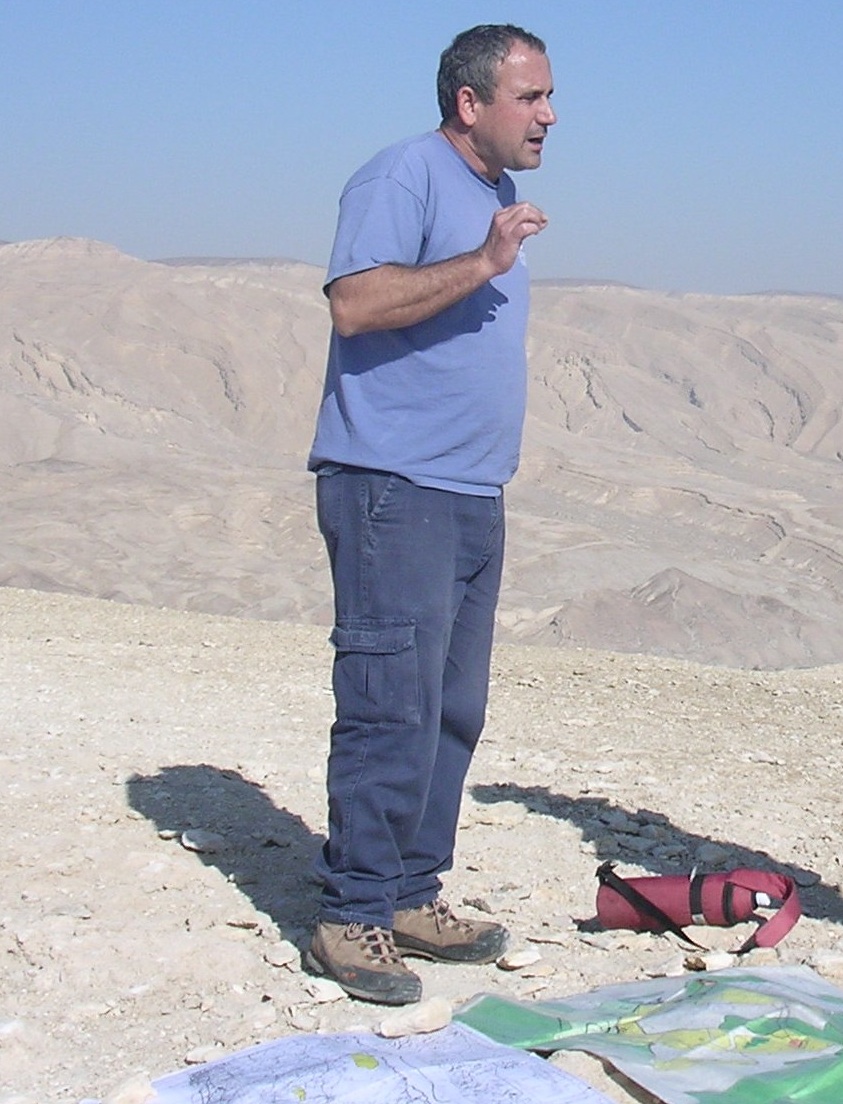
Today we interview Raanan Boral, who has been working in the field of nature conservation and environment for more than 25 years. He has worked as an advisor to the Minister of Environment in Israel and directed the Environment Protection Division at the SPNI (Society for the Protection of Nature in Israel). Today Boral works as a consultant to non-government and private organizations.
Click below for our questions and Boral’s answers:
Q1. Turkey and Israel have had talks about freshwater supply and purchase in the past. The Turkish government has been positive in its overall response so far but there is some opposition to this in the Turkish political spectrum. If the Turkish government were to agree to supply 1 BCM of freshwater to Israel, is there a possibility that Israel will agree in return to share this water with the Palestinian Authority (PA) and Jordan?
A1. I will start with the second part of the question – will Israel share imported water from Turkey with the PA and Jordan? The answer is definitely YES. Today the three entities are working in cooperation on the Red Sea Dead Sea water conduit, which aims to balance the Dead Sea water level and provide water to the three entities – foremost Jordan, the PA and Israel.
There is really no relevance to the source of water. It’s a question of quantity. With respect to importing water to the region from Turkey where freshwater is in excessive abundance, there is an opposition in Israel from the desalination industry against importing water as they prefer lack of competition.
The Israeli government has recently decided on a pilot project to import water from Turkey. In my view it is inevitable that this will be a significant source of water to the region in the future.
Q2. Israel is counting on desalination as a major source of its future water supply. However, there are limits to the growth of Israel’s water supply based on marginal water alone. What are the other ‘regional’ solutions that Israel can examine in terms of water cooperation with other countries?
A2. Israel has several water sources; from three aquifers, purified sewage and desalination. The source with the largest potential for growth is desalination (and in turn purified waste water, but to a lesser extent).
Yet, there is a limit to the amount of desalination plants that the environment can sustain, and it is therefore my view that there is no other option but to import water from Turkey, as is done with other products.
The world doesn’t necessarily lack water, rather, as with natural resources, wealth and other components of life, it’s a question of distribution. Therefore it is reasonable to assume that water will be transported from one area to another, and Israel will not be able to be an exception to the rule.
Q3. Lebanon’s Litani River has a particularly high quality of water, with a very low quantity of chlorates and nitrates present. Water cooperation with Lebanon would therefore serve Israeli interests but in order for this to happen, political cooperation between these two parties is required; in addition Israel-Lebanon relations are inter-linked with the Israel-Palestine conflict. Is it worth it for Israel to find political cooperation with Lebanon in order to secure its water situation or is this not a practical option?
A3. It is in Israel’s interest to find a political solution to the situation in the Middle East in general and with Lebanon in particular, not only for the sake of water but for all important aspects of peoples’ lives. With respect to the former questions there is a paradox; if the first issue (import water from Turkey) is executed the motivation to reach some sort of agreement with Lebanon, because of water, will decrease.
Q4. Technical reports suggest that over-pumping is leading to the depletion of groundwater aquifers in the West Bank, both in terms of water levels as well as water quality. This could cause water shortages in the short-run and devastation of the eco-system in the long-run. What can be done to preserve these aquifers?
A4. Over-pumping is a severe problem in all aquifers in Israel and the West Bank. The tremendous increase in population and water demand combined with mismanagement of water resources has led to a drop in the water level in all aquifers. The solution lies in a combination of measures that include water preservation, desalination and import.
Q5. Israel has experienced a severe drought period in the recent past. With environmental neglect and the effects of climate change, this can be a frequent and imminent risk in the future. What can be done to minimize the impact of such a danger in terms of national measures as well as well as regional cooperation?
A5. Two parliament inquiry committees have determined that Israel needs a coherent, comprehensive and interdisciplinary long and short term policy for its water sector. The details of such a policy are beyond the scope of this questionnaire. They include some of the issues mentioned above – reduce water demand, increase water production by desalination and import water from areas where it is abundant. My view is that such a step would be a good beginning.
More from our water series:
Gidon Bromberg on Water Security and Sustainability in the Middle East
Read our interview with Israel’s Water Commission
Interview with Israel’s past water commissioner, Shimon Tal
All the Water in Israel: Interviews with Government, Analysts and Researchers
Interview With Eli Ronen, the chairman of Mekorot



[…] interview with Israel’s Water Commission 5. Interview with Eli Ronen, chairman of Mekorot 6. Interview with Ranaan Borel, water consultant and activist 7. Interview with the Mayor of Ashkelon, Benny Vaknin, a peacebuilder through water and the […]
[…] interview with Israel’s Water Commission 5. Interview with Eli Ronen, chairman of Mekorot 6. Interview with Ranaan Borel, water consultant and activist 7. Interview with the Mayor of Ashkelon, Benny Vaknin, a peacebuilder through water and the […]
[…] with Israel’s Water Commission 5. Interview with Eli Ronen, the Chairman of Mekorot 6. Interview with Ranaan Borel (SPNI) on Water Security in Israel AKPC_IDS += "15881,";Browse topics: Israel, Jordan, Palestinian, Turkey, […]
Israel’s Water Security & Sustainability in Middle East: overpumping, severe drought pose major threats | Green Prophet http://ow.ly/UstR
The latest on our water series with Israeli experts: http://www.greenprophet.com/2010/01/08/15843/raanan-boral-water-israel/
News:: Raanan Boral on Israel's Water Security and Sustainability Potential in Middle East http://bit.ly/6OMAtE