

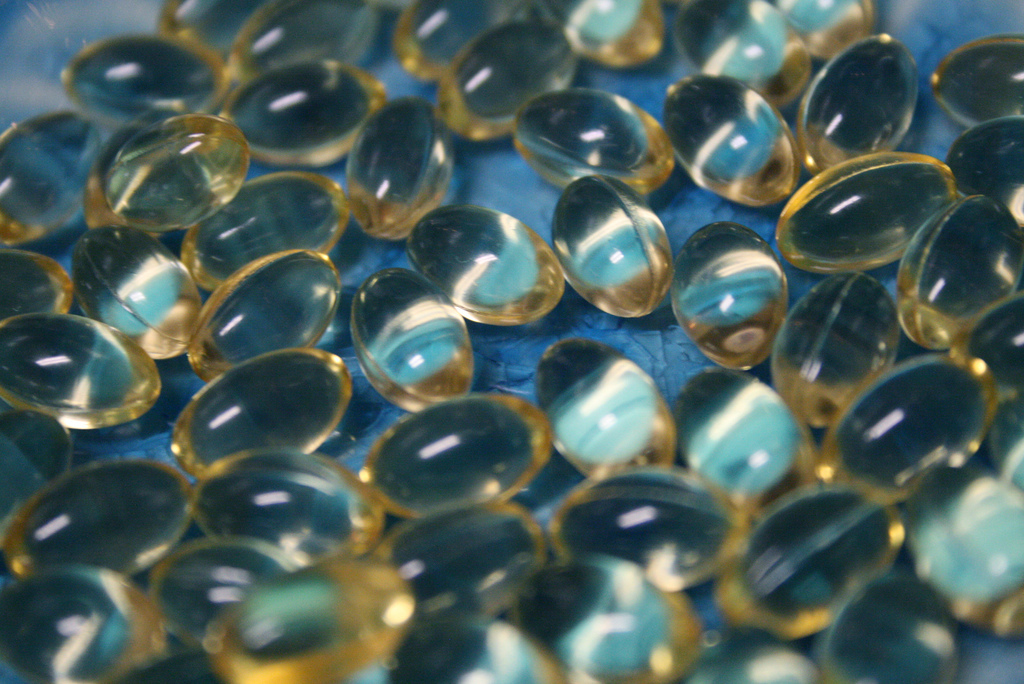
Who doesn’t want to live the longest, fullest life? We all do right? That’s why we go to the gym, fight for the right for clean air and water, and eat healthy organic food. As environmentalists with eyes wide open, some of us take vitamin supplements, like Omega 3, and other multi-vitamin packs, hoping to stave off illness and promote healthy tissues in our bodies. But buyer beware. Taking vitamins, like Vitamin E, a new Tel Aviv University study has found may do more harm than good.
The potent anti-oxidant has been used to stave off heart disease in those at risk, but indiscriminate use of the vitamin, without medical intervention, warn researchers, could shave time off your life.
The research group from Tel Aviv University have done what they say is the most comprehensive and accurate study of clinical data on Vitamin E use and heart disease to date. Their results were recently reported in ATVB, a leading journal of cardiology, and discussed in the journal BioFactors.
“There were so many conflicting reports about Vitamin E and its effect on various diseases, particularly heart disease, that we wanted to set the record straight, says Prof. Dov Lichtenberg of TAU’s Sackler School of Medicine.
“Our new study shows that some people may be harmed by the treatment, whereas others may benefit from it. Now we’re trying to identify groups of people that are most likely to benefit from the effects of Vitamin E,” adds study co-researcher Dr. Ilya Pinchuk.
A longer life without it?
Applying a very different approach than any previous study, the team of researchers put their heads together to draw definitive conclusions about Vitamin E. In their publication the researchers evaluated the results of the prominent studies measuring the health benefits of Vitamin E but reached varying conclusions. There have been many previous publications on the subject. Analysis of the results of all these past publications together revealed that subjects who did not take a Vitamin E supplement enjoyed more quality-adjusted-life-years (QALY), a standard parameter used in medicine to assess the effect of medical interventions.
“To explain the meaning of this parameter,” says Dr. Pinchuk, “consider a participant who was healthy during the first 10 out of 20 years of the study, but then suffered a stroke and became dependent on others throughout the following 10 years. The QALY during the first 10 years of healthy life is 10, but after the stroke the quality of life is only half of what this person had before. Therefore, the second decade is considered the equivalent of merely 5 years of healthy life and in sum a person’s QALY is 15.
The researchers examined data from more than 300,000 subjects in the US, Europe and Israel. “Our major finding,” says Dr. Pinchuk, “was that the average quality-adjusted life years (QALY) of Vitamin E-supplemented individuals was 0.30 less than that of untreated people. This, of course, does not mean that everybody consuming Vitamin E shortens their life by almost 4 months. But on average, the quality-adjusted longevity is lower for vitamin-treated people. This says something significant.”
“We’ve now concluded that going to the grocery or to a health food store to buy Vitamin E supplements, for the most part, won’t do you good. In some cases it can do harm,” says Dr. Pinchuk. “A doctor wouldn’t prescribe anti-hypertension drugs to the whole population, only to those with low blood pressure. It seems this is true for antioxidants, too. When you give them to everybody, you may be doing more harm than good. Some people may benefit from it, but more may be harmed.”
The researchers are now building sets of criteria that detail under what conditions Vitamin E supplements should be taken. They are also investigating the chemical mechanisms of antioxidants in general to better understand how they work.



[…] of them and now my face is covered in small scars that may never go away. Occasionally I apply Vitamin E oil to my face before I go to bed and it seems to make a huge difference, but it would be so much […]
News:: New Study Says Put Limits on Vitamin E Intake http://www.greenprophet.com/2010/01/07/15755/vitamin-e-heart/