
Every day, the Middle East’s desalination industry produces more brine than freshwater. Aquifers are drying up and becoming full of brine. Companies like Iyris claim to be able to farm on brackish water, solving part of the problem of access to freshwater. But a a small Saudi startup has found a solution to the problem inside the problem itself.
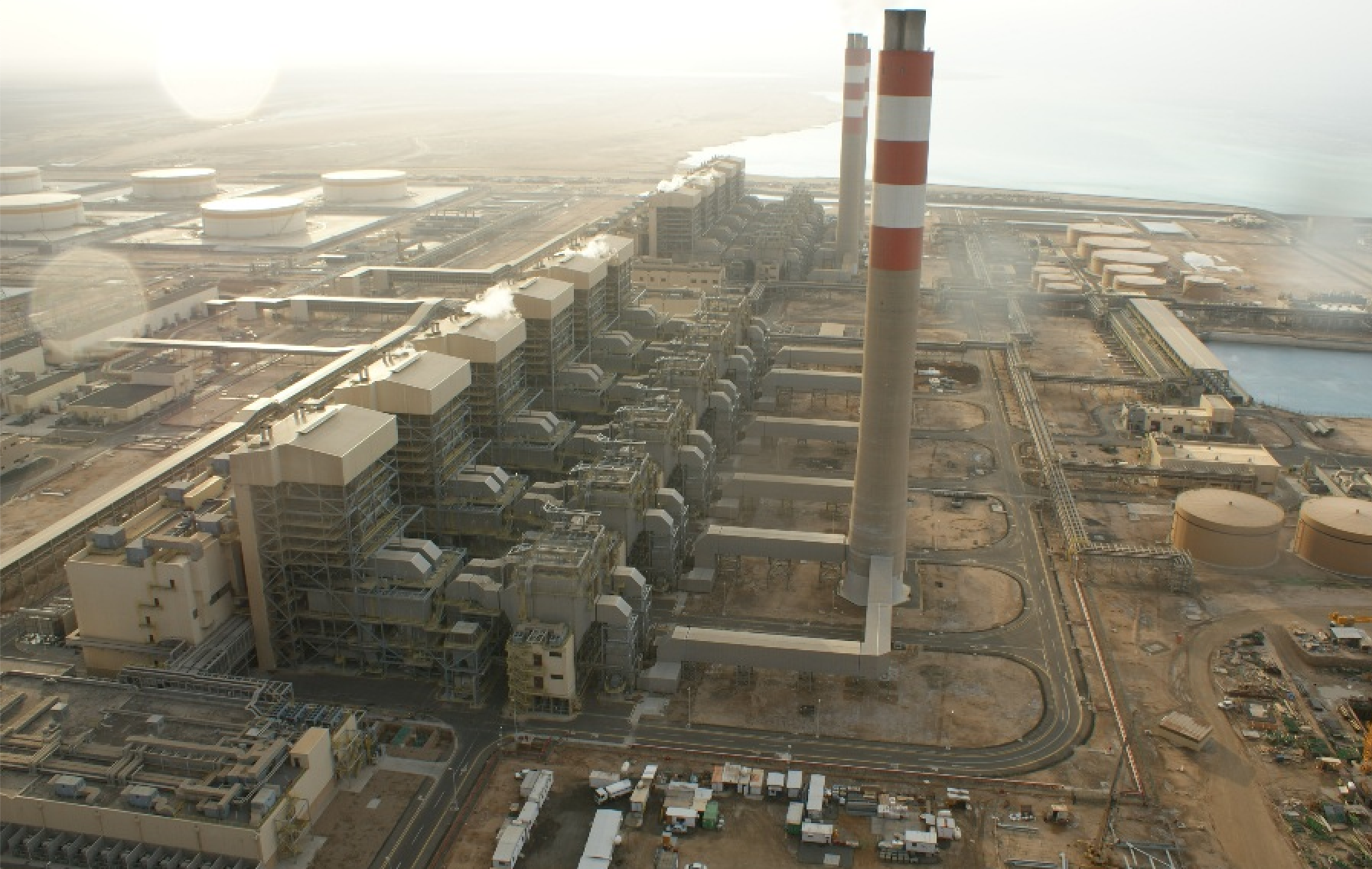
The math of desalination has long been troubling. Its energy-intensive and polluting. For every gallon of water pulled from the sea, a typical reverse osmosis plant discharges roughly 1.5 times the among of concentrated, chemically laden brine back into the ocean. Multiply that across the Middle East and North Africa, which is the region responsible for more than half of the world’s desalination output, and the scale of brine becomes alarming.
Global brine discharge now exceeds 140 million cubic meters per day, according to a 2019 UN-backed study, with Saudi Arabia alone accounting for 22 percent of the world’s total, according to a UN University Institute for Water study. The Arabian Gulf, already naturally one of the saltiest bodies of water on earth at 45 grams of salt per liter compared to a global ocean average nearer 35, is absorbing the consequences.
Into this problem has stepped Qalzam, a Saudi startup with a counterintuitive proposition: the brine is not the problem. It is the raw material.
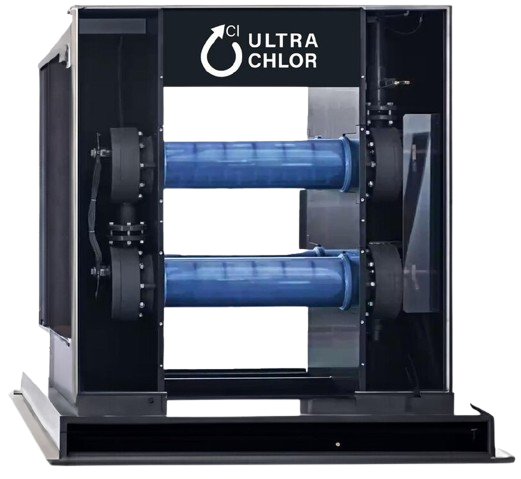
Founded in Riyadh and incubated at the Saudi Water Innovation Center (SWIC), Qalzam has developed a process to extract sodium hypochlorite (the active compound in chlorine disinfectant) directly from the waste brine produced by reverse osmosis plants. That sodium hypochlorite is then fed straight back into the same plant to disinfect the freshwater it has just produced, closing what Qalzam describes as a circular loop within the desalination process itself. In conventional plants, sodium hypochlorite must be manufactured separately, transported to site, and purchased as a chemical input.
Qalzam eliminates all three steps simultaneously.
The chemistry is not new. Sodium hypochlorite can be generated electrochemically from saline solutions, which is a process long understood in laboratory settings and applied at small scales in wastewater treatment. What Qalzam is engineering is the industrial translation of that process specifically for the high-salinity, high-volume conditions of Gulf desalination, where brine concentrations are substantially higher than those seen elsewhere in the world, and where the scale of operations can make even marginal improvements in cost or chemistry enormously significant.
“The chemicals should be all neutralized,” said Noreddine Ghaffour, a research professor at the Water Desalination and Reuse Center at King Abdullah University of Science and Technology (KAUST), speaking about brine management at Saudi desalination plants more broadly. His comment reflects a growing scientific and regulatory consensus: the era of dumping chemically complex brine into already-stressed marine environments is approaching its limits.
The timing is propitious. Saudi Arabia has positioned itself as a global leader in desalination capacity, doubling its output in recent years and announcing $9.33 billion across 60 new projects in its latest expansion.
The Saudi Water Partnership Company is targeting a near-tripling of national desalination capacity to 7.5 million cubic meters per day by 2027. Each new plant that comes online represents both a new source of brine and a potential customer for Qalzam’s on-sitewater
disinfectant solution. The startup has also graduated from Saudi Arabia’s Ministry of Industry and Mineral Resources’ “Numuw” industrial incubator and accelerator program, giving it institutional credibility at a formative stage.
The wider scientific case for brine valorization is strengthening rapidly. Research published in the journal Water in November 2025 modeled a 100,000-cubic-meter-per-day reverse osmosis facility and found that a sequential brine recovery process could achieve over 90 percent total salt recovery while producing marketable materials including sodium chloride, magnesium hydroxide, and bromine.
The estimated revenue from recovered materials in such scenarios ranges between $4.5 million and $6.8 million per year, potentially offsetting 65 to 90 percent of annual desalination operating costs, with a payback period of three to five years.
Qalzam’s narrower focus on sodium hypochlorite extraction and reuse sits within this broader economic logic but is considerably simpler to implement, requiring no complex mineral separation trains or crystallization equipment. This matters because complexity has consistently been the enemy of adoption in industrial water treatment. The technologies that scale are typically those that integrate cleanly into existing infrastructure rather than requiring its wholesale redesign. A bolt-on electrochemical unit that converts waste brine into a disinfectant that the plant already needs is, in engineering terms, a much easier sell than a full brine-mining operation requiring downstream chemical processing and commodity markets for the outputs.
Beyond the economics, the environmental calculus is straightforward. Saudi Arabia’s Gulf coastline is already under documented ecological stress from brine discharge, with dense, oxygen-depleted plumes affecting benthic marine life near major outfalls. Over in the Red Sea, dolphins, coral reef and at-risk species cannot tolerate more stress on the already noisy and polluted shipping areas.
Any technology that reduces both the volume and chemical load of that discharge addresses a concern that regulators, ecologists, and increasingly the operators themselves recognize as unsustainable at the scale to which the region is building.
Qalzam is still early-stage, with its team small and its first commercial deployments ahead of it. But the company sits at the intersection of three converging forces: a region building desalination capacity at a pace unmatched anywhere on earth (despite the scaling back of Saudis’ Vision 2030 with lowering prices of oil), a scientific community that has spent a decade documenting the harms of brine disposal, and a policy environment.
Saudi Vision 2030 and the UAE’s Net Zero 2050 strategy incentivize circular economy approaches to industrial water management.
The Middle East did not choose to become the world’s desalination laboratory. Geography and hydrology made that decision for it. But the region’s sheer scale of operations means that solutions proven here, including whatever Qalzam refines on the shores of the Gulf, will be exportable to every water-stressed coast on the planet.
Red Sea Farms (now Iyris) who we interviewed here, is a separate but thematically related KAUST spinout worth contextualizing alongside Qalzam, not as partners, but as parallel examples of Saudi water innovation coming out of the same university ecosystem.
Not far away, with Jordan between them, Israel’s IDE Technologies, founded in 1965 and headquartered in Kadima-Zoran, built the Sorek desalination plant south of Tel Aviv, which for years was the largest seawater reverse osmosis desalination facility on earth, producing 624,000 cubic meters of drinking water per day and supplying roughly 20 percent of Israel’s municipal water demand.
Today, desalination supplies over 70 percent of Israel’s domestic water consumption, a figure that has effectively drought-proofed a country that receives less than 200 millimeters of rainfall annually across much of its territory.
::Qalzam