
Toxins in tiny bodies: American children are carrying invisible chemical burden

PLastics in kids
Toxins in toddler toys

A silent chemical assault is underway. A new nationwide study has revealed that children in the United States — especially toddlers aged two to four — are regularly exposed to dozens of industrial chemicals during their most vulnerable developmental years. Many of these chemicals are not even on the radar of public health monitoring systems.

The study, published in Environmental Science & Technology, tested urine samples from 201 young children as part of the NIH-supported Environmental influences on Child Health Outcomes (ECHO) program. Researchers screened for 111 chemicals commonly found in household items, plastics, food packaging, cosmetics, and furniture.

Related: why glass is emitting more microplastics than plastic bottles

What they found is deeply unsettling: 96 chemicals were detected in at least five children. 48 were found in more than half. 34 were found in over 90% of the children — including 9 not tracked in national health databases like NHANES.

“These are not rare or accidental exposures,” said Deborah H. Bennett, the study’s lead author and professor of public health at UC Davis. “This is a daily, invisible flood of chemicals entering the bodies of children at a stage when their brains and immune systems are still forming.”

The Toxic Alphabet of Modern Childhood

chewing gum pieces, microplastics in gum, synthetic gum, natural gum, saliva with microplastics, plastic particles in saliva, chewing gum research, microplastic contamination, UCLA research on gum, microplastics released from gum, gum base made from plastic, plastic in everyday products, environmental impact of gum, lab research on chewing gum, microplastics from synthetic products, plastic pollution and health risks, people chewing gum with plastic particles
Dollar Store toys emit dangerous toxins. So does gum.

Phthalates and phthalate alternatives – Found in toys, food wrap, vinyl flooring, and shampoo

Parabens – Used in creams, cosmetics, and even medications

Bisphenols (BPA, BPS) – Found in plastic containers, canned food linings, and receipts

Benzophenones – Common in sunscreens and cosmetics

Pesticide residues, flame retardants, and combustion byproducts – Lurking in food, furniture, and air

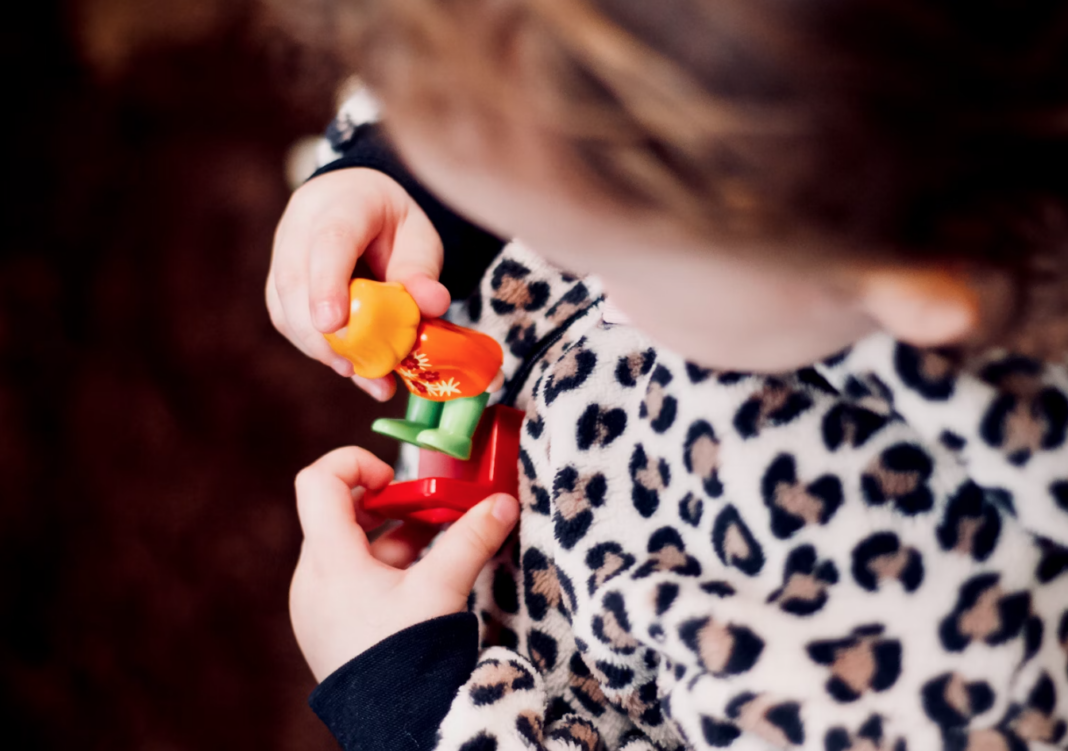
Children are especially vulnerable. Their smaller bodies mean higher exposures per kilogram, and behaviors like crawling, mouthing toys, and touching floors mean they are constantly in contact with contaminated surfaces. In some cases, the children’s chemical loads were higher than their mothers’ levels during pregnancy, pointing to postnatal environmental sources — the home, the daycare, the playground.
Plastics and toxins in toddlers

Related: the problems of Dollar Store plastic

The data also revealed disturbing patterns: Chemical exposures were highest among younger toddlers and racial/ethnic minorities, reflecting systemic environmental injustice. While some older chemicals like triclosan and certain phthalates are decreasing (likely due to public pressure and reformulations), new unregulated substitutes like DINCH and emerging pesticides are on the rise.

Swapping out banned chemicals for understudied alternatives is what scientists call “regrettable substitution.” It’s regulation on a delay — and children are paying the price.

What Can Parents Do to Reduce the Toxic Burden?

Anthroposophic, Waldorf School toys by Bella Luna are made from wood and natural paint

While we can’t control every exposure, there are concrete steps caregivers can take:

Avoid plastics labeled #3, #6, and #7, which may contain bisphenols and phthalates

Buy “paraben-free” and “fragrance-free” personal care products. Buy or make your own food wraps from fabric scraps and beeswax. Package lunches and food in steel, not plastic containers.

The Homesteading Family makes beeswax wraps for sandwiches at school and play

Ventilate homes, dust with a damp cloth, and consider buying air cleaners with HEPA filters

Wash hands before meals, especially after outdoor play or contact with plastic items

Limit pesticide exposure — wash produce well and consider organic options when possible

A Call for Chemical Accountability

Ultimately, this is not just a parenting issue. It’s a policy failure. Most of the 40,000+ chemicals used in consumer products in the U.S. are poorly regulated, with minimal long-term health data.

As Green Prophet has reported before, environmental chemicals are linked to declining fertility, disrupted hormones, obesity, and neurodevelopmental disorders — all of which are now rising in childhood populations.

“This study should sound the alarm,” said Jiwon Oh, postdoctoral scholar and co-author of the study. “We urgently need better biomonitoring, stronger chemical safety laws, and corporate transparency. Our children shouldn’t be the test subjects for industrial shortcuts.”

This is a pivotal moment. Conscious parents and policymakers alike have the opportunity — and the obligation — to push for a healthier future. Because these chemicals aren’t just in the air or water — they’re in our children. And that makes this not just a science story, but a moral one.


Karin Kloosterman
Karin Kloostermanhttp://www.greenprophet.com
Karin Kloosterman is an award-winning journalist, innovation strategist, and founder of Green Prophet, one of the Middle East’s pioneering sustainability platforms. She has ranked in the Top 10 of Verizon innovation competitions, participated in NASA-linked challenges, and spoken worldwide on climate, food security, and future resilience. With an IoT technology patent, features in Canada’s National Post, and leadership inside teams building next-generation agricultural and planetary systems — including Mars-farming concepts — Karin operates at the intersection of storytelling, science, and systems change. She doesn’t report on the future – she helps design it. Reach out directly to [email protected]

TRENDING

From Pilot Plant to Global Stage: How Aduro Clean Technologies’ 2026 Expansion Signals a Turning Point for Chemical Recycling Investors Like Yazan Al Homsi

The company's Next Generation Process (NGP) Pilot Plant in London, Ontario, has officially moved into initial operating campaigns, generating the kind of structured, repeatable data that separates laboratory promise from commercial viability.

How plastics can increase food poisoning

Banerjee’s research team is among the first to examine the interactions between foodborne pathogens and plastic particles, thereby advancing this emerging field from a food safety perspective.

erthos uses AI to scale bio-plastics that work in industry

AI and bio-plastics have a formidable crew looking to solve the plastics problem. It uses AI to match opportunities to existing machinery.

Why does eczema so often begin in childhood and how can we prevent it?

The first years of life may represent a critical window when environmental exposures: dust, mold, indoor allergens, pollutants, microplastics, all shape immune trajectories in lasting ways. If scientists can find safe ways to calm this early-life immune pathway, it may be possible to prevent allergic disease before it spreads from the skin to the lungs or gut.

Forever chemicals banned from Europe’s drinking water

The EU is taking a bold step in making sure all European Union member states worked to monitor and reduce PFAS levels in drinking water.

Should You Invest in the Private Market?

startustartup Unlike public stock exchanges, which offer daily trading, strict...

How to build a 100-year-company

Kongō Gumi is a Japanese construction company, purportedly founded in 578 A.D., making it the world's oldest documented company. What can we learn about building sustainable businesses from them?

From Pilot Plant to Global Stage: How Aduro Clean Technologies’ 2026 Expansion Signals a Turning Point for Chemical Recycling Investors Like Yazan Al Homsi

The company's Next Generation Process (NGP) Pilot Plant in London, Ontario, has officially moved into initial operating campaigns, generating the kind of structured, repeatable data that separates laboratory promise from commercial viability.

How AI Helps SaaS Companies Reduce Repetitive Customer Support Work

SaaS products are designed for large numbers of users with different levels of experience, and also in renewable energy.

Pulling Water from the Air

Faced with water shortage in Amman, Laurie digs up...

Turning Your Energy Consultancy into an LLC: 4 Legal Steps for Founders in Texas

If you are starting a renewable energy business in Texas, learn how to start an LLC by the books.

Tracking the Impacts of a Hydroelectric Dam Along the Tigris River

For the next two months, I'll be taking a break from my usual Green Prophet posts to report on a transnational environmental issue: the Ilısu Dam currently under construction in Turkey, and the ways it will transform life along the Tigris River.

6 Payment Processors With the Fastest Onboarding for SMBs

Get your SMB up and running fast with these 6 payment processors. Compare the quickest onboarding options to start accepting customer payments without delay.

Related Articles

Popular Categories