
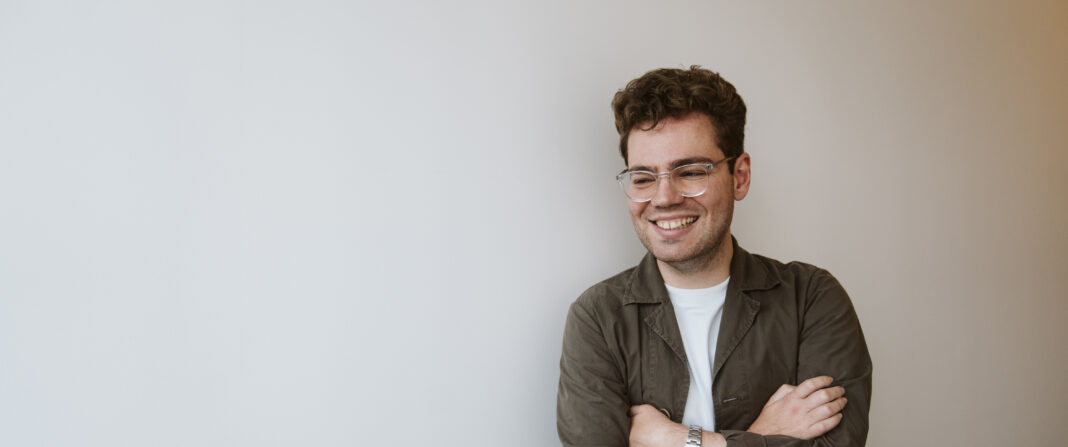
Rebuilding a life, one hand at a time: a medical first at Penn Medicine

New hands Luka Krizanac
Luka Krizanac gets a new set of hands

When Luka Krizanac lost all four limbs to sepsis at age 12, he never imagined he’d one day hold a cup, type on his phone—or feel the warmth of human touch again. But in a groundbreaking medical feat, the now 28-year-old Swiss man has received a bilateral hand transplant from doctors at Penn Medicine in Philadelphia. The surgery, performed in fall 2024, is the first of its kind in the US on a patient with surgically integrated leg prosthetics, and it marks a new chapter in the science of healing and regeneration.

Related: Turkey’s first womb transplant is a success

Krizanac is Penn’s fifth hand transplant recipient, and the program’s first since a COVID-era pause on non-vital transplants. The complexity of the procedure—known as vascularized composite allotransplantation—requires a team of over 20 specialists, from plastic and orthopedic surgeons to anesthesiologists and transplant coordinators.

“You do 1,001 things with your hands every day. Prosthetics can’t replace that,” said Dr. L. Scott Levin, a pioneer in the field and Chair Emeritus of Orthopaedic Surgery at Penn. “Our team is very proud of the many things we’ve done as ‘firsts,’” Levin said. “The first child. The first transatlantic vascularized composite allotransplantation. The first in a patient with no lower extremities. The first woman to have hand transplants who later gave birth to a baby.”

Healing Beyond Organs: A Sustainable Vision for Medicine
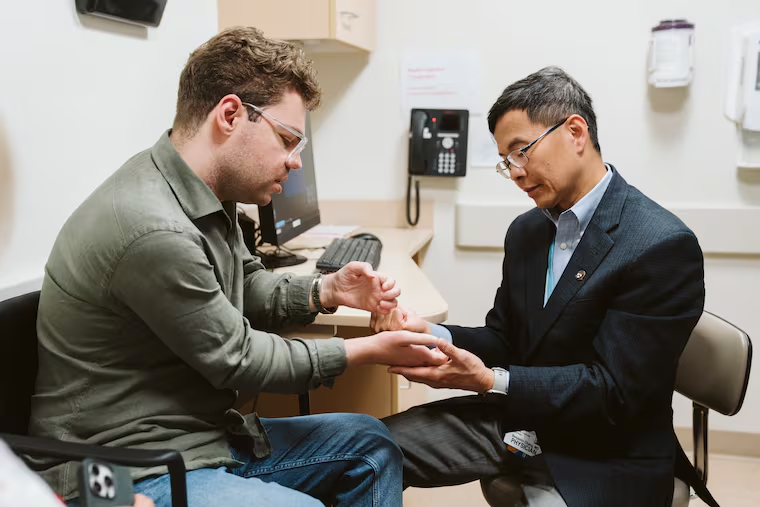
Luka Krizanac gets a new set of hands
While many sustainability stories focus on climate, the principles of regeneration and mindful resource use are equally vital in healthcare. Hand transplantation offers an alternative to mass-produced, resource-intensive prosthetics, and is built on human tissue reuse—a powerful expression of biological circularity.

Related: First whole eye transplant successful

Indeed, donor compatibility for hands is complex: beyond blood type, doctors must match skin tone, gender, muscle size, and age. “It’s the most human gesture I’ve ever witnessed—that someone would help me beyond their own life,” Krizanac said. “How can you ever find the words for that kind of gratitude?”

The road to surgery took years. Luka’s leg wounds had to heal first, and surgeons even flew to Europe to perform microsurgery on his residual limbs to prevent infection. Once cleared, he underwent a rigorous mental and physical evaluation to ensure he could endure the transplant’s demands: intense rehab, lifelong immunosuppressants, and the emotional weight of recovery.

Related: thinking about a hair transplant?

While the world emerged from lockdowns, Penn’s hand transplant team quietly practiced. In the Human Tissue Lab, they ran hours-long mock surgeries, rehearsing every nerve, vessel, and bone connection down to the stitch.

By fall 2024, the real operation began—10 hours long, performed overnight while most of Philadelphia slept. Four surgical teams, working in sync on Krizanac and the donor, navigated the complex choreography of rebuilding a body.

Six months after surgery, Luka is back home in Switzerland. He can now feel textures and temperatures, pick up food, and even push his glasses up—a movement most take for granted. His nerves continue to regenerate, and so does his confidence.

This story isn’t just a medical marvel. It’s a testament to long-term thinking, international cooperation, and the sustainability of human care—values we champion at Green Prophet. As we seek a regenerative future for the planet, we can’t forget to regenerate ourselves.

 

Read More

LEAVE A REPLY

Please enter your comment!
Please enter your name here

TRENDING

Hydrophilis rebreather, an interview with Oliver Isler

A retired Swiss biology teacher has built one of...

A summer of sugar wax or time for laser treatments? The environmental answer

Green Prophet readers know we write a lot about hair. We have covered the halal and the haram sides of hair removal for Muslims. We have written about sugar waxing, Persian sugaring, threading, and the beauty secrets that came out of the Middle East long before salons started calling them trends. Our articles on sugar wax broke the internet a few times. 

Why fewer lung transplants go to women

Women often have a smaller body size, which limits the number of donor lungs that are physically compatible. They are also more likely to develop antibodies from prior pregnancies, blood transfusions, or autoimmune conditions, making it harder for their bodies to accept many potential donor organs. Together, these factors significantly narrow the pool of compatible donors, Ardehali said.

Your Complete Guide to the Most Effective Hair Loss Solutions

Finding the best hair loss cure depends on seeing a trained dermatologist or trichologist, who guarantees that it is customized to the particular situation of the patient.

Fecal transplants “poop pills” safe for recovery after stem cell transplant

Fecal therapy safe in new clinical producer. Get paid to poop.

How to quiet noise from construction in your office

Streets need to be resurfaced in New York but the humming and grinding noise is unsettling. Noise is environmental pollution. 

EarthX and a blueprint for sustainable investing

Trammell S. Crow, a Dallas-based businessman and father of four, is focusing his efforts on impact investing, and media that focuses on saving the planet through EarthX.

Mining Afghanistan’s Mineral Discoveries Similar to Avatar

Now that American forces in Afghanistan are commemorating the longest period of any war that America has been involved in, including the 1965-73 Vietnam War, the recent discoveries of large and extremely valuable mineral and metal deposits may finally bring to light a reason to continue the presence of US fighting forces in this war torn and backward country.

From Pilot Plant to Global Stage: How Aduro Clean Technologies’ 2026 Expansion Signals a Turning Point for Chemical Recycling Investors Like Yazan Al Homsi

The company's Next Generation Process (NGP) Pilot Plant in London, Ontario, has officially moved into initial operating campaigns, generating the kind of structured, repeatable data that separates laboratory promise from commercial viability.

Nobul’s Regan McGee on Shareholder Value: “Complacency Is the Silent Killer” 

Why the governance framework designed to protect shareholders so...

Should You Invest in the Private Market?

startustartup Unlike public stock exchanges, which offer daily trading, strict...

How to build a 100-year-company

Kongō Gumi is a Japanese construction company, purportedly founded in 578 A.D., making it the world's oldest documented company. What can we learn about building sustainable businesses from them?

How AI Helps SaaS Companies Reduce Repetitive Customer Support Work

SaaS products are designed for large numbers of users with different levels of experience, and also in renewable energy.

Popular Categories