
HopOn for instant mobile payments by bus

HopOn-bus-payment-system-israel
In any city in the world, we have all had the experience of catching a bus, subway or train only to find we don’t the right change or the right card that needs to be refilled at some Kafka-esque office we’re never going to find. An Israeli startup is stepping in and solving this problem by collecting fares automatically.

HopOn, based in Tel Aviv, is a company of 12 people who plan to change the way people use public transport by offering a smart mobile payment and ticketing platform.

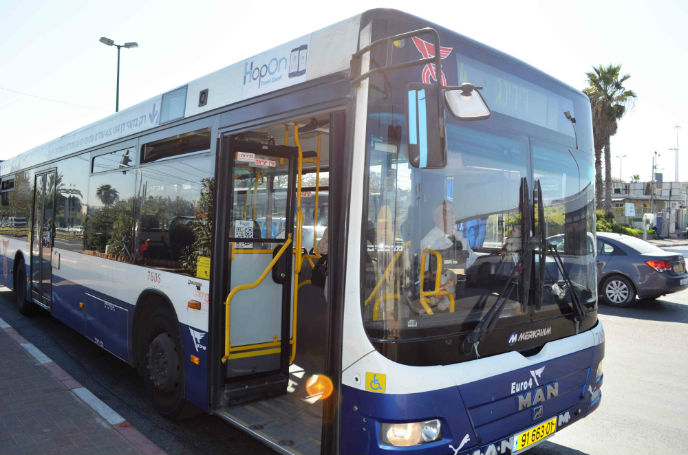
In Israel, HopOn has inserted beacons in 2,000 buses and soon at bike stations and other transportation hubs. Some 10,000 users have installed the app, allowing them to hop on a bus or bike without worrying about how to pay.

For bus operators, this means no more collecting fees person by person, freeing up drivers’ hands and minds to focus on the road. For riders, it means no more line-ups to pay, and more freedom to use the services meant to help us move through cities.

Company CEO Ofer Sinai tells ISRAEL21c that existing automated payment technologies are tethered to hardware and customers need to tap a device with a smart card, which runs on NFC (near field communication).

The hardware is expensive, he says, and you have to check in one by one. Plus, you have to obtain the card. Using HopOn, users’ tickets are validated automatically through a smartphone once they get onto their ride –– through the front door or back. No lines necessary.

[youtube]http://youtu.be/ioSEthx8aXs[/youtube]

In Tel Aviv, the company is working intensively with regulators and with the public bus operator Dan to ensure that customers get a secure and satisfactory experience whether on the bus or through the Tel-O-Fun pay-as-you-go public bike system.

HopOn’s small beacons connect to your smartphone via ultrasound from the vehicle’s GPS system, effortlessly pairing the passenger with a location-based fee.
mobile-bus-hopon

“We have pay-as-you-go options or pre-paid tickets,” says Sinai. “This is our added value. Even if you didn’t buy the right tickets –– don’t worry, you won’t be charged for what you didn’t use.”

Bus drivers who are part of the HopOn system, indicated to riders with a HopOn logo outside the vehicle, are trained on how to accept this novel form of payment. For now the drivers inspect a “secret code” image provided to them via the HopOn screen on the rider’s mobile device.

For people concerned about privacy, you can’t pay with Bitcoin just yet, but PayPal is an option and certain profile information can be kept anonymous.

A bus ticket to Monaco?

After Israel, the firm plans to take on the French market through a business lead in Monaco. HopOn has a local contact in New Jersey and is negotiating to start something in the United States, but the next market seems to be closer in Europe, Sinai tells ISRAEL21c.

HopOn was founded in 2013 and has raised $700,000 to date from a strategic investor. It is currently in a negotiating cycle with several venture capital firms with the aim of raising $5 million.

The next step for HopOn in Israel is to ramp up use –– to reach a bigger number of the country’s million and a half public-transport passengers every day.

It is also collaborating with other public transport app companies like Moovit. This popular Israeli app is like Waze for public transportation.

HopOn also plans on connecting to trip planners to help people get from Point A to Point B as quickly and easily as possible.

Sinai came onto the idea, with his partner David Mezuman, after many years of commuting between the cities of Tel Aviv and Petah Tikva in Israel. They felt it was ridiculous to have to fish for small change in order to get home. In true Israeli spirit, they didn’t just complain about a problem but resolved to do something about it for the sake of so many other commuters.

All aboard?

This article first appeared on ISRAEL21c – www.israel21c.org

Karin Kloosterman
Karin Kloostermanhttp://www.greenprophet.com
Karin Kloosterman is an award-winning journalist, innovation strategist, and founder of Green Prophet, one of the Middle East’s pioneering sustainability platforms. She has ranked in the Top 10 of Verizon innovation competitions, participated in NASA-linked challenges, and spoken worldwide on climate, food security, and future resilience. With an IoT technology patent, features in Canada’s National Post, and leadership inside teams building next-generation agricultural and planetary systems — including Mars-farming concepts — Karin operates at the intersection of storytelling, science, and systems change. She doesn’t report on the future – she helps design it. Reach out directly to [email protected]

TRENDING

Eco organization offices destroyed by Iran missile

Tel Aviv's eco organization, the Heschel Center, was impacted by an Iranian missile.

What are AWG air-water generators, and why they aren’t a golden-bullet solution (yet)

Atmospheric water generators (AWGs) sound like magic: machines that can pull drinking water out of air. The idea is mentioned in the Bible, where the elders would pray for water collected as dew on plants and the catch on turning this into a machine is in the physics. To turn invisible vapor into liquid, you must remove heat, especially the latent heat of condensation.

Jordan’s $6 Billion Aqaba–Amman Desalination Project from the Red Sea Moves Forward

In 2025, the Jordanian government signed agreements with a consortium led by Meridiam and SUEZ, alongside VINCI Construction and Orascom Construction. Under a 30-year concession agreement, the consortium will design, build, finance, operate, and maintain the system before transferring it back to the Jordanian government. The total investment is estimated at approximately $6 billion USD.

The Saudi Startup Turning Desalination’s Toxic Waste Into Its Own Disinfectant

For millennia, the Middle East's water crisis seemed an immutable fact of geography — a region defined as much by what it lacked as by what lay beneath its sands. Today, a convergence of plummeting solar costs, advancing membrane technology, and hard-won engineering expertise is rewriting that story.

Earth building with Dead Sea salt bricks

Researchers develop a brick made largely from recycled Dead Sea salt—offering a potential alternative to carbon-intensive cement.

Should You Invest in the Private Market?

startustartup Unlike public stock exchanges, which offer daily trading, strict...

How to build a 100-year-company

Kongō Gumi is a Japanese construction company, purportedly founded in 578 A.D., making it the world's oldest documented company. What can we learn about building sustainable businesses from them?

From Pilot Plant to Global Stage: How Aduro Clean Technologies’ 2026 Expansion Signals a Turning Point for Chemical Recycling Investors Like Yazan Al Homsi

The company's Next Generation Process (NGP) Pilot Plant in London, Ontario, has officially moved into initial operating campaigns, generating the kind of structured, repeatable data that separates laboratory promise from commercial viability.

How AI Helps SaaS Companies Reduce Repetitive Customer Support Work

SaaS products are designed for large numbers of users with different levels of experience, and also in renewable energy.

Pulling Water from the Air

Faced with water shortage in Amman, Laurie digs up...

Turning Your Energy Consultancy into an LLC: 4 Legal Steps for Founders in Texas

If you are starting a renewable energy business in Texas, learn how to start an LLC by the books.

Tracking the Impacts of a Hydroelectric Dam Along the Tigris River

For the next two months, I'll be taking a break from my usual Green Prophet posts to report on a transnational environmental issue: the Ilısu Dam currently under construction in Turkey, and the ways it will transform life along the Tigris River.

6 Payment Processors With the Fastest Onboarding for SMBs

Get your SMB up and running fast with these 6 payment processors. Compare the quickest onboarding options to start accepting customer payments without delay.

Related Articles

Popular Categories