

Daydreams can catalyze real change. Look to the far-reaching influence of designers who choose to work in the hypothetical, where unrestricted creativity is unfettered by cost, resources, and environmental impact. If only most of the Middle East’s fantastical architecture stayed imaginary.
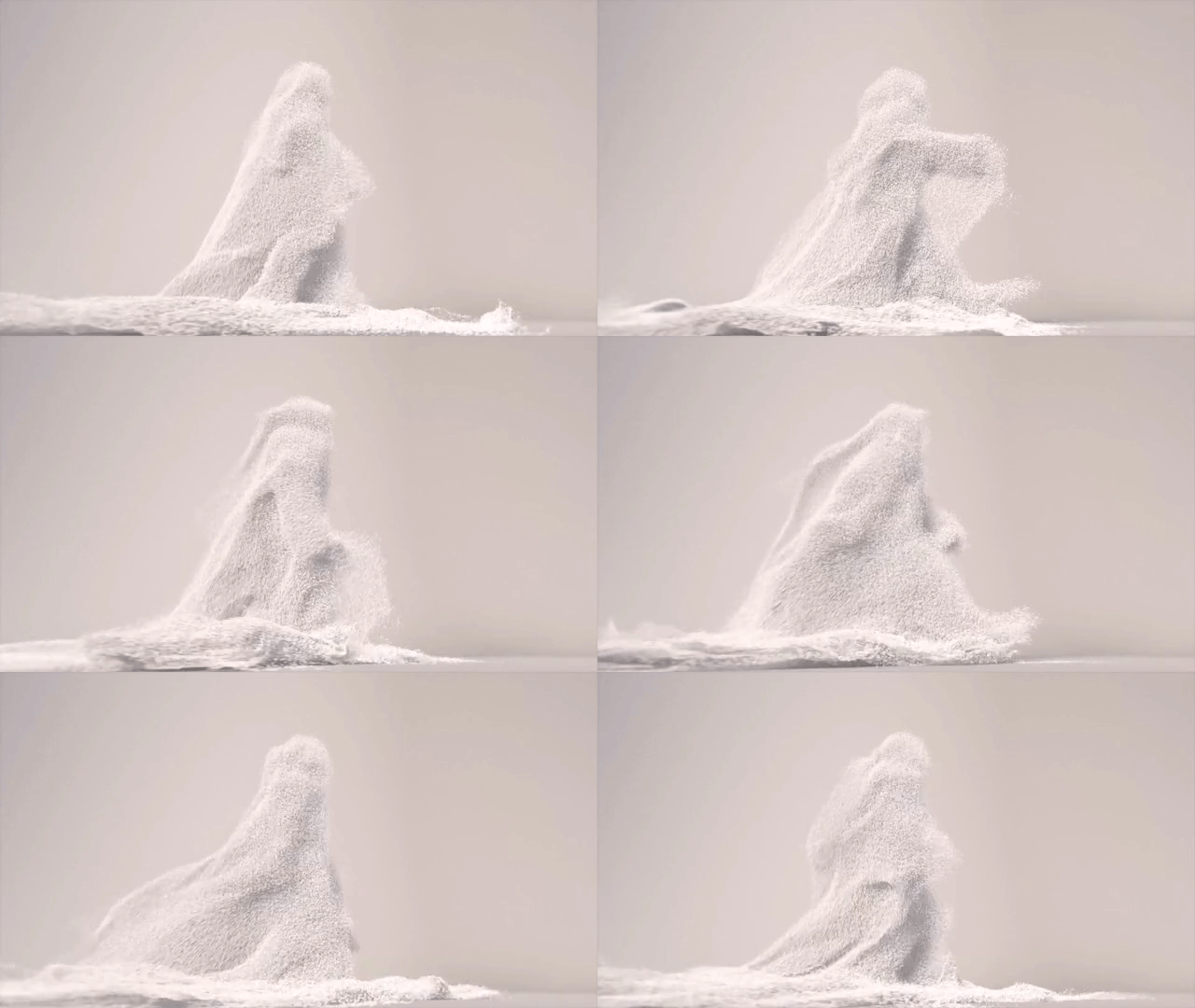
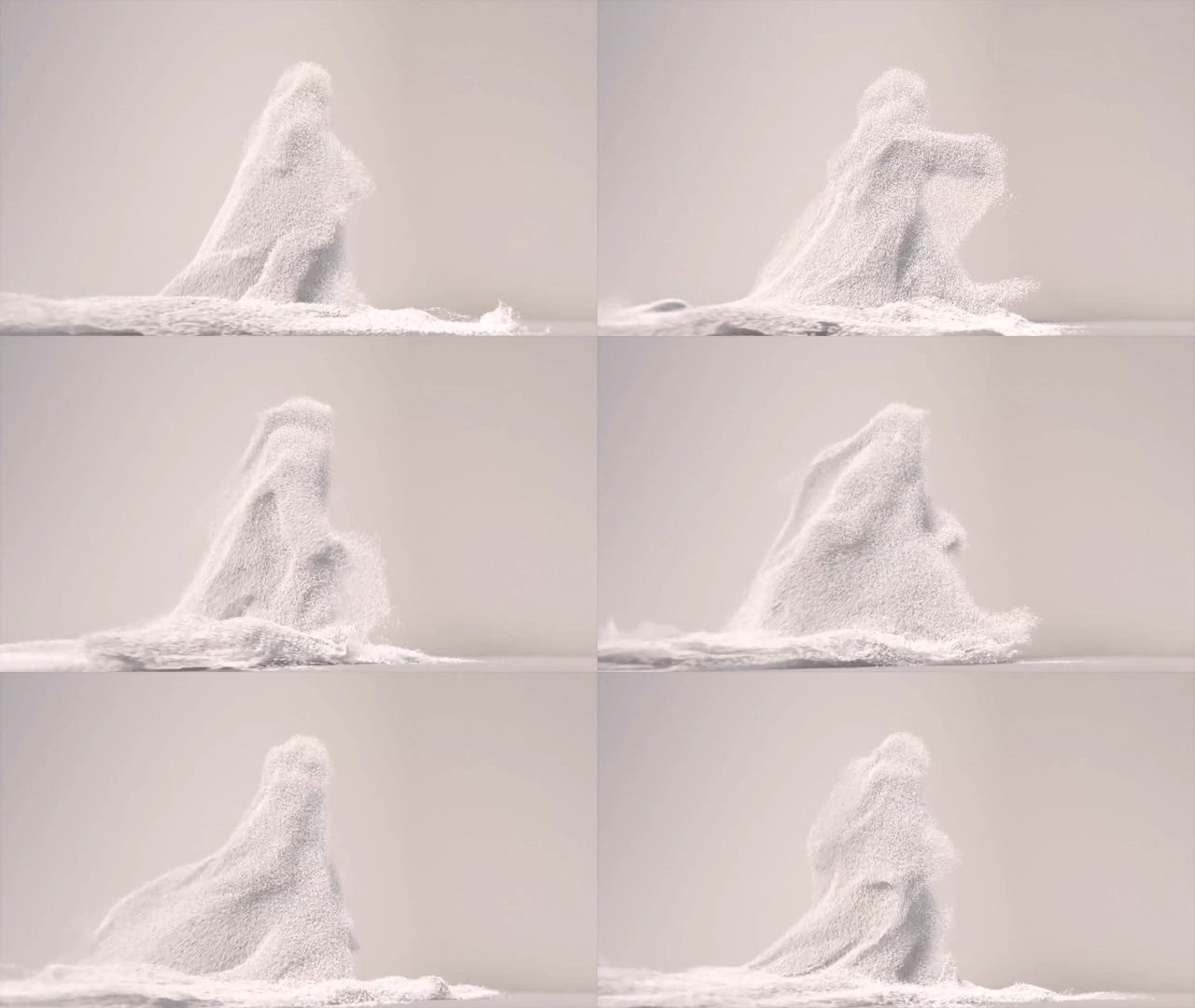
Digital animation “Walking Architecture” (clip above) pays homage to a 1960’s design group while pushing the boundaries of their conjectural vision.
UK-based multimedia studio Universal Everything developed a slowly evolving “video sculpture” that changes form, gradually morphing through an array of architectural structures that include geodesic domes, perforated lattices and pixilated building blocks. Meanwhile, its core motion, the act of walking, remains constant.
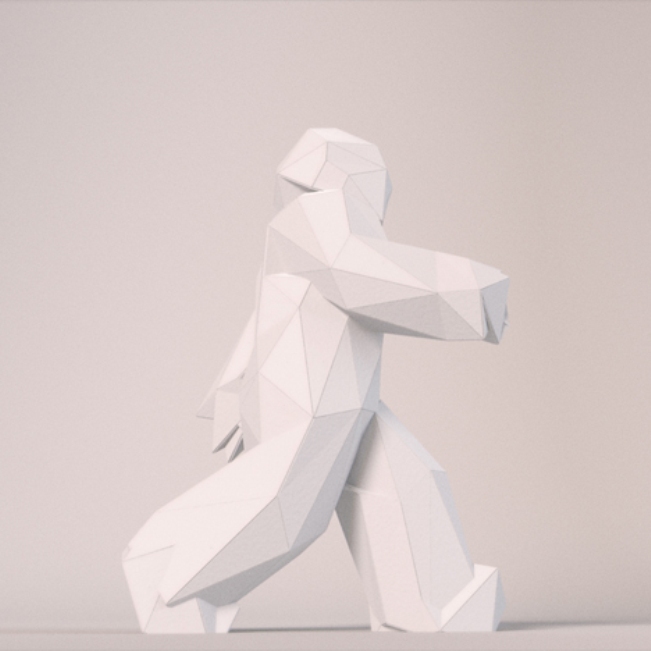 Matt Pyke of Universal Everything based the animation, entitled Walking Architecture, on the futuristic imaginings of 1960s architectural group Archigram; they envisioned a city as a living organism whose purposely stride is undeterred by its changing size and form. The title of the video is a reference to Archigram’s “Walking City”.
 The original project, conceived by British architect Ron Herron, imagined massive robotic structures, each with its own intelligence, freely walking to wherever their owners wanted or wherever their resources or manufacturing capabilities were needed.
 Archigram envisioned an entire series of walking cities, interconnecting when need arose to form enormous walking metropolises, and then dispersing when their concentrated power had served its purpose. Individual buildings could also be mobile.
 “The language of materials and patterns seen in radical architecture transform as the nomadic city walks endlessly, adapting to the environments she encounters,” said Pyke. (Note that he recognizes Architecture as female.)
This movie starts with a structure whose massing and proportions are similar to those of a human body. Over the next seven minutes, it gradually abstracts, transforming into varied shapes that include a cluster of pixilated cubes and a striated mound.
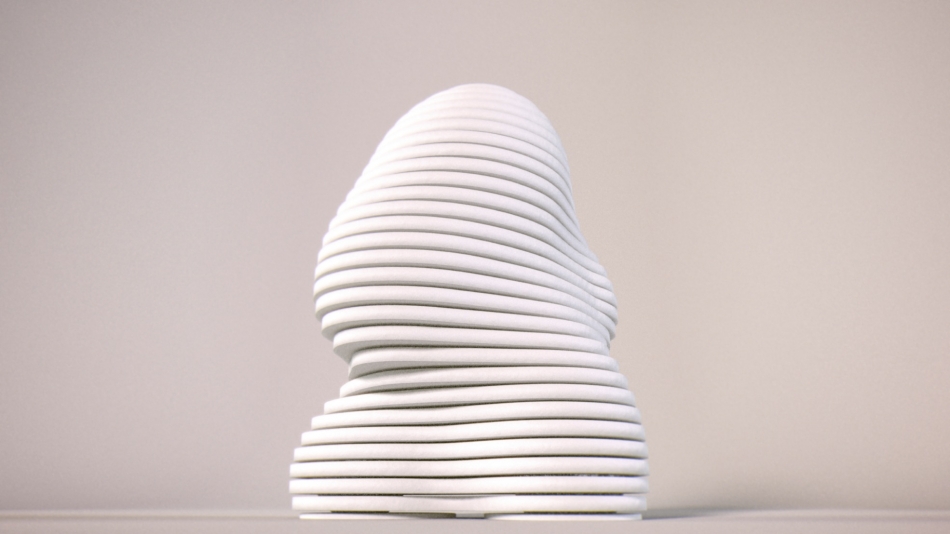 The figure ultimately returns to its original form, poised to begin the transformation anew.
Unlike their contemporary Buckminster Fuller, who worked to build more with less material (recognizing that most matter is finite), Archigram’s fantastical designs assumed a future of limitless resources. Never constructed, their schemes stimulated others to incorporate aspects of their designs into real bricks-and-mortar structures.
Often, hypothetical architecture sparks innovation that catapults significant developments in building materials and technologies. Dream on.
All images from Universal Everything




[…] Walking architecture envisions a built environment based on human motion Matt Pyke of Universal Everything based the animation, entitled Walking Architecture, on the futuristic imaginings of 1960s architectural group Archigram; they envisioned a city as a living organism whose purposely stride is undeterred by its changing … Read more on Green Prophet […]