

I once lived on a kibbutz in Israel for a year. The saddest sound I ever heard was a newborn calf crying for its mother. That’s the hidden soundtrack of the dairy industry — cows separated from their calves within hours, udders swollen, pumped with hormones, antibiotics, and additives like Bovaer to squeeze out more milk. All that pain, all that chemistry, ends up in our coffee cups.
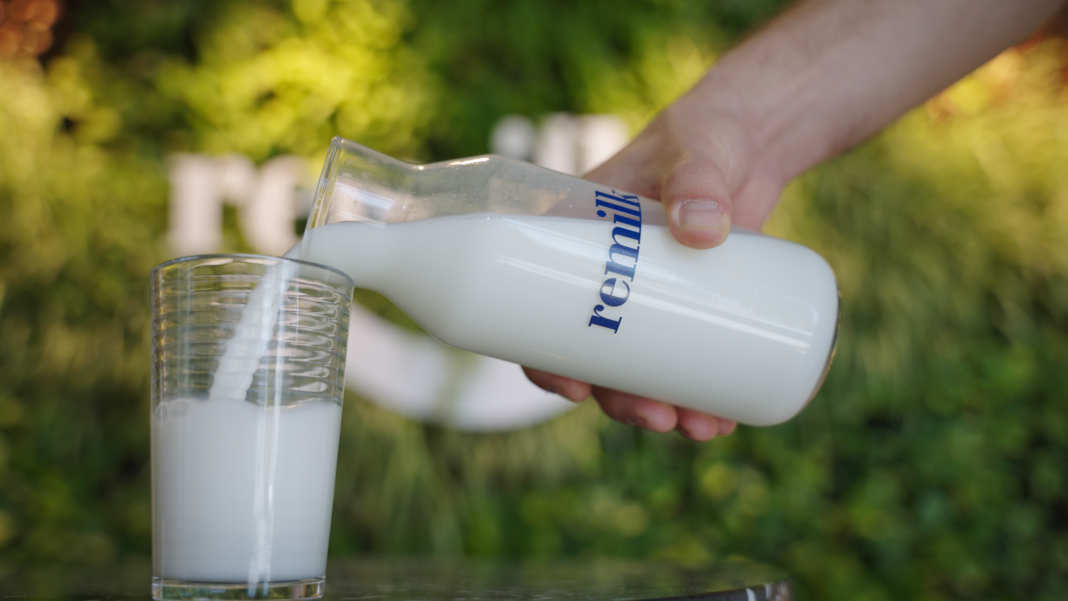
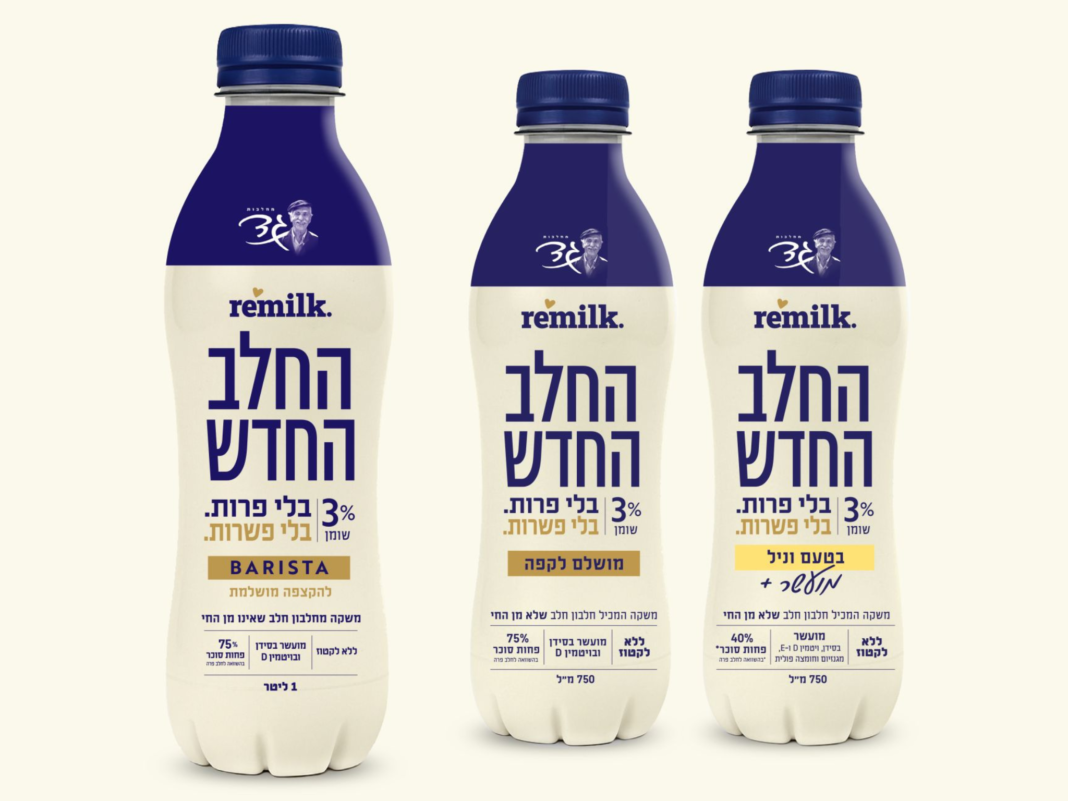
Enter Remilk, an Israeli foodtech pioneer creating real milk without cows. In partnership with Gad Dairies — one of Israel’s best-known dairy brands — Remilk has just launched The New Milk, a lactose-free, cholesterol-free, animal-free milk identical in taste and nutrition to cow’s milk. The product is now pouring into cafés and restaurants across Israel and will hit major supermarket chains in January 2026.
Related: Israel is the first country to approve the sale of lab meat
While we think safe, healthy, regenerative slow food is the best place to aim for, Remilk might be the healthy in-between until we get there.

Remilk’s milk is not plant-based. It’s real dairy protein, created using precision fermentation — the same process used in the biotech world to make insulin or vitamins. Scientists insert the gene for a cow’s milk protein into a microbe, which then “ferments” and produces that protein without the cow. The result: milk that’s biologically identical to dairy, minus the animal, methane, and moral compromise.
Remilk’s CEO Aviv Wolff calls it “a better, healthier, and tastier world through real milk made without cows.” Amir Aharon of Gad Dairies adds that the collaboration is “a defining moment where generations of dairy tradition meet groundbreaking technology.”
Three products are debuting under The New Milk line: a Barista Milk for cafés, and two retail versions — a regular milk and a vanilla-flavored option. They froth, foam, and taste just like the real thing, yet contain 75 percent less sugar. The milk is fortified with calcium and vitamins and, being kosher-pareve, can be served right after meat meals — a quiet revolution for Jewish kosher consumers long frustrated by dairy separation rules.
What Israelis really think about milk
Ahead of the launch, Remilk and Gad commissioned a national survey with Geocartography Knowledge Group. It found that 92 percent of Israelis still drink animal-based milk, but more than half also consume milk alternatives. There are more vegans per capita in Israel than anywhere else in the world. The main barrier for more people going vegan and dairy-free? Taste. Fifty-five percent said current substitutes “aren’t tasty enough,” while 50 percent of kosher-observant respondents said they’d happily drink coffee with milk after a meat meal — if the milk tasted real.
The New Milk may have found the perfect sweet spot: authentic flavor, ethical production, and a format that fits Israel’s dietary laws and café culture.
Beyond dairy guilt
Remilk’s animal-free protein has already been approved by regulators in Israel, the U.S., Canada (Canada gives the green light to cloned milk), and Singapore. Each market confirmed the protein’s safety and molecular identity with traditional milk. The company has raised more than $150 million USD and is scaling production globally.
Precision fermentation still uses energy, and its total carbon footprint depends on where and how it’s produced. Yet Remilk’s life-cycle analysis shows significant reductions in land and water use compared to industrial dairy. If scaled efficiently and powered by renewables, it could help phase out one of the most resource-intensive sectors of modern agriculture.
Read more on Israel’s uneven contributions to the alt meat and airy markets
Israel is the first country to approve the sale of cultured meat
Israel’s uneven impact in the cultivated meat market
Aleph Farms engineers lab-grown steaks from cattle cells
Slaughter free ribeye steak meat grown in a lab
Lab-grown meat telling convenient lies about carbon footprint
Israeli alt dairy startup Imagindairy raises $15M seed
Israel’s Yofix offers dairy and soy-free yoghurt alternative
Vegan protein alternative for dairy industry (Yofix flexitarian plant dairy)