

The mention of palm oil is enough to make a serious environmentalist wince in shame of what this oil harvesting has been doing to local ecosystems. In a bid to make the industry more sustainable the United Nations Food and Agriculture (FAO) director José Graziano da Silva is calling on innovators, including hydroponics specialists, to find new ways to reduce the wasteful industry.
(Read this wonderful interview by Arwa on how to do it using permaculture)
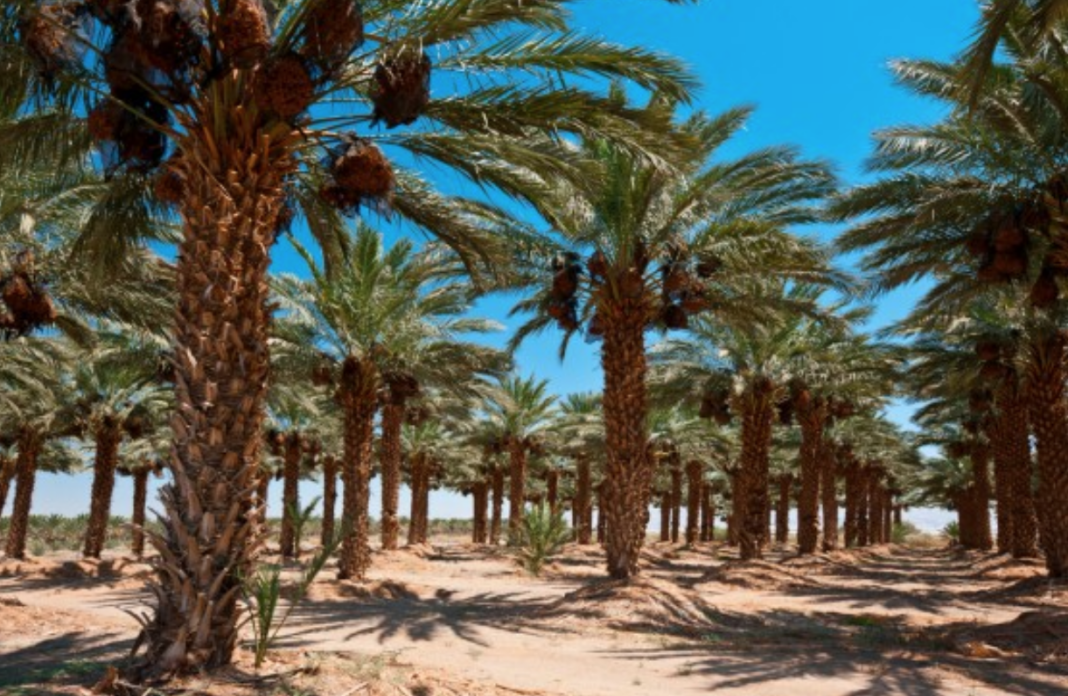
For centuries now date palm groves have been present in the hot deserts of MENA stretching from Morocco in the west to Yemen in the south. Indeed these man-made ecosystems have been vital centres of agricultural productivity in otherwise hostile and arid environments.
It is believed that the first date palms were cultivated in southern Mesopotamia in the 5th millennium BC and oasis agriculture developed on a wider scale during the Bronze Age. Researchers like Mark Bryant wants to re-introduce date palm gardens to the region – this time not just for agricultural purposes but in a bid to increase green and sustainable spaces.
The FAO could appreciate approaches like this. Hydroponics, for instance, would require too much infrastructure to work well and since date palms have hardly any roots it would be difficult to see how this suggestion would work in a cost-effective manner. Drip irrigation and permaculture though do sound like the sound way going forward.
“The impacts of climate change are making water increasingly scarce, provoking droughts that are more severe and prolonged, and also contributing to the outbreak and spread of pests and diseases, such as the Red Palm Weevil,” Graziano da Silva said at the 11th Session of the Khalifa International Award for Date Palm and Agricultural Innovation.
“We urgently need to build resilience and promote the adaptation of agricultural sectors through climate-smart practices that can also preserve natural resources and biodiversity,” he stressed, noting the importance of the date palm, which is deeply rooted in the economies, cultures and diets of the people of the Near East and North Africa region.
He referred to the diverse range of tools and knowledge that science and innovation have made available to produce “more and better with less resources”.
One solution included hydroponic systems that produce high-quality food with no soil and only 10 percent of the water normally used in traditional systems, and the use of drones to help track pests and diseases, as well as the use of nanotechnology for water desalinization.
“The challenge is to seize all the opportunities to apply and develop innovative solutions,” Graziano da Silva said. “For that, we need to put in place innovative policies, investments and partnerships bringing together the public and private sectors, and look to pursuing long-term commitment.”
Last November, FAO organized the first International Symposium on Agricultural Innovation for Family Farmers, where participants recognized the importance of family farmers for agricultural innovation.
Graziano da Silva emphasized the need to strengthen the capacity of farmers to innovate and acknowledged the invaluable role the Khalifa International Award for Date Palm and Agricultural Innovation is playing in the promotion of innovative agricultural practices, especially in water scarce regions.
From “feeding” to “nourishing” people with healthy and nutritious food
There is a need to foster innovation “across the whole food system,” and not just in the agricultural sectors. “We need to reposition our food systems away from simply ‘feeding’ to ‘nourishing’ people with healthy and nutritious food,” Graziano da Silva said. “This change is fundamental to tackle not only hunger but also all forms of malnutrition, particularly obesity.”
Globally, more than 2 billion people are overweight, including 670 million who are obese (accounting for about 13 percent of the world’s adult population).
According to the World Health Organization (WHO), the proportion of obese adults in the Near East and North of Africa is of around 30 percent, reaching almost 40 percent in specific countries.
“The growing rate of obesity is happening at a huge socio-economic cost,” Graziano da Silva stressed. “Obesity is a risk factor for many non-communicable diseases such as stroke, diabetes and some types of cancer,” he added.
Estimates indicate that the global economic impact of obesity is about$2 trillion per year (2.8 percent of the global GDP). “This is equivalent to the global impacts of smoking or armed conflicts globally,” he warned.
The main reason behind the rise of obesity, he noted, is that current food systems have increased the availability and accessibility of highly processed food that is very caloric and energy-dense, high in fat, sugar and salt.
“This is particularly worrisome when countries have an excessive dependency on food imports, as is the case in the Near East and North Africa region,” Graziano da Silva said. He called for food trade regulations that address the imports of unhealthy food, and contribute to avoiding what he defined as the “globalization of obesity”.
The FAO Director-General said the upcoming Expo 2020 in Dubai, will provide a great opportunity for the international community to discuss innovative ideas and partnerships to tackle future challenges, including food insecurity and malnutrition.