
No menu items!
No menu items!

Volta’s battery voted NanoIsrael’s nano product of the year

volta battery israel

A panel of judges at the NanoIsrael 2014 conference voted Volta’s carbon nanotube (CNT) battery as Nano product of the year. Read more for an explanation of what this means and why nanotechnology may soon be a household word.Philosopher Konrad Lorenz once said that scientists are people who know more and more about less and less until they know everything about nothing. The academics and industries collaborating on the Israel National Nanotechnology Initiative (INNI) are certainly pushing the boundaries of knowing everything about nothing, or rather, they are learning much about very small things.

In an interview at the NanoIsrael 2014 conference, Israel’s Chief Scientist, Avi Hasson told the Times of Israel that nanotechnology is on the verge of breaking out into many industries. Indeed, Green Prophet previously explored applications of nanotechnology in solar paint, desalination as well as a rediscovery of some of the ancient nanotechnology secrets of Egyptian blue.

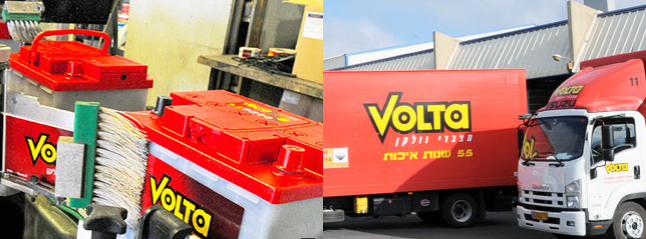
Volta’s carbon nanotube (CNT) car battery was chosen as Nano Product of the Year by judges at the NanoIsrael 2014 conference. Carbon nanotubes prevent breakdown of silicon inside the battery. Carbon nanotubes are also excellent electrical conductors and can improve electrical conductivities characteristics within the battery. These improvements allow it to last three times longer than batteries without such nanotechnology.

The batteries begin with the familiar technology of Lithium Ion batteries, similar to those popular in mobile devices but with silicon anodes instead of the graphite anodes in ordinary lithium batteries. The problem with silicon is that it breaks down when it expands and contracts during multiple charge and discharge cycles. Carbon nanotubes sheath the silicon and prevent it from crumbling. Volta’s breakthroughs have applications in everything from electric cars to mobile phones.

Brian Nitz
Brian Nitzhttp://www.greenprophet.com
Brian remembers when a single tear dredged up a nation's guilt. The tear belonged to an Italian-American actor known as Iron-Eyes Cody, the guilt was displaced from centuries of Native American mistreatment and redirected into a new environmental awareness. A 10-year-old Brian wondered, 'What are they... No, what are we doing to this country?' From a family of engineers, farmers and tinkerers Brian's father was a physics teacher. He remembers the day his father drove up to watch a coal power plant's new scrubbers turn smoke from dirty grey-back to steamy white. Surely technology would solve every problem. But then he noticed that breathing was difficult when the wind blew a certain way. While sailing, he often saw a yellow-brown line on the horizon. The stars were beginning to disappear. Gas mileage peaked when Reagan was still president. Solar panels installed in the 1970s were torn from roofs as they were no longer cost-effective to maintain. Racism, public policy and low oil prices transformed suburban life and cities began to sprawl out and absorb farmland. Brian only began to understand the root causes of "doughnut cities" when he moved to Ireland in 2001 and watched history repeat itself. Brian doesn't think environmentalism is 'rocket science', but understanding how to apply it within a society requires wisdom and education. In his travels through Europe, North America, Asia and the Middle East, Brian has learned that great ideas come from everywhere and that sharing mistakes is just as important as sharing ideas.

Read More

TRENDING

Prologium files for IPO as solid-state battery race heats up beyond Tesla

The challenge has always been scaling production: Laboratory success does not automatically translate into mass manufacturing. Materials that perform well in testing often behave differently when produced in millions of cells. This has been one of the biggest obstacles facing the entire industry.

New Ferrari Luce EV Interior – Can the New Electric Ferrari Bring Back Handmade Luxury?

Now Ferrari has unveiled a new class of EV and luxury car, the Ferrari Luce, and it's not meant to replace existing combustion engine cars in the line. But rather create a new class for collectors. At about $650,000 USD this isn't an every day family car, although your family could fit inside its roomy interior.

Ferrari’s new electric Luce could change luxury EVs forever

Ferrari has finally done what many fans thought it never would: build a fully electric car. The new Ferrari Luce is not a quiet compromise or a small city EV. It is a massive, futuristic, high-performance machine with more than 1,000 horsepower, a price tag around $640,000, and styling that has already divided the internet.

Appalachian lithium could supply America with EV batteries for 300 years

A vast and largely untapped lithium reserve may be hiding beneath one of North America’s oldest landscapes, the Appalachian Mountains, offering a surprising twist in the global race for clean energy materials. According to new findings from the U.S. Geological Survey (USGS), as much as 2.5 million tons of lithium could be buried across the region, stretching from the Carolinas up through New England.

Korean researchers create battery from greenhouse gases

Professor Ji-Soo Jang, in collaboration with Professor Taekwang Yoon of Ajou University and Professor Hansel Kim of Chungbuk National University, has developed a novel energy device that generates electricity during the process of capturing greenhouse gases.

Locals From Rishon Fight IKEA

Big Box stores are a pretty new concept in Israel, and thank God that not every Israeli city wants them in their backyard. A word from someone who has see the beautiful farmland around her hometown Newmarket, Ontario stripped and converted into vulgar strip malls of big box shops: they have no place in a healthy and sustainable town or city.

The Jewish National Fund Meets An Inconvenient Truth

According to the JNF, it has transformed thousands of acres of barren land into green forests in Israel. They state that each person emits about 23 tons of carbon per year, estimating that each tree planted can absorb one ton of carbon in its lifetime. That's a whole lot of trees you'd need to be planting. Could so many fit in Israel?

How to quiet noise from construction in your office

Streets need to be resurfaced in New York but the humming and grinding noise is unsettling. Noise is environmental pollution. 

EarthX and a blueprint for sustainable investing

Trammell S. Crow, a Dallas-based businessman and father of four, is focusing his efforts on impact investing, and media that focuses on saving the planet through EarthX.

Mining Afghanistan’s Mineral Discoveries Similar to Avatar

Now that American forces in Afghanistan are commemorating the longest period of any war that America has been involved in, including the 1965-73 Vietnam War, the recent discoveries of large and extremely valuable mineral and metal deposits may finally bring to light a reason to continue the presence of US fighting forces in this war torn and backward country.

From Pilot Plant to Global Stage: How Aduro Clean Technologies’ 2026 Expansion Signals a Turning Point for Chemical Recycling Investors Like Yazan Al Homsi

The company's Next Generation Process (NGP) Pilot Plant in London, Ontario, has officially moved into initial operating campaigns, generating the kind of structured, repeatable data that separates laboratory promise from commercial viability.

Nobul’s Regan McGee on Shareholder Value: “Complacency Is the Silent Killer” 

Why the governance framework designed to protect shareholders so...

Should You Invest in the Private Market?

startustartup Unlike public stock exchanges, which offer daily trading, strict...

Popular Categories