

Jordan’s Tiny Renewable Sector Receives a Fast $300 Million Boost

cleantech, jordan, solar energy, wind energy, renewable energy, Gulf Cooperation Council, GCC, Hashemite Kingdom of JordanWhen 97 percent of a nation’s energy is imported, every renewable energy gift counts. Jordan received a $300 million grant from the Gulf Cooperation Council (GCC), which Minister of Energy and Transportation Alaa Batayneh says will be used to develop a host of solar and wind energy projects in southern Jordan, The Jordan Times reports.

Although the Hashemite Kingdom has also resorted to exploring oil shale in order to bolster its near non-existent energy sector, last year’s passage of the Renewable Energy Law and a World Bank loan will start the long process of ensuring that by 2020, 10% of the kingdom’s energy will be produced in-house, and that it will be clean.

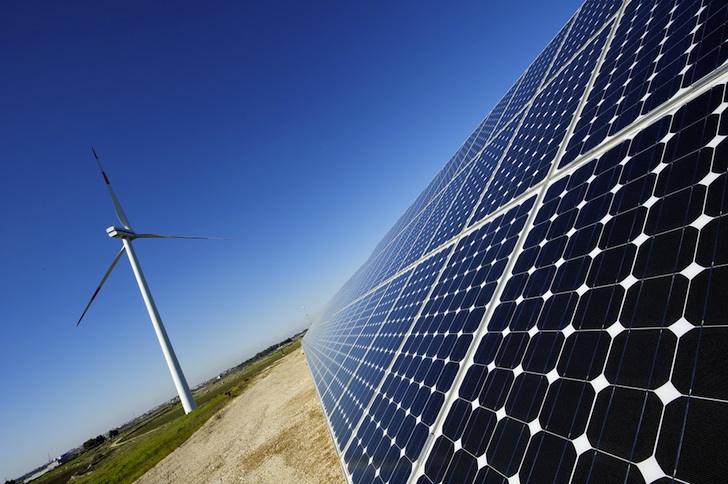
The new GCC grant will be used to produce wind and solar plants that will have  a total capacity of 125 megawatts of renewable energy, the paper reports.

A 50-75 megawatt solar plant and a 75-100 megawatt wind plant will be built in the Maan and Aqaba governorates and that is just the beginning.

The GCC states decided last year to give Jordan a total of $5 billion over the next five years. Saudi Arabia, the United Arab Emirates, Kuwait and Qatar will each contribute $1.25 billion to the aid package.

While Jordan has set an ambitious goal to build wind and solar plants with a combined generation capacity of 1200 megawatts by the end of the decade, it is first necessary to finalize pricing details – an issue that has thus far caused significant delays.

“After years of failing to look ahead, we don’t want to lose any more time,” Batayneh told the paper.

“We want to finalise these agreements and boost investment in the sector.”

:: Jordan Times

Image of wind and solar energy, Shutterstock

Tafline Laylin
Tafline Laylinhttp://www.greenprophet.com
As a tour leader who led “eco-friendly” camping trips throughout North America, Tafline soon realized that she was instead leaving behind a trail of gas fumes, plastic bottles and Pringles. In fact, wherever she traveled – whether it was Viet Nam or South Africa or England – it became clear how inefficiently the mandate to re-think our consumer culture is reaching the general public. Born in Iran, raised in South Africa and the United States, she currently splits her time between Africa and the Middle East. Tafline can be reached at tafline (at) greenprophet (dot) com.

TRENDING

Japan wants to build a solar panel ring around the moon

Unlike solar power on Earth, which is limited by night cycles, weather, and seasons, the Moon offers something close to uninterrupted exposure to the Sun. By placing solar infrastructure in orbit or along the lunar surface, engineers could generate continuous clean energy at a scale that may exceed global electricity demand,  the Japanese scientists say.

Korean researchers create battery from greenhouse gases

Professor Ji-Soo Jang, in collaboration with Professor Taekwang Yoon of Ajou University and Professor Hansel Kim of Chungbuk National University, has developed a novel energy device that generates electricity during the process of capturing greenhouse gases.

SunZia comes online and America’s 11B, and largest renewable project begins wind power

The impact is already being felt. California has broken its wind generation record multiple times in recent weeks as SunZia begins feeding electricity into the grid. It’s a glimpse of what a renewable-powered future could look like when large-scale infrastructure finally comes online. Can we start saying goodbye to Saudi Aramco and Arabian Gulf oil? 

Renewables hit 5,149 GW in 2025 as the world edges away from oil shocks and fossil-fueled conflict

“In the midst of uncertain time, renewable energy remains consistent and steadfast in its expansion,” said Francesco La Camera, IRENA’s Director-General. “A more decentralised energy system, with a growing share of renewables and more market players, is structurally more resilient.”

Should You Invest in the Private Market?

startustartup Unlike public stock exchanges, which offer daily trading, strict...

Nobul’s Regan McGee on Shareholder Value: “Complacency Is the Silent Killer” 

Why the governance framework designed to protect shareholders so...

Should You Invest in the Private Market?

startustartup Unlike public stock exchanges, which offer daily trading, strict...

How to build a 100-year-company

Kongō Gumi is a Japanese construction company, purportedly founded in 578 A.D., making it the world's oldest documented company. What can we learn about building sustainable businesses from them?

From Pilot Plant to Global Stage: How Aduro Clean Technologies’ 2026 Expansion Signals a Turning Point for Chemical Recycling Investors Like Yazan Al Homsi

The company's Next Generation Process (NGP) Pilot Plant in London, Ontario, has officially moved into initial operating campaigns, generating the kind of structured, repeatable data that separates laboratory promise from commercial viability.

How AI Helps SaaS Companies Reduce Repetitive Customer Support Work

SaaS products are designed for large numbers of users with different levels of experience, and also in renewable energy.

Pulling Water from the Air

Faced with water shortage in Amman, Laurie digs up...

Turning Your Energy Consultancy into an LLC: 4 Legal Steps for Founders in Texas

If you are starting a renewable energy business in Texas, learn how to start an LLC by the books.

Tracking the Impacts of a Hydroelectric Dam Along the Tigris River

For the next two months, I'll be taking a break from my usual Green Prophet posts to report on a transnational environmental issue: the Ilısu Dam currently under construction in Turkey, and the ways it will transform life along the Tigris River.

Related Articles

Popular Categories