



A “green” Arab renaissance cannot be accomplished without the rise of women in Arab countries. Recently in Jordan, the Google image was of Middle Eastern intellectual, feminist and writer, the late May Ziyade.
Don’t you love peeling the evolutionary onion, seeing who came before to take us where we are today? A century ago, in a pre-digital world, ideas were exchanged as they’d been for millennia: via dialogue and debate, and for educated elite, through writing. Literary circles were de rigueur in North America and Europe. Artists and thinkers gathered in these original “chat rooms”, investigating modern ideas emerging from clashing ideological tectonic plates: culture, politics and rapid industrialism.
“We should free the woman, so that her children won’t grow up to become slaves. And we should remove the veil of illusions from her eyes, so that by looking into them, her husband, brother and son will discover that there is a greater meaning to life.” So wrote May Ziyade, a leading figure in literary circles during the al-nahda, or Arab Renaissance. A hundred years befor the Arab Spring, she demonstrated words can change the world.
 Born in Nazareth in 1886, into a patriarchic Middle East where women were discouraged from public life, Ziyade’s parents pressed their kid into education and experience of wider cultures. She began school in Nazareth, later attending a Lebanese French convent school. Emigrating to Egypt, her father founded “Al Mahroussah” newspaper which published his 16-year-old’s first essays. Nice to have folks in high places, but Ziyade was one unusually smart cookie.
Turn-of-that-century children of wealthy Egyptians and Syrians were often educated in Europe, or locally in foreign missionary schools, absorbing Western culture and new forms of artistic expression. Both genders had the cross-cultural experience, but girls’ education was generally considered as currency for better marriages. Excluded from academia, women held informal study circles in their family homes: say hello to the book club.
At age 17, Ziyade began her own forum, hosting what would become the most famous literary salon in the Arab-speaking world. It lasted through the 1920s and ’30s. She raised eyebrows (and squashed gender inequality) by including both men and women from Cairo’s avant-garde. Having the boys onboard expanded the chat perspective and more quickly disseminated her message, as follow-on writings by men had greater likelihood of being published.
Salons were conduits between marginalized women and the communities they sought to influence. Participants wrote essays expanding on group discussions, and local press offered a ready platform for writings on nationalism and women’s rights. Before radio was widely available, the printed word held full power. A prolific poet and essayist, Ziyade become a leading representative of Arabic mahjar literature. Mahjar evolved in the early 1900s when Syrian Arabs (mostly Maronite Christians) migrated to the Americas in search of political opportunity. They founded literary groups such as NYC’s The Pen League, an artistic organization open to Western ideas yet stongly linked to Eastern heritage. The Arab Renaissance modernized Arabic literature, but it’s subset, mahjar, incited revolution.
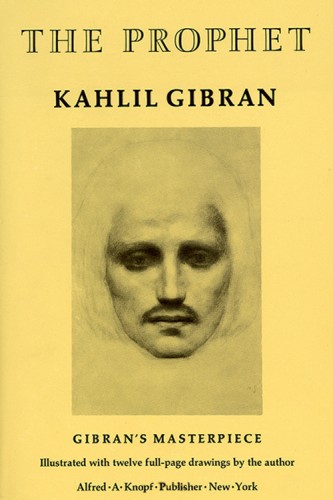
Keen on the topic of Middle Eastern women; Ziyade’s writing addressed ignorance and antiquated traditions. She wrote, “a woman enslaved could not breastfeed her children with her own milk when that milk smelled strongly of servitude.” She corresponded with influential American writers, including Lebanese-American poet Kahlil Gibran (Ziyade introduced Gibran’s work to Egypt). Despite never meeting, the pair corresponded for 19 years until his death in 1931, remarkable to ponder in our age of instant electronic access. Ziyade died in October 1941.
Seventy years on, her life is a blockbuster movie waiting to be filmed.
Her relevance as an activist is obscured by the romanticism of her story. She wrote 15 books of poetry, but her most socially-critical works were published in periodicals, making inventory problematic. In 1982, Syrian author Salma al-Haffar al-Kuzbari published the first “complete” edition of Ziyade’s works. Most writings on Ziyade have been in Arabic. Recent publications in English and French make study more accessible.
Never married and childless, she is a mother to the modern Middle Eastern woman. She presaged the power of regional literature, art, and social networking as powerful enablers of permanent change.
Decades after her death, the UN Arab Human Development Report concluded, “An Arab renaissance cannot be accomplished without the rise of women in Arab countries.”
Saudi women are granted rights to vote, and be elected.
Green Prophet has reported on Yemeni activist Tawakul Karman’s work for women’s rights, which earned her the Nobel Peace Prize. Organizations such as the Kayan Feminist Organization mobilize women to take action to restore their environment, and environmental enterprise Naqa’a spreads Islam’s green message in the fight against climate change. I believe that modern-day salons such as Green Prophet, with its female founder and writers focused on progress in environmental and humanitarian issues, continue May Ziyade’s mission.
Kudos for Google for turning a spotlight on this remarkable woman.


Great article, Other Laurie, fascinating profile of a woman in a time and place that we don’t hear much about in the US.
Would love to see more like this.
What a woman, and what a great story! Thanks so much Laurie.
The Great May Ziyade can be found here http://onefineart.com/en/artists/mayziedeh/index.shtml God bless her soul and Lebanon and Jordan
Will certainly check out Farrukhzad.
First thing I do in any new place is grab a library card and read the locals – hardpressed to find wide offerings in English in Jordan – can you recommend anyone else to check out?
Devoured a few volumes of Mahmoud Darwish – fantastic stuff – but reprimanded by 2 booksellers for not being able to read him in Arabic!
So please do drop some suggested reads – and I’ll hope to grab electronic copies off the internet! Thanks for the comment –
Forough Farrukhzad also wrote some nice poems about nature and such, but not that long ago though. Check her out!