Turkey Bans 74 Pesticides for the EU

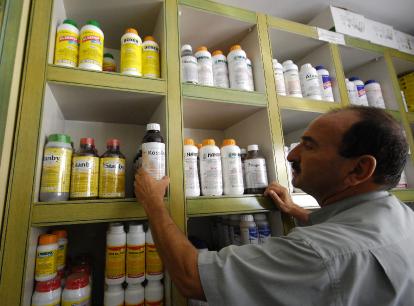
turkey-pesticideAs part of its long bid for European Union membership, Turkey has announced that 74 pesticides are off limits because they are poisonous. The Hurriyet Daily News reports that the EU has a list of 135 illegal chemicals, and Turkey is working on the others.

This is part of several environmental moves afoot in Turkey, from ecological building to a new renewable energy initiative.

Turkish agricultural officials say that the first 74 chemicals are relatively unimportant, and not often used in Turkish agriculture. Another six will get the axe next year. However, the remaining 55 will be harder to eliminate because they are some of the most crucial pesticides to local farmers. 

A board member of the Adana Chamber of Agricultural Engineers told Hurriyet that the European demands may be out of touch:

“Some pesticides are only a health risk when used incorrectly. Some of them are not needed in the EU as the products for which these pesticides are used are not widespread or there are other alternatives. However, Turkey has continued to sell them because it could not develop any alternatives,” he said.

This story shows the extent of European influence on agriculture, which extends even to farmers worldwide who seek to export to the Continent; produce has to meet rigorous standards on pesticide residues, worker conditions, and the size and weight of the fruit or vegetable. In that way, Europe can help raise the standard of agriculture worldwide, and that’s a good thing.

However, where those standards don’t match the reality on the ground – such as a list of pesticides that doesn’t change according to climate and the type of crops grown, it could generate frustration and apathy.

(Photo from Hurriyet)

Daniella Cheslow
Daniella Cheslowhttp://www.greenprophet.com
Daniella Cheslow grew up in a car-dependent suburb in New Jersey, where she noticed strip malls and Wal-Marts slowly replacing farmland. Her introduction to nature came through hiking trips in Israel. As a counselor for a freshman backpacking program at Northwestern University, Daniella noticed that Americans outdoors seemed to need to arm themselves with performance clothing, specialized water bottles and sophisticated camping silverware. This made her think about how to interact with and enjoy nature simply. This year, Daniella is getting a Master’s in Geography from Ben Gurion University of the Negev. She also freelance writes, photographs and podcasts. In her free time, she takes day trips in the desert, drops off compost and cooks local foods like stuffed zucchini, kubbeh and majadara. Daniella gets her peak oil anxiety from James Howard Kunstler and her organic food dreams from Michael Pollan. Read more at her blog, TheTruthHerzl.com. Daniella can be reached at daniella (at) greenprophet (dot) com.
2 COMMENTS
  1. Much of Turkey’s agriculture remains relatively ‘traditional’ (as opposed to chemical-dependent intensive farming).

    As such, it can be converted to certified organic production relatively easily – the best way to say goodbye to polluting (and unecessary) pesticides – thus safeguarding both the environment and rural livelihoods.

Comments are closed.

TRENDING

Monitoring farmers’ tillage patterns from space

Tillage is one of the clearest signals of how a farm treats its soil. Intensive plowing can degrade structure, release carbon, and increase erosion. Conservation practices—no-till, cover cropping, minimal disturbance—do the opposite. They build soil, retain water, and support biodiversity. But until now, measuring these practices at scale has been slow, expensive, and often self-reported.

Saving Gourmet Wild Plants For The Future

Think of truffles, a gourmet wild food. The European...

Jujube, the sidr tree of medicine and magic

A magic holy sidr bath to deflect the evil eye? It needs 7 powdered sidr leaves stirred into a bucket of warm water. The hadith of the Prophet Muhammad allows to repeat healing prayers and verses from the Koran to increase the water’s potency. 5 grams, or 1 tablespoon of sidr powder equals 7 leaves.

Farm To Table Israel Connects People To The Land

Farm To Table Israel is transforming the traditional dining experience into a hands-on journey.

Can biochar reduce ‘Forever Chemicals’ in food if it’s used in farms?

Biochar is produced by heating organic material in a low-oxygen environment so it does not burn. This process, known as pyrolysis, transforms plant matter into a stable, carbon-rich material.

Nobul’s Regan McGee on Shareholder Value: “Complacency Is the Silent Killer” 

Why the governance framework designed to protect shareholders so...

Should You Invest in the Private Market?

startustartup Unlike public stock exchanges, which offer daily trading, strict...

How to build a 100-year-company

Kongō Gumi is a Japanese construction company, purportedly founded in 578 A.D., making it the world's oldest documented company. What can we learn about building sustainable businesses from them?

From Pilot Plant to Global Stage: How Aduro Clean Technologies’ 2026 Expansion Signals a Turning Point for Chemical Recycling Investors Like Yazan Al Homsi

The company's Next Generation Process (NGP) Pilot Plant in London, Ontario, has officially moved into initial operating campaigns, generating the kind of structured, repeatable data that separates laboratory promise from commercial viability.

How AI Helps SaaS Companies Reduce Repetitive Customer Support Work

SaaS products are designed for large numbers of users with different levels of experience, and also in renewable energy.

Pulling Water from the Air

Faced with water shortage in Amman, Laurie digs up...

Turning Your Energy Consultancy into an LLC: 4 Legal Steps for Founders in Texas

If you are starting a renewable energy business in Texas, learn how to start an LLC by the books.

Tracking the Impacts of a Hydroelectric Dam Along the Tigris River

For the next two months, I'll be taking a break from my usual Green Prophet posts to report on a transnational environmental issue: the Ilısu Dam currently under construction in Turkey, and the ways it will transform life along the Tigris River.

Related Articles

Popular Categories