Home Blog Page 763

Review of ‘The Lost & Left Behind’ by Terry Glavin

0

lostleftbehind.jpg

“We are not gaining knowledge with every generation. We are losing it. A dark and gathering sameness is upon the world.”

– Terry Glavin – ‘The Lost & Left Behind: stories from the age of extinction’ 2007


This is one of those very few books that sit right in the hand – a few pages in, and the strength of the writing coupled with the clear message of the book, grip a reader, and the synergy of the authors words coursing through the reader has begun. In this case, Glavin, a Canadian journalist, blogger, author and professor of creative writing, has hit on the most urgent topic – extinctions: of species, habitats, languages, tribes, beliefs, stories …. that really should fire up our bellies and get us all responding.

The author has travelled the world, consulted scientists and talked to locals, read up on histories and teased out statistics, and herein presents a grim analysis of the situation. Each chapter structure is broken down into species headings: a tiger, a bird, a fish etc, but then within each chapter, a world around that species is contained and examined, and chiefly, how the human world has historically interacted with that species, and whether our actions have directly or indirectly caused that species to reduce in numbers, or like the famous dodo, simply disappear.

Israeli Scientists to “Freeze” Global Warming

2

freeze-global-warming-green-prophet.jpg

“At a time when steadily increasing atmospheric CO2 concentrations, coupled with the acidification of the ocean’s waters, precipitate the ongoing process of global warming, the importance of following long-term changes and trends in aquatic photosynthesis increases dramatically,” say Dr. Ilana Berman-Frank and Prof. Zvy Dubinsky, of Bar-Ilan University.

This is important since about 50% of global photosynthesis takes place in the oceans, which therefore are the major sink for atmospheric CO2, mitigating its mankind-driven increase.

Later this month, the Bar-Ilan team and colleagues from around the world will gather at a workshop at the Inter University Institute for Marine Sciences, on the shores of the Red Sea in Eilat, in order to monitor these trends – an important process they began thirty years ago.

Go Green Quickly to Avert Energy Crises, Say US-Israeli Economists

picture21.gifAnalysts from Tel Aviv University and San Francisco offer sound solutions for looming energy crises:

With electricity rates soaring as much as 150% since 2001, and predictions of severe and regular blackouts in states such as Washington and Virginia, there’s a clear need for new thinking about electricity.

A recipe for preventing a dark future comes by way of an Israeli and American team, who suggest effective and environmentally friendly ways to generate “healthy electricity” markets in the United States.

Israeli Green Funds Turn Red

shipping freight at sea from above
Greener shipping, cleaner fuel, less energy intensive. These are all calling for Impact Funds. 

It may pay to invest green, but Israeli green funds are momentarily in the red, reports the Israeli business newspaper, The Marker.

Israeli green mutual funds trading on the Tel Aviv Stock Exchange (TASE) invest primarily in foreign companies. The growth of the shekel, the nosedive of the dollar, plus a decline in the cost of oil have contributed to the crashing of green company stocks.

Altshuler Green Fund, the first green fund on the Israeli scene (founded in 2005) reached a high of NIS 550 million and now manages NIS 390 million in assets. Late last year the company launched the Green Extreme to fund cleantech companies who have not yet proven their feasibility.

Despite the recent weak performance of its green shares, Altshuler reports that many green companies are growing by about 30 percent a year.

Two other Israeli funds to look out for are Apex Green Energy (of Apex Mutual Funds), launched October 2007; and the cleantech division at IBI Investment House.

Says Elad Kook who heads the cleantech division at IBI, “figure we are at the beginning of an awakening to the global warming problem, and are just starting to understand the technologies of the companies in the green energy sector.”

For those with a green investment thumb, he recommends wind energy equipment manufacturers, such as Gamesa and Vestas, and energy demand management companies, such as Comverge, and Camco, which trades in carbon-dioxide emissions quotas.

But don’t stop here, read a Green Prophet interview on Israel green investments

A Green Shekel, Ethical Financial Investment in Israel.

Bjorn Lomborg Lectures Israel on Enviro-Funding

Israel’s Water at the Mercy of Heaven?

0

dry earth - green prophet.jpg

It seems that we’ve been too spend-thrifty with our water and it’s all running out. By the end of this year, if we do not do something drastic the water levels will become so low that our natural water sources will become polluted.

What is our government doing towards a solution? “By the end of the summer, [the water level may be so low that] we may not be able to pump water out of Lake Kinneret at all,” Water Authority spokesman Uri Shor told The Jerusalem Post that until the next desalination plant begins working, “we are at the mercy of the heavens.” This desalination plant is only due to be completed by the end of 2009.

Tread Lightly: An Update

0

footprints.jpgBack in January I wrote about the ‘Tread Lightly’ environmental project run by the Guardian Newspaper in the UK, (you can read the previous post here) and promised an update, so 3 months later, I’ve reviewed my pledges and progress, and that of the entire community who signed up – to date, 4209 folk around the globe, doing their bit to cut carbon and reduce their impact on planet earth.

Hey planet, how will spaceship earth remember you?

0

rings on a tree, earth memory

The Earth has a memory. It has records of African flowers blooming in the summer; it remembers cold, desolate Arctic winters since winters began, and the spawning of coral in the Great Barrier Reef one night, every spring.

I remember my first lesson as a child, on how the Earth remembers. The teacher had brought in a slice of wood from an old pine tree. Based on the number, thickness and colour of the rings we could tell how old the tree was when it was felled, if the tree was well watered, and if the summer of any given year was warm or cold.

Later, I learned, it is not only trees that Mother Nature imbues with memories. The Earth keeps mementos locked in time in most any place we look.

On the coast of Israel we can find traces of an anienct tsunami; in Canada we can see how the glaciers thousands of years ago dragged snow and rock across Ontario; in Mexico, we can see where a giant asteroid – the Chicxulub – pounded into the sea – an event that is believed to have caused a nuclear winter.

In recent years, along with the explosive population of humans, the Earth has started to record different memories. Pollen records from lakes, the chemical composition of corals, and the oxygen bubbles trapped in the glaciers reveal startling facts: that the amount of carbon released in the atmosphere every year is climbing steadily.

Carbon is the building block of life. Plants exchange carbon dioxide that our mammalian bodies exhale. Carbon also builds our bones, and it is the same material that makes trees strong.

Today, as more and more people inhabit the planet, the natural balance of carbon locked into the earth, and that which is released, has changed.

The result is Global Warming. We can no longer ignore that our planet is heating up. And unless we change the way we travel, heat our homes and consume our food, humanity, within the next couple of decades, could meet a very uncertain future.

“The world must embrace a carbon-neutral lifestyle,” says Al Gore, who produced a film about global warming, An Inconvenient Truth. “To do otherwise,” he says, “will result in a cataclysmic catastrophe.”

In this movie, Al Gore, presents the facts. We are currently emitting 70 million tons of global warming into the atmosphere every day, which means that we have doubled the amount of carbon dioxide in the atmosphere only in the last fifty years. If the frozen carbon dioxide in Siberia should melt (and with temperatures rising this is not so inconceivable – most of Greenland is melting) we will double the amount again, and ridiculous amounts of methane will be in the atmosphere.

Erin McKean, editor in chief of the New Oxford American Dictionary explained why the word carbon neutral was word of the year for 2006:

“The increasing use of the word carbon neutral reflects not just the greening of our culture, but the greening of our language. When you see first graders trying to make their classrooms carbon neutral, you know the word has become mainstream.”

The two greatest sources of carbon dioxide gases in the world comes from slash and burning of forests for cattle which produce methane gas; and fossil fuels that drive our cars and heat our homes.

With 6.5 billion people on the planet and counting, the future doesn’t look good.

How can we measure our individual impact and decrease our carbon footprint?

Action at the community and government level is clearly not working fast enough. Large corporations and politicians are thinking about profits, returns and gains on investment before thinking about responsible, non-polluting business practices.

It is easier for us to do something about Global Warming if we can understand what our own carbon footprint on the earth is. If public opinion and action changed the size of a growing ozone hole, we can certainly do the same for Global Warming.

To measure your carbon footprint, several organizations have developed a carbon calculator. With it, you can see how much carbon you and your family are adding. The goal is to become carbon neutral – where your carbon load is stabilized and offset by other carbon sequestering means such as through the planting of trees.

Adopting vegetarianism, use of public transportation and your bike, as well as purchasing local products that don’t involve long distance shipping can help; as well as the use of a clothesline to dry your clothes.

And since it is the shorter journeys before your engine is warm that produces the greatest amount of pollutants – jump on your bike for a quick trip to the store instead of using the car.

If you are going to idle for more than 2 minutes, turn your engine off and also make sure your tires are inflated. Avoid accelerating or braking quickly and park in the shade as sun on a hot car also produces smog. If you really want to make a big difference, drive a hybrid car.

Also signing up to invest in alternative and renewable energy such as solar and wind energy will counteract some of our negative habits. The sun, like a huge lightbulb, is only eight minutes away, and what is stopping us from having a solar powered planet?

Planting trees is also an important step forward, as they take in the carbon dioxide that pollutes our planet. At present the world’s forests are too quickly being destroyed.

Forest Fires are on the increase with lightning meeting rising climate temperatures and people are too readily using trees for living purposes. Last year in the USA, 57 million trees were used to make catalogues (that then pollute the street where you are living..)and it is estimated that 30 million dollars can be saved every year on greenhouse pollution by using recycled paper.

We can’t forget that the Earth has a memory. We have to wake up collectively and take responsibility for our actions if we want to minimize our carbon footprints on the Earth.

That way, the Earth and our future generations will be able to experience African flowers blooming in the summer; the cold, desolate Arctic winters since winters began, and the spawning of coral in the Great Barrier Reef one night, every spring.

Eco-Mum Says Toss Those Nappies With Elimination Communication (EC)

1

greenprophet-baby-environmental-ecology-health-israel.jpg

Well we have looked at the cloth nappy issue: now for the ultimate in eco-friendly baby practices – let’s go nappy free. No rubbish and no washing! You can’t get greener than that.

So how does it work?

Well it’s as simple as it sounds, your baby is nappy free. Elimination Communication (EC) is the practice of reading your baby’s expressions to understand when they need to do peepee or kaki and being able to respond to them. EC mums say that it strengthens their relationship with their baby.

Eco Purim

2

purim - green prophet.jpg

With the holiday of Purim drawing near it’s a great opportunity to rethink bad holiday habits. Here’s a few things to mull over:

  • Think reusable with the Mishloach Manot. Baskets look nice, but they usually go straight to the garbage.
  • Save those bottles, some places even give you money for them… (usually supermarkets)
  • Do you need to buy a costume? Be creative, see what you can find around the house.
  • Think eco when filling those baskets!

Make Bugs, Not Pesticides

1

Most people know that organic produce is good and that pesticides are bad. Not only do pesticides have negative effects on human health, having been linked to neurological problems, various cancers, Parkinson’s disease, kidney damage, and reproductive disorders, to name a few, but pesticides have negative effects on the environment as well.

The toxic pesticides used to keep insects off our produce end up poisoning the ground, air, water and food supplies.

The problem is worsened by the fact that many insects develop resistance towards chemical pesticides after a while, which causes a constant need for chemicals to be sprayed more often and for stronger chemicals to be used.

Making Light of Trash

1
Harold Kloosterman curbside shopping
Harold Kloosterman

We all know the saying: one’s mans trash is another man’s treasure. Embarrassing as it was in my younger years, my father was a collector and seller of other people’s trash and today makes a living from it. He calls it curbside shopping. It might be in the genes, because I too have a penchant for finding discarded treasures and good homes for my unwanted things. He also taught me how to make a chicken coop and raise chickens.

Besides all that good recyclable stuff like clothing and furniture, there is a whole spectrum of trash that one needs to account when focused on living an environmentally-friendly lifestyle.

Why is trash something important to reduce?

There are a number of reasons: costly and polluting packaging usually serves no purpose other than carrying your items from the store to the trunk of your car. Petrol costs for transporting excess waste adds up as does the world’s precious resources. Not to mention that some trash contains dangerous chemicals that eventually gets recycled in our ecosystem.

Taking a look inside your garbage, what’s there? If you live in a European or North American town, hopefully you will have a nearby glass, tin, plastic bottle, newspaper and cardboard recycling facility nearby.

In some countries, such facilities don’t yet exist, so making use of packaging in creative ways can help reduce landfill. Before you even have to find ways to reduce packaging, try eliminating it from your purchases. One way is to take your own plastic containers to bulk food and grocery stores and ask them to put your sliced cheeses, meats, olives and salads in your own reusable containers.

Plastic Bags and Other Packaging

Try and say no to the endless stream of plastic bags salespeople are trying to give to you. The average person uses 167 plastic bags a year and likely more than 99% of them end up in landfill where they will take centuries to break down, choking wildlife and polluting our surroundings along the way. The plastic bag is becoming such a hot topic in some countries such as Australia and Ireland – and recently even Israel.

“Every time we use a new plastic bag they go and get more petroleum from the Middle East and bring it over in tankers,” said Stephanie Barger, executive director of Earth Resource Foundation in California in a newspaper story. “We are extracting and destroying the Earth to use a plastic bag for 10 minutes.”

Speaking of plastic, today many environmentalists agree that people shouldn’t support the bottled water industry. Some cities in the US are even banning sale of bottled water in public buildings, like San Francisco Mayor Gavin Newsom. Instead, buy a Brita or a filter system for your water tap if you are worried about health issues and your local water supply.

An Organic Matter

Uncooked organic matter such as eggshells, vegetable peelings, and teabags should never be thrown in the trash. Either set up a composting bin (often available through your municipality) or suggest that a few buildings on your block develop one together in less trafficked areas of land. Just by keeping organic non-meat and non-dairy products out of the trash can reduce the weight of your garbage by about 50%.

It is possible to make a compost for meat and dairy, but this is more complicated because specific kinds of insect feeders should be introduced to keep nasty bacteria away. In such composts, women’s sanitary napkins and tampons can be also be broken down.

Bags of Leaves

Do you throw out bags of leaves, twigs and organic matter that land on your walkway and lawn? Truth is, it is not green to wrap this material and then ship it off to landfill. Organic matter that stems from the source it originated is important to keep in its place so that the cycle of life spinning in your back yard can keep its wheels turning. It will provide next year’s nutrients to your plants.

Unwanted Mail

Sometimes there is no way to get around it. But there are tips for reducing unwanted mail: First of all, avoid surveys that promise free goods. Such companies sell your address to promotional companies who will send you ads for stuff you probably don’t need anyway. Don’t give your address to strangers online, on the phone and when filling out contest entries in grocery stores. When in doubt use your email address (it’s much more environmentally friendly) and leave a note on your mailbox that unauthorized mail is not welcome.

Clothes

Old clothing, sheets and curtains should never be tossed in the trash. Based on my personal experience, there is always someone out there who will find your old and much loved T-shirt to be one of their greatest finds. In the most direct way, find a local Goodwill, Salvation Army or depot where you can drop off all your old clothes. Those items that are stained, can be kept for rags or stuffed into an old pillowcase and used for your pet’s mattress. Also, try to buy items that are of quality so that they last longer.

Furniture and knick-knacks

The old bowling ball. The organ. Your grandmother’s 50s style kitchen set. The electric fireplace that you inherited from your father’s golf buddy. While the easiest and obvious choice might be to toss everything into a big black bag and forget about it by throwing it to the curb, know that there are other ways of keeping your old trash alive.

Garage sales are one way. And if you notice that there are people collecting trash on a regular basis in your neighbourhood then try and get one of their numbers for pickup. Like my father, he is more than happy to stop buy and pick up a load of good junk, an old barbecue and even unwanted computers when someone calls.

If you have found no other outlet and must throw what you can’t compost and recycle to the trash, don’t do it on a rainy or snowy day. You never know who is looking for what treasures you no longer want.

The Green Vote

1

green jerusalem - green prophet.jpg

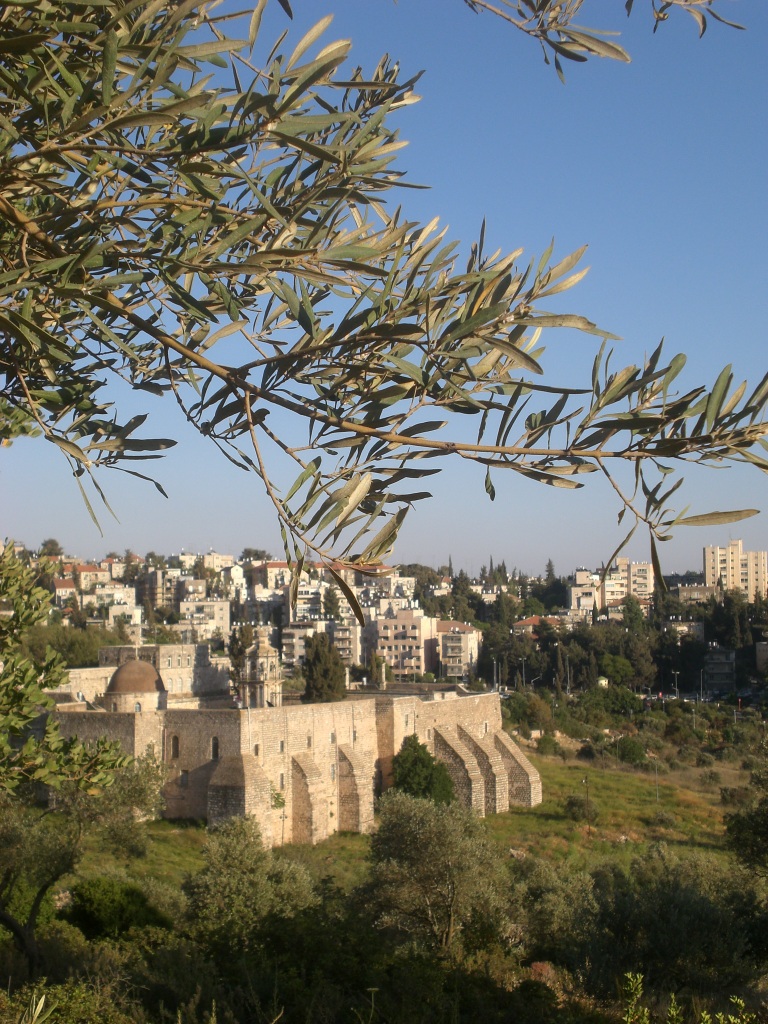
When looking for the next candidate for whatever office we look at whether the candidate is good for us. What are his/her ideal? Is s/he a good manager? Does s/he understand micro and macro finances? … oh yeah, and is s/he good for the environment?

Environmental organizations launched a campaign yesterday to evaluate candidates according to their environmental record ahead of November’s municipal elections in Israel.

Can This Be Fixed?

0

sneakers-green-prophet.jpg

The other day I was out with a friend and she told me that she had to stop by the shoe store to get knew shoes. I asked her why, and she responded that the backs of her shoes had been squashed and it was uncomfortable. I was able to convince her to check out a shoemaker first…

To make a long story short, for a tenth of the price of a new pair of shoes the shoemaker had a solution that made her sneakers even more comfortable than they had been before the incident.

Ask yourself: “Can this be fixed?” In today’s world, thank god, everything is accessible. If something’s broke, buy a new one right? Well think about it before you do. Often it can cost less and be just as good as new if you get it fixed instead.

The Water Crisis and the Electric Car

kinneret-drying-up.jpg

The public discussion of Israel’s water problems intensified last week, with Israel’s most respected newspaper, Ha’aretz, calling on water authorities to shift to regulating demand for the scarce resource. During the same week, a new study was released which suggested that a shift to electric cars could seriously impact water consumption in countries where this technology is adopted.

The crux of the study’s argument is that, as cars increasingly rely on the national grid for energy (instead of on gasoline), national electricity generation (currently based on non-renewable sources) must increase, which will significantly elevate power plants’ demand for water resources.

How divers can overcome fears and become more green

0
coral reefs, free diving
Climate change is heating our seas so less oxygen can be absorbed. What does this mean for reef health?

How can you set your professional dreams in motion if you have mountains of fear to overcome? For some it may be quitting one’s job to start up the new “green” home business, for others it may be as simple as asking the boss for a raise.

For me, as an environmental journalist dreaming about marine biology and reporting on coral reefs, I didn’t have to overcome my fears, I needed to dive straight into them and walk the walk, or rather, swim the walk – by getting my diver’s certification in order to see my subjects first hand.

Fortunately, I had a loving friend by my side, who reminded me before embarking on my first dive, the words of the Jewish sage, Rabbi Nachman, “The whole world is a very narrow bridge, and the most important thing is not to be afraid!

These are words I would come to know quite well, and take to heart, as I made my first dive.

Underwater, the refraction of light made everything look bigger – especially my fear of drowning. Knees on deep sea-sand, small squares of lead weights holding my body down 18 metres below, in a place where birds never get to fly, I was petrified.

Breathing slowly like my Yoga teacher once taught me was something I was thankful for learning.

Before my first dive off the small island of Koh Tao (Turtle Island) in Thailand, I had tried to prepare myself on the beach – where I compared hypothetical ocean depths to the height of trees, spying through the gap between my forefinger and thumb as a way to estimate how low I would need to go.

Despite the panic swelling up inside of me due to the treacheries of diving we had learned in the classroom, such as decompression sickness, dangerous sea animals, and the possibility of our lungs swelling up like balloons and then bursting, I wanted to be a diver.

As a journalist keen on writing about marine biology and environmental science, I needed that passport to change theory into practice.

How could I speak about the dying coral reefs and polluted marine life if I had never been to any great depths?

But with my head underwater and breathing through the lifeline of my scuba gear, dreams of marine biology were swept away with the current. Once submerged, survival was the only thing I was concerned about.

I clamped my teeth down on the regulator, which supplied a steady flow of oxygen, and reluctantly let the air out of my BCD. My body sank slowly.

As we descended deeper, I watched our spent air rocket to the surface in the shape of silver-coloured mushrooms. The fish, blasé about their natural talent to breath underwater, appeared to be mocking me. One white fish the size of my hand caressed my arm in support.

The dive instructor then prompted our group of six, one at a time, to flood our masks. In order to earn a license, he told us, one must be able to demonstrate a familiarity with water and the ability to perform certain tasks underwater should we get caught on seaweed, run out of air or lose our masks.

As I watched the others remove their masks without hesitation, my breathing became quick and sharp. Water was already threatening to enter my nose; panic swelled inside my chest. I was going to die.

Biologists call it the “fight or flight reaction” of the sympathetic nervous system – my body’s physiology changing abruptly from a perceived threat. What would I do? The flight option sounded most appealing.

The swaying rope we slid down suddenly seemed inviting. I, on the edge of extreme panic, was separated from the world by a wall of time: when diving one must never swim quickly to the surface, or hold one’s breath. To go up would need to be controlled and with caution.

In that case, better to just get a hold of myself on solid ground, I reason, even if the ground is covered in water. Maybe a million years ago, this sand was actually soil in a forest.

In truth, I ached to join the bubbles on the surface where they broke and where my body would have been free to laugh out loud, cough, and breathe though its nose.

There was no way to speak to tell my instructor I needed time. I faced him, pupils dilated, as he waited for me to release the edges of my mask and let the water well up inside.

Switch breathing to your nose, I told my brain. But the panic had set in and my breathing became too fast to control with Yoga exercises. The instructor grabbed my vest and with two hands held me on the ground. Underwater or above, the ground felt solid. The instructor’s hands were on my heart and an overwhelming rush of love for humanity and nature overtook me.

“The whole world is a very narrow bridge, and the most important thing is not to be afraid!” said Nachman in my head, reminding me as a Jew by choice I have joined a community of people who only through miracles by the hand of God and facing their fears have survived for centuries, against the odds.

Needless to say, I lived.

For the second dive, the sea was rough, but a rainbow arched across the sky. Sinking down into the water, I saw that narrow bridge materialize, in the form of a sunbeam penetrating through the blue.

This time, all the tests my instructor asked me to accomplish underwater were done with ease.

“Our dive club used to volunteer to clean up the reefs,” said my instructor nonchalantly, swimming beside me after the dive. “Rising gas prices and the fact that other dive clubs backed out of the project was the reason why our group stopped helping out. There are a few important marine protection groups here on the island you should check out,” he continued.

“And,” he added, “How about a fun dive at 30 meters tomorrow?”

What’s that? A dive for fun? He’s treating me like a diver, I said to myself as I lugged my tank towards the boat, energized. I was now a diver, having faced my fears and found my faith.