Home Blog Page 752

'Animate Earth' by Stephan Harding, a Review

“The crisis is at root one of perception; we no longer see the cosmos as alive, nor do we any longer recognise that we are inseperable from the whole of nature, and from our earth as a living being. But there is hope, for as the crisis deepens, the call of anima mundi intensifies.”

Stephan Harding, ‘Animate Earth

Tucked down a leafy lane in the Devon countryside in the UK is an extraordinary educational Centre – Schumacher College, part of the Dartington Hall Trust. Here they offer an Msc in Holistic Science – a ‘hard’ science degree grounded in the ecological philosophy that is the Gaia Principle, or theory.

This principle (in a nutshell) is that the planet is a vast living interconnected system, not the dead, mechanical object that many 19th and 20th Century philosophers and scientists in the West have based their ideas upon.

Stephan Harding is the co-coordinator of that Msc, resident ecologist, teacher on the short course programme that the college runs (and on which I have been fortunate to experience his formal & informal teaching style), and author of this recent book, ‘Animate Earth’, which is the fruit of his teaching and personal experience.


An ecomom on playing indoor games

2

Okay, so I know it’s hot and going outside is not always the best option. So what can we do with the kids indoors that does not involve TV and video games?

This week I will give you the rundown on indoor games, and believe you me, there is no shortage of ideas. There are card games galore, activity games that might require you to store your breakables for a while, memory games and arts and crafts. There’s even a board game to teach your kids about recycling!

Organic coffee in Tel Aviv

13

loveat organic coffee tel avivTel Aviv, for those who haven’t had the pleasure of visiting the city, is a city of coffee drinkers and cafes. (Some would say bums and people who don’t work in the middle of the day… but we say coffee drinkers and cafes.) It is not unusual to step out in the middle of a work day and spot people happily sitting out on sidewalk cafes drinking some form of coffee drink.

So it’s not a surprise that after organic hummus, organic falafel and even a vegan burger bar hit Tel Aviv… organic coffee would follow suit.

loveat coffee caraffe

Loveat cafe in the southern part of Tel Aviv (that just opened another branch on Nachalat Binyamin Street), offers only organic, shade-grown coffee which means that the coffee is both delicious and deliciously better for the environment.

Since LoveEat opened years ago, there are even more organic chains like Cafelix — another coffee shop with a hard to pronounce name. And Cafe Ada Hanina in Jaffa. Probably the best choice in Israel for great coffee and amazing vibes. See barrista below.

Ada Hanina cafe Jaffa

Ada says: “We love preparing good fresh coffee for you, every day, practicing direct fare trade, farm 2cup, and then back 2farm!”

Why is organic, shade-grown coffee important? Well, since coffee is one of the most widely consumed products in the world (and dangerously close to global consumption of fossil fuels), anything you can do to make your coffee consumption greener will have a big impact.

Regenerative farming and coffee

Organic coffee farming and regenerative agroculture is important because it doesn’t use pesticides and therefore avoids polluting soil and waterways. Shade-grown coffee is important because although it takes longer for the beans to ripen, no trees and natural habitats need to be cleared in order to grow the coffee.

Traditionally, coffee has been grown under the shade of trees but in order to keep up with modern demand farmers have begun to clear forests so that coffee beans can ripen faster under direct sunlight.

So coffee that is organic + shade grown = winning combination. Stir it up with some organic raw sugar and organic milk in a reusable cup, and that’s even better.

For more information about food, farming:

Israel’s Organic Eggs: On the Political Edge?

Why Doesn’t Tel Aviv’s Carmel Market Compost (or Recycle)?

Pack Your Lunch

0

Most aluminum foil is thrown out after on use. It’s a shame since it can be reused again and again without losing quality. Other alternatives are to use waxed paper, which can then be composted. Or tupperware, which is ideal or reusing.

Inbal Dayagi Designs a Boom Box With Eco Soul

Inbar Dayagi, boom box ipod alternative
Boombox by Inbal Dayagi

For whatever reason, the Ipod and its classic white earphones have become a symbol of music and street cool. People use them on the street, on the bus, on the train, in a plane… they’re everywhere.

But Ipods just aren’t Israeli designer Inbal Dayagi‘s style. Nope. She’s too funky and too green for that.

Guided by the principal of keeping things clean, smart, and simple, Inbal has created a sustainable music player on wheels that recharges itself as it grooves along. In other words, its a cooler, more portable, funkier version of the wind-up radio.

Simply named the “Boom Box“, the design of this music player is based on the ever-popular hula hoop toy and it’s sure to get some looks on the street. With its clever green functionality and super cool design, how could it not?

So take that, Ipod!

To read more about sustainable design, check out:

Bamboo Redux: Israeli Designers (And Daniel Fintzi) Do It. Why Don’t You? and Can Eco-Playful Sabras Do Bamboo?

Hiria: Tel Aviv’s Garbage Dump Turned Eco Park

4

Hiria garbage dump Tel Aviv

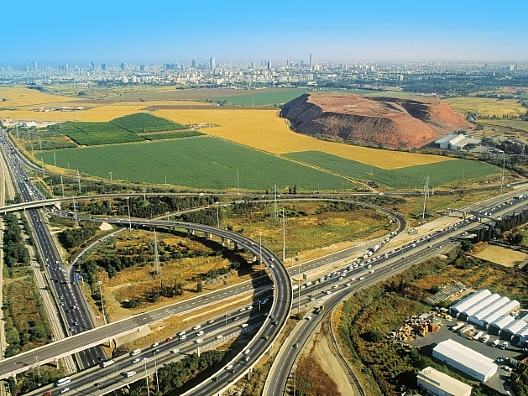
At 70 hectares big, the Hiria garbage dump is pretty hard to miss.It’s literally a mountain of garbage. 

Located off of the road connecting Tel Aviv and Jerusalem, Hiria is a cautionary tale of consumerism, excess waste, and what happens when you don’t reduce, reuse and recycle. YOu will see it on the way to Tel Aviv from the airport.

An ecological disaster since 1952 when it first became a dumping ground for the trash of the greater Tel Aviv region, Hiria is now being rejuvenated into a symbol of renewal and transformed into part of a greater park project.

The rehabilitation of the park includes the creation of a multi functional landscape to be available to the public, and the simultaneous reversal of existing ecological damage.

Environmentally pro-active activities taking place near the former garbage dump include a recycling park (which is used as an educational tool for both local and international professionals) and clean energy (the methane gas resulting from the decomposition of the garbage at Hiria is converted into energy). 

A visitor’s center, which was design by eco-friendly designer Brigitte Cartier has also being created in order to educate children and school groups about the damages of garbage and, in that way, nip future environmental damage in the bud.

Activities at the visitor’s center will include educational programs that provide information about Hiria’s past, a resource center about the park’s current development, guided tours, and the option to host public or private events.

Certain recreational activities are already available in the park, such as bike and hiking trails. Have no fear, though – the park managers promise that all nasty garbage odors have been eliminated.

During the month of July, special family-oriented and eco-art activities are available:

Family Tours and Reuse Workshops 

Re-Use Art Workshops with Brigitte Cartier 

In the future, though, let’s try to avoid another Hiria-esque situation. See more Green Prophet advice about avoiding garbage at Mulch, rot, and reinvigorate: Composting and Yoav Kotik Giveaway and Cool Reuse Ideas.

The Power of the Market

0

Are there green products missing in your local greenshop? Write to the manager! If you can get enough people to inquire your local greenshop manager will get the message. It’s about the little changes that will change our world. One step at a time…

Find more about a greenmarket near you.

Eco Tourism Companies in Iran

7

vultures pick on bones at the Tower of Silence in Iran
Vultures pick on bones at the Tower of Silence in Iran. An interesting eco tourism destination that can you can see with Iran eco tour companies li

As part of our ongoing virtual eco-tour of the Middle East, this week’s journey is to Iran. Iran is a little further off than Jordan and Lebanon, but it is also an intriguing spot. And thanks to some information provided by Mohammad Memarian as a response to a Green Prophet post on MidEast Youth – a great regional website that promotes dialogue between people all over the Middle East – we’ve come to understand that while ecotourism is a pretty new idea in Iran, it is definitely developing fast.

According to Mohammad, he tells Green Prophet that a National Ecotourism Committee was established recently in Iran, but they have not run any national-level projects yet. Ecotourism in Iran currently consists mostly of travel agencies offering special eco-tours and the northern parts of Iran are especially popular among eco-tourists.

Here are some environmentally friendly tourism options for green visitors to Iran:

iran eco tourismEcotour Iran: Ecotour Iran, a leading tour operating company, cooperates with experts in the field of ecotourism. It runs the only official ecotourism center in Iran as well as training courses for ecotour leaders in the fields of zoology, ornithology, botany, geography, history, photography, outdoor sports, anthropology, and more. They offer a wide range of tours, some of which include bird watching and nature photography tours.

Iran Paradise is another company that says it offers eco tourism in Iran. Highlights of their 12 day/11 night eco-tour itinerary include visiting a variety of national parks, sleeping in tents, and viewing various aquatic, forest, and desert eco systems.

Shiraz

Eco tour Iran

Let’s Go Iran: Let’s Go Iran is another tourism agency that offers a variety of eco-tours – skiing, diving, desert, and nomad tours. Highlights of the nomad eco-tour include a full day of camel riding in the desert followed by a delicious lunch of camel meat, camping overnight with the nomads in the Zagrus mountains, and trekking through mountains.

Read more about green happenings in the Middle East region:

Green News From the Arab Blogosphere

Voices From the Green Egyptian Blogosphere

Shmuel Ovadia's SDE Wave Energy Is More Than Just a Pipe Dream

5

sde wave energy israelAll of us are aware of the high cost of energy these days, as well as the adverse ecological effects of using fossil fuels like petroleum and coal to run the coastal power plants that supply our electricity in Israel.


Since our power plants are located on or near our 200 km coastline, it would be great if someone could come up with an alternative fuel source that is not only economical but environmentally friendly as well. Sitting on the beach near my home in Israel’s central region, and seeing the tides come in, I have often wondered if something might be done to use the power of the ocean waves to make electricity. After all, many countries have been using water power to make electricity for years.

The idea of electricity being generated from the power of ocean tides and waves may be closer to being reality than previously believed up to now. Although harnessing the power of ocean waves has been thought about for years, no practical type of device has been made that is strong enough to withstand the battering received by the power of even normal sea surf as we have along our coastline.

Ingestible Sunscreen by LycoRed's Based on Tomatoes So You Don't Become One

lycored lycomato tomato-based sunscreen natural israelLycored has been in the natural food coloring business for some time and realized the amazing anti-oxidant properties found in tomatoes could be used in the cosmetics business.

The company has recently developed an alternative sunscreen that you ingest. This is good news for bleaching corals, transexualizing fish, and for our health — it is known that sunscreens contain chemicals that are not so healthy for us and the environment.

Lycored’s new invention will allow us to use much less.

Based on a tomato extract, Lycored’s neutraceutical (ingested as a capsule) Lycomato can be used to help your skin fight off the sun’s harmful UV rays.

Although Lycomato’s based on a tomato, don’t worry, you won’t turn red the company says. The product is currently available in Europe, and Lycored supplements can already be found in Israel in the You drink by Tara.

Heading to the beach?
See Eco-Mum on Green Summer Vacations

[youtube]http://www.youtube.com/watch?v=WwPLE7L5Klg[/youtube]

::Israel21c

Don't Under-Estimate the Quarter

1

Recycling cans and bottles can be annoying: they clutter up your home, they smell if you don’t wash them out.

But a little bit can go a long way… The average American drinks 216 liters of soft drinks each year. In soda cans that the equivalent of 648 cans a year. If you would cash those in at 25 cents a can you would get $162… Still sounds like something to scoff at?

If you don’t feel like recycling check out other ways in which you can reuse your cans…

Eco-Rabbi: Parshat Chukat – Hitting The Land

0

rock land moses environmentLast week, God took care of the waste in the camp. This week Moses hits the rock. The Israelites had been traveling in the desert for roughly forty years, and Miriam, the sister of Moses and Aaron, dies. After Miriam dies suddenly the People of Israel lack water. Commentaries explain that in Miriam’s merit a spring followed the Israelites around, miraculously, during their travels. Now that she had passed on, the spring has dried up.

God commands Moses to gather the people in order to show them a miracle. Moses is supposed to speak to a rock and water will flow out of it. When Moses stands up before the people he loses his temper and hits the rock instead, water still flows from the rock but God is angry.

The previous time that the people of Israel did not have water God commanded Moses to hit the rock. But this time God commanded Moses to speak to the rock. God tells Moses that is as a result of his not bringing water in the manner in which he was commanded, he would not be allowed to bring the Israelites into Israel.

We can learn much from this story. Several commentaries extrapolate various educational models from this story, being forceful vs. being pleasant with your students. I believe that we can learn about not just how we should treat students, but how we should treat our land.

Palestinian Agro-Industrial Park: A Sustainable Plan?

Leaders from Israel, Jordan and the Palestinian Authority concluding talks in Tokyo yesterday with the announcement that they plan to start building an agro-industrial park in the Palestinian Territories by next year.

The agro-industrial park could provide jobs for up to 6,000 Palestinians in the West Bank. According to Japanese Foreign Minister Masahiko Komura, the park’s “success would provide local people with new jobs, promote the economic development of Palestine and hope for the future (full story from AFP).”

While we applaud the efforts of all four sides to work cooperatively towards achieving a viable Palestinian state with a successful economy, we wonder if this is  another example of improper consideration of environmental concerns…

EcoMum On Green Summer Vacations

0

The summer is here and the kids are at home, if they are not at summer camp then you are probably hearing the words “I’m bored!” alot, if not too much. So how to keep your kids happy and green at the same time. In the next few weeks I hope to bring you some fun ideas to wile away the summer without putting a hole in your pocket!

First of all turn the TV off and let’s go out, whether you live in the city or the country, a little bit of imagination and old fashioned fun can keep you all busy and tired at the end of the day. Build your own kite and go fly, bike rides, nature trails, star-gazing and even bug collecting, all for no extra cost.

My first offering is good for inner-city and country kids alike. The Nature Trail can be at your local park or along your street, by foot or by bike. Just don’t forget plenty of water, a hat and suntan lotion.

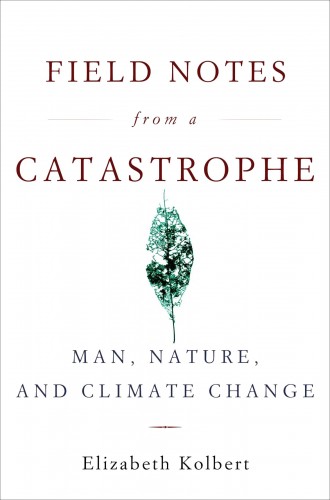
'Field Notes from a Catastrophe' by Elizabeth Kolbert, a Review

book review field notes catastrophe kolbert cover imageThis is the first book I’ve read in a long time that I have felt so conflicted about.

I bought it after having seen it prominently displayed in UK bookshops, and having read some of the author’s incisive political writings in The New Yorker.

I anticipated that it would be illuminating and instructive, and expected it to fit into a recent run of similar non-fiction books about the environment that equally inform with hard facts; frighten the reader at the scale of the problem humanity faces, and also provide some sense of optimism about human ingenuity and ecological salvation.

After reading ‘Field Notes from a Catastrophe’ I found that it did none of these, and that its style oddly jarred with me – not compulsive writing, nor reflective and so insightful as to leave me wanting more.

Indeed Kolbert’s closing lines leave a bleaker taste than other writers on this subject:

It may seem impossible to imagine that that a technologically advanced society could choose, in essence, to destroy itself, but that is what we are now in the process of doing.