Home Blog Page 745

EcoMum keeps it Green and Sexy!

3

green sexy lingerieWell the kids are back at school, time to pamper ourselves a little. Being an EcoMum is not all about being knee deep in cloth nappies, eating organic and recycling.

Okay, I admit, I do not spend hours shopping for the new trendy look and yes second hand shops and organic clothing are my buzz words, and yes I am most likely to wear something until it falls apart but heh! whoever said that I couldn’t be sexy too! So here’s a fun way to enjoy ourselves: green sexy knickers!

There are several great companies out there, admittedly not here in Israel but maybe this will get the ball rolling.

Investment House Talk on Green Investments

2

renewable energy investment advisor

This interview features Eyal Hadas, managing director and head of renewable energy at Cukierman & Co. Investment House Ltd. (CIH) in Tel Aviv.

We met Eyal at a renewable energy conference at Tel Aviv University several months ago (when Al Gore was in town and Karen photo-ed him in his cowboy boots), and were impressed by his experience in the international clean technologies market.

Israeli companies have some strengths and limitations, says Eyal who has worked for years in Europe. He will explain more below.

For those interested in understanding the Israeli market a little better, Eyal offers some food for thought. I was particularly surprised to find out that Persian Gulf countries are already investing in Israeli clean technologies.

First – more about Cukierman: Founded in 1993, Cukierman is the leading European oriented investment house, headquartered in Israel. They provide a full array of investment banking services including corporate finance, private equity and strategic consulting to Israeli and European companies.  

Since its establishment, Cukierman has been engaged in transactions valued at €2.36 billion through private placements, initial public offerings and mergers and acquisitions. In addition, Cukierman has developed a dominant position in private equity through the Catalyst Fund.

Eyal, tell us a little about Cukierman, who it invests in, and how the organization is positioned to other investment banks in Israel, Europe: We are investment bankers based out of Tel Aviv, with an office in Paris. In general, we either act as principals through our private equity fund, Catalyst ($100 million under management) or as advisors in various transactions: $10 million to $100 million. Examples: IPOs, private & public placement, merger and acquisition, corporate & project (structural) financing.

We have several verticals division: Real-Estate IT, Bio-Technology & Energy.

We work regularly with all the major Israeli financial institutions for example IBI – Poalim Capital Markets, UNION Bank and institutional investors, and also in Europe. We are also the representatives of the Government of Hong Kong and of Dews, Switzerland. His firm also works abroad and if you are looking to expand to Hong Kong for instance, see HK tax advisors

Tell us what you do specifically: The Energy Division of Cukierman focuses primarily on financial advisory transactions backed by cash flow generating assets in renewable energy, mostly in the EU. We have been involved so far in wind, biogas and photovoltaics (PV). These transactions provide annual yields to the investor of 10 percent and upwards, depending on various factors, such as the technology type and geographical location.

CIH Energy functions as a “one-stop-shop” for its clients: due diligence, financial, legal & tax advisory services. In the course of our business, we have developed alliances with some of the leading renewable energy companies in Europe, who are projects developers, financial institutions, technology and engineering due-diligences services, legal and tax advisors.

What kinds of unique opportunities do you see here in Israel’s clean technology sector? Israel as a “technology development hub” is however, by in large, a rather small (“niche”) market for cleantech technologies:

1) Renewable Energy: energy storage, photovoltaic (PV) panels efficiency improvement

2) Water Treatment: biological (drinking water & wastewater Purification, “Water Safety”

3) Solid & Liquid Waste Treatment: biological biodegradable technologies primarily for hazardous waste treatment.

What do you think are the companies’ strengths, the hottest enterprises? Do you have any favorite companies? Israeli companies, which are most innovative normally, manage to develop a “cutting-edge technology” outside the box, so to speak. Due to a small market size they can hardly bring their products and service to the local market – to “scale it up’” Nor are Israeli clean tech companies capable of strategic marketing (usually the case).

Has your company invested in any Israeli ventures? If so, which ones? Our private equity fund, Catalyst, hasn’t made an investment in cleantech ventures in Israeli companies. However, suitable investments (annual company turnover of at least $5 million are being considered).

Some are saying that renewable energy might be the only way to stop global warming. What’s your position on that? It’s an unrealistic view! Renewable energy will provide a substantial contribution. More importantly from the perspective of global warming is energy saving and efficiency measures! 

Can you envision other Middle East countries investing in Israeli clean technologies in the near future, or is it a preposterous idea? Yes. Actually Persian Golf countries are already investing in Israeli cleantech ventures either directly (via companies in Cyprus for example) or through USA / European Private Equity Funds.

Can you offer any tips for young entrepreneurs who might want to apply to Cukierman for investment or counsel? Study the needs and the prices of your target market/s well!

How does your model work? We first screen, then due diligence the technology/products/service/ company (including its management), then we deicide if we will take an exclusive mandate (normally a retainer Euro 3,000-5,000 per month + success-fee of about 2.5 – 5 percent).

Do you have any environmental heroes? Please share them with us. Yes, several. For example, Dieter Ammer, chairman of the Management Board of Conergy AG, Hamburg Germany. Dieter managed to take –– within 10 years – Conergy from a “start up” of less than $1 million revenues in 1998, to one of the largest renewable energy systems and projects providers worldwide: in 2007 there were Euro 706 million in revenues.

Greater Amman Municipality Introduces Recycling in Amman

7

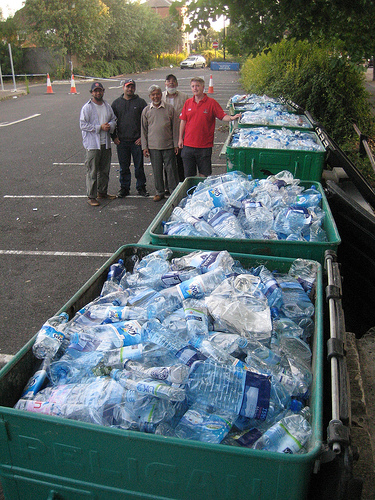
Jordan Amman recycling trash

As the population of Amman, capital of Jordan increases, so does the amount of trash produced per day. The most recent estimate is that over the summer, the amount of garbage produced daily in Amman will increase to 750 tons.

In an effort to stem the tide, the Greater Amman Municipality (GAM) in cooperation with the Jordan Environment Society are spearheading a new initiative to recycle solid waste.

Until now, the capital’s garbage has been dumped in the Ghabawi landfill. The new Collection and Segregation of Solid Waste project will both introduce the recycling method into the handling of garbage, and expand the capacity of the city’s landfills.

The project is now in the first phase, and will feature 1,000 recycling bins in various districts of Amman. GAM officials have stated that there will be a promotional campaign throughout Amman to encourage citizens to participate in recycling.

The success of the project is crucial: If recycling catches on in the selected districts, more bins will be installed in other areas of the city.

Green Prophet covers other environmental issues in Jordan:
Jordanian Ministry of Environment Launches Eco-Cities of the Mediterranean Forum 2008
Controversial Red-Dead Sea Canal On Hold–But Why?
Jordan River Peace Park: Coming Soon?

::The Jordan Times

Making the Most of Stone Fruits: Plum Buckle Recipe

0

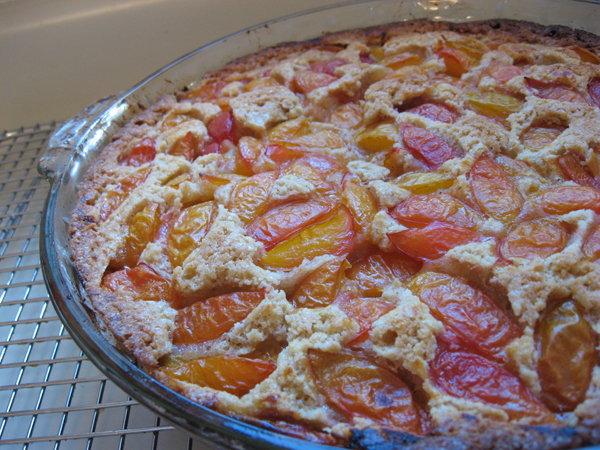
organic plum buckle recipe

There is something so profoundly compelling about a dish named buckle. Just think of it: buttery golden batter, giving way – buckling – under the weight of juicy, jammy, slightly caramelized hunks of fruit. A buckle is more exuberant than a plate of muffins, yet more modest than a cake. Serve it with coffee in the morning, nibble on a wedge with tea in the afternoon, have a slice after dinner for dessert.

What makes this recipe green?

Become An Artist

3

cereal box recycleThere are so many wonderful things that you can do with odd household throw-aways. Be creative and think outside the box, or INSIDE the box in some cases…

  • Cereal boxes can make stylish and colorful bookmarks.
  • Use empty tissue boxes to store extra plastic bags.
  • Ever find that your chips get crushed? Pop them into a box before you stuff it in the pantry.
  • Small boxes (such as pudding boxes) can make great puppets!
  • Open an empty cereal box and let your young child have fun coloring on the inside.
  • You can use  boxes to protect items when mailing. Or just storing away.
  • Use empty boxes for kindling your barBQ.
  • Boxes can be transformed into great building blocks.
  • Finally, if you open your box flat you can drop it into a recycling bin.

Looking for more creative games and solutions? Have a tip to share?

Neot Semadar: An Eco Village in the Southern Negev

7

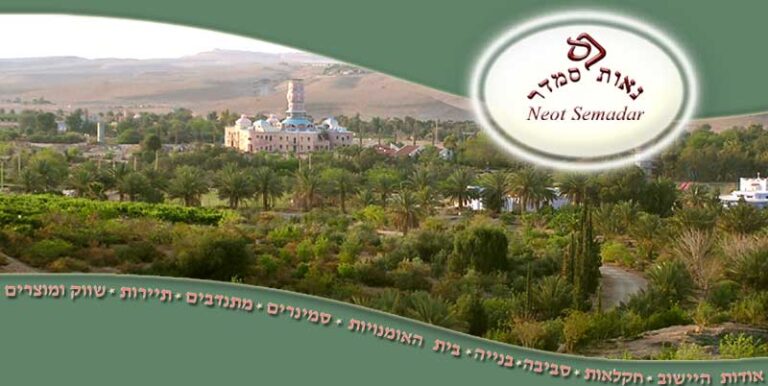
Negev eco-village Neot Smadar IsraelIf you choose to live in the heart of the Negev desert – or any desert for that matter – chances are, you’re pretty in touch with nature.  Because you’re surrounded by it.  There just aren’t any of the modern distractions that many of us know and love, like movies, frozen yogurt stands, etc.
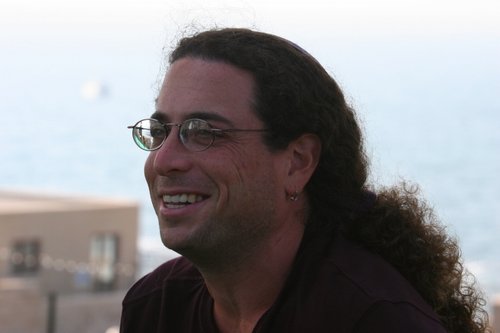
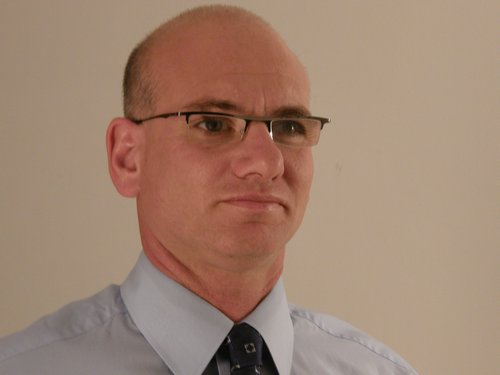
But the approximately 200 people living at the Neot Semadar village in the southern part of the Negev desert can – and do – live without those distractions in an environment that is completely harmonious with its surroundings.

The village, which was founded by a group of close friends in 1989, is really a community of people trying to understand their relationships with each other as people and their relationships with the earth.  The 200 people living there are friends, children, youth, and visitors from both Israel and overseas who are looking for a fresh perspective.

Tour Guide Jared Goldfarb Explores the Eco-Wonders of Israel

6

eco-tourism in israel advice from jared goldfarb

He’s a tour guide, educator and environmentalist. Meet Jared Goldfarb, who has a unique take on eco-tourism, and ways to lighten your travels in Israel. Whether you’re just visiting for a few days, or live here, Jared offers some advice for the thoughtful — and curious –– traveller.

Tell us a little about what you do? I am a freelance Jewish educator and Israel educator – both of which can mean many things. For 8 years, I served as Program Director of Ta Shma: Pluralistic Jewish Learning, and I continue to teach Jewish text for numerous institutions. I also teach the history of the Land of Israel and modern Israeli history in various frameworks, including year-in-Israel programs for young Jewish adults, international biblical study programs for Christian clergy, and multi-faith missions that use this land and its narratives as a common ground for dialogue.

In addition, I’ve been a licensed tourguide since 2000, and in that capacity work mostly with families and small groups looking to create a meaningful Israel experience.

Paint us a picture of a typical week at work: Thankfully, there is no such thing in my life. Otherwise, I’d probably get bored by the end of said week! One of the things I love most about being a freelancer is the ability to pick and choose (and even design) the work I want to do. It’s a little scary when it comes to financial stability, but I’ll take the excitement of running from an Early Rabbinic text study session on the Temple Mount with 70-year-old priests to a sea-kayaking expedition with a deaf family celebrating their son’s bar mitzvah any day.

Dov Khenin Will Take Your Questions Now

dov khenin tel aviv mayor green poster image

UPDATE: DOV KHENIN’S NIGHT AT CITYTREE HAS BEEN POSTPONED TO MONDAY, SEPTEMBER 15 at 9 pm.

Dov Khenin, Tel Aviv’s greenest mayoral candidate, will be speaking this Monday in Hebrew at Etz BaIr (CityTree), which is on Bialik Street 23 in Tel Aviv.

Khenin is currently a Knesset Member representing Hadash, a joint Jewish-Arab Communist party. He speaks often in Tel Aviv on issues relating to the environment and the income gaps between Israel’s poorest and wealthiest groups.

Israel's Electric Car Guru Shai Agassi Gets Wired

19

shay shai agassi electric cars from project better place photo

With the aura of an evangelist, Israel’s Shai Agassi is moving full steam ahead to revolutionize the electric car market, with Project Better Place. Essentially borrowing the model from the cellular market, Agassi plans to create a new electric car paradigm, where you switch batteries and pay for the lease of the battery (like minutes on the phone), rather than the device itself.

Earlier, in August, he was featured in Wired magazine (read the long article Shai Agassi’s Audacious Plan to Put Electric Cars on the Road here), which we’ve just got around to posting about now.

Now I’ve posted some of my thoughts about the electric car on the The Huffington Post, later picked up by the Green Autoblog. While everyone is going gaga over Agassi, I think it’s wise for a few critics out there to voice their concerns. It seems that Agassi’s plan is an inevitability, so I hope my concerns might help the company build their project with a little more of the environment in mind.

Selling a Vision of Hope To Advance Clean Technology and Peace in the Middle East

3

hamsa Israel army IDF photo

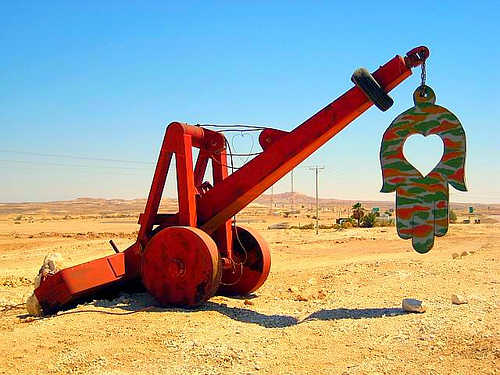
Today’s guest post is by Nissim Dahan, who is working to sell his “Vision of Hope.” Dagan envisions a network of individuals and organizations to help create economic prosperity in the Middle East. Through funding and implementing new environmental solutions, like clean technologies, Dahan believes the world can fight extremism. He uses the analogy of the Hamsa, the “hand of God” and the Middle East symbol to ward off the evil eye, to convey his mission. Here is his pitch:

We’ve all heard the doomsday scenarios if Global Warming is allowed to play itself out. For example, by the year 2050, sea levels may rise by as much as 20 feet –– flooding 60 percent of inhabitable land leading to water shortages, crop failures, and so forth. And most scientists would agree that even if all the facts are not as yet in, the risk of catastrophe is at least great enough to justify quick action now, before it’s too late to turn things around.

So given the evidence and logic that point to going “green,”why is it that not enough is being done? How do we explain the inertia that keeps serious change from taking place? The answer is not all that complicated.

Israeli Eco Tourism Welcomes the Yurt

8

yurt eco tourism Israel

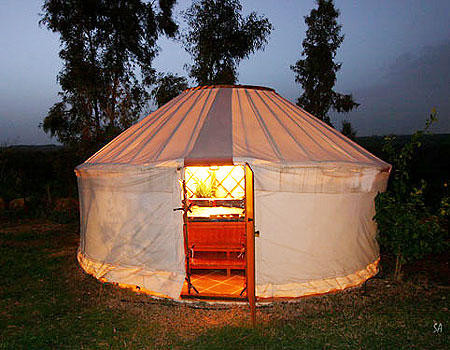
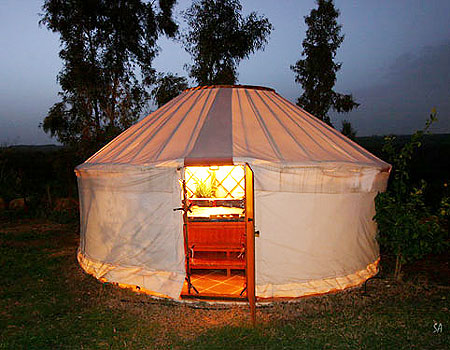
If you don’t know what a yurt is, have no fear.  Most people don’t (including yours truly).  But yurts, with their portability, suitability for nature trips, and simple low-tech structures are highly suitable for eco-tourism – so they definitely deserve our attention.  And it certainly is exciting that yurts are entering the Israeli tourism scene.

So what is a yurt?  A yurt is a portable fabric covered dwelling with an underlying wooden structure that was first used by nomads in central Asia.

What do yurts have to do with Israeli eco tourism?  Thanks to the Indian Village at Moshav Avnei Eitan in the Galilee, plenty.

The Ripple Effect

0

ripple effectHarness the power of the ripple. When you drop a small pebble in a big pond it sends out waves in every direction affecting the entire pond.

There are many ways that you can harness this power. One way is by donating US$1 to your favorite eco-cause (check out some options at www.onebuckfortheplanet.org). If you spread the word to others to do the same you can create a ripple of giving that makes a huge difference for our planet.

Continue this ripple!

Thanks to Jenson for the tip! Do YOU have a green-living tip you’d like to Share?

Here’s how others are donating

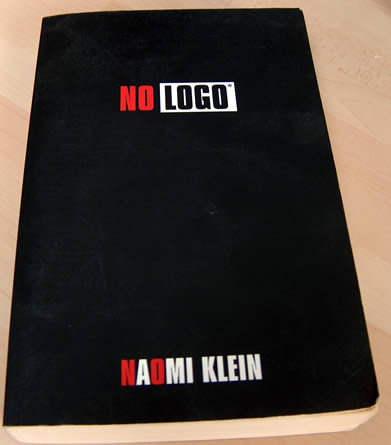
Review of 'No Logo': Getting Frustrated With Klein's Screed

4

no logo book cover naomi klein image
This week’s eco-book review is by Prophet Daniella Cheslow: Although Starbucks never made it in Israel, McDonald’s, Burger King, Puma, Crocs, Nike, Diesel, and the Coffee Bean are among the hundreds of global brands that have found eager customers among Sabras. I read Naomi Klein’s ‘NoLogo’ for some insight into the branded city of Tel Aviv.

Ah, the good old days, when the most pressing global issues were G-8 meetings and Nike’s sweatshops. Published in 1999, ‘NoLogo’ reminded me how much the world has changed since September 11, two years later.

Klein’s 490 pages details the branding of public space, the reduction of quality manufacturing and service jobs, and the rising global anti-corporation movement. By the time I was finished with the book, if I suspended my knowledge of what came between Klein and reality in the last nine years, I would almost expect Tel Aviv to be alive with protesters of corporate abuses every Friday instead of plastered with signs for “The Human Race,” Nike’s upcoming 10K night run.

Klein’s book includes some fascinating insights. She documents the moment when America’s leading companies ceased selling products and began hawking their image instead. According to Klein, this occurred during the 1970s recession. In the face of competition, Marlboro cigarettes decided to lower their prices, which showed how badly they were being battered by the market. At the same time, a few corporations chose to keep the same prices but expand their advertising budgets. Those companies, such as Apple, The Body Shop, Levi’s and Disney, found continued success even in a time of reduced national consumer spending.

Power Your Own Workout. GO, dy-na-MO!

5
Team Dynamo
Team Dynamo

When you were kids, did you have that cool attachment on your bike – a dynamo – that powered your bike lamp with no battery?  All the kids who had them would go whirring by in the dark, the dynamo spinning against the side of the wheel, and their lights glowing brighter and brighter, the faster they went.  Of course, when they stopped, the beam would fade and the world would grow dark again.  At Adam Boesel’s Green Microgym in Portland, Oregon, this gadget is taken to a whole new level.

Adam aims to have the greenest workout place around. First, he installed solar panels on the window shades (to save electricity) and then decided not to install showers (to save water and heat) [HEY! There is a limit to how far one should go!]  Feeling that was not enough, he then added a Human Dynamo – a set of four full-body workout machines with pedals and hand cranks that generate electricity in a dynamo – and three spin bikes attached to a motor to generate electricity from all the sweat and tears invested by the customers.

Recycled Paper

2

For every ton of paper, roughly 200,000 sheets of paper, that is recycled paper saves us from cutting down approximately 17 trees. The average school tosses 38 tons of paper each year, the equivalent of 644 trees.

When you buy notebooks and paper think green and spend a couple extra to get recycled (it’s not always more expensive).

Raise the awareness in school, perhaps you can rally others to the cause and organize a school-wide paper recycling program. And see some tips below, via Masterclass:

Verify the type of paper your recycling center accepts. Even though most places in the United States have similar rules for recycling, you should check with your local plant to confirm which paper products they accept. Some recycling centers are “single-stream,” meaning you can pile all of your recycling into one bin and the plant will sort it later; other centers are “sorted-stream,” and require you to separate your paper out from your glass and other recycling, or even sort paper by its type (e.g., old newspapers, mixed paper, office paper, etc.).

Keep it unshredded, where possible. Many people shred papers that have identifying or confidential information to prevent that information from being shared. However, shredding paper reduces the length of its fibers, thereby reducing its recyclability. In addition, some recycling centers can’t process shredded paper and instead request that you deliver it to a separate plant. Where possible, try to avoid shredding paper, instead black-out sensitive information using an ink marker. If you shred your important papers and your recycling center can’t process them, consider using your paper shredding around the house—for instance, in composting, vermiculture, or as an absorbent bed for small-animal litter.

Avoid wetting the paper. Once paper becomes wet, it’s much harder to recycle and often has to be thrown away. Keep your paper separate from other recyclable materials that may dampen the paper (such as rinsed plastic containers or used aluminum cans). Avoid getting grease on paper bags used to hold food. Additionally, try not to put your recycling bin out too early on rainy days.

Don’t worry about staples. If some of your printed materials contain staples, you may wonder if you need to pry them out before tossing the stack in the recycling. In fact, most paper recycling plants have machines that can remove staples from the paper stream, so you don’t have to remove them beforehand. However, check with your local recycling center to verify whether they remove staples.

Go paperless. While paper is an ideal candidate for recycling, most paper fibers can only be recycled up to seven times before the fibers become too weak for recirculation. That’s why the best way to conserve paper is to go paperless wherever possible. Try storing digital versions of files rather than printing out documents, from boarding passes to event tickets.

You can also offset your books.