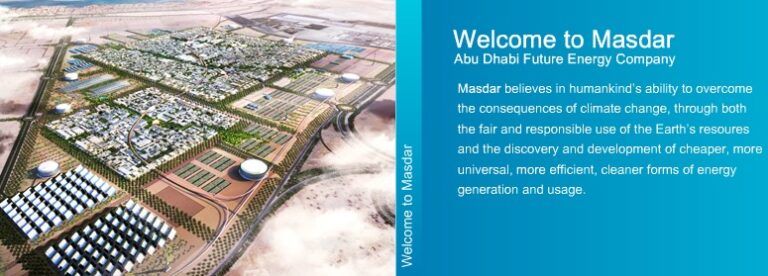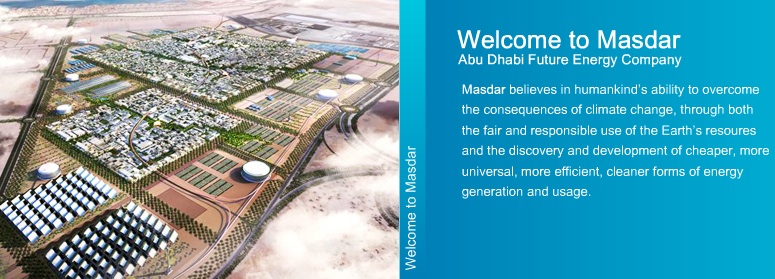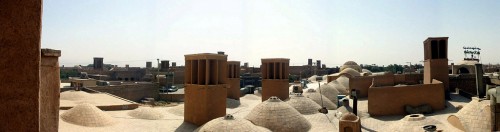
Though lacking the resources that have enabled richer Arab states, and the UAE in particular, to play a leading role in promoting renewable energy, Syria is also looking to boost its involvement in this field. This week, the Higher Institute for Applied Sciences and Technology (HIAST) in Damascus is hosting an International Conference on International Energies (ICRE) and Exhibition.
Architect Cameron Sinclair Gives a Damn
With a mantra to “design like you give a damn,” Sinclair has transformed thousands of lives.
Whether to save governments billions of dollars in mutual conservation efforts or to share information about the harmful effects of meat, great things happen when people get together to achieve a common good. Few people know this better than the co-founder of Architecture for Humanity, Cameron Sinclair. Fresh out of college in 1999, with only $700 and a website, the 24-year-old architect and Kate Stohr joined forces to create a non-profit organization that provides “innovative solutions to housing problems all over the globe.” Today that organization has 80 chapters in 20 countries, and can usually be found at the scene of virtually every serious natural disaster.
Enviromena Solar Company Awarded Enviro Prize, and Busts Arab Stereotypes
Arab solar energy company gets awarded for its sustainable vision in Beirut, Lebanon.
They sealed a $15 million round of financing this year; now Abu Dhabi’s solar developer Enviromena Power Systems (“Enviromena”) won the “Sustainable Development of the Environment Award” at the Takreem Arab Achievement Awards held in Beirut last month.
Hosted by Al Jazeera’s star Laila Al-Shaikhli, in Beirut, the awards were to honor achievements in the Arab world. Presented at a gala dinner of over 500, the winners met with Lebanese President Michel Suleiman the following day, and included Prince El Hassan bin Talal of Jordan (who we met 2 months ago) on the jury committee as well as former United Nations Secretary General Boutros Butros-Ghali.
Sage Advice on Natural Deodorants (7 Tips)

When it comes to a safe deodorant what are your options? Karin picks Weleda’s “Sage” deodorant as a good choice. But you have options. Read on.
People like us who are concerned with the environment, apply the same basic common sense to our bodies, right? That’s why many environmentalists and even just every day folk have stopped using anti-perspirant (containing aluminum) to stop sweat. On HowStuffWorks they explain in depth how it works.
Basically aluminum ions in the anti-perspirant go into our body cells, the ones that line our sweat glands at the epidermis – the top layer of the skin. Aluminum ions, and then the water that passes by them, eventually block the ducts so the sweat can’t get out.
Arab Company Agrobics Cleans Industrial Wastewater, Inspired By Olive Waste
“If agricultural wastewater went straight to the wastewater treatment plant, the facility would just collapse,” says Dr. Isam Sabbah, left, founder of the clean tech company Agrobics.
Growing up in the Galilee region of Israel, Dr. Isam Sabbah was all too aware of the problems associated with the waste from olive presses. He’d seen organic wastes and oils flowing into the streets and through the valleys nearby his home. As a student of environmental science at the Technion Israel Institute of Technology in the northern city of Haifa, he learned just how polluting the agriculture industry can be to groundwater. It became his goal to make the industry more environmentally friendly.
With a PhD in environmental sciences in hand, about seven years ago the Galilee Society (the Arab National Society for Health Research and Services that strives to achieve equitable health, environmental and socio-economic conditions for Palestinian Arabs in Israel) charged Sabbah with a research project to investigate ways of safely dealing with olive oil waste, pulp and oils.
A Quick Guide To Travelling By Bike in the Middle East
You can cycle through the Middle East, with some advance planning: ie burka coverings for women going through Saudi Arabia, and special VISAs for Syria. Image via Tyson Manering while cycling through Jordan.
Bicycle touring enthusiasts interested in going on biking tours of the Middle East are now discovering that this sport is not just confined to North America, Europe and Asian countries like China and Japan. While it is true that Western countries have the most developed system of bike touring maps and travel info, Middle East countries also have cycling information that can enable either individuals or groups to undergo a unique and interesting travel experience. Eco-tourism at its finest. But is cycling the Middle East possible and safe?
Meat Free Mondays at Tel Aviv University
Tel Aviv University students join Paul McCartney’s and Yoko Ono’s international effort to raise awareness about the impact of meat on our health and environment. [Photo credit: Erez Katsav]
A couple of weeks ago, Tel Aviv University students joined others at Harvard, Oxford, Columbia, and many other universities worldwide in a campaign – Meat Free Mondays – that demonstrates their high level of education regarding vegetarianism’s positive effect on the environment.
The meat industry is one of the most energy intensive and carbon emitting industries in the world, and so vegetarianism (or vegawarianism) is a more eco-friendly option. Even if it is for only one day of the week, as in the case of Meatless Mondays in Tel Aviv.
Basata and Sinai’s Siwa Oasis for eco-tourism
The Siwa Oasis is becoming a hot eco-tourism spot in Egypt, away from the glam of 5 star hotels. Alexander the Great loved the spot.
While high-end, luxury travel continues to suffer somewhat, not all segments of Egypt’s tourism sector are declining. Eco-friendly destinations are continuing to burgeon. On the Red Sea coast are dozens of small environmentally sound “off-the-beaten-track” camps that house scores of Egyptian and foreign visitors daily.
One of those places is Basata, arguably the first such eco-lodge in the country. Lining the pristine sandy beaches are small huts, capable of housing two, three, four and more campers nightly. One of the draws to the camp is their low waste production.

According to Maria Wuersel, co-owner of the camp, they produce their own water. She said that each guest receives an introductory course in water management, which includes what the waste water is used for: flushing the few toilets, pre-washing dishes, and more.
“We use much less water and expel less waste than your typical hotels elsewhere,” she said in a phone interview.

Although many destinations across the country expect a fall in clientele this year, Wuersel argued that because Basata is so different from the average high-end locations in Egypt, their profits are not expected to drop.
“We expect things to stay about the same. Everything thus far is the same and we are already fully-booked for all the major holidays,” she said.

Because most of Basata’s visitors are not the typical “mass tourism” common in Egypt through tour operators like Hassan’s Alexandria-based agency, the fear that the global recession will affect the camp is unlikely.
“Our clients are going to come, we are confident because they want to have this experience. We are not in fear at this time of losses, but we will see by the end of the year,” she added.
Becoming even more popular than the Red Sea eco-lodges is the Western Oasis of Siwa. It is here where legend tells that Alexander the Great received his divine mission to conquer the world from Athena at Siwa’s Oracle.
It is here, in the midst of Egypt’s barren Western desert that the plush town opens to the visitor. Its green landscape filled with trees, palm trees and farming that betrays the area, reminding even the most knowledgeable visitor that from the sandy desert life somehow manages to surface.

Unlike the hundreds of high-end luxury resorts on the Red Sea and northern coasts of Egypt, Siwa boasts its “traditional” experience. There are no five-star monster hotels, at least not yet and no airport. Getting to Siwa requires a 10-hour bus ride from Cairo across the desert towards Libya.
People come from all over the globe to experience the pristine calm that Siwa’s over 230 natural freshwater springs offer; a far cry from the bustling cities and markets that line much of Egypt’s streets. Locals in Siwa offer some of the most exquisite organic materials that are inaccessible anywhere else in the world.
Entirely free of chemical fertilizers, the residents sell their trinkets to tourists and ship them to Egypt’s Crafts – a Cairo-based shop selling the high quality organic materials and souvenirs – for those unfortunate few who don’t make it to the oasis.
There are worries, however, that the current economic crisis will deal Siwa a major blow. With no airport – one is scheduled to open sometime this year or early 2010 – Siwans wonder if tourists will stop coming.
Hassan said he has already booked a number of tours of the oasis for the spring – it is too cold for most tourists to venture into the desert in the winter months.
“I think Siwa and the Red Sea environment places will do just fine this year because the types of people going to these places are going to go there anyway,” he argued. The reason is because eco-tourists are not as worried about financial considerations. The prices are already measurably cheaper than the five-star resorts and hotels in the country.
The only question for Wuersel and Siwa to ask is whether people will venture to Egypt in the first place. At least the draw of such “untouched” landscapes will keep tourists whetting their appetite when searching for that new destination.
Despite government worries that tourism will dwindle in light of the global economic crisis, and ministry of trade said that overall growth dropped into the negatives (3 percent) in 2009, Minister of Tourism Zoheir Garranah is confident that now is the time to invest.
“I am an astute believer in investing even more heavily when things are bad,” he began, “because when they start to rebound the investment pays back dramatically.”
With eco-tourism still booming, one wonders where the government will invest in and if the future projects will be beneficial.
Abu Dhabi’s "Wondering Where the Lions Are" (And Why The Corals Won't Come Back)
Scientists seek to solve the mystery of disappearing coral in Abu Dhabi. Bring in Inspector Clouseau!
It doesn’t take a whole lot of common sense to figure this one out: you build monolithic structures and artificial islands on a fragile seashore along the Persian Gulf, have oil tankers pulling petrochemicals from the land which leaks into the water. Add a little global warming, sewage and fish farming to the mix, and well, corals –– one of the most delicate structures in the marine ecosystem –– just die.
That’s what’s been happening west of the city of Abu Dhabi, the capitol of the United Arab Emirates, where a coral “wipe out” 10 years ago, has failed to revive itself. The whole sad story of the mess humanity is doing to this world makes me think of the old Bruce Cockburn song “Wondering Where the Lions Are.”
You Call This Garbage? Hasadna Upcycled Design Workshop Doesn't.
Used ice-cream taster spoons turn into delightful eco-inspired lamp.
It happened to me just the other night, when I was standing at the counter of the ice cream shop, trying to decide between espresso cardamum and dark chocolate (or both). I felt guilty about my deliberation, and the consequent waste of those small plastic spoons that are used to dish out the samples. How many of those spoons are wasted annually by indecisive ice creams eaters like myself?
But at Iceberg Ice Cream in Tel Aviv, where I was making my decision (and eventually opted for both flavors), none of the plastic spoons go to waste. They are all carefully collected, washed, and handed over to Hasadna… where they are subsequently transformed into fun, beautiful chandeliers.
But that’s not all they make at Hasadna.
The Story Behind Jerusalem's Royal Rock
The demand for Jerusalem stone comes with a social and environmental cost
We have applauded Jerusalem’s living building, and we have drooled over delicious vegan dishes offered by Eucalyptus Restaurant in the Khutzot HaYotzer artist’s quarter. But nothing defines the city’s visual character more definitively than the prolific presence of Jerusalem stone.
Lebanon To Waive Taxes on Hybrid Cars
Tesla’s electric roadster (above) and Nissan’s LEAF could evade import tax to Lebanon this year.
Israel probably thought it was alone in the region with its plans to lift (and then stiff) taxes from hybrids and electric cars until now: Its northern neighbor Lebanon says it will likely do the same. In the 2010 draft budget, reports the Daily Star, the Lebanon government is factoring in exempting companies and individuals from paying import taxes on hybrid cars. This announcement could boost sales of hybrids and all-electric vehicles, such as Nissan’s LEAF to the Middle East region, especially in oil-less countries where citizens tend to have more modest dealings with environment issues and transport.
An Ungreen Invention: The Automated Street Meat-Cutting Robot
[youtube width=”560″ height=”400″]http://www.youtube.com/watch?v=H65o8uSmKz8&feature=player_embedded[/youtube]A totally redundant and ungreen invention automates Middle East meat cutting.
We were fooled by Grist yesterday and the news that McDonald’s meals won’t compost for 1,000 years, but this meat-cutting robot, a donor-robo looks like no joke. Designed by Turkish engineers, your Middle East street meat will never be the same, boast developers of the product now being sold at a German expo. Seriously folks?
Green LEGO? Build Futuristic Solar Cars and Wind Powered Robots
Get your kids to build tomorrow’s solar power plant or wind turbine, with LEGO.
LEGO, makers of timeless bricks of wonder, continue their welcome advance into the classroom with the new Renewable Energy Set. The new set lets students experiment with using energy from their own bodies and the three main energy sources – solar, wind, and water – to generate, store, and use power. The set also contains building instructions for a variety of models such as a solar-powered car and a wind turbine.
The renewable energy set, comes with a new activity pack, which lets students explore renewable energy sources; investigate energy supply, transfer, accumulation, conversion, and consumption; and use measurements and data analysis to describe and explain outcomes through hands-on activities and real-life models.
The new set is part of Lego Education, a branch of Lego which aims to provide pre-schools to high-schools, with an educational package for exploring topics such as robotics, mechanics, electricity, math and even Aerospace.
If the last time you saw a piece of LEGO was in your childhood, I encourage you to check out some of the amazing things that can be done these days with the modern LEGO Mindstorms, it makes the LEGO Technics of my childhood look like naive child’s play by comparison. It is great to see the Legos of this generation, are just as relevant today, as they were for my generation.
And if there is a child in your life (your son or daughter, a niece, nephew, or spouse), pull him away from the TV and computer screen, and build something together.
Halal Or Not, McDonald's Food Won't Decompose Faster Than Plastic Bags
New disturbing news about the McDonald restaurant chains that have found themselves in practically every Middle Eastern country except for Syria and Iran: With plans to set up a worldwide composting program, the Mc-company canned its plans after learning that its food scraps simply will not decompose. Well, not for the next 500 or 1,000 years at least.
This fact was confirmed by scientists, and reported on the environment news site Grist. According to reports, not a single item on the Mickie D’s menu is disposable.
Scary or what?