Home Blog Page 605

UAE Ministry of Environment and Water Uses Animated Film to Promote Plastic Bag Ban

2

In the battle against plastic bags, the UAE Ministry of Environment and Water has started taking a more fun approach.

As part of its mission to ban non-biodegradable plastic bags from the UAE by 2012, the Ministry of Environment and Water will soon release an animated movie that promotes eco-friendly alternatives.  The Ministry is hoping that this more accessible and fun approach will encourage people to stop using plastic bags.  The film is part of a larger campaign, the Emirates Free from Plastics Initiative, that has already been active and which hopes to educate the public about the damages caused by plastic bags.

Make a Spout for a Bag of Spice Using an Old Bottle

6

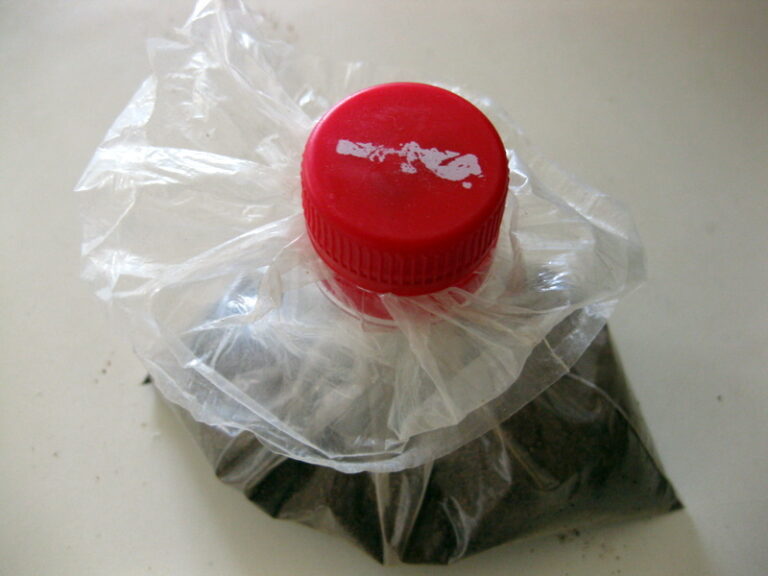
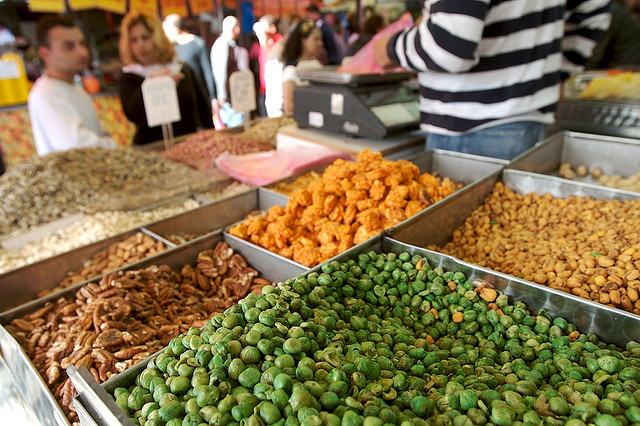
plastic-bag-spoutA simple, free cover for spices and grains bought loose in the store or market

I often buy spices, grains and legumes in plastic bags at the market. But it’s hard to keep the bags closed properly, and the contents often spill out into the drawer or freezer. This wastes precious food, and leaves a mess.

Then I saw this great idea for recycling a plastic drink bottle to make a pour spout for a plastic bag. You’ll need a a plastic bag that is thin and flexible, like a sandwich bag—this spout won’t work with a crinkly pasta bag. But you can convert a used bread bag to a container for small grains using the spout.

Kibbutznik Sues Israel’s Health Ministry For Right To Open Public Ecological Pool

0

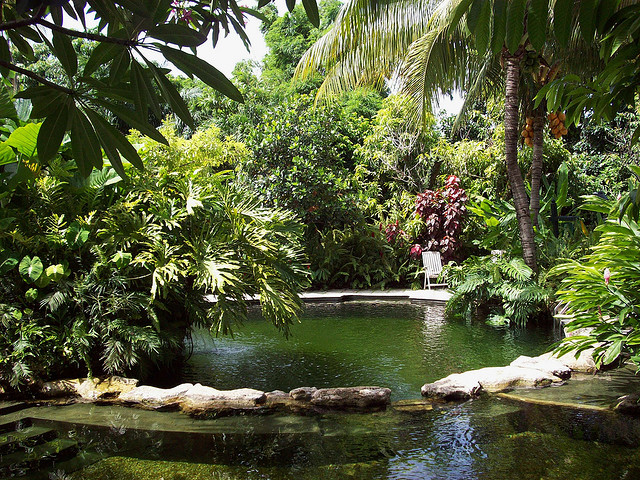
ecological-pool-with-plantsAlice Miller claims that by denying the right to open a public ecological pool, Israel’s Health Ministry is also preventing a way of life.

In Israel, where language and tradition are deeply rooted to nature, the shift away from the materialistic status quo is spreading. Several kibbutzim around the country are demonstrating that with a healthy dose of scientific knowledge and a smidgen of innovation, people can live off the land quite comfortably. Kibbutz Ketura is leading the way with solar energy, Kibbutz Lotan’s Center for Creative Ecology is known worldwide, while Kibbutz Samar is one of the last-standing socialist communities in Israel that grows and exports organic dates. Northwest of Lake Kinneret, Kibbutz Hukok is also an ecological community, but Israel’s Health Ministry is preventing them from taking that ideology to the next level.

Climbing God’s Mountain in Sinai

3

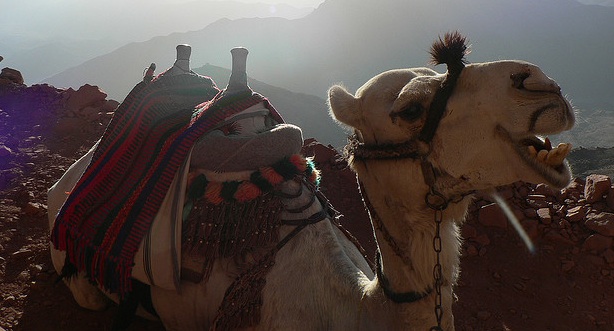
camel sinai moses mountain
The ultimate “spiritual” and ecological experience – climbing the mountain where Moses was believed to have received the 10 commandments, in Sinai.

In the heart of the Sinai Peninsula lies the biblical mountain that Moses supposedly received the Ten Commandments from God thousands of years ago. When Moses went to traverse the sharp edges of the mountain to pray at the summit, God granted him what has come to characterize monotheistic religion at the present moment.

The Ten Commandments are arguably the most well known laws God granted humanity. Mount Sinai has become a regular place of pilgrimage for millions of people the world over.

This sacred mountain, when climbed today, is a spiritual journey that people of all creeds and ethnicities come to each year in the hope of experiencing the hand of God in this world. Mount Sinai is a path to a different world. With perseverance even the average climber can get to the top of the mountain and bear witness to the birth of modern monotheism.

Seeing the sunrise at dawn, following a few hours of arduous climbing, can change the way we perceive the world. Here, the desert that Moses and the early Jewish people crossed unfolds before your eyes. The spectacular view from where Moses received the stone tablets containing the commandments of God is unlike any location on earth. It is here that religion truly becomes a part of ones life.

This journey, like most in Egypt, begins in Cairo, where the ideal trip consists of renting a mini-bus for the six-hour road trip into God’s land. After entering the Sinai, with its picturesque peaks and reddish glow, head to St. Katherine, the home to one of the earliest churches in Christendom. A friend once said, “this is Sinai, built by God some time ago by moving water. Maybe it should have been left submerged.” We laughed at the irony. Without Sinai there would be no mountains for the Israelites to flee to and no mountain for Moses to climb. St. Katherine was built in order to recognize the importance of that mountain that is situated directly behind.

Arguably the most famous mountain on the planet, maybe second only to Everest, Gabal Moussa, in Arabic, or Mount Moses (Mount Sinai), is, at first glance a seemingly unrecognizable peak within a chain of hundreds of mountains that look almost similar. Despite the obvious difficulty of this being the actual mountain Moses received Tablets from God, thousands of pilgrims and tourists traverse the rugged Sinai in order to climb this sacred mountain, which is believed to actually be the location of where Moses received the Ten Commandments.

From St. Katherine, after an evening of shisha (Middle East pipe) and relaxation with the Bedouins, the trip to the top of the mountain begins. Hours after the sun has set, the sacred path to the top takes its first step. There are two paths to choose from. One, the path of penitence is the more difficult. This route consists of stairs to the top. It is a testament to God, in which the climber climbs thousands of steps that go almost straight up. The second path is a bit easier, as it consists of a dirt pathway that zigzags up the mountain. While this route is not as difficult as the stairs, it still tests the will.

With flashlights as the only assistance up the mountain it is easy to picture Moses, clad in his wooden sandals and long robe ascending to the peak in order to pray and ask God for help from the troublesome times the Israelites were in. Continuing to climb what feels like a never-ending journey through the crevices that asking God for His help doesn’t seem out of question. The darkness does not allow for the cliffs to be discernable, obviously making the climb much more palatable. Nobody would want to know that one little slip and the fall would probably break many bones in the body. There is no turning back after making it a few hundred kilometers.

If climbing a mountain by foot is out of the question due to physical reasons, the Bedouin guides that accompany the groups up the mountain have at their disposal camels and donkeys, which can be ridden if the need arises. This allows for all people, without discrimination of age and physical state, to ascend God’s great mountain.

At times the mountain seems to give way to the ardent climber with level paths that make the climber, at least I did, believe the end is near. However, almost as the luxury of being able to walk straight for a while sets in, God’s mountain throws another climb in the wake. As the footprints of calm are whisked away by the next upward climb, it becomes evident that submission to the will of God begins to be a full force if making it to the summit is going to be a reality.

It is a trial in a sense. Getting to the top of the mountain is a test from God. Passing the test means walking up a jagged mountain for hours in order to bear witness that the spiritual quest was worth the struggle.

For hours climbing, the only thought is that nothing will make this journey worthwhile, until of course, the summit that Moses reached three thousand years ago is finally reached. Now it is a waiting game. After what seems like days, which in fact is no more than a few hours, the climber, winded and tired still has to wait until sunrise to fulfill the journey set out earlier in the evening. But it is worth every second of the arduous climb to the summit.

Make sure to have brought warm clothes, because unlike most of Egypt, the summit of Sinai Mountain is not a pleasant place for the underdressed. With winds gusting at speeds of up to 50 kilometers an hour the warmth of a blanket or two cannot be stressed. There is no greater displeasure than waiting for the warmth of the Sinai sun to makes its break over the surrounding mountain peaks than being utterly cold because the wrong attire was worn.

As daybreak begins to form, the mountain begins to come alive. Its reddish glow starts to come into view. Off in the distance the Red Sea is awakening, with Bedouin and visitor still asleep. If only they knew what they were missing. The sun slowly makes its way across the horizon. This is the time to snap beautiful pictures of the landscape below. The sun appears to race across the desert as if it was competing with the moon for the moment.

By Desmond Shepherd

More on Eco-Tourism in Sinai:
In Praise of the Middle East Squat Toilet
Visit St. Katherine’s Eco Retreat
Siwa and Red Sea Eco-Tourism Hot Spots

Dubai Gas Stations Running Out of Gas

Is it the story like the cobbler who doesn’t wear shoes?

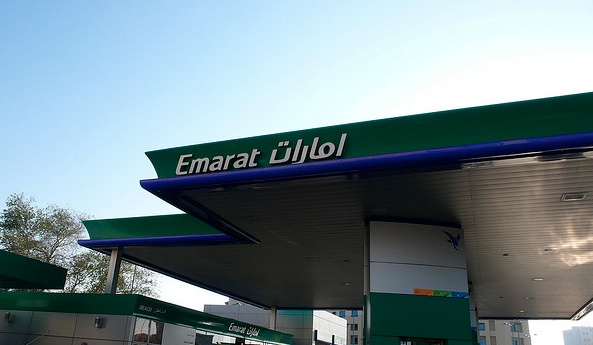
Government regulated oil prices are forcing Dubai companies to charge lower fees than they pay to import the gas. Now, gas retailers in Dubai in the United Arab Emirates are finding it hard to deal with rising prices and government price controls. Emarat, one of four gas retailers operating in Dubai, have run out of gas at some of its stations as the company struggles to meet its financial engagements, the Dubai-based newspaper Gulf News is reporting.

Hima: The Middle East’s Tradition of Environmental Protection

1

hima-middle-east-environment
Hima, practised for over 14,000 years in the Arabian Peninsula, is believed to be the most widespread system of traditional conservation in the Middle East, and perhaps the entire earth.

In these modern times, it’s easy to think of environmental protection as a new concept which has emerged in response to modern problems linked to industrialisation and globalisation. In reality, the need to protect the environment from abuse has been a constant concern for humans since the beginning of time- especially for people who were living directly of the earth’s resources.

Even the Middle East,which many assume is new to environmental concerns, had a system to help protect nature called ‘Hima’. Hima which roughly translates as ‘protected or preserved place’ has been practised for over 14,000 years in the Arabian Peninsula and is believed to be the most widespread system of traditional conservation in the Middle East, and perhaps the entire earth.

Which Earthy, Temporary Home Would You Choose? Sukkah City, NYC 2010

0

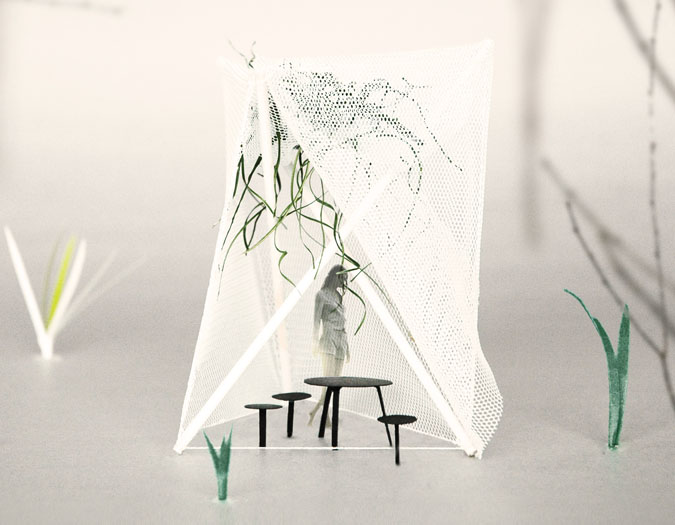
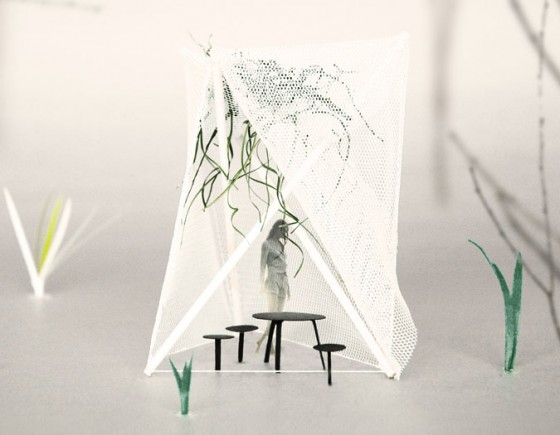
NYC-sukkah-competitionNew York City will host “The People’s Sukkah Choice” on Union Square during the Festival of Sukkot.

In Great Falls, Virginia, where my parents have lived for the last umpteen years, the beautiful wooden homes shrouded by giant leafy trees have been carelessly discarded in favor of cleared properties and attendant “McMansions.” Washington D.C.’s wealthy businessmen and politicians build these ghastly structures large enough to house an entire Palestinian village, and call it home. So large, and so unsightly, they create a blight on the neighboring landscape and inspire not an ounce of connectedness. Should the Chinese overrun America and send these people into exile, they’d have a hard time packing their wares.

The Sukkah, by contrast, is made of the earth and with the earth; they can not help but blend into the landscape. They are a symbol of transience: originally built to shelter the Jews during their 40 years wandering through the desert, they kept the people rooted to tradition. They still do. But asking a modern Jewish family to close up shop and return to the woolly wild may not be so realistic. As such, the Sukkah City International Design competition in New York City inspires a snazzy twist to an enduring custom. 

Egypt To Re-Think Wastewater Treatment At Upcoming Conference

2

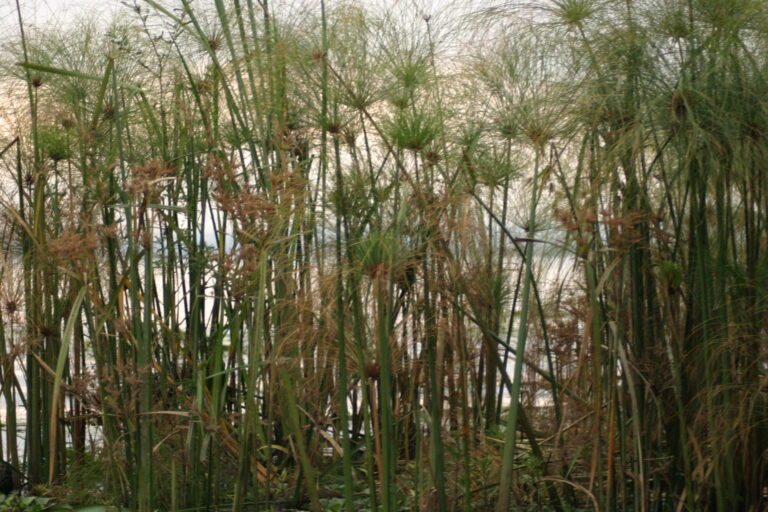
papyrus-plants-morningUsing constructed wetlands is one alternative to be addressed at the IQPC wastewater conference in Cairo this October.

As Egypt’s population increases, it puts pressure on the country’s main water source: the Nile River. In addition to general pollution from agricultural runoff and other pollutants, the recent diesel spill north of Aswan demonstrates the challenges of keeping the river fit for consumption. A pair of industrious young students are planning a kayaking trip from Aswan to Alexandria in order to generate better awareness among the populace. However, government action is absolutely critical in order to ensure the river’s long-term sustainability.  

Repair Your Eating Habits in Time for Yom Kippur

0

Fasting, while probably better for the environment, is unfortunately unsustainable for us humans.  What other ways can you make your eating eco-friendly?

Yom Kippur, the Jewish Day of Atonement, is one of the holiest days of the year for Jews and is a time of reflection, atonement, fasting and prayer.  It is a day when people look back upon the past year and think forward towards the future.  With the fasting that will be going on (and the resulting grumbling tummies), though, you may also want to think about how the ways you satisfy one of your most basic needs – eating – can be improved.  Our eating habits have a huge effect on the environment, and making a few alterations can make a big difference.

Living simpler & deeper with The Moneyless Man

the-moneyless-man One man goes on a mission to live a year without money; James  tells us how it’s done.

If we take green living seriously, we all must examine every aspect of life, from consumerism through to energy use and our personal economic and social attitude. This is what Mark Boyle has done, to an extreme level – he has forsaken our regular monetary exchange system, and has lived and looked outside its constraints (and luxuries) for a year (and more) and written it up in ‘The Moneyless Man – A Year of Freeconomic Living’.

“Money no longer works for us. We work for it. Money has taken over the world. As a society, we worship and venerate a commodity that has no intrinsic value, to the expense of all else. What’s more, our entire notion of money is built on a system which promotes inequality, environmental destruction and disrespect for humanity.”

moneyless-man-bookcover What you didn’t know about mushrooms

It is an illuminating tale of the practicalities and difficulties of managing life without the lubrication we all moan about, struggle to earn (or revel in its abundance), and the network of transactions we associate with money.

Here on GP we’ve written about making your own soaps and cleaning solutions; Mark goes much further and describes how he makes toothpaste from cuttlefish and fennel seeds, and ink and paper from foraged mushrooms. He forages for food, grows his own, barters his time and energy in exchange for sacks of wheat (and is living on a farmers land in exchange for time given to the farm growing food).

He shuns buses and public transport, relying instead on his legs, his trusty bike, and occasionally sticking his thumb out.  There is a wealth of practical ‘how to’ information interspersed throughout the book. He includes tips on low impact transport, hitchhiking, keeping clean without toiletries, a hay fever remedy, making booze for free, and even offers up advice on menstruation!

He writes memorably about getting from Bristol to his hometown of Ballyshannon in County Donegal in Ireland (a distance of some 500 miles) by hitching.

Celtic Tiger Economy

Ironically, I lived just outside Ballyshannon myself a few years back, and resonate with how Mark painfully describes how the traditional way of life in Ireland has changed, all due to a growing economy and society’s shift to being part of a market-led and pressure-driven system, where we have less time for anyone else’s well-being. Rural Ireland is not anymore the peaceful haven of stone cottages with turf smoke lingering in the air; it is now the land of a virulent Celtic Tiger economy and its depressed aftermath.

“Another major motivation is much simpler and more emotional – I’m tired. I’m tired of witnessing the environmental destruction that takes place every day, and playing a part, however small, in it. …. I’m tired of seeing families and lands destroyed in the Middle East so that we in the West can fuel our lives on cheap energy. And I want to do something about it. I want community not conflict…”

moneyless-man-hiking Here in Bristol, Mark is a local hero: as well as being a warm and genuinely compassionate guy, he has set up the freeconomy network,  ran freeskilling evenings in a local café, where anyone could learn or teach a new skill ranging from yoga through to beer-making and identifying trees, and organised the Freeconomy Feast in November 2008, which fed 1000 people a meal from foraged and found food (for free), and provided entertainment and inspiration for at least 4,000 in a single – entirely moneyless – day!

Freeconomic Community

This is all detailed in chapter 14, but take my word for it, it was a hell of an achievement. I know he has even bigger plans in the pipeline: all proceeds from this (already best-selling) book will go to the creation of a Freeconomic Community, living communally together, based on values of mutual co-operation and trust, out of the regular economic system.

“ Living the slow life is definitely more time-consuming but I’d rather have it consumed this way than in watching a reality television show in the room we call ‘living’…if I didn’t really believe this, I wouldn’t put myself to so much trouble.”

Despite all this frenetic activity promoting the freeconomic life, Mark lives simply and frugally in a small caravan. He is the living proof that we don’t need to dispense with all the trappings of modern life, such as a phone (incoming calls only!) and a laptop – just power them from renewable sources. He has carved out a media career writing and philosophising about his efforts, and has been much sought out by the media.

I was bemused recently when I saw him on a daytime TV show where the presenter wove her piece around the question of whether a ‘moneyless man’ could be a good catch! Mark played along, using even this rather inane opportunity to cheerfully get the message across with a grin and his wonderfully distinctive Irish brogue. Many of the media images of him show him shirtless, chopping wood or just loving being in the natural surroundings of his home.

Far and wide

He lives deep in the English countryside, between Bristol and Bath, but his message is spreading far and wide. ‘The Moneyless Man’ has just been published in Korean (surely it must be coming out in both Hebrew and Arabic soon?), which shows how this simpler, more thoughtful and more turned on lifestyle really touches a nerve.

Watch video on Mark’s life:

[youtube]http://www.youtube.com/watch?v=cyqavzuFZ3c[/youtube]

Read this book if you care about the human impact upon the earth, if you are similarly angry and frustrated about this corrupt, oil-based economic system we live under, and read Mark’s book if you too want to make a difference.

‘The Moneyless Man – A Year of Freeconomic Living’ by Mark Boyle Published by www.one-world-publications.com 2010

Turkey’s Solimpeks Wins Certification for Hybrid Solar Panels

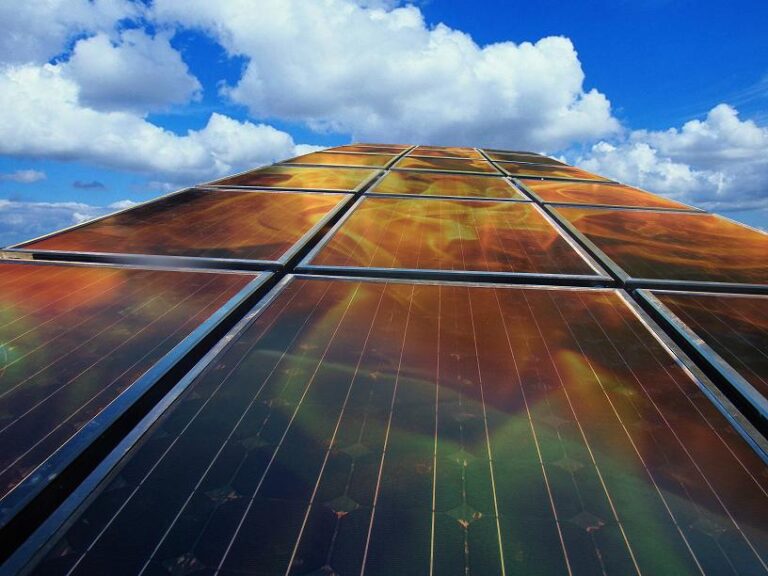
Hybrid-solar-panels The sky’s the limit: Solimpeks’ hybrid solar systems produce both electricity and hot water.

I recently installed a fan in my roof to pump out the hot air from the attic and help keep the house cooler during the summer. I also have a solar panel on the roof to produce hot water. It seems logical that the solar energy harnessed for the water heater should also be able to provide electricity to operate the fan, right? Well, it turns out it’s not that simple – so until I install a separate photovoltaic (PV) solar panel on the roof, the fan will be plugged into an electric socket instead.

It would be nice to have a single solar panel capable of producing both hot water and electricity. A Turkish company, Solimpeks Solar Energy Corp., is producing precisely this type of combined system,  and has now been awarded MCS (Microgeneration Certification Scheme) certification for its Volther hybrid system.

Another Name for Sugar – High Fructose Corn Syrup

6

corn-cobs-in-bowlWould you think that this healthy vegetable could be converted into something unhealthy?

When glancing at a list of ingredients, many of the words are not simply unfamiliar but completely unknown to the average consumer. This being the case, checking a list of ingredients seems an almost futile exercise as many of the foods listed are unheard of. When it comes to the various forms of sugar in food, the inability to recognise ingredients can be a huge concern for the health-conscious consumer.

Zonzoo Gives Old Phones New Life In The UAE

0

recycled cell phones Zonzoo and Enviroserve recycle cell phones, earning donors a bit of good, “green”  cash.
When old cell phone batteries peter out and new models are just too hard to resist, many people chuck leave their old phones languishing in a drawer or chuck them in the trash bin.

From there they are transported and dumped in the local landfill, such as Hariya, where it leaks harmful toxins. Another alternative is to recycle your old cell phone, to give it a new life. Unfortunately, it’s not always easy to recycle in the Middle East, where the facilities are not as advanced as they are in the West. Zonzoo is changing that.

Sinking Hotels! Salt Imbalance In Mined Dead Sea Threatens Tourism Industry

0

dead-seas-salt-problemThe tourism and minerals industry, as well as the Tamar Regional Council, argue over who must take responsibilities for what environmentalists call all “ecological disaster.”

Take the most beautiful blue blown-glass vase designed with divine providence, throw it against a wall, and watch it shatter into hundreds of pieces. Then, try to glue it back together again and enter it into a design competition. This is what is happening with the Dead Sea. The northern part is shrinking as a result of reduced inflow, while the southern end is expanding because of the Dead Sea Works’ alteration of its chemical balance.

As a result, Ein Boker’s tourism industry is in grave danger, but Tamar’s Regional Council Head is mostly concerned with having the Dead Sea listed as one of the World’s Seven Natural Wonders next year in order to draw increased tourism traffic to the Negev. Meanwhile, the Society for the Protection of Nature (SPNI) calls the lake an “ecological disaster;” how the Knesset (the Israeli parliament) rules in the coming month will determine which industry will endure the brunt of this disaster.

Activists Generate Awareness of Critical Issues Ahead of UN Summit

2

UN-activists-new-york Activists are pulling out all the stops ahead of a development summit at UN headquarters on 20-22 September.

Pro-aid and anti-poverty lobbyists are trying everything from giant letters to banging pans to raise awareness of the high-level event.

The Millennium Development Goals (MDGs) suffer from a lack of widespread public recognition, not least in the summit’s host country, the US.

Mobilizing popular support and influencing delegates will demand a range of online and offline techniques, according to advocacy specialists, some more quirky than others.