Oman is returning to the Venice Biennale with Zīnah, an immersive installation by artist and curator Haitham Al Busafi that transforms a traditional form of horse adornment into a large-scale sensory experience.
Professor Ji-Soo Jang, in collaboration with Professor Taekwang Yoon of Ajou University and Professor Hansel Kim of Chungbuk National University, has developed a novel energy device that generates electricity during the process of capturing greenhouse gases.
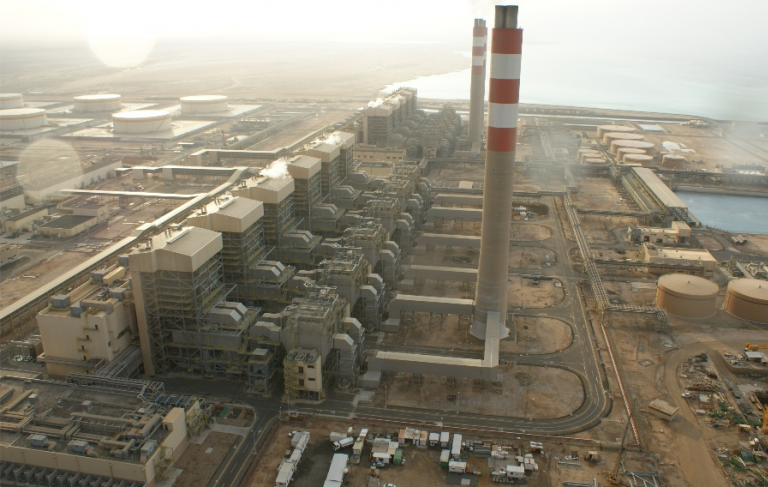
The impact is already being felt. California has broken its wind generation record multiple times in recent weeks as SunZia begins feeding electricity into the grid. It’s a glimpse of what a renewable-powered future could look like when large-scale infrastructure finally comes online. Can we start saying goodbye to Saudi Aramco and Arabian Gulf oil?
The Convention on the Conservation of Migratory Species of Wild Animals (CMS), governments agreed to extend protection to 40 more migratory species, from cheetahs and striped hyenas to snowy owls, giant otters, and great hammerhead sharks. Too many of them are slipping toward extinction .
Oman is returning to the Venice Biennale with Zīnah, an immersive installation by artist and curator Haitham Al Busafi that transforms a traditional form of horse adornment into a large-scale sensory experience.
Professor Ji-Soo Jang, in collaboration with Professor Taekwang Yoon of Ajou University and Professor Hansel Kim of Chungbuk National University, has developed a novel energy device that generates electricity during the process of capturing greenhouse gases.
The impact is already being felt. California has broken its wind generation record multiple times in recent weeks as SunZia begins feeding electricity into the grid. It’s a glimpse of what a renewable-powered future could look like when large-scale infrastructure finally comes online. Can we start saying goodbye to Saudi Aramco and Arabian Gulf oil?
The Convention on the Conservation of Migratory Species of Wild Animals (CMS), governments agreed to extend protection to 40 more migratory species, from cheetahs and striped hyenas to snowy owls, giant otters, and great hammerhead sharks. Too many of them are slipping toward extinction .
Oman is returning to the Venice Biennale with Zīnah, an immersive installation by artist and curator Haitham Al Busafi that transforms a traditional form of horse adornment into a large-scale sensory experience.
Professor Ji-Soo Jang, in collaboration with Professor Taekwang Yoon of Ajou University and Professor Hansel Kim of Chungbuk National University, has developed a novel energy device that generates electricity during the process of capturing greenhouse gases.
The impact is already being felt. California has broken its wind generation record multiple times in recent weeks as SunZia begins feeding electricity into the grid. It’s a glimpse of what a renewable-powered future could look like when large-scale infrastructure finally comes online. Can we start saying goodbye to Saudi Aramco and Arabian Gulf oil?
The Convention on the Conservation of Migratory Species of Wild Animals (CMS), governments agreed to extend protection to 40 more migratory species, from cheetahs and striped hyenas to snowy owls, giant otters, and great hammerhead sharks. Too many of them are slipping toward extinction .
Oman is returning to the Venice Biennale with Zīnah, an immersive installation by artist and curator Haitham Al Busafi that transforms a traditional form of horse adornment into a large-scale sensory experience.
Professor Ji-Soo Jang, in collaboration with Professor Taekwang Yoon of Ajou University and Professor Hansel Kim of Chungbuk National University, has developed a novel energy device that generates electricity during the process of capturing greenhouse gases.
The impact is already being felt. California has broken its wind generation record multiple times in recent weeks as SunZia begins feeding electricity into the grid. It’s a glimpse of what a renewable-powered future could look like when large-scale infrastructure finally comes online. Can we start saying goodbye to Saudi Aramco and Arabian Gulf oil?
The Convention on the Conservation of Migratory Species of Wild Animals (CMS), governments agreed to extend protection to 40 more migratory species, from cheetahs and striped hyenas to snowy owls, giant otters, and great hammerhead sharks. Too many of them are slipping toward extinction .
Oman is returning to the Venice Biennale with Zīnah, an immersive installation by artist and curator Haitham Al Busafi that transforms a traditional form of horse adornment into a large-scale sensory experience.
Professor Ji-Soo Jang, in collaboration with Professor Taekwang Yoon of Ajou University and Professor Hansel Kim of Chungbuk National University, has developed a novel energy device that generates electricity during the process of capturing greenhouse gases.
The impact is already being felt. California has broken its wind generation record multiple times in recent weeks as SunZia begins feeding electricity into the grid. It’s a glimpse of what a renewable-powered future could look like when large-scale infrastructure finally comes online. Can we start saying goodbye to Saudi Aramco and Arabian Gulf oil?
The Convention on the Conservation of Migratory Species of Wild Animals (CMS), governments agreed to extend protection to 40 more migratory species, from cheetahs and striped hyenas to snowy owls, giant otters, and great hammerhead sharks. Too many of them are slipping toward extinction .
Oman is returning to the Venice Biennale with Zīnah, an immersive installation by artist and curator Haitham Al Busafi that transforms a traditional form of horse adornment into a large-scale sensory experience.
Professor Ji-Soo Jang, in collaboration with Professor Taekwang Yoon of Ajou University and Professor Hansel Kim of Chungbuk National University, has developed a novel energy device that generates electricity during the process of capturing greenhouse gases.
The impact is already being felt. California has broken its wind generation record multiple times in recent weeks as SunZia begins feeding electricity into the grid. It’s a glimpse of what a renewable-powered future could look like when large-scale infrastructure finally comes online. Can we start saying goodbye to Saudi Aramco and Arabian Gulf oil?
The Convention on the Conservation of Migratory Species of Wild Animals (CMS), governments agreed to extend protection to 40 more migratory species, from cheetahs and striped hyenas to snowy owls, giant otters, and great hammerhead sharks. Too many of them are slipping toward extinction .
Oman is returning to the Venice Biennale with Zīnah, an immersive installation by artist and curator Haitham Al Busafi that transforms a traditional form of horse adornment into a large-scale sensory experience.
Professor Ji-Soo Jang, in collaboration with Professor Taekwang Yoon of Ajou University and Professor Hansel Kim of Chungbuk National University, has developed a novel energy device that generates electricity during the process of capturing greenhouse gases.
The impact is already being felt. California has broken its wind generation record multiple times in recent weeks as SunZia begins feeding electricity into the grid. It’s a glimpse of what a renewable-powered future could look like when large-scale infrastructure finally comes online. Can we start saying goodbye to Saudi Aramco and Arabian Gulf oil?
The Convention on the Conservation of Migratory Species of Wild Animals (CMS), governments agreed to extend protection to 40 more migratory species, from cheetahs and striped hyenas to snowy owls, giant otters, and great hammerhead sharks. Too many of them are slipping toward extinction .
Oman is returning to the Venice Biennale with Zīnah, an immersive installation by artist and curator Haitham Al Busafi that transforms a traditional form of horse adornment into a large-scale sensory experience.
Professor Ji-Soo Jang, in collaboration with Professor Taekwang Yoon of Ajou University and Professor Hansel Kim of Chungbuk National University, has developed a novel energy device that generates electricity during the process of capturing greenhouse gases.
The impact is already being felt. California has broken its wind generation record multiple times in recent weeks as SunZia begins feeding electricity into the grid. It’s a glimpse of what a renewable-powered future could look like when large-scale infrastructure finally comes online. Can we start saying goodbye to Saudi Aramco and Arabian Gulf oil?
The Convention on the Conservation of Migratory Species of Wild Animals (CMS), governments agreed to extend protection to 40 more migratory species, from cheetahs and striped hyenas to snowy owls, giant otters, and great hammerhead sharks. Too many of them are slipping toward extinction .
Trojena, a new ski resort planned for the Asian Games in Saudi Arabia is the opposite of sustainable
Neom, a bombastic collection of futuristic cities and resorts, has flopped as Saudi oil prices roll back reality. The Saudi plan of hosting the 2029 Asian games to be held at Trojena, a ski report in the desert, has been cancelled.
The 2029 Asian Winter Games were supposed to be Saudi Arabia’s big moment for tourism and Vision 2030, hosted at Trojena, the ambitious mountain ski resort being built inside the $500 billion Neom megaproject in the northwest desert. It would have been the first winter sporting event ever held in an Arab-speaking country, a remarkable geopolitical flex for a nation with essentially no winter sports tradition and barely any snow. (Read here about Snowmax and the dangers of artificial snow).
Trojena was to be a spa in the summer and a ski paradise in the winter
The Olympic Council of Asia announced the games would be postponed last month, and within days announced they would instead move to Almaty, Kazakhstan. Al Arabiya Gulf News gave no reason for the change, but the context is hard to ignore.
With oil prices down, Saudi Arabia is in fiscal trouble, and oil is the core of the problem. The kingdom’s budget deficit widened in the fourth quarter of 2025 to its highest level in five years, as lower oil prices squeezed government finances, according to Arab News.
Saudi Arabia needs crude at around $91 a barrel to balance its budget, but prices have been stuck in the low $60s for months Securities Finance Times, a gap of nearly 30% between the dream and reality.
Location of Mount Lawz, Trojena uploaded by Mashba. Actual site of the proposed but now cancelled Asian Winter Games
That gap is starting to show in the kingdom’s grand ambitions of building The Mile, a 15-minute city on the Red Sea.
Saudi officials have signaled a pivot to “wiser” spending, and the government has made clear it will not hesitate to walk away from costly projects that no longer fit its priorities.
Trojena, which was already facing significant construction delays and had missed its original 2026 completion target, appears to be one casualty of that reckoning along with The Line.
It looks like a mirage, because it is
Saudi officials have been quietly reviewing some of the biggest Vision 2030 projects and though they are not canceling them outright, they are stretching timelines and trimming scope.
Trajena, built by Zaha Hadad. A ski resort in Red Sea area mountains
Almaty, by contrast mades sense. Kazakhstan previously hosted the 2011 Asian Winter Games and the 2017 Winter Universiade, so the infrastructure is already there.
Inside Trojena
For Saudi Arabia, losing the games is more than a sporting embarrassment. It’s a signal that Vision 2030’s most spectacular promises: a ski resort in the desert, a linear city in the wilderness, a new Las Vegas on the Red Sea were always contingent on oil staying expensive. And one by one, reality is doing the editing that ambition refused to do. If Americans pull through on fusion (see Xcimer), OPEC oil will be over.
It doesn’t take a genius city planner to know that tunnels under the city spare pedestrians and foot traffic in the city above. Major cities around the world have built traffic tunnels, and it’s obvious when you are in New York how tunnels can get you across the city quickly.
Tunneling is impressive but it comes with problems. London’s Crossrail project, for example, uncovered thousands of archaeological artifacts mid-construction.
Modern cities have centuries of buried infrastructure: gas pipes, water mains, electrical conduits, fiber optic cables, old foundations. Routing tunnels around all of this requires painstaking planning and coordination with dozens of agencies but Dubai, a relatively new city that’s missing even basic sewage pipes in some buildings, has a great chance to build its city from scratch right.
Dubai has announced this month that they will be working with Elon Musk‘s Boring Company to build tunnels in Dubai.
At an estimated $545 million for 14 miles, the Dubai Loop is actually relatively cheap by global standards: New York’s Second Avenue Subway cost roughly $2.5 billion per mile. Most cities simply can’t finance that.
Dubai’s Particular “Boring” Problem
The Dubai police invite the public to see their Tesla Cybertruck
Dubai is sprawling, car-dependent, and built in a desert climate where surface-level public transport is actively hostile to pedestrians for much of the year. Temperatures regularly exceed 40°C (104°F) in summer, making walking between transit stops an uncomfortable proposition. Imagine how you feel when your car’s air conditioning stops working?
Underground transport sidesteps the heat. A cool, connected tunnel network with frequent stops could shift behavior in a city where the private car, and even gold Mercedes, have long reigned supreme. The pilot route will offer “first- and last-mile solutions”, meaning it’s designed to work with Dubai’s existing Metro rather than in competition with it.
If it succeeds, Dubai Loop could become a compelling model for other Gulf cities, Abu Dhabi, Riyadh, Doha, all that share the same urban sprawl, heat, and car dependency challenges.
Steve Davis, President of The Boring Company, commented that: “We are proud to partner with the Roads and Transport Authority, one of the world’s leading entities in adopting innovative solutions in the transport sector. Through this partnership, we look forward to delivering advanced, safe, and highly efficient tunnelling solutions that support Dubai’s vision for sustainable and future mobility.”
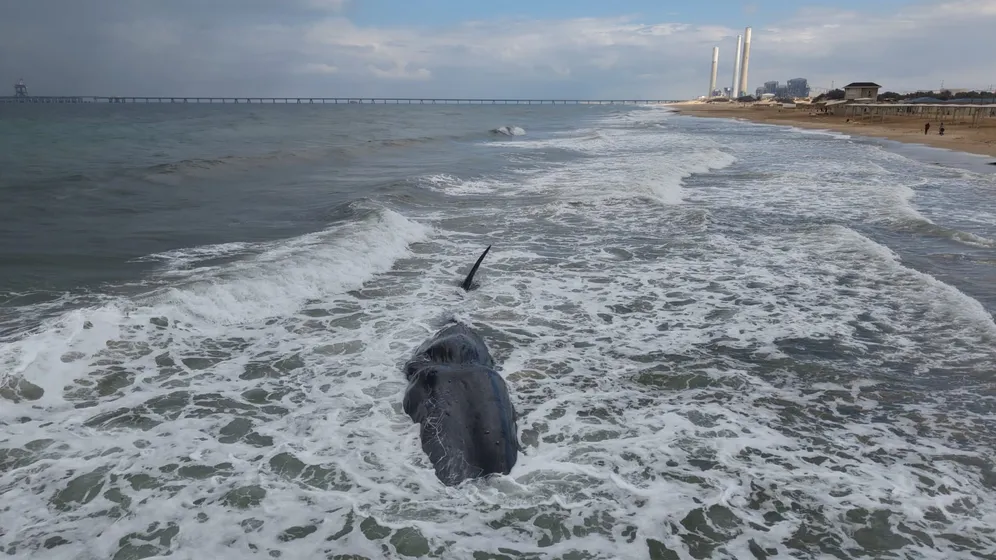
Whale found dead off the Israeli coast. Evyatar Ben-Avi / Israel Nature and Parks Authority
A large sperm whale has washed ashore on Zikim Beach in southern Israel, marking only the eighth documented case of its kind along the country’s Mediterranean coast since monitoring began.
The carcass was reported Tuesday morning within the Shikma Marine Nature Reserve near the Gaza-adjacent shoreline. Israeli marine authorities confirmed the animal as a sperm whale (Physeter macrocephalus), the world’s largest toothed predator.
According to Hebrew-language press reports, marine inspector Evyatar Ben-Avi of the Israel Nature and Parks Authority received the initial alert. Researchers from Israel’s Dolphin and Sea Center were dispatched to assess the site.
“Since research began in Israel, eight sperm whale carcasses have been recorded along the country’s coasts (including the one discovered this morning),” said Dr. Mia Elser of the NGO.
The Mediterranean population of sperm whales is considered genetically distinct and far smaller than its Atlantic relatives. The International Union for Conservation of Nature (IUCN) classified the Mediterranean group as Endangered in 2021, with estimates suggesting only 250 to 2,500 individuals remain, and declining. Recent videos and photographs from Gaza, also near to the sperm whale sighting, has shown that Palestinians are catching dolphins, sharks and endangered sea turtles for food.
“The Mediterranean sperm whale population is genetically isolated from Atlantic whales. It even has its own characteristic clicking pattern,” said Dr. Aviad Scheinin, director of the Dolphin and Sea Center at the Morris Kahn Marine Research Station to local media.
Scientists say deep-diving sperm whales face a unique set of threats in the region: drifting swordfish and tuna nets that entangle whales as bycatch, seismic surveys for offshore gas exploration that disrupt their acoustic navigation, constant conflict and plastic waste that accumulates in the deep-sea food chain.
For readers of Green Prophet, the image is sadly familiar: a giant of the deep arriving silently at shore, carrying the invisible pressures of modern seas. Each stranding is both a biological record and an ecological warning, from a population already on the edge.
Xcimer’s Conner Galloway and Alexander Valys (right)
In a nondescript facility in Denver, a small team of physicist-engineers is attempting something that sounds like science fiction: igniting a miniature star on Earth. (See how China came close to making an artificial sun).
If they pull it off, the consequences would ripple across every corner of the global economy, and nowhere more dramatically than Saudi Arabia and the oil-rich kingdoms of the Middle East.
The premise behind Xcimer is simple even if the physics is anything but: fuse light atoms together the way the sun does, release enormous amounts of energy, and do it without carbon emissions, without meltdown risk, and without the mountains of radioactive waste that plague conventional nuclear power. Clean, dense, effectively limitless energy which is the holy grail of human civilization. With fusion we could run air conditioners all day and all night. We could live well on the equator or run our heaters in the arctic and enjoy limitless travels to space.
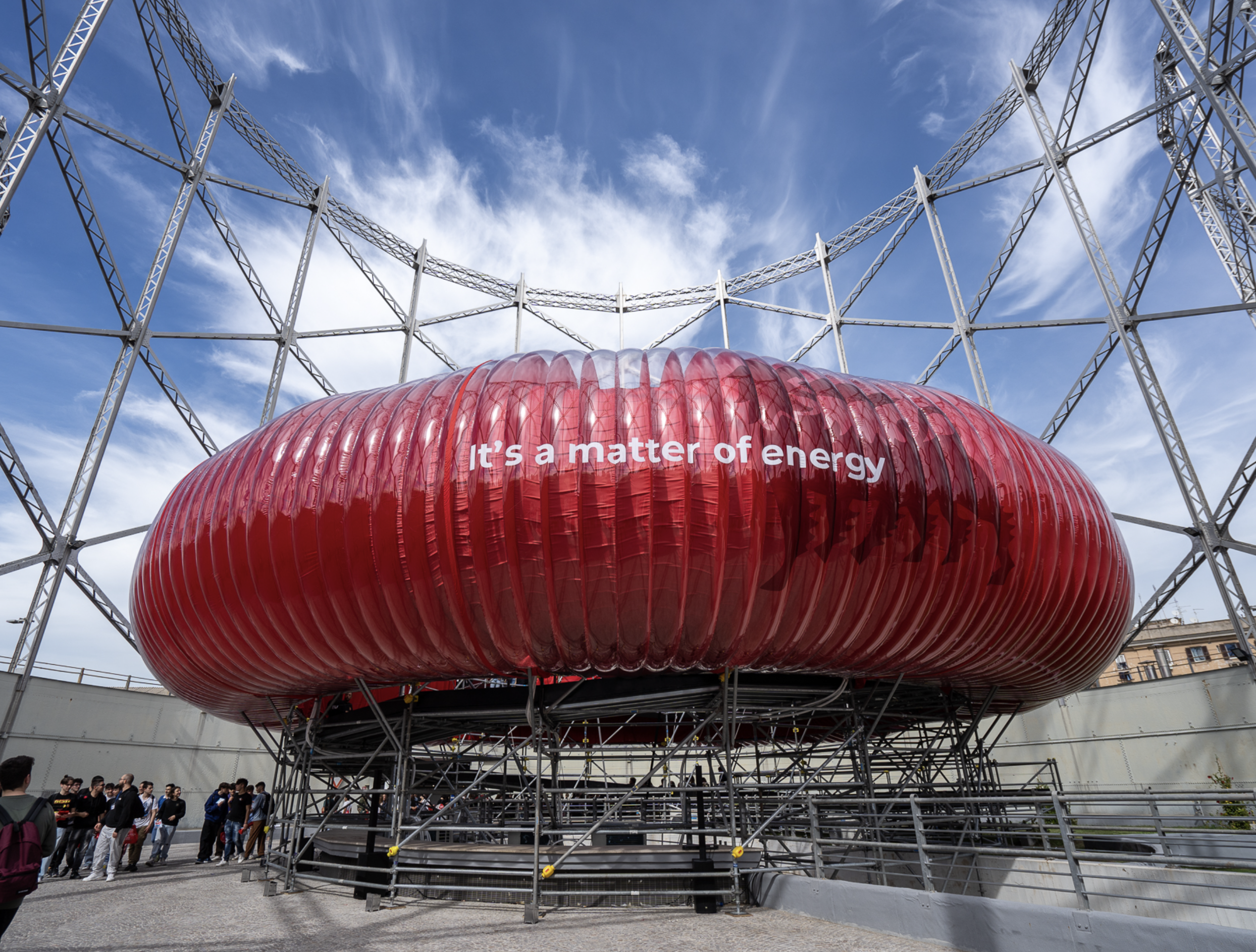
A fusion project by Italy’s Eni
What makes Xcimer genuinely different from the fusion experiments that have come before is its choice of laser technology. Rather than the expensive solid-state systems used at the US National Ignition Facility, which achieved a landmark ignition milestone in 2022 but at staggering cost, Xcimer uses krypton-fluoride excimer lasers, borrowed from semiconductor manufacturing.
These deliver high-efficiency ultraviolet pulses at a fraction of the price, and in 2025 the company completed the first privately funded excimer fusion laser of its kind built in over two decades. That’s not a press release milestone. That’s real hardware.
“We’ve already begun using Xcimer’s LPK experimental testbed to validate laser models and inform the design of our future systems,” said Conner Galloway, CEO and Chief Science Officer of Xcimer. “This milestone also sends the strongest signal yet that the private sector can build on decades of public investment to turn transformative research into commercially viable systems. We’ve seen this transition before in industries like space—and we’re beginning to see it happen in fusion.”
The roadmap is ambitious but structured. A Phoenix laser system in 2026 will validate the core physics. A Vulcan facility around 2030 aims to cross the holy grail of breakeven, which is producing more energy from fusion than was put in.
Xcimer is already taking proposals on prospective new sites nationwide to house Vulcan, which would directly employ hundreds of people in a large variety of jobs, including physicists, technicians, and support staff.
Vulcan’s location could pave the way for a future regional source of zero-carbon energy expertise, making the location attractive to more emerging businesses such as artificial intelligence and software companies, robotics manufacturers, and medical research facilities.
By the mid-2030s, Xcimer envisions a prototype power plant delivering electricity to the grid at roughly $40 per megawatt-hour, competitive with natural gas and cheaper than most new coal. That’s when things start to get fun. Just like in solar. Every year the cost for producing solar goes down.
The US Department of Energy has already selected Xcimer as one of eight companies in its fusion commercialization program, lending the venture both credibility and critical public-private backing.
Now consider what this means for Saudi Arabia, and by extension the entire OPEC architecture that has shaped global geopolitics and which has supported a whole lot of evil and terrorism for half a century. The Muslim Brotherhood was born in Saudi Arabia and Iran-mullahs run on oil feeding terror operatives money in Lebanon, Gaza and Yemen. Unlike the UAE which has diversified, the Saudi economy runs on one thing: the world’s insatiable need for oil.
Renewable energy has already begun chipping at that foundation, and oil prices are dowb, but OPEC countries know that solar and wind have an Achilles heel because they are intermittent energy sources.
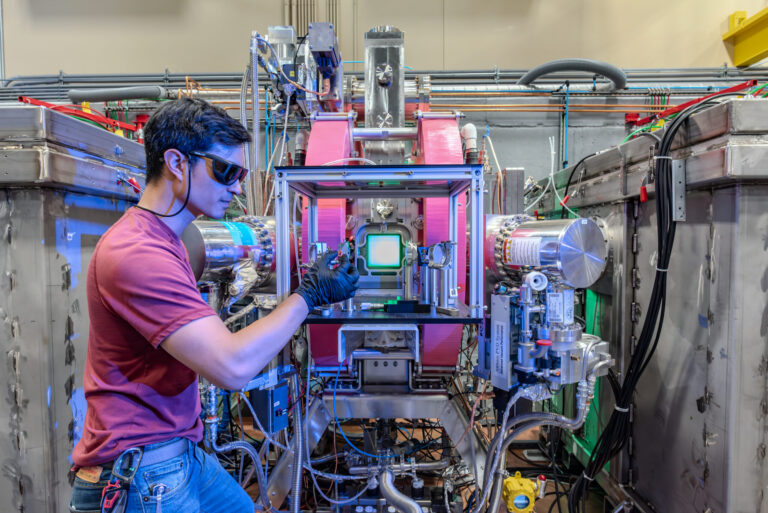
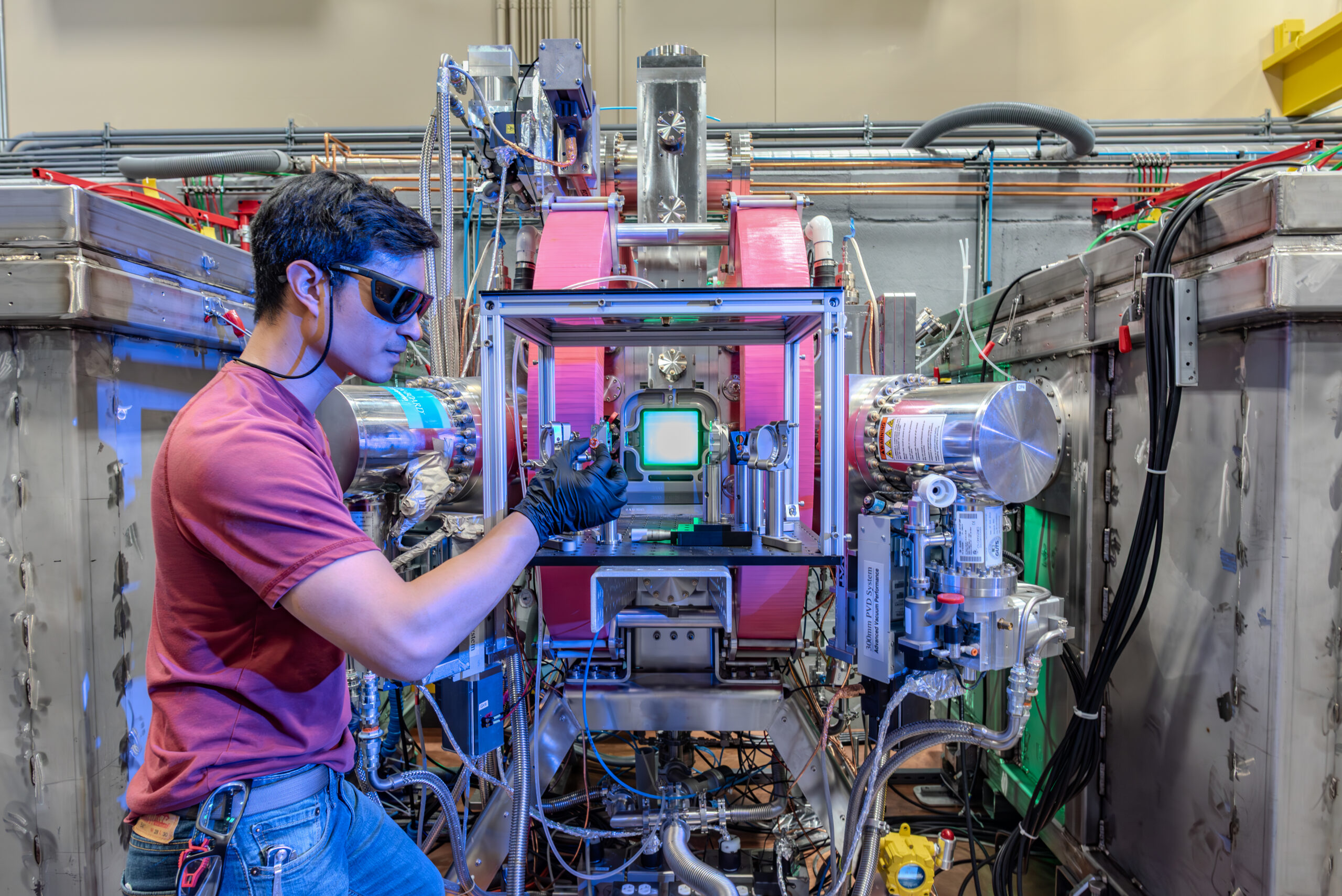
Jeffrey Villanueva working on the Long-Pulse Kinetics Platform laser amplifier at Xcimer Energy in Denver, Colorado. – Photo credit: Edward DeCroce
“We use the same approach as America’s National Ignition Facility – the only system in the world to demonstrate fusion ignition. We don’t need to spend time and money to demonstrate unproven plasma confinement physics; we combine NIF’s proven inertial confinement fusion approach with breakthrough laser technology. We’re driving down cost and complexity so we can deliver electricity on a pragmatic timeline and business model.”
Batteries help, but not enough. Fusion has no such weakness. It runs continuously, day and night, in any weather, in any country. A fusion-powered world wouldn’t just reduce demand for oil; it would collapse it entirely.
The leverage that petrostates have wielded for decades, over energy prices, over foreign policy, over global inflation, over terrorism, evaporates the moment civilization has access to a cheaper, cleaner, inexhaustible alternative.
Xcimer hasraised just over $111 million from leading energy investors since its founding in 2022. It’s part of the DOE Milestone-Based Fusion Development Program, a highly competitive public-private partnership program designed to accelerate the development of fusion energy on the power grid. Xcimer wasawarded $9 million, one of the most significant awards under the program’s first budget period.
Xcimer also collaborates with Los Alamos National Laboratory, Lawrence Livermore National Laboratory, Oak Ridge National Laboratory, Savannah River National Laboratory, Naval Research Laboratory, Laboratory for Laser Energetics, Massachusetts Institute of Technology, General Atomics and Westinghouse.
Desalination and power plant powered by the sun in ultra-luxury Shebara, Saudi Arabia.
Every day, the Middle East’s desalination industry produces more brine than freshwater. Aquifers are drying up and becoming full of brine. Companies like Iyris claim to be able to farm on brackish water, solving part of the problem of access to freshwater. But a a small Saudi startup has found a solution to the problem inside the problem itself.
The math of desalination has long been troubling. Its energy-intensive and polluting. For every gallon of water pulled from the sea, a typical reverse osmosis plant discharges roughly 1.5 times the among of concentrated, chemically laden brine back into the ocean. Multiply that across the Middle East and North Africa, which is the region responsible for more than half of the world’s desalination output, and the scale of brine becomes alarming.
Global brine discharge now exceeds 140 million cubic meters per day, according to a 2019 UN-backed study, with Saudi Arabia alone accounting for 22 percent of the world’s total, according to a UN University Institute for Water study. The Arabian Gulf, already naturally one of the saltiest bodies of water on earth at 45 grams of salt per liter compared to a global ocean average nearer 35, is absorbing the consequences.
Qalzam stand alone unit, via Qalzam
Into this problem has stepped Qalzam, a Saudi startup with a counterintuitive proposition: the brine is not the problem. It is the raw material.
Founded in Riyadh and incubated at the Saudi Water Innovation Center (SWIC), Qalzam has developed a process to extract sodium hypochlorite (the active compound in chlorine disinfectant) directly from the waste brine produced by reverse osmosis plants. That sodium hypochlorite is then fed straight back into the same plant to disinfect the freshwater it has just produced, closing what Qalzam describes as a circular loop within the desalination process itself. In conventional plants, sodium hypochlorite must be manufactured separately, transported to site, and purchased as a chemical input.
Qalzam eliminates all three steps simultaneously.
The chemistry is not new. Sodium hypochlorite can be generated electrochemically from saline solutions, which is a process long understood in laboratory settings and applied at small scales in wastewater treatment. What Qalzam is engineering is the industrial translation of that process specifically for the high-salinity, high-volume conditions of Gulf desalination, where brine concentrations are substantially higher than those seen elsewhere in the world, and where the scale of operations can make even marginal improvements in cost or chemistry enormously significant.
“The chemicals should be all neutralized,” said Noreddine Ghaffour, a research professor at the Water Desalination and Reuse Center at King Abdullah University of Science and Technology (KAUST), speaking about brine management at Saudi desalination plants more broadly. His comment reflects a growing scientific and regulatory consensus: the era of dumping chemically complex brine into already-stressed marine environments is approaching its limits.
The timing is propitious. Saudi Arabia has positioned itself as a global leader in desalination capacity, doubling its output in recent years and announcing $9.33 billion across 60 new projects in its latest expansion.
The Saudi Water Partnership Company is targeting a near-tripling of national desalination capacity to 7.5 million cubic meters per day by 2027. Each new plant that comes online represents both a new source of brine and a potential customer for Qalzam’s on-sitewater
disinfectant solution. The startup has also graduated from Saudi Arabia’s Ministry of Industry and Mineral Resources’ “Numuw” industrial incubator and accelerator program, giving it institutional credibility at a formative stage.
The wider scientific case for brine valorization is strengthening rapidly. Research published in the journal Water in November 2025 modeled a 100,000-cubic-meter-per-day reverse osmosis facility and found that a sequential brine recovery process could achieve over 90 percent total salt recovery while producing marketable materials including sodium chloride, magnesium hydroxide, and bromine.
The estimated revenue from recovered materials in such scenarios ranges between $4.5 million and $6.8 million per year, potentially offsetting 65 to 90 percent of annual desalination operating costs, with a payback period of three to five years.
Qalzam’s narrower focus on sodium hypochlorite extraction and reuse sits within this broader economic logic but is considerably simpler to implement, requiring no complex mineral separation trains or crystallization equipment. This matters because complexity has consistently been the enemy of adoption in industrial water treatment. The technologies that scale are typically those that integrate cleanly into existing infrastructure rather than requiring its wholesale redesign. A bolt-on electrochemical unit that converts waste brine into a disinfectant that the plant already needs is, in engineering terms, a much easier sell than a full brine-mining operation requiring downstream chemical processing and commodity markets for the outputs.
Beyond the economics, the environmental calculus is straightforward. Saudi Arabia’s Gulf coastline is already under documented ecological stress from brine discharge, with dense, oxygen-depleted plumes affecting benthic marine life near major outfalls. Over in the Red Sea, dolphins, coral reef and at-risk species cannot tolerate more stress on the already noisy and polluted shipping areas.
Any technology that reduces both the volume and chemical load of that discharge addresses a concern that regulators, ecologists, and increasingly the operators themselves recognize as unsustainable at the scale to which the region is building.
Qalzam is still early-stage, with its team small and its first commercial deployments ahead of it. But the company sits at the intersection of three converging forces: a region building desalination capacity at a pace unmatched anywhere on earth (despite the scaling back of Saudis’ Vision 2030 with lowering prices of oil), a scientific community that has spent a decade documenting the harms of brine disposal, and a policy environment.
Saudi Vision 2030 and the UAE’s Net Zero 2050 strategy incentivize circular economy approaches to industrial water management.
The Middle East did not choose to become the world’s desalination laboratory. Geography and hydrology made that decision for it. But the region’s sheer scale of operations means that solutions proven here, including whatever Qalzam refines on the shores of the Gulf, will be exportable to every water-stressed coast on the planet.
Red Sea Farms (now Iyris) who we interviewed here, is a separate but thematically related KAUST spinout worth contextualizing alongside Qalzam, not as partners, but as parallel examples of Saudi water innovation coming out of the same university ecosystem.
Not far away, with Jordan between them, Israel’s IDE Technologies, founded in 1965 and headquartered in Kadima-Zoran, built the Sorek desalination plant south of Tel Aviv, which for years was the largest seawater reverse osmosis desalination facility on earth, producing 624,000 cubic meters of drinking water per day and supplying roughly 20 percent of Israel’s municipal water demand.
Today, desalination supplies over 70 percent of Israel’s domestic water consumption, a figure that has effectively drought-proofed a country that receives less than 200 millimeters of rainfall annually across much of its territory.
Buying and selling cannabis in Thailand. Be aware of shifting policies in the United States where each state has its own rules and laws which differ from Federal laws.
Cannabis use continues to evolve in different parts of the country. In Pittsburgh, specific laws shape how residents interact with marijuana products. These rules support safe usage while also setting boundaries for public behavior. Anyone interested in recreational use should first learn what is legally allowed.
The best dispensary in Pittsburgh, PA, provides regulated products with reliable quality. Before visiting one, users must know what is permitted in the city. Legal access alone does not protect against fines or legal complications. The following guidelines clarify how to stay within the law while using cannabis.
Know the Limits for Possession in the City
Adults who are 21 or older can carry up to 30 grams. This amount applies to personal use within Pittsburgh’s limits. Carrying more could lead to confiscation or legal action. Staying under the limit avoids problems during any public stop.
Law enforcement still observes suspicious activity or behavior linked to cannabis. Officers may take action depending on how the substance is stored. Users should keep marijuana sealed and away from public view. Careful storage helps avoid legal confusion or misinterpretation.
Keep All Use Private and Away from Public View
Smoking in some US states needs to stay private in the home
Using cannabis in public areas is not permitted by law. Parks, sidewalks, and streets remain off-limits to all cannabis use. People who violate these rules may face fines or removal. Using marijuana in public can attract legal attention from authorities.
Private properties remain the safest places for personal cannabis use. Residents must also check rental or lease agreements before using marijuana. Some buildings have their own no-smoking or substance use policies. Confirming policies before use prevents future issues with housing management.
Stay Off the Road After Using Any Cannabis Product
Driving after using marijuana is unsafe and also illegal in Pittsburgh. Impairment affects judgment and slows down reaction on the road. Law officers can conduct field tests if someone shows clear signs. Refusal to cooperate may increase the chance of legal trouble.
The law applies equally to all vehicle types across the city for road safety. That includes motorcycles, bicycles, and motorized scooters on any public street. Delaying travel until the effects pass helps users avoid safety issues. Waiting also reduces the risk of involvement in unwanted accidents.
Buy from Regulated Sellers Within Legal Limits
TIPA and Wyld are teaming up to package cannabis edibles in home-compostable laminate and take steps to keep hard-to-recyclable, single-use flexible plastics out of the environment.
Unlicensed sellers operate outside of state regulations and lack testing standards. The safest method of obtaining cannabis is through a verified source. Only licensed dispensaries follow city and state-level procedures. Buying from unknown sources can carry legal or health risks.
The best dispensary in Pittsburgh, PA, only sells approved and tested products. Packaging includes full labeling of strength, ingredients, and use. Trained staff help guide users based on desired effects or needs. Users benefit from knowing exactly what they are consuming.
Follow Federal Rules on Restricted Properties
Pittsburgh includes areas under federal jurisdiction with strict marijuana bans. Federal properties follow national law, which still prohibits cannabis possession. That includes courthouses, post offices, and certain buildings in the city. Carrying marijuana there may lead to federal prosecution.
Cannabis use is also banned in national parks and similar zones. These areas operate with their own law enforcement, separate from local police. Users should avoid carrying cannabis near those spaces. Avoiding confusion with local and federal rules prevents major issues.
Understand Employment Restrictions for Cannabis Use
Cannabis use does not protect someone from workplace policy violations. Many jobs continue to test employees for THC in the system. Results may affect hiring decisions or current job status. Not all employers allow recreational cannabis use among staff.
Reading the company policy helps workers understand the full guidelines. Certain sectors, like health or transportation, often maintain strict rules. Talking to supervisors or human resources helps answer common questions. Respecting rules at work supports professional success and personal safety.
Never Provide Cannabis to Anyone Under 21
State law clearly bans marijuana access for people under 21. Sharing any cannabis with minors carries strong legal consequences. Even small amounts qualify as unlawful distribution or supply. Age restrictions apply to all forms of recreational marijuana.
Keeping cannabis away from minors protects both users and their households. Safe storage includes sealed containers in hard-to-reach places. Below are recommended options to keep cannabis secure:
Lockable storage boxes
Cabinets with coded entry
Containers with child-proof lids
High placement out of easy reach
Why Experienced Cannabis Shoppers Choose Licensed Dispensaries with Proven Standards
In Pittsburgh, following cannabis laws is only part of the equation. Where you shop affects both product quality and your understanding of legal use. The best dispensary in Pittsburgh, PA, with a strong compliance track record, helps customers stay informed and confident in their choices.
These locations do more than sell; they educate, guide, and uphold safety standards that align with city regulations. Experienced shoppers often return to dispensaries that provide consistent product integrity, staff expertise, and a dependable customer experience. For those who value legal clarity and professional service, exploring a licensed provider is a smart next step.
You’ve built your Texas energy consultancy on expertise and trust. Clients rely on you to interpret grid data, advise on renewables strategy or guide them through regulatory change. Texas’s energy sector is one of the largest in the country, contributing about $390 billion to the state economy and supporting over 819,000 jobs across oil, gas, and renewables. With the state leading in oil, natural gas, wind and utility-scale solar production, it is no surprise that demand for energy consultants continues to grow.
At some point, the side project becomes something more serious. Contracts grow, and so does risk. You may start to wonder whether trading in your own name still makes sense.
If you feel unsure about the legal aspects of how to form a Texas LLC, you’re not alone. Many founders hesitate because the process sounds complex. The good news is that you can move forward with clarity and confidence when you understand what Texas actually requires.
Choose the LLC structure
When you form a Limited Liability Company, you create a separate legal entity that stands apart from you as an individual—a structure that gives you limited liability protection. In practical terms, if a client disputes a consultancy report or a project faces financial difficulty, creditors usually pursue the company’s assets rather than your personal savings.
You must decide whether you want:
A single-member LLC, where you remain the sole owner, or;
A multi-member LLC if you work with partners.
Most independent consultants choose the single-member route because it keeps management simple while still protecting personal assets.
However, if you co-found the business with another engineer or sustainability advisor, you should agree on ownership percentages early and record them in an operating agreement. This document sets out how you share profits and how you resolve disagreements, reducing confusion later.
File your formation correctly
Texas requires you to file a Certificate of Formation with the Texas Secretary of State. You can submit this document through SOSDirect or SOSUpload. SOSDirect works well if you want to complete the online form step by step. SOSUpload suits you if you prefer to upload a prepared PDF.
You must include your LLC name, registered agent details and management structure. Texas currently charges a $300 filing fee. After submission, the Secretary of State reviews your documents and issues evidence of filing once they accept them.
Keep your filed copies and the certificate of formation confirmation. Banks often ask for this evidence when you open a business account. Likewise, corporate clients may request proof that your company exists before they sign consultancy agreements.
Get your EIN the right way
After formation, you need an Employer Identification Number from the IRS. Even if you don’t plan to hire staff, you should obtain an EIN because banks require it to open a business account. You can apply for an EIN online for free through the IRS website.
During the application, you confirm your LLC details and the responsible party. This step links your tax identity to your company rather than your personal Social Security number. That separation strengthens your professional image and supports accurate bookkeeping.
Plan for Texas franchise tax
Texas doesn’t impose a state income tax on individuals, yet it does require most LLCs to file an annual franchise tax report. The Texas Comptroller publishes current franchise tax thresholds and rates, including a No Tax Due Threshold of $2,650,000 for 2026 and 2027 and an annual reporting due date of May 15.
If your consultancy earns less than that threshold, you might not owe tax, yet you still must file a report. Mark 15 May in your calendar and set reminders. Keep accurate revenue records throughout the year so you can complete the report quickly. This routine will help you avoid penalties and keep your LLC in good standing.
Protect your momentum with the right foundations
Renewable energy consultant in Texas. For Green Prophet.
You started your energy consultancy to solve real problems, not to wrestle with paperwork. Yet the legal structure you choose shapes how confidently you can grow. By forming your Texas LLC carefully from the outset, you reduce risk and build credibility at the same time.
With a proactive approach, you can focus on advising clients on strategy while your legal foundations support you in the background. Take these steps methodically, and you will turn your consultancy into a stable, professional business that matches the ambition you already bring to your work.
A man eats after a Neuralink implant. But Chinese medicine may be able to help repair spinal cord damage too.
Neuralink implants hope to communicate between synapses in the brain after a spinal cord injury. With some hope in mind there, we know that spinal cord injury remains one of the most challenging neurological conditions to treat, largely because damage continues to worsen long after the accident.
Secondary injury processes caused by inflammation, and cell death—creates a hostile microenvironment that blocks neural regeneration in the immune system. Chinese medicine might provide some relief say researchers from China after a new study on ancient medicine pairings.
Current clinical strategies for spinal cord treatments focus on surgery, rehabilitation, and limited pharmacological interventions, and of course stem cell treatments and Neuralink which is a hopeful front, but in practice long-term functional recovery is often minimal. Many experimental therapies fail because they target only one aspect of this complex pathology.
As growing evidence suggests that multi-target regulation is essential for meaningful repair. In a study inPrecision Clinical Medicine, Chinese researchers investigated whether a synergistic natural drug-pair approach could improve recovery after severe spinal cord injury.
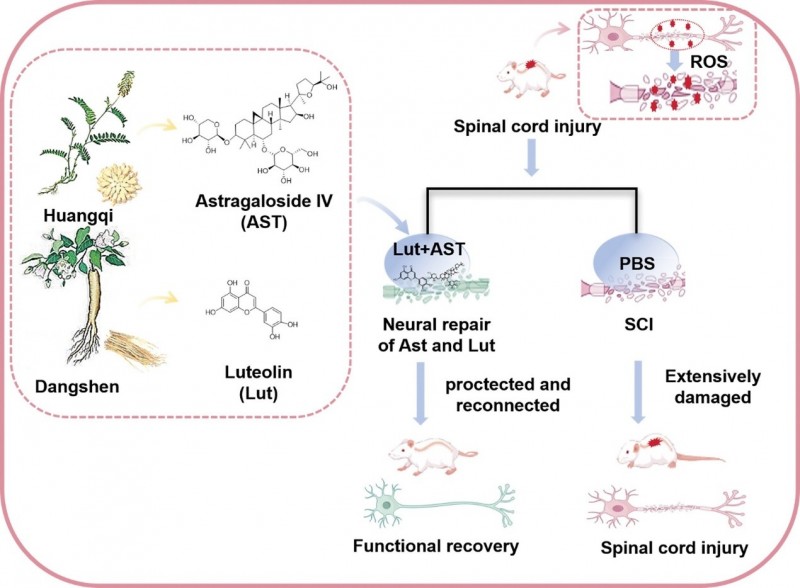
Graphical abstract illustrating that the Lut-AST combination, derived from the classic TCM herb-pair Huangqi and Dangshen, promotes functional recovery after SCI by synergistically mitigating oxidative stress and neuroinflammation.
In the study, the scientists didn’t just test one plant compound at a time. They tested two traditional Chinese medicine compounds together — luteolin (from flowers like honeysuckle and chrysanthemum) and astragaloside IV (from astragalus root, Huang Qi). These plants have been combined in Chinese herbal formulas for centuries to help the body recover from injury and inflammation. So in a sense, the researchers were testing a modern, purified version of an ancient Chinese herbal pairing.
The honeysuckle is an ancient Chinese Medicine, now shown to help repair spinal cord injury
When they compared treatments, each compound alone helped only a little. But when they used both together, recovery after spinal cord injury improved much more. The combination reduced inflammation and oxidative stress while also supporting nerve survival and regrowth. Rats that received the paired treatment regained more movement, and their spinal cords showed less damage and scarring.
So the key idea is this: instead of inventing a brand-new drug, the scientists essentially tried a traditional Chinese medicine recipe principle — combining a restorative herb (astragalus/Huang Qi) with an anti-inflammatory flower compound (luteolin-rich herbs). Modern lab tests then confirmed what traditional practice long suggested: healing complex injuries often requires multiple plant compounds working together, not a single isolated molecule.
Astragalus Huang Qi via Wikipedia
“Spinal cord injury is not driven by a single pathological process, so it is unlikely that a single-target drug can achieve meaningful recovery,” said one of the study’s senior authors. “What makes this strategy compelling is the way these two compounds complement each other—one strongly counteracts oxidative stress, while the other supports neural protection and regeneration. By working together, they create conditions that are far more favorable for repair. This study provides a strong rationale for exploring synergistic, multi-component therapies in the treatment of complex neurological injuries.”
The study offers important insights for the future design of spinal cord injury therapies. By demonstrating that a carefully selected drug pair can outperform single-compound treatments, it supports a shift toward multi-target strategies for neurological repair.
Although the current findings are based on preclinical models, they lay the groundwork for developing safer, more effective combination therapies that may reduce reliance on high-dose steroids or invasive interventions. Beyond spinal cord injury, this synergistic approach could inform treatment strategies for other neurodegenerative and traumatic conditions where oxidative stress and inflammation play central roles, advancing the broader field of regenerative and precision medicine.
The lead scientist on this study is Wei Lin, from the Department of Orthopedics at the Traditional Chinese Medicine–Western Medicine Hospital of Cangzhou and the Hebei Key Laboratory of Integrated Traditional and Western Medicine in Osteoarthrosis Research in Cangzhou, China.
The fashion industry knows that makers are making their mark. Young women are raiding Value Villages and are turning old textiles into hip fashion must-haves. Doilies and old 80s T-shirts are getting cut up and remade into newly loved fashion statements. Anyone who has a teenage girl probably has some upcycled jeans project half-done in the corner of the room.
A new collaboration between luxury brand Coach and textile reuse pioneer Bank & Vogue attempts to stitch those two worlds together: high fashion and the global textile waste stream. Textiles from fast fashion brands are filling up landfill. So much of it is poorly made with low-cost materials that the fashion items can’t be reused or reloved.
“This Coach collection is our love letter to denim and to American heritage pieces that only get better with time,” says Stuart Vevers, Creative Director at Coach.
Rivers polluted by dye from the textile industry, via Gigie Cruz-Sy/Greenpeace
“Made with post-consumer materials and re-crafted with intention, each piece is truly one of a kind, shaped by the stories it already holds and the ones you’ll add. There’s an honesty in these pieces; lived-in, love-worn, and full of character. Perfectly imperfect in all the ways we value. Guided by our imagination — and our commitment to reducing our impact on the planet.”
Developed in partnership with Bank & Vogue, a global leader in textile reuse and recycling, the capsule transforms reclaimed denim into distinctive, one-of-a-kind designs. Each garment embraces visible character and individuality, reinforcing Coach’s ongoing commitment to circular fashion and responsible design practices.
And this is where the story gets interesting for sustainability watchers: Bank & Vogue isn’t a marketing construct. It’s an actual node in the global used-clothing economy.
A Coach RePurposed bag
As co-founder of the Bank & Vogue family of companies, Steven Bethell has been a thought leader and pioneer in the post-consumer textile space for over 25 years. He has dedicated his work life to innovative and relevant solutions to the crisis of stuff. Steven and his team have traveled to over 30 countries working extensively amongst the robust second-hand markets of the world.
Steven Bethell, a globally recognized leader in sustainable fashion and textile reuse, has been appointed to the board of the Secondary Materials and Recycled Textiles Association (SMART)
Steven is also the brainchild behind the largest remanufacturing plant in the world, where the circular economy for textiles is brought to life. Taking post-consumer waste and transforming it into relevant products, Steven works with big brands to help them bring their sustainability platforms to the next level.
A Coach RePurposed bag
Translation: the jeans you once donated to charity may travel continents before becoming luxury goods. Circular fashion isn’t just a design choice — it’s logistics, sorting, labour, and global material flows.
The Coach RePurposed capsule is now available in Coach stores and online.
Deep Space Energy is creating a power plant for the moon. Via Deep Space Energy.
Elon Musk has made it clear. He’s going to inhabit Mars. But the first natural step, he says, will be the moon. We’ve reported on the moon base station. NASA knows that plants can grow on the moon. And countries like China and Russia have declared they will build cities there too using nuclear power. Stepping up to democratize the moon is an EU-funded company, Deep Space Energy, which has just raised more than $1 million USD as a seed fund to help it create energy generators on the moon. It’s a bid to strengthen the European sovereign space and defense industry and power Moon surface exploration.
The researchers are from Latvia: “Our technology, which has already been validated in the laboratory, has several applications across the defence and space sectors.
“First, we’re developing an auxiliary energy source to enhance the resilience of strategic satellites. It provides the redundancy of satellite power systems by supplying backup power that does not depend on solar energy, making it crucial for high-value military reconnaissance assets,” says Mihails Ščepanskis, founder and CEO of the company.
Based in Riga, the company is developing a radioisotopic generator toward commercialisation. The electricity comes from nuclear decay — a nuclear process. And the equipment does not include a nuclear reactor which could explode.
The funding was made up of its €350k pre-Seed round led by Outlast Fund and Linas Sargautis, an angel investor and a former co-founder of NanoAvionics. The company also secured additional €580k in public contracts and grants by the European Space Agency (ESA), NATO DIANA, and the Latvian government. It’s not a huge sum of money for such an ambitious project but it’s a start.
European and American military and space technologies are what leads to new inventions in medicine, ecology and renewable energy.
Military spy satellites evolved into Earth-monitoring satellites that now track deforestation (Amazon, Congo), (see MIT using AI and imaging for trees in cities) they can monitor methane leaks and pollution; and satellites predict droughts and crop failures.
Military thermal imaging using infrared vision is now used to detect inflammation and vascular disease, it can screen for breast cancer and detect fevers at airports.
In the 2025–2026 period, EU-Startups has reported substantial capital flows into the European SpaceTech sector, primarily at Seed and Series A stage.
Germany’sReflex Aerospacesecured €50 million to scale sovereign satellite platforms, while France’sInfinite Orbitsraised €40 million to expand in-orbit servicing capabilities. Also in France,Look Upattracted €50 million to grow its radar-based space surveillance network, andUNIVITYsecured €31 million to accelerate development of a space-based 5G constellation.
In Germany,Marble Imagingraised €5.3 million to scale its very high resolution Earth observation satellites ahead of launch, while Spain’sKreios Spacesecured €8 million to advance propulsion systems for very low Earth orbit. Italy’sAstradyneraised €2 million to commercialise ultralight solar panels, and Spain’sOrbital Paradigmclosed a €1.5 million pre-Seed round to develop reusable space capsules.
Orbital space capsule
Collectively, these rounds represent approximately €187 million in disclosed funding moving into European SpaceTech across adjacent segments including satellite infrastructure, propulsion, communications, servicing and observation.
Deep Space Energy says it will put a focus on energy resilience for satellites and lunar missions rather than platform deployment.
“As Europe is trying to become more independent, it is imperative to produce satellites with advanced capabilities on our own. Our technology provides an auxiliary energy source for satellites, which makes them more resilient to non-kinetic attacks and malfunctions,” Mihails adds.
Founded in 2022, Deep Space Energy is developing a new radioisotope power generator for space that uses the heat produced by the nuclear self-decay of radioisotopes – materials extractable from waste of commercial nuclear reactors.
The product aims for applications in deep space science missions, lunar surface missions and high-value defense satellites. Their solution converts that heat into electric power, requiring 5 times less radioisotope fuel than a thermo-electric generator (RTG), currently used in space.
The company highlighted that its radioisotope-based energy generator is not designed for any kind of weapons. It will target high-value, dual-use satellites to increase their resilience and operational reliability. The primary focus is on satellites operating in Medium Earth Orbit (MEO), Geostationary Orbit (GEO) and Highly Elliptical Orbit (HEO), which are all critical for modern military reconnaissance and early-warning systems.
These satellites support a range of defence functions, from synthetic aperture radar (SAR)
satellites for detecting troop concentrations through clouds and foliage, to signal intelligence for intercepting communications and radio transmissions, as well as missile-launch detection, which is essential for anti-missile defense systems.
Egita Poļanska, partner at the lead investor Outlast Fund, shares: “Space energy tech has been stuck with certain limitations for decades, but we’re finally seeing the pieces come together for a real breakthrough – new materials, smarter power systems, and actual commercial demand for lunar operations.
“Deep Space Energy is building the infrastructure that will literally power the next chapter of space exploration and industry. As Europe ramps up its space ambitions, we need our own companies to lead in these foundational technologies. We’re thrilled to back this team and honestly pretty excited to have an actual moonshot in our portfolio, in the most literal sense possible.”
Copyright, Moon Village Association
In the long term, the company aims to focus on the Moon economy. The radioisotope power generator looks to address critical energy challenges in the next phase of lunar exploration, including NASA and ESA’s Artemis, Argonaut and lunar rover programs, as well as the Moon Village framework led by the Moon Village Association. In particular, the technology is designed to support lunar night survival and operations in permanently shadowed regions, enabling extended scouting and prospecting missions.
On the Moon, where the temperatures at night drop below 150 degrees Celsius, and nights last for roughly 354 hours, moonrovers can’t rely on solar power.
The company’s technology requires approximately 2kg of Americium-241 fuel to generate 50W of power for a lunar rover, compared with around 10kg of radioisotope material needed by legacy RTG systems for comparable output. Given current projections that Americium-241 production capacity will reach around 10kg per year by the mid-2030s, this efficiency could enable lunar exploration missions to begin more than five years earlier and at up to five times the mission volume.
According to Ščepanskis, the company’s technology can significantly enhance the economics of moon rover missions by enabling them to last multiple day-night cycles up to a few years. The sole expenses of bringing payload to the Moon cost up to a million euros per kilogram; thus, by enhancing the lifetime of the rovers, the company helps to save hundreds of millions.
fresh jujube fruit in Ramla market Israel Photo by Miriam Kresh for Green Prophet
When you hear “jujube,” you might first think of the chewy, retro gumdrop candy with its brilliant red, yellow and green colors. But “jujube” started as English for sidr, the tree considered holy in Islam.
In the Koran it’s written that on the Day of Judgment the faithful, will dwell in Paradise “Among thorn-less sidr trees and clustered plantains, and spreading shade, and water gushing, and plentiful fruit.”
Perhaps because of this, sidr leaves are said to have magical, mystical properties.
Jujube (sidr) fruit Photo by Douglas Alan via Unsplash
Every year, one evening at mid-Ramadan, the tree shakes. The names on the leaves that fall are of those who will die in the coming year.
The sidr tree in black magic
Then there’s the intriguing use of sidr leaves as protection from black magic and the evil eye. We described what the evil eye is. Basically, it’s ill-wishing someone from feelings of envy, rivalry, and hatred.
Jealousy exists in the human heart; it can’t be shrugged off. Mature people recognize and try to overcome it; if we can’t exactly turn the other cheek, at least we hopefully move on to a healthier way of coping than secretly ill-wishing someone.
In Islamic culture, and in cultures who have lived in close quarters with Moslems, the evil eye is feared as one would fear a physical threat. In speaking of another’s child or property, it’s polite to raise one’s hand, palm outward, and say “hamsah” several times – to show there’s nothing to fear – all one’s intentions are good.
Women are especially susceptible to the suggestion of an evil eye. A pretty girl. A married woman wanting to conceive. A protective mother.
Men may fear that their success in business may cause envy, or that their virility will be impaired by witchcraft. Women are especially susceptible to the suggestion of an evil eye. A pretty girl. A married woman wanting to conceive. A protective mother.
Anti evil eye bracelets Photo by Miriam Kresh for Green Prophet
To ward off the evil eye, a person may wear an amulet bracelet.
But for a person needing stronger protection, there’s another, more intimate way to deal with witchcraft and the evil eye: bathing with sidr-infused water. This is also said to expel demons.
On the positive side, the sidr tree may host the spirit of a saint. Far from pagan, pre-Islamic tree worship, the tree itself isn’t a holy object; rather, the holiness of a saint whose custom it was to sit in its shade has been transferred to the tree. For this reason, it’s considered lucky to sit or sleep under a sidr tree.
There’s a Moslem legend about a sidr tree (also known in English as a lote tree) that grows in Paradise. On its leaves are etched the names of all humans. Every year, one evening at mid-Ramadan, the tree shakes. The names on the leaves that fall are of those who will die in the coming year.
A Mughal depiction of the lote tree (sidr). A large lote tree, known as Sidr Al Muntaha, was the last tree at the brink of the physical world that the Prophet Muhammad ﷺ and Angel Jibril passed before entering the heavens during Isra’a wal Miraj. Source unknown.
It follows that sidr once served to purify the dead. In Iran, Iraq, India, and southwestern Saudi Arabia, deceased Muslims were washed water infused with sidr leaves. The custom has apparently faded out in most countries.
A magic holy sidr bath to deflect the evil eye?
It needs 7 powdered sidr leaves stirred into a bucket of warm water. The hadith of the Prophet Muhammad allows to repeat healing prayers and verses from the Koran to increase the water’s potency. 5 grams, or 1 tablespoon of sidr powder equals 7 leaves.
Take the bucket of warm sidr water into the shower and pour it all over. It’s ok to rinse off the powder residue. Then step out of the shower, freshly immune to other people’s bad vibes.
Jean Pierre Conte is the chairman and managing director of Genstar Capital, a leading middle-market private equity firm with investments in healthcare, software, financial services and industrial technology.
U.S. charitable giving reached a record $592.5 billion in 2024, with individual donors contributing 66% of that total. Yet as philanthropy grows more sophisticated, donors increasingly want to know their contributions produce measurable results rather than simply funding operations. This shift toward impact-focused giving has pushed philanthropists to develop clearer frameworks for evaluating where and how they deploy resources.
Jean-Pierre Conte, managing partner of family office Lupine Crest Capital, has spent years refining such a framework through the JP Conte Family Foundation. Established in 2017, the foundation has distributed millions to organizations spanning education, medical research, and environmental conservation. What sets his approach apart is a willingness to evaluate nonprofits with the same rigor he brings to business decisions—while remaining guided by deeply personal values rooted in his own family history.
Conte serves as the foundation’s sole funder and president, maintaining direct oversight of every grant recipient rather than delegating decisions to staff. This hands-on structure allows him to apply lessons learned across decades in private equity to how he assesses charitable organizations. “A lot of nonprofits aren’t run crisply,” he observes, noting that he evaluates them with the same performance orientation he brings to business.
His philanthropic priorities trace directly to his upbringing. Jean-Pierre Conte spent his early years in Brooklyn before his family settled in New Jersey. His father Pierre escaped France after the Nazi occupation ended, while his mother Isabel departed Cuba seeking independence and a fresh start in America. “I grew up in a modest household that had big dreams and big aspirations, but we didn’t have a lot of resources,” he shares.
Those formative experiences now inform every grant decision his foundation makes. Rather than spreading resources thin across dozens of causes, Jean-Pierre Conte concentrates giving in areas where personal connection meets institutional excellence: educational opportunity for first-generation students, neuroscience research honoring his late father’s battle with Parkinson’s disease, and environmental conservation work through partnerships like Pepperwood Preserve in Northern California.
Principle One: Evaluate Organizational Capacity Before Writing Checks
Jean-Pierre Conte’s approach to selecting grant recipients begins with assessing whether an organization possesses the internal capacity to execute its mission. Before committing funds, he conducts direct evaluations of prospective partners.
“I interviewed each school, visited each school, and learned that some of the schools were really good at it, good at providing resources, attracting that talent, and even mentoring that talent while they were at school,” he explains. “And other schools didn’t. They were either too small, didn’t have the resources, or both, and sometimes schools didn’t have the talent or the conviction to do it.”
This vetting process led him to establish the Conte First Generation Fund at 11 universities, including his alma maters Colgate University and Harvard. Rather than distributing scholarships broadly, he concentrated resources at institutions demonstrating both commitment and capability to support first-generation students throughout their college experience.
The 2025 Bank of America Study of Philanthropy confirms this capacity-focused approach is gaining traction among affluent donors. Researchers found that philanthropists increasingly deploy sophisticated giving methods—including donor-advised funds and private foundations—while applying measurement and evaluation frameworks to their grants.
Principle Two: Prioritize Leadership Quality Within Partner Organizations
For Jean-Pierre Conte, organizational leadership often determines whether a nonprofit can translate funding into outcomes. His experience with Sponsors for Educational Opportunity (SEO) demonstrates this conviction in practice.
When he observed that SEO’s Bay Area operations needed stronger direction, he advocated for leadership changes rather than simply increasing his financial contribution. “We multiplied the number of students served in the Bay Area by five to seven times,” he shares about the results following that transition.
The program now graduates 85% of participants from four-year colleges, and four out of five SEO Scholars become the first in their families to earn a degree. Those outcomes stem partly from the organization’s leadership infrastructure—the kind of institutional strength Jean-Pierre Conte screens for before committing foundation resources.
His decision to fund two endowed professorships at UCSF in November 2024 followed similar logic. The $5 million gift supports Parkinson’s disease research through positions overseen by S. Andrew Josephson, MD, chair of the Department of Neurology.
“Andy is such a great leader. He’s on a mission to find better solutions for brain health. He’s brilliant, but he’s also full of empathy and drive. When I met him, I knew I wanted to support his work at UCSF,” Jean-Pierre Conte recalls.
Principle Three: Start Intervention Early to Maximize Long-Term Impact
Jean-Pierre Conte’s philanthropy initially concentrated on supporting students already enrolled in college. Over time, he recognized that earlier intervention produced stronger outcomes.
“A light went off, and I came to the conclusion that I need to start sooner, in high school or earlier, to really help change the trajectory,” he explains. This realization led him to partner with organizations like 10,000 Degrees, which works exclusively with students from low-income communities—93% from Black, Indigenous, and Latino backgrounds.
The foundation donated $250,000 to 10,000 Degrees in 2023, supporting programming that reaches students as early as eighth grade. SEO Scholars operates similarly, providing after-school programs, Saturday classes, and summer sessions that supplement public school education years before college applications begin.
“These are kids who, voluntarily in eighth grade, agree to go into this program and do after-school work, work on Saturdays, work during the summer, and extra tutoring to supplement their public school education,” Jean-Pierre Conte has noted. “Plus, they agreed to mentoring to get them to go to college.”
Principle Four: Build Permanent Infrastructure Rather Than Provide Temporary Support
The JP Conte Family Foundation prioritizes grants that create lasting institutional capacity. His $5 million UCSF gift established endowed professorships—positions that will fund neuroscience research for decades rather than supporting a single study or short-term initiative.
His $25 million donation to Colgate University in 2025 funded construction of the Jean-Pierre L. Conte Social Center, creating permanent campus infrastructure rather than covering operational expenses. The foundation’s June 2025 donation of a Type 3 wildland fire engine to Colorado’s Aspen Fire Protection District—the largest gift in Aspen Wildfire Foundation history—applied the same thinking: equipment that serves communities for years rather than one-time emergency relief.
Principle Five: Let Personal Values Guide Giving Priorities
Jean-Pierre Conte makes no apology for allowing biography to shape philanthropy. His father’s Parkinson’s diagnosis at age 75 and eventual passing in 2017 transformed medical research into a foundation priority. His own experience as a first-generation college student who received mentorship from Wall Street professionals drives his educational giving.
“I’ve always felt the need to give back,” he says.
The foundation website articulates this philosophy directly: “We focus on funding projects that deliver real, accountable, change to communities and individuals: not just aesthetic public relations.” For donors seeking frameworks to guide their own charitable decisions, that combination of personal conviction and disciplined evaluation offers one model worth examining.
Two thousand years ago, someone scratched a web of lines into stone in a Roman settlement on the empire’s northern edge. Soldiers, traders, or locals passing time in Coriovallum, now Heerlen in the Netherlands, moved small counters across those lines in a tactical duel of blockade and entrapment.
Excavation of two pottery kilns in Heerlen, the Netherlands, in 1940.Het Romeins Museum
The board survived but the rules did not. Now researchers believe they have them using artificial intelligence.
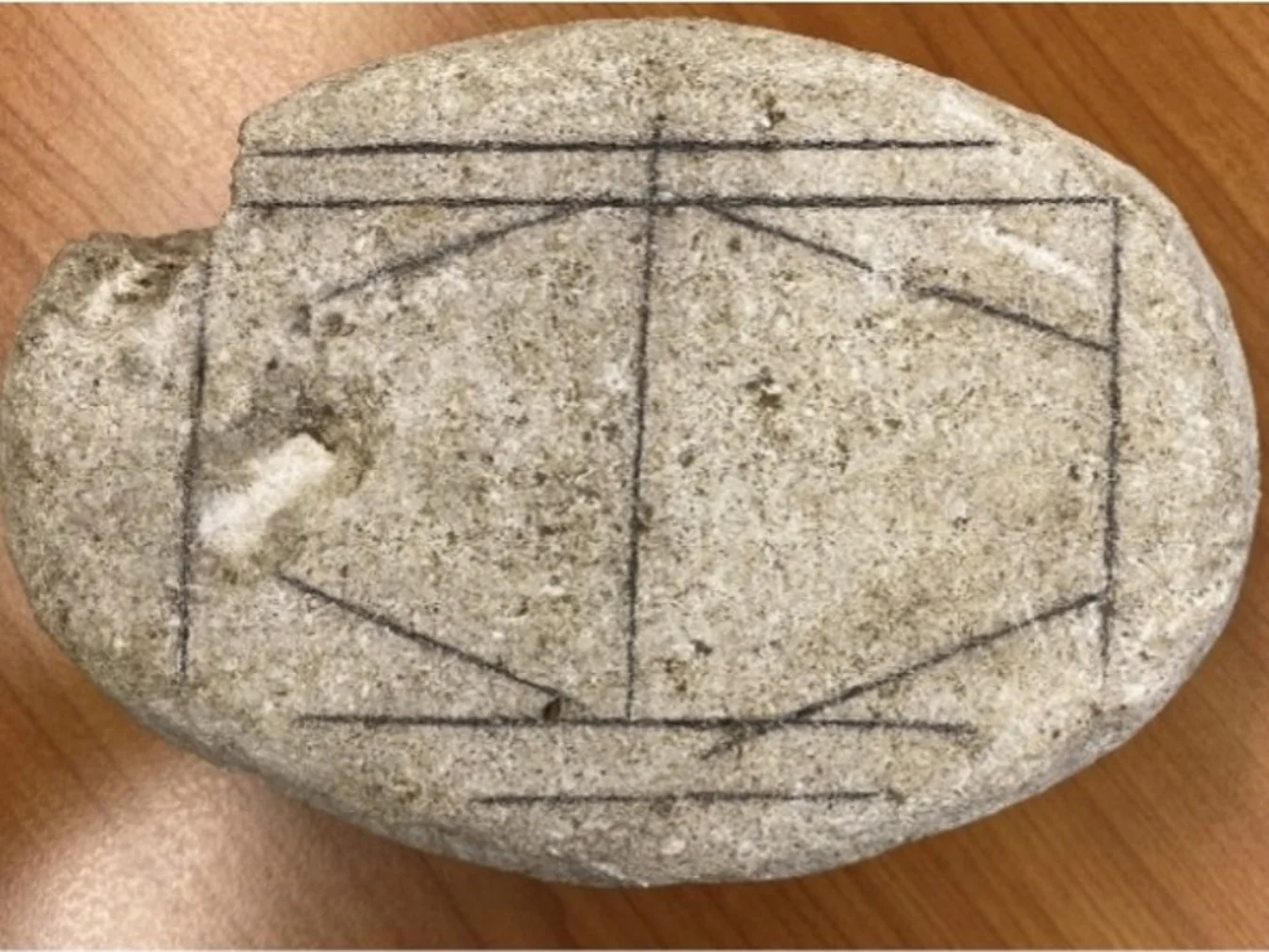
By simulating thousands of possible turn sequences on the carved network found at the site, archaeologists identified a ruleset that best matches the wear patterns on the stone: a two-player blocking game they’ve named Ludus Coriovalli, the Game of Coriovallum.
Results of the AI simulation showing nine possible game boards. In these games, the player with more pieces attempts to block the player with fewer pieces.Crist et al./AntiquityKunrader limestone blocks forming the foundation of the porticus of the Roman baths of Coriovallum. The rough-hewn blocks are from a local quarry. A Norroy limestone pillar base rests atop them (photograph courtesy of Het Romeins Museum).
It belongs to the Roman family of line-movement strategy games that includes ludus latrunculorum, but with its own geometry and tempo.
Here, the results of use-wear analysis are used to inform artificial intelligence-driven simulations based on permutations of rules from historic Northern European games. Disproportionate wear along specific lines favours the rules of blocking games, potentially extending the time depth and regional use of this game type.
For Green Prophet readers, this is familiar territory.
We’ve previously explored ancient games reborn from archaeology, from Mehen boards etched into ship planks to Egyptian Senet sets reconstructed from tomb art. These games are more than pastime, they’re ancient culture, revealing how people thought about territory, risk, and control.
Results of the AI simulation showing nine possible game boards. In these games, the player with more pieces attempts to block the player with fewer pieces.Crist et al./AntiquityResearchers studied a possible game board, shown here with pencil marks highlighting the incised lines. Walter Crist
Ludus Coriovalli adds a Roman frontier voice to that conversation.
What are the proposed rules of the game?
Two players use unequal numbers of pieces on a network of intersecting lines, with the larger force attempting to surround and immobilize the smaller force. Players take turns moving one piece at a time along the engraved lines to an adjacent intersection point. A piece (or group) is captured or neutralized when it is completely blocked so it cannot move along any connecting line. The larger side wins by trapping all opposing pieces, while the smaller side wins by evading capture or escaping the blockade.
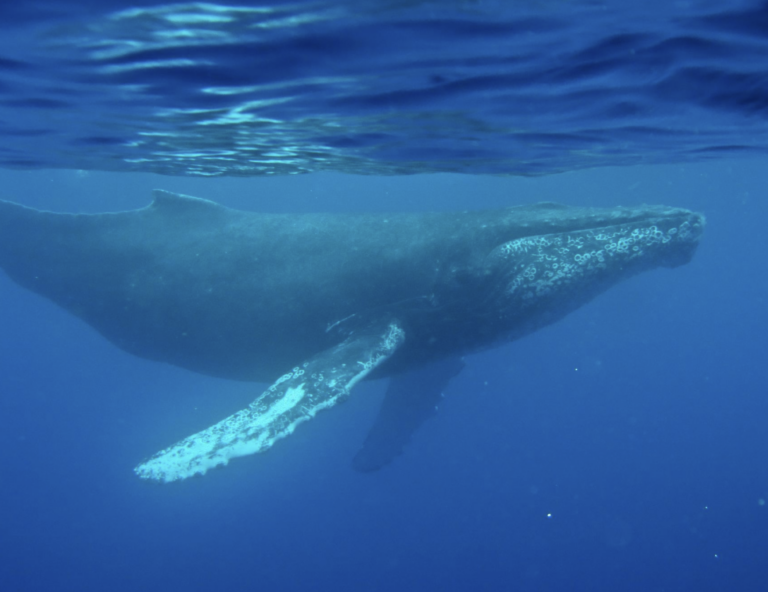
Some moments define an era: the Moon landing, 9/11. For the natural world, a new milestone has surfaced from the ocean’s past, the oldest known recording of a humpback whale. Listen to the historic recoding played over a modern video of whales, above.
Scientists at Woods Hole Oceanographic Institution (WHOI), one of the world’s leading marine research centers, have uncovered a recording captured on March 7, 1949, near Bermuda.
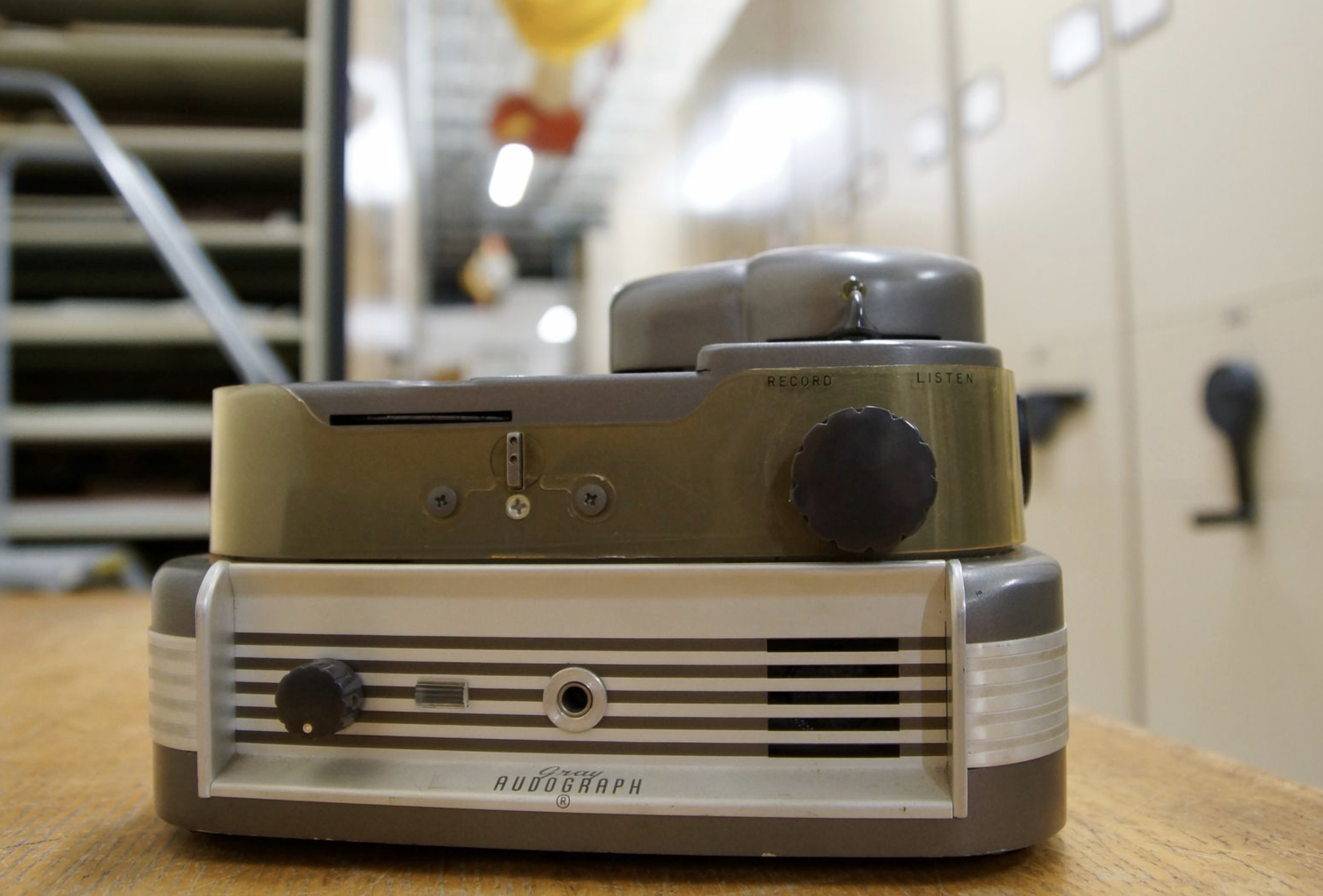
The sound was preserved on a fragile but remarkably intact audograph disc found in the institute’s archives. At the time, researchers aboard the research vessel Atlantis were testing sonar systems, measuring explosive charges, and conducting acoustic experiments in collaboration with the US Office of Naval Research.
The machine used in the historic recording of the humpback whale. Courtesy of Woods Hole.
Underwater recording technology was then in its infancy, and scientists still struggled to identify the sources of many ocean sounds.
Around that same period, WHOI scientist William Schevill and his wife Barbara Lawrence — a pioneering mammalogist — were laying the foundations of marine mammal bioacoustics. In 1949 they used a crude hydrophone and dictating machine to record beluga whales from a small boat in Canada’s Saguenay River, the first confirmed recording of wild marine mammals. Many recordings from the late 1940s were poorly preserved or lost, reflecting how early ocean acoustics research struggled with both technology and storage.
“Data from this time period simply don’t exist in most cases,” said Laela Sayigh, a marine bioacoustician and senior research specialist at WHOI. “The ocean is much louder now, with increases in both the number and types of sound sources. This recording can provide insight into how humpback whale sounds have changed over time, and serve as a baseline for measuring how human activity shapes the ocean soundscape.”
Today, WHOI scientists deploy passive acoustic buoys, Slocum gliders, and autonomous hydrophones to monitor ocean soundscapes at scale. These systems generate vast datasets used to study marine life, track ship noise and industrial impacts, and understand long-term environmental change.
The WHOI-led Robots4Whales program focuses specifically on protecting marine mammals using autonomous ocean robots equipped with the Digital Acoustic Monitoring Instrument (DMON). These systems detect whale calls in real time by tracking frequency changes in sound — producing “pitch tracks” from spectrograms that can be matched to known species libraries and transmitted ashore via satellite.
“Underwater sound recordings are a powerful tool for understanding and protecting vulnerable whale populations,” said marine bioacoustician Peter Tyack, emeritus research scholar at WHOI. “By listening to the ocean, we can detect whales where they cannot easily be seen. At the same time, these acoustic tools let us track how human activity — from shipping to industrial noise — alters the ocean soundscape and affects how whales communicate, navigate, and survive.”
Unlike most recordings from this era, which were lost as early media deteriorated, the audograph discs survived and appear to have been uniquely used for underwater sound — making them a rare, possibly singular example of early ocean listening preserved from the dawn of marine acoustics.
Europe was built with free access to safe, clean, spring water in cities. Here is an Austrian woman at water well in 1940
About 20 years ago we were all throwing out bottles and food packaging that contained BPA. The words BPA stand for (bisphenol A) – it’s a chemical used to make hard, clear plastics and protective resin linings inside metal cans. It helps plastics stay strong and heat-resistant, but small amounts can migrate into food and drinks. But the chemical is an endocrine disruptor, hurting our bodies in a number of ways.
We’ve come a lot further since BPA. We now have microplastrics and PFASs to worry about. Forever chemicals, or PFAS, are man-made chemicals and products made to repel water, grease, and stains. They’re in firefighting foams, non-stick cookware, waterproof clothing (yes, they’ve been used by the eco-darling Patagonia), stain-resistant carpets, fast-food packaging that seem like paper but which are water-proof, and many industrial processes.
PFASs don’t break down, and they escape factories, landfills, and training sites into soil and groundwater, eventually reaching our drinking water. Wastewater plants can’t fully remove them, so they circulate in rivers and crops too. Long-term exposure has been linked to immune, hormone, and cancer risks.
Consumers can reduce exposure by limiting grease-proof packaging, choosing PFAS-free textiles and cookware, and supporting water testing and filtration in their communities. And now the EU is taking a bold step in making sure all European Union member states worked to monitor and reduce PFAS levels in drinking water. Consider that if you live in Iraq, PFAS are the last thing you need to worry about – European, American and Chinese oil companies are leaking crude oil right into the water, and they know about it.
But those same Europeans who want to make the world a better place, at least where they live, has created a Drinking Water Directive. Don’t click on that link if you have an aversion to bureaucratic policy speak.
According to a press release sent out, EU countries will need to inform the commission on PFAS in water, including data on exceedances of the limit values. According to the commission, rife with overpaid bureaucrats who engage in political activities against western values, the new reporting system is reportedly “simpler than under the previous Drinking Water Directive and reduces the amount of data to be reported.
“It is the first time systematic monitoring of PFAS in drinking water is being implemented in the EU,” they write.
What happens if your country exceeds the limits put in place? The EU countries must inform the public, and protect public health. Actions may include closing contaminated wells, adding treatment steps to remove PFAS, or restricting the use of drinking water supplies for as long as the violation continues.
The UE believes that people should have access to safe drinking water.
If you are from a non-EU country and are concerned about PFAS in your drinking water, take these guidelines to your ministry or oversight group in your region or country dealing with water monitoring.
The EU says that the guidelines were developed with member states.
“PFAS pollution is a growing concern for drinking water across Europe. With harmonised limits and mandatory monitoring now in force, Member States have the rules and tools to swiftly detect and address PFAS to protect public health, says Jessika Roswall, Commissioner for Environment, Water Resilience and Competitive Circular Economy.
How to remove PFAS from your tap water at home?
Next question for readers and entrepreneurs? The most common in-home water filters that remove PFAS are activated carbon filters like those found in a Brita Elite jug or Berkey filter, but the best is reverse osmosis and undersink-ROs like Aquafor.
In Canada and the US, the main Berkey-style gravity water filter options people compare are Berkey, ProOne, British Berkefeld, Alexapure, and Waterdrop.
Dual stage filters (activated carbon + reverse osmosis) the best option.