Home Blog Page 594

UAE Residents Learn To Save Inflatable Dolphins And Whales

0

how-to-save-whaleCetacean-lovers learn how to rescue beached mammals in Abu Dhabi and Dubai.

Humans engage in all manner of self-destructive behavior, and whales beach themselves. What’s worse, because they are deeply attached to other members of their pod, when senior whales beach themselves, the rest of the “family” will follow suit. The results are devastating, not only for the whales but also for onlookers who watch as these gentle giants struggle, slowly, against death on the beach.

Saving them is no easy feat. Whales, whose poop is essential to marine environments, can weigh thousands of pounds. Not only does this make them difficult to move, but often their internal organs and ribs are compromised by the force of their own weight. Since they endure significant anxiety and have to be handled very carefully, UK experts traveled last week to the UAE to teach 50 well-meaning participants how to avoid doing more harm than good while protecting their favorite dolphins, dugongs, and whales.

It’s Not Just Global Warming. It’s Global Scorching.

3

drought-predictionThe warmer colors (red, purple) represent parts of the planet that are likely to experience the worst drought within the next few decades.

In some places, 2010 was the hottest year on record. Saudi Arabia – with its enormous swath of desert – was particularly hard hit, while Egypt stewed during a series of blackouts amidst brain-pickling heat. The discomfort of those painful summer months may have dissipated as temperatures begin to dip, but prepare yourself: in the next few decades, particularly around the Mediterranean, our brains could shrivel to nothing under heat and drought that our planet may never have experienced before.

Similar to the Richter scale that measures the severity of earthquakes, the Palmer Drought Severity Index (PDSI) rates droughts. Negative numbers refer to dry conditions and positive numbers refer to wetter conditions. Though many northern latitudes will get wetter as warm air holds more moisture, dry southern and subtropical areas are likely to become so hot and so dry that the PDSI will no longer be relevant.     

Marda Permaculture Farm Plants Sustainable Seeds in Palestine

1

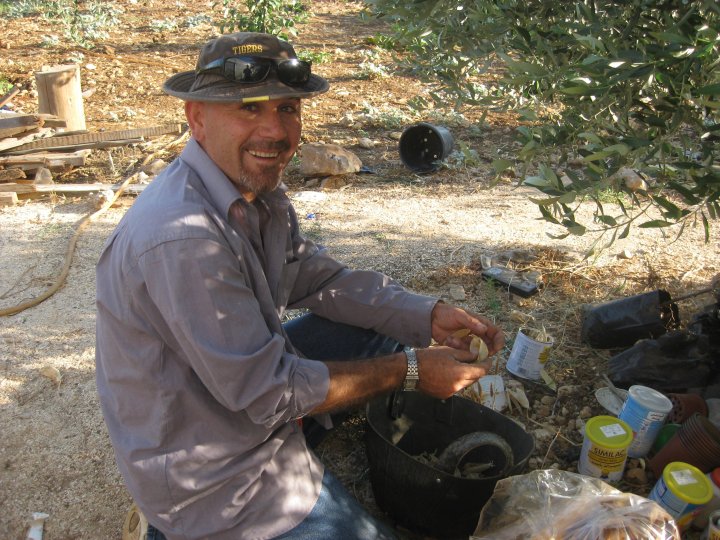
Murad Alkhufash marda permaculture farm palestine

Marda Permaculture Farm shows that traditional and modern sustainable farming practices can go hand in hand.

Amidst the conflict and destruction that plagues Palestine, the Marda Permaculture Farm stands out as a model of sustainability and greenery.  Founded in 2006 by permaculturist Murad Alkhufash (pictured above) who is a tenth generation farmer, the working farm blends local traditional farming methods with modern permaculture techniques and science.  It also empowers the local community to produce healthy food for itself in a cheaper and more eco-friendly way, by avoiding industrial fertilizers or pesticides.

Israel Cleantech Intelligence: Google Power and 7 More Headlines


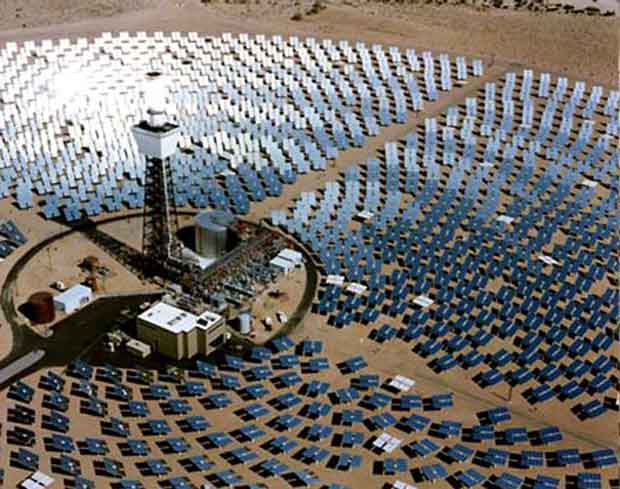
Brightsource panels

The benefits of algae, GreenRoad’s new competitor, agricultural production forecasts and more headlines related to Israeli cleantech and the environment.

During the past week Google revealed that it’s been working on self-driving cars. Around the same time GreenRoad’s founder and Chief of Safety announced he is leaving the company. Is Google in his future? Solar water heaters are in the future of the US market, with Israel’s M.C.O Industries announcing that it is entering the US market. Meanwhile, the OECD is to review Israel’s environment policy which doesn’t seem too good. For these stories and more, see this week’s headlines below.

BrightSource & Solar Millennium Accused of Building on Sacred Indian Sites

2

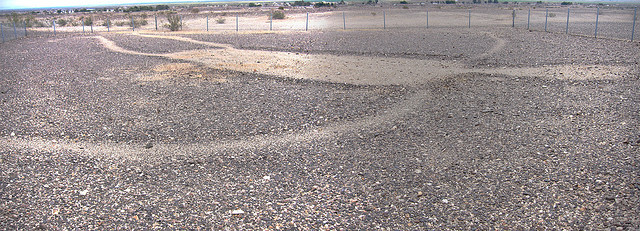
blythe-intaglioesWill your solar energy be haunted?

We pushed and pushed, and finally got what we asked for: non carbon-based energy. After years of weaving through red tape, the Israeli company BrightSource Energy finally received the go ahead to build the world’s largest Concentrated Solar Power (CSP) plant in the California desert. When it is completed, it will double the amount of solar energy available in the United States.

It has emerged, however, that both BrightSource and Solar Millennium are stepping on toes and that their energy generation may be haunted: not only will the desert tortoise be relocated, but Native Americans suggest that the mirrors will displace other animals, as well as sensitive plants, and perhaps most controversially, the plants could destroy sites that are considered sacred to Native Americans. 

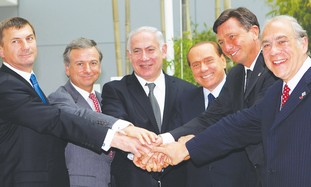
Will OECD Conf. Compel Israel To Solve Dead Sea Problem?

2

oecd-conference-jerusalemBefore calling its tourism industry sustainable, Israel should first solve its Dead Sea problem.

When Israel was invited to join the Organization for Economic Co-operation and Development (OECD) earlier this year, dissident voices condemned the move, citing its dubious human rights record.

Israel’s contribution to science and technology sealed its inclusion in this elite group of developed countries nonetheless, though because membership requires higher operating standards in all sectors of society, Israel’s polluters have already been taken to task.

This week, 26 out of 33 OECD members, as well as Estonia, India, and Romania, are participating in a three day tourism conference in Jerusalem focused on elevating the industry to a more environmentally conscionable and sustainable level. While in general Israel’s record is sound, with numerous eco-options available to foreigners, the state of the Dead Sea and its sinking hotels remains the country’s biggest blight.

The Ecology of Sustainable Love

0

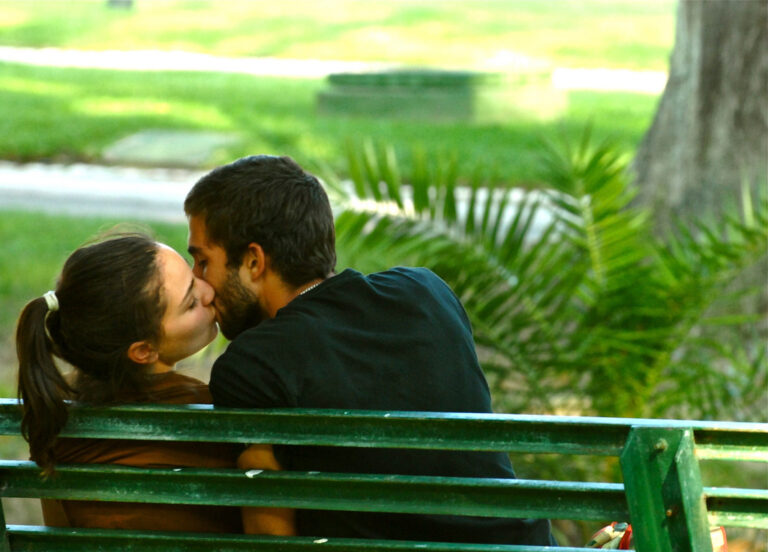
eco sex

Physical passion is the ‘fire’ element of sustainable relationships, and is dependent on a healthy dose of ‘earth, air and water’ according to a noted eco-sexpert.

Wendy Strgar is in the business of creating sustainable relationships, and her ecology of love philosophy is both green and desirable. Like the water we drink for survival, love is essential to our wellbeing. Maintaining a vibrant and authentic bond with another human being requires specific skills to flourish; emotional tools that we can learn and are as simple to understand as earth, water, air and fire.

The following is adapted from her book, Love That Works, A Guide to Enduring Intimacy, and discusses the parallels of these four basic components of Mother Earth to the inner landscapes of our personal connections. Her message is relevant wherever your call home, including the Middle East, where developing better relationship skills underpins our ability to coexist.

“The [Earth] of our relationships rests in our thoughts. This is the foundation of your relationship.”

Our thoughts are incredibly powerful: They can keep us connected or drive us apart. When was the last time you monitored the emotional quality of your thinking about your partner? Giving people the benefit of the doubt, giving up the need to be right, and looking for what is lovable in your partner will help you choose thoughts that sustain a loving atmosphere.

“The Water of our relationships happens in the ebb and tide of togetherness. This is how we show up for each other and keep our promises.”

Showing up for someone isn’t about creating quality time and special date nights, although these are nice ways to have together time. Adding safety to your relationship has more to do with making different choices about the little things. For example, instead of reading the paper after work, offer to help with dinner. Sharing the details of a life together speaks volumes about priorities. “Your needs matter to me” is an essential message to pass to your beloved.

“The Air of relationships flows with our ability to communicate. What we say and whether we feel heard is the basic currency that enriches or bankrupts our relationships.”

Communication takes the form of words and actions. Not being able to self-disclose or share important life events literally takes the air out of love. The goal of communicating is to connect. Sometimes that may mean engaging in a conversation that isn’t interesting to you, or learning to listen more attentively.  This can also be about how you pay attention sitting side by side. Be sensitive to each other, and don’t take missteps personally. Men and women have different ways of expressing and listening to each other, and sometimes have to work to learn to communicate well.

“The Fire of relationships is ignited through physical touch. Cultivating a passionate, tender and safe place to explore sexuality with the one we love is the height of intimacy.”

Many believe that if the physical intimacy in their relationship improved, so would the rest of their love. Usually, the reverse is true. A great sexual relationship and ongoing passion is the result of our thoughts, communications and ability to show up outside the bedroom.

Intimate lives that are nourished from the ground up, so to speak, offer partners a place to truly open up, discover their own passion, and be generous with their sexuality.

Consider each aspect of your relationship – your thoughts about it, being present for your partner, communicating together and sharing pleasure – and ask yourself: where can I improve? Where would you like to see more from your partner? By paying attention to these ‘elements’ in your relationship, you can create a more sustainable, secure and passionate bond.

More eco-sexuality news:
GM Foods Shrinking Sexual Health in a Womb Near You
Birth Rate in Middle East Bad News for Planet
Eco-Sexy Nutrition for Women, From Horny Goat Weed to Vitamin C

Academic Research and Environmental Policy Conference at Tel Aviv University Tomorrow

0

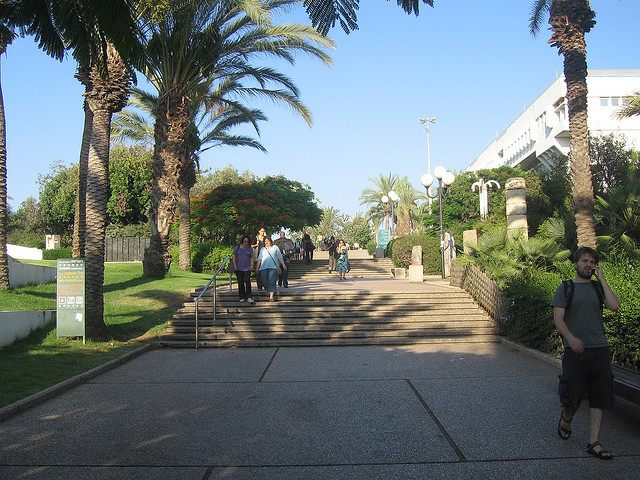
tel aviv university campusWho says that academia has to be detached from the real world?

The world of academia is notorious for being detached from the real world.  There are plenty of good reasons why it’s called the “ivory tower”.  Because sometimes you just don’t care why Jacques Derrida chose to spell the word difference as differance, and it really won’t make any impact on your daily life if you understand Heidegger.  But even though academia is, by definition, motivated by pursuing knowledge (and not action), some pursuits of knowledge can be very useful in the real world.  Tel Aviv University is hoping to prove that environmental research is one of them.

Cool, thick and hot Arabic almond milk recipes

1

oat milk shake with bananas

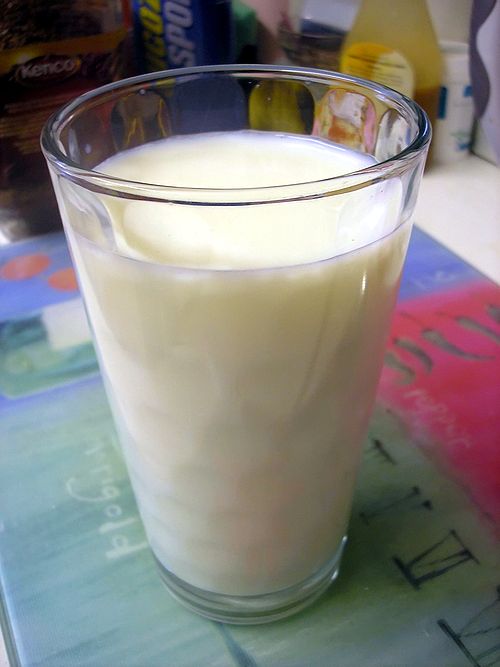
Cool, soothing raw almond milk is great for hot days. But when winter arrives, enjoy a creamy, hot, Middle Eastern version.

Almond milk, while it may be killing the bees, is a vegan option for a protein drink, instead of animal milks (like camel’s milk). It’s lactose-free, has no cholesterol, and a cup contains 10 grams of protein (and for kosher cooking, it’s pareve). The original raw almond milk is amazingly refreshing on hot days, and goes well with dishes like lemon-scented vegetarian couscous.

You can take the recipe a step further. When the weather turns cold, make a thick, creamy hot version with the typical Arabic flavoring of cardamom and cinnamon.

Cool Almond Milk Recipe

about 3 cups

Ingredients:

1 -1/3 cups ground raw almonds

2 cups  water

1/4 tsp vanilla extract

pinch of salt

Bring water to a boil, then turn the flame off.

Add the ground almonds and the salt. Steep for 10 minutes.

Strain the milk through cheesecloth or a fine strainer. Add the vanilla extract and mix. Chill before drinking.

bee foraging almond blossoms

Thick, Creamy Arabic Almond Milk

3 cups

Ingredients:

3 cups almond milk, as made above – or animal milk if liked

3 tablespoons rice flour

3 tablespoons grated raw almonds

1 teaspoon ground cardamom seed

3 tablespoons sugar

powdered ginger for sprinkling

  • Bring the milk to a boil over low heat.
  • Add sugar, ground almonds, and rice powder.
  • Cook for 10 minutes, stirring constantly.
  • Add the cardamom, stir.
  • Strain into individual cups.
  • Sprinkle ground ginger over each cup; drink hot.

More recipes using almonds on Green Prophet:

Almond-Blossom Liqueur

Za’atar Pesto


Energy Conference in Israel Becomes Arena for Debating Natural Gas Deal with Egypt

0

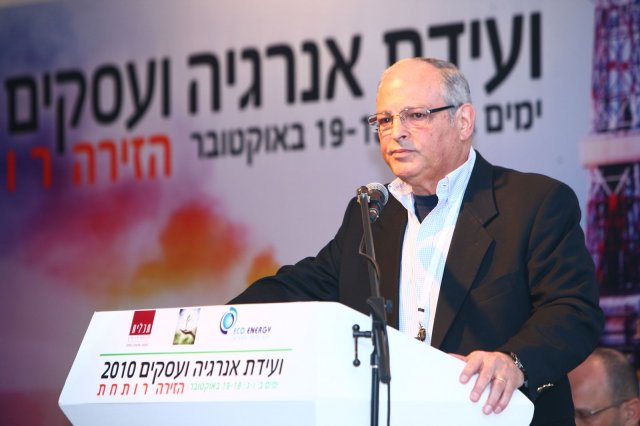
Nimrod Novik addressing the Israel Energy and Business Convention 2010

Nimrod Novik of the Merhav Group  was not pleased by the frontal attack waged by Delek’s Yoram Turbowitz at an energy conference in Israel this week.

The Israel Energy and Business Convention 2010 held this week in Ramat Gan addressed a range of energy-related issues and featured keynote speeches by several government ministers. Of particular interest to the Green Prophet, however, was the opening plenary session of Day 2, entitled “Regional Cooperation in the Fields of Energy and Infrastructure.” The conference program promised that “business executives and representatives of the countries in the region and international organizations will attend the session.” But after arriving at the conference, it was disappointing to discover (and indicative of the current political situation) that the only country in the region that was represented on the panel was Israel.

A more apt title for the session might have been: “Domestic Squabbling over Regional Cooperation” – because most of the session involved a verbal “ping-pong” (as one of the panelists described it) between competitors in the natural gas market regarding Israel’s procurement of natural gas from Egypt.

ZenithSolar Makes Solar Power Affordable for Everyone

ZenithSolar technology makes solar-power affordableHas affordable solar energy without government subsidies finally arrived?

ZenithSolar, a solar energy tech company, has launched a new solar system on Kibbutz Yavne in Israel that achieves 72% solar efficiency, provides both hot water and electricity and doesn’t require the need of subsidies.

Bogus Job Offers For Elephant Trainers And Graphic Designers

4

bogus-job-opportunities

Deputy Editor of XPRESS goes undercover and exposes rampant recruitment racket in the United Arab Emirates.

Mazhar Farooqui, Deputy Editor of XPRESS, posted a resume that depicted him as the most worthless employee in the United Arab Emirates. Even so, he was offered all kinds of lucrative jobs. For only $81, the undercover editor was told by the “recruitment agency” Waseela near Sharjah City Centre that he could transfer to Canada to work in a veterinary hospital, or a zoo with elephants or any other number of animals.

They need trainers, lots of trainers they told him. But first he had to produce a processing fee. In an undercover operation, XPRESS revealed a handful of phony recruitment agencies in Dubai, Sharjah, and Ajman that charge illegal processing fees for jobs that do not exist. And because it is not a criminal offense, police claim to be powerless. 

Eid Al-Adha: The Muslim Festival of Meat?

8

eid-al-adha-meat-vegetarianism-muslimArwa explores why the shift away from home slaughtering during Eid al-Adha is damaging the way people see meat.

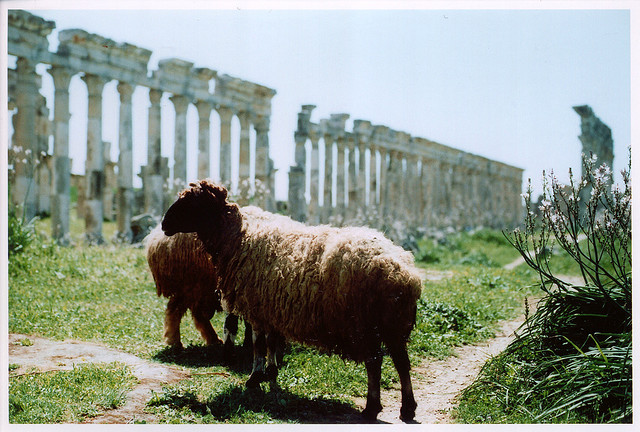
In around one month’s time Muslims from across the world will celebrate Eid al-Adha by sacrificing a sheep or a goat. Eid al-Adha, the ‘Festival of Sacrifice’, commemorates the occasion when god asked Prophet Ibrahim to sacrifice his son Ismail as an act of obedience and at the last minute his son was replaced with a sheep to slaughter. Although festival is spiritual event, major elements of it include eating lots of meat which raises the question: where will people be getting their meat from?

Traditionally, many Muslim families would buy a sheep or goat weeks in advance and slaughter it themselves on the day. Today, however, that practice is increasingly rare in the Middle East and almost non-existent in Muslim communities in the west. Many will now buy their meat from a butcher or worse their supermarket which ultimately disconnects them from the fact that their meat comes from somewhere; that an animal was sacrificed to feed them.

Holidays and Home Slaughters

One of the earliest memories I have is watching a sheep get slaughtered in our front garden in Jordan to celebrate Eid al-Adha. I must have been around 5 or 6 yrs old at the time and although it should have been traumatic, I can honestly say it wasn’t. A sheep had been brought into our house a couple of weeks before and it stayed on our flat roof upstairs where it had enough food and water to keep it happy. My brother and sister would occasionally go up to keep it company but I wisely kept my distance. A couple of days before Eid it was brought down and led into the front garden- come Eid day, it was quickly and efficiently slaughtered.

Now one of the things that sticks in my mind is that there was a lot of blood and it sprayed everywhere- on the walls, the steps, the porch and the windows. But the blood was washed away and the meat cut up and distributed to neighbors and poor families. I wasn’t left feeling that what had happened was shocking, terrible or that the animal had suffered. It’s was where our meat came from and I accepted that as a fact. [It would be years down the line when I watched a video about factory-farming that I felt disturbed and shocked at the treatment of animals.]

Where Does Your Meat Come From?

These days, meat is bought nicely wrapped in plastic and if you asked, most kids probably wouldn’t know where their meat came from. In the UK, I asked a young Muslim girl aged six where she thought tuna was and after some thinking she asked back, ‘Is it like a type of bread?’. She’s quite a smart girl but where her food comes from just isn’t something she’s ever needed to think about before. Is vegetarianism the answer? Some have put convincing arguments for vegetarianism within Islam as a way to solve our problematic relationship with meat but ultimately, not everyone will embrace it and so other solutions are needed.

Bringing people closer to, or even reminding them of, where their meat comes from is one way to do this. People always want lots and lots of cheap meat but meat shouldn’t be cheap because it comes from taking an animal’s life. Around a year ago, I was speaking to Ali Carr, a Muslim farmer who sells organic halal meat in the UK and after recalling the horrific conditions of factory-farming and the small scale nature of organic farming he admitted that :“If we try to follow the design the our maker has laid for us on how raise livestock, then we may have to eat less meat in the future. It’s better to save up and eat meat that tastes better, is more nutritious and halal rather than eat factory farmed meat everyday.”

This Eid, I hope people take the time to think about where their meat came from, and the conditions the animal lived through before it made to their plate.

For more on food and religious celebrations see:
Eid Al-Adha: Getting close to your meat
Have a Green and Joyful Sizdah Bedar (Persian New Year)
Repair Your Eating Habits in Time for Yom Kippur

What Abu Dhabi Plans For When The Water Runs Out

5

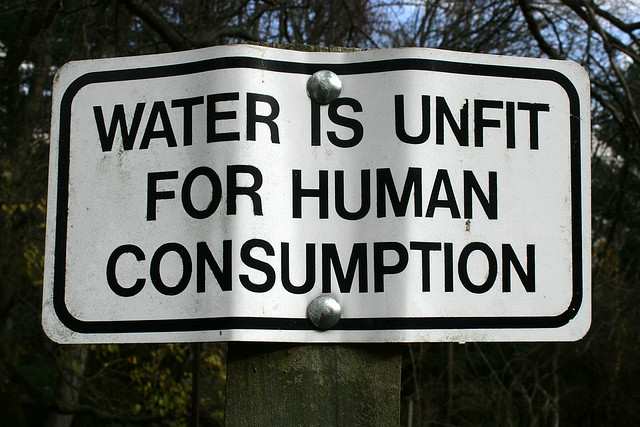
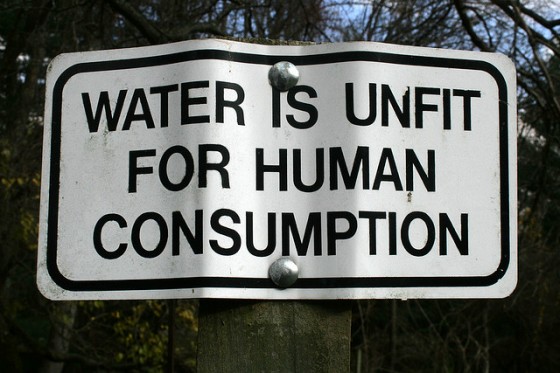
water-unfit-for-drinking Abu Dhabi’s government plans to pump desalinated water underground to prepare for event that its desalination plants are threatened.

Relying almost entirely on desalination plants for drinking water, and with approximately 90% of its groundwater unfit for drinking, Abu Dhabi’s water security is deeply uncertain. A major oil spill or a serious case of sea pollution could ground the plants; without them for even a few days, experts say Abu Dhabi’s constituents will face tremendous suffering.

The government recently announced the details of Plan B: millions of dollars of desalinated water – taken from excess winter supplies – are slated to be pumped into underground aquifers. Though cheaper, less environmentally destructive, and more secure than above-ground holding tanks, this plan does not come without risks.

Paula Leven Handspins and Knits Wool, Bringing Totally Off-the-Grid Crafts to Etsy

2

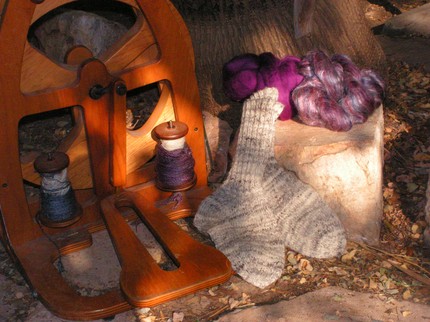
Paula Leven is an avid spinner, in the archaic use of the term.

Etsy, the popular handmade craft shopping site, touts itself as being green for a few reasons: all the items on the site are either handmade or vintage, and there is a feature to help shoppers buy local.  And yes, these are green ideas.  But Paula Leven takes her Etsy shop to a new eco-friendly level with her completely off-the-grid wares.  Whereas other crafters often using electronic devices such as sewing machines to make their products, Paula relies solely on her two hands, her spinning wheel, and her knitting needles.  Her products are old school, and completely non-electric.