UAE To Cut Electricity Output, Carbon Emissions

carbon footprint

The United Arab Emirates has one of the largest carbon footprints in the world. Not surprising considering the small country has an indoor ski hill in the middle of the desert and a number of other Las Vegas-esque attractions (like the IceLand waterpark), but the government has said enough. A new high-tech plan was announced on Sunday that could see the UAE’s daily electric power consumption reduced by 30 percent, the government said.

According to Gulf News, 70 percent of an estimated 56.6 terrawatts of power used in the gulf emirates is used for cooling and lighting. This, when coupled with water usage, makes the UAE a leader in carbon emissions.

Minister of Environment and Water Rashid Ahmad Bin Fahd joined with mobile operator Etisalat and Pacific Control Systems at Dubai’s annual Gitex Technology Week to unveil Emirates Energy Star, a program that “monitors energy use in buildings in real-time via telecom infrastructure from a command center in Dubai.”

Bin Fahd said the launch of the program “was a big step toward a greener tomorrow for the UAE.”

“This is a big advancement and will help reduce our carbon footprint,” Bin Fahd told Gulf News in an exclusive interview. “Technology is a very big tool to make this project work. It’s another big day, a good day for the environment in the UAE.”

However, despite the nice overtures, others are not convinced. Ahmed bin Hamza, an environmental expert and former government consultant, told Bikya Masr via telephone that at this point, “it is simply lip service to the world that the UAE is looking to get better.”

He argued that what is needed is actual implementation of these sort of efforts to create a new perspective that is based on reduction “rather than band-aiding things.”

One of the solutions he believes would be vital to the Emirates success on green initiatives would be to force new construction to fit what he called “eco-effective practices that do more than reduce, they create a new method of thinking that could see the country move to the top of the green revolution.”

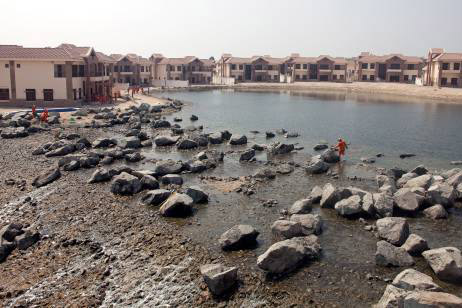
But it’s not happening now, he said. Bin Hamza added that Dubai is the main culprit, with their manmade islands and spectacular attractions. “This in-your-face grandioso has to end and we have to build great buildings with cool things, but while maintaining the goal of being environmentally sustainable.”

This is the crux of the matter, officials and experts say. According to government statistics, some 70 percent of power output goes to buildings, making it difficult to put pressure on people to change their daily routine.

“We can’t because they aren’t the problem. The problem is the construction itself,” said William Evans, a British executive at a top Dubai corporation. “It is extremely hot here and if we are going to reduce our carbon footprint there has to be solutions we are not seeing.”

Read through Green Prophet’s United Arab Emirates section (here) for more green news on the UAE

(Reprinted from Bikya Masr)
Image via wheatfields

Read More

TRENDING

Dan Zaslavsky’s energy tower dream is rising again in Iran and China

The Energy Tower idea never made the leap from drawings and engineering studies to full-scale construction. But nearly two decades after most people stopped talking about it, the concept is quietly evolving in two unexpected places: China and Iran. The concept let dreamers dream and doers do - figuring out more pleasing designs and engineering.

Billie Eilish’s Mom Takes the Stage at Hollywood Climate Summit — But Does Hollywood Still Care About Climate Change?

Hollywood once promised to help save the planet. Leonardo DiCaprio warned of climate catastrophe from awards stages. Celebrities flew to climate conferences. Studios pledged greener productions. Streaming platforms rushed to commission environmental documentaries. But in 2026, with the aftermath of wildfires, heatwaves and floods becoming routine, a question lingers: Does Hollywood still care about climate change?

Can Scientists Predict Coral Bleaching Before It Happens?

Now researchers at the Woods Hole Oceanographic Institution (WHOI) in the US say they have developed a way to predict coral bleaching five to six months before it occurs, potentially giving reef managers enough time to intervene and save vulnerable corals.

We’ve lived through the past 11 of the hottest years on record

Have we forgotten about global warming when the world...

Global Emissions Keep Rising, But Scientists Say Peak is in Sight

At COP30 in Belém, Brazil, scientists delivered another stark...

Locals From Rishon Fight IKEA

Big Box stores are a pretty new concept in Israel, and thank God that not every Israeli city wants them in their backyard. A word from someone who has see the beautiful farmland around her hometown Newmarket, Ontario stripped and converted into vulgar strip malls of big box shops: they have no place in a healthy and sustainable town or city.

The Jewish National Fund Meets An Inconvenient Truth

According to the JNF, it has transformed thousands of acres of barren land into green forests in Israel. They state that each person emits about 23 tons of carbon per year, estimating that each tree planted can absorb one ton of carbon in its lifetime. That's a whole lot of trees you'd need to be planting. Could so many fit in Israel?

How to quiet noise from construction in your office

Streets need to be resurfaced in New York but the humming and grinding noise is unsettling. Noise is environmental pollution. 

EarthX and a blueprint for sustainable investing

Trammell S. Crow, a Dallas-based businessman and father of four, is focusing his efforts on impact investing, and media that focuses on saving the planet through EarthX.

Mining Afghanistan’s Mineral Discoveries Similar to Avatar

Now that American forces in Afghanistan are commemorating the longest period of any war that America has been involved in, including the 1965-73 Vietnam War, the recent discoveries of large and extremely valuable mineral and metal deposits may finally bring to light a reason to continue the presence of US fighting forces in this war torn and backward country.

From Pilot Plant to Global Stage: How Aduro Clean Technologies’ 2026 Expansion Signals a Turning Point for Chemical Recycling Investors Like Yazan Al Homsi

The company's Next Generation Process (NGP) Pilot Plant in London, Ontario, has officially moved into initial operating campaigns, generating the kind of structured, repeatable data that separates laboratory promise from commercial viability.

Nobul’s Regan McGee on Shareholder Value: “Complacency Is the Silent Killer” 

Why the governance framework designed to protect shareholders so...

Should You Invest in the Private Market?

startustartup Unlike public stock exchanges, which offer daily trading, strict...

Popular Categories