Home Blog Page 586

Are cloth diapers green in water-scarce communities?

12

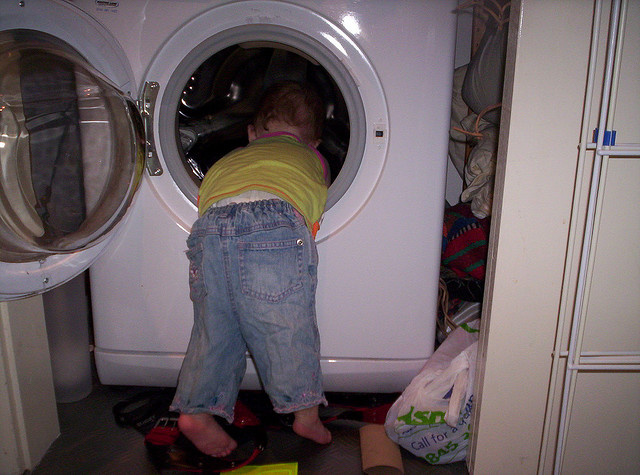
toddler peeking into the washing machineFor me, cloth diapers meant  two or three extra loads of laundry a week.

When I read that Karin decided to “walk the walk” and switch to reusable diapers with her young baby, I could see that she and her husband, along with readers, have the same questions that people asked back when I used cloth diapers for my two youngest. Are reusable cloth diapers really worth the trouble? Aren’t they messy and smelly? How green are they, really, especially with the water shortage? And in the Middle East the price isn’t so attractive either.

For me, reusable cloth diapers were a practical choice, not only an idealistic one. Here’s why:

  1. Convenience. I found reusables more convenient than the disposable diapers I had used with my older children. It meant a couple of extra loads a week. I used Chinese pre-fold diapers, which are flat, square layers of cotton with a few extra layers in the middle. They took little time to hang out and dried quickly, they didn’t need folding, and had no elastic that would wear out. I kept a large enough supply to fill one washing load, plus a few extra. The waterproof, fitted covers for the pre-folds could be washed in any load or rinsed by hand, so I only needed 3 or 4 in each size.
    Cloth diapers mean no more late-night diaper runs to the store, and you don’t have to take out the garbage as often. If  I ran out of diapers, I stuffed a cover with a receiving blanket or small towel.
  2. Smell. To keep cloth diapers from smelling, use a minimum of detergent. Urine interacts with soap residue to make a strong chemical reaction. Most people use too much detergent in their machines. Disposable diapers smell bad when they are new and worse once they get wet. After a day or two they smell horrid.
  3. Mess. When the babies were still exclusively breastfed, I tossed the diaper in the bucket until wash day. Once solids were introduced, I used a spray attachment to briefly rinse poop into the toilet. Any stains came out after two or three washes at most. There’s no need to pre-soak, as is sometimes recommended.
  4. Cost. When calculating costs, include water, electricity and detergent. My costs also included the diapers, which lasted for two babies, and the covers, which didn’t. I ordered the supplies from the US and people brought them for me, but not everyone has this option. It’s possible to recycle cotton clothes to make your own with minimal sewing skills, and there’s a market for used diapers here too. I sold mine to a grateful new mom, although I still wonder whether I should have saved them for the grandchildren.
  5. Environment. Brendan I. Koerner of Slate claims that with today’s energy-efficient machines, there’s no question that reusables are more environmentally friendly than disposables.  As for water, the production of disposables uses water, some say double the amount needed for laundering cloth. Even if the water doesn’t come from a local supply, we should be thinking globally. And we are importing all of that material that will end up in local landfills. Water, at least, is a renewable resource and waste water in Israel is recycled. Then we have to consider the  energy and pollution involved in producing and transporting the diapers. Reusable diapers also use resources in their production, but this is spread out over the life of the diapers. Until we use disposable clothes or  bed linens, I think it’s reasonable to launder diapers.

Read more on cloth diapers from a dad’s perspective here.

The kids whose diapers I washed are now 9 and 7, but I still remember the satisfaction of bypassing the baby products aisle in the grocery store. If I had to do it again, though, I would choose elimination communication, a method of training children to recognize cues that greatly reduces the amount of time children spend in diapers. That is by far the greenest choice.

More Green Posts by Hannah Katsman:

Twelve Tips for Saving Water in the Kitchen

Breastfeed Your Baby in a Hijab: Public Breastfeeding in the Middle East

A Fading Art: Understanding Breastfeeding in the Middle East
Farmer’s Notebook: Raising Goats Humanely in Outback Israel

3

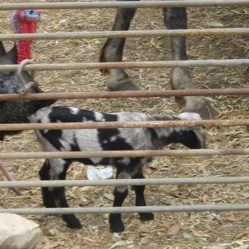
rebecca whitegoat baby
Green Prophet’s new writer Rebecca shares her personal experience raising 5 female goats. She shares an easy goat cheese recipe too!

The first goats arrived to our garden by chance. Our friends needed to get rid of their goats urgently as their neighbours were complaining about the baahing. We weren’t sure what that meant, but we jumped at the chance. My husband and I were both curious, as well as in a genuine need to enjoy a morning coffee that didn’t have soy milk in it.

They were strange and nervous creatures, but the “baahing” didn’t bother us and we later discovered that the “baahing” stopped completely when one of the baby goats was reunited with her mother and returned to nurse.
And so began our journey with learning how to raise and milk our new friends and how to do it in the most efficient, yet humane way.

Six Finalists Chosen for Masdar’s Zayed Future Energy Prize

2

The late Sheikh Zayed, founding father of Abu DhabiThe annual Zayed Future Energy Prize, named for Sheikh Zayed bin Sultan Al Nahyan, the founder of modern Abu Dhabi who died in 2004, recognizes pioneering work in the field of renewable energy.

Six finalists have been selected from an original pool of nearly 400 nominees for the 2011 Zayed Future Energy Prize. The winner – to be announced on January 18th during the World Future Energy Summit (WFES) in Abu Dhabi – will receive $1.5 million. A $350,000 prize will also be awarded to two other finalists for their innovation, long-term vision and leadership in renewable energy and sustainability. Green Prophet is a media sponsor of the event and we are looking forward to reporting the winner. 

Better Than Masdar, Penyon Bay Ecovillage – Morocco – Is Accepting Applications

0

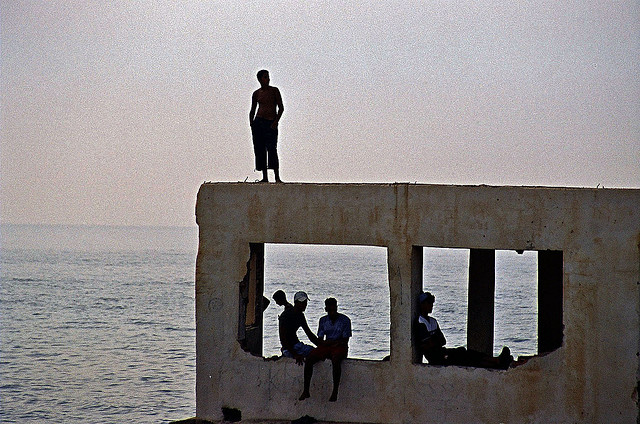
bay-of-alhoceimaWhen it comes alive, the Penyon Bay Ecovillage will overlook the Bay of Alhoceima in Northern Morocco.

As economies and ecosystems degenerate, and spiritual malaise increases (as I’ve pointed out in my green Christmas wish list), communities worldwide are forming new bonds. Moving away from the consumer model, ecovillages incorporate various degrees of the old world order – before the industrial revolution – to create a new, post-industrial prototype.

Some focus strictly on natural building and organic farming, others rely on tourism to stay afloat, while the most ambitious ecovillage fuses agriculture, art, building, education, energy, and even medicine into a holistic community model. Penyon Bay Ecovillage, when it gains traction, will fit into this latter category.

Local Israeli Authorities Take More Control Over Environmental Protection

0

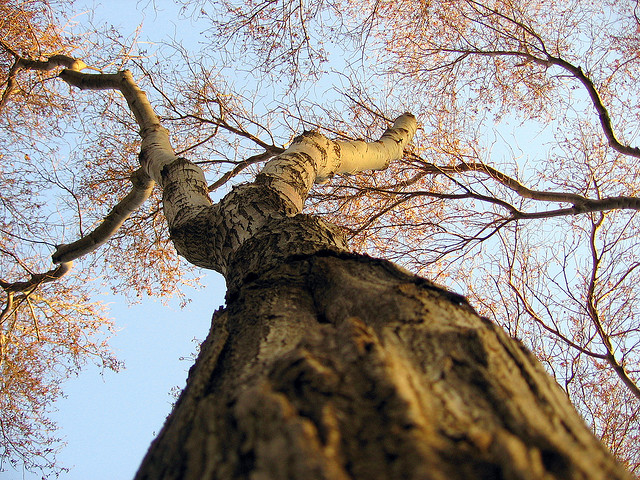
"israel local environment"Who’s responsible for this Tel Aviv tree?  The local Tel Aviv environmental committee.

Some of the red tape preventing local environmental issues from being resolved has to do with the fact that national government has too much on its plate.  Even in a small country like Israel, local issues can often be seemingly ignored by the national government and municipalities are sometimes powerless to do anything.  Over recent years, though, Israel has been granting greater control of environmental issues to the local authorities and following a law passed in 2006, 250 environmental committees have been established all over the country.

The committees met for their first conference last week, titled Democracy and Environmental Under Local Authority in Israel 2010: First National Conference of Local Environment Committees.

How Do You Solve Traffic Congestion in Cairo? With Helicopters Taxis, Apparently

3

Desperation and an entrenched car-culture is pushing Cairenes towards outlandish solutions to their hellish traffic congestion

In the bursting-at-the-seams megacity of Cairo, it seems that there is no escaping the traffic. Roads grind to standstill for hours most days and the traffic jams are only getting worse as the Egyptian population simultaneously heads to Cairo every morning either to work or in search of a job. However, one organisation has decided that if there is no space on the road than the solution is take to the air and introduce the ‘Helicopter Taxi’.

Yep, you read right. According to Al-Arabiya, an Egyptian aviation company will be launching a flying taxi project as part of a plan to solve traffic problems in the city. Five turbo helicopters have already been purchased so that people can be flown around Egypt and Cairo whilst avoiding the traffic below. As well as plans for fire fighting and medical evacuation helicopters, these flying taxis will also be “affordable to all people” wishing for a stress-free (and let’s face it a more exciting) Monday morning commute. However, something’s not adding up.

Kuwaiti Sharks, Ecosystems and Exxon

0

kuwait sharksWhat is the impact of development on the Gulf’s marine ecosystem and can oil companies really play a part in its preservation?

As sharks face the threat of extinction worldwide, conservationists in Egypt have recently raised concerns over the need to protect reef sharks in the Gulf by establishing sanctuaries. Fifty years ago, the Gulf waters were filled with diverse marine life but the criss-cross of oil tankers, conflict and urban development has had its toll on the fragile ecosystem. In Kuwait, environmental filmmaker Zeina Aboul Hosn joined a research expedition in 2008 in search of the forgotten sharks of the Gulf. What she found was dead sharks in the fish markets and a worrying lack of awareness of the importance of sharks for sustaining marine diversity.

Reported by Al Jazeera, the 22 minute film explains that in the past Kuwaitis heavily relied on fishing and pearl diving for their sustenance. However, this all changed when oil was discovered and the Gulf waters then became simply the means of transporting a quarter of the world’s crude oil. The generation which grew up as fishers and pearl-divers is now dwindling in numbers and the link between the sea and the Kuwaitis is increasingly muted.

Mark Your Calendars for Solar Maghreb 2011 Conference in Casablanca!

0

The Magreb nations have a bright solar future: don’t miss your chance to be part of it!

Solar Maghreb in Casablanca, Morocco on 24-25 May 2011 is the must-attend utility-scale solar conference to make contacts within the five Maghreb nations – meaning “the Western” ones, in Arabic – of Morocco, Algeria, Tunisia, Mauritania and the Western Sahara.

Most of the national governments of the Maghreb region are now investing large sums of money in solar power to reach recently set renewable energy targets by Morocco.

With Desertec, and the region’s proximity to Europe, the future export potential of the region is high. With high levels of solar radiation, Solar Maghreb is one of the most attractive renewable energy investment destinations in the world.

Going Half Way On Kushies Washable Diapers

34

kushies washable cloth diaperAfter recovering from the shock of motherhood, Karin tries an eco-compromise by using washable diapers half of the time.
It’s been 4 months since I’ve given birth and I decided that I was fit enough to try washable, reusable diapers. My daughter is exclusively breastfed, an undertaking that completely overwhelmed me for the first few months of her life. But the benefits of breastfeeding are enormous. Call me a wimp, or call me out for not being green enough, but I couldn’t ever imagine during that period, finding the energy to wash diapers. Praise be to women before the invention of disposable diapers. But as the editor of Green Prophet, I know I need to walk the walk. It was time to try washables.

Where I live in the Middle East, the only options open to me are online ordering, and I found all the systems and options so expensive and really confusing – not to mention the sour behavior from my husband every time I brought the idea up. (He’s thinking smelly diapers all over the place). So back in Canada for a visit – I took a trip to the local BabiesRUs to see with my own eyes what washable diapers are available. Here’s my story.

Love Bugs: How Bacteria in Our Guts Influence Mate Selection

0

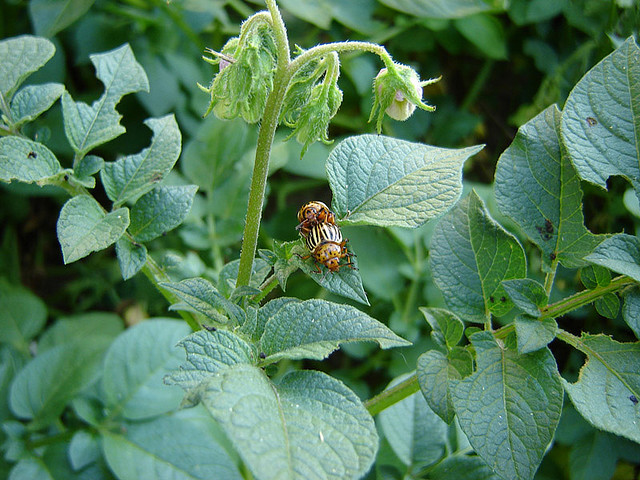
bugs mating beetles sex

Is mate choice determined by bugs in our gut?

The latest research from Israel is revealing some unexpected insights about attraction and partner selection. If sparks aren’t flying between you and a potential mate, could the problem may be as close as the bugs in your gut?

Right now the findings apply only to fruit flies, humble insects that because of their quick lifespans and genetic uniformity have taught humankind a thing or two about the inner magic of our bodies and our world. In this case, they helped Tel Aviv researchers test a new theory that basically says this: not only do we adapt to our environments, but so do the symbiotic bacteria living in our bodies, and our adaptations are actually intertwined as part of a larger biological milieu.

Icy Ireland Imports 25,000 Tonnes Of Egyptian Salt

1

Outline of Birket Maraqi salt lake in the oasis of Siwa, EgyptThree years of extra snow has weakened Ireland’s salt stocks, demonstrating an overall lack of preparedness for the effects of climate change. Outline of Birket Maraqi salt lake in the oasis of Siwa, Egypt

Facebook status updates from the UK read like this: “go away snow”, “does anyone know if its safe to drive to this or that icy town?”, or, finally, “thank goodness – I can fly.” People joke that the UK shuts down with the kind of snow that Minnesotans can suntan in. But there’s also a serious side to this story.

The weather in the UK is not normal. Just like Russia’s drought and the Middle East’s higher temperatures, global warming has permanently altered weather patterns. And by having to import salt from Egypt to clear its roads, Ireland demonstrates the same lack of preparedness we all have for this new reality.

21st Century Egypt Powers Two Villages Entirely With Solar Power

0

Egypt finally harnesses a power that it understood centuries ago

Egypt now has one of the very first entire towns in the world to be powered exclusively with solar power. And actually, it is a pair of towns, so it is a world first.  The two villages were not previously on the national grid. Oum Al-Sagheer and Ein Zahrah are located about 500 miles from Cairo at Siwa, which is a desert oasis tourism destination.

Hassan Younis, Egypt’s minister of Electricity and Energy announced the project this week. The villages will get solar to power all the mosques and schools and each of the other facilities in the two villages, as well as the houses of their residents, and even right down to the street lighting.

World’s Thirstiest Country Yemen May Be First To Run Out Of Water

0

Fetching waterPredictions of water loss in Yemen by 2020 threaten lives and agriculture  – Children must still fetch water for towns that are increasingly parched and dry.

According to experts cited by CNN, Yemen could be the first nation to completely run out of water in as little as 10 years, a prospect that creates a grim future for the young population of 24 million that is expected to double in 20 years.

In Yemen’s capital Sana’a, which could be the world’s first city to go dry, the population is growing at a rate of 7 percent per year as people are fleeing from the parched outer areas of the country to Sana’a. Despite a 1,185 mile shoreline, as the poorest nation in the Middle East, experts predict Yemen is on target to literally run out of water.

25 Shark Species In Persian Gulf Need Urgent Protection

2

reef-sharkReef sharks in the Gulf are especially vulnerable without sanctuaries to ensure their protection.

Red Sea sharks are threatened by Yemenese poachers who sell their fins to Asia for a fit price. But it turns out that Persian Gulf shark species are also vulnerable. So much so that conservationists have advised regional environmental groups and governments to set aside sanctuaries that will protect them.

As predators, sharks play an essential role in any marine ecosystem. Without them, prey are able to proliferate, in turn eradicating food lower on the chain. Failure to institute substantial measures to protect Gulf sharks would lead to a serious imbalance, and harm the economics of people who rely on it.

Syria’s drip irrigation water park

1

water security park syriaA new park in drought-hit Syria showcases water-saving techniques

Following five years of drought which has driven nearly half a million people away from drought-hit areas and put the country at risk of increasing desertification, Syria has inaugurated a water scarcity park to highlight the need to conserve dwindling water supplies.

Using drip irrigation techniques, the 1,000 square metre ‘water scarcity park’ will harvest rainwater and also use solar power to generate electricity to pump water for irrigation. Drip irrigation is a technique used to conserve water as draws water directly from it sources and takes it the plants through a network of pipes with small holes so that water waste is minimal.

drip irrigation technology, stockholm international water institute, industry water award, agriculture, water scarcity, Middle East, Israel, Netafim
Netafim pipes snake through farmer’s fields and deliver water and nutrients right at the root base

The park which was opened by the country’s Vice-President Dr Najah Al-Attar, is located in Dummar, a suburb of Damascus and is planted with various drought-resistant flora. It is hoped that the park will be used as model for public and private parks and help rationalize the consumption of water and energy.

The water scarcity crisis in Syria has been blamed on a combination of poor water management, lack of rainfall and the over-extraction of water. In the past, Syria was comfortably supported by the Euphrates River in the top half of the country but the diversion of large amounts of water into agriculture and industrial sector means that the supplies are not sufficient to support the population. According to reports in The National, scientists reported that between 2002 and 2008, water availability dropped from 1200 cubic meters to 750 cubic meters per person in Syria.

Unlike the rich Gulf states which are able to afford expensive desalination plants, Syria is struggling with water scarcity and urban household face water cuts each evening. Severe drought in the rural east of the country has also drastically affected 1.3 million people with 800,000 of whom had had their livelihoods devastated and half a million forced to move into the cities just to eke out a living. According to a February report by the United Nations Office for the Coordination of Humanitarian Affairs, this has been the “largest internal displacements in the Middle East in recent years.”

Sadly, Syria is not an isolated case in the region as the entire Middle East is facing water shortages. A report by the Arab Forum for Environment and Development (AFED) remarked that Arab region is one of the driest in the world- 70% of the land is dry and rainfall is sparse- and the effects of climate change will only exacerbate the situation. After delays in the rainy season serious concerns were raised with regards to water availability in Lebanon and Jordanians were also urged to pray for rainwater.  The AFED report added: “Without fundamental changes in policies and practices, the situation will get worse, with drastic social, political and economic ramifications.”

For more on Syria and water issues see:

500,000 Syrians Flee Drought-Stricken Zone

Syria’s Dustbowl Attributed To Wasted Water

Syria Suffers Water Shortage – More News on Middle Eastern Drought