Home Blog Page 581

Severe Winter Storm Proves Caesarea Predictions True

0

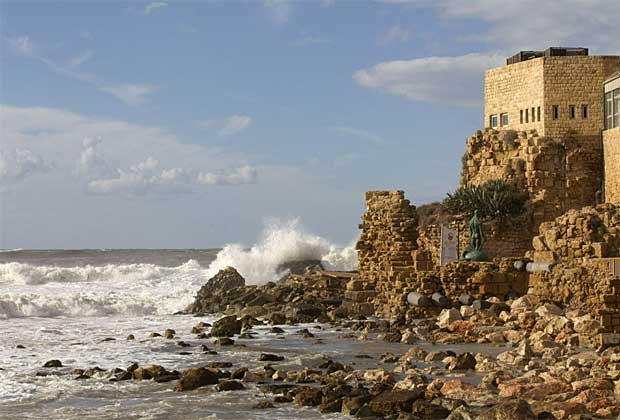
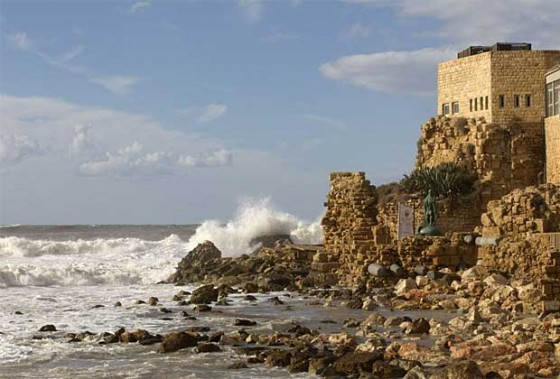
The cruel sea, with 10 meter high waves took its toll on the ancient port of Caesarea this weekend.

Sunday’s severe winter storm that raged all over Israel and other parts of the Eastern Mediterranean caused substantial damage to the sea wall and parts of the archeological sites of the ancient sea port of Caesarea. The site, which we wrote about last month on Green Prophet has been predicted to suffer severe damage by the relentless force of the sea, unless a significant amount of restoration work is done to protect one of the most popular archeological sites in Israel. Caesarea and other coastal archeological sites have been the subject of a planned restoration project to be carried out by the State under the supervision Architect Zeev Margalit, who personally warned that the deterioration of the ancient seaport is literally “happening in front of our eyes.”

David de Rothschild To Speak At NYC Green Drinks Tonight

4

david-de-rothschild-plastikiIn the running to become National Geographic’s 2010 Adventurer of the Year, David de Rothschild continues to spread awareness of the world’s oceans.

Towards the end of July this year, David de Rothschild and his crew finished an 8,500 mile journey in a boat made out of 12,500 plastic bottles, the Plastiki. This epic adventure was designed to draw attention to the 4 billion pounds of trash (most of it plastic) that are dumped in the world’s oceans each year.

As fearless as he is audacious, David is one of the world’s most visible environmental activists and a Green Prophet favorite. By attending events such as the Green Drinks taking place tonight in New York City, he demonstrates a tireless commitment to draw attention to the oceans as well as other important issues.

Leading Researcher Says Replanting Trees In The Scorched Carmel Forest Is A Mistake

0

carmel-forest-firePlants to restore the Carmel forest by planting new trees are misguided, according to a leading researcher.

Rushing to the scene of the recent Carmel fire to plant a pile of trees would be a mistake, according to a leading researcher from Israel’s University of Haifa. While Professor Ido Izhaki recognizes the unfortunate toll that the Carmel fire took on human life, and that human factors have contributed to making the forest more vulnerable, the Mediterranean forest on the Carmel Mountains depends on fire to maintain its ecological integrity and should be left alone to restore itself.  

Saudi Arabia Holds Out for Carbon Capture & Storage at Cancun

0

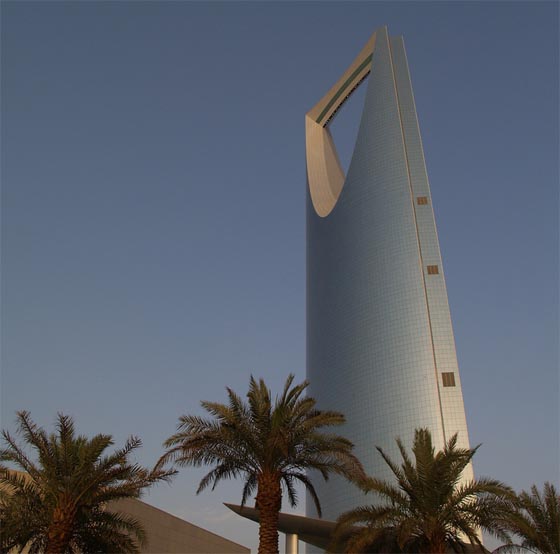
Saudi Arabia has called for the inclusion of CCS into the CDM mechanism at previous climate talks. This year, Norway made it happen.

At the recently concluded climate meeting in Cancun, some progress was made on a controversial topic. Norway, a country that has been a leader in the development of low carbon oil technologies, proposed that CCS (Carbon Capture & Storage) be an  allowable carbon offset in the CDM or Clean Development Mechanism. The CDM allows polluters, if unable to reduce their own carbon emissions, to invest money in projects like solar farms, lower carbon technologies, or reforestation in the developing world, that would reduce emissions elsewhere. The idea is that lowering CO2 anywhere helps.

Traditionally, less controversial technologies have been included in the CDM, like reforestation, or building solar and wind farms. But the delegate from Saudi Arabia argued that at present there is no real incentive for developing countries to deploy Carbon Capture & Storage: wasting an opportunity to reduce carbon emissions.

Humans Play God Big-time: Relocate Oceans To Deserts

14

Transplanting seas to inland ocean lakes? A good idea for the Middle East?

The two century-old and highly respected Japanese engineering giant Shimizu has hatched a wild and crazy proposal to rehabilitate the desert for human use.

Their idea is to move vast amounts of seawater along canals that would track deep into desert landmasses to create a series of connected huge inland seas measuring 30 km (18 miles) across. Small cities could then be created within the gigantic seawater “lakes,” on artificial islands.

RECIPE: Sambusak, Spicy Middle Eastern Turnovers

0

image-sambusak-turnoverFancy a hot snack? Try sambusak.

If you suddenly need a nosh while browsing an open-air market  (like one of these shouks), look around. You’re sure to find a sambusak stand where hungry shoppers are buying these hot, spicy pastries.  These popular turnovers also appear at wedding buffets and fancy hotel receptions.

Made at home, they freeze well and are excellent to have on hand  when guests are coming and you need something to offer in a hurry. Of course, a cup of Turkish coffee (recipe here) is the perfect drink to go with sambusak.

Sambusak

yield: about 20 pastries

Ingredients for Dough:

1/4 oz. dry yeast, or 1 cube fresh yeast

1 teaspoon salt

1 teaspoon baking powder

2 teaspoons sugar

1 cup water

3 cups all-purpose flour

METHOD

In a large bowl, dissolve the yeast in the water.

2. Add the salt, baking powder, and sugar. Stir.

3. Add the flour a cup at a time. Mix, then knead till the dough is firm.

4. Cover the bowl and allow the dough to rise for 2 hours.

Ingredients for the Chickpea Filling:

2 cans of chickpeas

2 tablespoons olive oil

2 medium onions, finely chopped

1 teaspoon salt

1 1/2 teaspoon ground cumin

1/4 teaspoon ground ginger

1/2 teaspoon black pepper

1/4 teaspoon ground nutmeg

1/2 teaspoon white pepper – or use 1 teaspoon of either white or black pepper

oil for shallow frying


Put the chickpeas in a strainer. Drain and rinse them.

Put them through a food processor till they’re a chunky paste, or blend them.

Fry the onions in the olive oil till translucent.

Add the dry spices to the onions; stir and cook about 3 minutes.

Add the spiced onions to the chickpeas and mix everything up well.

Form the pastries

Take pieces out of the dough till you have 20 equal-sized pieces. Pat each piece into a rough circle in the palm of your hand as you work.

Flour your work surface and roll each patty into a circle about 3 inches in diameter. Don’t be afraid to roll them out thin.

Place a tablespoon of stuffing in the middle of each circle. Fold the dough over to make a triangle, hiding the stuffing.

Pinch the edges of the sambusak together, or crimp them with a fork to seal them.

Fry the sambusak in shallow oil over medium heat. Turn them over when the first side is golden, and fry the other side. Drain on paper towels or crumbled newspaper and serve hot.

Another delicious filling is mashed potatoes seasoned with fried onions and spices as above.

Freeze un-fried sambusak in layer separated by baking paper. Put them straight into hot oil when you take them out of the freezer, and proceed as above.

Bon appetit!

More Middle-Eastern snack recipes from Green Prophet:

Photo of sambusak by Miriam Kresh.

Miriam also writes a food blog.

On Show: Camel-Killing Plastic Lump From The Valley Of Death

1

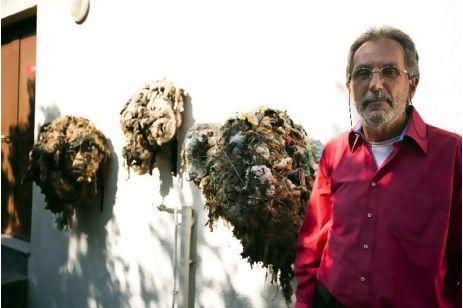
plastic-rock-art-showThese clumps of plastic debris killed the camels from whose bellies they were retrieved.

I’m not going to beat around the bush: I loathe plastic bags. There are many reasons, chief of which is the impact they have on our domestic and wildlife. Months ago we reported that camels were discovered to have been killed – slowly and painfully – by ingested plastic bags that eventually grew into giant rocks of plastic.

In addition to the UAE, Syria has attempted to curb the country’s plastic bag habit, but progress is slow to take root. Equally frustrated, one American designer intends to place a 30kg lump of plastic, taken from a camel’s stomach, in the center of an upcoming art exhibition designed to clamp down on the use of plastic. 

Iran’s “Dead Sea” Lake Urmia is drying up with no one to protect it

2

Lake Urmia, lake orumiyeh

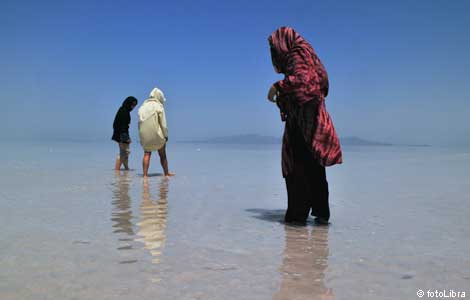
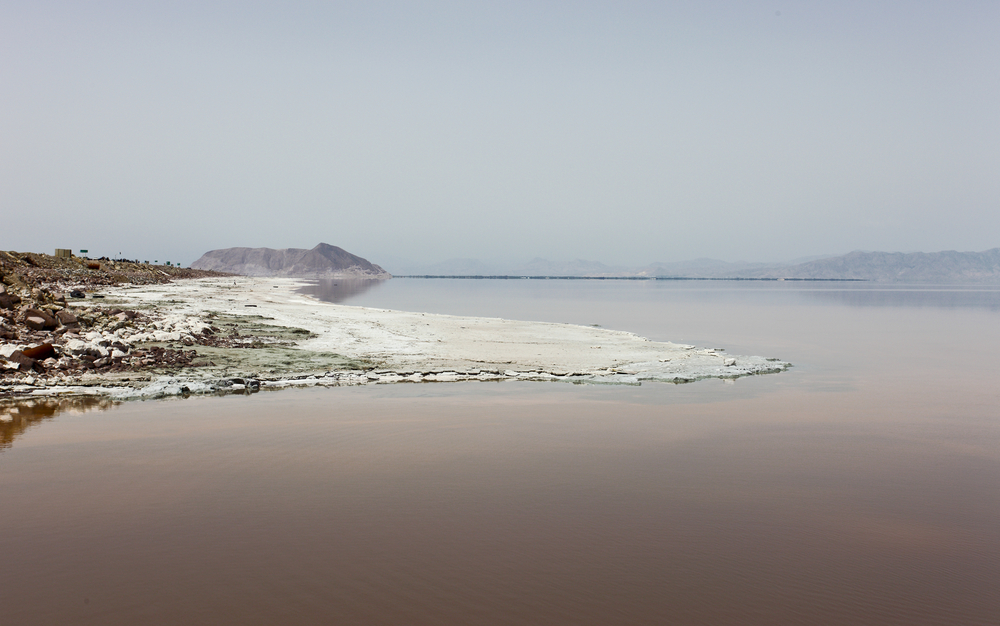
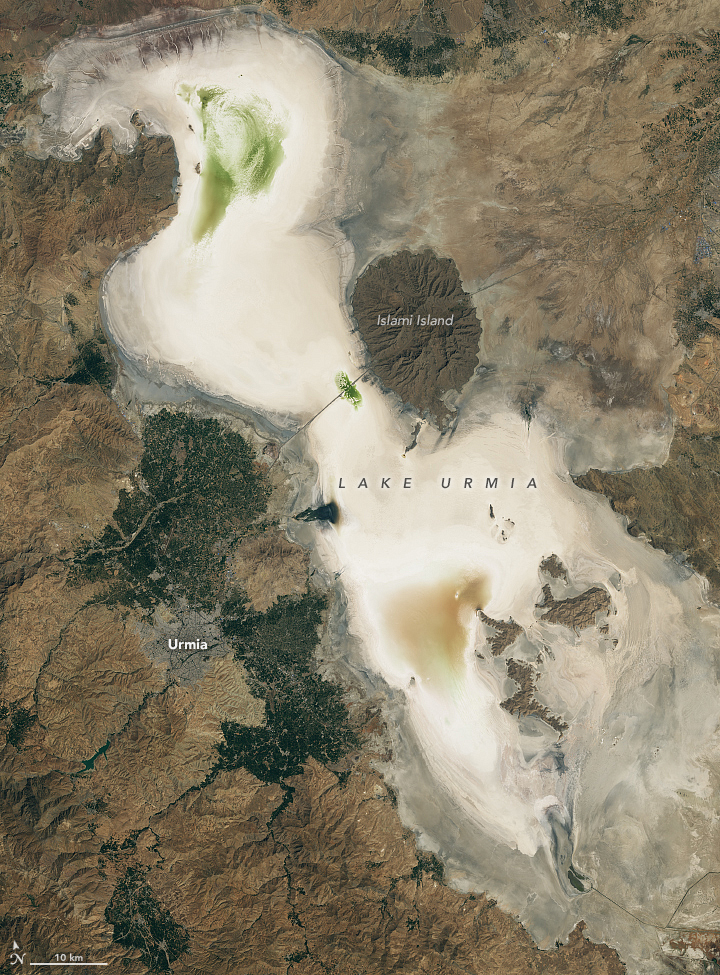
Like the Dead Sea, Lake Orumiyeh has shrunk to half its former glory. And the creatures that used to call it home have sought solace elsewhere, as the lake becomes increasingly saline. Located in the northwest province of West Azerbaijan providence, Lake Orumiyeh is part of the world’s largest saltwater wetlands, according to the Financial Times, but both drought and irrigation projects risk drying it up altogether. If this happens, it will leave behind an enormous and dangerous reservoir of salt.

One resident of Ghoschi, a town located astride the lake, claims that flamingos used to call out six or seven times a day, but now they are no longer there. And the brine shrimp on which they fed have disappeared completely.

Nearly 70% of waterfowl species have disappeared while the former shore is now a “salt-strewn desert.”

Environmentalists claim that an extended drought accounts for nearly 70% of the lake’s loss, but the rest is attributed to irrigation projects that are used to cultivate 1.4 million hectares of agricultural land.

Residents worry that like the Aral Sea, the lake will dry up completely, leaving behind up to 10 billion tonnes of salt that could potentially cause storms that would travel as far as Tehran. Up to 13 million people could be displaced.

“If, God forbid, Lake Orumiyeh completely dries up, we will be facing 8bn-10bn tonnes of salt which could function like a monster bomb,” Hassan Abbasnejad, director-general of the Environment Protection Organization of West Azerbaijan, told the Financial Times.

Environmentalists say that this should not be a political issue, but Azeris living in the region believe that a recent bridge project, which links the eastern and western parts of Azerbaijan province, is part of a conspiracy to allow the lake to disappear, thereby pushing the Azeri population elsewhere. Earlier this year, they protested the bridge by carrying bottles of water. Many were and continue to be jailed.

President Mahmoud Ahmadi-Nejad has approved a $1.7 billion plan to restore the lake over the next five years by adjusting irrigation channels and redistributing water. The government also intends to seed clouds, though we have just learned that experts believe that praying for rain is more effective.

Mr. Abbasnejad told the paper that they would water the lake with blood, if necessary, that it was a “holy duty” to ensure that it survives.

Update in 2023, Lake Urmia goes dry in August

Lake Urmia in 2023
Lake Urmia in 2023

Lake Urmia (Persian: دریاچه ارومیه‎, theDaryache-ye Orumiye, Azerbaijani Urmu gölü, Kurdish Wermy, Armenian: Կապուտան ծով, Kaputan ts’ov; ancient name: Lake Matiene) is a salt lake in northwestern Iran near Iran’s border with Turkey. Like the Dead Sea in Israel and Jordan, and Aral Lake in Iraq we could lose this lake forever if we don’t take action today.

Image via Financial Times

An Insider’s Experience of Exploring Beirut by Bike

2

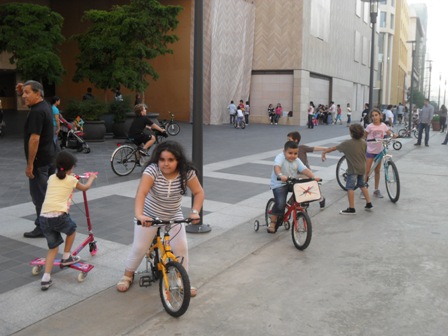
"beirut lebanon bike path"What it’s really like to explore Beirut (and especially the new Waterfront District) by bike.

Lebanon – and Beirut in particular – have been making efforts recently to improve the availability of eco-friendly forms of transportation.  A campaign this past summer gathered 150 cyclists in Beirut to demonstrate how easy it could be to bike through the city.  And, in order to provide tourists with alternatives to bus tours or trekking around in personal rented vehicles, a new tour company – BeBeirut – has started offering walking and running tours.  It appears as though Beirut is becoming a friendlier place for those who like to travel using their own two legs.

We recently took a virtual bike tour of the city, thanks to the blogger over at This is Beirut, and got an insider’s scoop on what it’s really like to traverse the new bike path along the developing Waterfront District.

Green Tidings from The American University in Cairo

0

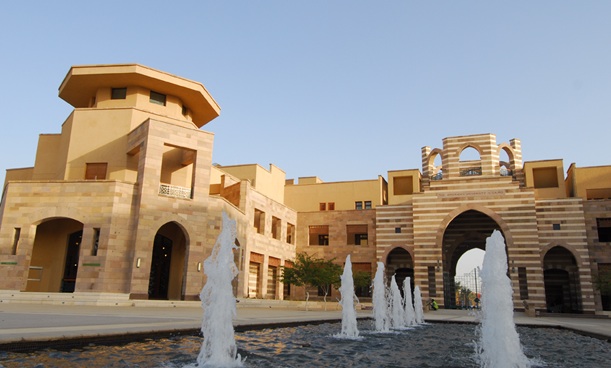
american university cairo American University in Cairo’s new campus was designed for efficient energy and water usage.


Most observers would not think of Egypt as an environmental leader. Instead, the smog and litter of Cairo come to mind, or the negative environmental impact of the Aswan Dam. Yet we recently reported here that Egypt ranks No. 1 in the Mideast (and No. 22 in the world) in renewable energy investment potential. Earlier this year, we also featured Cairo’s lush Al-Azhar Park, built on a former garbage dump.

Dance for Rain, Don’t Seed Clouds Finds New Research

0

israel rain danceCloud seeding not more effective than chance (or prayers?) finds new research.


Prayers are answered as rain starts falling in the Middle East –– but not before hot, possibly climate change related dry spells have helped spread wildfires in Lebanon and Israel. But those looking to cloud seeding to ignite a rain: better do a rain dance. Cloud seeding, a weather modification process designed to increase precipitation amounts by dispersing chemicals into the clouds, does not work, has found Tel Aviv University researchers.

In the most comprehensive reassessment of the effects of cloud seeding over the past fifty years, new findings from Prof. Zev Levin, Dr. Noam Halfon and Prof. Pinhas Alpert have dispelled the myth that, at least in Israel, cloud seeding is an effective mechanism for precipitation enhancement. The findings were recently reported in Atmospheric Research.

ETV’s Micro Turbine Battery Charger A Game Changer for EVs?

0

ETV’s micro- turbine device to extend the range of  the battery cell packs to up to twice the present driving range of 130 -160 km. Public charging posts (like this one) may not be needed.

The electric car innovation and development industries in Israel have not been sparing media hype to make people more aware of the approaching realities of large numbers of electric cars plying the streets and highways. This is especially true regarding companies such as Better Place LLC, which plans to put their version of a Renault made electric car on Israel’s roads by the end of 2011.

Better Place’s battery exchange network is not being received favorably by many people, however; and the company’s infrastructure concepts in Israel (the proposed trial center for company head Shai Aggasi), the company does not appear to be to moving towards creating such a big impression on the average individual. The company is also being looked at as an electric car  “monopoly” since it is the only “favored” electric car company in Israel.

All this may change, however, with the entrance of another electric car concept “player”, ETV Motors which has just announced a radically new concept to extend the range of  the lithium ion  battery cell packs that will be fueling these cars.

Lebanon NGO Plants Ancient Species to Reclaim Arid Land

1

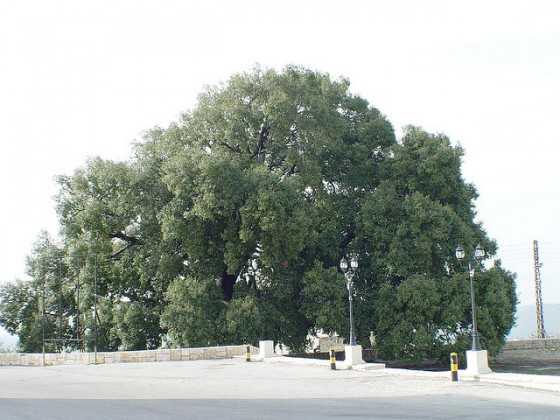
1500-year-old Lebanese oak treeThis Lebanese oak tree has survived for 1500 years, but many others were destroyed in recent forest fires.

Sawdust from Lebanese cedars has been found in ancient Egyptian tombs, and the Bible recounts how the trees were brought to Jerusalem for the building of Solomon’s Temple.  The cedar even appears on the Lebanese flag. But with climate change and the devastation caused by forest fires, Lebanon can’t take these great trees for granted.

Fortunately, the local NGO Jouzour Loubnan has stepped into the breach and begun planting three ancient species— cedars, almonds and carob. Carob and almond provide fruit, while planting native trees ensures that the ecosystem can sustain them.

Cancun Ends On Slightly Better Note Than Copenhagen

0

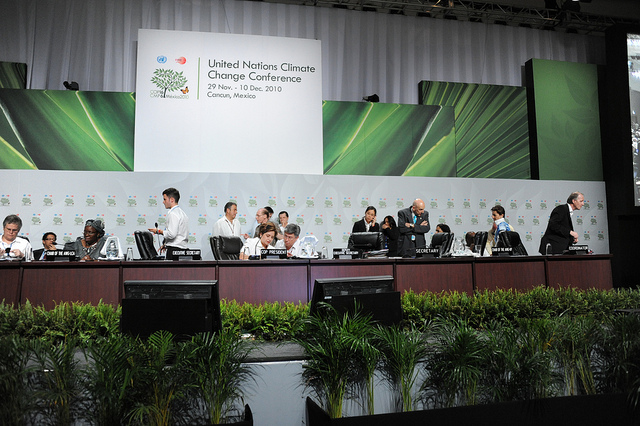
climate-change-talks-cancunCancun ends. Qatar’s happy, so is Saudi Arabia. But Bolivia’s not.

Not every country whose representatives attended the climate talks in Mexico are pleased with the outcome. CNN reports that Bolivia sought to block what is being dubbed the “Cancun Agreement,” saying that the text of that agreement is hollow, and that the failure will lead to loss of human life.

Even so, tiny rhetorical steps were taken, and the United States and Mexico were eager to call the conference a success. In addition to sparing forests worldwide, a Green Climate Fund to help poor nations combat climate change is supposed to be established and Carbon Capture Storage (CCS) will be funded under the UN.

Stay Cool In Turkey’s 5 Star Underground Yunak Evleri Hotel

1

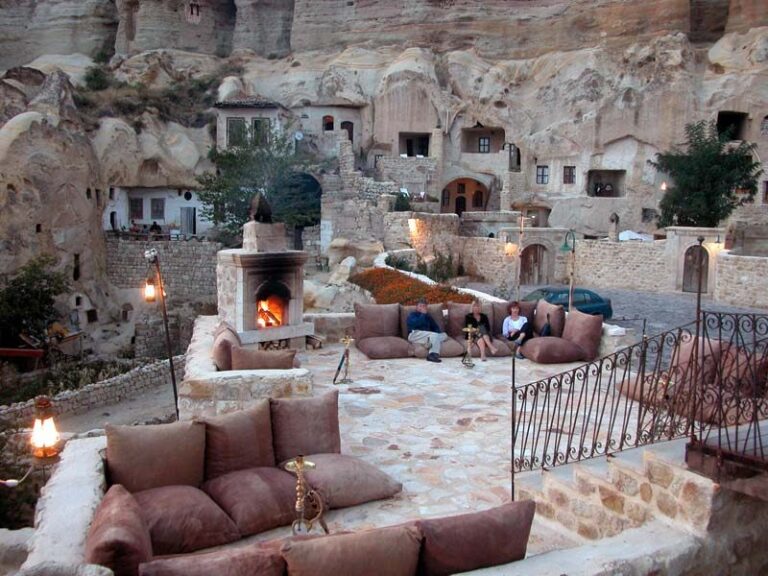
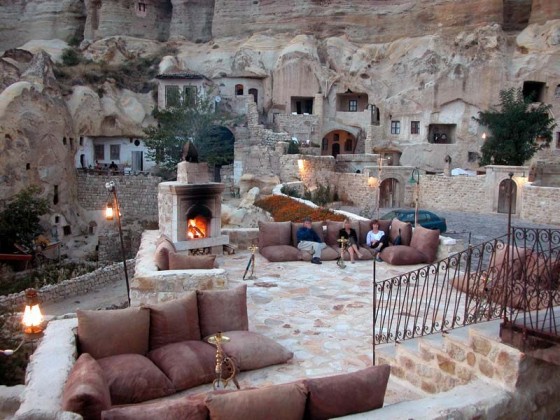
cave-hotel-turkeyStep back in time with this restored 5th-6th century sextet of cave houses converted into a luxury hotel.

We were quite taken with these long-standing caves in Iran, and with this eco-boutique hotel in Turkey, but neither match the style of the restored Yunak Evleri hotel in Cappadocia. With fixings such as marble in the reception area, it isn’t the most modest tourism facility we have featured, but we do love to see history, nature, and travel merge in creative harmony. Once a sextet of cave houses carved out of soft limestone, a little cleanup and modern conveniences were added to this 5th-6th century marvel to produce a 21st century luxury hotel.