For those unaware, SpaceX has already shifted focus to building a self-growing city on the Moon, as we can potentially achieve that in less than 10 years, whereas Mars would take 20+ years.
For those unaware, SpaceX has already shifted focus to building a self-growing city on the Moon, as we can potentially achieve that in less than 10 years, whereas Mars would take 20+ years.
For those unaware, SpaceX has already shifted focus to building a self-growing city on the Moon, as we can potentially achieve that in less than 10 years, whereas Mars would take 20+ years.
For those unaware, SpaceX has already shifted focus to building a self-growing city on the Moon, as we can potentially achieve that in less than 10 years, whereas Mars would take 20+ years.
For those unaware, SpaceX has already shifted focus to building a self-growing city on the Moon, as we can potentially achieve that in less than 10 years, whereas Mars would take 20+ years.
For those unaware, SpaceX has already shifted focus to building a self-growing city on the Moon, as we can potentially achieve that in less than 10 years, whereas Mars would take 20+ years.
For those unaware, SpaceX has already shifted focus to building a self-growing city on the Moon, as we can potentially achieve that in less than 10 years, whereas Mars would take 20+ years.
For those unaware, SpaceX has already shifted focus to building a self-growing city on the Moon, as we can potentially achieve that in less than 10 years, whereas Mars would take 20+ years.
Follow the top 10 Middle East environment news stories of 2010.
With 2011 a few days away, we wanted to reflect on the stories that shaped the Middle East in 2010. As global warming transforms our climate and we scramble to catch up, we have found our region to be split in two camps: the people who get it, and the people who don’t.
A new law in Israel could mandate manufacturers to take ensure their packaging is recycled, or reused.
Despite its posh upcycled art installation, a quick visit to Israel’s Hiria dump demonstrates the extent to which materials that could be recycled, and should be recycled, are instead buried. There are cages available in some neighborhoods where people can stash their plastic bags and bottles, and sometimes batteries, and Koala Recycling Solutions recently started an aluminum recycling program, but mostly, Israel’s recycling system needs serious help. That could change if the Knesset approves a new law that puts the onus of recycling on the manufacturers’ shoulder.
Ever wondered about the science of solar or wind energy, but feel overwhelmed by too much information? READ cuts through the noise with a guide that is both informative and inspiring.
Who says the Middle East doesn’t have progressive leanings? There may be the odd dud who thinks mocking global warming with a water park in the middle of the desert is clever, but then we also have Studied Impact based in Dubai, and the Land Art Generator Initiative (LAGI).
A multidisciplinary design house that has received coverage for their power plant fit for living, and for the LAGI design competition that inspired the Solaris electricity-generating magic carpet, Studied Impact/LAGI just released an easy-to-use, comprehensive online guide to renewable energy. Covering the ugly power plant paradigm in dust, READ illustrates the beautiful and smart side of renewable energy.
A pilot program will bring a greener hybrid bus to Israel’s Sharon region.
Here’s some good green news for 2011 in Israel: In addition to the thousands of electric cars that Better Place hopes to bring to Israel next year, a hybrid bus will also be tested that offers a 50% reduction in emissions and fuel savings of up to 35%. The Metropoline bus company plans to test a Volvo 7700 Hybrid bus on the company’s routes in the Sharon region, TheMarker reported (in Hebrew) today.
For me, cloth diapers meant two or three extra loads of laundry a week.
When I read that Karin decided to “walk the walk” and switch to reusable diapers with her young baby, I could see that she and her husband, along with readers, have the same questions that people asked back when I used cloth diapers for my two youngest. Are reusable cloth diapers really worth the trouble? Aren’t they messy and smelly? How green are they, really, especially with the water shortage? And in the Middle East the price isn’t so attractive either.
For me, reusable cloth diapers were a practical choice, not only an idealistic one. Here’s why:
Convenience. I found reusables more convenient than the disposable diapers I had used with my older children. It meant a couple of extra loads a week. I used Chinese pre-fold diapers, which are flat, square layers of cotton with a few extra layers in the middle. They took little time to hang out and dried quickly, they didn’t need folding, and had no elastic that would wear out. I kept a large enough supply to fill one washing load, plus a few extra. The waterproof, fitted covers for the pre-folds could be washed in any load or rinsed by hand, so I only needed 3 or 4 in each size.
Cloth diapers mean no more late-night diaper runs to the store, and you don’t have to take out the garbage as often. If I ran out of diapers, I stuffed a cover with a receiving blanket or small towel.
Smell. To keep cloth diapers from smelling, use a minimum of detergent. Urine interacts with soap residue to make a strong chemical reaction. Most people use too much detergent in their machines. Disposable diapers smell bad when they are new and worse once they get wet. After a day or two they smell horrid.
Mess. When the babies were still exclusively breastfed, I tossed the diaper in the bucket until wash day. Once solids were introduced, I used a spray attachment to briefly rinse poop into the toilet. Any stains came out after two or three washes at most. There’s no need to pre-soak, as is sometimes recommended.
Cost. When calculating costs, include water, electricity and detergent. My costs also included the diapers, which lasted for two babies, and the covers, which didn’t. I ordered the supplies from the US and people brought them for me, but not everyone has this option. It’s possible to recycle cotton clothes to make your own with minimal sewing skills, and there’s a market for used diapers here too. I sold mine to a grateful new mom, although I still wonder whether I should have saved them for the grandchildren.
Environment. Brendan I. Koerner of Slate claims that with today’s energy-efficient machines, there’s no question that reusables are more environmentally friendly than disposables. As for water, the production of disposables uses water, some say double the amount needed for laundering cloth. Even if the water doesn’t come from a local supply, we should be thinking globally. And we are importing all of that material that will end up in local landfills. Water, at least, is a renewable resource and waste water in Israel is recycled. Then we have to consider the energy and pollution involved in producing and transporting the diapers. Reusable diapers also use resources in their production, but this is spread out over the life of the diapers. Until we use disposable clothes or bed linens, I think it’s reasonable to launder diapers.
The kids whose diapers I washed are now 9 and 7, but I still remember the satisfaction of bypassing the baby products aisle in the grocery store. If I had to do it again, though, I would choose elimination communication, a method of training children to recognize cues that greatly reduces the amount of time children spend in diapers. That is by far the greenest choice.
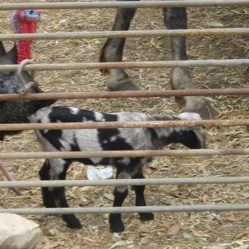
Green Prophet’s new writer Rebecca shares her personal experience raising 5 female goats. She shares an easy goat cheese recipe too!
The first goats arrived to our garden by chance. Our friends needed to get rid of their goats urgently as their neighbours were complaining about the baahing. We weren’t sure what that meant, but we jumped at the chance. My husband and I were both curious, as well as in a genuine need to enjoy a morning coffee that didn’t have soy milk in it.
They were strange and nervous creatures, but the “baahing” didn’t bother us and we later discovered that the “baahing” stopped completely when one of the baby goats was reunited with her mother and returned to nurse.
And so began our journey with learning how to raise and milk our new friends and how to do it in the most efficient, yet humane way.
The annual Zayed Future Energy Prize, named for Sheikh Zayed bin Sultan Al Nahyan, the founder of modern Abu Dhabi who died in 2004, recognizes pioneering work in the field of renewable energy.
Six finalists have been selected from an original pool of nearly 400 nominees for the 2011 Zayed Future Energy Prize. The winner – to be announced on January 18th during the World Future Energy Summit (WFES) in Abu Dhabi – will receive $1.5 million. A $350,000 prize will also be awarded to two other finalists for their innovation, long-term vision and leadership in renewable energy and sustainability. Green Prophet is a media sponsor of the event and we are looking forward to reporting the winner.
Because of an enduring myth, Bedouins in Jordan kill hyenas and owls; The Badia Center for Ecological Education is trying to educate locals and relieve pressure on wildlife.
The desert area north of Amman, Jordan (the site of the King Hussein Park) which engulfs roughly 75% of the entire country, is under strain. In addition to being water scarce, what resources are available are taxed by the presence of Palestinian refugees and other displaced persons.
Wildlife are similarly threatened, mostly by people. Jordan’s wolves are hunted, as are hyenas, and amphibians, other mammals, and reptiles are losing their habitat. Owls are considered a bad Oman by Jordanians and they are murdered too.
Although elsewhere Israel and Jordan cooperate to save birds that share a joint migratory corridor, the Badia Center for Ecological Education works to raise awareness of all species in the Badia.
Initiated in 2000, the center has a dual role as a wildlife rehabilitation center and education center. It is a unique center as it comprises cooperation between 170 Bedouins, 68 of whom are women.
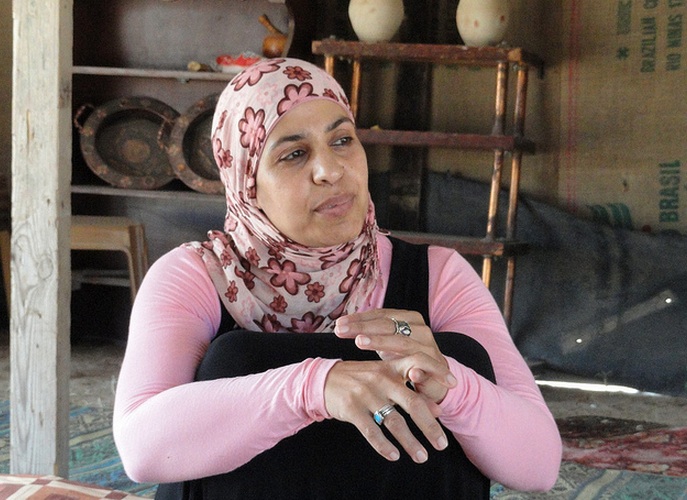
Various Bedouin tribes have traversed the desert for hundreds, and some say thousands of years, with some coming from Saudi Arabia and Morocco, and despite being forced into a more static lifestyle, many have maintained the knowledge of the area’s unique landscapes and wildlife. Some like Mariam, a Bedouin woman in Israel, turns folklore wisdom into medicine. There is lots more on Bedouin folk wisdom from Jordan here.
Miriam Aborkeek makes Bedouin beauty products and medicine the way her grandmother taught her. From local foraged weeds and plants.
In addition to identifying the various threats to species in the region, the center hopes to reduce the pressure on wildlife. Locals run over and poison predators such as wolves if they encroach on their livestock, and because they are superstitious. The same is true for barn owls, though some people like Prof. Yossi Leshem in Israel is de-demonizing owls.
According to an anecdote in David without Borders’ blog (no longer online on Nov. 2020), Bedouin people believe that if a hyena urinates on them, it will proceed to drag them to a cave and feast on their body. Because of this, they won’t hesitate to kill them on the spot if they come across one.
In time, the group also hopes to build an eco-lodge to help fund strident efforts to preserve their precious natural resources.
Some focus strictly on natural building and organic farming, others rely on tourism to stay afloat, while the most ambitious ecovillage fuses agriculture, art, building, education, energy, and even medicine into a holistic community model. Penyon Bay Ecovillage, when it gains traction, will fit into this latter category.
Who’s responsible for this Tel Aviv tree? The local Tel Aviv environmental committee.
Some of the red tape preventing local environmental issues from being resolved has to do with the fact that national government has too much on its plate. Even in a small country like Israel, local issues can often be seemingly ignored by the national government and municipalities are sometimes powerless to do anything. Over recent years, though, Israel has been granting greater control of environmental issues to the local authorities and following a law passed in 2006, 250 environmental committees have been established all over the country.
The committees met for their first conference last week, titled Democracy and Environmental Under Local Authority in Israel 2010: First National Conference of Local Environment Committees.
Desperation and an entrenched car-culture is pushing Cairenes towards outlandish solutions to their hellish traffic congestion
In the bursting-at-the-seams megacity of Cairo, it seems that there is no escaping the traffic. Roads grind to standstill for hours most days and the traffic jams are only getting worse as the Egyptian population simultaneously heads to Cairo every morning either to work or in search of a job. However, one organisation has decided that if there is no space on the road than the solution is take to the air and introduce the ‘Helicopter Taxi’.
Yep, you read right. According to Al-Arabiya, an Egyptian aviation company will be launching a flying taxi project as part of a plan to solve traffic problems in the city. Five turbo helicopters have already been purchased so that people can be flown around Egypt and Cairo whilst avoiding the traffic below. As well as plans for fire fighting and medical evacuation helicopters, these flying taxis will also be “affordable to all people” wishing for a stress-free (and let’s face it a more exciting) Monday morning commute. However, something’s not adding up.
What is the impact of development on the Gulf’s marine ecosystem and can oil companies really play a part in its preservation?
As sharks face the threat of extinction worldwide, conservationists in Egypt have recently raised concerns over the need to protect reef sharks in the Gulf by establishing sanctuaries. Fifty years ago, the Gulf waters were filled with diverse marine life but the criss-cross of oil tankers, conflict and urban development has had its toll on the fragile ecosystem. In Kuwait, environmental filmmaker Zeina Aboul Hosn joined a research expedition in 2008 in search of the forgotten sharks of the Gulf. What she found was dead sharks in the fish markets and a worrying lack of awareness of the importance of sharks for sustaining marine diversity.
Reported by Al Jazeera, the 22 minute film explains that in the past Kuwaitis heavily relied on fishing and pearl diving for their sustenance. However, this all changed when oil was discovered and the Gulf waters then became simply the means of transporting a quarter of the world’s crude oil. The generation which grew up as fishers and pearl-divers is now dwindling in numbers and the link between the sea and the Kuwaitis is increasingly muted.
The Magreb nations have a bright solar future: don’t miss your chance to be part of it!
Solar Maghreb in Casablanca, Morocco on 24-25 May 2011 is the must-attend utility-scale solar conference to make contacts within the five Maghreb nations – meaning “the Western” ones, in Arabic – of Morocco, Algeria, Tunisia, Mauritania and the Western Sahara.
With Desertec, and the region’s proximity to Europe, the future export potential of the region is high. With high levels of solar radiation, Solar Maghreb is one of the most attractive renewable energy investment destinations in the world.
After recovering from the shock of motherhood, Karin tries an eco-compromise by using washable diapers half of the time.
It’s been 4 months since I’ve given birth and I decided that I was fit enough to try washable, reusable diapers. My daughter is exclusively breastfed, an undertaking that completely overwhelmed me for the first few months of her life. But the benefits of breastfeeding are enormous. Call me a wimp, or call me out for not being green enough, but I couldn’t ever imagine during that period, finding the energy to wash diapers. Praise be to women before the invention of disposable diapers. But as the editor of Green Prophet, I know I need to walk the walk. It was time to try washables.
Where I live in the Middle East, the only options open to me are online ordering, and I found all the systems and options so expensive and really confusing – not to mention the sour behavior from my husband every time I brought the idea up. (He’s thinking smelly diapers all over the place). So back in Canada for a visit – I took a trip to the local BabiesRUs to see with my own eyes what washable diapers are available. Here’s my story.
The latest research from Israel is revealing some unexpected insights about attraction and partner selection. If sparks aren’t flying between you and a potential mate, could the problem may be as close as the bugs in your gut?
Right now the findings apply only to fruit flies, humble insects that because of their quick lifespans and genetic uniformity have taught humankind a thing or two about the inner magic of our bodies and our world. In this case, they helped Tel Aviv researchers test a new theory that basically says this: not only do we adapt to our environments, but so do the symbiotic bacteria living in our bodies, and our adaptations are actually intertwined as part of a larger biological milieu.

 Follow the top 10 Middle East environment news stories of 2010.



 A pilot program will bring a greener hybrid bus to Israel’s Sharon region.














 After recovering from the shock of motherhood, Karin tries an eco-compromise by using washable diapers half of the time.