 In looking toward the future, social Greens throughout the Middle East should coordinate an agenda geared toward a sustainable tomorrow.
Both climate change and the repressive political culture that pervades the Middle East have roots in the state system and political culture of the region. The autocratic regimes of the Middle East – specifically Libya, Sudan, Saudi Arabia, the Gulf States and Iran – came about as part of the successful efforts of the formerly imperial powers of Europe, chiefly Britain and France, to preserve their economic and political interests in the domains of North Africa and West Asia they once ruled.
A process that began in the nineteenth century, intensified in the post-World I period and then continued through the early 1970s enabled the departing imperial powers to carve the regions into states. Authority over these polities was conferred on indigenous elites whose regimes were propped up by royalties from the transfer of petroleum resources to the roaring fires of the industrial West through tidy arrangements with European and increasingly American corporations.
The insatiable appetite of industry for fossil fuels coupled with market-driven economic growth and rising consumerism in the countries of the “developed” North have been the main engine of carbon-based climate change. This engine has been powered by the petroleum resources of the Middle East whose political, economic and social configuration has been designed to serve the market economies.



 Fashion designer Naomi Maaravi makes clothes with a story.







 At this time of ecological uncertainty, can we really justify $200,000 adrenalin hits for the rich?
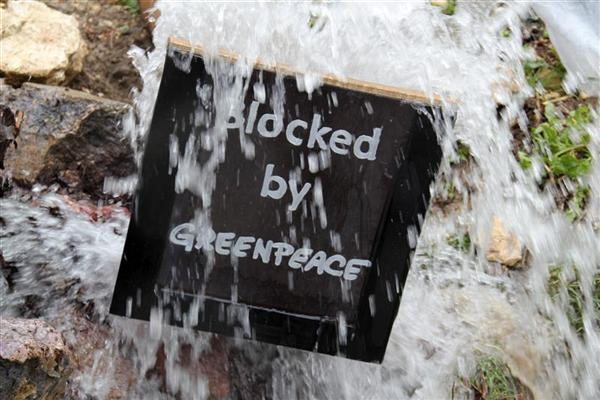

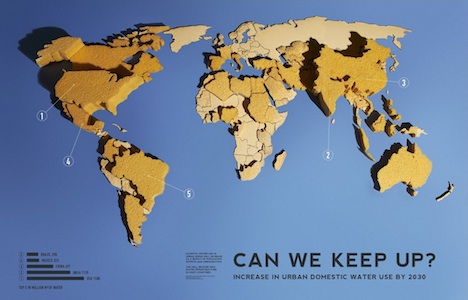
 This art installation by Matthew Laws & Hall Watts is an accurate portrayal of what our 2030 water consumption will look like.