EIT Pharma CEO Leen Kawas is advancing lonafarnib for chronic hepatitis D, showing how stalled late-stage drug programs can be revived and carried toward regulatory review.
Smart glasses are changing the economics of eyewear by turning conventional frames into higher-priced technology products. What used to be mainly a sale built around frame design, lenses, prescription needs and brand preference is now also a sale built around cameras, audio, AI features, app support and connected-device setup.
The film itself is about a Special Forces officer, played by Pitt, stranded in the Alaskan wilderness with his combat dog Odin after a plane crash. Odin is played by Uber, a highly trained German shepherd from a military and law-enforcement breeding line.
“Beavers effectively write their history into the landscape with each shrub they cut and every pond they create by damming streams,” said lead author Dr Georgia Hole, who carried out the research at Anglia Ruskin University and is now based at Durham University.
EIT Pharma CEO Leen Kawas is advancing lonafarnib for chronic hepatitis D, showing how stalled late-stage drug programs can be revived and carried toward regulatory review.
Smart glasses are changing the economics of eyewear by turning conventional frames into higher-priced technology products. What used to be mainly a sale built around frame design, lenses, prescription needs and brand preference is now also a sale built around cameras, audio, AI features, app support and connected-device setup.
The film itself is about a Special Forces officer, played by Pitt, stranded in the Alaskan wilderness with his combat dog Odin after a plane crash. Odin is played by Uber, a highly trained German shepherd from a military and law-enforcement breeding line.
“Beavers effectively write their history into the landscape with each shrub they cut and every pond they create by damming streams,” said lead author Dr Georgia Hole, who carried out the research at Anglia Ruskin University and is now based at Durham University.
EIT Pharma CEO Leen Kawas is advancing lonafarnib for chronic hepatitis D, showing how stalled late-stage drug programs can be revived and carried toward regulatory review.
Smart glasses are changing the economics of eyewear by turning conventional frames into higher-priced technology products. What used to be mainly a sale built around frame design, lenses, prescription needs and brand preference is now also a sale built around cameras, audio, AI features, app support and connected-device setup.
The film itself is about a Special Forces officer, played by Pitt, stranded in the Alaskan wilderness with his combat dog Odin after a plane crash. Odin is played by Uber, a highly trained German shepherd from a military and law-enforcement breeding line.
“Beavers effectively write their history into the landscape with each shrub they cut and every pond they create by damming streams,” said lead author Dr Georgia Hole, who carried out the research at Anglia Ruskin University and is now based at Durham University.
EIT Pharma CEO Leen Kawas is advancing lonafarnib for chronic hepatitis D, showing how stalled late-stage drug programs can be revived and carried toward regulatory review.
Smart glasses are changing the economics of eyewear by turning conventional frames into higher-priced technology products. What used to be mainly a sale built around frame design, lenses, prescription needs and brand preference is now also a sale built around cameras, audio, AI features, app support and connected-device setup.
The film itself is about a Special Forces officer, played by Pitt, stranded in the Alaskan wilderness with his combat dog Odin after a plane crash. Odin is played by Uber, a highly trained German shepherd from a military and law-enforcement breeding line.
“Beavers effectively write their history into the landscape with each shrub they cut and every pond they create by damming streams,” said lead author Dr Georgia Hole, who carried out the research at Anglia Ruskin University and is now based at Durham University.
EIT Pharma CEO Leen Kawas is advancing lonafarnib for chronic hepatitis D, showing how stalled late-stage drug programs can be revived and carried toward regulatory review.
Smart glasses are changing the economics of eyewear by turning conventional frames into higher-priced technology products. What used to be mainly a sale built around frame design, lenses, prescription needs and brand preference is now also a sale built around cameras, audio, AI features, app support and connected-device setup.
The film itself is about a Special Forces officer, played by Pitt, stranded in the Alaskan wilderness with his combat dog Odin after a plane crash. Odin is played by Uber, a highly trained German shepherd from a military and law-enforcement breeding line.
“Beavers effectively write their history into the landscape with each shrub they cut and every pond they create by damming streams,” said lead author Dr Georgia Hole, who carried out the research at Anglia Ruskin University and is now based at Durham University.
EIT Pharma CEO Leen Kawas is advancing lonafarnib for chronic hepatitis D, showing how stalled late-stage drug programs can be revived and carried toward regulatory review.
Smart glasses are changing the economics of eyewear by turning conventional frames into higher-priced technology products. What used to be mainly a sale built around frame design, lenses, prescription needs and brand preference is now also a sale built around cameras, audio, AI features, app support and connected-device setup.
The film itself is about a Special Forces officer, played by Pitt, stranded in the Alaskan wilderness with his combat dog Odin after a plane crash. Odin is played by Uber, a highly trained German shepherd from a military and law-enforcement breeding line.
“Beavers effectively write their history into the landscape with each shrub they cut and every pond they create by damming streams,” said lead author Dr Georgia Hole, who carried out the research at Anglia Ruskin University and is now based at Durham University.
EIT Pharma CEO Leen Kawas is advancing lonafarnib for chronic hepatitis D, showing how stalled late-stage drug programs can be revived and carried toward regulatory review.
Smart glasses are changing the economics of eyewear by turning conventional frames into higher-priced technology products. What used to be mainly a sale built around frame design, lenses, prescription needs and brand preference is now also a sale built around cameras, audio, AI features, app support and connected-device setup.
The film itself is about a Special Forces officer, played by Pitt, stranded in the Alaskan wilderness with his combat dog Odin after a plane crash. Odin is played by Uber, a highly trained German shepherd from a military and law-enforcement breeding line.
“Beavers effectively write their history into the landscape with each shrub they cut and every pond they create by damming streams,” said lead author Dr Georgia Hole, who carried out the research at Anglia Ruskin University and is now based at Durham University.
EIT Pharma CEO Leen Kawas is advancing lonafarnib for chronic hepatitis D, showing how stalled late-stage drug programs can be revived and carried toward regulatory review.
Smart glasses are changing the economics of eyewear by turning conventional frames into higher-priced technology products. What used to be mainly a sale built around frame design, lenses, prescription needs and brand preference is now also a sale built around cameras, audio, AI features, app support and connected-device setup.
The film itself is about a Special Forces officer, played by Pitt, stranded in the Alaskan wilderness with his combat dog Odin after a plane crash. Odin is played by Uber, a highly trained German shepherd from a military and law-enforcement breeding line.
“Beavers effectively write their history into the landscape with each shrub they cut and every pond they create by damming streams,” said lead author Dr Georgia Hole, who carried out the research at Anglia Ruskin University and is now based at Durham University.
Mix and match the endless possibilities with Sharon Golan’s Mr. Potato-esque DIY shoes.
When it comes to fashion, and sustainable fashion, shoes may be one of the worst offenders. Not only do shoe fashions change rapidly, but they also tend to wear out faster than our other articles of clothing. Shoe designers and producers have tried to find solutions to this ecological conundrum, with Nike introducing a shoe recycling program and other designers creating multi-functional and multi-fashion shoe designs. The solution, as Israeli designer Sharon Golan proves, does not have to be boring. Making a versatile, sustainable shoe that lasts longer and is lighter on the resources (due to its versatility) can be fun.
Enter Shell 256, Golan’s shoe design with a collection of 16 modular shoe components that can be combined and used to create 256 different variations of shoes.
A Ph.D student at the Hebrew University of Jerusalem, Shaul Lapidot has designed an industrial bio-foam made from paper mill waste.
You would be forgiven for thinking that Green Prophet has some kind of illicit connection with the Hebrew University in Jerusalem given all the attention we’re giving them this week. Professor Oded Shoseyov from there developed Ashpoopie – a real-life version of “Vapoorizer” that turns animal and human poop into ash within seconds, and yesterday we learned that Ph.D student Shaul Lapidot has invented a new eco-friendly industrial foam comprised of the discards of paper mills, cutting down on both paper waste and fossil fuel consumption in one fell swoop.
Versace caved to pressure to stop selling “killer” sandblasted jeans. Will other brands follow suit?
Blue jeans are getting uglier by the day. Around Christmas last year we wrote about environmental and social hazards associated with the “jeans capital of the world” in China. We’ve since discovered that giving jeans a distressed look, achieved by blasting them with pressurized silica, is often fatal for the people who work in jean factories. (Silica is sand and has numerous uses. China is buying up sand from Israel, for example, to use in its roads!)
Called sandblasting, Turkey banned the practice in 2009 because so many workers began to die from silicosis. Other countries such as Bangladesh, Egypt, and Mexico are reportedly continuing to allow what has killed 46 people in Turkey alone since November 2010. Further compounding the problem, a handful of brands, including Armani, Dolce & Gabana, and Matalan, refuse to discontinue sales of their “killer” jeans.
Investigating the profit-motivated push to make genetically modified food ‘halal’
Back in December 2010, a conference held in Penang, Malaysia with biotechnology experts and halal proponents ended with the conclusion that genetically modified food washalal ( ‘permissible’ for Muslims) as long as the sources from which they originate from are halal. This decision – which was accompanied by a fatwa declaring GM halal – came as a shock to some in the wider Muslim community who consider GM a deviation from god’s creation.
The UK-based green Muslim organisation Islamic Foundation for Ecology and Environmental Sciences insisted the fatwa was controversial and “failed to consider biotechnology from an Islamic perspective, ignoring not only the harm that GM causes to the environment but the way it undermines the integrity of God’s creation.”
Adrian Smith + Gordon Gill make their own announcement: they’re designing the Kingdom Tower, but it won’t be a mile high.
Every blogger who gives a toot about sustainable building fell over themselves earlier this year to mock Saudi’s mile high tower. We all bought the story without really thinking about what such a tall building might look like; but there’s a very good reason we fell for what turned out to be a dirty news leak: absurd stuff like this actually happens in the Middle East.
Recently a billionaire Sheikh from Abu Dhabi etched his name – Hamad- into the sands of a one mile stretch of island. His self-aggrandizing graffiti is visible from space. And Dubai has the 2,651 foot Burj al Khalifa tower. Perhaps feeling left out of the cockshow, Saudi has now officially commissioned Adrian Smith + Gordon Gill to design a 3,280-foot spacescraper – skyscraper just doesn’t seem high enough- that will surpass the Burj as the world’s next tallest tower.
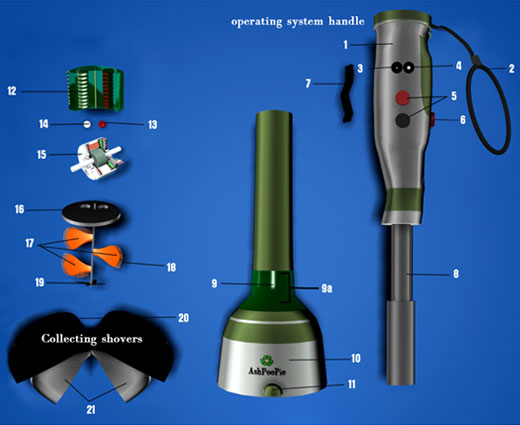
This handy gadget, which looks like a camping flashlight, delivers a secret formula to animal and human waste that turns it into ash within seconds!
With so much sh#t mounting in the world – dog poop on the sidewalk, overflowing human waste in heavily-trafficked tourist areas, sewage plants banned (like in the West Bank) – we need some kind of magic formula to get rid of it. And now we need look no further.
Professor Oded Shoseyov from the Hebrew University in Jerusalem has invented Ashpoopie – a contraption that delivers “special formula” to dog or human waste which almost immediately turns the feces into ash. If this sounds far-fetched to you, don’t worry, we had the same reaction, but closer analysis shows that if this stuff is as safe and cheap as its publicist claims, we potentially have a revolutionary product on our hands that can solve all of the world’s sh#tty problems.
The magic formula of Ashpoopie
Cleaning up dog turds left on the street with plastic bags that won’t degrade for hundreds of years is not an effective solution to getting rid of “shoe mines,” according to Paulee CleanTec. Rather than get rid of the waste, it ends up being shuffled to some other place.
What we really need is something that will make it vanish altogether. Ashpoopie does just that. Well, almost.
Within ten seconds after it is mixed with what the company calls a “cheap and safe” special formula – which magic ingredients have yet to be disclosed – the poop becomes an odorless and completely sterile ash that can be vacuum packed. But Wait, the best is yet to come.
Using human poop as fertilizer
Ashpoopie won’t only rid the streets of New York City, Tel Aviv, and other dog-friendly urban environments of these nuisance piles; but it will also turn human waste into fertilizer and generate electricity!
Paulee’s Spokespeople Mr. Moshe Hibel and Dr Yaeli Pintchuck claim that the same patent is being used to develop SCHT – Self Contained Human Toilets.
According to Dr. Yaeli Pintchuck:
This patent will be used for: Portable / chemical toilets which have no connection to any sewage system. Shortly we can say that based on the formula that we use (cheap and safe chemical) the feces will turn to sterile ash in seconds and will leave about 10-20% of the original “portion” – the ash can be evacuated once in a long while and then can be used as fertilizer.
This toilet will even generate its own energy by capturing heat energy from the process required to convert the feces into ash and converting into electricity. Failing that, according to Dr. Pintchuck, a solar panel can be installed.
Cleaning pollution in the Nile
Paulee’s poop-to-ash converter has numerous applications. It can be used to clean up the Falucca boats that pollute the Nile River and other waterbound vessels, as well as on airplanes, buses, and trains. It’s also a superb solution for dealing with high quantities of human waste at music festivals and poor villages that lack access to a sewage plant. This stuff can literally be used anywhere.
By now you’re probably expecting Ashpoopie to cost hundreds of dollars, right? Maybe not. Although the cost of the initial outlay has not been established, a month’s supply of small capsules – enough to clean up after one dog – will cost between $10 and $20. Human applications, by virtue of volumes, would probably cost a bit more. Unless you own a Great Dane.
Professor Oded Shoseyov’s expects Ashpoopie to be available in retail outlets by the second quarter of 2012.
2020 update: looks like Ashpoopie never made it to production.
According to water-technology.net, an innovative water purification plan that was recently tested on NASA’s last space shuttle, Atlantis, gives reasonable hope for change. The new polymer system, tested in orbit, successfully removed all bacteria and viruses from water used in flight.
The system is a creation of the Fisher Institute for Air and Space Strategic Studies and Strauss Water, a subsidiary of Israel’s largest food and beverage conglomerate.
This man is paddling trash out of a polluted water body in the Jordanian city Azraq, which is believed to have one million barrels of oil.
All signs show that Jordan is firmly caught in the clutches of a resource curse. Since it takes a whopping 80% of its energy from Egypt, which has not been a reliable supplier following numerous post-revolution explosions of its natural gas lines, and its renewable energy thrust is only expected to shape up in another five years or more, the Kingdom is eager to secure other sources of energy to meet its growing demand.
To do that and create more energy independence for a country that imports 97% of its energy, geologists are pressing the government to step up exploration of what they hope is a substantial oil field just east of Amman.
It now appears that the environmentalists in Israel may be winning out on efforts to build giant solar array farms in the Negev and Arava regions. A recent study conducted by Israel’s Nature and Parks Authority (NPA) indicates that building such projects could be fatal to thousands of wild animals that live in the fragile ecosystem of these desert regions.
Dror Peleg’s recycled plastic bike will set you “Frii” from flat tires.
You won’t be able to do the Tour de France with this colorful bike designed by Israeli student Dror Peleg, but you will definitely capture everyone’s attention. Like this green toilet also developed in Israel, and Hashim Al Sada’s solar generator developed specifically for Qatari campers, Frii is relatively cheap to produce and has the potential to make life a lot greener and happier for a large number of people.
We speak to Gidon Bromberg (left) about the challenges of working with the first and only regionally focused environmental organisation in the Middle East
“We face condemnation from people in Jordan, Palestine and Israel for the work we do,” explains Bromberg. “We call them the ‘spoilers’ as they don’t want to see any co-operation whether there is benefit for the communities for not… They state that any co-operation should come after a final peace agreement but we don’t believe that.”
Rather than waiting for peace, Bromberg states that action is needed now to influence governments to make the right decision and also to halt the ongoing environmental destruction that is occurring every day in the region.
The Green Sheikh appropriately devotes this month’s column to the environmental and social benefits of Ramadan.
Every year more than 1.6 billion people around the world celebrate the amazing holy month of Ramadan, (learn how to green your holy month) fasting from dawn to dusk, abstaining from food, drink and sexual relations. Only those who are sick, elderly or on a journey, or women who are pregnant, menstruating or nursing are permitted to break the fast and make up an equal number of days later in the year. If they are physically unable to do this, then they must feed a needy person for every day missed.
A few years ago I wrote an Arabic article called “adaat wa ibadaat” which means literally in English “habits and rituals.” It focused on our daily habits of consumption and lifestyle during the month of Ramadan, taking its main message from the noble Qur’an: “Eat and drink but waste not by excess, for God loves not the wasters”.
After watching a sobering documentary about global warming, Hashim Al Sada has devoted his career to developing solar powered solutions for Qatar.
If you can’t beat ’em, do you join ’em or redirect the game? Qatari desert camps are often equipped with a variety of electronics, including refrigerators, air-conditioning units (check out these Dead Sea inspired Advantix Systems), and televisions powered by diesel generators. (Berbers in the Sahara also rely on diesel generators to pump water). Rather than dismissing these trappings and the pollution generated to maintain them, the 26 year old Qatari inventor Hashim Al Sada created a clean energy alternative that will allow his fellow Qataris to enjoy these full-luxury “camping” trips without the attendant environmental destruction.
Quick to make and satisfying – roasted chickpeas answer the need for a healthy snack.
When we casually dump a can-full of chickpeas into a pan, we’re thinking of dinner, not how the ancient world ate the little yellow grains. But chickpeas found in Middle-Eastern archeological excavations have been proved to be eaten by folks as far back as 6790 BCE. The ancients ate young chickpeas raw, boiled the mature grains, and also ate the leaves. So can we. In fact, having access to the pungent spices of the Middle East, we can make far more delicious snacks of them than our faraway forefathers ever ate. (See our delicious recipe for humous here, and our equally good chickpea-filled sambusak pastries.)
High in protein and fiber, with satisfying complex carbohydrates, chickpeas seasoned with Middle Eastern spices and roasted are easy to make and popular with everyone.

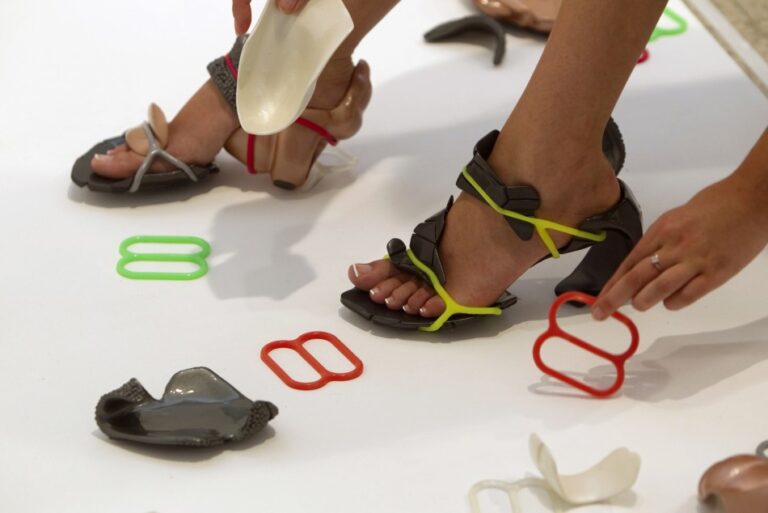
 Mix and match the endless possibilities with Sharon Golan’s Mr. Potato-esque DIY shoes.