Home Blog Page 524

Should Green Organisations Accept Sponsorship From Big Bad Corporations?

3

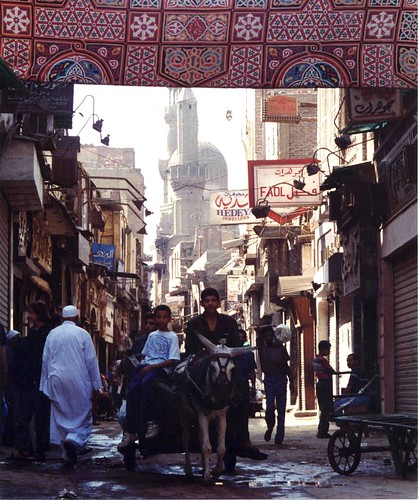
From climate events to marine conservation projects, it seems that green organisations in the Middle East are happy to take money from not-so-green corporations

It goes something like this. A green organisation is set up with the good intentions of sorting out some environmental injustice be it pollution or marine destruction. That green and very credible organisation is then approached by a not-so-green corporation looking to sponsor it – the financially struggling organisation could really do with the support but is concerned that it will lose its credibility.

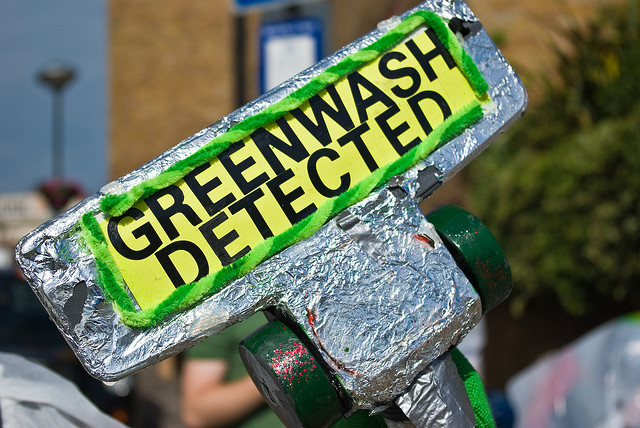
The corporation, which has caused a fair amount of environmental pollution of its own, claims that it wants to work with that organisation to change and insists that together they can achieve more. That green organisation agrees – the corporation gets it greenwashed press release earning it relatively cheap Eco points whilst the green organisation loses its credibility with real campaigners.

It’s a tricky and universal problem facing green organisations worldwide but after receiving another dubious greenwashed press release this morning, I couldn’t help asking myself why are there so many green organisations in the Middle East sponsored by large corporations?

Dine with an Unconventional “Green” Sheikh

5

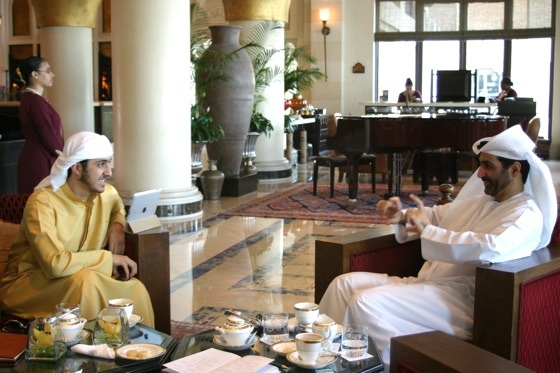
the Green Sheikh, Dubai, environmental awareness, sustainable development, Blue PlanetThis image was taken from our interview with the Green Sheikh in Dubai earlier this year. And this is his first column on Green Prophet

We are thrilled to announce that the Arab world’s most famous environmental activist will pen a monthly column for Green Prophet. Born H.E. Sheikh Abdulaziz Al Nuaimi, he is probably better known as the Green Sheikh (who knows how to treat a lady!) Drawing from a strong background in environmental sciences (and boundless energy), Abdulaziz travels extensively to promote cultural, environmental, and spiritual awareness.

In concert with our own philosophy, the Green Sheikh’s somewhat unconventional approach transcends borders, politics, and religion. For this, he is deeply loved both in his home country, the United Arab Emirates, and throughout the world. And for breaking down the barriers associated with Arab royalty in order to help save what he calls the Blue Planet from human destruction, he is enormously respected.

In his first column, the Green Sheikh introduces Dine with an Unconventional Sheikh, a cross-cultural exchange program, and speaks a little bit about what he hopes to achieve during his current visit to Brazil. He cherishes public participation, so please don’t be shy to add your comments and questions to his posts. The first one is below.

Green Love “Sticks” In Jaffa

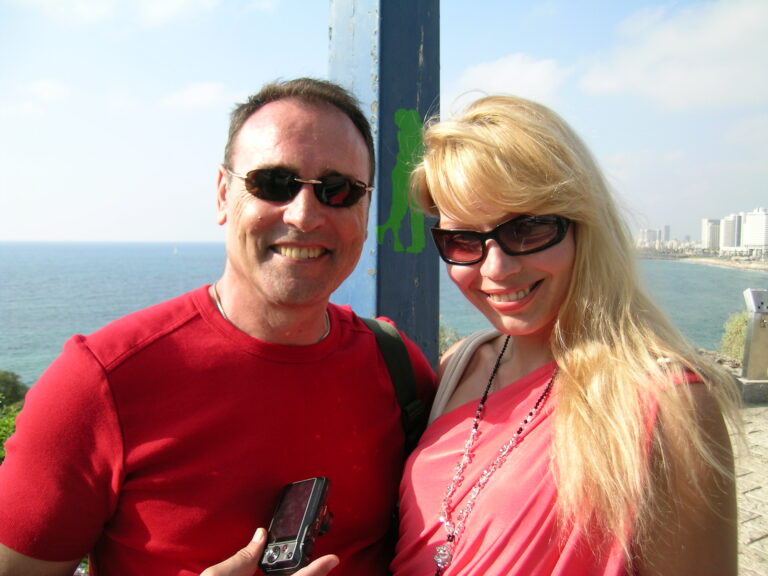
jaffa tel aviv loveA Ukranian woman and an Israeli man (a couple in love) pose for green love in digital times, in Old Jaffa overlooking Tel Aviv.

I’ve been singing Lovers In A Dangerous Time by the Canadian singer Bruce Cockburn over the last week or so. A perfect song, an anthem for my trip around Jaffa yesterday as I activated my friend’s project Love in Digital Times. Green stickers, sustainable cities. Conflict. Peace. World Environment Day. A lot of messages.

Stephen Ibbott, a painter and artist from Toronto had sent me some “green” stickers in the mail, and I had an assignment to place them around the city and photograph them. I like these interactive art happenings, like the peace box sent to me by a New York artist a few years ago (picture below). Using World Environment Day yesterday as my D-Day, I set off with baby on my back to stick Stephen’s hand-painted stickers around the city. I guess I am advertising myself as a vandal. But in the name of love? Worth it. Some more images follow, with brief explanations why I chose the spots I chose.

Food Geo-politics Hits Middle East Streets

3

food politics middle eastThe international aid and development organization Oxfam recently revealed some alarming facts and future predictions on world hunger, warning that the world faces a real crisis in agricultural production and nutrition, with climate change exacerbating the crisis. The Middle East is cited as a “taste of what may be to come” as rising food costs contribute to a growing dependence on imports, widening social inequalities, food deprivation and social unrest.

Other observers are echoing the concern that food scarcity is becoming the new norm. Already in 2011, the UN Food Price Index has surpassed its previous all time global high, as of March climbing for eight consecutive months.

Today’s price hikes are driven by several factors, including what Oxfam refers to as a “broken agricultural system” driven by a minority of investors, whose primary purpose to deliver profit, a rapidly expanding population, temperature increases, and irrigation wells running dry.

Last month’s deadly tornadoes in the US, largest Icelandic eruption in 100 years, droughts and warming temperatures in wheat growing areas in parts of China, US and Western Europe add further evidence to the IPCC’s predictions that the number of natural disastrous are on the increase.

Arab Spring May Boost Chance for Desertec Solar Power

desertec arab springPolitical stability, as well as sunshine is needed for Desertec solar projects.

The “Arab Spring” uprisings that have turned several Middle Eastern countries literally upside down may actually become a boost for the Desertec solar energy project that could eventually provide much needed electrical power to several Middle East North Africa countries – and Europe to boot.  What began last year as optimistic news that Egypt was planning to earnestly develop solar energy by building two 100 MW solar energy plants began to look futile as that country and others in the Middle East began to reel under the chaos of civil unrest and even civil war. This had led many to wonder if there is a future at all for solar energy in Egypt and other MENA countries. And investors today are obviously very uncertain about how the sands will shift in the coming months, and years in the region. Especially now as new leadership styles, democratic, autocratic and bureaucratic come to light. 

Israeli Enviro Minister: Please Keep Politics Out of Water!

1

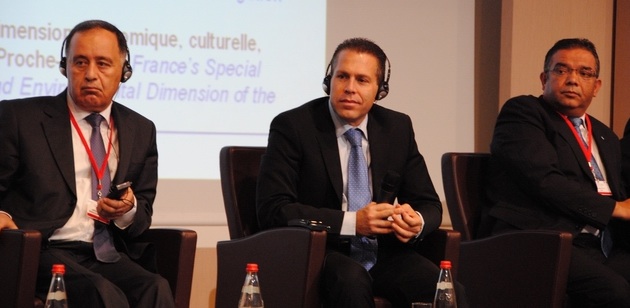
israel erdan water parisIs it possible to keep politics out of water negotiation in the Middle East? Israel enviro minister (center) thinks so

In a statement to the panel Hydro-Diplomacy: A Path to Peace, at the For’UM Conference on Innovation, which took place in Paris on May 31, Israel Minister of Environmental Protection Gilad Erdan called for keeping the water issue out of the political conflict. He noted to other ministers in the room from the Midde East North Africa Region that water scarcity and water source pollution threaten both the Israeli and Palestinian populations and said that if the issues of water supply and political conflict are not separated, cooperation and a solution to the water problems plaguing the entire population of the region will not be reached.

The Famous Potters Of El-Qasr, Egypt Got Soul

1

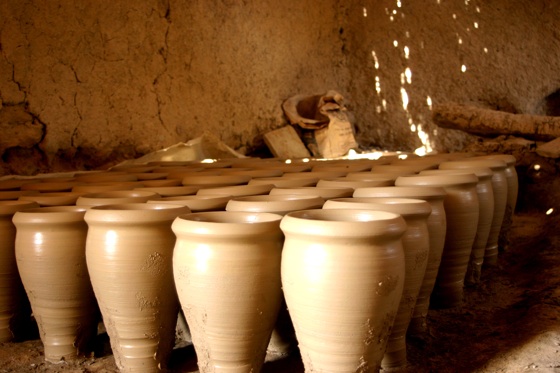
sustainable development, art, culture, travel, egyptPottery has been passed on for several generations in el-Qasr, an ancient village 12 hours south of Cairo.

In the medieval village el-Qasr, set at the foot of a limestone mountain in Egypt’s western desert, pottery is taken very seriously. In their book Egypt, Civilization of the Sands, Pauline and Philippe de Flers quote the historian Nessim Henry Henein, who spent several months with master potters in the region.

He said, “The Potter of Al-Qasr describes his wheel as a soul that engenders life, and the act of potting as gestation and birth.” Reading this imbued my visit to a tiny, dark studio situated on the edge of the village with a sense of the sacred. But I don’t think the potters felt the same way.
sustainable development, art, culture, travel, egypt

Followed by a little boy who kept trying to sell me a woven broom, of sorts, and his sister who kept telling him to leave me alone, my guide introduced me to the famous potters of el-Qasr.

This was a brief interview illuminated by very little explanation. Inside the mud brick studio covered in palm fronds were two piles of clay made from the abundantly-available local top soil. These were covered with clothes to keep in moisture. The helper was responsible for pulling out the right amount of clay for the specific jar being made, and giving it shape, before lining it up in front of the potter.

The latter then turned the lump into a beautiful jar by carefully caressing and smoothing the spinning clay. Despite the old fashioned technology, which consisted of no more than a simple foot-operated wheel, the quiet man churned out three pots in the brief time I was there.
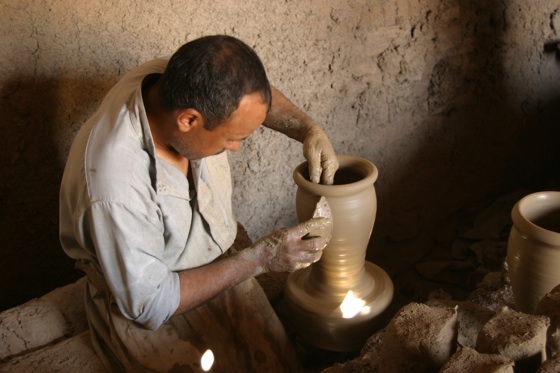
sustainable development, art, culture, travel, egypt

According to the de Flers, an ancient code dictates a unique design for each jar. This ensures that everyone who uses them will know the contents. The sega, which means “to give a drink” and is 16 inches long and 8 inches tall, has been used since before Roman times. They were designed to fit into the irrigation canals built alongside el-Qasr wells. Another jar of a similar size but with different squiggles would be instantly recognized for having a different purpose.

Although I tried not to make a menace of myself, the potters were grumbling unhappily about my presence. The room was small and dark, so I moved around trying to optimize the available light. But their rhythm was disrupted and the helper guy kept bumping into me. After the third time, and him protesting loudly, I realized I was not so welcome.

sustainable development, art, culture, travel, egypt

After being imbued with life inside, the pots are left to dry in the sun for several days before they are fired in a giant kiln. After that, they are sold all over Egypt and used locally to cool water. More than a historical cottage industry, although that is incredibly valuable and interesting to tourists, potting also generates a modest income for the humble people who live here.

El-Qasr is a little known jewel 12 hours south of Cairo. Learn how to bake bread like an Egyptian and stay tuned for more stories about this charming village.

More about Egyptian Culture and Travel:

5 Tips For Traveling Through Post-Revolution Egypt

Eco Sins of the Cheshire Blogger

Egypt May Survive Climate Change Thanks to AUC Students

Sefirat HaOmer: 49 Steps Upward

0

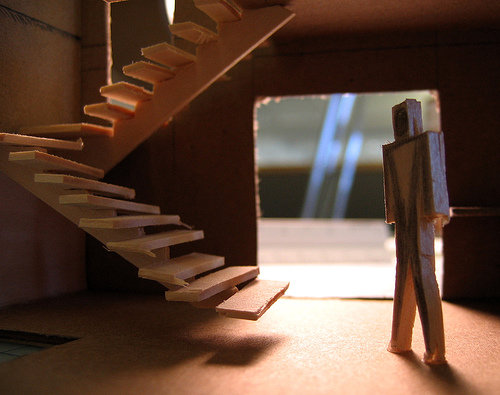
image-man-and-stairs
The 49 days between the holidays of Passover and Shavuot are a stairway to spiritual renewal.

Sefirat HaOmer – the literal counting of seven week’s days in Jewish tradition- is drawing to a close with the upcoming Shavuot holiday (Tuesday night). Reflecting the Biblical commandment to sacrifice a measure of the new barley harvest at Shavuot, the period is rich in mystical, historical, and material significance. It’s a time of meditation, of  self-refinement. See our eco-rabbi’s insights on how to raise your spiritual level, in his post on Parshat Naso. A time of mourning cut through with rejoicing. A time to remember the past and to plan ahead. A significant period in the Israeli agricultural calendar.

On Passover, the Jews experienced the redemption from slavery in Egypt. During the following 49 days, the nation prepared itself for redemption from idol-worship and other spiritual traps. The culmination of this period came on Shavuot, when Moses brought down the Torah from Mt. Sinai.

Bake Bread Like An Egyptian

home cooking, travel, nature, EgyptSurrounded by trash in a small enclosure, this village woman from el-Qasr, Egypt, bakes several loaves of bread in giant clay “jar.”

Baking bread el-Qasr style isn’t great for the lungs, but it does wonders for the beleaguered soul. Twelve hours south of Cairo, past the enigmatic White desert, and past the lush Farafra Oasis, this city was once a Medieval fortress built over an old Roman village. Formerly the capital of Dakhla, the last of the famed oases where intrepid travelers stocked up on provisions before braving the formidable Sahara desert, el-Qasr hasn’t lost its full-bodied, slow-paced rhythm.

But when the news that an Americaine arrived swept through the sleepy village, women suddenly emerged from every corner carrying their woven baskets. “La, shokran,” I said over and over, “No, thank you, la, la, shokran.” One woman, however, taught me something that no money could buy.

Recipe: Spinach and Mushroom Quiche

0

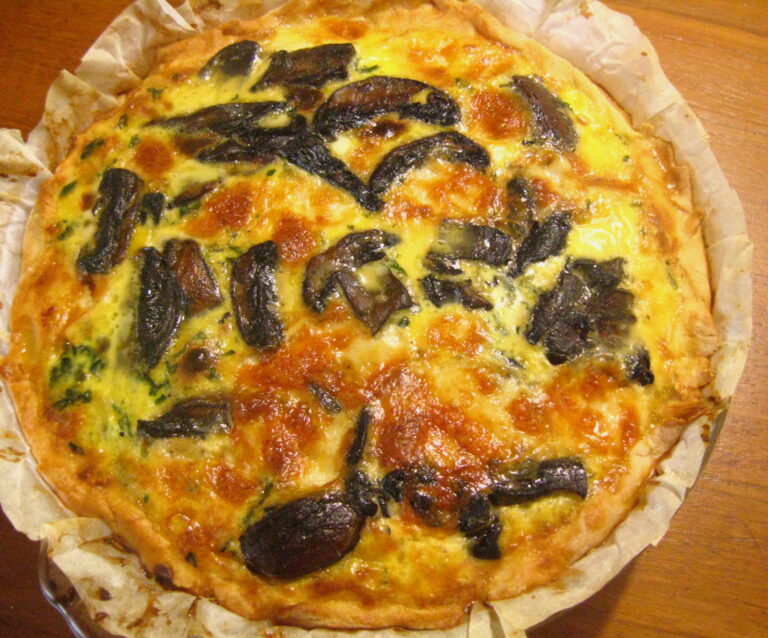
image-spinach-mushroom-quiche
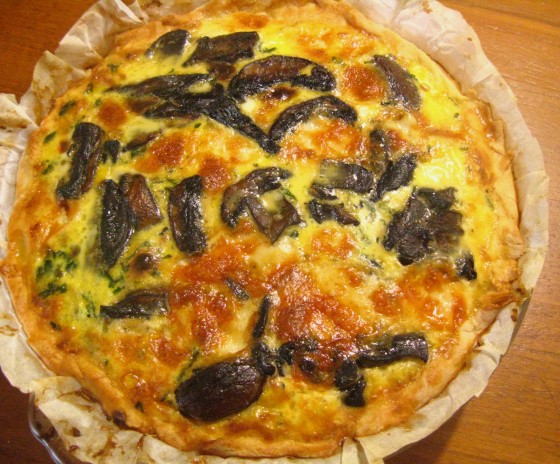
Just in time for Shavuot, a goat’s-cheese quiche stuffed with fresh greens and mushrooms.

The Jewish Shavuot holiday, which occurs on Tuesday night this week, celebrates  receiving the Torah at Mt. Sinai. All-night study sessions and prayer mark the holiday’s spirit. Other customs include decorating the home with fresh leaves and flowers, and eating dairy foods. See our labneh recipe for an easy Middle-Eastern dairy dip.

Tradition has it that since the laws of kashrut were still to be revealed, the Jews refrained from eating meat for the entire 40 days that Moses stood on Mt. Sinai. Delicious Shavuot recipes have evolved from the dairy tradition, many of them sweet. Last year, we posted a New York Cheesecake recipe for Shavuot. I like to give my family something savory too, something with plenty of organic vegetables in it.

The answer is Spinach-Mushroom Quiche.

Nature Toy Finds Eco-Friendly Ways to Entertain Kids this Summer

"ecological toys chalk"Let kids get outdoors and color driveways and sidewalks with Nature Toy’s eco-friendly chalk.

With the summer vacation from school fast approaching, many parents are trying to find ways to entertain their kids during the long break.  Which means those eco-friendly parents out there are trying to find environmentally and kid-friendly toys for their kids to play with this summer.  Perhaps in response to an obvious need, Nature Toy (an Israeli-based company founded in 2010) has started to collect a range of eco-friendly and natural toys in one place and made it easier on concerned parents.  Nature Toy claims that it was born “out of the need of giving our children a world of imagination and toys, based on natural and pleasant materials – in contrary to the ‘world of plastic’ of our days.”

SBY Solar Blocks Arava Power Solar Field Launch Today

Arava Power solar energy sby
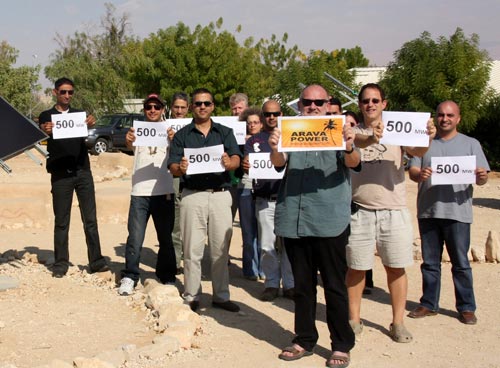
On the eve of its launch, Arava Power must prepare for a “real” solar war: Israel’s first solar field company loses building permit and prepares for battle –– over sun rights and tariffs

The Israeli solar installation company SBY (Solar By Yourself) has effectively played a role in freezing Arava Solar’s building permit this weekend. In a much anticipated event happening today, Arava Power will not be able to connect its solar energy to the grid. Sad news because rapper Shyne, international and local media, and infrastructure and agriculture ministers from around the world are expected at the launch of Israel’s first solar farm today at Kibbutz Ketura, near the Israeli city of Eilat. Word on the ground is that the Israeli government has issued a limited number of feed-in tariffs, and once the allocations of solar energy feeding to the grid are achieved, feed-in tariffs and subsequently the profits of future solar energy installations become limited.

One solar energy company shutting down another over money.

Green Prophet spoke with Arava Power’s CEO, Jonathan Cohen this morning as the news broke: “Solar By Yourself has been aggressively attacking Ketura Sun and indeed all ground-based solar projects in Israel this past year and a half. We will of course prepare and address fully all claims against Ketura Sun’s building permit, as we have done thus far. We are proud to be fulfilling Ben Gurion’s vision this afternoon, launching the first substantial solar field in Israel, the first we anticipate of many to come.”

Arava Power Founders Ask: Time for a Six-Day Solar War?

yossi arava power keturaToday is Naksa Day, World Environment Day, and the day when Arava Power is launching its solar field in the desert. With Arava’s permits temporarily halted, Green Prophet looks at a powerful op-ed by Arava founders on 6 steps to creating a green war.
June 5 marks not only World Environment Day and the anniversary of the Six-Day War; this year it also marks the ribbon cutting for the first solar field in the history of the Jewish people. Just as the 1967 war ushered in a new chapter in the strengthening of Israel’s long-term viability, the affixing of the mezuzah on Israel’s first solar field holds the promise of a new era by ending fossil fuels’ role as the exclusive power source for Israel’s growing energy needs.

Turkey’s Dams Are Violating Human Rights, UN Report Says

2

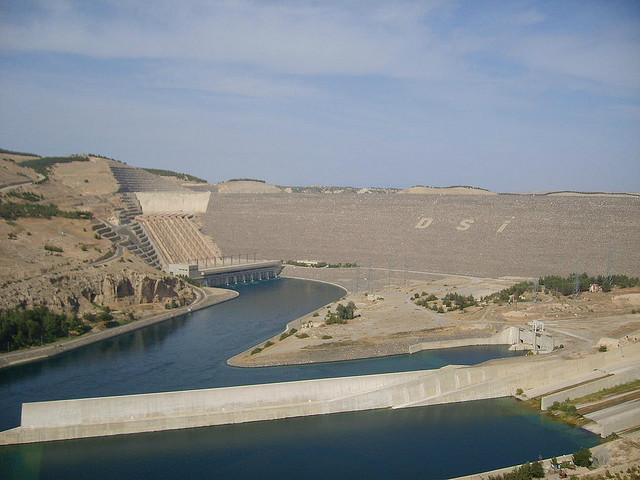
Turkish dams don’t just affect Turks — they cut off access to water in Iraq and Syria as well, forcing entire populations in those countries to resettle.

Hydropower seems like the perfect solution to Turkey’s escalating energy demand: a clean form of energy and an irrigation source that can be harnessed from the many rivers that flow through the country. But the real cost of hydropower in Turkey has long been apparent. Building a hydraulic dam requires acres of land around the site to be torn up and clear-cut, displacing local residents, destroying local habitats, and often submerging settlement sites that date back to ancient times.

Turkey’s government has long been aware of these issues, and mostly ignored them. But a new report submitted to the United Nations Committee on Economic, Social and Cultural Rights puts an international slant on Turkey’s destructive dams. Turkey’s dams, the report alleges, have failed to abide by “international guidelines designed to prevent human rights violations through development and infrastructure projects.”

Protest Against Nuclear Power In Jordan

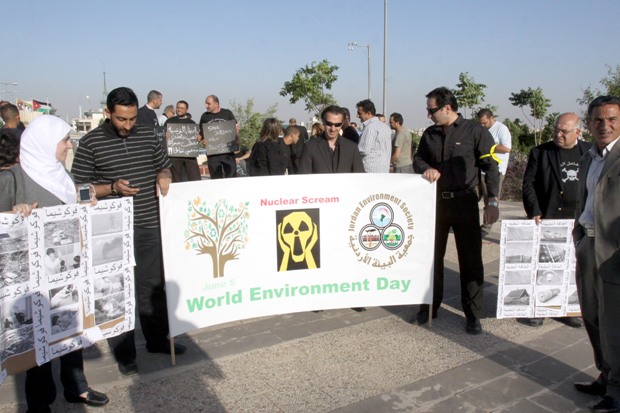
Protesters in Jordan are campaigning against the country’s plans to build a nuclear reactor which they state carries more risks than positive impacts

Despite the disaster at Japan’s Fukushima nuclear station and Germany’s bold move to shut down all nuclear reactors by 2020, it seems the Middle East is still set on a nuclear future. Israel has hinted that it may build a ‘safe nuclear station’, Turkey is pushing on with its nuclear ambitions and Jordan recently announced that it is forging ahead with plans to build its first nuclear power plant despite local resistance and regional instability.