Home Blog Page 525

Estrogen Exposure Raises Blood Pressure Via the Brain

New animal research is significant: Chronic estrogen exposure leads to a build up of a compound in the brain that causes blood pressure to rise.

For years, women were told that the estrogen they consumed in the form of contraception or hormone replacement therapy had heart-protective benefits. Recent research suggested otherwise: long-term exposure to estrogen was linked to higher blood pressure in women, but the connection wasn’t fully understood. Now the link is becoming clearer, thanks to research at Michigan State University (MSU).

What should women in the Middle East know about hormones and their health? It’s a complicated answer, but of this, we are sure: Ecosexuality advocates are moving away from their use, opting for natural means to regulate our reproductive health, fertility and wellbeing.

Nissan and Renault EVs: What if Every Appliance We Use Ran on Gasoline?

Gasoline engines still work fine in cars; but what if they ran hair dryers or computers?

Renault and Nissan, who happen to be partner auto companies, and who both are developing electric cars the Fluence and the Leaf, came out with the same clever advertisement: “What if everything we use ran on gas?” The ads are designed to coincide with the launching of both the Renault EV series of electric cars and Nissan’s Leaf, which is currently not scheduled to be introduced into the Middle East. The Renault Fluence electric model, with the help of  the Better Place electric car technology company, is about to begin selling in Israel by late summer.

The Marsh Arabs Who Restored A Global Ecosystem

0

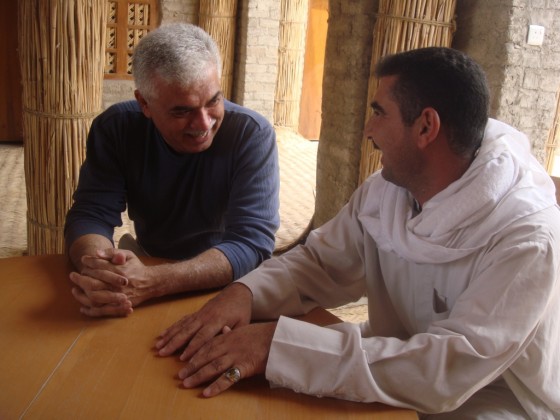
Azzam Alwash (left), director of the environmental organisation Nature Iraq, talks with a Marsh Arab who lives in the Mesopotamian Marshlands of Iraq

In the first part of this two-piece feature, Azzam Alwash the director of Nature Iraq, spoke to us about his warm memories as a child visiting the Mesopotamian Marshlands of Iraq with his father; the shock he faced when he returned to Iraq from America in 2003 to find the marshes completely decimated under Saddam’s regime and his vow to help restore the wetlands to their former glory.

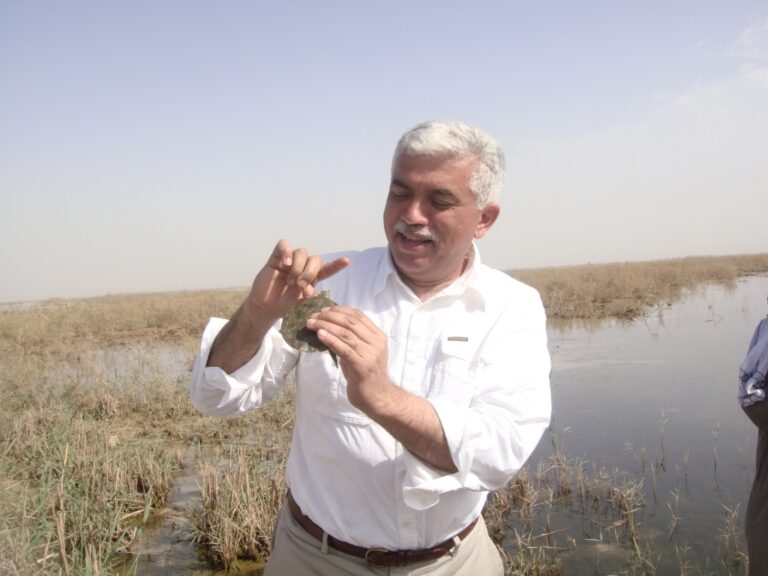
Despite a shaky start to the restoration of the marshlands due to two years of drought and dwindling water supplies, the marshlands (which are home to a wide range of wildlife such as water buffalos, foxes and rare birds) are on the mend. And a new generation of Iraqi environmentalists as well as the Marsh Arabs  have played their part in restoring a global ecosystem which has existed for over 7,000 years.

Natural Herbs for Breast Health and Enhancement

form enhancing herbs
Certain plants, especially those rich in phyto-estrogens, are being looked at more closely for their role in growing a healthier bosom.

Using herbs and foods to enhance a woman’s form date back to ancient times, and some suggest that the use of tinctures, massage oils and brews were popular among Egyptian harems. Some of the most popular supplements include saw palmetto, fenugreek, fennel, red clover, wild yam and dong quai. Empirical scientific evidence is more limited than anecdotal evidence from multiple cultural references that suggest breast enlargement can occur from certain natural compounds.

If larger or suppler breasts are desired, going the natural ‘aphrodisiac‘ route is likely to be safer, greener and gentler to your body and the planet.

Common Herbs: Below is a list of some of the most common mastogenic plants. Please note, while we only cover mostly breast health effects here, each of these plants are known to have additional health properties.

  • Fenugreek: This herb, which tastes like a combination of celery and maple syrup, has been shown to minimize the symptoms of menopause, and increase a woman’s bust size and milk production in nursing mothers.  Specifically, India’s traditional Ayurvedic physicians prescribe it to nursing mothers to increase their milk, and in American folk medicine, fenugreek was considered a potent menstruation promoter. More locally, Middle East harem women ate the seeds to become more buxom.  How does it work? Fenugreek seeds contain steroid precursors, diosgenin and other phyto-estrogens that are thought to increase breast size.
  • Saw Palmetto: This compound is popular as a natural treatment for prostate enlargement and impotence in men, but it is also recommended by those who practice natural medicine to increase a woman’s bust size and sexual desire.  Many cultures have used it throughout the centuries. Native Americans used the berries for food and medicine, particularly for breast disorders in women. Saw palmetto berry also tones the urethra, and it may be used to uphold the healthy function of the thyroid gland and urinary system.  How does it work? Phyto-nutrients stimulate breast tissue, increasing health and size.
  • Wild Yam: This most popular herbal tonic is noted for its benefits to a woman’s reproductive system, including minimizing premenstrual and menopausal symptoms, again because of it’s phyto-nutrients. It can be taken in capsule or tea form. The powder can also be added to cream with which a woman can use to massage her breasts.
  • Fennel:  This herb has been used to treat amenorrhea (absence of a menstrual cycle), low sex drive in women, and to increase bust size and promote milk production in new mothers. Rich in phyto-nutrients, it works well with Fenugreek, and can be added to creams like Wild Yam to be massaged directly on the breasts.

Dosages and Risks: There are many supplements on the market with wide-ranging doses. Some websites suggest that if a woman intends to use breast-enhancing herbs, she take them as single ingredients for maximum results. That way, she can control how much she takes and start with just one or two at a time. Most have been used for centuries across cultures with little known risks.

With that said, we recommend that you see your health care provider before starting any new regime, since dosages are not standardized, and there still could be some risks, especially if a woman is pregnant, nursing or taking other prescription drugs or supplements.

When in doubt, ask an informed provider first.

Success Rates: Generally speaking, using natural herbs and supplements are less drastic than the options provided for by modern medicine, such as surgery. This also means they are less invasive. Until more research is conducted on these and other breast enhancing compounds, we can’t establish universal guidelines or success rates. Individuals are likely to experience different outcomes.

Our recommendation? Check with your physician, obtain these from a reliable source, preferably organic and sustainably harvested, and conduct your own personal research to determine which herbs are best for your breasts.

:: Image: Diana Blackwell

Read more on eco-sexuality issues:

Are Hormones in the Environment Making Breasts Bigger?
How do Tree Humpers Prevent Pregnancy?

World Renowned Author Dishes on GINKS, Green Sex and Making Love to Planet Earth

Paddle For The Planet This World Environment Day

0

marine protected areas, marine conservation, pollution, acidification

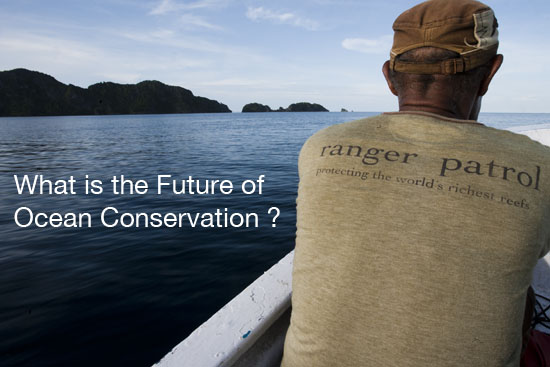
Watermen and women from 52 countries will unite this World Environment Day to raise funds for the Daram Marine Reserve in Raja Ampat, Indonesia.

Pull out your oars and go paddling this World Environment Day, June 5, 2011. Started by a crew of Dubai-based watermen distressed by the state of our oceans but determined to give back in a postive and meaningful way, Paddle for the Planet aims to help establish and support a patchwork of marine reserves across the globe. Plagued by overfishing, pollution, coral depletion, and rising acidification as a result of higher carbon concentrations in our atmosphere, our oceans need help. P4P makes marine conservation splashing fun. 

Lebanon Rocks Out To Cure The Green Blues

environmental activism, environmental art, environmental hazards, Mediterranean SeaBatroun is an outpost of beauty in Lebanon. The next generation of environmental activists want to make sure it stays that way.

Georges “Junior” Daou belongs to the next generation of Lebanese. A long time nature-lover, he has devoted himself full time to rejecting toxic waste in Beirut, consistent oil spills that degrade the Mediterranean Sea, and the maltreatment of animals. But the recent university graduate and his posse are approaching their environmental activism from a unique angle. In order to reach deep inside and awaken the green souls of their fellow Lebanese, they turn to art and music.

Arava Power Switches on Solar Power Plant at Kibbutz Ketura

[youtube]http://www.youtube.com/watch?v=VRe8Z_qCYb0&feature=youtu.be[/youtube]

It’s being billed as an historical event. The folks at Arava Power, based at Kibbutz Ketura near Eilat will be inaugurating Israel’s first full solar field on Sunday, June 5, World Environment Day. Over the next twenty years the field called Ketura Sun, is expected to generate some 5 MW of electricity and will spare the production of some 125,000 metric tons of carbon dioxide.

Journalists are invited to the event. Contact Arielle ([email protected]) for an invitation. Buses will leave Tel Aviv and Jerusalem in the morning. But those hearty travellers making the journey – expect a long day in the sun. The return ride will take you back around 10:30 PM. Some 5 hours later, you’ll be home.

The event will be an opportunity to brush shoulders with some big players in renewable energy: Siemens Project Ventures, which has already participated in the development of 14 international power plant projects, is a stakeholder in the Arava Power venture.

::Arava Power

David de Rothschild’s Plastiki

1

UNEP, adventure, Plastiki, plastic, oceans, myoo, david de rothschildA National Geographic “emerging explorer,” David de Rothschild talks to Green Prophet about plastic, and how adventures inspire change and action.

We wrote about the trip from San Fran to Sydney in a boat made from thousands of plastic bottles. And we reviewed the Plastiki book. Now we bring it all together in this exclusive interview with our favorite eco-adventurer David de Rothschild. Learn more about what inspires the man who makes loving and protecting nature an adventure to be shared.

Cell Phones As Risky As DDT and Engine Exhaust

cell phones cancer WHO reportSome tips for preventing possible cell-phone cancer link.

The United Nations health arm, the World Health Organization (WHO) has taken a pretty bold move listing cell phone use, and the radiation it emits as dangerous as DDT in pesticides, and as risky as the cancers that can be caused by vehicle exhaust fumes.

While it is very hard to point out any causal link to cell phone use and cancer, since cancer is a complicated disease and there are many types of cancer, not to mention it takes years to develop, the WHO is pretty much convinced of the link, and is building a plan based on dozens of different studies. A report in the medical journal, The Lancet is expected later this summer. What are some tips to talking safe?

I personally interviewed one of the foremost experts on cell phone use and the link to cancer, Dr. Sigal Sadetzki in Israel who took her findings to Congress in the United States. Israel is a particularly meaningful group for study purposes, because while the rest of the world was still using landlines every Israeli and their pet was connected to a cell phone network. People in Israel buy them for their kids, and are known to be very heavy users. This makes Israeli case studies on cell phones and cancer particularly important.

Speaking with Fox News once, the producer of a show once asked me if Sadetzki  had done any research on Americans, because that’s what Americans want to know. I tried explain with no luck, that Israelis have the same brain matter (more or less), glands, tissues, and susceptibility to cancer as Americans would. Yet Fox wanted proof on American soil. Will this new WHO report be convincing enough to the world?

The Israeli newspaper Haaretz (no link found) has reported the news released by WHO. The new WHO report lists cell phones in a risk factor B2, meaning they are possibly carcinogenic. An Israeli health board is also considering implementing legislation that will limit cell phone use to those under 14, those whose tissues are growing rapidly and which are susceptible to DNA damage.

I personally refrain from using a cell phone for long calls, and use a headset (not Bluetooth) when I must use the phone. I do so not only for the cell phone cancer link but because I find cell phone companies repugnant in their customer service and monopolies, and the quality of conversation on landlines is much better. For similar reasons, I usually choose landlines over the free calls of Skype, especially when I am abroad and can avoid the really extortionately high fees charged for phone calls by hotels.

Other recommendations from Sadetzki are (or were a couple of years ago):

1. Parents should limit the time their kids use cell phones or hands-free devices

2. Calls, especially made by children should be limited in time

3. Cell phones should never be carried touching the body, like in a pocket where radiation while it’s communicating with the base station, can be transmitted to the body

4. Cells phones shouldn’t be recharged near your bed or sleeping/resting quarters

5. Use a headset when talking on cell phone

6. Limit use in rural areas, because the radiation levels can be higher, the more spaced out antennas are in your network

There is to be a summary of the panel’s findings at the WHO website and published in the July 1 issue of the journal Lancet Oncology.

Cell phones have become such an important element in our life, not just for calling your honey at home when you are out buying groceries. For many young people in the western world it is their only connection – they no longer subscribe to landlines; and for a major percentage of the world’s population, it is the only way they access the Internet.

Maybe the next question is how to make cell phones less dangerous.

Above image via pinksherbert

“The Garden of Eden Had Been Turned Into The Ashes of Hell”- Azzam Alwash On The Destruction Of The Marshlands of Iraq

0

Azzam Alwash, marsh iraqIn this two-part feature, Azzam Alwash tells us how he achieved the impossible and helped restore the Marshlands of south Iraq after its destruction under the Saddam regime
Travelling through the Mesopotamian Marshlands of Iraq on a boat with his father, Azzam Alwash felt he had glimpsed a garden of Eden- a land of abundance, peace and natural beauty. “In my childs’ mind eyes, the reeds were like forests with ‘trees’ extending to the sky and pathways made of small canals in which our boat floated. Every now and then we came to an open space through which air blew, cooling us down,” he recalls. “The sounds of frogs were all around us and the water was so clean you could see the fish scramming away from our boat. Birds would fill the sky when we disturbed them.”

Whilst Alwash’s memories of the time he spent as a young boy with his father in the marshes stayed with him, the marshes faced a rather brutal fate. In reprisal to the Marsh Arabs support of an uprising against the Saddam regime, in the 1980s the marshlands were drained of their water and life withered away.

Alwash was lucky enough to escape the turmoil of Iraq under Saddam to America where he trained as a hydraulic engineer, yet those early memories of the Marshlands never left him and when he returned 25 years later, he vowed to help restore that Garden of Eden. In 2004, he setup Nature Iraq, the country’s first and only environmental organisation with the aim of restoring the Marshlands- a task many believed would be impossible.

Brilliant Biomass Stoves And Sleek Solar Heaters At Project Lebanon 2011

cleantech, egypt, middle east, lebanon project 2011, lebanon sustainability weekWho says the Middle East can’t be sustainable? Project Lebanon has it all: minced biofuels, wind turbines, outdoor solar lights and more.

All kinds of cool cleantech innovations geared specifically towards the Middle East and Egypt will be on display at Project Lebanon 2011. Today is the opening day of the International Construction and Environmental Technology Trade Exhibition in Beirut. Considered among the key sales and business platforms for people interested in the latest developments in building materials, construction, equipment, and environmental technology, the 16th annual event gets off to a roaring start with biomass boilers, outdoor solar lights,  and a variety of other innovative products.

Lebanon-based Phoenix energy is among the numerous businesses showcasing their latest clean technologies such as the sleek Solior FL 150 solar thermal water heater which can be installed on flat, slanted, or tiled roofs. Project Lebanon takes place in tandem with Energy Lebanon and Lebanon Sustainability Week, which officially kicks off tomorrow. The show will run from today, May 31 2011 through June 3 between 3pm and 10pm at the Beirut International Exhibition & Leisure Center in Beirut’s Central District. Visit http://www.projectlebanon.com for more information.

More sustainability news from Lebanon:

Mashrabiya: 12th Century Light & Cooling for Lebanon’s USJ Campus

World’s Largest Canvas Turned into 5,000 Reusable Bags

Lebanese Man Turns Garbage into Beautiful Glasses

Dutch Ark Builder: “When You Open It, There Is a God”

noah ark johan huibers
A Green Prophet? This ark now being built to scale might save us from climate change.

Crazy as it sounds, a Dutch man is building an ark, cubit by cubit, exactly as it’s written in the Bible and to scale – like the one Noah built, described in Genesis. He had the idea for some years now, and has financed the major undertaking through revenues earned by a smaller ark he charged admission to as it sailed through Dutch canals.

Breaking!!! Ground Zero Rubble Site to be Adorned by Arab-Based Design Team

1

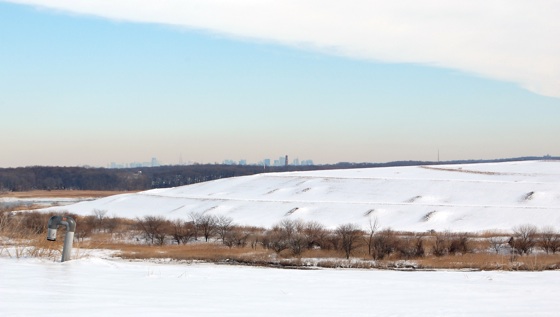
land art generator initiative, renewable energy, freshkills park, reclaimed landfillOne tiny little part of the sprawling Freshkills landfill with the Manhattan skyline in the background.

The final resting place of Ground Zero remains and rubble and once taller than the Statue of Liberty, when complete Freshkills Park will be the largest prettified landfill in the United States. The NYC mayor’s office has given the go ahead to the Dubai-based Land Art Generator Initiative to solicit ideas for beautiful, renewable energy public artwork to adorn this important site on the outskirts of Manhattan.

LAGI 2010, the first biennial design competition premised on the slogan “energy can be beautiful,” enjoyed resounding success. Sponsored by Masdar, covered by all of the world’s major media houses, and held in Abu Dhabi, the competition drew over 400 entries. The winning design – Lunar Cubit – comprises energy-generating pyramids that light up in accordance with various phases of the lunar cycle.

NATO’s Steel Fish To Protect Med from Oil Spills

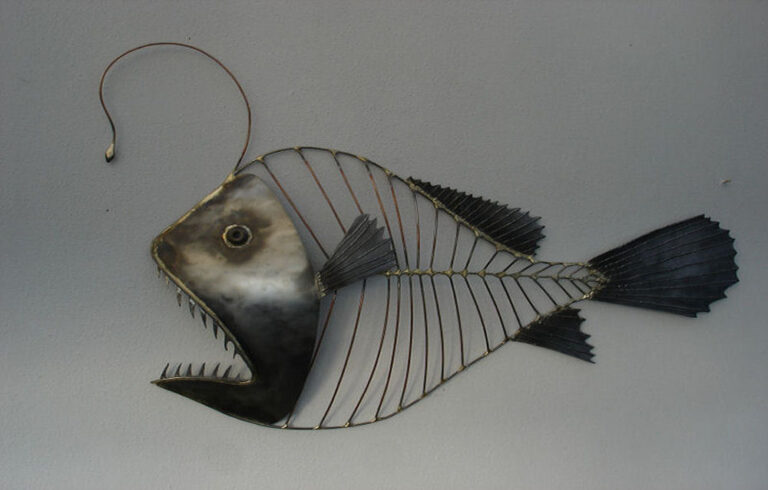
steel fishNATO’s “steel fish” may not be works of art like this, but they have a very important goal: to catch oil spills.
Pollution issues in the Mediterranean Sea have reached a point where the future of this historic body of water will be in serious doubt without environmental protection. A new project called “steel fish” is a hightech undersea contamination detector, which will be NATO’s way of giving advanced notice of leakage of oil from ships sailing through this body of water, as well as from wells being drilled into the Mediterranean seabed.

“Worst Case Scenario” Realized as Three Fukushima Nuclear Reactors Melt Down

3

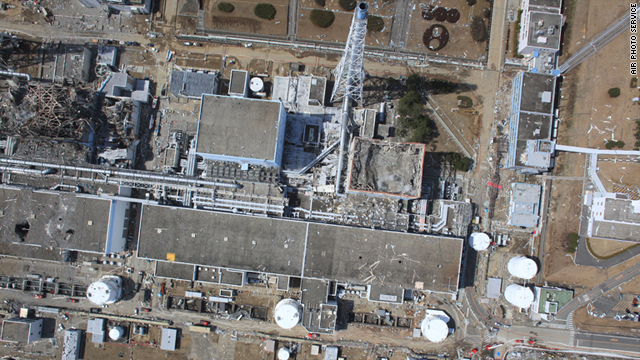
damaged Fukushima reactorsAreal view of damaged Fukushima reactors – another Chernobyl?

In what is being considered as a “worst case scenario” Japan power company authorities have now confirmed that three of the Fukushima nuclear reactors have actually melted down. The news follows onsite investigation by volunteer plant workers who were able to observe the damage from the March 9 magnitude earthquake and tsunami that flooded the reactors with sea water, which resulted in radiation levels in the seas near the plant of up to 1,250 times above normal levels. With this fact in mind, many people began to fear that a meltdown of the reactor fuel rods in even one of the damaged reactors will seriously affect the world environment  for  years to come.