Karl Studer occupies an unusual position in American business. As President of Quanta Services, he oversees electrical infrastructure operations across the United States, Canada, and Australia, managing thousands of employees and multibillion-dollar projects.
A fresh oil spill in the Tigris River, filmed by an Iraqi university student, has reignited concern over Iraq's polluted waterways. From ancient Mesopotamia to modern Basra, the country's dependence on oil has come at a steep environmental and human cost, with activists warning that unchecked contamination is putting ecosystems and public health at risk.
Hair restoration technology continues to evolve, but the surgeon behind the procedure remains the most important factor. Doctor-led hair transplants emphasize careful diagnosis, conservative donor management, natural hairline design, and long-term planning rather than simply maximizing graft counts. By treating donor hair as a limited resource and tailoring each procedure to the patient's future hair loss, experienced surgeons can reduce the need for corrective surgery while delivering more natural, sustainable results.
Can data centers really be built in space? Pasadena-based Sophia Space is partnering with Apex to test the idea by launching modular AI computing systems into low Earth orbit in 2027. Using radiation-hardened compute TILEs cooled by passive radiative systems and mounted on scalable satellite buses, the companies aim to prove that edge computing can operate reliably in space. While challenges remain, the project represents an important step toward distributed orbital computing networks that could support everything from climate monitoring and pollution tracking to autonomous spacecraft navigation in an increasingly crowded orbital environment.
Mona Khalil spent decades protecting Lebanon's sea turtles and coastal ecosystems. Her death in the ongoing conflict between Israel and Hezbollah shines a light on a broader environmental tragedy unfolding across northern Israel and southern Lebanon. From damaged wetlands and disrupted bird migrations to threatened seed banks and endangered wildlife, the region's ecosystems are becoming casualties of a war with no clear end in sight.
Karl Studer occupies an unusual position in American business. As President of Quanta Services, he oversees electrical infrastructure operations across the United States, Canada, and Australia, managing thousands of employees and multibillion-dollar projects.
A fresh oil spill in the Tigris River, filmed by an Iraqi university student, has reignited concern over Iraq's polluted waterways. From ancient Mesopotamia to modern Basra, the country's dependence on oil has come at a steep environmental and human cost, with activists warning that unchecked contamination is putting ecosystems and public health at risk.
Hair restoration technology continues to evolve, but the surgeon behind the procedure remains the most important factor. Doctor-led hair transplants emphasize careful diagnosis, conservative donor management, natural hairline design, and long-term planning rather than simply maximizing graft counts. By treating donor hair as a limited resource and tailoring each procedure to the patient's future hair loss, experienced surgeons can reduce the need for corrective surgery while delivering more natural, sustainable results.
Can data centers really be built in space? Pasadena-based Sophia Space is partnering with Apex to test the idea by launching modular AI computing systems into low Earth orbit in 2027. Using radiation-hardened compute TILEs cooled by passive radiative systems and mounted on scalable satellite buses, the companies aim to prove that edge computing can operate reliably in space. While challenges remain, the project represents an important step toward distributed orbital computing networks that could support everything from climate monitoring and pollution tracking to autonomous spacecraft navigation in an increasingly crowded orbital environment.
Mona Khalil spent decades protecting Lebanon's sea turtles and coastal ecosystems. Her death in the ongoing conflict between Israel and Hezbollah shines a light on a broader environmental tragedy unfolding across northern Israel and southern Lebanon. From damaged wetlands and disrupted bird migrations to threatened seed banks and endangered wildlife, the region's ecosystems are becoming casualties of a war with no clear end in sight.
Karl Studer occupies an unusual position in American business. As President of Quanta Services, he oversees electrical infrastructure operations across the United States, Canada, and Australia, managing thousands of employees and multibillion-dollar projects.
A fresh oil spill in the Tigris River, filmed by an Iraqi university student, has reignited concern over Iraq's polluted waterways. From ancient Mesopotamia to modern Basra, the country's dependence on oil has come at a steep environmental and human cost, with activists warning that unchecked contamination is putting ecosystems and public health at risk.
Hair restoration technology continues to evolve, but the surgeon behind the procedure remains the most important factor. Doctor-led hair transplants emphasize careful diagnosis, conservative donor management, natural hairline design, and long-term planning rather than simply maximizing graft counts. By treating donor hair as a limited resource and tailoring each procedure to the patient's future hair loss, experienced surgeons can reduce the need for corrective surgery while delivering more natural, sustainable results.
Can data centers really be built in space? Pasadena-based Sophia Space is partnering with Apex to test the idea by launching modular AI computing systems into low Earth orbit in 2027. Using radiation-hardened compute TILEs cooled by passive radiative systems and mounted on scalable satellite buses, the companies aim to prove that edge computing can operate reliably in space. While challenges remain, the project represents an important step toward distributed orbital computing networks that could support everything from climate monitoring and pollution tracking to autonomous spacecraft navigation in an increasingly crowded orbital environment.
Mona Khalil spent decades protecting Lebanon's sea turtles and coastal ecosystems. Her death in the ongoing conflict between Israel and Hezbollah shines a light on a broader environmental tragedy unfolding across northern Israel and southern Lebanon. From damaged wetlands and disrupted bird migrations to threatened seed banks and endangered wildlife, the region's ecosystems are becoming casualties of a war with no clear end in sight.
Karl Studer occupies an unusual position in American business. As President of Quanta Services, he oversees electrical infrastructure operations across the United States, Canada, and Australia, managing thousands of employees and multibillion-dollar projects.
A fresh oil spill in the Tigris River, filmed by an Iraqi university student, has reignited concern over Iraq's polluted waterways. From ancient Mesopotamia to modern Basra, the country's dependence on oil has come at a steep environmental and human cost, with activists warning that unchecked contamination is putting ecosystems and public health at risk.
Hair restoration technology continues to evolve, but the surgeon behind the procedure remains the most important factor. Doctor-led hair transplants emphasize careful diagnosis, conservative donor management, natural hairline design, and long-term planning rather than simply maximizing graft counts. By treating donor hair as a limited resource and tailoring each procedure to the patient's future hair loss, experienced surgeons can reduce the need for corrective surgery while delivering more natural, sustainable results.
Can data centers really be built in space? Pasadena-based Sophia Space is partnering with Apex to test the idea by launching modular AI computing systems into low Earth orbit in 2027. Using radiation-hardened compute TILEs cooled by passive radiative systems and mounted on scalable satellite buses, the companies aim to prove that edge computing can operate reliably in space. While challenges remain, the project represents an important step toward distributed orbital computing networks that could support everything from climate monitoring and pollution tracking to autonomous spacecraft navigation in an increasingly crowded orbital environment.
Mona Khalil spent decades protecting Lebanon's sea turtles and coastal ecosystems. Her death in the ongoing conflict between Israel and Hezbollah shines a light on a broader environmental tragedy unfolding across northern Israel and southern Lebanon. From damaged wetlands and disrupted bird migrations to threatened seed banks and endangered wildlife, the region's ecosystems are becoming casualties of a war with no clear end in sight.
Karl Studer occupies an unusual position in American business. As President of Quanta Services, he oversees electrical infrastructure operations across the United States, Canada, and Australia, managing thousands of employees and multibillion-dollar projects.
A fresh oil spill in the Tigris River, filmed by an Iraqi university student, has reignited concern over Iraq's polluted waterways. From ancient Mesopotamia to modern Basra, the country's dependence on oil has come at a steep environmental and human cost, with activists warning that unchecked contamination is putting ecosystems and public health at risk.
Hair restoration technology continues to evolve, but the surgeon behind the procedure remains the most important factor. Doctor-led hair transplants emphasize careful diagnosis, conservative donor management, natural hairline design, and long-term planning rather than simply maximizing graft counts. By treating donor hair as a limited resource and tailoring each procedure to the patient's future hair loss, experienced surgeons can reduce the need for corrective surgery while delivering more natural, sustainable results.
Can data centers really be built in space? Pasadena-based Sophia Space is partnering with Apex to test the idea by launching modular AI computing systems into low Earth orbit in 2027. Using radiation-hardened compute TILEs cooled by passive radiative systems and mounted on scalable satellite buses, the companies aim to prove that edge computing can operate reliably in space. While challenges remain, the project represents an important step toward distributed orbital computing networks that could support everything from climate monitoring and pollution tracking to autonomous spacecraft navigation in an increasingly crowded orbital environment.
Mona Khalil spent decades protecting Lebanon's sea turtles and coastal ecosystems. Her death in the ongoing conflict between Israel and Hezbollah shines a light on a broader environmental tragedy unfolding across northern Israel and southern Lebanon. From damaged wetlands and disrupted bird migrations to threatened seed banks and endangered wildlife, the region's ecosystems are becoming casualties of a war with no clear end in sight.
Karl Studer occupies an unusual position in American business. As President of Quanta Services, he oversees electrical infrastructure operations across the United States, Canada, and Australia, managing thousands of employees and multibillion-dollar projects.
A fresh oil spill in the Tigris River, filmed by an Iraqi university student, has reignited concern over Iraq's polluted waterways. From ancient Mesopotamia to modern Basra, the country's dependence on oil has come at a steep environmental and human cost, with activists warning that unchecked contamination is putting ecosystems and public health at risk.
Hair restoration technology continues to evolve, but the surgeon behind the procedure remains the most important factor. Doctor-led hair transplants emphasize careful diagnosis, conservative donor management, natural hairline design, and long-term planning rather than simply maximizing graft counts. By treating donor hair as a limited resource and tailoring each procedure to the patient's future hair loss, experienced surgeons can reduce the need for corrective surgery while delivering more natural, sustainable results.
Can data centers really be built in space? Pasadena-based Sophia Space is partnering with Apex to test the idea by launching modular AI computing systems into low Earth orbit in 2027. Using radiation-hardened compute TILEs cooled by passive radiative systems and mounted on scalable satellite buses, the companies aim to prove that edge computing can operate reliably in space. While challenges remain, the project represents an important step toward distributed orbital computing networks that could support everything from climate monitoring and pollution tracking to autonomous spacecraft navigation in an increasingly crowded orbital environment.
Mona Khalil spent decades protecting Lebanon's sea turtles and coastal ecosystems. Her death in the ongoing conflict between Israel and Hezbollah shines a light on a broader environmental tragedy unfolding across northern Israel and southern Lebanon. From damaged wetlands and disrupted bird migrations to threatened seed banks and endangered wildlife, the region's ecosystems are becoming casualties of a war with no clear end in sight.
Karl Studer occupies an unusual position in American business. As President of Quanta Services, he oversees electrical infrastructure operations across the United States, Canada, and Australia, managing thousands of employees and multibillion-dollar projects.
A fresh oil spill in the Tigris River, filmed by an Iraqi university student, has reignited concern over Iraq's polluted waterways. From ancient Mesopotamia to modern Basra, the country's dependence on oil has come at a steep environmental and human cost, with activists warning that unchecked contamination is putting ecosystems and public health at risk.
Hair restoration technology continues to evolve, but the surgeon behind the procedure remains the most important factor. Doctor-led hair transplants emphasize careful diagnosis, conservative donor management, natural hairline design, and long-term planning rather than simply maximizing graft counts. By treating donor hair as a limited resource and tailoring each procedure to the patient's future hair loss, experienced surgeons can reduce the need for corrective surgery while delivering more natural, sustainable results.
Can data centers really be built in space? Pasadena-based Sophia Space is partnering with Apex to test the idea by launching modular AI computing systems into low Earth orbit in 2027. Using radiation-hardened compute TILEs cooled by passive radiative systems and mounted on scalable satellite buses, the companies aim to prove that edge computing can operate reliably in space. While challenges remain, the project represents an important step toward distributed orbital computing networks that could support everything from climate monitoring and pollution tracking to autonomous spacecraft navigation in an increasingly crowded orbital environment.
Mona Khalil spent decades protecting Lebanon's sea turtles and coastal ecosystems. Her death in the ongoing conflict between Israel and Hezbollah shines a light on a broader environmental tragedy unfolding across northern Israel and southern Lebanon. From damaged wetlands and disrupted bird migrations to threatened seed banks and endangered wildlife, the region's ecosystems are becoming casualties of a war with no clear end in sight.
Karl Studer occupies an unusual position in American business. As President of Quanta Services, he oversees electrical infrastructure operations across the United States, Canada, and Australia, managing thousands of employees and multibillion-dollar projects.
A fresh oil spill in the Tigris River, filmed by an Iraqi university student, has reignited concern over Iraq's polluted waterways. From ancient Mesopotamia to modern Basra, the country's dependence on oil has come at a steep environmental and human cost, with activists warning that unchecked contamination is putting ecosystems and public health at risk.
Hair restoration technology continues to evolve, but the surgeon behind the procedure remains the most important factor. Doctor-led hair transplants emphasize careful diagnosis, conservative donor management, natural hairline design, and long-term planning rather than simply maximizing graft counts. By treating donor hair as a limited resource and tailoring each procedure to the patient's future hair loss, experienced surgeons can reduce the need for corrective surgery while delivering more natural, sustainable results.
Can data centers really be built in space? Pasadena-based Sophia Space is partnering with Apex to test the idea by launching modular AI computing systems into low Earth orbit in 2027. Using radiation-hardened compute TILEs cooled by passive radiative systems and mounted on scalable satellite buses, the companies aim to prove that edge computing can operate reliably in space. While challenges remain, the project represents an important step toward distributed orbital computing networks that could support everything from climate monitoring and pollution tracking to autonomous spacecraft navigation in an increasingly crowded orbital environment.
Mona Khalil spent decades protecting Lebanon's sea turtles and coastal ecosystems. Her death in the ongoing conflict between Israel and Hezbollah shines a light on a broader environmental tragedy unfolding across northern Israel and southern Lebanon. From damaged wetlands and disrupted bird migrations to threatened seed banks and endangered wildlife, the region's ecosystems are becoming casualties of a war with no clear end in sight.
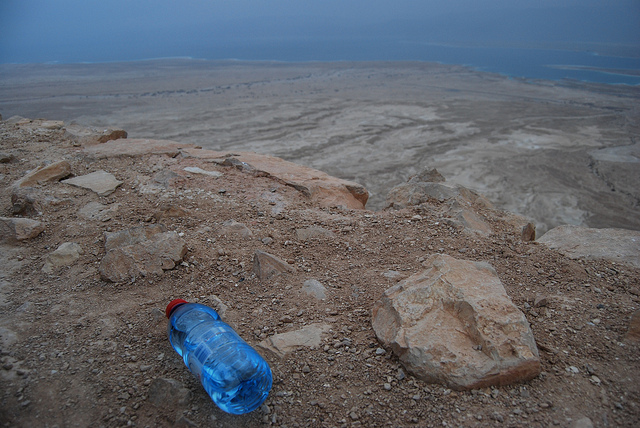
Despite these ongoing environmental issues, Israel Chemicals, owners of the Dead Sea Works, recently declared operating profits of 41 percent due to rising potash prices, according the Marker.
The seven modular folds of the Loop Chair grant it a twelve-fold function.
Modular: constructed with standardized units or dimensions for flexibility and variety in use. It’s the “flexibility and variety in use” part that makes modular design so sustainable, because if one item can be modified and serve a range of functions then you don’t need to use additional resources to create multiple objects. We’ve seen this concept applied to a number of designs – from modular toasters that allow for parts to be added based on the growth of your family, to modular women’s shoes with alternate heels, and even modular multipurpose furniture. The Loop Chair, designed by Israeli designer Boaz Mendel, is another such innovative modular design that brings us 12 different functions for the price of one item.
Sleek, green and probably expensive; GM’s extended range ELR will soon be coming off assembly lines
The love for expensive and unique cars in many parts of Middle East is something we love to cover, including such models a white gold Mercedes sports coupes running on biofuel, and a white gold Bentley said to actually upstage the gold Mercedes model. In order to generate an interest in luxury car models powered by electricity, the Tesla Motors electric car company, creator of high priced EV sports models, promoted its stock in an IPO investment opportunity in the NASDAQ Stock exchange where Middle Eastern investors were said to have made some good profits when Abu Dhabi’s Al Wahada Capital Investment bought a 7.8 percent stake in Tesla Motors.
A database of all the chemical industries in Jordan and their risk to the environment has been mapped
Following recent revelations that chemicals dumped in landfills maybe disintegrating into toxic cocktails, it’s great to hear that Jordan has finalized an eco-map which will monitor industrial pollution in the country. Funded by USAID, the project has mapped all the chemicals plants in Jordan in an effort to monitor the industry and hold polluting plants to account. Environment ministry figures estimate the amount of hazardous waste generated annually by industries at 23,000 tonnes.
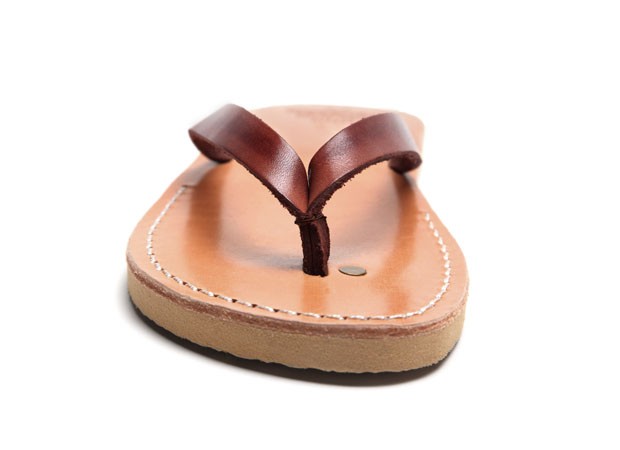
Thanks to a small-scale production leatherwork co-op in Tel Aviv, he doesn’t have to any more. Introducing 100% natural, vegetable tanned leather sandals with a recycled rubber sole. (And they’re stylish too.)
This four-person co-op does all of the production and administration involved with creating the sandals, and this allows them to have full control over what goes into the shoes. Only natural Italian leather is used, and no dyes or artificial substances.
The leather is also vegetable-tanned, which means that it avoids the usage of environmentally damaging chemical tanners.
The sandals are sold via Apolis, a company that believes that the “most valuable practice in creating lasting change is by investing in people. It is people who are the innovators, the advocates, and the revolutionaries. Apolis is a platform for a network of global citizens who are empowering people through opportunity.”
On the co-op that makes the sandals, Shea Parton, co-founder of Apolis, says that “they understand the importance of carefully sourcing their materials, an approach which continues to be a central part of their business, enabling them to truly appreciate what goes in to each pair of handcrafted sandals. We hope you wear them well.”
The European Commission has earmarked €71 million to support renewable energy projects in Jordan whilst a report highlights the importance of solar power for Lebanon’s future
Desalination is an expensive and energy-intensive way of removing salt from water to make it potable – Israel hopes it will provide 75% of its drinkable water by 2013
In times of political madness, we have to remind ourselves of the many Israelis who pursue peace and beauty, like Pitsou Kedem.
We don’t usually comment on Israeli politics because there is already so much rhetoric floating around the media machine, but Thursday’s attacks and counterattacks in Southern Israel and Gaza really make us wonder whether Palestinian and Israeli relations will ever reflect the peaceful cooperation that takes place between many ordinary citizens in this region who tirelessly put peace before politics.
We are grateful to have a few celebrations along the way, and designer Pitsou Kedem is one of them. Despite several earlier renovations, Kedem tried his hand at breathing new life into a beautiful vaulted home just south of Tel Aviv, Jaffa, where Green Love “Sticks.” Peeling back decades, Pitsou Kedem broke through a couple of walls and applied minimalist interventions to create a wonderful fusion of old and new with incredible views of the nearby Mediterranean Sea.
Israel’s BrightSource Energy is among the large-scale solar developers happy with the Australian government’s new carbon “tax” that was just carefully shepherded through parliament by Prime Minister Julia Gillard despite the sort of astroturfing hysteria normally perpetrated only in American media.
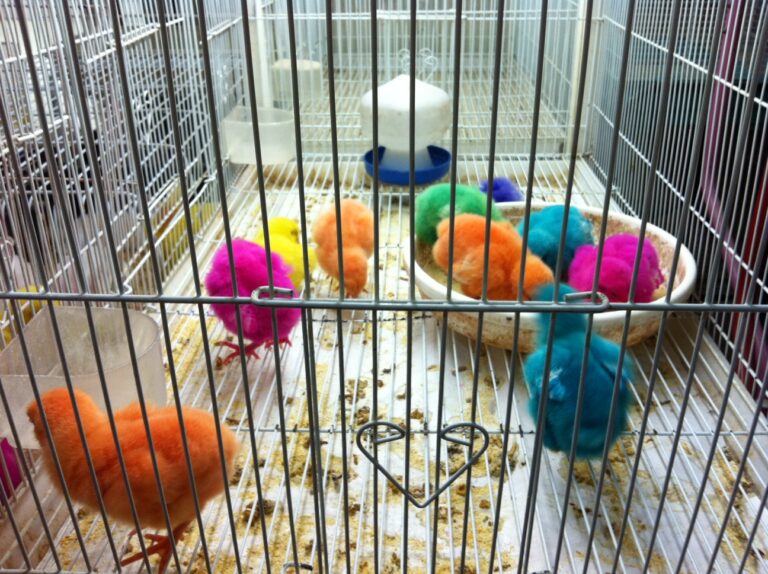
Science journalist Mike Shanahan took these pictures of dyed chicks while attending a conference in Qatar. He questions how antics like this impact children’s understanding of nature.
Sometimes we come across a story and think “this can only happen in the Middle East.” Renowned science journalist Mike Shanahan, who previously inspired us to consider the antidote to bigger, better, and more, ran across these brightly dyed chicks and bunnies in Doha, Qatar, where he attended the World Conference of Science Journalists, and asked a young journalism student how she felt about the animals being subjected to such kaleidoscopic antics.
Although she sited religious regions for believing that people in Qatar generally consider animals to be superior to humans, that has not been Green Prophet’s experience of how animals are treated in Egypt, the United Arab Emirates, or Morocco, for example, where illegal wildlife trafficking is common. Nonetheless, Mike raised another important question: how does this kind of treatment (it’s only cruel if the animals are licking at the dye, and only then if it’s toxic) affect children’s attitude towards animals?
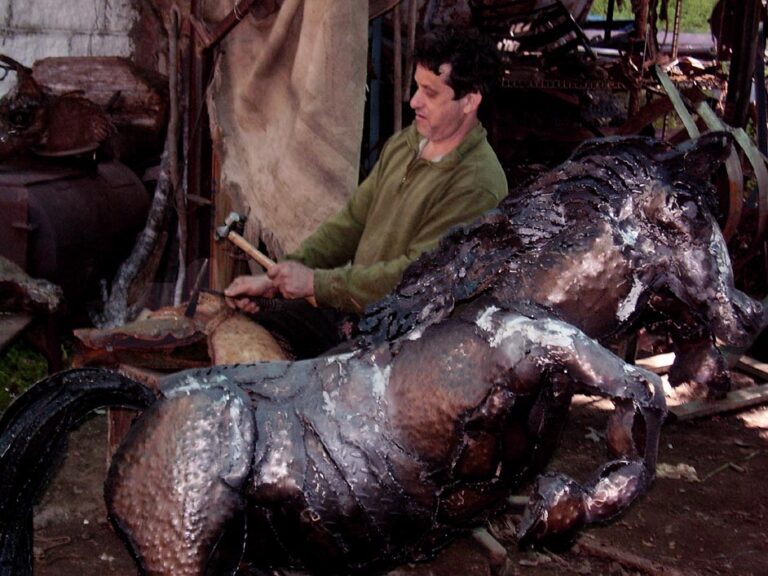
From small-scale butterflies to large horses, Reuven Fields’ scrap metal sculptures breathe life into discarded pieces.
It takes a lot of energy to mine metals from the earth, and significantly less energy to recycle metals into something new. But if you can upcycle used metal scraps into something else (such as an upcycled aluminum can chair) without it undergoing a significant process? That’s ideal. And industrious. The concept has not evaded Reuven Fields, an Israeli artist currently living and working in North Carolina in the United States whose front lawn and studio are filled with sculptures fashioned out of scrap metal.
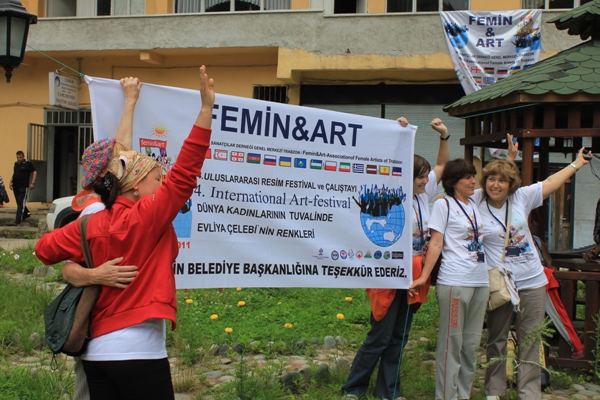
The FEMİN-ART Women Artists Association from Trabzon, Turkey, one of the regions worst affected by the Chernobyl meltdown, has been awarded funding to produce root-based paints and distribute them for free.
Chemical-based paints have long been known to cause adverse health effects, from reduced sperm counts in men to raising the risk of miscarriage or birth defects for the children of pregnant women.
The link between organic living and better human health is obvious to residents of Trabzon, along the Black Sea coast of Turkey, an area seriously blighted by the Chernobyl nuclear meltdown of 1986. Now, with funding from the Turkey-European Union Civil Society Dialogue, a female artists’ association from the city of Trabzon will strive to replace standard chemical paints with ones from healthier, organic sources.
Ayran, doogh, dhallë, daw, xynogala or tan is a cold savory yogurt-based beverage of yogurt and water popular across Western Asia, Central Asia, South Asia, Southeastern Europe, North Asia and Eastern Europe. The principal ingredients are yogurt, water and salt. Herbs such as mint may be optionally added.
Need a refreshing, sugar-free drink? Look no further than the container of natural yogurt in your fridge.
Known as aryan in Turkey and drunk plain, the cooling, soothing yogurt-based drink is popular all over the Middle East. Syrians and Lebanese call it laban ayran. In Iraq and Jordan it’s called shenina.
Rather than fill up on drinks sweetened with sugar or aspartame, go for something cool and salty. The salt is part of what makes aryan so refreshing. As we endure the summer heat, we need to replace some of the minerals lost through perspiration, and aryan is a pleasant way to do it.
Aryan, Turkish Yogurt Drink Recipe
1/3 glass yogurt (natural)
1/3 glass water
1/3 teaspoon of salt
1/3 glass of crushed ice
1. Combine all the above except the ice and beat well.
2. Put the ice into a tall glass and pour the blended yogurt in.
That’s it. Try using soda water for a change, or add a little crushed mint to the glass. Then you’ll have doogh, the Iranian version of aryan.
Enjoy!
More lip-smacking Middle-Eastern recipes on Green Prophet:
Gulf conservation groups have teamed up with National Geographic Al Arabiya to showcase 100 stunning images of Arabian species
The Gulf countries of the Middle East may be more famous for their outlandish construction projects, endless deserts and malls than their biodiversity but one art exhibition is hoping to change all that. A large coalition of conservation groups have teamed up with National Geographic Al Arabiya to launch a massive outdoor art exhibition to tackle people’s perceptions and showcase a wide variety of species from the Arabian peninsular.
These innocuous-looking pellets release deadly fumes that killed a young IT professional in Dubai last week.
This is the second pesticide-related tragedy we are covering this week. A few days ago, no fewer than 15 top racing camels in Qatar died after their breeder administered a toxic chemical to their skin, which the owner blames on the poor quality of the product he received. Potentially more serious, though we value all living creatures, several people throughout the United Arab Emirates have died this year as a result of the wrongful application of a pesticide that is typically used to kill moles, rabbits, and rats. The most recent man, Raghavendra Shivaji, died last week Friday after inhaling toxic gases from a neighboring apartment.

 The Dead Sea from far above: note the divided northern and “southern” portions.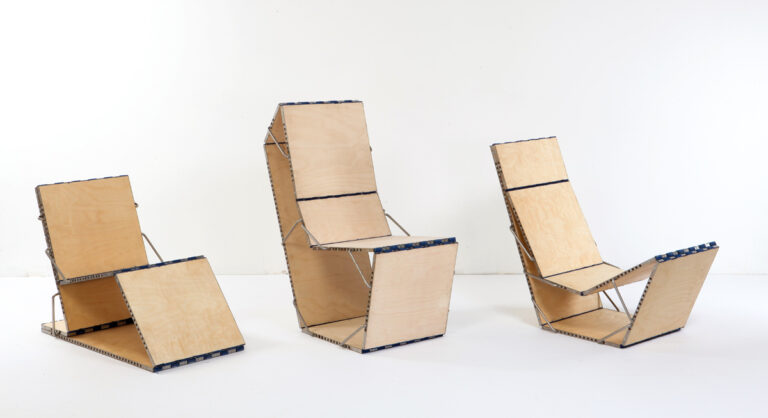

 Sleek, green and probably expensive; GM’s extended range ELR will soon be coming off assembly lines