It's sea turtles which may in the end save islands in the Seychelles. They may also better help us understand climate change. Like rings on a tree, scientists have found a way to read sea turtle shells and how they are impacted by climate change tells a story.
For centuries, the Sámi shaman drum was one of the most powerful sacred objects in northern Europe, and one of the most feared by church and state. If ISIS looks bad to us today for its religious fundamentalism, Christians were just as fervent.
In a real emergency, romance takes a back seat to physics, panic, and how fast 150 people can squeeze through a narrow tube. The Federal Aviation Administration says every aircraft must be evacuated within 90 seconds. That’s the gold standard. But new research suggests that in the real world, especially as we age, that number might be more aspirational than achievable.
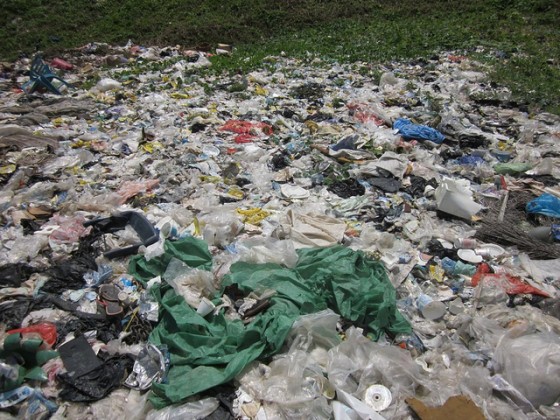
Research from the Wildlife Conservation Society (WCS) and the University of Queensland, published in Ocean & Coastal Management, found that nearly three out of four marine protected areas (MPAs) worldwide are exposed to sewage pollution.
It's sea turtles which may in the end save islands in the Seychelles. They may also better help us understand climate change. Like rings on a tree, scientists have found a way to read sea turtle shells and how they are impacted by climate change tells a story.
For centuries, the Sámi shaman drum was one of the most powerful sacred objects in northern Europe, and one of the most feared by church and state. If ISIS looks bad to us today for its religious fundamentalism, Christians were just as fervent.
In a real emergency, romance takes a back seat to physics, panic, and how fast 150 people can squeeze through a narrow tube. The Federal Aviation Administration says every aircraft must be evacuated within 90 seconds. That’s the gold standard. But new research suggests that in the real world, especially as we age, that number might be more aspirational than achievable.
Research from the Wildlife Conservation Society (WCS) and the University of Queensland, published in Ocean & Coastal Management, found that nearly three out of four marine protected areas (MPAs) worldwide are exposed to sewage pollution.
It's sea turtles which may in the end save islands in the Seychelles. They may also better help us understand climate change. Like rings on a tree, scientists have found a way to read sea turtle shells and how they are impacted by climate change tells a story.
For centuries, the Sámi shaman drum was one of the most powerful sacred objects in northern Europe, and one of the most feared by church and state. If ISIS looks bad to us today for its religious fundamentalism, Christians were just as fervent.
In a real emergency, romance takes a back seat to physics, panic, and how fast 150 people can squeeze through a narrow tube. The Federal Aviation Administration says every aircraft must be evacuated within 90 seconds. That’s the gold standard. But new research suggests that in the real world, especially as we age, that number might be more aspirational than achievable.
Research from the Wildlife Conservation Society (WCS) and the University of Queensland, published in Ocean & Coastal Management, found that nearly three out of four marine protected areas (MPAs) worldwide are exposed to sewage pollution.
It's sea turtles which may in the end save islands in the Seychelles. They may also better help us understand climate change. Like rings on a tree, scientists have found a way to read sea turtle shells and how they are impacted by climate change tells a story.
For centuries, the Sámi shaman drum was one of the most powerful sacred objects in northern Europe, and one of the most feared by church and state. If ISIS looks bad to us today for its religious fundamentalism, Christians were just as fervent.
In a real emergency, romance takes a back seat to physics, panic, and how fast 150 people can squeeze through a narrow tube. The Federal Aviation Administration says every aircraft must be evacuated within 90 seconds. That’s the gold standard. But new research suggests that in the real world, especially as we age, that number might be more aspirational than achievable.
Research from the Wildlife Conservation Society (WCS) and the University of Queensland, published in Ocean & Coastal Management, found that nearly three out of four marine protected areas (MPAs) worldwide are exposed to sewage pollution.
It's sea turtles which may in the end save islands in the Seychelles. They may also better help us understand climate change. Like rings on a tree, scientists have found a way to read sea turtle shells and how they are impacted by climate change tells a story.
For centuries, the Sámi shaman drum was one of the most powerful sacred objects in northern Europe, and one of the most feared by church and state. If ISIS looks bad to us today for its religious fundamentalism, Christians were just as fervent.
In a real emergency, romance takes a back seat to physics, panic, and how fast 150 people can squeeze through a narrow tube. The Federal Aviation Administration says every aircraft must be evacuated within 90 seconds. That’s the gold standard. But new research suggests that in the real world, especially as we age, that number might be more aspirational than achievable.
Research from the Wildlife Conservation Society (WCS) and the University of Queensland, published in Ocean & Coastal Management, found that nearly three out of four marine protected areas (MPAs) worldwide are exposed to sewage pollution.
It's sea turtles which may in the end save islands in the Seychelles. They may also better help us understand climate change. Like rings on a tree, scientists have found a way to read sea turtle shells and how they are impacted by climate change tells a story.
For centuries, the Sámi shaman drum was one of the most powerful sacred objects in northern Europe, and one of the most feared by church and state. If ISIS looks bad to us today for its religious fundamentalism, Christians were just as fervent.
In a real emergency, romance takes a back seat to physics, panic, and how fast 150 people can squeeze through a narrow tube. The Federal Aviation Administration says every aircraft must be evacuated within 90 seconds. That’s the gold standard. But new research suggests that in the real world, especially as we age, that number might be more aspirational than achievable.
Research from the Wildlife Conservation Society (WCS) and the University of Queensland, published in Ocean & Coastal Management, found that nearly three out of four marine protected areas (MPAs) worldwide are exposed to sewage pollution.
It's sea turtles which may in the end save islands in the Seychelles. They may also better help us understand climate change. Like rings on a tree, scientists have found a way to read sea turtle shells and how they are impacted by climate change tells a story.
For centuries, the Sámi shaman drum was one of the most powerful sacred objects in northern Europe, and one of the most feared by church and state. If ISIS looks bad to us today for its religious fundamentalism, Christians were just as fervent.
In a real emergency, romance takes a back seat to physics, panic, and how fast 150 people can squeeze through a narrow tube. The Federal Aviation Administration says every aircraft must be evacuated within 90 seconds. That’s the gold standard. But new research suggests that in the real world, especially as we age, that number might be more aspirational than achievable.
Research from the Wildlife Conservation Society (WCS) and the University of Queensland, published in Ocean & Coastal Management, found that nearly three out of four marine protected areas (MPAs) worldwide are exposed to sewage pollution.
It's sea turtles which may in the end save islands in the Seychelles. They may also better help us understand climate change. Like rings on a tree, scientists have found a way to read sea turtle shells and how they are impacted by climate change tells a story.
For centuries, the Sámi shaman drum was one of the most powerful sacred objects in northern Europe, and one of the most feared by church and state. If ISIS looks bad to us today for its religious fundamentalism, Christians were just as fervent.
In a real emergency, romance takes a back seat to physics, panic, and how fast 150 people can squeeze through a narrow tube. The Federal Aviation Administration says every aircraft must be evacuated within 90 seconds. That’s the gold standard. But new research suggests that in the real world, especially as we age, that number might be more aspirational than achievable.
Research from the Wildlife Conservation Society (WCS) and the University of Queensland, published in Ocean & Coastal Management, found that nearly three out of four marine protected areas (MPAs) worldwide are exposed to sewage pollution.
If the thought of walking around a bustling city doesn’t feel like eco-tourism to you, maybe it’s time to think again and implement ‘The Art of Mindful Walking’.
The term ecotourism often conjures images of mud brick eco lodges in the desert or visiting rare endangered plants on a nature reserve, but it can and should be broadened to include enjoying less than natural sites with more eco-friendly forms of tourism (such as walking and biking). As far as carbon footprints go, it may even be more eco-friendly to stay put in whatever city or town you’re already in and taking in the sites without the aid of fossil fuels rather than hopping on a highly polluting airplane to visit the aforementioned plants and eco lodges. If you’re unconvinced of the poetry of walking a city’s streets, though, take a cue from Londoner Adam Ford’s ‘The Art of Mindful Walking’.
Evian’s campaign tries to tell consumers to “live young”, but it may end up reminding the public about its younger generation and the future of the planet.
Elio Pacheco, the CEO of Danone Waters, came to Israel in late June to re-introduce Evian’s campaign and admitted that environmentalists are one of the brand’s biggest problems. Instead of going on the defensive, however, he said that Evian “has protected its water sources since the 1920s… We were one of the first companies to improve bottles. We introduced a smaller bottle for easier recycling. There is a lot we do on an environmental level, we just don’t shout it from the rooftops.”
The slogan of the new campaign, which consists mostly of models wearing t-shirts with babies’ bodies printed on them (thus making the models look like babies), is ‘live young’. This Green Prophet wonders if that slogan could backfire, causing environmentalists to claim instead that you should avoid drinking bottled water so that our young may live on a healthy planet.
Even if that thought doesn’t occur to most consumers, the Evian campaign is facing awkward timing since the Israeli Environmental Protection Ministry just joined forces with various green groups to fight the bottled water industry.
Maybe it’s time Evian did shout its environmental good deeds from the roof tops.
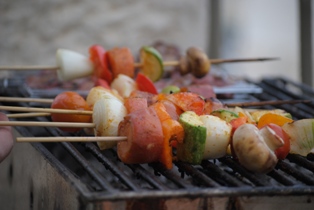
Fire up your grill and cook these aromatic vegetable chunks to delicious perfection.
If there’s one favorite way to cook in the Middle East, it’s the outdoor grill. There really is no way to produce that smoky flavor. We’ve gotten away from the traditional picture of a paunchy, unshaven guy in a T-shirt taking gulps from a can of beer while watching the hamburgers burn. Now he’s devotedly turning skewers of vegetables to tender perfection between those gulps of beer. (Because you can’t get away from the fact that cold beer is the best refresher while you’re standing at a grill, and new micro-breweries in Israel are making wonderful ones these days.)
Admittedly, meat is, and probably always will be, the first grilling choice in the Middle East. But tender vegetable chunks marinated in favorite Middle Eastern flavors go down well with even die-hard carnivores. And they’re so easy to make. Another vegetarian option for grilling is our za’atar-flavored tofu: instead of frying it, skewer it in chunks and grill. Whatever you’re grilling, make sure to have a few Middle-Eastern favorites to round out your meal, like majadra, the peasant dish of rice and lentils. And enjoy a cup of authentic Turkish coffee before you rise from the table.
Urban agriculture – whether rooftop or vertical – is largely touted to reduce citizen reliance on poorly regulated commercial farming and the general industrial food machine. But getting the seeds of urban agriculture programs to grow in a vast city like Cairo needs tender loving care. One group of friends is giving it their all.
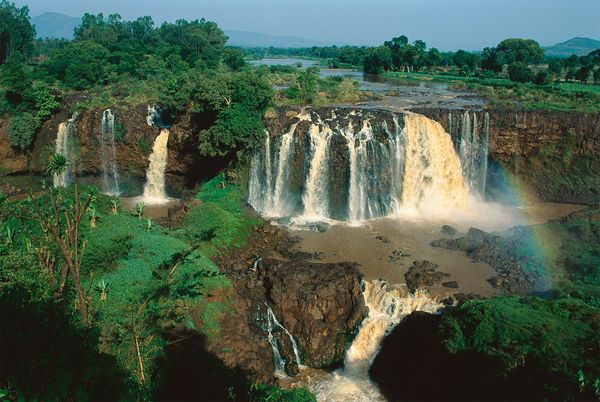
Climate change could derail Ethiopia’s grand plan to produce 15,000 MW of electricity with a series of controversial dams.
The initial rhetoric surrounding Ethiopia’s Grand Millennium Dam seems to have subsided, but the plans to proceed with Africa’s largest hydroelectric plant are still very much in place. Although it is yet unclear how Ethiopia will raise funds for the project it can scarcely afford, combined with four other dams Ethiopia hopes to develop in concert with the Blue Nile’s 5,000 MW plant slated for the Benishangul-Gumuz region, the country hopes to produce a total of 15,000 MW of hydroelectric power by 2015. But in his zealous pursuit to reclaim the powerful Nile waters from Egypt and Sudan and generate economic autonomy for his people, Prime Minister Meles Zenawi is oblivious to one very important factor that could derail his ambitions: climate change.
The focus on sharing profits and taking communities into consideration means that the Islamic way of banking is (theoretically) better for the planet
The announcement by the CEO of Doha Bank, R Seetharaman, that Islamic banking is the right platform to boost ‘green financing’ as its values sustainable environmental development has got me thinking about Islamic finance again.
Is Islamic banking really good for the environment? If so, why? And what is Islamic banking anyway?
Islamic banking is system of finance based on the principles of Islamic laws – two of the main principles are sharing profit and loss and the other is the prohibition of collecting and paying interest. So if you take out a loan, interest cannot be paid or collected so the lender pays back the amount owed plus a small amount of extra money agreed on at the very beginning.
All investment must reflect Islamic principles and so you can’t invest in companies involved in alcohol, pork and gambling. Building on this, it could be argued that investing in ecological harmful projects is prohibited since Muslims believe that god has appointed humans are protectors of nature and investing in, for example, oil companies would conflict with this.
Islam Nature and Society Into Consideration
Another reason that Islamic finance is seen as a ‘greener’ alternative is that current economic systems (ie. neoliberalism or capitalism) put the human need for consumption above everything else. Nature is seen as a free good and so the cost of its extraction or use is not factored into the cost of production, thus encouraging its free exploitation.
In contrast, the Islamic principles which guide the economy include the notion that humans are trustees of nature who must ensure it is not harmed or unduly exploited. Furthermore, excess is consistently discouraged in favour of moderation and the welfare of the entire society is placed at the heart of every matter under consideration including finance.
For example, at the conference meeting entitled ‘Towards an Alternative Economy’, the head of Doha Bank explained that as Islamic banking is part of a system which values society as a whole, it is better placed to promote green finance initiatives such as developing water resources, dealing with global warming, promoting small-scale enterprises as well as encouraging women’s participation.
Gulf oil money is poised to give more
Islamic finance is clearly in a position to have a positive impact on the environment but the question is whether these green principles are actually able to translate into reality and play a role in Islamic finance. I have previously written about the green ethics at the root of Islam but also the lack of awareness of such principles amongst the average Muslim and also the abysmal environmental record of many Muslim countries.
Furthermore, I can’t see banks in the Gulf states holding back from investing in ecologically harmful oil and petrol companies due to the Islamic principle of duty towards nature. Thus, the existence of these green ethics is no guarantee of their application and that means that Islamic Banking still has a lot to prove before it gets its green seal of approval.
New and renovated buildings in Israel will now have to comply with a newly launched “Israel Standard for Green Building”.
During a press conference on this past Tuesday to announce the launch of a new green building standard for new and renovated buildings in Israel, Environmental Protection Minister Gilad Erdan said that “a green building is a good type of building that is worth living in. It is better quality and more economical.” Economics may be one of the ways that the Environment Ministry is trying to make “Israel Standard 5281” more appealing, as it is claiming that it is expected to save families living in four room apartments approximately 1,000 NIS per year. It appeases environmentalists as well, however, since it will significantly reduce electricity and resource consumption.
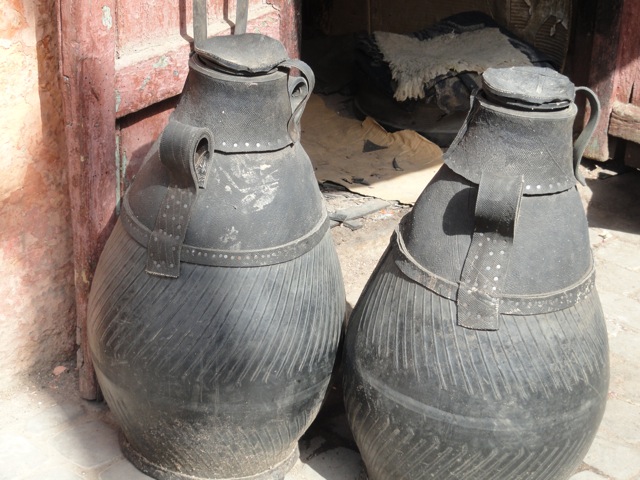
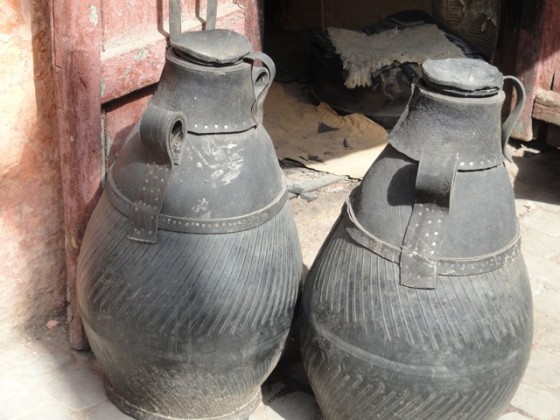
If you rub these recycled tire jugs three times will an eco-genie pop out?
In the medina of Marrakesh at Jemâa el Fna, minutes away from the Jewish spice market, and the snake charmers, who Tafline finds aren’t so charming for animal and snake rights, we found a small eco-stall. A couple of old men are making jugs, waste bins and containers from recycled tire rubber. If you rub one of these jars would an eco-genie emerge?
I saw these jars being used as bathroom waste bins while staying in the High Atlas mountains at the Kasbah du Toubkal. Then was pleasantly surprised to see them as a local offering at the world-famous bazaar in Marrakesh. I took these pics in the morning. Venturing out in the 45 degree C summer heat at noon time is hazardous to one’s health.
Just before taking these pics I saw some westerners negotiating with the two men, hand-making their wares on site, like much of the crafts in Morocco. Destined for a Pier 1 Imports near you?
Right in the middle of a crowded tourist destination, a sewage drain overflowed and no one rushed to the scene to clean it up!
Last night, hundreds of tourists that descended upon the popular La place Jemâa el Fna in Marrakech were greeted with a stinking treat. Right next to the open air restaurant that later served me a small Moroccan salad, potato cakes, and delicious mint tea, (see a recipe for Moroccan Anise bread here) and where Henna painters, storytellers, and snake charmers spend their evenings luring tourists to their small patch of concrete, a blocked drain overflowed. And nobody rushed to the scene to clean it up.
Some of the most dangerous soil and ground water polluters are sites that used to house Israel Defense Forces munitions plants, such as one in the Beit Hakerem neighborhood in Jerusalem. This site, located in valley that is between the Beit Hakerem neighborhood and the Givat Ram campus of Hebrew University, is now said to be highly polluted with highly toxic chemicals and gasses, according to Haaretz. Despite the risks, and that pregnant women in Jerusalem are full of chemicals, plans are going ahead to construct a new neighborhood on the munitions site. Buyers beware.
New Mediterranean jellyfish invasions are causing big problems for coastal power plants
Ever since new species of jellyfish, such as one known as Marvigaria Stellata began to appear in the Mediterranean, numerous warnings have been issued by media sides concerning this “plague” that is getting worse. Some say this partially being attributed to global warming. Jellyfish have been residents of the Mediterranean for years – and many entered the invasive mode after the Suez Canal was open, allowing them to seep in from the Red Sea. Every year, great numbers of them wash up on various beaches in both Israel and Lebanon, and previous Green Prophet articles have even offered tips on how to deal with the gelatinous blobs that to some people are very painful if stung by them.
With just over two weeks left till Ramadan the Islamic month of fasting, Muslims are being urged to go fairtrade
For the typical Muslim family, the last couple of days before Ramadan, the holy month of fasting, is a mad dash to get everything sorted. Mums and dads will be finding time to do those odd jobs around the house (so they can invite visitors round) and buying enough food basics to last the month (so they won’t have to go shopping when they’re hungry). But the UK-based Muslim organisation the ‘Radical Middle Way’ is urging Muslims to take a step back and think about consciously buying, using and serving Fairtrade products this Ramadan.
As they explain, Islam believes that people deserve decent working conditions and a fair price for what they produce, so why not put these beliefs into practice this Ramadan?
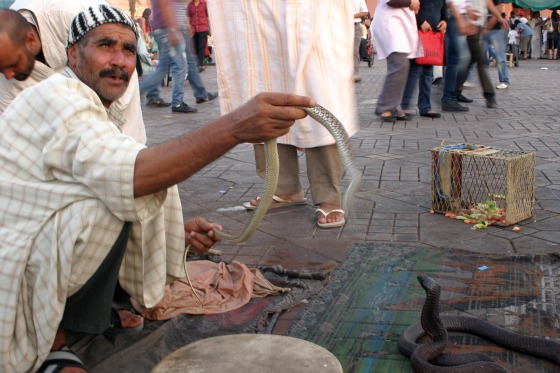
Snake charmers in Morocco use cheap tricks to get their snakes to look charmed. Tafline investigates.
Although I care about the snakes, I hoped to goodness, when my face was within mere inches of the cobra, that its fangs had been removed.
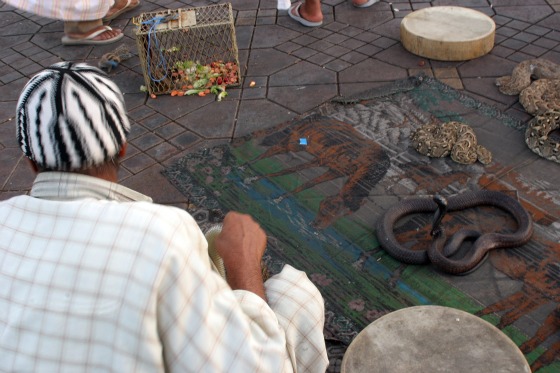
Most nights, Mohammed El Rachidi takes his cobras and vipers to La place Jemâa el Fna in Marrakech, a throbbing tourist attraction in Morocco’s most colorful city. The story goes that the snakes rise from their baskets to the sound of the charmer’s flute, and mesmerized by the music, begin to “swoon.”
So far, the Green Prophet Moroccan experience has included Karin’s rocking two nights at the Kasbah du Toubkal, a stunning eco-resort in the Atlas Mountains, and my ungraceful summit of the highest point in North Africa. A must see on every Lonely Planet reader’s list, I’ve resisted looking too closely at the so called snake charmers, mostly because the ancient “art” has such a long and romantic history that I’m reluctant to give a negative glow. Alas, the pursuit of truth prevails.
The snake’s side of the story
Dancers in the night
Egyptian Cobras found in North Africa are typically nocturnal. They would sooner die than be seen in the middle of a heavily trafficked tourist den. Knowing this, it seemed obvious that the snakes and their charmers would have a dodgy story. Last night, I set out to figure out what that might be.
With my large camera, I’m far from discreet, so I knew that I would have to pay for my cobra photo session and I also knew that it would have to go quickly. There would be many people around, and my charmer would want to move on to more “clients.”
A bystander, Mr Mustapha Elessaoui, was called over to translate for me. Only since I’ve been in Morocco have I questioned whether taking Spanish during college was better than French. As he bent down to write his name in my notebook, a harmless water snake popped out of his other hand. Everyone look disgusted at me for squealing my surprise.
Bored cobra
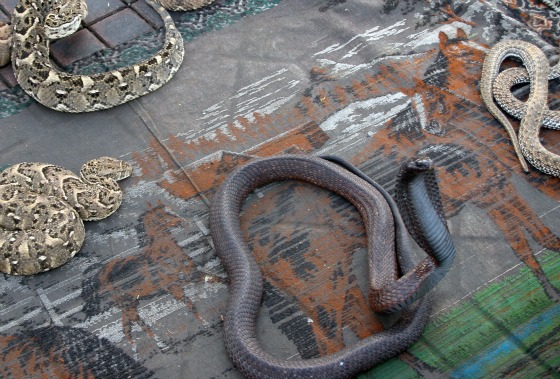
We negotiated my price, which was just over $1 at MAD 10. Maybe they thought I would only take one photo. I took more, though, because El Rachidi insisted on provoking the snake to make it stretch its hood, a defensive posture achieved by spreading the ribs located in the neck under elastic skin, which blurred my already poorly-lit images.
The snake barely responded. Like the lion that the Egyptian man bored to tears with his “heroic fight,” the cobra didn’t appear to have much energy for a fight, much less dancing.
A tour guide with a major European company, Mostofa Mohandi explains that charmers “starve the snakes and then make them ‘dance’ by giving them food.” The snakes learn to associate the flute with the food, which is why, he says, they rise up when the music appears.
In order to make the snakes look less lackluster and lifeless, charmers wet them, Mohandi added. I did not see food, but the blankets were wet, and the vipers looked like they were full of valium for the amount of interest they showed.
Face to venomous face
Mere steps away from the café Argana that was blown up by terrorists in April earlier this year, El Rachidi doesn’t even bother to entertain with the flute. For my measly fee, he swiped at the cobra a few times with a water snake but quickly lost interest and left me to my own devices.
Every so often another man would emerge at the mat with a snake wrapped around his neck, each time startling me out of my professional cool. But I needn’t have worried.
Snake abuse in Morocco?
Probably, like other charmers, El Rachidi has removed the fangs and sewed the snakes’ mouths shut in order to keep himself from being bitten. This seemed too complicated to approach with my limited language skills, but I had read The Truth Behind Snake Charming beforehand and hoped to goodness it was accurate when I put my face within one meter of a creature whose venomous powers deserve grave respect.
Unlike the Emirati penchant to import illegal animals such as Cheetahs and keep them as pets, Essaoui says that both the cobras and vipers come from the Moroccan section of the Sahara desert. However, there is no sentimental connection between the charmed and charmer. When these snakes are no longer useful, they will be tossed aside and replaced with others.
Most people are familiar with the snake charmers of India, which has banned individual ownership of reptiles. But owning and wooing them is still very much legal in Morocco, where, as a source of income and a tourist attraction, the practice is likely to continue for a long time.
Solar glass windows from Pythagoras Solar can generate energy comparable to regular solar panels while cutting heat gain
Hot on the heels of its debut in the US with solar windows powering the Sears Tower in Chicago, Israel’s Pythagoras Solar has earned a $100,000 award for its innovative and almost invisible energy-producing solar glass.
The GE Ecomagination Challenge award is given to companies with promising clean technologies that have the most potential commercial impact. The unusual solar company was co-founded by Gonen Fink, who has a B.Sc in computer science and physics and an MA in philosophy, which is surely one of the most unusual solar business backgrounds.
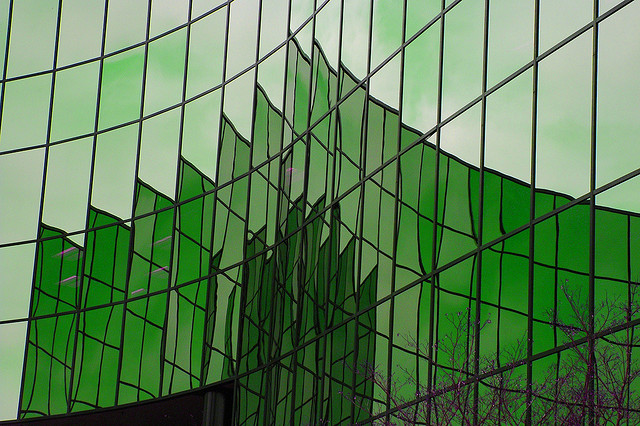
Pythagoras Solar devised a way to embed thin solar cells between dual panes of glass, so windows on the sides of skyscrapers (or skylights on top of buildings) can generate electricity. Prisms next to the solar cells catch and concentrate the sunshine, focusing it onto the cells, while also filtering the sun’s heat – reducing the need for air conditioning. The combination of energy efficiency and energy generation mean that buildings with Pythagoras solar windows can potentially be Net Zero buildings – that make as much power as they use.
Their solar glass is unusual among BIPV (building-integrated PV) offerings in that it can generate the same energy as regular solar panels, about 13 watts per square foot, while doing something solar panels don’t do: act as actual skylights or windows, letting in light, and keeing out heat. It will sell for between $100 and $125 a square foot when it is available to the general public later this year.
To select winners from among 5,000 cleantech entrants, awarding the prize based on originality, feasibility and potential impact, GE enlisted the help of innovation-hungry venture capital firms RockPort Capital, Kleiner Perkins Caulfield & Byers, Foundation Capital, and Emerald Technology Ventures, who are also members of the Ecomagination Initiative, GE’s global commitment to build innovative clean energy innovations. General Electric is the third largest company in the world, which makes its practical commitment to finding a new sustainable energy future all the more admirable and encouraging.
“We’re honored by the award,” said Udi Paret, Pythagoras Solar’s director of business development. “The company was founded with the idea of creating a solution that would change the energy equation, not just making renewable energy economically viable but also reducing the consumption of energy. The integration of the two is really what changes the equation.”
With the potential for an increase of business in the global market as a result of the Sears Tower exposure, the Israeli startup was already setting up shop with five people in California as well as its employees in Israel and China, for a total of 30 employees worldwide. With this new award, perhaps that number needs to be looked at again.
Turkey is ahead of most European countries in its commitment to biodegradable plastics, says the CEO of Cereplast, an international biobased and compostable plastic manufacturer.
With over one thousand kilometers of coastline along the Mediterranean Sea, Turkey sees plenty of evidence of the environmental harm wreaked by plastic bags. The amount of plastic discarded into the sea is reportedly creating huge floating plastic islands in the Mediterranean, similar to the “Giant Plastic Patch” in the Pacific Ocean. Efforts by the Turkish government to limit Turks’ use of plastic products have been half-hearted and only partly successful.
But a new commercial agreement between a major Turkish plastic processor and an international plastic manufacturer suggest that, in the private sector at least, Turkey is taking measures to use more environmentally friendly plastics.


 If the thought of walking around a bustling city doesn’t feel like eco-tourism to you, maybe it’s time to think again and implement ‘The Art of Mindful Walking’.






 If you rub these recycled tire jugs three times will an eco-genie pop out?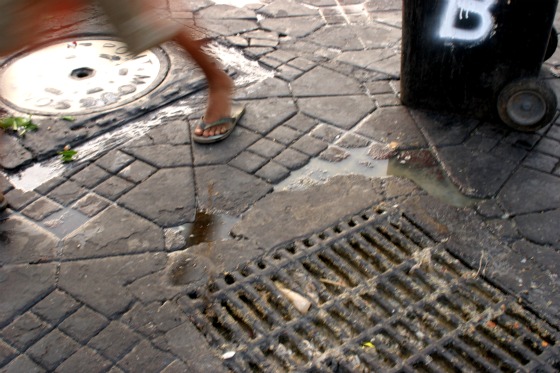

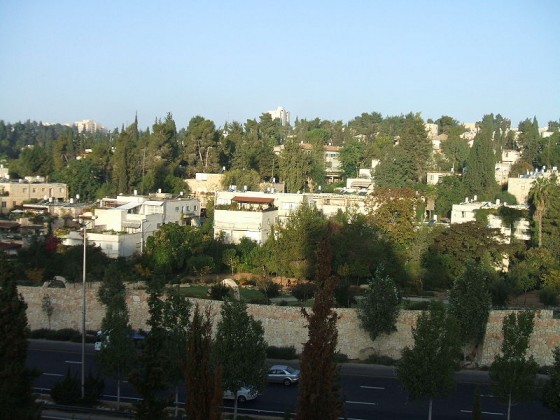 Beit Hakerem, an upscale “green” Jerusalem Neighborhood may not be so green underground due to solvents contamination.