Home Blog Page 515

7 Gulf Fish That Are Totally OK To Eat

8

gulf fish guide

There’s a lot of buzz about overfishing, but navigating what is sustainable to eat is not so easy in the Middle East, where we don’t have such well-established research institutes as the Monterey Bay Institute in California.

Luckily, we do have the WWF-EWS in the United Arab Emirates, which has been doing an excellent job of tracking which Gulf fish species are overfished, like the popular Hammour, and which populations are able to rebound quickly enough to make their consumption sustainable.

In order to make good choices easy, EWS has published a handy picture guide that details the good, the not-so-bad, and the ugly. We’ve listed the good. This guide is about fish at risk and those that are not. It cannot vouch for pollutants in fish. Rule of thumb, if a fish is eating other fish, it contains more contaminants. The larger the fish, the more it bio-accumulates pollution. 

And later, after you’ve read on, be sure to check out our fish recipes, which can also apply to delicious recipes for fish that are not historically popular in the Gulf region. See Moroccan fish stew. Persian fish stew recipe. These recipes work well for tasteless farmed fish like the gilt-head bream. 

List of fish that are (probably) okay to eat in the Arab Gulf:

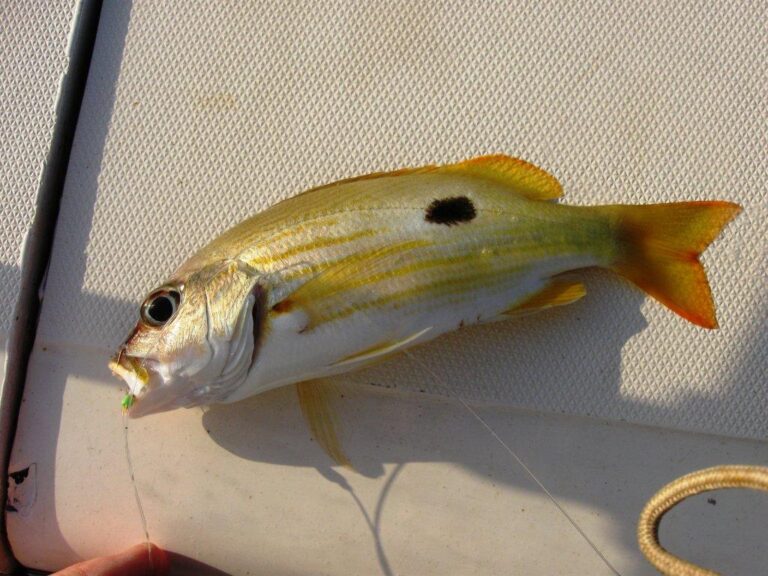
The Sordid Sweetlips, or Yanam in Arabic, comes from the Haemulida family that are found in fresh, brackish, and salt water. Their coloring changes throughout their lives, and are so-called because of their large fleshy lips.

sustainable fishing, overfishing, WWF, Persian Gulf, Arabian Gulf

The Pink Eared Emperor is known in Arabic as the Shaari Eshkeli. They favor reef/rocky and sandy places and typically eat crustaceans and other small fish.

pink ear emporer fish

The Angel Fish. If you are anything like me, this Angel fish might just be too cute to eat, but EWS-WWF does have it on their list of sustainable options for the Gulf. Called Anfooz in Arabic and also known as the Red Sea Angelfish, the largest of its species grows up to about 8 inches. They lose their bright colors when they are dead and on ice. In the photo below the fish eyes are not clear at all or are sunken indicating that this fish is not fresh. 

angel fish on ice 

The Black Streaked Monocle Bream or Ebzimi in the Emirates is an incredible fish. Though this small image might not be a great indicator, the male can reach up to 10 pounds in size, while the female grows even larger. The female Bream can also live up to 17 years, making it a wonderful, resilient option for fish-eaters in the Emirates and beyond.

monocle bream ebzimi in amarbic

The Two Bar Seabream is another great option. Called Faskar in Arabic, this fish also likes to huddle around the reef at depths between 2 and 20 meters. Consider that when you see it in the market or buy it frozen, the fish may have lost its bright colors. 
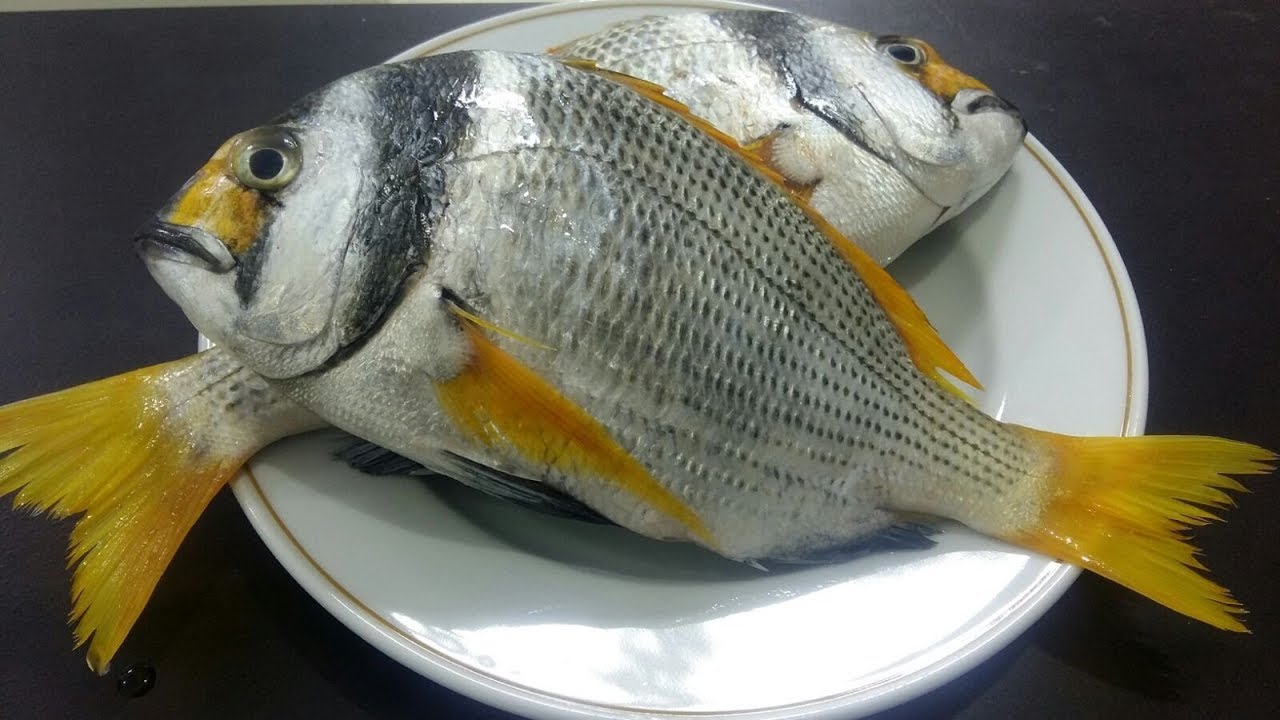
sea bream faskar

The Ehrenberg’s Snapper (Lutjanus ehrenbergii) is also known as the Blackspot Snapper and Ehrenberg’s Seaperch. They are common inhabitants of rubble areas.


orange spotted travellyThe last fish on our list of seven is The Orange Spotted Trevally or Jesh umalhala. Another English name for this fish is the Gold Spotted Trevally, which can grow to be as large as 2 feet. This fish is a powerful predator that feeds on a variety of small fish and crustaceans.

Even if you aren’t a lover of the taste of fish, it’s a healthier alternative to red meat. There are always spicy Middle East and North African recipes that will make any fish taste like heaven, even to fussy eaters.

Try Moroccan fish stew or our Persian fish stew recipe. These recipes work also well for tasteless farmed fish like the gilt-head bream, known in placs like Israel as Denise. 

More on sustainable fishing in the Gulf Region:


GlassPoint Solar Wins Huge Middle East Oil Field Contract

0

Last November, Rod MacGregor, the CEO of innovative GlassPoint Solar approached oil drillers in the Middle East to offer Enhanced Oil Recovery (EOR) using solar, and returned with no orders. This week, he is announcing the fruit of the mission. His first MENA contract will be with Oman’s 60% government-owned partnership with the Shell Group, Petroleum Development Oman.

Your Nightcap May Be Giving You Insomnia

1

image-woman-sleeping
Alcohol actually interferes with restful sleep.

As a home wine maker, I don’t like to be told that a couple of glasses will do any harm at any time.  And with all the exciting green developments in Israeli wine, it’s hard to pass up the opportunity to taste some of the latest cool vintages during the quiet evening hours.

Yet I have to concede it’s true. If I allow myself that second glass before bed time, a restless night follows. And even if locally made booze like arak has some medicinal properties, it’ll still interfere with my rest.  So I was interested to read Dr. Russel Rosenberg’s article in the Huffington Post about alcohol and sleep. Dr. Rosenberg is a sleep specialist and chairman of the board at the National Sleep Foundation.

According to Dr. Rosenberg, alcohol lightens sleep and interferes with rapid eye movements, essential to deep,  refreshing sleep. The drinker may feel sleepy at first, but as the alcohol works through his system at night, he wakes up and tosses around. It takes an hour to metabolize one ounce of booze.

Qatar To Invest In 1,4000 New Local Farms

3

qatar organic farmsQatar is hoping to boost its food security by setting up 1,400 agricultural farms covering an area of 45,000 hectares

Following the recent news that the United Arab Emirates is slowly embracing organic farming, are more signs that the Gulf States are slowly recognising the importance of food sustainability. Qatar has announced plans to establish 1,400 farms to improve its food production and also train more people to work in the agricultural sector to improve productivity.

The Adhoc Canoe You Can Carry On Your Back

1

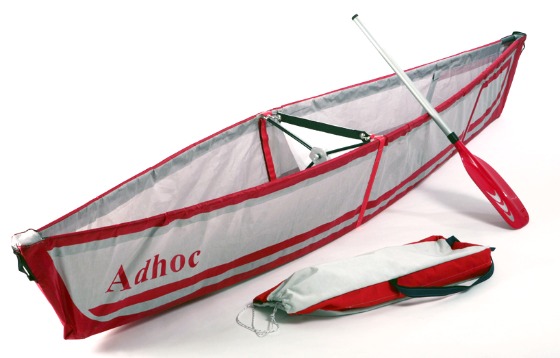
foldable travel canoe israelThis attractive Adhoc canoe packs down to the size of a backpack and weighs pretty close to nothing!

It’s time to face the truth: I am an eco-nomad.  Although it’s sometimes challenging to live up to my fullest green fantasies on the road, I do my best, though I often miss having easy access to the recreational sports that reinforce my love of nature: I miss my Trek bike, which gave me so much joy in Arizona’s pine-lined mountains, and kayaking along verdant Alaskan shores.

Of course, it’s not impossible to enjoy these activities in other countries, but it is almost always more expensive to rent equipment than to bring your own. He may not be a nomad, but Israeli designer Ori Levin has created the perfect solution for a gal like me: an awesome canoe that folds down to about the size of a standard backpack!

Palestine/Israel: A Stunning Tale of Peace, Water And Walls

6

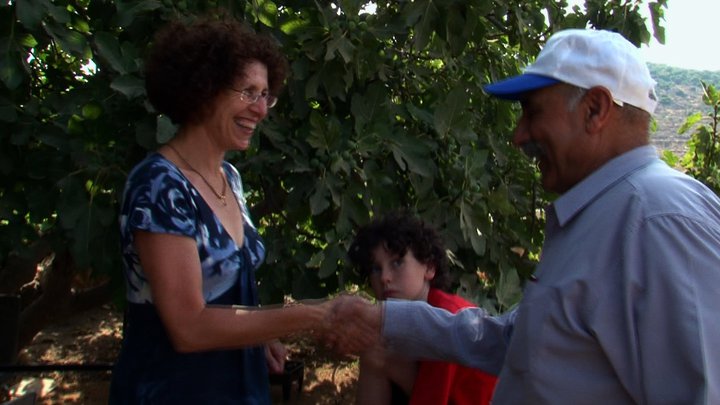
Help support a project which tells the amazing story of how Palestinians and Israelis in one West Bank village worked together to preserve water and stop the wall

We have recently covered the great work of the regional environmental organisation Friends of the Earth Middle East and how they have managed to promote eco-peace to the Arab-Israeli conflict. Now, we look at how they helped bring together Palestinians and Israelis in one community in the Occupied Palestinian Territories to preserve water and also to stop the separation wall from dividing them forever.

Adversely affected by the expansion of Israeli settlements and the Israeli separation wall, Palestinians from Wadi Fukin and Israelis from the local village of Tsur Hadassah got together to resolve the issue. One filmmaker who captured their campaign back in 2010 is now hoping to get raise enough funds to take their message of ecological peace to other villages across Palestine and Israel.

Israeli Chef Yotam Ottolenghi Brings Sexy Vegetarian Cuisine to London

1

[youtube]http://www.youtube.com/watch?v=iqjAYZox-bs[/youtube]

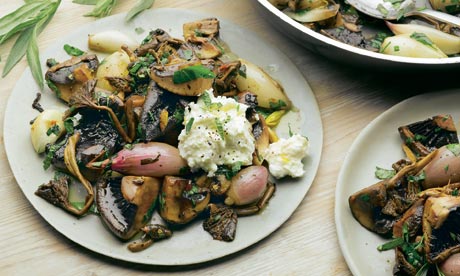
“Vegetarian option” doesn’t have to be a dirty word when using one of Yotam Ottolenghi’s luscious Mediterranean vegetarian recipes.

For a nation most culinarily associated with fish and chips or shepherd’s pie, a vegetarian food option may not be the most appealing to the English.  British-born celebs such as Paul McCartney might be promoting vegetarian campaigns such as Meatless Monday, but it still probably takes something truly delicious (like eggplant stuffed with bulgur and fruit) to get the average Brit to forgo his or her bangers and mash.  Enter Yotam Ottolenghi, an Israeli-born non-vegetarian chef with a great appreciation for Mediterranean meatless wonders.  For years Ottolenghi has been publishing a column titled The New Vegetarian in The Guardian, slowly convincing Londoners to eat more vegetables and less meat.

Watermelon Basil Granita recipe

0

image-watermelon-granita
Can summer get much better than this?

The good thing about the height of summer is watermelons with red, red hearts and lots of sweet juice. Green Prophet has some good ways to serve it, and here are some.

Here in the Middle East they’re for sale everywhere right now.  Even the little neighborhood grocery stores have a discarded shopping cart crammed with watermelons in front. In some old-fashioned places, a man driving a horse-drawn wagon goes around the streets, calling out “Watermelons! Red and Sweet!” and all the housewives rush out to buy.

Eating watermelon seems to cool you down immediately. One reason may be because it’s full of Vitamin C, which helps the body to withstand heat. The fruit has lots of other healthy properties too. Now, thanks to the dessert-ful Couldn’t Be Pareve blog, we found a delicious new way to enjoy it.

Granita. Doesn’t that sound good? Watermelon granita, accented with basil. The satisfying crunch of icy crystals, watermelon sweetness, and a note of mystery from the basil. And so easy to make. Try it. You’ll like.

Piece-Meal High Heels Let Wearers Design Their Own Shoes

4

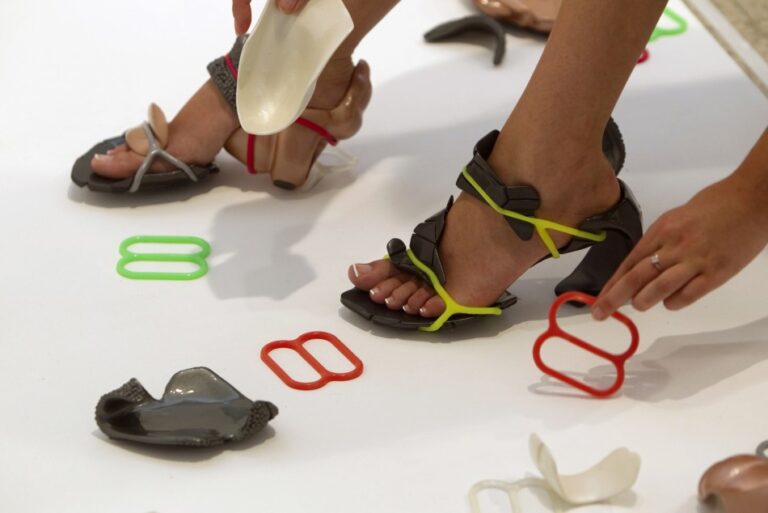
"modular shoe design"Mix and match the endless possibilities with Sharon Golan’s Mr. Potato-esque DIY shoes.

When it comes to fashion, and sustainable fashion, shoes may be one of the worst offenders.  Not only do shoe fashions change rapidly, but they also tend to wear out faster than our other articles of clothing.  Shoe designers and producers have tried to find solutions to this ecological conundrum, with Nike introducing a shoe recycling program and other designers creating multi-functional and multi-fashion shoe designs.  The solution, as Israeli designer Sharon Golan proves, does not have to be boring.  Making a versatile, sustainable shoe that lasts longer and is lighter on the resources (due to its versatility) can be fun.

Enter Shell 256, Golan’s shoe design with a collection of 16 modular shoe components that can be combined and used to create 256 different variations of shoes.

Axing Paper Waste and Nasty PET in One Fell Bio-Foam

1

PET, bio-foam, recycled materials, green materials, Hebrew University of Jerusalem, Shaul LapidotA Ph.D student at the Hebrew University of Jerusalem, Shaul Lapidot has designed an industrial bio-foam made from paper mill waste.

You would be forgiven for thinking that Green Prophet has some kind of illicit connection with the Hebrew University in Jerusalem given all the attention we’re giving them this week. Professor Oded Shoseyov from there developed Ashpoopie – a real-life version of “Vapoorizer” that turns animal and human poop into ash within seconds, and yesterday we learned that Ph.D student Shaul Lapidot has invented a new eco-friendly industrial foam comprised of the discards of paper mills, cutting down on both paper waste and fossil fuel consumption in one fell swoop.

Armani & Others Pressured to Give Up Deadly Jeans

3

environmental hazards, sandblasting, health, blue jeansVersace caved to pressure to stop selling “killer” sandblasted jeans. Will other brands follow suit?

Blue jeans are getting uglier by the day. Around Christmas last year we wrote about environmental and social hazards associated with the “jeans capital of the world” in China. We’ve since discovered that giving jeans a distressed look, achieved by blasting them with pressurized silica, is often fatal for the people who work in jean factories. (Silica is sand and has numerous uses. China is buying up sand from Israel, for example, to use in its roads!)

Called sandblasting, Turkey banned the practice in 2009 because so many workers began to die from silicosis. Other countries such as Bangladesh, Egypt, and Mexico are reportedly continuing to allow what has killed 46 people in Turkey alone since November 2010. Further compounding the problem, a handful of brands, including Armani, Dolce & Gabana, and Matalan, refuse to discontinue sales of their “killer” jeans.

Can GM Foods Be ‘Halal’? Or Kosher?

7

Investigating the profit-motivated push to make genetically modified food ‘halal’

Back in December 2010, a conference held in Penang, Malaysia with biotechnology experts and halal proponents ended with the conclusion that genetically modified food was halal ( ‘permissible’ for Muslims) as long as the sources from which they originate from are halal. This decision – which was accompanied by a fatwa declaring GM halal – came as a shock to some in the wider Muslim community who consider GM a deviation from god’s creation.

The UK-based green Muslim organisation Islamic Foundation for Ecology and Environmental Sciences insisted the fatwa was controversial and “failed to consider biotechnology from an Islamic perspective, ignoring not only the harm that GM causes to the environment but the way it undermines the integrity of God’s creation.”

Water from the Air May be a Viable Solution After All

2

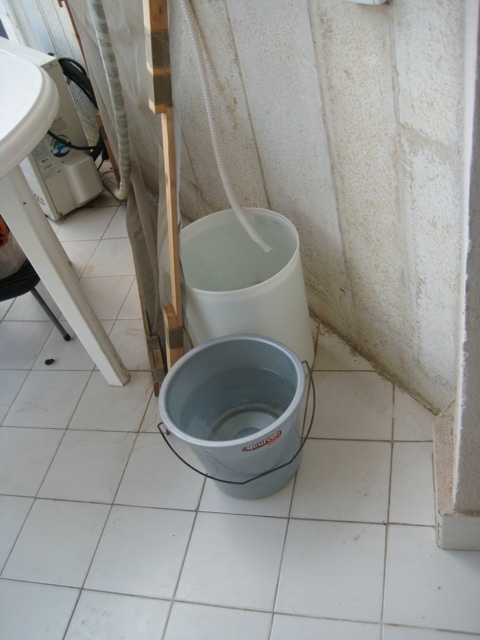
All this water from only 8 hours use of 1 hp AC unit!

Given the continued shortage of fresh water in many parts of the world, especially in the Middle East, my thoughts again turn towards making use of the run-off water created by air conditioners during the hot, sticky summer months. This idea has also been suggested as a solution for the  fresh water shortage in UAE countries like Dubai and Abu Dhabi, where it may be possible to condense the heavy humid air, with humidity levels often as high as 85%, into potable water supplies that can be used for both human consumption and agriculture.

World’s Next Largest Tower to be Built in Saudi, For Real

2

unsustainable development, Kingdom Tower, Saudi ArabiaAdrian Smith + Gordon Gill make their own announcement: they’re designing the Kingdom Tower, but it won’t be a mile high.

Every blogger who gives a toot about sustainable building fell over themselves earlier this year to mock Saudi’s mile high tower. We all bought the story without really thinking about what such a tall building might look like; but there’s a very good reason we fell for what turned out to be a dirty news leak: absurd stuff like this actually happens in the Middle East.

Recently a billionaire Sheikh from Abu Dhabi etched his name – Hamad- into the sands of a one mile stretch of island. His self-aggrandizing graffiti is visible from space. And Dubai has the 2,651 foot Burj al Khalifa tower. Perhaps feeling left out of the cockshow, Saudi has now officially commissioned Adrian Smith + Gordon Gill to design a 3,280-foot spacescraper – skyscraper just doesn’t seem high enough- that will surpass the Burj as the world’s next tallest tower.

Ashpoopie Turns Poo into Ash

12

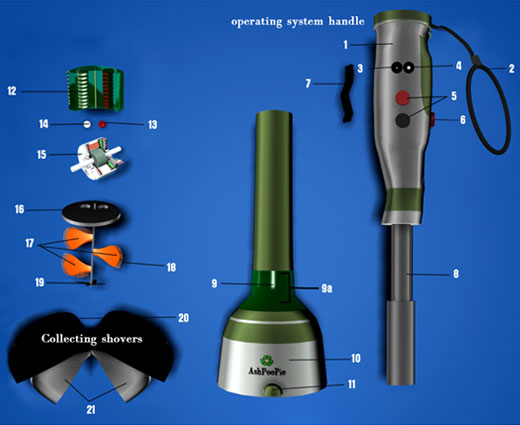
wastewater treatment, human waste, sewage, Israel, Aspoopie, Paulee CleanTecThis handy gadget, which looks like a camping flashlight, delivers a secret formula to animal and human waste that turns it into ash within seconds!

With so much sh#t mounting in the world – dog poop on the sidewalk, overflowing human waste in heavily-trafficked tourist areas, sewage plants banned (like in the West Bank) – we need some kind of magic formula to get rid of it. And now we need look no further.

Professor Oded Shoseyov from the Hebrew University in Jerusalem has invented Ashpoopie – a contraption that delivers “special formula” to dog or human waste which almost immediately turns the feces into ash. If this sounds far-fetched to you, don’t worry, we had the same reaction, but closer analysis shows that if this stuff is as safe and cheap as its publicist claims, we potentially have a revolutionary product on our hands that can solve all of the world’s sh#tty problems.

The magic formula of Ashpoopie

Cleaning up dog turds left on the street with plastic bags that won’t degrade for hundreds of years is not an effective solution to getting rid of “shoe mines,” according to Paulee CleanTec. Rather than get rid of the waste, it ends up being shuffled to some other place.

What we really need is something that will make it vanish altogether. Ashpoopie does just that. Well, almost.

Within ten seconds after it is mixed with what the company calls a “cheap and safe” special formula – which magic ingredients have yet to be disclosed – the poop becomes an odorless and completely sterile ash that can be vacuum packed. But Wait, the best is yet to come.

Using human poop as fertilizer

Ashpoopie won’t only rid the streets of New York City, Tel Aviv, and other dog-friendly urban environments of these nuisance piles; but it will also turn human waste into fertilizer and generate electricity!

Paulee’s Spokespeople Mr. Moshe Hibel and Dr Yaeli Pintchuck claim that the same patent is being used to develop SCHT – Self Contained Human Toilets.

According to Dr. Yaeli Pintchuck:

This patent will be used for: Portable / chemical toilets which have no connection to any sewage system. Shortly we can say that based on the formula that we use (cheap and safe chemical) the feces will turn to sterile ash in seconds and will leave about 10-20% of the original “portion” – the ash can be evacuated once in a long while and then can be used as fertilizer.

This toilet will even generate its own energy by capturing heat energy from the process required to convert the feces into ash and converting into electricity. Failing that, according to Dr. Pintchuck, a solar panel can be installed.

Cleaning pollution in the Nile

Paulee’s poop-to-ash converter has numerous applications. It can be used to clean up the Falucca boats that pollute the Nile River and other waterbound vessels, as well as on airplanes, buses, and trains. It’s also a superb solution for dealing with high quantities of human waste at music festivals and poor villages that lack access to a sewage plant. This stuff can literally be used anywhere.

By now you’re probably expecting Ashpoopie to cost hundreds of dollars, right? Maybe not. Although the cost of the initial outlay has not been established, a month’s supply of small capsules – enough to clean up after one dog – will cost between $10 and $20. Human applications, by virtue of volumes, would probably cost a bit more. Unless you own a Great Dane.

Professor Oded Shoseyov’s expects Ashpoopie to be available in retail outlets by the second quarter of 2012.

2020 update: looks like Ashpoopie never made it to production. 

More Awesome Inventions:

Are Kobi Levi’s Tongue Shoes Fit for Dancing?

Israeli Biomedical Technology Purifies Water from Outer Space

Israeli Designs Green Toilet for India’s Slums