Adults who are 21 or older can carry up to 30 grams. This amount applies to personal use within Pittsburgh’s limits. Carrying more could lead to confiscation or legal action. Staying under the limit avoids problems during any public stop.
In the study, the scientists didn’t just test one plant compound at a time. They tested two traditional Chinese medicine compounds together — luteolin (from flowers like honeysuckle and chrysanthemum) and astragaloside IV (from astragalus root, Huang Qi). These plants have been combined in Chinese herbal formulas for centuries to help the body recover from injury and inflammation.
A new collaboration between luxury brand Coach and textile reuse pioneer Bank & Vogue attempts to stitch those two worlds together: high fashion and the global textile waste stream.
Stepping up to democratize the moon is an EU-funded company, Deep Space Energy, which has just raised more than $1 million USD as a seed fund to help it create energy generators on the moon.
Adults who are 21 or older can carry up to 30 grams. This amount applies to personal use within Pittsburgh’s limits. Carrying more could lead to confiscation or legal action. Staying under the limit avoids problems during any public stop.
In the study, the scientists didn’t just test one plant compound at a time. They tested two traditional Chinese medicine compounds together — luteolin (from flowers like honeysuckle and chrysanthemum) and astragaloside IV (from astragalus root, Huang Qi). These plants have been combined in Chinese herbal formulas for centuries to help the body recover from injury and inflammation.
A new collaboration between luxury brand Coach and textile reuse pioneer Bank & Vogue attempts to stitch those two worlds together: high fashion and the global textile waste stream.
Stepping up to democratize the moon is an EU-funded company, Deep Space Energy, which has just raised more than $1 million USD as a seed fund to help it create energy generators on the moon.
Adults who are 21 or older can carry up to 30 grams. This amount applies to personal use within Pittsburgh’s limits. Carrying more could lead to confiscation or legal action. Staying under the limit avoids problems during any public stop.
In the study, the scientists didn’t just test one plant compound at a time. They tested two traditional Chinese medicine compounds together — luteolin (from flowers like honeysuckle and chrysanthemum) and astragaloside IV (from astragalus root, Huang Qi). These plants have been combined in Chinese herbal formulas for centuries to help the body recover from injury and inflammation.
A new collaboration between luxury brand Coach and textile reuse pioneer Bank & Vogue attempts to stitch those two worlds together: high fashion and the global textile waste stream.
Stepping up to democratize the moon is an EU-funded company, Deep Space Energy, which has just raised more than $1 million USD as a seed fund to help it create energy generators on the moon.
Adults who are 21 or older can carry up to 30 grams. This amount applies to personal use within Pittsburgh’s limits. Carrying more could lead to confiscation or legal action. Staying under the limit avoids problems during any public stop.
In the study, the scientists didn’t just test one plant compound at a time. They tested two traditional Chinese medicine compounds together — luteolin (from flowers like honeysuckle and chrysanthemum) and astragaloside IV (from astragalus root, Huang Qi). These plants have been combined in Chinese herbal formulas for centuries to help the body recover from injury and inflammation.
A new collaboration between luxury brand Coach and textile reuse pioneer Bank & Vogue attempts to stitch those two worlds together: high fashion and the global textile waste stream.
Stepping up to democratize the moon is an EU-funded company, Deep Space Energy, which has just raised more than $1 million USD as a seed fund to help it create energy generators on the moon.
Adults who are 21 or older can carry up to 30 grams. This amount applies to personal use within Pittsburgh’s limits. Carrying more could lead to confiscation or legal action. Staying under the limit avoids problems during any public stop.
In the study, the scientists didn’t just test one plant compound at a time. They tested two traditional Chinese medicine compounds together — luteolin (from flowers like honeysuckle and chrysanthemum) and astragaloside IV (from astragalus root, Huang Qi). These plants have been combined in Chinese herbal formulas for centuries to help the body recover from injury and inflammation.
A new collaboration between luxury brand Coach and textile reuse pioneer Bank & Vogue attempts to stitch those two worlds together: high fashion and the global textile waste stream.
Stepping up to democratize the moon is an EU-funded company, Deep Space Energy, which has just raised more than $1 million USD as a seed fund to help it create energy generators on the moon.
Adults who are 21 or older can carry up to 30 grams. This amount applies to personal use within Pittsburgh’s limits. Carrying more could lead to confiscation or legal action. Staying under the limit avoids problems during any public stop.
In the study, the scientists didn’t just test one plant compound at a time. They tested two traditional Chinese medicine compounds together — luteolin (from flowers like honeysuckle and chrysanthemum) and astragaloside IV (from astragalus root, Huang Qi). These plants have been combined in Chinese herbal formulas for centuries to help the body recover from injury and inflammation.
A new collaboration between luxury brand Coach and textile reuse pioneer Bank & Vogue attempts to stitch those two worlds together: high fashion and the global textile waste stream.
Stepping up to democratize the moon is an EU-funded company, Deep Space Energy, which has just raised more than $1 million USD as a seed fund to help it create energy generators on the moon.
Adults who are 21 or older can carry up to 30 grams. This amount applies to personal use within Pittsburgh’s limits. Carrying more could lead to confiscation or legal action. Staying under the limit avoids problems during any public stop.
In the study, the scientists didn’t just test one plant compound at a time. They tested two traditional Chinese medicine compounds together — luteolin (from flowers like honeysuckle and chrysanthemum) and astragaloside IV (from astragalus root, Huang Qi). These plants have been combined in Chinese herbal formulas for centuries to help the body recover from injury and inflammation.
A new collaboration between luxury brand Coach and textile reuse pioneer Bank & Vogue attempts to stitch those two worlds together: high fashion and the global textile waste stream.
Stepping up to democratize the moon is an EU-funded company, Deep Space Energy, which has just raised more than $1 million USD as a seed fund to help it create energy generators on the moon.
Adults who are 21 or older can carry up to 30 grams. This amount applies to personal use within Pittsburgh’s limits. Carrying more could lead to confiscation or legal action. Staying under the limit avoids problems during any public stop.
In the study, the scientists didn’t just test one plant compound at a time. They tested two traditional Chinese medicine compounds together — luteolin (from flowers like honeysuckle and chrysanthemum) and astragaloside IV (from astragalus root, Huang Qi). These plants have been combined in Chinese herbal formulas for centuries to help the body recover from injury and inflammation.
A new collaboration between luxury brand Coach and textile reuse pioneer Bank & Vogue attempts to stitch those two worlds together: high fashion and the global textile waste stream.
Stepping up to democratize the moon is an EU-funded company, Deep Space Energy, which has just raised more than $1 million USD as a seed fund to help it create energy generators on the moon.
New and renovated buildings in Israel will now have to comply with a newly launched “Israel Standard for Green Building”.
During a press conference on this past Tuesday to announce the launch of a new green building standard for new and renovated buildings in Israel, Environmental Protection Minister Gilad Erdan said that “a green building is a good type of building that is worth living in. It is better quality and more economical.” Economics may be one of the ways that the Environment Ministry is trying to make “Israel Standard 5281” more appealing, as it is claiming that it is expected to save families living in four room apartments approximately 1,000 NIS per year. It appeases environmentalists as well, however, since it will significantly reduce electricity and resource consumption.
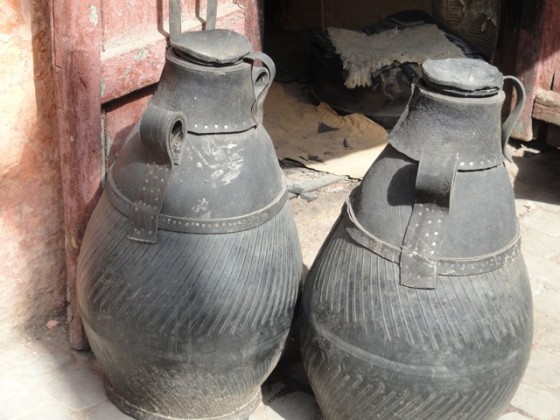
If you rub these recycled tire jugs three times will an eco-genie pop out?
In the medina of Marrakesh at Jemâa el Fna, minutes away from the Jewish spice market, and the snake charmers, who Tafline finds aren’t so charming for animal and snake rights, we found a small eco-stall. A couple of old men are making jugs, waste bins and containers from recycled tire rubber. If you rub one of these jars would an eco-genie emerge?
I saw these jars being used as bathroom waste bins while staying in the High Atlas mountains at the Kasbah du Toubkal. Then was pleasantly surprised to see them as a local offering at the world-famous bazaar in Marrakesh. I took these pics in the morning. Venturing out in the 45 degree C summer heat at noon time is hazardous to one’s health.
Just before taking these pics I saw some westerners negotiating with the two men, hand-making their wares on site, like much of the crafts in Morocco. Destined for a Pier 1 Imports near you?
Right in the middle of a crowded tourist destination, a sewage drain overflowed and no one rushed to the scene to clean it up!
Last night, hundreds of tourists that descended upon the popular La place Jemâa el Fna in Marrakech were greeted with a stinking treat. Right next to the open air restaurant that later served me a small Moroccan salad, potato cakes, and delicious mint tea, (see a recipe for Moroccan Anise bread here) and where Henna painters, storytellers, and snake charmers spend their evenings luring tourists to their small patch of concrete, a blocked drain overflowed. And nobody rushed to the scene to clean it up.
Some of the most dangerous soil and ground water polluters are sites that used to house Israel Defense Forces munitions plants, such as one in the Beit Hakerem neighborhood in Jerusalem. This site, located in valley that is between the Beit Hakerem neighborhood and the Givat Ram campus of Hebrew University, is now said to be highly polluted with highly toxic chemicals and gasses, according to Haaretz. Despite the risks, and that pregnant women in Jerusalem are full of chemicals, plans are going ahead to construct a new neighborhood on the munitions site. Buyers beware.
New Mediterranean jellyfish invasions are causing big problems for coastal power plants
Ever since new species of jellyfish, such as one known as Marvigaria Stellata began to appear in the Mediterranean, numerous warnings have been issued by media sides concerning this “plague” that is getting worse. Some say this partially being attributed to global warming. Jellyfish have been residents of the Mediterranean for years – and many entered the invasive mode after the Suez Canal was open, allowing them to seep in from the Red Sea. Every year, great numbers of them wash up on various beaches in both Israel and Lebanon, and previous Green Prophet articles have even offered tips on how to deal with the gelatinous blobs that to some people are very painful if stung by them.
With just over two weeks left till Ramadan the Islamic month of fasting, Muslims are being urged to go fairtrade
For the typical Muslim family, the last couple of days before Ramadan, the holy month of fasting, is a mad dash to get everything sorted. Mums and dads will be finding time to do those odd jobs around the house (so they can invite visitors round) and buying enough food basics to last the month (so they won’t have to go shopping when they’re hungry). But the UK-based Muslim organisation the ‘Radical Middle Way’ is urging Muslims to take a step back and think about consciously buying, using and serving Fairtrade products this Ramadan.
As they explain, Islam believes that people deserve decent working conditions and a fair price for what they produce, so why not put these beliefs into practice this Ramadan?
Snake charmers in Morocco use cheap tricks to get their snakes to look charmed. Tafline investigates.
Although I care about the snakes, I hoped to goodness, when my face was within mere inches of the cobra, that its fangs had been removed.
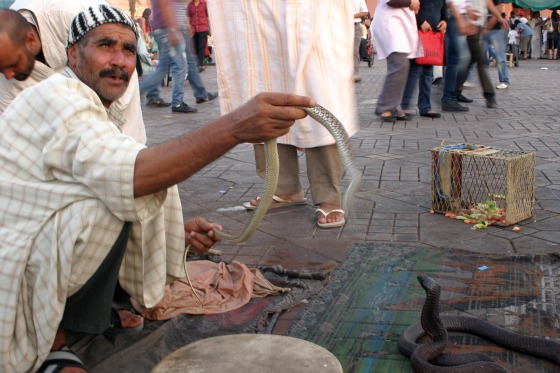
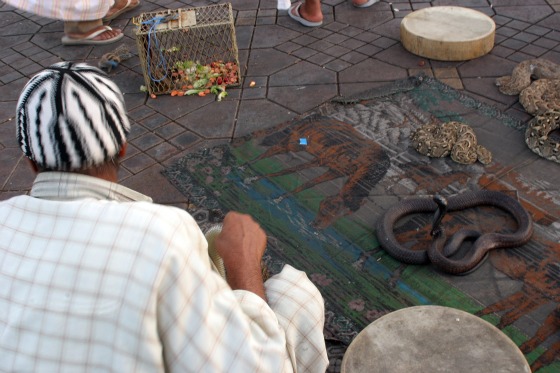
Most nights, Mohammed El Rachidi takes his cobras and vipers to La place Jemâa el Fna in Marrakech, a throbbing tourist attraction in Morocco’s most colorful city. The story goes that the snakes rise from their baskets to the sound of the charmer’s flute, and mesmerized by the music, begin to “swoon.”
So far, the Green Prophet Moroccan experience has included Karin’s rocking two nights at the Kasbah du Toubkal, a stunning eco-resort in the Atlas Mountains, and my ungraceful summit of the highest point in North Africa. A must see on every Lonely Planet reader’s list, I’ve resisted looking too closely at the so called snake charmers, mostly because the ancient “art” has such a long and romantic history that I’m reluctant to give a negative glow. Alas, the pursuit of truth prevails.
The snake’s side of the story
Dancers in the night
Egyptian Cobras found in North Africa are typically nocturnal. They would sooner die than be seen in the middle of a heavily trafficked tourist den. Knowing this, it seemed obvious that the snakes and their charmers would have a dodgy story. Last night, I set out to figure out what that might be.
With my large camera, I’m far from discreet, so I knew that I would have to pay for my cobra photo session and I also knew that it would have to go quickly. There would be many people around, and my charmer would want to move on to more “clients.”
A bystander, Mr Mustapha Elessaoui, was called over to translate for me. Only since I’ve been in Morocco have I questioned whether taking Spanish during college was better than French. As he bent down to write his name in my notebook, a harmless water snake popped out of his other hand. Everyone look disgusted at me for squealing my surprise.
Bored cobra
We negotiated my price, which was just over $1 at MAD 10. Maybe they thought I would only take one photo. I took more, though, because El Rachidi insisted on provoking the snake to make it stretch its hood, a defensive posture achieved by spreading the ribs located in the neck under elastic skin, which blurred my already poorly-lit images.
The snake barely responded. Like the lion that the Egyptian man bored to tears with his “heroic fight,” the cobra didn’t appear to have much energy for a fight, much less dancing.
A tour guide with a major European company, Mostofa Mohandi explains that charmers “starve the snakes and then make them ‘dance’ by giving them food.” The snakes learn to associate the flute with the food, which is why, he says, they rise up when the music appears.
In order to make the snakes look less lackluster and lifeless, charmers wet them, Mohandi added. I did not see food, but the blankets were wet, and the vipers looked like they were full of valium for the amount of interest they showed.
Face to venomous face
Mere steps away from the café Argana that was blown up by terrorists in April earlier this year, El Rachidi doesn’t even bother to entertain with the flute. For my measly fee, he swiped at the cobra a few times with a water snake but quickly lost interest and left me to my own devices.
Every so often another man would emerge at the mat with a snake wrapped around his neck, each time startling me out of my professional cool. But I needn’t have worried.
Snake abuse in Morocco?
Probably, like other charmers, El Rachidi has removed the fangs and sewed the snakes’ mouths shut in order to keep himself from being bitten. This seemed too complicated to approach with my limited language skills, but I had read The Truth Behind Snake Charming beforehand and hoped to goodness it was accurate when I put my face within one meter of a creature whose venomous powers deserve grave respect.
Unlike the Emirati penchant to import illegal animals such as Cheetahs and keep them as pets, Essaoui says that both the cobras and vipers come from the Moroccan section of the Sahara desert. However, there is no sentimental connection between the charmed and charmer. When these snakes are no longer useful, they will be tossed aside and replaced with others.
Most people are familiar with the snake charmers of India, which has banned individual ownership of reptiles. But owning and wooing them is still very much legal in Morocco, where, as a source of income and a tourist attraction, the practice is likely to continue for a long time.
Solar glass windows from Pythagoras Solar can generate energy comparable to regular solar panels while cutting heat gain
Hot on the heels of its debut in the US with solar windows powering the Sears Tower in Chicago, Israel’s Pythagoras Solar has earned a $100,000 award for its innovative and almost invisible energy-producing solar glass.
The GE Ecomagination Challenge award is given to companies with promising clean technologies that have the most potential commercial impact. The unusual solar company was co-founded by Gonen Fink, who has a B.Sc in computer science and physics and an MA in philosophy, which is surely one of the most unusual solar business backgrounds.
Pythagoras Solar devised a way to embed thin solar cells between dual panes of glass, so windows on the sides of skyscrapers (or skylights on top of buildings) can generate electricity. Prisms next to the solar cells catch and concentrate the sunshine, focusing it onto the cells, while also filtering the sun’s heat – reducing the need for air conditioning. The combination of energy efficiency and energy generation mean that buildings with Pythagoras solar windows can potentially be Net Zero buildings – that make as much power as they use.
Their solar glass is unusual among BIPV (building-integrated PV) offerings in that it can generate the same energy as regular solar panels, about 13 watts per square foot, while doing something solar panels don’t do: act as actual skylights or windows, letting in light, and keeing out heat. It will sell for between $100 and $125 a square foot when it is available to the general public later this year.
To select winners from among 5,000 cleantech entrants, awarding the prize based on originality, feasibility and potential impact, GE enlisted the help of innovation-hungry venture capital firms RockPort Capital, Kleiner Perkins Caulfield & Byers, Foundation Capital, and Emerald Technology Ventures, who are also members of the Ecomagination Initiative, GE’s global commitment to build innovative clean energy innovations. General Electric is the third largest company in the world, which makes its practical commitment to finding a new sustainable energy future all the more admirable and encouraging.
“We’re honored by the award,” said Udi Paret, Pythagoras Solar’s director of business development. “The company was founded with the idea of creating a solution that would change the energy equation, not just making renewable energy economically viable but also reducing the consumption of energy. The integration of the two is really what changes the equation.”
With the potential for an increase of business in the global market as a result of the Sears Tower exposure, the Israeli startup was already setting up shop with five people in California as well as its employees in Israel and China, for a total of 30 employees worldwide. With this new award, perhaps that number needs to be looked at again.
Turkey is ahead of most European countries in its commitment to biodegradable plastics, says the CEO of Cereplast, an international biobased and compostable plastic manufacturer.
With over one thousand kilometers of coastline along the Mediterranean Sea, Turkey sees plenty of evidence of the environmental harm wreaked by plastic bags. The amount of plastic discarded into the sea is reportedly creating huge floating plastic islands in the Mediterranean, similar to the “Giant Plastic Patch” in the Pacific Ocean. Efforts by the Turkish government to limit Turks’ use of plastic products have been half-hearted and only partly successful.
But a new commercial agreement between a major Turkish plastic processor and an international plastic manufacturer suggest that, in the private sector at least, Turkey is taking measures to use more environmentally friendly plastics.
But the true extent of one of the war’s most horrifying legacies has been kept from the international public’s view. In an excerpt taken from The American Conservative, UTNE describes how the American army has left behind untold (but high) quantities of depleted uranium (DU) that is the most probable cause of babies being born with three heads and other devastating defects.
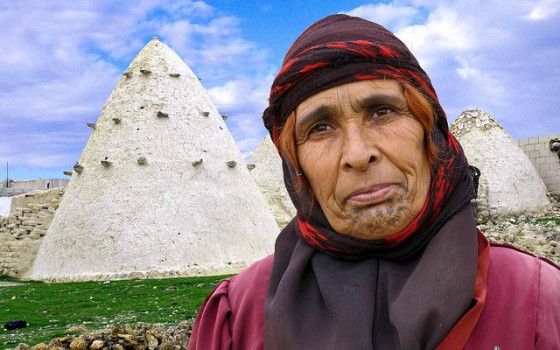
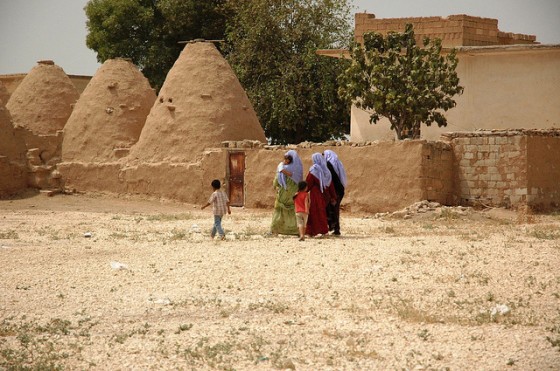
How do the Syrian beehive-shaped houses made out of mud manage to stay so cool in extreme desert conditions?
As war and conflict tear through Syria, we take a look at the ancient earthen beehive-shaped houses on the edge of the country which have been wowing visitors for centuries. We have covered these amazing traditional Syrian houses which manage to stay cool in the desert without air conditioning before, but I couldn’t resist showcasing these amazing feats of architecture again. Their iconic shape and eco-friendly architecture is definitely something which needs to be celebrated time and time again.
According to Earth Architecture, half of the world’s population live of work in buildings constructed of earth. So rather than seeing earth architecture as something of the past we must accept that in some way and in some places, earth architecture still rules supreme. Mud, dirt and straw are the oldest building material on the planet as they are widely available, cheap and relatively easy to manipulate and build with.
The beehive houses is an ancient dwelling with evidence of its existence going back to 3,700 B.C. There have been recorded examples of their construction in Cyprus and Turkey although it is only in Syria that they have persisted to this day. The Syrian beehive-houses are located on the edge of the Syrian desert with whole beehive villages in Aleppo and are used for storage as well as housing.
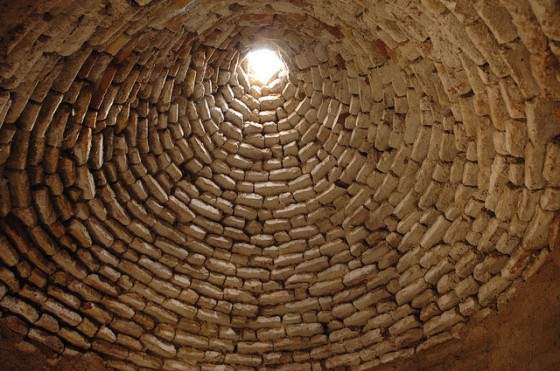
It is believed that the conical homes continue to be built in areas of Syria as there are no alternative building materials available which were better suited to the environment. Beehive homes are built using mud bricks which are stacked in a conical shape which allows hot air to travel upwards allowing the ground floor where the residents live to stay cool.
To keep the air cool, these houses rarely have windows which also protects the residents from the desert winds. The conical dome of the beehive houses also allows the rare torrential rains to flow down without exposing the mud to too much water.
All the amazing images are via james.gordon6108/flickr
This really bad picture of former Egyptian Deputy Prime Minister Youssef Wali should not blur his egregious crimes.
Hosni Mubarak is not the only official to lose tremendous face following the dramatic Egyptian revolution earlier this year. The former Deputy Prime Minister and Minister of Agriculture and Land Reclamation Youssef Wali also became the subject of prosecutors’ interest when a few shady business transactions came into focus. After he resigned in February, 2011, prosecutors froze his assets in April for yet more dubious transactions. Now officials accuse Wali of permitting the illegal entry of previously banned carcinogenic pesticides into the country over a six year period.
Europe and MENA need each other. France gives Morocco some of the funds it needs to get its solar plan off the ground.
Morocco has scorching solar ambitions, but fiscal limitations. King Mohamed VI made developing the country’s renewable energy resources a priority in 2008, when oil prices surged, and established a goal for solar energy to generate 42% of the country’s electricity needs by 2020. Achieving these goals would be impossible without cooperating with Europe – particularly France and Spain. Paris takes another step towards demonstrating its commitment to this inevitable marriage.
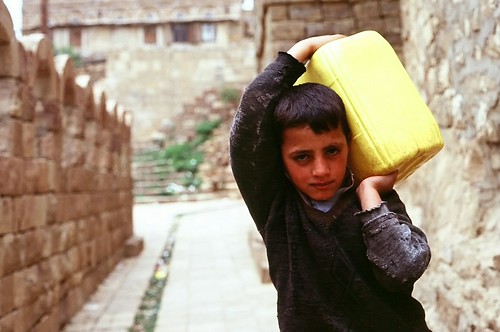
For years now, Green Prophet has been reporting on the growing water shortage situation in Africa and the Middle East and its economic and geopolitical implications. However, the scale of the problem and the need for urgent international coordination to secure this basic commodity is becoming more urgent today as stories and pictures from Yemen warn of an inevitable social collapse in the middle of political uncertainty.
IDE Technologies wins ‘Best Company of 2011’ – but is it truly the best green company?
Selected from among 15 Israeli clean technology companies, Israeli-global company IDE Technologies was recently awarded the title of ‘Best Company of 2011’ by the 2011 Cleantech Exhibition. The company was granted the award for its contribution to the field of desalination and water technology – the very reason why an environmental organization such as Friends of the Earth Middle East may deem it unworthy of receiving such recognition.
Desalination in Israel is tricky business: on the one hand, it creates an alternative to the nation’s heavy reliance on winter rainfall. On the other hand, it is energy intensive, polluting, often privatized, and diminishes the importance of water conservation.

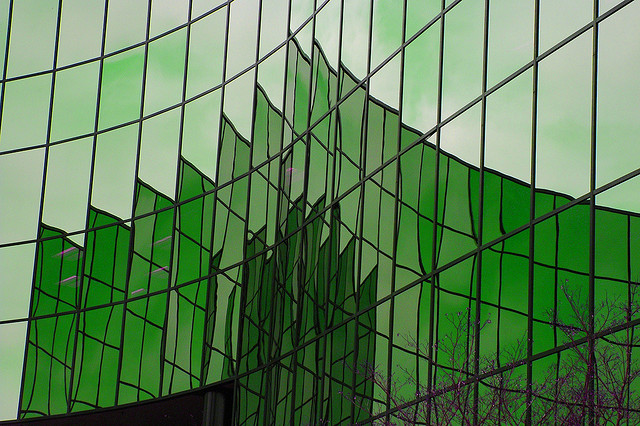
 New and renovated buildings in Israel will now have to comply with a newly launched “Israel Standard for Green Building”.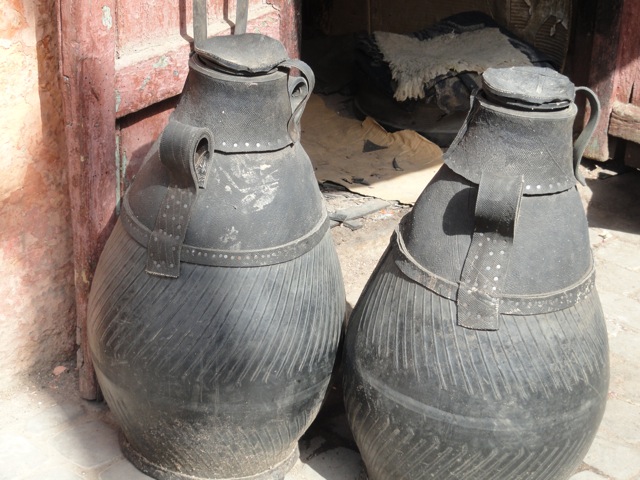
 If you rub these recycled tire jugs three times will an eco-genie pop out?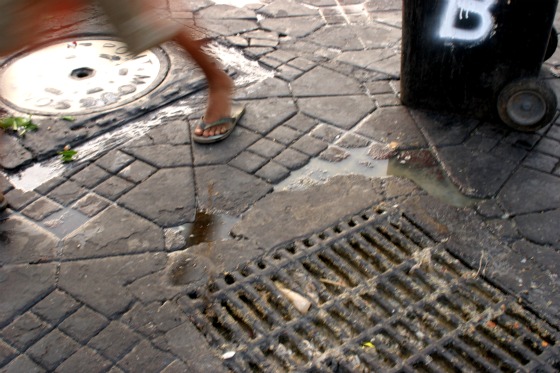

 Beit Hakerem, an upscale “green” Jerusalem Neighborhood may not be so green underground due to solvents contamination.