Adults who are 21 or older can carry up to 30 grams. This amount applies to personal use within Pittsburgh’s limits. Carrying more could lead to confiscation or legal action. Staying under the limit avoids problems during any public stop.
In the study, the scientists didn’t just test one plant compound at a time. They tested two traditional Chinese medicine compounds together — luteolin (from flowers like honeysuckle and chrysanthemum) and astragaloside IV (from astragalus root, Huang Qi). These plants have been combined in Chinese herbal formulas for centuries to help the body recover from injury and inflammation.
A new collaboration between luxury brand Coach and textile reuse pioneer Bank & Vogue attempts to stitch those two worlds together: high fashion and the global textile waste stream.
Stepping up to democratize the moon is an EU-funded company, Deep Space Energy, which has just raised more than $1 million USD as a seed fund to help it create energy generators on the moon.
Adults who are 21 or older can carry up to 30 grams. This amount applies to personal use within Pittsburgh’s limits. Carrying more could lead to confiscation or legal action. Staying under the limit avoids problems during any public stop.
In the study, the scientists didn’t just test one plant compound at a time. They tested two traditional Chinese medicine compounds together — luteolin (from flowers like honeysuckle and chrysanthemum) and astragaloside IV (from astragalus root, Huang Qi). These plants have been combined in Chinese herbal formulas for centuries to help the body recover from injury and inflammation.
A new collaboration between luxury brand Coach and textile reuse pioneer Bank & Vogue attempts to stitch those two worlds together: high fashion and the global textile waste stream.
Stepping up to democratize the moon is an EU-funded company, Deep Space Energy, which has just raised more than $1 million USD as a seed fund to help it create energy generators on the moon.
Adults who are 21 or older can carry up to 30 grams. This amount applies to personal use within Pittsburgh’s limits. Carrying more could lead to confiscation or legal action. Staying under the limit avoids problems during any public stop.
In the study, the scientists didn’t just test one plant compound at a time. They tested two traditional Chinese medicine compounds together — luteolin (from flowers like honeysuckle and chrysanthemum) and astragaloside IV (from astragalus root, Huang Qi). These plants have been combined in Chinese herbal formulas for centuries to help the body recover from injury and inflammation.
A new collaboration between luxury brand Coach and textile reuse pioneer Bank & Vogue attempts to stitch those two worlds together: high fashion and the global textile waste stream.
Stepping up to democratize the moon is an EU-funded company, Deep Space Energy, which has just raised more than $1 million USD as a seed fund to help it create energy generators on the moon.
Adults who are 21 or older can carry up to 30 grams. This amount applies to personal use within Pittsburgh’s limits. Carrying more could lead to confiscation or legal action. Staying under the limit avoids problems during any public stop.
In the study, the scientists didn’t just test one plant compound at a time. They tested two traditional Chinese medicine compounds together — luteolin (from flowers like honeysuckle and chrysanthemum) and astragaloside IV (from astragalus root, Huang Qi). These plants have been combined in Chinese herbal formulas for centuries to help the body recover from injury and inflammation.
A new collaboration between luxury brand Coach and textile reuse pioneer Bank & Vogue attempts to stitch those two worlds together: high fashion and the global textile waste stream.
Stepping up to democratize the moon is an EU-funded company, Deep Space Energy, which has just raised more than $1 million USD as a seed fund to help it create energy generators on the moon.
Adults who are 21 or older can carry up to 30 grams. This amount applies to personal use within Pittsburgh’s limits. Carrying more could lead to confiscation or legal action. Staying under the limit avoids problems during any public stop.
In the study, the scientists didn’t just test one plant compound at a time. They tested two traditional Chinese medicine compounds together — luteolin (from flowers like honeysuckle and chrysanthemum) and astragaloside IV (from astragalus root, Huang Qi). These plants have been combined in Chinese herbal formulas for centuries to help the body recover from injury and inflammation.
A new collaboration between luxury brand Coach and textile reuse pioneer Bank & Vogue attempts to stitch those two worlds together: high fashion and the global textile waste stream.
Stepping up to democratize the moon is an EU-funded company, Deep Space Energy, which has just raised more than $1 million USD as a seed fund to help it create energy generators on the moon.
Adults who are 21 or older can carry up to 30 grams. This amount applies to personal use within Pittsburgh’s limits. Carrying more could lead to confiscation or legal action. Staying under the limit avoids problems during any public stop.
In the study, the scientists didn’t just test one plant compound at a time. They tested two traditional Chinese medicine compounds together — luteolin (from flowers like honeysuckle and chrysanthemum) and astragaloside IV (from astragalus root, Huang Qi). These plants have been combined in Chinese herbal formulas for centuries to help the body recover from injury and inflammation.
A new collaboration between luxury brand Coach and textile reuse pioneer Bank & Vogue attempts to stitch those two worlds together: high fashion and the global textile waste stream.
Stepping up to democratize the moon is an EU-funded company, Deep Space Energy, which has just raised more than $1 million USD as a seed fund to help it create energy generators on the moon.
Adults who are 21 or older can carry up to 30 grams. This amount applies to personal use within Pittsburgh’s limits. Carrying more could lead to confiscation or legal action. Staying under the limit avoids problems during any public stop.
In the study, the scientists didn’t just test one plant compound at a time. They tested two traditional Chinese medicine compounds together — luteolin (from flowers like honeysuckle and chrysanthemum) and astragaloside IV (from astragalus root, Huang Qi). These plants have been combined in Chinese herbal formulas for centuries to help the body recover from injury and inflammation.
A new collaboration between luxury brand Coach and textile reuse pioneer Bank & Vogue attempts to stitch those two worlds together: high fashion and the global textile waste stream.
Stepping up to democratize the moon is an EU-funded company, Deep Space Energy, which has just raised more than $1 million USD as a seed fund to help it create energy generators on the moon.
Adults who are 21 or older can carry up to 30 grams. This amount applies to personal use within Pittsburgh’s limits. Carrying more could lead to confiscation or legal action. Staying under the limit avoids problems during any public stop.
In the study, the scientists didn’t just test one plant compound at a time. They tested two traditional Chinese medicine compounds together — luteolin (from flowers like honeysuckle and chrysanthemum) and astragaloside IV (from astragalus root, Huang Qi). These plants have been combined in Chinese herbal formulas for centuries to help the body recover from injury and inflammation.
A new collaboration between luxury brand Coach and textile reuse pioneer Bank & Vogue attempts to stitch those two worlds together: high fashion and the global textile waste stream.
Stepping up to democratize the moon is an EU-funded company, Deep Space Energy, which has just raised more than $1 million USD as a seed fund to help it create energy generators on the moon.
But even though the discovery will likely increase Israel’s GDP by more than 2 percent, and help it produce energy domestically, a recent report by the Milken Institute says there may be some serious negative consequences as well. Presented at the Globes Israel Business Conference, which took place on December 11 to 12 in Tel Aviv, the report recommends that Israel create a “sovereign investment fund,” a government-owned gas company stock portfolio that could be invested in international markets.
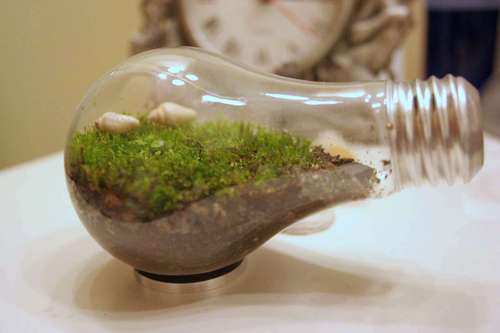
As shown in the photo above, a light bulb terrarium is literally a green way to reuse an old incandescent bulb. These small terrariums are a bright gift idea and are perfect for decorating a desk, shelf, or window sill. Check out instructions on how to pull this off at Instructables.
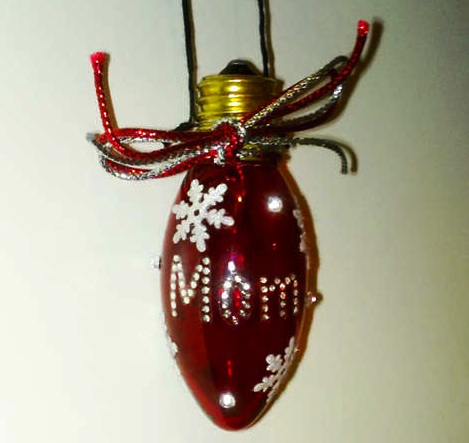
2. Light Bulb Christmas Ornaments
Ho ho ho and and an old halogen light bulb (or other form of incandescent bulb). With the Christmas season upon us, some upcyclers may be looking for ways to make Christmas ornaments. Light bulbs are easily personalized and decorated with yuletide cheer. Get some inspiration at Instructables.
3. Converting Light Bulbs into Chemical Glassware
A more scientific project would be to convert your old light bulbs into chemical glassware. This idea is not new (it was published in Popular Science in 1933, as seen above), but it’s still relevant. Check out the full instructions at Modern Mechanix.
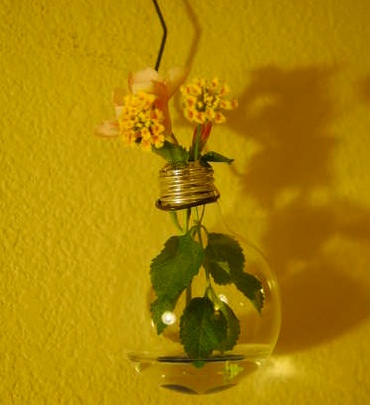
4. Light Bulb Hanging Vase
Small, clear, and vase-shaped already, old incandescent light bulbs are easily transformed into miniature vases. You could either build a stand for the bulb, or have it hang with thread or wire. Place a flower plucked from your garden in the bulb vase, or alternatively you could use it to keep your basil fresh. Easy instructions can be found at Instructables.
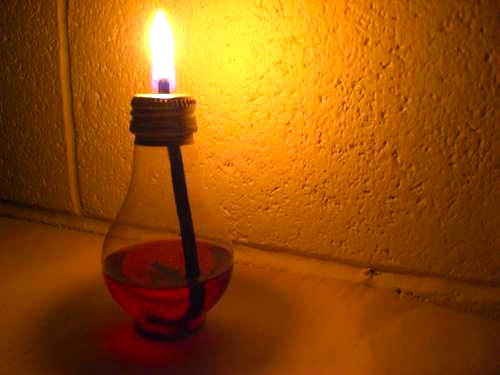
5. Light Bulb Oil Lamp
Brooklyn-based designer Sergio Silva sells similar light bulb oil lamps for a hefty sum, but you can make your own with fairly basic equipment. Make a single oil lamp or a set of nine as an alternative and upcycled Hannukah menorah. Learn how at Instructables.
Note: Before attempting any of these projects, make sure that you have safely hollowed out the wiring from the light bulb.
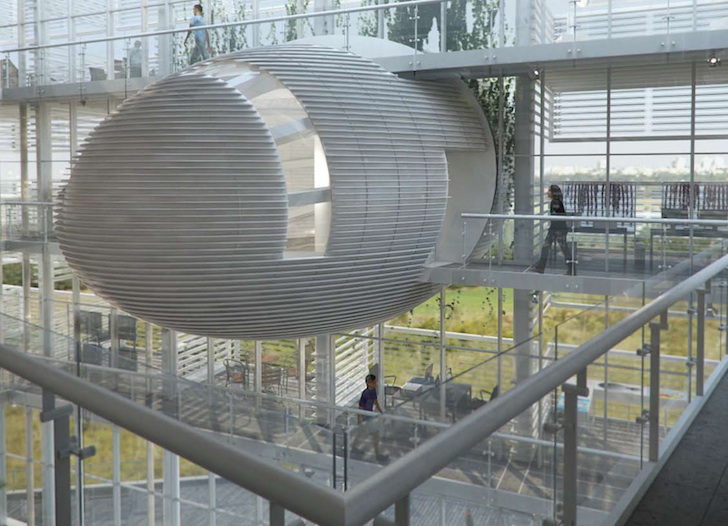
We’re so thrilled to announce that Geotectura has finally broken ground on Israel’s very first LEED Platinum Building.
We’ve been waiting for this happy moment since November 2008 when Geotectura together with Axelrod-Grobman Architects and Chen Architects first won a prestigious international competition to design TAU’s Porter School of Environmental Studies. After years of information gathering and preparation, the firm is finally breaking ground on what they hope will be Israel’s very first LEED Platinum certified building.
Although there are few precedents in Israel’s architectural history, the designers and PSES have approached this project with an uncompromising commitment to reducing its environmental impact. From brownfield rehabilitation to the most advanced energy and water saving techniques, the PSES EcoBuilding’s groundbreaking design is bound to inspire a whole new era of sustainable development.
GE Energy demonstrates its Jenbacher gas engine at the Gas Arabia Summit 2011 in Oman today.
The extent of the global problem of gas flaring can be seen in this satellite photo of North America, that is quite bewildering at first sight. On the right we see the twin cities of Minneapolis and St Paul Minnesota, but the much larger spread-out bright light on the left is out in the middle of nowhere, in the almost unpopulated states northwest of Minnesota. What on earth is that light there? Has some new city sprung up in those deserted lands, unknown to the rest of us?
Often thought of as too expensive or sophisticated for the average driver, plug-in electric vehicles will soon be available even to the occasional driver. Israel’s largest car rental company, Eldan, signed an agreement with Better Place electric vehicle company on December 5, making hundreds of Renault Fluence Z.E. electric cars available to the general public by 2012 through Eldan’s standard rental program. The decision, which makes Eldan the first car rental company to offer EVs as an option, may push the electric vehicle (EV) farther into the Israeli mainstream.
The wonderful thing about living in the Middle East is that we have so many holidays each year. But we like to celebrate the earth-friendly way, so check out our suggestions for good places to buy sustainable gifts.
We know most of our readers are unlikely to buy into the mad consumer rush that Christmas has become and our Christmas wish list is also quite simple, but giving away thoughtful, socially-conscious gifts that tell the people in your life how special they are definitely makes the season warmer. We have compiled a list of 6 stores throughout the Middle East that offer everything from natural beauty products and local crafts to the most beautiful recycled glass art – all of which are reasonably-priced and both earth and people friendly. If you’re looking for gifts that you can be proud of, come on in to see what our region’s talented artisans have to offer.
No sewing experience or fancy equipment necessary! For this easy 4-step project you will need: an old t-shirt or tank top, scissors, needle and thread, and old socks.
California-based startup company Blueseed has plans to either build or retrofit a ship that will provide accommodation and office space for talented foreign innovators who don’t meet America’s stringent working visa regulations. Since the September 11 attacks on the World Trade Center in New York City, even the brightest would-be entrepreneurs have met serious legislative barriers to getting their companies off the ground in Silicon Valley.
Blueseed’s CEO Max Marty and his team aims to change all that by giving 1,000 of the best entrepreneurs a chance to develop their ideas “in an ecosystem designed for their success” in the contiguous zone just 12 nautical miles from San Francisco. Although still in the planning stage, Paypal’s founder Peter Thiel has already entered the 500K USD “seed funding” round of the project, which will also showcase cutting edge waste management and energy generating technologies.
Doomsday and after-apocalypse movies have been around for some time. A post-nuclear holocaust Television movie entitled The Day After came out in 1983 and was later followed by a film on global warming and then on ozone depletion. How to survive events such as these was depicted in the 1993 movie The Fire Next Time.
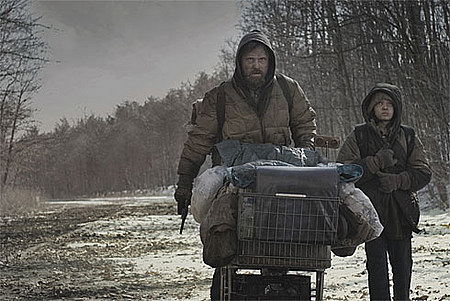
I don’t want to frighten all of you, but the idea of how to survive catastrophe, as graphically portrayed in yet another post apocalyptic movie, The Road brings home the reality of what people might do (to themselves and to others) in order to survive.
Survival is only for the fittest
Many of us now live in modern urban environments and are totally dependent on supermarkets for food, cars and other motorized vehicles for transportation, and electricity and gas to cook and preserve our food, light our homes, and keep warm in winter or cool in summer.
Computers, cell phones, and other electronic devices are needed just to communicate with one another. Even going to a doctor is dependent on modern clinics and medicines manufactured by large pharmaceutical companies.
In a post-apocalyptic world, none of these modern conveniences would be available; and only people who know the basic skills needed for survival would be able to carry on.
Lighting a fire using flint and steel sets, the sun’s rays via a magnifying glass, or by the ancient method of a bow-like device making friction on a piece of wood would be very handy in a situation where no matches or other fire starters are available.
As for finding food for self preservation, possessing some kind of firearm or even a bow and arrow set could mean the difference between life and death.
Unfortunately, outside of countries like the USA, Australia, and a few others, few families possess any kind of firearm due to strict anti-gun laws in the countries they live in. This is especially true in the Middle East – including Israel.
Gardening is good for surviving anything, even Covid.
Some basic preparations, aside from those mentioned above, include having a small garden at home, even if only on a balcony.
It’s a good idea to store enough basic food and water to last for at least a couple of months.
Bottled water, canned and dried food, and herbs are good things to keep in your pantry, and enough first aid and other basic medical supplies and medicines are also necessary.
And for those who need certain prescription medicines, try to get extra amounts over normal prescriptions.
This is not an easy subject to write about; but then again, we do not live in an easy world. In fact it’s getting more difficult all the time and it behooves us to face this unpleasant reality.
At the ongoing Eye on Earth summit in Abu Dhabi, there has been a lot of talk about sharing environmental data. But we question whether knowledge is enough.
As early as 1930, a British engineer named Guy Calendar warned that increased carbon emissions as a result of industrialization was beginning to raise the global surface temperature of the earth. The following year, a man named E.O. Hulbert wrote in the Physical Review that if atmosphere CO2 concentrations doubled or tripled, then the earth’s surface temperature would increase by 4 and 7 degrees Celsius.
Now — nearly a century later — climate change is well underway. This is what a handful of high profile luminaries are currently addressing at the Eye on Earth Summit in Abu Dhabi, and The National reports a focus on knowledge. Sharing environmental data, experts say, will bring us closer to mitigating climate change. Will it?
We speak to Muslim green campaigner Sofiah Jamil about the environmental threats facing Southeast Asia and why climate justice alone isn’t enough
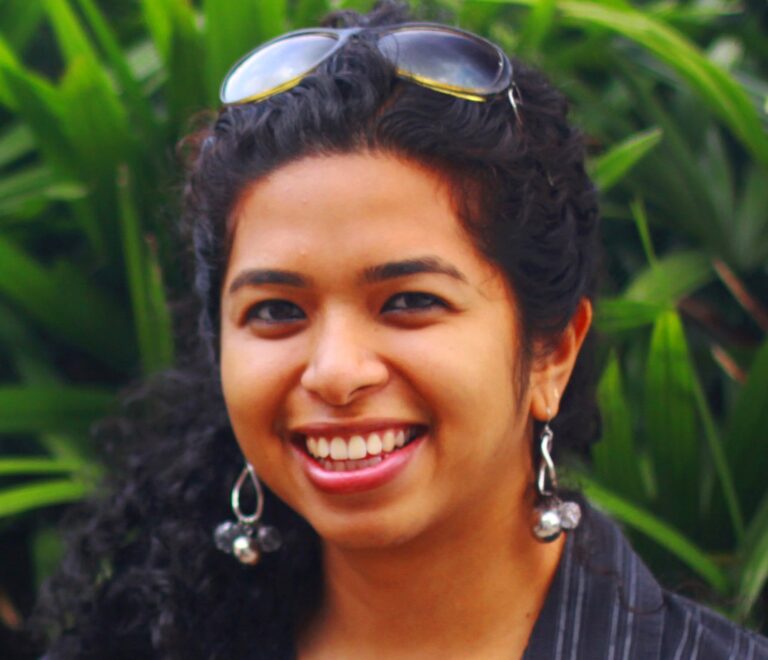
Sofiah Jamil is a Singapore-based campaigner who has been working hard to help Muslims living in Southeast Asia connect their faith with environmental issues. As well as setting up ‘Project ME: Muslims + Environment‘ and running The Green Bush blog, her research at Nanyang Technological University focuses on environmental security. Spurred on by her undergraduate studies in Australia where she experienced a higher level of environmental awareness (compared to her concrete and urban home of Singapore), she has studied the implications of forest fires on Indonesia and Malaysia.
In 2009, Sofiah took part in a 6-week programme by the Study of the United States Institute for the Environment to help increase her knowledge and hopes to start her PhD next year at the Australian National University focusing on the topic of Muslim environmental initiatives. Green Prophet spoke to her about the unique environmental risks that the Southeast region faces and the role women can play in dealing with these.
Although the massive 3,300,000 sq m King Abdullah Financial District in Riyadh will feature a variety of “green” initiatives, this is definitely sustainable architecture Saudi style.
We applaud any individual or organization that seeks to green up their portfolio, and Saudi Arabia is no exception. Really, it’s difficult to blame the Kingdom’s residents for striking it rich with oil, expanding their quality of life, and not wanting to let it go even as the world gets hotter and ecosystems collapse. But sustainable Saudi architecture exists in a class of its own.
We have on one end simple earth architecture such as Hassan Fathy’s famous works in Egypt, which requires very little imported materials and have virtually no environmental impact, and then we have the King Abdullah Financial District (KAFD) designed by Henning Larsen Architects (HLA). Even though all kinds of alternative energy and passive design techniques have been incorporated into its design, this 3,300,000 sq m mixed use center is audacious, expensive, and about as glitzy as it gets.
A new twist on Hannuka’s potato latkehs: The kids look forward to the same latkehs year after year, but adults sometimes want something a little different. Surfing the Net for an alternative recipe, this recipe from The New York Times caught my eye. It’s as easy to make as the traditional recipe, but it’s just different enough to make those traditional potato fritters interesting again.
In a small bowl, whisk together the sour cream or yogurt, cinnamon and syrup. Cover and chill until ready to use.
Coarsely grate the apples, potato and onion. Put the mixture in a clean dish towel and squeeze to wring out as much liquid as possible. For the crispiest pancakes, you want the least moisture.
Working quickly, put the mixture in a large bowl, add the flour, eggs, salt, baking powder and pepper, and mix until the flour is absorbed.
In a heavy-bottomed pan over medium-high heat, pour in about 1/4 inch of oil. Once the oil is hot (a drop of batter placed in the pan should sizzle), drop heaping tablespoons of batter into the pan, cooking 3 to 4 latkes at a time. Use a spatula to flatten the scoops into disks.
When the edges of the latkes are brown and crispy, 2 to 3 minutes, flip them. Cook until the second side is deeply browned, another 2 to 3 minutes.
Transfer the latkes to a plate lined with recycled, crumpled newspaper sheets to drain. Repeat with the remaining batter. Serve with dollops of the cinnamon sour cream on top.
Yield: about 1 1/2 dozen latkes. Enjoy!
More recipes for the Festival of Lights from Green Prophet:
Looking for a cool eco-activity with the kids this Hanukkah vacation? This one is for the birds!
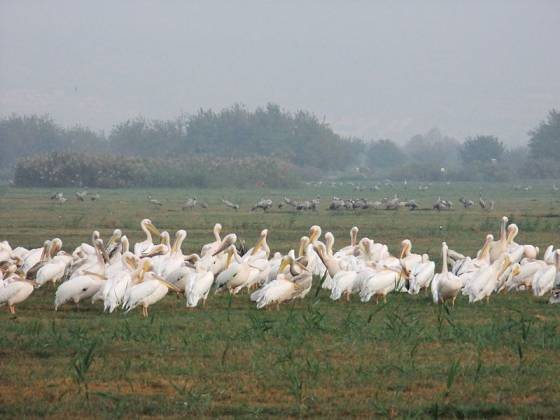
Until December 28th, you can visit nature reserves and parks in the Galilee and Golan for a special bird-watching festival. The events will be held in six main sites: the Agamon Hula, the Gamla nature reserve, at the Sea of Galilee, Kfar Rupin, En Afek nature reserve and their area. Having reported on the Kuwait’s Ornithological Society events last July, we wholeheartedly recommend the many interesting birdwatching activities offered in Israel this month.

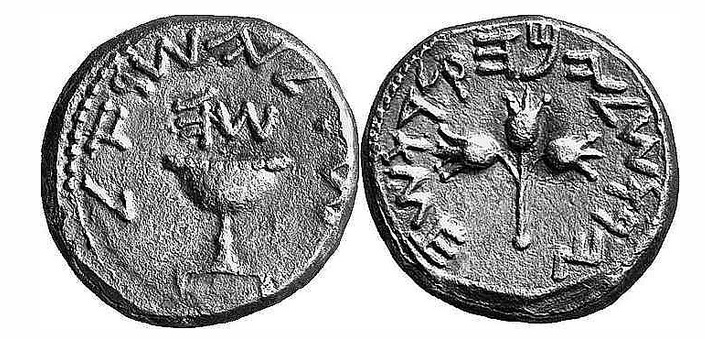 Israel’s natural gas wells could lead to an unsustainable shekel.




 Rent an electric car when you travel to Israel.