The Convention on the Conservation of Migratory Species of Wild Animals (CMS), governments agreed to extend protection to 40 more migratory species, from cheetahs and striped hyenas to snowy owls, giant otters, and great hammerhead sharks. Too many of them are slipping toward extinction .
When the region settles after the American war with Iran, and it will, American and European travelers will come back. Not just for spectacle or headline projects, but for places that feel real. Places that haven’t been engineered to impress and which get into your soul.
We predict that visitors to Saudi Arabia will want to see places like Rijal Alma.When the region settles after the American war with Iran, and it will, American and European travelers will come back. Not just for spectacle or headline projects, but for places that feel real. Places that haven’t been engineered to impress and which get into your soul.
We predict that visitors to Saudi Arabia will want to see places like Rijal Alma.
“Forever chemicals” like the ones ejected by Lulelemon yoga pants into strategic areas don’t go away. They don’t break down in nature, and once they’re in water, soil, or our bodies, they tend to stick around. But scientists at Florida International University think they’ve found a smarter way to deal with them, and it uses something as simple as pH.
Koh Phangan may be known for yoga, detox retreats, and full moon parties, but beyond the curated paradise lies a different reality—one of injured stray animals and the quiet work of rescue. This story explores PACS (Phangan Animal Care for Strays), a grassroots animal shelter tackling overpopulation, disease, and neglect on the island. Through firsthand experience with teens, it reveals how meaningful travel, volunteerism, and compassion offer a deeper kind of healing—far from the Instagram version of paradise.
The Convention on the Conservation of Migratory Species of Wild Animals (CMS), governments agreed to extend protection to 40 more migratory species, from cheetahs and striped hyenas to snowy owls, giant otters, and great hammerhead sharks. Too many of them are slipping toward extinction .
When the region settles after the American war with Iran, and it will, American and European travelers will come back. Not just for spectacle or headline projects, but for places that feel real. Places that haven’t been engineered to impress and which get into your soul.
We predict that visitors to Saudi Arabia will want to see places like Rijal Alma.When the region settles after the American war with Iran, and it will, American and European travelers will come back. Not just for spectacle or headline projects, but for places that feel real. Places that haven’t been engineered to impress and which get into your soul.
We predict that visitors to Saudi Arabia will want to see places like Rijal Alma.
“Forever chemicals” like the ones ejected by Lulelemon yoga pants into strategic areas don’t go away. They don’t break down in nature, and once they’re in water, soil, or our bodies, they tend to stick around. But scientists at Florida International University think they’ve found a smarter way to deal with them, and it uses something as simple as pH.
Koh Phangan may be known for yoga, detox retreats, and full moon parties, but beyond the curated paradise lies a different reality—one of injured stray animals and the quiet work of rescue. This story explores PACS (Phangan Animal Care for Strays), a grassroots animal shelter tackling overpopulation, disease, and neglect on the island. Through firsthand experience with teens, it reveals how meaningful travel, volunteerism, and compassion offer a deeper kind of healing—far from the Instagram version of paradise.
The Convention on the Conservation of Migratory Species of Wild Animals (CMS), governments agreed to extend protection to 40 more migratory species, from cheetahs and striped hyenas to snowy owls, giant otters, and great hammerhead sharks. Too many of them are slipping toward extinction .
When the region settles after the American war with Iran, and it will, American and European travelers will come back. Not just for spectacle or headline projects, but for places that feel real. Places that haven’t been engineered to impress and which get into your soul.
We predict that visitors to Saudi Arabia will want to see places like Rijal Alma.When the region settles after the American war with Iran, and it will, American and European travelers will come back. Not just for spectacle or headline projects, but for places that feel real. Places that haven’t been engineered to impress and which get into your soul.
We predict that visitors to Saudi Arabia will want to see places like Rijal Alma.
“Forever chemicals” like the ones ejected by Lulelemon yoga pants into strategic areas don’t go away. They don’t break down in nature, and once they’re in water, soil, or our bodies, they tend to stick around. But scientists at Florida International University think they’ve found a smarter way to deal with them, and it uses something as simple as pH.
Koh Phangan may be known for yoga, detox retreats, and full moon parties, but beyond the curated paradise lies a different reality—one of injured stray animals and the quiet work of rescue. This story explores PACS (Phangan Animal Care for Strays), a grassroots animal shelter tackling overpopulation, disease, and neglect on the island. Through firsthand experience with teens, it reveals how meaningful travel, volunteerism, and compassion offer a deeper kind of healing—far from the Instagram version of paradise.
The Convention on the Conservation of Migratory Species of Wild Animals (CMS), governments agreed to extend protection to 40 more migratory species, from cheetahs and striped hyenas to snowy owls, giant otters, and great hammerhead sharks. Too many of them are slipping toward extinction .
When the region settles after the American war with Iran, and it will, American and European travelers will come back. Not just for spectacle or headline projects, but for places that feel real. Places that haven’t been engineered to impress and which get into your soul.
We predict that visitors to Saudi Arabia will want to see places like Rijal Alma.When the region settles after the American war with Iran, and it will, American and European travelers will come back. Not just for spectacle or headline projects, but for places that feel real. Places that haven’t been engineered to impress and which get into your soul.
We predict that visitors to Saudi Arabia will want to see places like Rijal Alma.
“Forever chemicals” like the ones ejected by Lulelemon yoga pants into strategic areas don’t go away. They don’t break down in nature, and once they’re in water, soil, or our bodies, they tend to stick around. But scientists at Florida International University think they’ve found a smarter way to deal with them, and it uses something as simple as pH.
Koh Phangan may be known for yoga, detox retreats, and full moon parties, but beyond the curated paradise lies a different reality—one of injured stray animals and the quiet work of rescue. This story explores PACS (Phangan Animal Care for Strays), a grassroots animal shelter tackling overpopulation, disease, and neglect on the island. Through firsthand experience with teens, it reveals how meaningful travel, volunteerism, and compassion offer a deeper kind of healing—far from the Instagram version of paradise.
The Convention on the Conservation of Migratory Species of Wild Animals (CMS), governments agreed to extend protection to 40 more migratory species, from cheetahs and striped hyenas to snowy owls, giant otters, and great hammerhead sharks. Too many of them are slipping toward extinction .
When the region settles after the American war with Iran, and it will, American and European travelers will come back. Not just for spectacle or headline projects, but for places that feel real. Places that haven’t been engineered to impress and which get into your soul.
We predict that visitors to Saudi Arabia will want to see places like Rijal Alma.When the region settles after the American war with Iran, and it will, American and European travelers will come back. Not just for spectacle or headline projects, but for places that feel real. Places that haven’t been engineered to impress and which get into your soul.
We predict that visitors to Saudi Arabia will want to see places like Rijal Alma.
“Forever chemicals” like the ones ejected by Lulelemon yoga pants into strategic areas don’t go away. They don’t break down in nature, and once they’re in water, soil, or our bodies, they tend to stick around. But scientists at Florida International University think they’ve found a smarter way to deal with them, and it uses something as simple as pH.
Koh Phangan may be known for yoga, detox retreats, and full moon parties, but beyond the curated paradise lies a different reality—one of injured stray animals and the quiet work of rescue. This story explores PACS (Phangan Animal Care for Strays), a grassroots animal shelter tackling overpopulation, disease, and neglect on the island. Through firsthand experience with teens, it reveals how meaningful travel, volunteerism, and compassion offer a deeper kind of healing—far from the Instagram version of paradise.
The Convention on the Conservation of Migratory Species of Wild Animals (CMS), governments agreed to extend protection to 40 more migratory species, from cheetahs and striped hyenas to snowy owls, giant otters, and great hammerhead sharks. Too many of them are slipping toward extinction .
When the region settles after the American war with Iran, and it will, American and European travelers will come back. Not just for spectacle or headline projects, but for places that feel real. Places that haven’t been engineered to impress and which get into your soul.
We predict that visitors to Saudi Arabia will want to see places like Rijal Alma.When the region settles after the American war with Iran, and it will, American and European travelers will come back. Not just for spectacle or headline projects, but for places that feel real. Places that haven’t been engineered to impress and which get into your soul.
We predict that visitors to Saudi Arabia will want to see places like Rijal Alma.
“Forever chemicals” like the ones ejected by Lulelemon yoga pants into strategic areas don’t go away. They don’t break down in nature, and once they’re in water, soil, or our bodies, they tend to stick around. But scientists at Florida International University think they’ve found a smarter way to deal with them, and it uses something as simple as pH.
Koh Phangan may be known for yoga, detox retreats, and full moon parties, but beyond the curated paradise lies a different reality—one of injured stray animals and the quiet work of rescue. This story explores PACS (Phangan Animal Care for Strays), a grassroots animal shelter tackling overpopulation, disease, and neglect on the island. Through firsthand experience with teens, it reveals how meaningful travel, volunteerism, and compassion offer a deeper kind of healing—far from the Instagram version of paradise.
The Convention on the Conservation of Migratory Species of Wild Animals (CMS), governments agreed to extend protection to 40 more migratory species, from cheetahs and striped hyenas to snowy owls, giant otters, and great hammerhead sharks. Too many of them are slipping toward extinction .
When the region settles after the American war with Iran, and it will, American and European travelers will come back. Not just for spectacle or headline projects, but for places that feel real. Places that haven’t been engineered to impress and which get into your soul.
We predict that visitors to Saudi Arabia will want to see places like Rijal Alma.When the region settles after the American war with Iran, and it will, American and European travelers will come back. Not just for spectacle or headline projects, but for places that feel real. Places that haven’t been engineered to impress and which get into your soul.
We predict that visitors to Saudi Arabia will want to see places like Rijal Alma.
“Forever chemicals” like the ones ejected by Lulelemon yoga pants into strategic areas don’t go away. They don’t break down in nature, and once they’re in water, soil, or our bodies, they tend to stick around. But scientists at Florida International University think they’ve found a smarter way to deal with them, and it uses something as simple as pH.
Koh Phangan may be known for yoga, detox retreats, and full moon parties, but beyond the curated paradise lies a different reality—one of injured stray animals and the quiet work of rescue. This story explores PACS (Phangan Animal Care for Strays), a grassroots animal shelter tackling overpopulation, disease, and neglect on the island. Through firsthand experience with teens, it reveals how meaningful travel, volunteerism, and compassion offer a deeper kind of healing—far from the Instagram version of paradise.
The Convention on the Conservation of Migratory Species of Wild Animals (CMS), governments agreed to extend protection to 40 more migratory species, from cheetahs and striped hyenas to snowy owls, giant otters, and great hammerhead sharks. Too many of them are slipping toward extinction .
When the region settles after the American war with Iran, and it will, American and European travelers will come back. Not just for spectacle or headline projects, but for places that feel real. Places that haven’t been engineered to impress and which get into your soul.
We predict that visitors to Saudi Arabia will want to see places like Rijal Alma.When the region settles after the American war with Iran, and it will, American and European travelers will come back. Not just for spectacle or headline projects, but for places that feel real. Places that haven’t been engineered to impress and which get into your soul.
We predict that visitors to Saudi Arabia will want to see places like Rijal Alma.
“Forever chemicals” like the ones ejected by Lulelemon yoga pants into strategic areas don’t go away. They don’t break down in nature, and once they’re in water, soil, or our bodies, they tend to stick around. But scientists at Florida International University think they’ve found a smarter way to deal with them, and it uses something as simple as pH.
Koh Phangan may be known for yoga, detox retreats, and full moon parties, but beyond the curated paradise lies a different reality—one of injured stray animals and the quiet work of rescue. This story explores PACS (Phangan Animal Care for Strays), a grassroots animal shelter tackling overpopulation, disease, and neglect on the island. Through firsthand experience with teens, it reveals how meaningful travel, volunteerism, and compassion offer a deeper kind of healing—far from the Instagram version of paradise.
This creamy vegan rice dish, dotted with little chunks of aromatic asparagus, satisfies the taste for something substantial and savory.
Asparagus has been in the markets for some time in the Middle East. It’s worth buying it for this low-fat, creamy risotto. And don’t forget another great vegan recipe – Chickpea and Artichoke Salad. Two great dishes for a vegan buffet.
The winter months in the Middle East are the perfect time to travel to Thailand, especially with this year’s cold snap. Warm tropical temperatures hovering around 30, paired with a pineapple strip and a beach anywhere south of Bangkok can cure anyone’s winter blues.
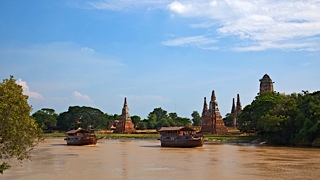
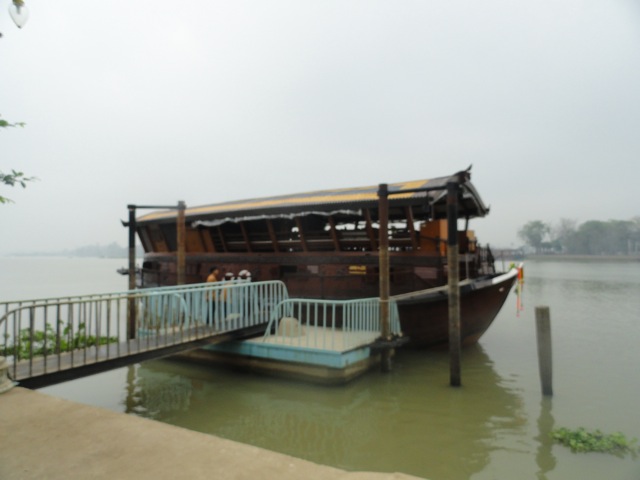
While Bangkok is fast, furious and very polluted, like the slow food movement, instead of lingering in Bangkok we decided to take a slow boat up the Chao Phraya River to the Ayutthaya province to see ancient ruins and the spirit of ancient Siam. And on this slow boat, The Mekhala Cruise (with an overnight luxury cabin) you can learn about good environmental stewardship by being among Thai people, and people of the river.
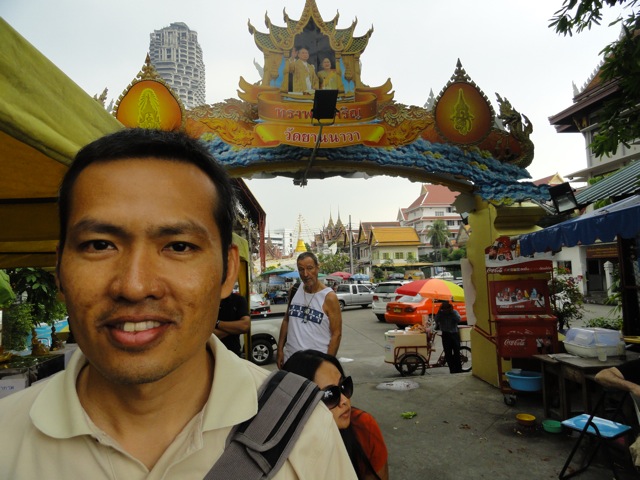
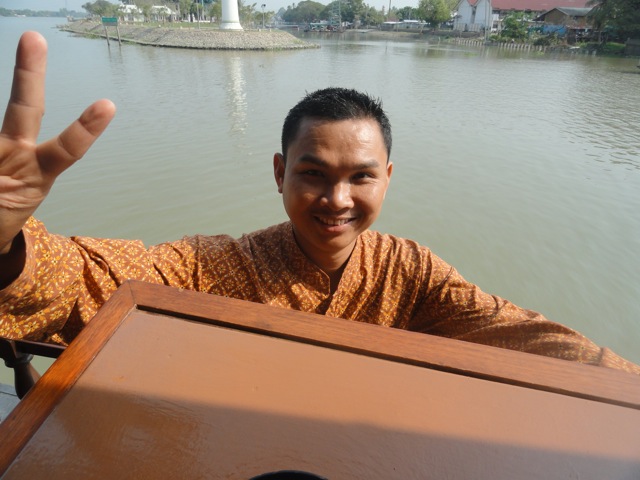
We boarded the boat at 1 PM and met with Teerapole (pictured just below) who we’d been coordinating with via email. We met at a well-traveled temple and on a small pier where the fish are protected from fishing.
He tells Green Prophet: “I think the river culture in Thailand is becoming something of the past. Not many tourists have an opportunity to see a simple way of lives of Thais since boat travel is less popular than other means of transportation. It’s also amazing to know how local people have learned to live with nature for centuries.”
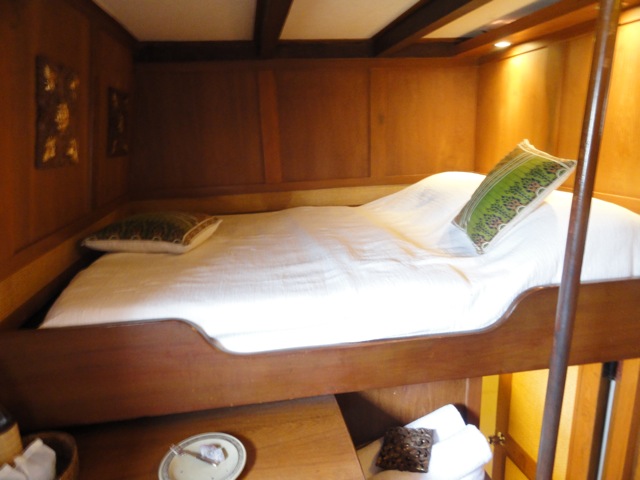
Over on the boat the group was small, about 15 of us, and we had ample space and privacy on the renovated rice barge, which is 92 years old. A covered deck protected us from the sun, and the occasional hot rain. Around 1:30 PM we pulled off the pier and headed up river, passing endless barges trucking goods like freight trains or Mac trucks to and from Bangkok.
Don’t expect the excitement of the turquoise water you’ll find down in the south on this river trip. This is a well-traveled river, giving credence to Bangkok being the Venice of the East. The journey which will bring us finally at the banks of the King’s Summer Palace (the one from the movie The King and I) gave us ample time to think and imagine a different way of life so connected to the water, and so far from the thirsty Middle East from which we arrived.
Thai people do not lack water but they are still challenged with protecting what they have. Long over are the days when Thailand didn’t have to worry about water conservation. Water must be drank from bottles not as a luxury but a health precaution. The rivers around Bangkok are polluted and the country has no clear plan of action in sight. And winding our way down the river up to Ayutthaya we saw people toss kitchen waste into the water, and using it as a washtub for clothes or bathing. No doubt it is a toilet too.
Factories that line river, including the Singha Beer factory are contributors to industrial pollution in the river as well. There are over 30,000 industrial facilities that line the river, and many of these are in clear view as we chug along.
The drive to Ayutthaya from where we were in Bangkok takes about an hour and a half by car. The Mekhala Cruise about five hours at night, and a couple more in the morning. We enjoy the slowness of going up river.
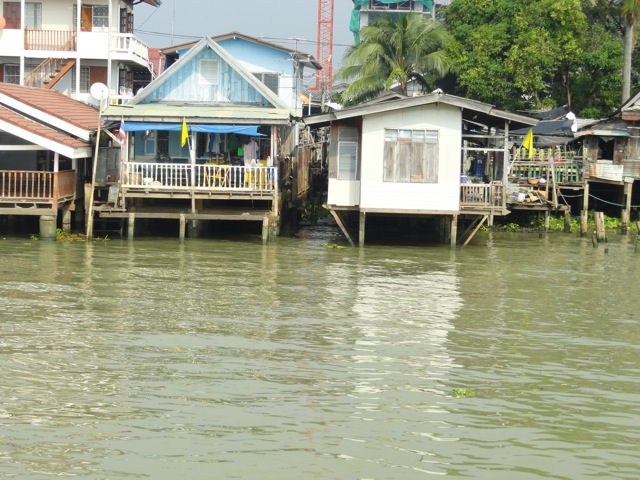
Along the way we couldn’t help but notice the sandbags, the general disorder and the waterline marked by paint or sand shadows, showing where the floodwaters had risen only three months ago. Even ancient river people attuned to the currents are not immune to the chaos of climate change.
But river people live simply, many of them parking their boats under their homes.
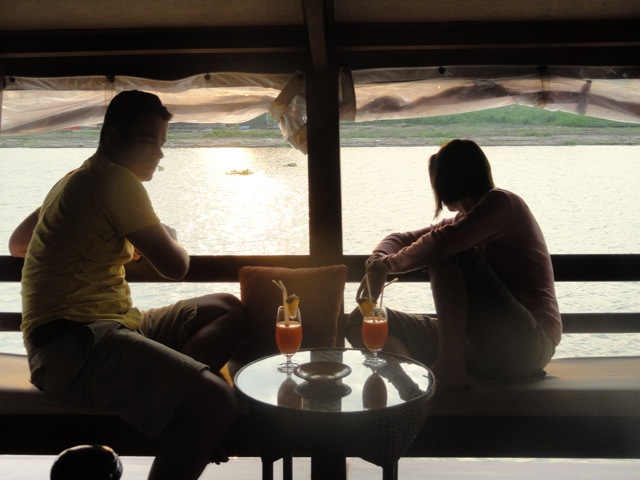
After a half day on board we get off to visit a fresh food market. Being a little late for the day, the pickings were slim. We returned home to find a wonderful candlelit dinner waiting for us. The food was the best so far that we’ve had in Thailand and the staff of four were very careful to make sure they prepared food to suit our dietary habits. I was eating lacto-ovo vegetarian and they got it without any explanation.
As for facilities you couldn’t be happier: The gorgeously renovated boat and cabins were spotless and well equipped with private toilets and showers.
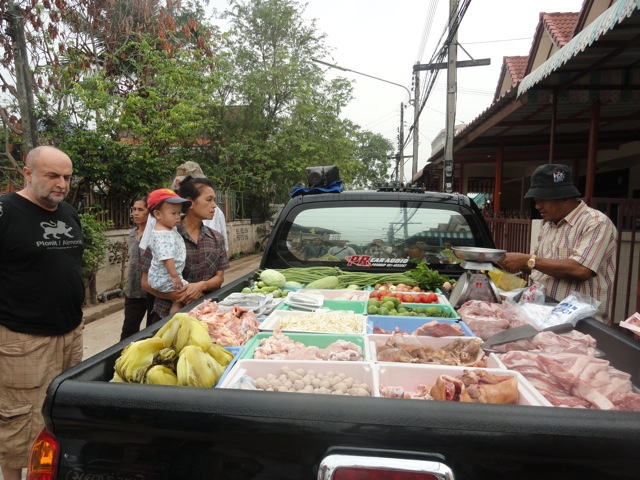
After docking for the night, the next day early in the morning the boat started on its journey without us knowing it. Then we docked for a nice treat: we stopped at a Mon village (see the local food truck below), an ecological village that clearly was affected by the flood. Red flood lines were painted on all the electricity poles throughout the village. See how they shop for fresh food below.
Back on the boat we ate breakfast and continued along our way to the King’s Palace.
Run by the company Asian Oasis, the same outfit that runs a couple of eco-lodges in northern Thailand, the Mekhala Cruise was an overnight cruise that starts in Bangkok and ends in the old capital of Siam. The company says they can schedule trips according to your needs and interests and the company which also runs an eco-lodge in the north of Thailand (one of the very few ecologically responsible lodgings we found in Thailand) is knowledgeable and mindful of ecological practices and the importance of cultural preservation.
As revelers race towards the islands looking for parties and sunshine, an honest retreat is the Mekhala’s slow boat cruise bringing you closer to the every day people that inhabit the suburbs of Bangkok. The drop off destination is a perfect launch pad for another day of must-see tourism sites: the King’s Palace, and all the 4,000 year old ruins in the Ayutthaya region. These are the ruins that will give you a bit of scope and scale of the Thai culture.
In the spirit of protecting and celebrating the river culture of the Bangkok area, we learned from our own intuition and the staff on board how important the rivers are for the way of life in Thailand. I give this boat cruise a big thumbs up as a gentle way to ease into Bangkok and the time of your life in Thailand.
To extend the river trip take a long tail boat another hour up the river from the King’s Palace pier for 200 baht. It will bring you smack dab in the middle of all the ruins, with the help of a motorbike taxi.
Middle Easterners come to know Thailand through its migrant workers and domestic help. You might not notice this when they are foreigners, but Thai people have an extraordinary grace, charm and sense of humor that you can really only experience in person, in their own country.
What are Thai people best known for I asked Teerapole when we were docked in Bangkok. What can they give the ecological movement? Tolerance, he told me. Thai people are open-minded and are easy to embrace change. I told him that the Thai people also have a lot to teach the world. Their family values, communal eating habits, their simple way of life should be embraced by all of us.
For more lessons on Thailand’s ecological communities see the Asian Oasis eco-lodge in Northern Thailand. The company is probably the only one in Thailand I’ve seen so far that embraces ecological issues, not using these issues to sell tours or hotel rooms.
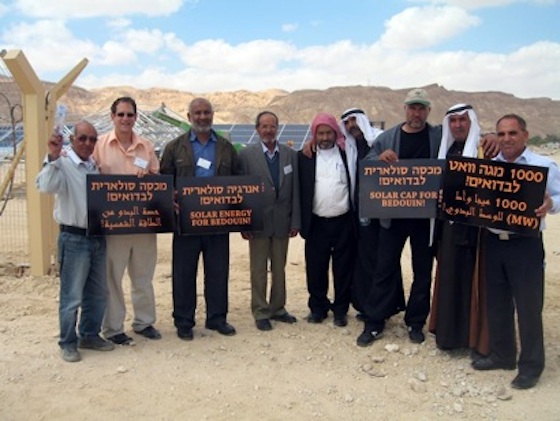
Arava Power Company pioneers first ever solar contract for Israel’s Bedouin minority
The first-ever license for a solar project has been awarded this week to Israel’s bedouin community by Israel’s Public Utility Authority. Yosef Abramowitz of Arava Power Company promoted and led the solar project, to make a solar energy dream come true for Bedouin living in the Israel’s Negev desert.
The Obama Administration is supplying 80 percent of the $30 million of financing it will take to build the small photovoltaic solar farm, using the little-known Overseas Private Investment Corporation of the US government: OPIC.
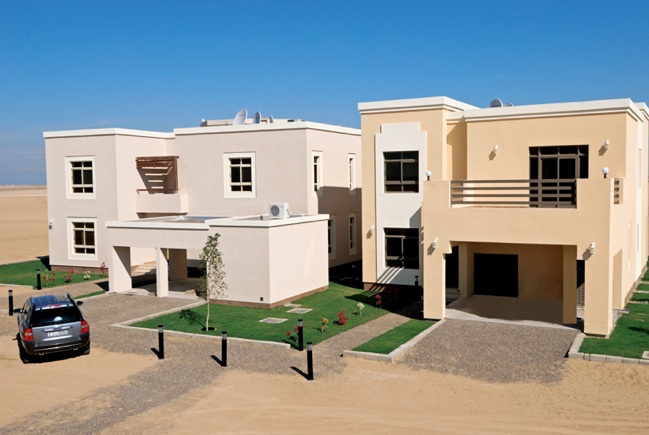
Going green doesn’t come naturally to wealthy villa owners in the Gulf.
An online real estate company listed a seven bedroom villa in Dubai’s neighboring Emirate Abu Dhabi for $95,300 a year, which amounts to nearly $8,000 a month. Anyone who can afford to spend that much money on rent probably has little incentive to turn off the lights in order to conserve energy or shorten their showers, which may explain why the Abu Dhabi Urban Planning Council sometimes has to meet with villa owners six times before they grasp the minimum requirements of the country’s mandatory Estidama green building code.
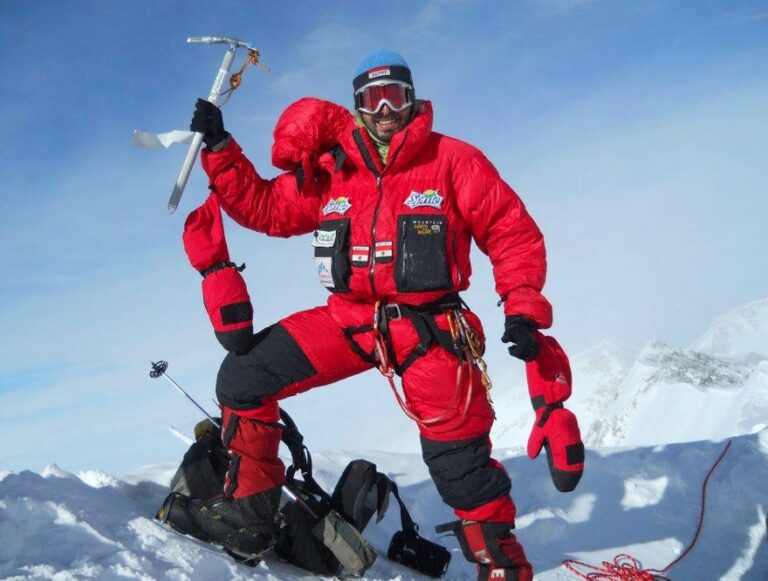
Omar Samra is an adventurer whose incredible pursuitshighlight the importance of environmental awareness.
When Omar Samra isn’t running one of the few genuinely eco-friendly and socially responsible tourism outfits in Egypt called Wild Guanabana, he climbs mountains. Big ones. He was the first Egyptian to summit Mt. Everest in 2007 and by the end of 2012, if he secures the necessary sponsorships, he will also be the first from his country to reach the top of the world’s seven highest peaks – including the formidable Mt. McKinley in Alaska. If you’re aren’t already impressed by the man who graduated from the London School of Business but eschewed a life of high finance life for something more soulful, maybe this will help: all of Samra’s journeys are carbon neutral.
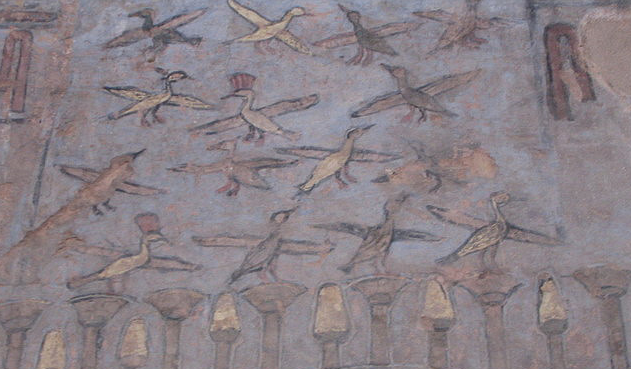
H5N1 has infected 159 and killed 55 people in Egypt since 2006.
A nationwide campaign to stop the spread of H5N1 avian influenza in Egypt is to be launched by the government in a few weeks, say officials, but details are still sketchy. The new plan, which will involve coordination between the Health Ministry, the Agriculture Ministry and poultry producers, requires close monitoring and various bio-safety measures.
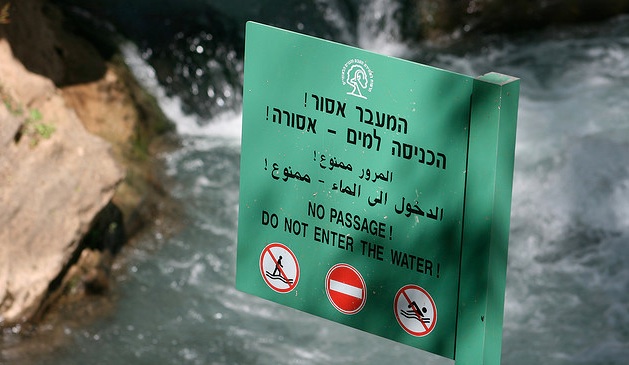
Two-thirds of Tel Aviv’s water wells are too polluted to use.
A recent study discovered that many Tel Aviv wells are polluted beyond suitability as drinking water sources. Data collected by the Health Ministry and Water Authority showed that 96 of a total 166 wells in the Tel Aviv area were closed due to contamination. Nearly two-thirds of the wells have been shuttered since 1980, when all 166 were in full operation. The pollution has been caused by two types of activities. First, contaminants from armament manufacturing, agricultural runoff and sewage systems seep into the groundwater table.
Tanin 1 gas field, in large yellow area north of the Tamar field, is too close for comfort to Lebanese shores. Lebanon is going to the UN to complain.
Israel’s got natural gas. A lot of it. Cleaner burning than coal or bitumen, natural gas has a reputation for being more environmentally friendly. Countries like Qatar have a lot of natural gas and now Israel – with help from the American company Noble Energy – has found enough gas to make it energy independent for decades.
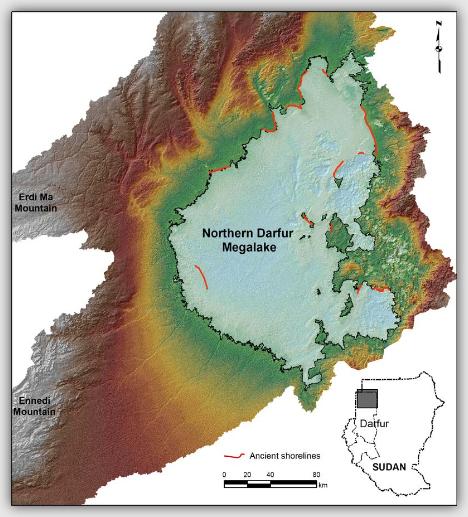
At least 300,000 people died and almost three million were displaced by the Darfur conflict in Sudan. Egyptian-American geologist Farouk El-Baz believes that limited access to water is one of the root causes of this conflict. Doctor El-Baz is director of Boston University’s center for remote sensing. He is known for his use of satellite images to search for water in the Mideast and North Africa. His work led to the discovery of a large underground water source in Egypt’s East Uweinat region near the borders with Libya, Chad and Sudan. This Nubian Sandstone Aquifer System (NSAS) contains over five million cubic feet of groundwater and is already bringing life and prosperity to a desolate part of the Eastern Sahara.
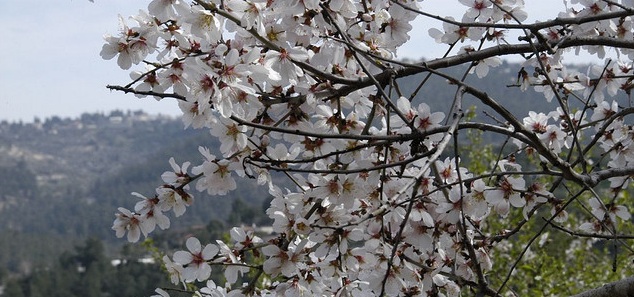
Spring has sprung in Israel, marked by almond blossoms and Tu Bishvat
The Jewish holiday of Tu Bishvat begins as the sun sets on the 7th of February 2012. This holiday has its origins in some ecologically-focused passages in the Talmud. Deuteronomy 14:22-29 requires that one tenth of all that a field produces in a year should be set aside as a tithe and that every third year’s tithe should be stored in towns so that widows, foreigners and Levites (who have no land allotment) would have food.
eL Seed, a Tunisian artist who combines Arabic calligraphy and street painting, is making an imprint on the world street art scene.
I can’t remember how I found him. One of those idle internet ramblings where a sound or image grabs you by the hair and pulls you smack up to the monitor to find out more. I love when that happens. And it happened with eL Seed.
I’m a graffiti fan. Filthy subway cars in ‘70’s Manhattan made more tolerable by paint-sprayed shells. Crumbling underbellies of bridges and tunnels, colorfully tagged, sound out visual wake-up calls. People observe, and comment. I love public art. The kind spelled in lower case. Yarn-bombing, sidewalk chalk painting, Lego micro-installations, and graffiti.
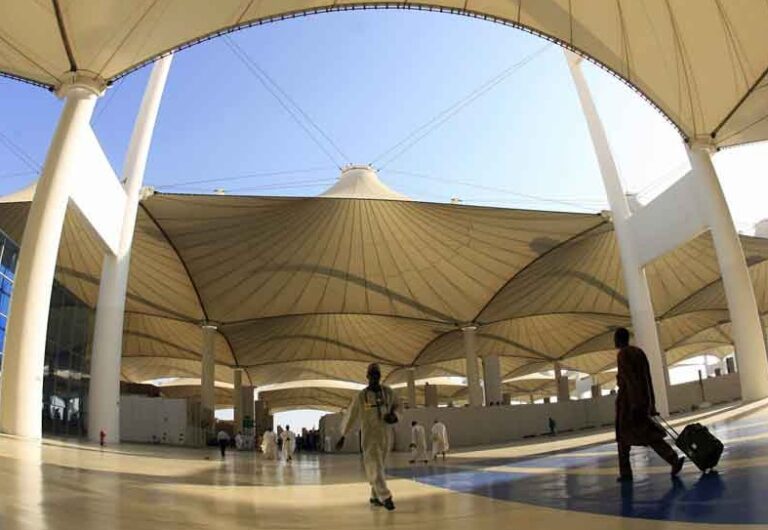
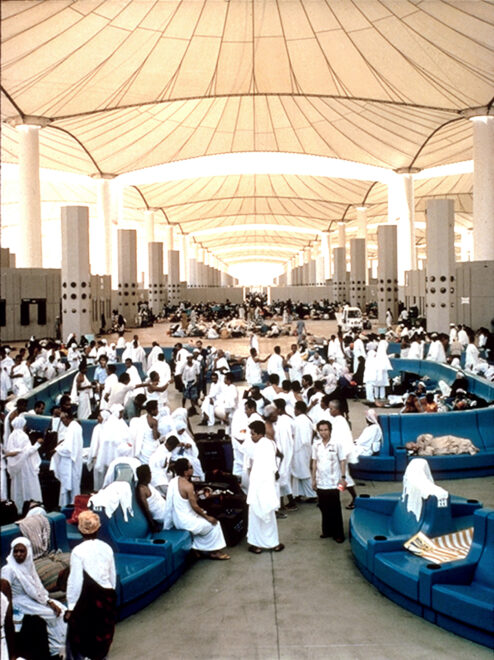
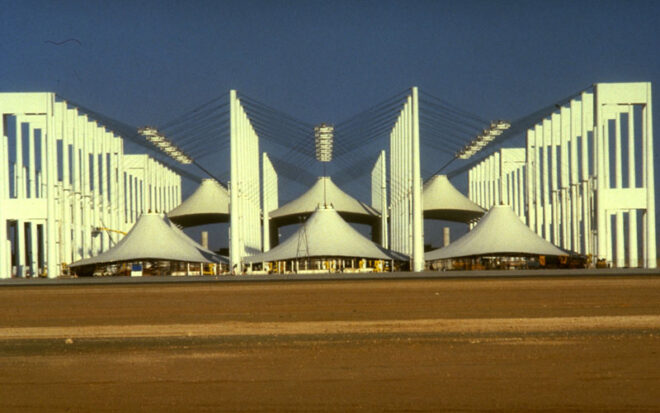
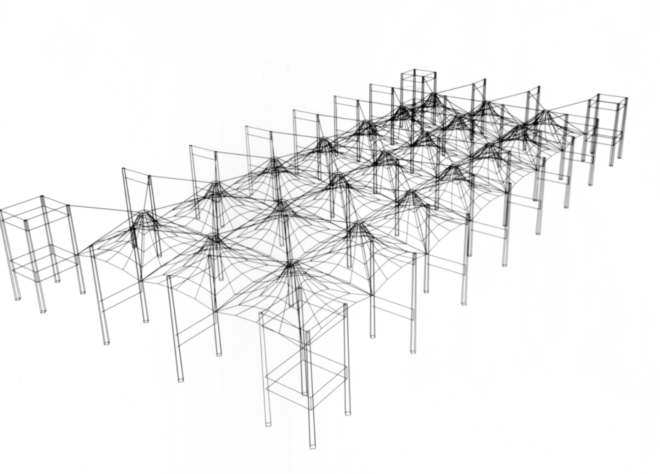
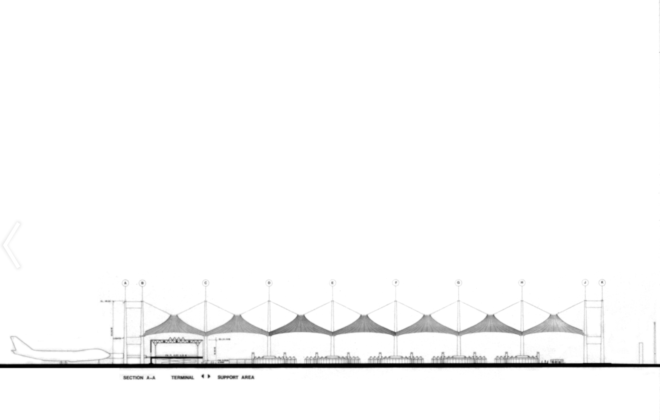
Hajj Terminal, Jedda Saudi Arabia, the 6-week terminal at Abdul Aziz Airport built by Skidmore, Owings and Merrill, a Chicago-based architectural firm. It stands the test of time as a green gem.
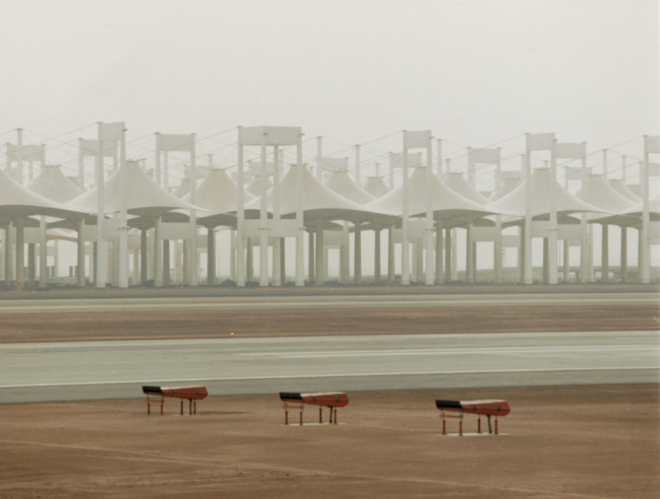
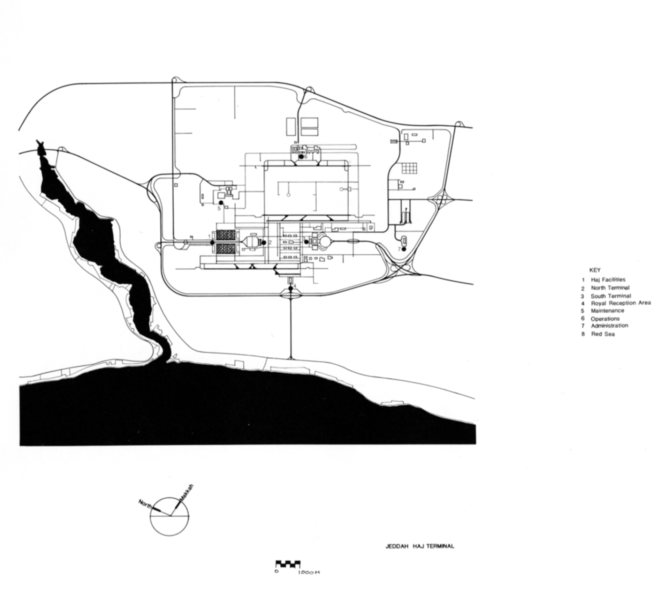
Dozens of gleaming white tents form a bold roofline covering 120 acres of passenger services; sustainable magnificence created by visionary architects Skidmore, Owings & Merrill over thirty years ago. Located in Jeddah’s King Abdulaziz International Airport in Saudi Arabia, the terminal serves as a temporary city for millions of pilgrims destined for Mecca to take part in the annual Hajj.
The world’s 1.7 billion Muslims are all encouraged to undertake the pilgrimage, and approximately 0.01 percent heed the call each year. With increasingly accessible air travel, the number of hajjis – or pilgrims – grows annually, now over 1.5 million.
A human tide rolls into the airport as pilgrims fly in from around the world before travelling by road to the holy cities of Mecca and Medina. The crush returns as Hajj concludes. The entire cycle occurs in a matter of weeks.
Crowd dynamics in Mecca led to stampedes in 2004 and 2005, killing 244 and 360 people, respectively. Safe and efficient handling of this eclectic population is a logistical challenge with critical risks.
Terminal plans hatched in the mid-‘60’s were mothballed in the decade after the 1967 Six Day War.
In 1974, SOM’s superstar design team led by Bengalese-born engineer Fazlur Kahn and American architect Gordon Bunshaft resumed work on the terminal, part of an ambitious airport Master Plan. Initially designed as a fully enclosed building (Edward Durrell Stone, modern architecture legend, consulted during early planning), this new design team had a flash of contextual insight and determined that a traditional air-conditioned terminal wasn’t ideal for the desert site, nor for the unique passenger demographic.
They played with Arabian imagery of desert tents, billowing fabric. In the wake of the moonwalk, they experimented with space-age materials. Tent-like shapes, made of Teflon-coated fiberglas (resistant to heat, humidity and sun-damage), suggested an open-air environment. Kahn’s radically innovative structural design allowed for long-span open spaces.
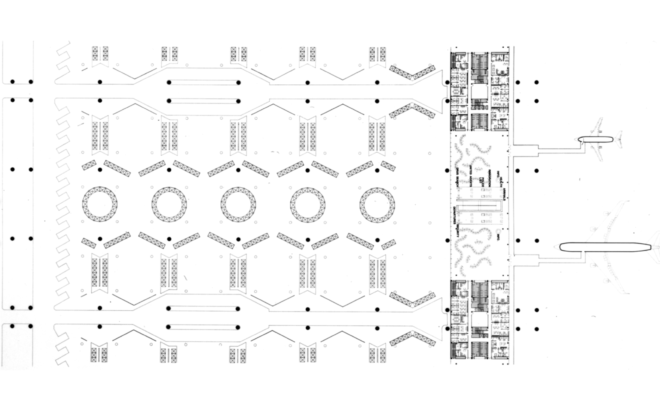
Two symmetrical sections of tent “modules”, framed by towering pylons, are separated by a landscaped mall. Steel cables weave between the elements, suspending the tents and eliminating clunky roof supports. The tents cover the air-conditioned arrival buildings, sited along terminal edges and housing security, check-in, toilets and shops.
The tents are the showstopper, capable of accommodating 80,000 people at any time.
The white tents deflect heat and diffuse natural daylight into interiors. Their conical shape creates a chimney effect, cooling interiors with minimal mechanical assistance. When outside air burns at 120 degrees F, inside stays a balmy 75.
The designers understood these travelers’ needs. Tucked below the tents is a mosque. And gathering areas where pilgrims can meet their tour groups. There are private spaces for changing into ritual garments and performing ablutions. Travellers trade goods along the pilgrimage route and seek mementos of their Arabian experience, so SOM integrated a traditional market (souk) into the design.
Completed in 1981, the Hajj Terminal received that year’s Progressive Architecture award. In 1983 it scored an American Institute of Architects (AIA) National Honor Award and the 1983 Aga Khan Award for Architecture. In 2009, it received the AIA Twenty-Five Year award for its architectural design of “enduring significance”.
The AIA explained, “This project exemplifies the power of a clear idea. With a very simple bay repeated quite beautifully, they set the standard for many airports since.
“The architects created a highly sustainable project well ahead of the green movement. The terminal presents a sense of place, ecology, economy of means, and culture – not imposing on but learning from the local culture and environment. The brilliant and imaginative design of the roofing system met the awesome challenge of covering this vast space with incomparable elegance and beauty.”
Airport terminals evolve. Functional hangers to protect travelers from weather have morphed into ersatz shopping malls. A place to check luggage, then navigate increasingly difficult security hurdles. Run the gauntlet of duty-free; grab an overpriced bite; conduct impromptu business via wireless gadgetry; and eventually board a flight. Terminals have become a car-to-plane conduit, designed so we shop every step of the way. Can you name a new terminal that provides a real sense of place?
Last week, Frommers.com named this aviation old-timer as one of the best terminals in the world, based on stellar performance in key operational metrics such as on-time departures, cleanliness, and ease of travel to and from city center.
High functionality coupled with environmental smarts, wrapped in a gorgeous skin: Hajj Terminal is a timeless beauty.
Watch the vintage film on the creation of the Hajj Terminal
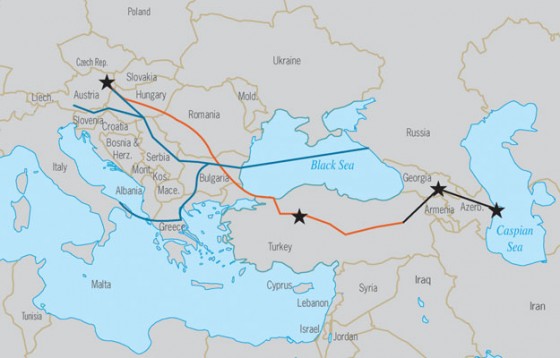
The Nabucco natural gas pipeline (in orange) was designed to lessen eastern Europe’s dependence on Russia’s sometimes unreliable gas supply. But Russia’s South Stream pipeline project (in blue) now seems more likely to be built.
A 2,400-mile pipeline transporting 30 million cubic meters from central Asia to Austria each year. That was the plan when the European Union designed the Nabucco gas pipeline in 2009 as part of its Southern Gas Corridor initiative for enhanced energy security throughout Europe.
Turkey’s cooperation in the project was vital, given its central location between the gas-producing central-Asian ‘stans and the gas-hungry nations of eastern Europe. But now it appears that Turkey is favoring alternate routes instead, including a gas pipeline by Russia — the very nation whose gas supply Nabucco was designed to bypass.
According to Jewish tradition, it’s the day on which each tree is judged as to the amount of water it will receive over the year. It’s also the cut-off date when determining the age of the tree. As man is compared to “the tree of the field,” Tu B’Shvat is a good day to inaugurate ecology studies.
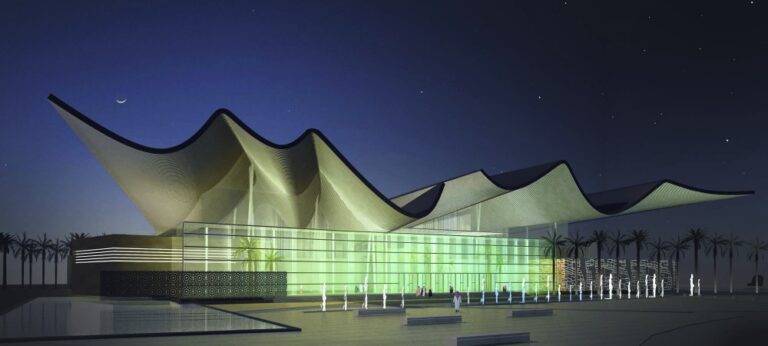
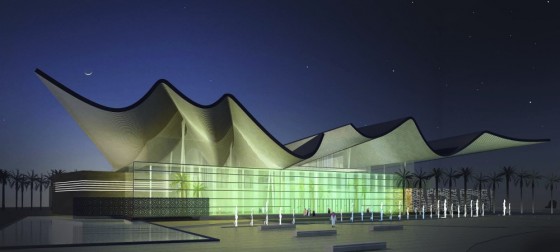
Studio Schiattarella and Tecturae’s winning proposal for the Celebration Hall of Riyadh distorts true Bedouin values.
It is common in Middle Eastern design to evoke images of a more sustainable past in order to justify a less sustainable present, and nowhere is this more true than in Saudi Arabia. The winning proposal for the Celebration Hall of Riyadh submitted by Studio Schiattarella and Tecturae has used the symbolism of a Bedouin Tent “as a starting point the “signs” of the Saudi cultural identity, or rather the formal elements that represent it symbolically.” But given its huge wealth and consistently obese architecture projects, we have to ask: what true Bedouin values do the Saudis continue to display today?

 This creamy vegan rice dish, dotted with little chunks of aromatic asparagus, satisfies the taste for something substantial and savory.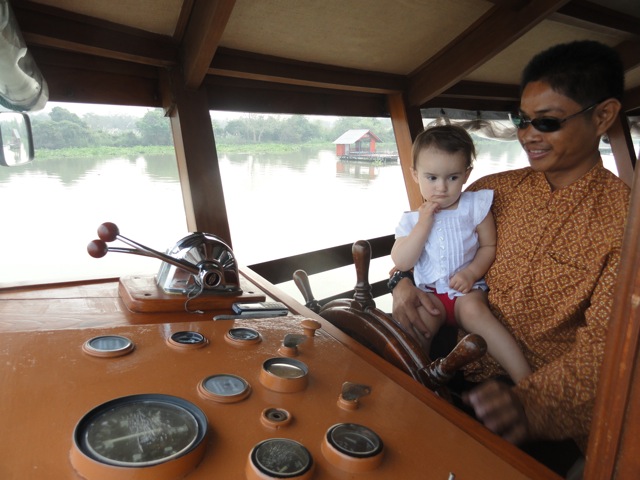





 Hajj Terminal, Jedda Saudi Arabia, the 6-week terminal at Abdul Aziz Airport built by Skidmore, Owings and Merrill, a Chicago-based architectural firm. It stands the test of time as a green gem.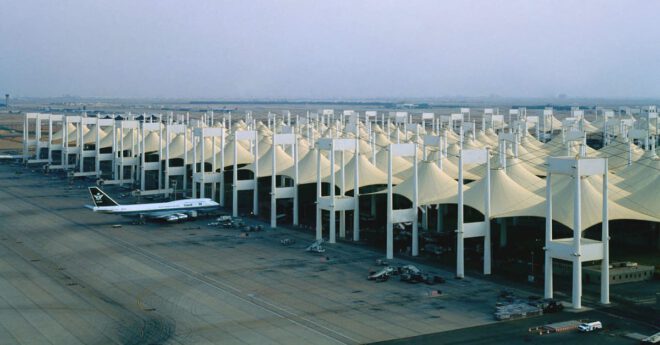

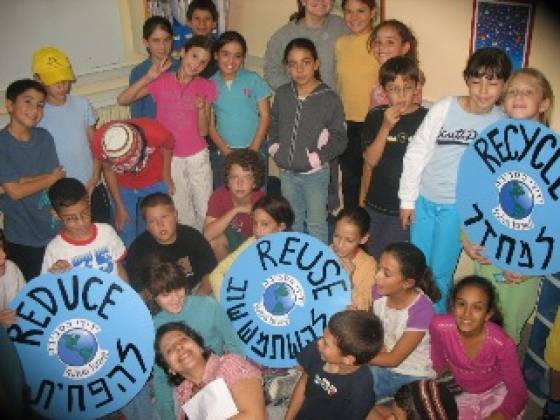
 The 15th day of the Jewish month of Shavat signals the launching of new Jewish eco-education programs.