Adults who are 21 or older can carry up to 30 grams. This amount applies to personal use within Pittsburgh’s limits. Carrying more could lead to confiscation or legal action. Staying under the limit avoids problems during any public stop.
In the study, the scientists didn’t just test one plant compound at a time. They tested two traditional Chinese medicine compounds together — luteolin (from flowers like honeysuckle and chrysanthemum) and astragaloside IV (from astragalus root, Huang Qi). These plants have been combined in Chinese herbal formulas for centuries to help the body recover from injury and inflammation.
A new collaboration between luxury brand Coach and textile reuse pioneer Bank & Vogue attempts to stitch those two worlds together: high fashion and the global textile waste stream.
Stepping up to democratize the moon is an EU-funded company, Deep Space Energy, which has just raised more than $1 million USD as a seed fund to help it create energy generators on the moon.
Adults who are 21 or older can carry up to 30 grams. This amount applies to personal use within Pittsburgh’s limits. Carrying more could lead to confiscation or legal action. Staying under the limit avoids problems during any public stop.
In the study, the scientists didn’t just test one plant compound at a time. They tested two traditional Chinese medicine compounds together — luteolin (from flowers like honeysuckle and chrysanthemum) and astragaloside IV (from astragalus root, Huang Qi). These plants have been combined in Chinese herbal formulas for centuries to help the body recover from injury and inflammation.
A new collaboration between luxury brand Coach and textile reuse pioneer Bank & Vogue attempts to stitch those two worlds together: high fashion and the global textile waste stream.
Stepping up to democratize the moon is an EU-funded company, Deep Space Energy, which has just raised more than $1 million USD as a seed fund to help it create energy generators on the moon.
Adults who are 21 or older can carry up to 30 grams. This amount applies to personal use within Pittsburgh’s limits. Carrying more could lead to confiscation or legal action. Staying under the limit avoids problems during any public stop.
In the study, the scientists didn’t just test one plant compound at a time. They tested two traditional Chinese medicine compounds together — luteolin (from flowers like honeysuckle and chrysanthemum) and astragaloside IV (from astragalus root, Huang Qi). These plants have been combined in Chinese herbal formulas for centuries to help the body recover from injury and inflammation.
A new collaboration between luxury brand Coach and textile reuse pioneer Bank & Vogue attempts to stitch those two worlds together: high fashion and the global textile waste stream.
Stepping up to democratize the moon is an EU-funded company, Deep Space Energy, which has just raised more than $1 million USD as a seed fund to help it create energy generators on the moon.
Adults who are 21 or older can carry up to 30 grams. This amount applies to personal use within Pittsburgh’s limits. Carrying more could lead to confiscation or legal action. Staying under the limit avoids problems during any public stop.
In the study, the scientists didn’t just test one plant compound at a time. They tested two traditional Chinese medicine compounds together — luteolin (from flowers like honeysuckle and chrysanthemum) and astragaloside IV (from astragalus root, Huang Qi). These plants have been combined in Chinese herbal formulas for centuries to help the body recover from injury and inflammation.
A new collaboration between luxury brand Coach and textile reuse pioneer Bank & Vogue attempts to stitch those two worlds together: high fashion and the global textile waste stream.
Stepping up to democratize the moon is an EU-funded company, Deep Space Energy, which has just raised more than $1 million USD as a seed fund to help it create energy generators on the moon.
Adults who are 21 or older can carry up to 30 grams. This amount applies to personal use within Pittsburgh’s limits. Carrying more could lead to confiscation or legal action. Staying under the limit avoids problems during any public stop.
In the study, the scientists didn’t just test one plant compound at a time. They tested two traditional Chinese medicine compounds together — luteolin (from flowers like honeysuckle and chrysanthemum) and astragaloside IV (from astragalus root, Huang Qi). These plants have been combined in Chinese herbal formulas for centuries to help the body recover from injury and inflammation.
A new collaboration between luxury brand Coach and textile reuse pioneer Bank & Vogue attempts to stitch those two worlds together: high fashion and the global textile waste stream.
Stepping up to democratize the moon is an EU-funded company, Deep Space Energy, which has just raised more than $1 million USD as a seed fund to help it create energy generators on the moon.
Adults who are 21 or older can carry up to 30 grams. This amount applies to personal use within Pittsburgh’s limits. Carrying more could lead to confiscation or legal action. Staying under the limit avoids problems during any public stop.
In the study, the scientists didn’t just test one plant compound at a time. They tested two traditional Chinese medicine compounds together — luteolin (from flowers like honeysuckle and chrysanthemum) and astragaloside IV (from astragalus root, Huang Qi). These plants have been combined in Chinese herbal formulas for centuries to help the body recover from injury and inflammation.
A new collaboration between luxury brand Coach and textile reuse pioneer Bank & Vogue attempts to stitch those two worlds together: high fashion and the global textile waste stream.
Stepping up to democratize the moon is an EU-funded company, Deep Space Energy, which has just raised more than $1 million USD as a seed fund to help it create energy generators on the moon.
Adults who are 21 or older can carry up to 30 grams. This amount applies to personal use within Pittsburgh’s limits. Carrying more could lead to confiscation or legal action. Staying under the limit avoids problems during any public stop.
In the study, the scientists didn’t just test one plant compound at a time. They tested two traditional Chinese medicine compounds together — luteolin (from flowers like honeysuckle and chrysanthemum) and astragaloside IV (from astragalus root, Huang Qi). These plants have been combined in Chinese herbal formulas for centuries to help the body recover from injury and inflammation.
A new collaboration between luxury brand Coach and textile reuse pioneer Bank & Vogue attempts to stitch those two worlds together: high fashion and the global textile waste stream.
Stepping up to democratize the moon is an EU-funded company, Deep Space Energy, which has just raised more than $1 million USD as a seed fund to help it create energy generators on the moon.
Adults who are 21 or older can carry up to 30 grams. This amount applies to personal use within Pittsburgh’s limits. Carrying more could lead to confiscation or legal action. Staying under the limit avoids problems during any public stop.
In the study, the scientists didn’t just test one plant compound at a time. They tested two traditional Chinese medicine compounds together — luteolin (from flowers like honeysuckle and chrysanthemum) and astragaloside IV (from astragalus root, Huang Qi). These plants have been combined in Chinese herbal formulas for centuries to help the body recover from injury and inflammation.
A new collaboration between luxury brand Coach and textile reuse pioneer Bank & Vogue attempts to stitch those two worlds together: high fashion and the global textile waste stream.
Stepping up to democratize the moon is an EU-funded company, Deep Space Energy, which has just raised more than $1 million USD as a seed fund to help it create energy generators on the moon.
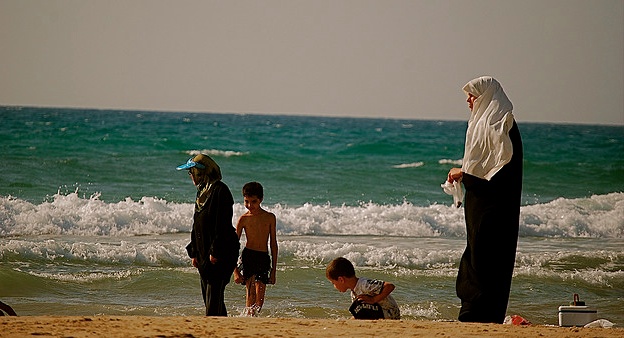
The arid Middle Eastern desert climate offers little in the way of natural resources. But it does boast of brilliant and fierce sunlight.
In a continuing effort to reach the goal of 10% renewable power by 2020, Israel has recently been issuing a slew of new solar licences, including a 120 MW thermal solar plant that will be built outside Kibbutz Zeelim and a 60 MW thermal solar plant to be constructed outside Kibbutz Mashabei Sadeh, both located in the Negev Desert and estimated to be operational by 2014.
It’s official: Zaha Hadid is going to design the new Central Bank of Iraq’s Headquarters; Tafline argues that it should be green.
Zaha Hadid is widely celebrated for her incredible, untethered design, but less so for her environmental sensibilities. So when we learned that the deal to design a major project for her home country, the Central Bank of Iraq’s Headquarters, is now official, we went looking for the slightest sign that this project might be at least a little bit green. Very few details have been revealed except a huge team of mostly mainstream engineers and consultants, but at least one firm involved in the project seems to recognize the importance of smart and sustainable design – Arup.
This edible leaf is shooting up all over the Middle East right now. Ask for marmia in Arab markets.
To celebrate the emergence of winter’s wild greens, here is a vegan recipe featuring a Middle Eastern specialty: Jerusalem Sage.
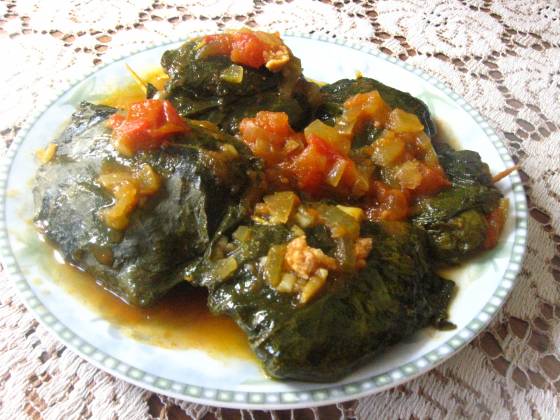
Jerusalem sage
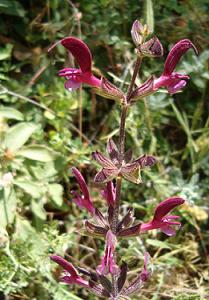
Wild, edible Salvia hierosolymitana has dark-pink or reddish flowers and is not the same as the decorative garden plant, Phlomis fruticosa. Both are called Jerusalem Sage in English, but the yellow-flowering Phlomis fruticosa isn’t eaten. To see the edible Middle Eastern Jerusalem Sage in flower, the one which can be eater, see the photo below.
The leaf may be chopped and added to soups or stews as a pot herb, but the most delicious way to eat it is stuffed with rice and vegetables, enriched with a tomato sauce. If Jerusalem Sage isn’t available, you may substitute mallows, found in fields with ethical foraging – or Swiss chard, if convenient.
Find Jerusalem sage in Cyprus, Israel, Jordan, Lebanon, Syria, and the West Bank. It typically grows in open fields, rocky soils, and among low-growing native shrubs. It was first described in 1853 by botanist Pierre Edmond Boissier, with the epithet “hierosolymitana” referring to “royal, sacred Jerusalem”.
Male digger bee (Anthophora dufourii) pollinating Salvia hierosolymitana, Mount Carmel, Israel
Stuffed Jerusalem Sage Recipe
Ingredients:
500 grams – 1 Ib. fresh Jerusalem Sage leaves
1 1/2 cup rice
1/2 cup pine nuts
1/4 cup olive oil
1/2 green bell pepper, finely chopped
1/2 cup onions, finely chopped
1 cup seeded, chopped tomatoes
1/2 cup chopped parsley
1 1/2 teaspoon salt
1/2 teaspoon black pepper
Another 1/4 cup olive oil
1/2 cup lemon juice
1/2 cup water and more if needed
1 large tomato, thickly sliced
Cloves from 1 head of garlic, separated and peeled
Rinse the rice and set it to drain. Blanch the leaves by placing each in boiling water for 30 seconds, then putting into a bowl with cold water.
Mix the rice and pine nuts in a medium bowl. Heat 1/4 cup olive oil in a frying pan and cook the bell pepper, onions, parsley and chopped tomatoes in it over medium heat for 5 minutes, stirring a few times. Season with salt and pepper to taste. When the vegetables are softened, reserve 3 tablespoons and set aside. Pour the rest into the rice/pine nuts mixture. Mix well.
Spoon one tablespoon of filling onto the center of each leaf and make a square bundle, securing it with a toothpick. Alternately, place the filling on the broad end of the leaf and roll it into a fat cigar. Secure with a toothpick.
Pour 1/4 cup olive oil into a large pot. Cover the bottom of the pot with sliced tomato and peeled garlic cloves. Place the stuffed leaves on top, making layers if needed. Sprinkle salt and lemon juice over all; add water to barely cover the leaves. Scatter the reserved cooked vegetables over the top. Bring to a simmer then cook, covered, over low heat 1/2 hour or until sauce thickens. Check once or twice to make sure the bottom layer isn’t drying out or scorching.
MIT researchers say that soon all we’ll need to harvest our vast solar resource is grass and stabilizing powder.
While Masdar and Suntech and other solar energy projects are laboring under expensive, high-tech materials in order to improve their energy-absorbing capability, MIT researchers in the United States are taking a different approach: using grass. (No, not that grass. Our articles on cannabis can be found here.)
They realized that nothing in nature absorbs energy as well as plants, so they have developed a solar technology that combines a small amount of grass (or other agricultural waste), a stabilizing powder made of zinc oxide and titanium oxide, and a glass or metal substrate which mimics the photosynthesis process. Eventually their technology will be so simple that anybody will be able to make their own solar panels for next to nothing. See our DIY solar panels pros and cons to know if setting up solar on your own is for you.
Photosynthesis packed for DIY home solar kits
According to the folks at Fastco Design, the MIT researchers have discovered how to “chemically stabilize plant-derived photosystem-I (PS-I), the structures inside plant cells that perform photosynthesis, on a substrate that creates electric current when exposed to light–all using readily-available materials.”
This solar cell then isolates PS-1 molecules and eventually carries an electrical current with the stabilizing powder.
So, instead of massive solar-panel producing factories that require a lot of natural materials, MIT’s technology could literally be packed in a small plastic bag and shipped off to anyone who wants to make their own solar panels at home.
DIY panels for anyone
If DIY enthusiasts can get their hands on a few grass clippings or other greenery and the substrate, then MIT only needs to ship out the zinc and titanium oxide and instructions for creating energy from this unlikely mix and a solar panel has been made.
Eventually, according to Andreas Mershin, people will be able to mix everything together and create a paint that can be applied to their roof. But there is a catch. At the moment, this technology doesn’t even have a 2% efficiency rate yet. But it will, and even that is plenty efficient given the small amount of resources necessary to create it.
This is what we call putting the sun’s power into the hands of the people. One day we won’t have to rely on the big money folks in order to have a little light in our homes.
Next Wednesday activists will hold a public forum to democratically demand access to the Horsh Beirut urban park.
In 1696, the Horsh Beirut Pine forest used to be as large as 1,250,000 square meters but the Crusaders, Mamluks, Ottomans, and World War II allies each took their turn plundering its timber in order to build ships and weapons. Further damage has been done since then to such an extent that today one of the only urban parks in this concrete jungle has shrunk to a mere 255,000 square meters. Although significantly smaller than it once was, Horsh Beirut could still offer residents of Beirut a retreat from the city smog – if the city hadn’t denied access to it for the last two decades. Activists are now speaking out against what they say is a denial of their inalienable rights.
A powerful short film by Iranian-Canadian filmmaker Raha Shirazi, Acqua will make you look at water with new eyes.
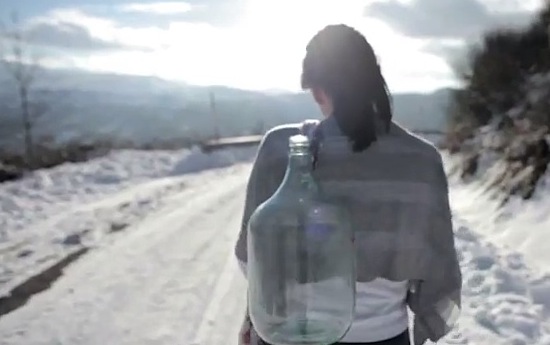
Raha Shirazi’s film Acqua is almost guaranteed to make you never take water for granted again. In it, a woman walks through snow in search of water with a jar on her back. Everywhere there is water, but after reaching a specific destination, she experiences some kind of trauma that especially resonates with us given our region’s tremendous water scarcity.
“In both Iran, and where I was in Italy, a long time ago women would travel from their village to bring back water,” Shirazi told Twitch Film. “Fetching water was always a woman’s job. Even now for purpose of vigil in these areas, women travel to a specific place and bring back water,” she added. Take a look at this beautiful film clip and let us know if it makes you re-evaluate your relationship to water.
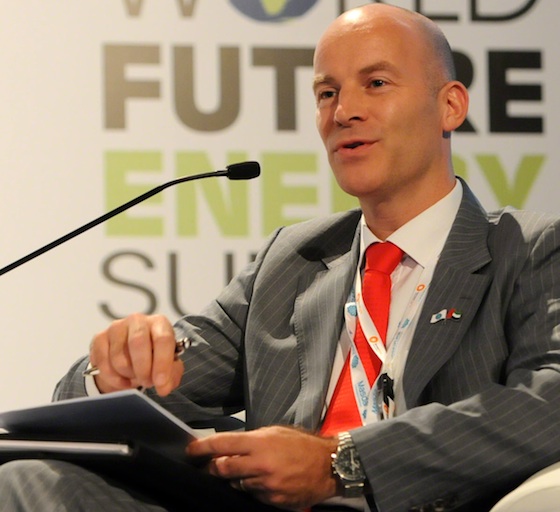
Frank Wouters of Masdar Power at Abu Dhabi’s World Future Energy Summit.
With its first large scale solar farm expected to be operational by August, Masdar is now about to construct its second utility-scale solar project in the UAE, the 100 MW Nour 1. The first, Shams 1, used concentrated solar-thermal power (CSP) technology, that drives a steam turbine with a solar-heated liquid. The second, Nour 1, is to use solar PV panels, that convert sunlight into electricity directly with photo-voltaics (PV).
But the companies that have bid to help build its second large-scale solar power plant must source half of their panels from Masdar, Abu Dhabi’s own clean-energy company.China’s Suntech, the leading solar PV manufacturer globally, is among the half a dozen bidders for Nour 1. Fourteen companies had been pre-qualified in July.
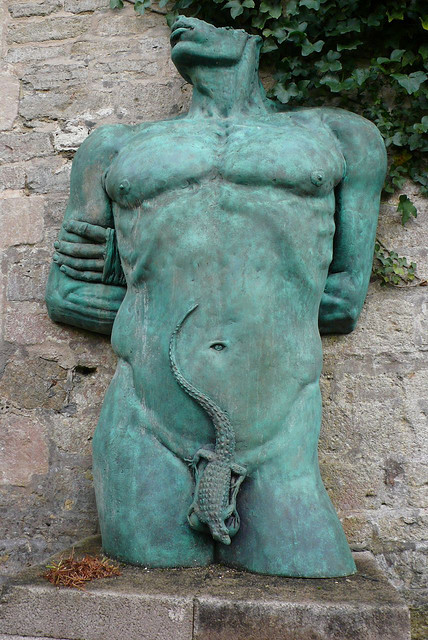
Ultrasounds are routinely used in prenatal care in women. New research suggests his testes could be next on the agenda. The lizard look is optional.
Researchers have been exploring a male birth control pill, but with the exception of condoms, vasectomies or coitus interuptus – each with varying success rates and not necessarily halal depending on religious leanings – birth control for men is still limited. A new study may be changing that. Goodbye unplanned pregnancies, hello ultrasound testes ‘zapper.’
It may not be painful and offers potentially better results with greater flexibility than current contraception options for men. Warning: Do not try this at home, with your laptop or other source of radiation exposure.
Join the debate: is the world’s first all-women falconry association in Qatar a bad idea?
Falconry is a time-honored tradition in the Gulf, but like more recent sports such as race-car driving and rugby, it is a male-dominated sport. So when the Katara cultural village in Qatar recently announced the launch of the world’s first female falconry association, both men and women issued ridiculed the move.
Women and hunting don’t go together
HE Sheikh Joan bin Hamad bin Khalifa Al Thani is hosting the 3rd Qatar International Falconry and Hunting celebrations at the Sabkha Marmi Sealine in Doha, Qatar. Festivities conclude tomorrow, but not without a controversial bang.
Today Katara formally announced the inauguration of the new all-women venture, which will include conferences and competitions designed at preserving the country’s falconry heritage.
But many people argue that women and hunting don’t go together and never have, Gulf News reports.
Women and falcons against tradition
“This is against our traditions, and engaging in this exclusively male sport will make people scoff at us,” a Facebook user wrote, quoted by Al Rayah – an Arabic daily in Qatar. “It is a waste of public funds and our women are going to behave like men,” said another.
These protests came in response to the idea that in order to engage in falconry, women would have to spend days in the desert (instead of the kitchen?)
Hessa Al Meftah, the head of public relations at the Qatar Foundation for the Protection of Women and Children, told the paper that creating a female falconry association is “laughable.” “It has always been known since time immemorial that falconry is for men only,” she told Al Rayah.
“Our grandmothers have been involved with men in almost everything, but history does not record a single case of a woman engaged in falconry,” she added.
Women have better things to do than falconry
Social activist Leena Al Dafie told the daily that women have better interests than falconry and that more time should be spent protecting Qatar’s society and traditions.
Our own Green Sheikh recently honored the United Arab Emirates’ former president Sheikh Zayed Bin Sultan Al-Nahyan who loved falconry for the role it played in his country’s rich cultural history. Can this legacy – traced to ancient Bedouins who relied on the birds of prey to help them hunt – withstand the introduction of women?
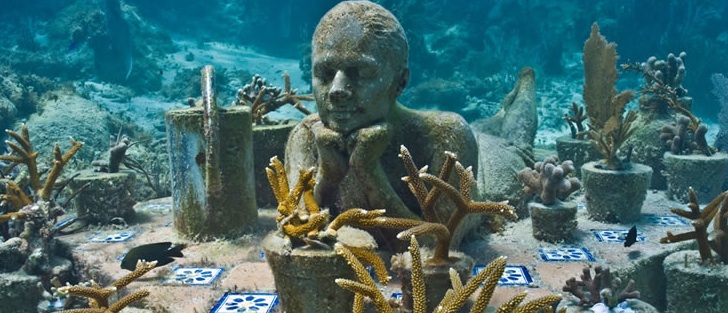
Jason deCaires Taylor uses eco art to conserve a fragile ecosystem
See a starfish caress a schoolgirl’s cheek as she holds hands with the boy with the algae beard. Watch a baby shark swirl‘round that Beetle parked curbside to coral and lobsters. Underwater, everything’s magnified. Changing currents and depths cause kaleidoscopic effects. Dive in next season and all will be changed. Jason deCaires Taylor creates underwater eco-art: offering “eerie encounters where art evolves from the effects of nature on the efforts of man”. Taylor works with marine biologists to create site-specific, underwater sculpture parks that double-duty as artificial coral reefs.
Adventures in Lebanon is offering a Valentine’s Day snowshoeing tour that is bound to heat up this special day!
Valentine’s Day is just around the corner and if you’re anything like us, you’re scratching your head looking for fun-loving things to do that don’t involve diabetes-inducing chocolate and environmentally destructive flowers. Why not treat your special sweetie to an awesome snowshoeing tour offered by Adventures in Lebanon?
Not only will you have plenty of excuses to snuggle up to stay warm, setting off all kinds of love chemicals, but you’ll burn off so many calories that you don’t have to feel guilty about closing the night with a wonderful meal back in Beirut.
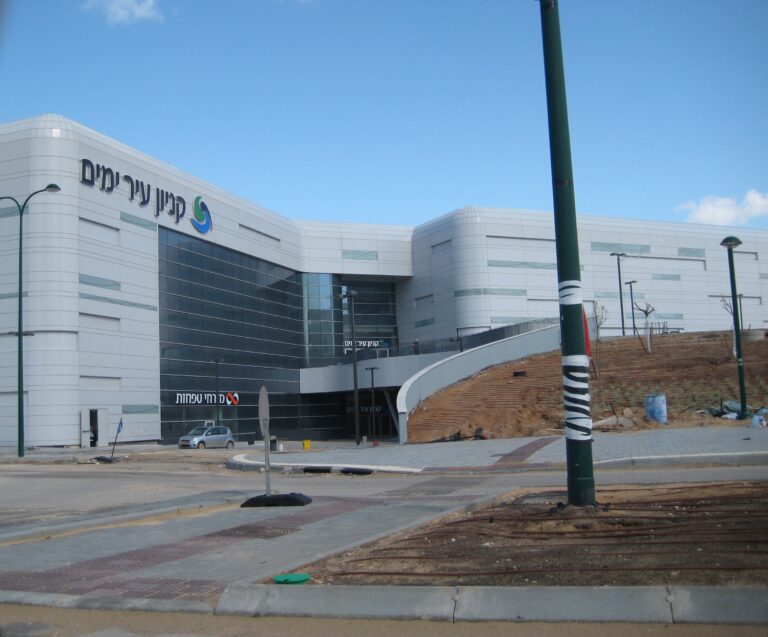
A green shopping mall is not green if its AC sounds like a jet liner taking off
When previous articles of making shopping malls more sustainable and green, such as Amman Jordan’s new Mega Mall, were posted, it appeared that these large enclosed shopping centers are on the right track to becoming more environmentally friendly. The use of energy saving LEED lighting in super glitzy malls such as those in Dubai may also be showing ways to provide adequate lighting at considerably less environmental risks.
Israel’s soon to be opened Ir Yamim (Sea City) shopping Mall, hailed as being the country’s first “green” shopping mall, was also given a considerable amount of kudos by me. But now it may be that this so-called “green shopping mall” may not be as green after all.
Founded by a retired biologist who supplied cancer patients with home-grown marijuana, Tikun Olam farm grows the herb and gives guidance to people disabled by pain.
We may associate growing marijuana with furtive operations and police raids, but in Israel there are at least seven facilities authorized to grow the herb for medicine. See our recent post on Israel’s newly-relaxed regulations on medical marijuana. And while illegal traders make big profits, Israel’s biggest authorized cannabis suppliers simply gift it to licensed patients who can’t afford to pay.
Tikun Olam is the name of the farm, and its name, which translates as “repairing the world,” reflects its idealistic origins.
Dora Cohen, a retired biologist with a big heart, began cultivating the plant in two rooms of her own home to help cancer patients. With official recognition of marijuana’s effectiveness in pain management, she and her family founded a facility with 11,000 square meters of greenhouses, automatic climate control systems, and a meteorological station.
The farm is located in an unpublicized area in the north. Police surveillance of the area is stringent, with cameras everywhere and the workers checked for smuggling. Strict safety precautions are taken when the processed marijuana is transported to patient’s homes or to Tikkun Olam’s center in Tel Aviv.
Yuval Zolotov, Tikkun Olam
When we asked the farm’s spokesperson, Yuval “Tubi” Zolotov, about visiting the farm, he explained that it entails a complicated clearing process through the police. Luckily, he gave us a good picture of medical cannabis in Israel today by phone.
Green Prophet: What’s special about medical marijuana?
Zolotov: The best-known chemical constituents of cannabis are the cannabinoids, and THC is the most famous of those. It’s the strongest one for making a person feel high. But it’s not the most important cannabinoid for medical purposes. We are working on developing other strains of cannabis with lower THC values.
Green Prophet: Do patients get high anyway?
Zolotov: Each person reacts in his/her individual way to cannabis. Our clients are sick people seeking relief from physical or psychiatric suffering. It’s an entirely different atmosphere than when a person smokes it for fun. But presumably some people do experience a mild high. On the other hand, every conventional medication for major pain relief produces side effects and dependencies. Cannabis’s are far milder.
Green Prophet: Once a person has obtained a license to buy cannabis, do they just take the cigarettes home and start smoking?
Zolotov: We provide trained guides on managing safe treatment at home. We can’t recommend dosage because every patient has an individual pain threshold which he/she must learn to manage according to need. Some patients prefer to absorb cannabis through a tincture in alcohol (administered in drops), an edible oil from the seeds, or to eat chocolate or cookies containing marijuana.
(Find Green Prophet’s recipe for Majoun marijuana candy here.)
Green Prophet: Approximately how many patients are authorized to use marijuana today?
Zolotov: It’s hard to say, because cannabis is usually issued only to patients in later stages of disease and so there are a certain number of deaths, as well as new patients, all the time. But we estimate 7000-8000 people. There are 120,000 cancer patients today in Israel; we estimate that in the future at least 40,000 of them will be using medical cannabis.
Green Prophet: Thank you, Tubi Zolotov.
More about cannabis and other drugs in the Middle East:
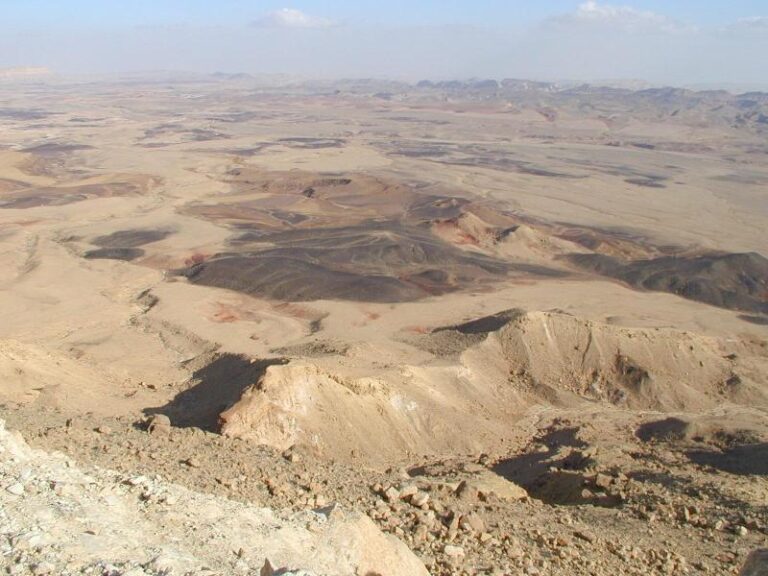
The Makhtesh Ramon Crater in Israel’s Negev desert is just one site that will be more accessible as a result of two planned rail links.
On Sunday black globe winner Prime Minister Benjamin Netanyahu announced a plan to build two new railways linking the country’s two seas – the plastic-filled Mediterranean and the Red. The 220 mile passenger train between Tel Aviv and Eilat will “link up with the periphery in a way that has not been done up until now,” he said at the weekly cabinet meeting.
A new freight route between Eilat and Ashdod just south of Tel Aviv will compete with the Suez Canal as a major trade link between Asia and Europe. Netanyahu insists that the latter “will create a very great interest on the part of Asia’s rising powers, China and India.”
The Bedouins are a group of skaters and artists who are empowering post-revolutinary Tunisian youth.
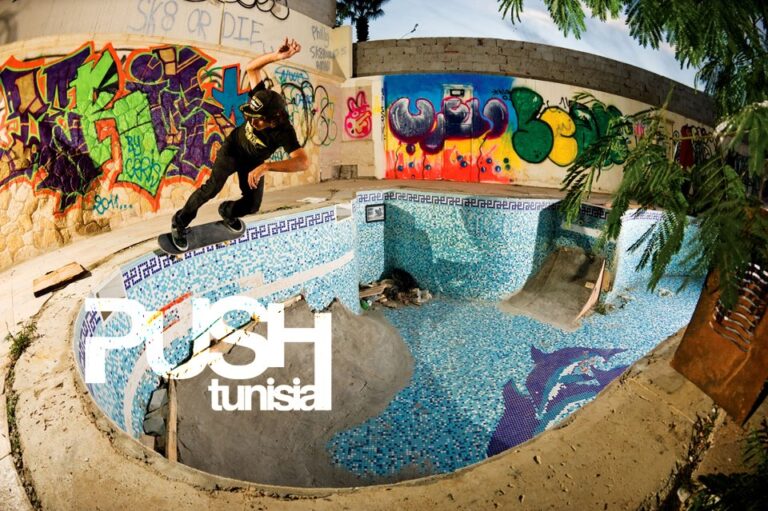
When Nathan Gray and his posse of skateboarders and street artists collectively known as “The Bedouins” were scouting out the perfect place to build a skate park in post-revolutionary Tunisia, some of the locals suggested they inhabit Imed Trabelsi’s abandoned mansion.
Once the glittering home of the country’s former Construction Minister and nephew-in-law of ousted dictator Zine El Abidine Ben Ali, the building and grounds had been trashed by protestors during the Jasmine revolution, so a team of skaters and locals set about converting the place into an inspiring skate and art park. It is also an important location for PUSH Tunisia – a documentary scheduled to make its official debut later this year.

 The arid Middle Eastern desert climate offers little in the way of natural resources. But it does boast of brilliant and fierce sunlight.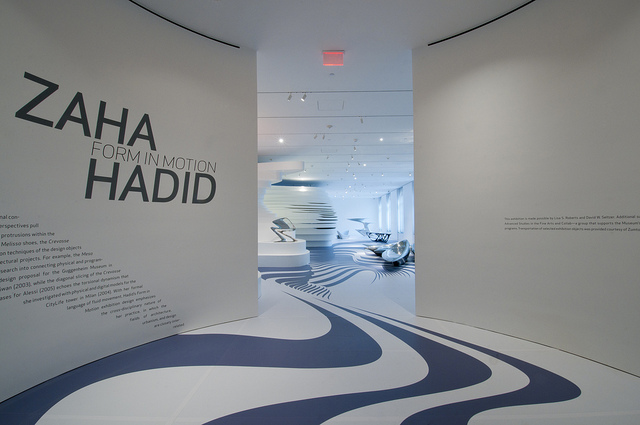







 Jason deCaires Taylor uses eco art to conserve a fragile ecosystem

 A green shopping mall is not green if its AC sounds like a jet liner taking off