“In the midst of uncertain time, renewable energy remains consistent and steadfast in its expansion,” said Francesco La Camera, IRENA’s Director-General. “A more decentralised energy system, with a growing share of renewables and more market players, is structurally more resilient.”
Health insurance is a regulated financial product. Insurers operate under binding contracts, overseen by state insurance commissioners, that legally obligate them to pay claims meeting policy terms. Policyholders who believe a covered claim was wrongfully denied have legal recourse through state regulatory channels.
The New Zealand Merino Company, now rebranded as Zentera, has quietly removed the phrase “world’s leading ethical wool brand” from its website, a notable change that comes after a disturbing investigation by PETA Asia-Pacific into the company’s ZQ-certified wool supply chain, PETA reports to Green Prophet.
Somehow vegetables with short seasons excite the imagination and appetite more sharply than produce that’s available all year around. Good Middle Eastern cooks have many recipes for delicate fava beans, and this turmeric-fragrant soup is one.
“In the midst of uncertain time, renewable energy remains consistent and steadfast in its expansion,” said Francesco La Camera, IRENA’s Director-General. “A more decentralised energy system, with a growing share of renewables and more market players, is structurally more resilient.”
Health insurance is a regulated financial product. Insurers operate under binding contracts, overseen by state insurance commissioners, that legally obligate them to pay claims meeting policy terms. Policyholders who believe a covered claim was wrongfully denied have legal recourse through state regulatory channels.
The New Zealand Merino Company, now rebranded as Zentera, has quietly removed the phrase “world’s leading ethical wool brand” from its website, a notable change that comes after a disturbing investigation by PETA Asia-Pacific into the company’s ZQ-certified wool supply chain, PETA reports to Green Prophet.
Somehow vegetables with short seasons excite the imagination and appetite more sharply than produce that’s available all year around. Good Middle Eastern cooks have many recipes for delicate fava beans, and this turmeric-fragrant soup is one.
“In the midst of uncertain time, renewable energy remains consistent and steadfast in its expansion,” said Francesco La Camera, IRENA’s Director-General. “A more decentralised energy system, with a growing share of renewables and more market players, is structurally more resilient.”
Health insurance is a regulated financial product. Insurers operate under binding contracts, overseen by state insurance commissioners, that legally obligate them to pay claims meeting policy terms. Policyholders who believe a covered claim was wrongfully denied have legal recourse through state regulatory channels.
The New Zealand Merino Company, now rebranded as Zentera, has quietly removed the phrase “world’s leading ethical wool brand” from its website, a notable change that comes after a disturbing investigation by PETA Asia-Pacific into the company’s ZQ-certified wool supply chain, PETA reports to Green Prophet.
Somehow vegetables with short seasons excite the imagination and appetite more sharply than produce that’s available all year around. Good Middle Eastern cooks have many recipes for delicate fava beans, and this turmeric-fragrant soup is one.
“In the midst of uncertain time, renewable energy remains consistent and steadfast in its expansion,” said Francesco La Camera, IRENA’s Director-General. “A more decentralised energy system, with a growing share of renewables and more market players, is structurally more resilient.”
Health insurance is a regulated financial product. Insurers operate under binding contracts, overseen by state insurance commissioners, that legally obligate them to pay claims meeting policy terms. Policyholders who believe a covered claim was wrongfully denied have legal recourse through state regulatory channels.
The New Zealand Merino Company, now rebranded as Zentera, has quietly removed the phrase “world’s leading ethical wool brand” from its website, a notable change that comes after a disturbing investigation by PETA Asia-Pacific into the company’s ZQ-certified wool supply chain, PETA reports to Green Prophet.
Somehow vegetables with short seasons excite the imagination and appetite more sharply than produce that’s available all year around. Good Middle Eastern cooks have many recipes for delicate fava beans, and this turmeric-fragrant soup is one.
“In the midst of uncertain time, renewable energy remains consistent and steadfast in its expansion,” said Francesco La Camera, IRENA’s Director-General. “A more decentralised energy system, with a growing share of renewables and more market players, is structurally more resilient.”
Health insurance is a regulated financial product. Insurers operate under binding contracts, overseen by state insurance commissioners, that legally obligate them to pay claims meeting policy terms. Policyholders who believe a covered claim was wrongfully denied have legal recourse through state regulatory channels.
The New Zealand Merino Company, now rebranded as Zentera, has quietly removed the phrase “world’s leading ethical wool brand” from its website, a notable change that comes after a disturbing investigation by PETA Asia-Pacific into the company’s ZQ-certified wool supply chain, PETA reports to Green Prophet.
Somehow vegetables with short seasons excite the imagination and appetite more sharply than produce that’s available all year around. Good Middle Eastern cooks have many recipes for delicate fava beans, and this turmeric-fragrant soup is one.
“In the midst of uncertain time, renewable energy remains consistent and steadfast in its expansion,” said Francesco La Camera, IRENA’s Director-General. “A more decentralised energy system, with a growing share of renewables and more market players, is structurally more resilient.”
Health insurance is a regulated financial product. Insurers operate under binding contracts, overseen by state insurance commissioners, that legally obligate them to pay claims meeting policy terms. Policyholders who believe a covered claim was wrongfully denied have legal recourse through state regulatory channels.
The New Zealand Merino Company, now rebranded as Zentera, has quietly removed the phrase “world’s leading ethical wool brand” from its website, a notable change that comes after a disturbing investigation by PETA Asia-Pacific into the company’s ZQ-certified wool supply chain, PETA reports to Green Prophet.
Somehow vegetables with short seasons excite the imagination and appetite more sharply than produce that’s available all year around. Good Middle Eastern cooks have many recipes for delicate fava beans, and this turmeric-fragrant soup is one.
“In the midst of uncertain time, renewable energy remains consistent and steadfast in its expansion,” said Francesco La Camera, IRENA’s Director-General. “A more decentralised energy system, with a growing share of renewables and more market players, is structurally more resilient.”
Health insurance is a regulated financial product. Insurers operate under binding contracts, overseen by state insurance commissioners, that legally obligate them to pay claims meeting policy terms. Policyholders who believe a covered claim was wrongfully denied have legal recourse through state regulatory channels.
The New Zealand Merino Company, now rebranded as Zentera, has quietly removed the phrase “world’s leading ethical wool brand” from its website, a notable change that comes after a disturbing investigation by PETA Asia-Pacific into the company’s ZQ-certified wool supply chain, PETA reports to Green Prophet.
Somehow vegetables with short seasons excite the imagination and appetite more sharply than produce that’s available all year around. Good Middle Eastern cooks have many recipes for delicate fava beans, and this turmeric-fragrant soup is one.
“In the midst of uncertain time, renewable energy remains consistent and steadfast in its expansion,” said Francesco La Camera, IRENA’s Director-General. “A more decentralised energy system, with a growing share of renewables and more market players, is structurally more resilient.”
Health insurance is a regulated financial product. Insurers operate under binding contracts, overseen by state insurance commissioners, that legally obligate them to pay claims meeting policy terms. Policyholders who believe a covered claim was wrongfully denied have legal recourse through state regulatory channels.
The New Zealand Merino Company, now rebranded as Zentera, has quietly removed the phrase “world’s leading ethical wool brand” from its website, a notable change that comes after a disturbing investigation by PETA Asia-Pacific into the company’s ZQ-certified wool supply chain, PETA reports to Green Prophet.
Somehow vegetables with short seasons excite the imagination and appetite more sharply than produce that’s available all year around. Good Middle Eastern cooks have many recipes for delicate fava beans, and this turmeric-fragrant soup is one.
Groq and Saudi Arabia: Harnessing AI to Revolutionize Sustainability and Save the Planet
Groq, a Silicon Valley AI pioneer and an OurCrowd portfolio company, is playing a crucial role in advancing artificial intelligence and contributing to sustainability efforts through its cutting-edge technology. The company recently secured a $1.5 billion commitment from the Kingdom of Saudi Arabia, aimed at expanding its AI infrastructure and meeting the rapidly growing demand for computing power worldwide.
This investment follows Groq’s success in establishing the region’s largest AI inference cluster in December 2024, a monumental achievement completed in just eight days. From its state-of-the-art data center in Dammam, Saudi Arabia, Groq is now delivering market-leading AI capabilities to customers globally via GroqCloud.
The AI infrastructure Groq is advancing has significant potential to drive sustainability initiatives across various sectors. For example, AI is already being used to optimize energy efficiency, reduce waste, and enhance renewable energy systems. With Groq’s advanced computing power, these technologies can be scaled up and accelerated, helping to minimize carbon footprints and reduce energy consumption.
How artificial intelligence can help the planet
Groq’s ability to handle immense computational loads is crucial for improving renewable energy management, such as optimizing energy storage, balancing supply and demand, and predicting weather patterns that impact energy production.
In agriculture, AI-driven solutions can help optimize water use, reduce pesticide dependence, and increase crop yields, making farming more sustainable. Groq’s technology can enhance these models by processing large amounts of data at faster speeds, leading to more efficient and environmentally friendly farming practices. Furthermore, AI can play a pivotal role in carbon capture and storage technologies by improving their efficiency and monitoring emissions, helping companies reduce CO2 output.
AI also aids in climate modeling and forecasting, providing better predictions of extreme weather events and sea level rise. These predictions can inform decision-making and resource allocation for climate adaptation strategies. Additionally, AI-powered waste management systems, which are capable of automating the sorting of recyclable materials and optimizing waste collection, can further help reduce environmental impact.
Groq’s groundbreaking AI infrastructure, backed by Saudi Arabia’s investment, not only strengthens the Kingdom’s position as a global leader in AI but also amplifies the potential for AI to contribute to a more sustainable future. By leveraging AI to enhance sectors like energy, agriculture, and waste management, Groq is helping create tangible solutions for environmental challenges, demonstrating that innovation and sustainability can go hand in hand.
The Clore Garden of Science at the Weizmann Institute in Rehovot, is the largest outdoor science park in the world. While it was once a naive and simple, an interactive series of science exhibits for kids has been upgraded since June 2024. The park, inside the world famous Weizmann Institute of Science, and where Einstein once roamed, has undergone significant renovations, introducing several new exhibits that focus on sustainability: such as bamboo treehouses and how to grow food using hydroponics.
The bamboo treehouse is beautiful and shows us how adaptable this sustainable material is for building.
It’s a good day outing with kids under 12 and expect to spend a few hours there as the kids can safely explore the interactive exhibits that encourage play and climbing. An affordable cafe offering lunch means you don’t need to pack a lunch but if you do, there are plenty of tables throughout the park for sitting and eating. Do order tickets in advance.
What you can find at the exhibit, updated in June 2024.
Andoor Science Center: A modern two-story facility now houses various interactive labs, including the AI Media Lab, Culinary Lab, and Multidisciplinary Lab, offering hands-on learning experiences in artificial intelligence, food science, and more.
Garoon Family Legacy Square: This outdoor courtyard showcases some of the garden’s most timeless exhibits, reflecting its evolution into a contemporary science museum.
Amphitheater: Designed as a giant periodic table, this 250-seat amphitheater serves as a venue for educational presentations and events, highlighting the elements that compose our world. Beside the amphi is the old geodesic dome which was once a hydroponic farm. It is now a planetarian-like movie theatre. Large cushions on the floor encourage everyone to come in and spend an hour gazing at the projected stars and movies on the roof of the geodesic dome. You don’t need to tickets to enter.
Movement Exhibit: Engage with interactive installations that demonstrate the mechanics of movement using gravity and water, providing a hands-on understanding of physical principles. The kids were busy trying to pump balls up into the air as though they were in a giant pinball machine.
Light Exhibit: Explore the nature of light through activities focused on vision, perception, and illusions, offering insights into optical phenomena. It wasn’t exactly a TeamLab Borderless experience like in Tokyo, but nonetheless a sweet travel through a tunnel of mirrors.
Not exactly TeamLab Borderless in Japan, but a sweet exhibit for smaller kids
Earth Exhibit: This area features a sustainable village with bridges, composting systems, and a living treehouse, educating visitors about sustainability and climate change.
Who was Chaim Weizmann?
Chaim Weizmann was the father of modern fermentation. He discovered a fermentation process for harnessing bacteria to produce large quantities of useful chemicals such as biofuel.
Albert Einstein With Chaim Weizmann photo 1921
Weizmann was called the father of industrial fermentation. The bacterium Clostridium acetobutylicum was named the Weizmann organism, giving him a taste of fame long before his Israeli political career. His process of Acetone Butanol Ethanol (ABE) fermentation helped produce explosives for World War I and a team of chemical engineers at UC Berkley worked on perfecting his process for the efficient production of biofuels.
Weizmann’s ABE process was initially used to produce acetone which was used in the World War I explosive cordite. Like Alfred Nobel and Albert Einstein, he might have wondered about the moral implications of inventing something which would be used as a tool of war.
The fashion industry is one of the world’s biggest polluters, with synthetic dyes playing a major role in environmental destruction. Every year, textile dyeing releases over 200,000 tons of toxic chemicals into waterways, polluting drinking water, harming aquatic life, and devastating ecosystems. Conventional dyeing processes require vast amounts of water, contributing to severe water shortages in many regions. Meanwhile, synthetic dyes are often made from petrochemicals, leading to increased carbon emissions and long-term soil degradation.
The impact of synthetic dyes on individuals is equally alarming. Many dyes contain carcinogenic and hormone-disrupting chemicals, which can lead to skin irritations, respiratory issues, and allergic reactions for both workers and consumers. Prolonged exposure has been linked to neurological damage and reproductive health problems, making it clear that the dyeing industry’s toxic practices are harming not just the planet but also human well-being.
As consumers and brands alike search for sustainable alternatives, one company is leading the charge in transforming the dyeing industry—Algaeing. This innovative company harnesses the power of algae to create eco-friendly, biodegradable dyes, offering a groundbreaking solution to the toxic world of textile coloration.
Image via algaeing.com
To scale its impact, Algaeing has partnered with leading fashion brands and textile manufacturers, including Organic Basics. In collaboration with Algaeing, Organic Basics introduced the world’s first undergarment collection dyed with biodegradable algae-based dye. This collection emphasizes sustainability by utilizing algae-derived dyes that are free from harmful chemicals and pesticides.
The Problem with Synthetic Dyes
Rivers polluted by dye from the textile industry, via Gigie Cruz-Sy/Greenpeace
Synthetic dyes have been the standard in the fashion industry for decades, but they come with a heavy environmental and human cost. The production and use of these dyes contribute to:
Water Pollution: The textile industry is responsible for 20% of global wastewater pollution. Many dyes contain heavy metals, carcinogens, and toxic chemicals that seep into rivers and oceans, affecting both marine life and human health.
High Water Consumption: Dyeing fabrics can consume up to 200 liters of water per kilogram of fabric, a staggering amount that worsens global water scarcity.
Carbon Emissions: The production of synthetic dyes relies on fossil fuels, releasing greenhouse gases that drive climate change.
Harm to Workers: Textile dye workers are frequently exposed to harmful chemicals, leading to respiratory diseases, skin disorders, and even cancer.
Microplastic Pollution: Many synthetic dyes are used in polyester and synthetic textiles, contributing to microplastic pollution in the environment.
With fashion brands and policymakers increasingly prioritizing sustainability, the industry is in desperate need of an eco-friendly alternative. Enter Algaeing—a company proving that nature itself holds the key to cleaner fashion.
What is Algaeing?
Image via algaeing.com
Algaeing is a pioneering biotechnology company that develops and commercializes algae-based dyes and fibers. Instead of relying on synthetic chemicals, the company uses algae—a natural, fast-growing organism that requires minimal resources—to create safe, renewable color solutions. Their patented process not only replaces toxic dyes but also reduces overall environmental impact across the supply chain.
Ethics and ecology overlap in this photo of a person covered in red gold algae. Unsplash.
Why Algae-Based Dyes Work
Algaeing’s innovative process offers several advantages over conventional dyeing methods:
Zero Toxic Waste: Unlike synthetic dyes that release toxic residues, algae dyes are completely biodegradable and safe for ecosystems.
Minimal Water Usage: Traditional textile dyeing requires excessive amounts of water, while Algaeing’s process reduces water consumption by up to 80%.
Carbon-Negative Production: Algae naturally absorb carbon dioxide during growth, making the dyeing process carbon-negative and helping combat climate change.
Biodegradable and Skin-Friendly: Algaeing’s dyes are free from harmful chemicals, making them hypoallergenic, non-toxic, and safe for both workers and consumers.
Efficient and Scalable: Unlike plant-based dyes, which often struggle with consistency and scalability, Algaeing’s dyes can be produced reliably at a commercial scale.
The Future of Sustainable Fashion
The fashion industry has long been resistant to change, but the urgency of the climate crisis is pushing brands to innovate. Algaeing is partnering with leading textile manufacturers to integrate algae dyes into mainstream fashion, offering a viable alternative that meets both environmental and commercial demands.
With consumers demanding greater transparency and sustainability, brands that adopt Algaeing’s technology can dramatically reduce their carbon footprint and lead the movement toward ethical fashion. As governments worldwide implement stricter regulations on water pollution and carbon emissions, companies that fail to transition to sustainable solutions risk falling behind.
The toxic reality of synthetic dyes is no longer acceptable. With the planet facing an environmental crisis, the fashion industry must embrace innovations like Algaeing’s algae-based dye technology. By shifting away from petrochemical dyes and investing in biodegradable, renewable solutions, we can protect our water, reduce emissions, and create a cleaner, more sustainable future for fashion.
Algaeing is proving that color doesn’t have to come at the cost of the planet. With algae leading the way, the future of textiles is not just green—it’s regenerative.
About Algaeing
Algaeing was founded in Israel by Renana Krebs, a fashion industry veteran who saw the urgent need for sustainable innovation in textiles. The company has since gained international recognition for its eco-friendly dyeing solutions proving that algae-based alternatives can be both commercially viable and environmentally responsible. With ongoing research and partnerships, Algaeing is set to lead the charge toward a cleaner, more sustainable fashion industry.
Isaac Berzin from Israel was a Time Magazine 100 who started a company called GreenFuel to turn algae into biofuel. The company failed to launch.
As of 2025, Algaeing has raised approximately $4.84 million in funding from investors such as Iron Nation Venture Capital, Capital Nature, Purple Orange Ventures, Katapult Ocean, and Closed Loop Partners via pitchbook.com. The company operates with a dedicated team, including co-founders Renana Krebs (CEO) and Dr. Oded Krebs (CTO), along with Ariel Romano serving as CFO and Chief Commercial Officer.
The global textile dyes market was valued at USD 10.68 billion in 2021 and is projected to reach USD 16.08 billion by 2030, growing at a CAGR of 4.7% during the forecast period via polarismarketresearch.com. Algaeing’s innovative solutions position it well to capture a share of this expanding market, especially as demand for sustainable and eco-friendly dyes continues to rise. The company also produced a natural ink.
10 Israeli companies innovating with algae
Israelis have a fascinating with algae, growing it in vats in the desert. Here are 10 Israeli companies or their affiliates leveraging algae in their innovations:
Algatech: Located in Kibbutz Ketura, Algatech specializes in cultivating microalgae to produce natural astaxanthin, a potent antioxidant used in supplements and cosmetics.
Brevel: This startup focuses on producing neutral-tasting, highly functional algae-based proteins, aiming to enhance plant-based dairy alternatives.
BarAlgae: Founded in 2018, BarAlgae utilizes advanced technology to cultivate various microalgae species for applications in aquaculture, nutrition, cosmetics, and more.
Univerve: Based in Tel Aviv, Univerve is developing cost-effective systems to convert algae into renewable biofuels, offering a sustainable alternative to fossil fuels.
AlgaHealth: This biotech company pioneers the development of microalgae-based nutraceuticals, focusing on producing high-quality fucoxanthin for health and wellness products.
Yemoja: Specializing in cultivating unique microalgae strains, Yemoja provides natural ingredients for the cosmetics and food industries, including algae-derived components that enhance plant-based meat products.
SimpliiGood: Innovating in the food sector, SimpliiGood creates algae-based meat alternatives, such as chicken schnitzel analogs, offering nutritious and sustainable protein sources.
Vaxa: Founded by Dr. Isaac Berzin (who founded the failed but great idea of GreenFuel), Vaxa operates an algae farm in Iceland, producing omega-3 supplements and protein powders from algae, contributing to sustainable nutrition solutions.
Seambiotic: Collaborating with global partners, Seambiotic cultivates marine microalgae using CO₂ emissions, aiming to produce biofuels and nutraceuticals while reducing greenhouse gases.
GreenFuel Technologies: Founded by Israeli scientist Isaac Berzin, GreenFuel developed processes to grow algae using emissions from fossil fuels, producing biofuels from the harvested algae.
The company is not alone in the space. Living Ink creates black dye and colors from algae. Based in the United States, Living Ink develops environmentally safe and sustainable color pigments derived from algae. Their flagship product, Algae Black, replaces petroleum-based carbon black in various applications, including printing inks and coatings.
Mounid, from Sweden, is developing algae-based inks for textile dyeing. Their innovative approach seeks to replace synthetic dyes with natural, biodegradable alternatives, addressing environmental concerns associated with traditional dyeing methods.
Cellana from Hawaii develops algae-based bioproducts, including pigments and specialty chemicals. Their focus on sustainable algae cultivation supports various applications, such as nutritional supplements and bioenergy.
I keep a wary eye open against illness, and prefer to immediately treat any scratchy throat, cough, or stomach upset with natural remedies. It usually works. But it’s happened that illness has caught me first.
I wonder what would have become of me without antibiotic treatment for pneumonia with peritonitis at one time and a post-partum breast infection at another. Later in life, I had a whopper all-around infection of the chest, throat, eyes, and ears after a loved one died. My immunities had bottomed out due to exhaustion and grief. Antibiotic meds got me back on my feet, and I’m here to tell the tale.
Strep throat, bronchitis, urinary tract infections and other ailments appear any time. We can almost shrug and say, “People get sick.” We’re confident that we’re going to be uncomfortable for a while, but that we’ll survive: there’s antibiotics.
Yet there’s another side to antibiotics. At the same time that antibiotics kill harmful bacteria, they destroy beneficial bacteria that live in the gut and keep us healthy. According to a study of intestinal bacteria published in the journal Clinical Infectious Diseases, “Gut microbiota (micro-organisms) mostly repopulate within two to four weeks of finishing a course of antibiotics. However, it can take up to a year or longer for your gut microbiome to fully recover.”
Microbiomes are colonies of specific bacteria that live in specific places in or on the body. Here we’re focusing on the health-supporting bacteria that are found in the large intestine or colon, but also in the vagina. These “good” bacteria are often weakened or largely destroyed by antibiotic treatment.
So what can be the effects of weak, or absent good bacteria?
Commonly, nausea, gas, diarrhea and a scraped sensation in the gut. In women, a yeast infection may occur after a round of antibiotics. People complain of feeling “wiped out” after illness treated with antibiotics; not only because illness is debilitating itself, but because the bacteria that nourish their colon and prevent inflammation aren’t there.
It may also happen that a person whose gut bacteria have vanished either extensive treatment with antibiotic meds, gets sick again – needing another round of antibiotics. A continuing cycle of illness/antibiotics can lead to a severe gut infection called Clostridium difficile. It’s a life-threatening condition. in 2023, the FDA approved a new therapy for that: poop pills. Transferring fecal bacteria from a healthy donor replaces up to 95% of the missing bacteria in the patient’s depleted gut.
But don’t get grossed out. The good news is, that in common cases, it’s more than possible to encourage gut health, and to replace missing healthy bacteria. It’s even easy. It’s about eating pre-biotic foods regularly, to help maintain a high level of healthful bacteria.
Let’s look at the difference between prebiotic and probiotic foods.
Prebiotics are rich in fiber and pass through the body partially undigested. Think of whole grains, sourdough bread, organic leafy greens and fruit. According to the American Society for Nutrition, dandelion greens, Jerusalem artichoke, garlic, leeks, and onions have the highest amounts of prebiotics. Their list includes onion rings, creamed onions, cowpeas, asparagus, and Kellogg’s All-Bran cereal.
Probiotic foods are a slicker trick, many either being liquid, semi-liquid, or having been fermented in liquid, usually brine but sometimes milk. Here we’re looking at miso soup,; vinegar-free sauerkraut (and here’s how to make your own); kimchi; kombucha; yogurt with active culture; kfir, and unpasteurized pickled vegetables.
You can make many gut-friendly foods at home, such as labneh, a tangy spread based on yogurt. Start with yogurt whose label reads “bio-active” or “active cultures” or some such label indicating it has active friendly bacteria.
You do have to locate kfir grains and the kombucha starter (also called the mother) first. I’ve acquired both by putting out a call on my local WhatsApp groups, but if that doesn’t work for you, natural foods stores often carry them. Otherwise, there are many online sources.
A weird mother
What to avoid eating while taking antibiotics:
Some authorities warn that dairy and calcium-rich foods bind the meds to the calcium and prevent them from being absorbed by the body. The list includes tofu, kale, fortified cereals and orange juice, alternative milks and chia seeds; all calcium-rich. But you can eat them if you wait two hours after taking the antibiotic and six hours before the next dose.
High acid foods like citrus, sodas, chocolate and tomato products may interfere with absorption of certain meds. Best to stay away from them altogether while on antibiotics. Caffeine and alcohol are on the list too.
Surprisingly, multi-vitamins and antacids are also on the “take it easy” list while taking antibiotics. These products contain minerals that bind to the meds and prevent their absorption. As with calcium-heavy foods, take the vitamins and antacids two hours after you take your antibiotic and six hours before your next dose.
Read the label or the pamphlet inside the box. If it says to take with food, you can take your medicine with a meal or a little snack like crackers and fruit. Food helps the body to absorb certain medications and can reduce side effects. If the product should be taken on an empty stomach, time your meals to be either one hour after you take the medicine or two hours before your next dose.
And no matter what, stay hydrated while you’re sick. Drink plenty of water or warm herbal tea like mint or chamomile.
After finishing the course of antibiotics, it’s wise to continue eating probiotic foods. Indulge, and enjoy.
We love Dr. Bronner’s sustainable and regenerative chocolate. Chocolate lovers are always on the lookout for new and exciting flavors, and camel milk chocolate is quickly gaining attention as a delicious and sustainable alternative to traditional dairy-based chocolates. But what makes camel milk chocolate special? Where can you buy it? And why is camel milk considered a more sustainable choice? Let’s explore.
Dr. Bronner chocolate
What Does Camel Milk Chocolate Taste Like?
Camel milk chocolate has a distinct flavor that sets it apart from regular cow’s milk chocolate. It is often described as being creamier, with a slightly salty and caramel-like undertone. The natural sweetness of camel milk allows for reduced sugar content in chocolate, making it a healthier option for those looking to cut back on added sugars.
Additionally, it lacks the strong aftertaste that goat’s milk chocolate can have, making it an appealing choice for those seeking something new yet familiar.
Why Is Camel Milk More Sustainable?
Lower Environmental Impact – Camels require significantly less water than cows, making them a more sustainable option in arid and drought-prone regions. They can thrive in desert environments where other dairy-producing animals would struggle, reducing the need for artificial irrigation.
Why hasn’t drinking camel milk caught on?
No Need for Intensive Farming – Unlike large-scale dairy farms that often contribute to deforestation and greenhouse gas emissions, camels can be raised in natural desert ecosystems without destroying native flora and fauna.
Nutritional Benefits – Camel milk is rich in vitamins and minerals, including iron, vitamin C, and B vitamins, while being lower in fat and lactose than cow’s milk. This makes it a suitable alternative for those with lactose intolerance or those looking for a more nutrient-dense dairy source.
Where to Buy Camel Milk Chocolate
If you’re curious to try camel milk chocolate, several brands and retailers offer this unique treat:
Al Nassma (UAE) – One of the pioneers in camel milk chocolate, offering a variety of flavors including whole milk, dark chocolate, and nut-infused varieties. Available online and in select luxury stores worldwide.
Dubai-based chocolate shops – Many specialty confectioners in the UAE sell camel milk chocolate, making it a must-try if you visit the region.
Amazon and Online Specialty Stores – Some online marketplaces offer camel milk chocolate for international delivery.
Local Health Stores and Gourmet Shops – Some high-end or organic stores may stock camel milk chocolate, particularly in regions that promote sustainable and ethical food choices.
Can camel milk work in a keto diet?
Camel milk can be considered keto-friendly in moderation. One cup of full-cream camel milk contains approximately:
100 calories
5g protein
8g carbohydrates
5g total fat
3g saturated fat
Since the ketogenic diet typically limits daily carbohydrate intake to 20-50g per day, camel milk’s 8g of carbs per cup may fit within that range if consumed in moderation. However, compared to other keto-friendly dairy alternatives like almond milk (which has fewer carbs), camel milk is on the higher end in terms of carbohydrate content. If you’re strictly following a keto diet, it’s best to use camel milk sparingly or opt for a lower-carb alternative.
I hate to buy new things and prefer vintage finds. But when it comes to a travel backpack, it’s wise to have something new and dependable. As an owner of the Cotopaxi Allpa 42L Travel Pack in light blue, priced at $250, I can confidently say it’s one of the best travel bags I’ve ever had. The design is both functional and stylish, with a suitcase-style opening that makes packing and organizing effortless. The internal compartments and mesh pockets keep everything in place, and I love the addition of a stretchable water bottle pocket and a luggage pass-through strap—it just makes traveling so much smoother.
One of the things I love most about this backpack is the color. The vibrant mix of blues and subtle color accents gives it a unique, personal feel—like it was made just for me. It’s not just another generic bag; it has character, and that makes me want to keep it for a long time. And that, in itself, is a form of sustainability—buying something you truly love and want to keep instead of replacing it frequently.
Beyond aesthetics, the sustainability aspect is a huge plus. Cotopaxi was founded by Davis Smith, an entrepreneur passionate about using business as a force for good. Inspired by his childhood in Latin America, where he saw both the beauty of nature and the struggles of poverty, he created Cotopaxi with a mission to give back. As a Certified B Corporation, Cotopaxi meets high social and environmental standards, ensuring that their products make a positive impact.
The Allpa 42L is made from 100% recycled polyester and repurposed nylon, reducing waste and keeping materials out of landfills. The company also focuses on fair labor practices by partnering with factories that ensure safe working conditions and fair wages for workers. Their Del Día collection uses leftover fabric from other companies’ production runs, preventing textile waste and creating one-of-a-kind designs. Cotopaxi also prioritizes carbon neutrality, offsetting emissions through environmental projects.
Additionally, their Gear for Good initiative donates a portion of revenue to poverty alleviation, education, and environmental conservation efforts, particularly in underserved communities. Knowing that my purchase supports not just sustainability but also global humanitarian efforts makes me feel even better about this backpack.
Overall, the Cotopaxi Allpa 42L isn’t just a backpack—it’s a long-term travel companion. Between its durability, smart design, ethical production, and the personal connection I feel with its colors and craftsmanship, I know this is a bag I’ll cherish for years.
And because it’s made with sustainability in mind, I can travel knowing my purchase supports both the planet and the people who make these amazing bags.
Saudi Aramco is building a mile-long futuristic “sustainable” city built with billions in investment. Is it sustainable though?
Discover how sustainable investing and Green Forex can transform finance. Learn how ESG factors influence currency stability for a greener future.
Sustainable investing, which was once a niche concept, has now become a mainstream financial strategy. Today’s investors understand and value environmental, social, and governance (ESG) factors more than ever, making them key considerations in allocating their assets. This change comes from two main factors: clients increasingly want their investments to align with their values, and there’s growing recognition that sustainable practices can lead to better long-term financial results.
What Are Sustainable Investing and Green Forex Strategies?
Sustainable investing means investing in companies that follow ethical and responsible practices, which helps them operate more environmentally and socially consciously. The fundamental purpose behind sustainable investing revolves around using financial resources to drive positive societal changes and benefits. Investors have various options, including buying shares in companies producing solar panels or biofuels or joining community loan funds.
The three main subheadings under sustainable investing represent various investment areas in this field.
Environmental investments evaluate companies’ management of non-renewable resources and their approach to climate issues and clean energy transitions.
The social component of sustainable investing examines initiatives that address human rights issues and diversity concerns. These topics cover both gender equality and support for underprivileged communities.
The governance element of sustainable investing evaluates companies that promote business ethics alongside trust, transparency, and marketplace compliance. These businesses prioritize ethical practices above all else while treating profits as a secondary goal within their organizational structure.
Sustainable investment has also influenced the forex market by creating “Green Forex.” This foreign exchange form is growing on MT4 trading platforms. Why? Investors now assess ESG factors when evaluating currency strength because countries with eco-friendly policies often experience improved currency stability.
According to an IISD publication by David Uzsoki, in 2036, nearly all global assets under management could incorporate ESG principles. Sustainable investing and Green Forex could play a pivotal role in the future of finance. Let’s find out more.
Invest in agriculture
The Rise of Sustainable Investing, Market Expansion, and Growth Trends
According to MSCI, ESG Investing began back in the 1960s. However, during that era, people invested in them as a political statement, with investors avoiding stocks linked with tobacco. Today, this concept has grown beyond political activism. It is now a values-based part of financial analysis. Investors see it as a complementary strategy with fewer “activist” connotations.
Sustainable investing has come a long way in its over six decades of existence. Grand View Research reports that the global ESG investing market was valued at USD 25.10 trillion in 2023. Europe dominates with 85% of sustainable funds, totaling USD 2.5 trillion in 2023. In the same report, the market is projected to grow at a compound annual growth rate (CAGR) of 18.8% from 2024 to 2030. The growth will stem from rising awareness and demand for value-aligned, sustainable investments.
ESG assets will keep rising as investors see their long-term potential. In 2023, sustainable funds returned 12.6%, outperforming traditional funds’ 8.6%. This outperformance spans equity and fixed-income assets. Therefore, sustainable investing is not just an ethical choice but a financially sound one.
Green Forex Strategies – A New Frontier
The forex market is the world’s largest financial market. Currency trade is based on economic, political, and social factors. Traders have traditionally focused on interest rates, inflation, and geopolitical tensions, which aid in predicting currency movements. However, this doesn’t seem so anymore, with the ESG wave reshaping forex trading.
Countries with strong ESG policies attract more foreign investment, boosting their currency value. Conversely, nations with poor sustainability may see weaker currencies. That said, here are case studies on how ESG impacts currency values;
The Euro and Green Energy policies: The EU implements green policies like the European Green Deal. This aims for carbon neutrality by 2050. These initiatives make the euro attractive to environmentally conscious investors. This way, the euro has stability.
Norway’s Sovereign Wealth Fund: Norway integrates ESG principles into its sovereign wealth fund management. They prioritize investments in sustainable industries. This strategy supports the Norwegian krone’s stability despite changes in oil prices.
Future Predictions and Emerging Trends
As the world advances towards a more sustainable future, ESG factors will play an essential role in financial investments such as forex markets.
Investors who incorporate ESG financial assets into their portfolios will likely have a competitive edge. Central banks may also set monetary policies based on ESG factors.
As green policies and ethical governance become the norm, here are key trends to anticipate:
Increase in ESG-oriented investments
Investments in renewable energy, particularly solar and wind
Redirecting financial resources to protect and manage natural ecosystems sustainably
Carbon trading and CO₂ footprint offsetting
Technological Advancements — Blockchain and AI enhancing ESG reporting transparency and efficiency
Moshe Safdie’s Habitat 67 is considered a sustainable design but is it regenerative?
“Regenerative design, as a philosophy and practice, aims not merely to limit the damage we cause to the environment but to restore natural systems.”
Academics from the University of Bath have issued a new resource on the potential for regenerative design to deliver net-positive benefits, as well as actionable principles for change. RENEW: a manifesto for regenerative design and engineering is a 35-page electronic guidebook developed by the university’s Centre for Regenerative Design & Engineering for a Net Positive World (known as RENEW).
The RENEW center takes a cross-disciplinary approach to developing systems for the built environment that harmonize benefits to society with the natural world.
RENEW combines expertise from more than 40 academics, researchers, and industry stakeholders in water and chemical engineering, materials and composites, and placemaking and architecture with social science, economic, governance, and ecological studies.
The University of Bath’s Centre for Regenerative Design & Engineering for a Net Positive World (RENEW) has released a guidebook focused on defining regenerative design and expanding awareness of its prospects. Left to right: Dr. Juliana Calabria-Holley, co-director; Prof. Sukumar Natarajan, director; and Dr. Emma Emanuelsson, co-director.
Regenerative > Sustainable?
Mudhif, from the Arab Marsh people built at Dubai Design Week could classify as regenerative de
Technology, science, and education have long focused on improving the human experience—such as by extending life expectancy worldwide—and evolving the spaces where we live, work, and play, but have done so through “extractive, non-regenerative practices,” said RENEW members in the manifesto.
Sustainability has been championed for four decades to manage and minimize damage to the Earth’s resources but has been slow to penetrate the industrialized world. The guidebook’s authors note that contemporary net-zero emissions efforts and global climate target policies do not prescribe a way forward for “human systems to contribute positively to natural systems.”
In order to adequately mitigate the impacts of climate change, improve biodiversity, and rebalance social inequities, the RENEW manifesto authors indicate that society requires an evolution from resource exploitation to a framework that prioritizes restoration of the global ecosystem.
In an announcement launching the RENEW guidebook, center director and professor Sukumar Natarajan said that the initiative is designed to provide guiding principles for engineering, architecture, and other disciplines that enable society to “create resilient, fair communities that can thrive in balance with nature, while improving standards of living.”
The RENEW manifesto lays out six guiding principles of regenerative design, then offers a framework for putting them into practice. The six principles include:
Reflective governance—Establish continuously evolving metrics and monitoring practices to track progress and impact.
Embrace interconnectivity—Recognize that the world is intricate and interdependent. Take a holistic view accounting for the dynamic relationships between ecosystems and communities.
Work as nature—Work harmoniously with and as nature. Design systems that work as part of species and ecosystem patterns, processes, and cycles.
Prioritize net positive—Prioritize regeneration, replenishment, and restoration, recovering and reusing waste to create net-positive solutions and an abundance of resources. The aim should be to repair, sustain, and enrich the planet, rather than deplete its precious resources.
Cultivate resilience—Systems should be designed with a capacity to adapt, diversify, and self-renew even in the face of uncertainty, change, and disturbances.
Transmit—Document, curate, and publicize to help proliferate best practice through active discourse on a global scale.
The authors concluded that the guide is intended as a foundation for continuously evolving this multidisciplinary approach to solving building/engineering problems.
Center co-director Emma Emanuelsson observed that “We want this manifesto to help create a less anxious future for today’s young people, and for humans and nature to prosper in equal measure. It may not show us the full journey, but it does have advice and a framework to allow us to get started.”
Terviva is an agricultural innovation company partnering with farmers to grow and harvest pongamia, a climate-resilient tree which helps to reforest land and revitalize communities.
At a recent panel discussion, the moderator posed a familiar question: “Why is your company confident that your sustainable product will be successful?” One panelist eagerly responded, “Because it’s what consumers want!”
While optimistic, this response reflects a common misconception: consumer interest in sustainability automatically translates to commercial success. This misconception becomes especially evident when you look beyond consumer markets where purchasing managers need to balance the environmental objectives with other more fundamental things, like budgets and the capabilities of the product.
While it’s undeniable that consumers are increasingly prioritizing sustainability—data reveals that they are willing to pay a 9.7% premium for sustainable products—this demand is only one piece of a much larger puzzle. Successful sustainable products must engage multiple stakeholders across the entire value chain, and the success of sustainable products in 2025 will hinge on their ability to address broader business imperatives beyond mere consumer trends.
Think of it this way: sustainability is not just a passing fad or the latest hot-button issue; it’s a comprehensive business strategy.
Ashley Kleckner, SVP, Terviva
The Path to Success: A Holistic Approach
So, what do we mean when we say “broader business imperatives?” Fundamentally, we’re talking about how the business operates, its overall operational efficiency, and how a product addresses key sustainability objectives (like land and water consumption or the carbon impact of production).
At Terviva we’ve learned that some of the reasons investors and partners want to engage with us to plant trees are not just because it’s a compelling story.
They are compelled by the risk mitigation benefits of our genetics and orchard design trials for example, and having patents around our IP for the end products provides proof points that mitigate go to market risk. Here are three critical aspects that industry leaders can learn from our experience in bringing sophisticated partners onboard in their quest for sustainable success:
Product Innovation: Sustainable products must solve real challenges for stakeholders. This means developing solutions that meet consumer demand, enhance operational efficiency, and reduce environmental impact. Companies should prioritize innovative approaches that regenerate ecosystems, optimize resource use, and create value across the supply chain.
Operational Excellence: Efficiency is key to sustainable success. Organizations must strive to maximize yield while minimizing waste. This involves adopting advanced technologies and practices that enable greater productivity with fewer resources. Companies that focus on operational excellence will meet market demand and contribute positively to environmental goals.
Market Integration: Sustainable products must address fundamental business challenges, including carbon emissions, land use, and supply chain dynamics. By aligning sustainability initiatives with core business objectives, companies can create compelling value propositions that resonate with stakeholders at all levels.
This integrated approach fosters collaboration and drives meaningful progress toward sustainability goals. For instance, automakers that invest in electric vehicle technology respond to consumer demand and tackle regulatory pressures and long-term viability in an increasingly eco-conscious market. Equally, companies that build sustainable, short supply chains tend to be more resilient to the kinds of disruption we saw during and immediately after the COVID-19 pandemic.
The bigger picture
The key takeaway for industry leaders is clear: sustainable products will flourish in 2025, not just because they are trendy, but because they tackle critical business challenges while delivering conservation benefits. Companies prioritizing holistic solutions—addressing the needs of consumers, businesses, and communities—will be best positioned to lead the charge toward a sustainable future.
In an era where sustainability is a long-term business strategy, embracing this multifaceted approach is essential for long-term success and industry leadership. As we progress, the challenge will be to sustain the strong momentum towards sustainability. By advocating for sustainable business practices and incorporating them into our own operations, we show that you don’t need to choose between the planet and the bottom line.
Getting at least 30 minutes of daily summer sun in the first year of life may mean a lower relapse risk for children who are diagnosed with multiple sclerosis (MS) later, according to a study published on February 12, 2025, online in Neurology, Neuroimmunology & Neuroinflammation, an official journal of the American Academy of Neurology.
The study also found if a child’s biological mother had at least 30 minutes of daily sun during the second trimester of pregnancy, the child had a lower risk of MS relapses. The study does not prove that sun lowers relapse risk for children with MS, it only shows an association.
Multiple sclerosis is a disease which prevents the nerves from sending signals to the body to move, sense or function. MS is not present at birth. It develops as the immune system matures. Less than 1% of people who have MS are diagnosed before age 10. But there is an association and genetic risk.
“It is important not to spend too much time in the sun without sun protection, however greater exposure to sun has been tied in previous research to a lower risk of developing MS in childhood,” said Gina Chang, MD, MPH, of The Children’s Hospital of Philadelphia and member of the American Academy of Neurology. “It’s encouraging that our study found that greater sun exposure during early development may also be beneficial in helping to reduce disease activity in children who are later diagnosed with MS.”
For the study, researchers looked at health records from 18 MS clinics across the United States to identify 334 children and young people with childhood-onset MS age four to 21. Participants were within four years of experiencing their first symptoms. The median follow-up time was 3.3 years.
To determine sun exposure, participants’ parents or guardians completed questionnaires that asked how much time the participant and their biological mother had spent in the sun at various periods of life, what kind of clothing they typically wore and how often they used sunscreen.
Of the total group, 206, or 62%, experienced at least one relapse during the study. Relapses were defined as new or returning symptoms lasting for at least 24 hours and separated by at least 30 days from the last MS attack, without a fever or infection.
They found that of 75 participants who had 30 minutes to an hour of daily summer sun during their first year of life, 34 children, or 45%, had a relapse. Of the 182 participants who had less than 30 minutes of daily summer sun during their first year of life, 118 children, or 65%, had a relapse.
After adjusting for factors such as tobacco exposure in the first year of life, season of birth, the type of MS medication taken and use of sun protection such as sunscreen, hats and clothing, researchers found that 30 or more minutes of daily summer sun during the first year of life was associated with a 33% lower risk of relapse compared to less than 30 minutes of daily summer sun.
Researchers also looked at sun exposure for the biological mothers of the children.
They found that 30 minutes or more of daily sun during the second trimester of pregnancy was associated with a 32% reduced risk of relapse for their child with MS.
“Our findings suggest that sun exposure in early childhood may have long-lasting benefits on the progression of childhood-onset MS,” said Chang. “Future studies should look at how time in the sun at other time periods before and after MS diagnosis affects disease course, to better guide sun exposure recommendations for children with MS and to help design potential clinical trials.”
A limitation of the study was that it relied on participants’ parents or guardians reporting their sun exposure and use of sun protection, which they may not have remembered accurately.
During the Spring Meeting in Chiang Rai, Thailand, AIPH The International Association of Horticultural Producers members consist of thousands of growers of flowers and ornamental plants around the world opened entries for the third edition of the AIPH World Green City Awards – the only global awards for cities where plants and nature are the core focus.
The Awards recognise and celebrate bold and innovative action that harnesses the power of plants and nature to create greener, healthier, and more resilient cities.
“Today, more than ever, we are faced with an epic challenge: ensuring that our cities remain liveable and resilient in the face of climate change and growing urbanisation,” says AIPH President Leonardo Capitanio. “As climate change predictions become reality, it is clear that plants will be among the most valuable resources we have to keep our cities comfortable. We must recognise the importance of plants and trees and their ability to adapt to stress in order to ensure the health and well-being of us all.”
Rothschild Boulevard trees along the bile path in Tel Aviv, Photo by Yonatan Honig (Courtesy – Tel Aviv Jaffa)
Cities around the world are encouraged to enter their greening initiatives to showcase their achievement and commitment to nature-orientated solutions to address major challenges facing urban environments. The AIPH World Green City Awards 2026 comprise seven categories:
Living Green for Biodiversity & Ecosystem Restoration
Living Green for Climate Change
Living Green for Health & Wellbeing
Living Green for Water
Living Green for Social Cohesion & Inclusive Communities
Living Green for Urban Infrastructure & Liveability
Living Green for Urban Agriculture & Food Systems
A two stage judging process ensures rigour and integrity. Three Finalists for each category are selected by a Technical Panel of urban greening experts. From this list, an international Jury decides on the winners. Of the seven category winners, only one will be named Grand Winner of the AIPH World Green City Awards 2026.
The recipient of the prestigious Grand Winner title of the 2024 edition was the City of Chengdu, China, which was announced at the 2024 Awards Ceremony held at the Future World Green City Congress in Utrecht, the Netherlands. The inaugural edition of the AIPH World Green City Awards was won by the City of Hyderabad in India. Both cities impressed the judges with their city-wide approach to urban greening.
“The AIPH World Green City Awards has grown from strength to strength since the inaugural edition in 2022,” says Mr Bill Hardy, Chair of the AIPH Green City Committee. “In the past two editions of the Awards we have seen how collective action at the local level can achieve global impact. Cities are champions for the power of plants and nature, that is why all cities are invited to enter the AIPH World Green City Awards 2026.”
Ying Chen is the first author of this study and a doctoral student in chemistry at Rice. Photo by Jeff Fitlow/Rice University.
Researchers at Rice University in Houston, Texas, have developed a new method for performing chemical reactions using water instead of toxic solvents.They call it green chemistry. We wrote about the potential of water over toxic solvents way back in 2008. The idea is now coming to fruition. Baby steps in science.
The scientists created microscopic reactors capable of driving light-powered chemical processes by designing metal complex surfactants (MeCSs) that self-assemble into nanoscale spheres called micelles. This innovation could drastically reduce pollution in industries including pharmaceuticals and materials science, where harmful organic solvents are often necessary.
The new micellar technology represents a step forward in sustainable chemistry. These self-assembled micelles form in water, where their hydrophobic cores provide a unique environment for reactions, even with materials that are typically insoluble in water.
The research team led by Angel Martí, professor and chair of chemistry at Rice, demonstrated that this system can efficiently perform photocatalytic reactions while eliminating the need for hazardous substances. The study was published in Chemical Science Feb. 10.
“Our findings show how powerful molecular design can be in tackling chemical sustainability challenges while maintaining high chemical performance,” Martí said. “We’ve created a tool that could transform how chemical reactions are performed, reducing environmental harm while increasing efficiency.”
How the discovery works
Surfactants are molecules with a dual nature: One part is attracted to water, while the other repels it. When added to water, they naturally form micelles or tiny spheres where the water-avoiding parts gather in the center, creating a small reaction space. The scientists modified these surfactants by adding a light-sensitive metal complex to their structure, making the MeCSs.
The researchers tested different versions of the MeCSs by altering the length of their hydrophobic, or water-repelling, tails. They found that these molecules could form micelles as small as 5-6 nanometers, much smaller than those in similar systems. The team used these micelles to perform a photocatalytic reaction, achieving high yields without needing harmful solvents.
The new micellar technology represents a step forward in sustainable chemistry. Photo by Jeff Fitlow/Rice University.
“These micelles act like tiny reaction vessels,” said Ying Chen, first author of this study and a doctoral student in chemistry at Rice. “They enable chemical transformations that wouldn’t normally work in water while being more sustainable than traditional methods.”
Why this matters
Many chemical processes in manufacturing and research rely on organic solvents, which are harmful to the environment and expensive to handle safely. The development of photoactive water-based micelles capable of driving chemical reactions offers a safer, greener alternative. Additionally, the system can be reused, improving its cost-effectiveness and environmental footprint.
In 2008 we reported on the groundbreaking work, thanks to a groundbreaking discovery at Tel Aviv University. Prof. Arkadi Vigalok from the School of Chemistry has discovered a way to use water to make certain steps of a complicated chain of chemical reactions more environmentally-friendly.
Prof. Vigalok’s solution replaces chemical solvents, which can pollute the environment, with water. Though chemists have long thought it possible, Prof. Vigalok’s approach has only rarely been even attempted. His discovery was reported in the journal Angewandte Chemie, International Edition. Once ideas are published in the scientific community they become open-source questions and challenges for the science community around the world to solve.
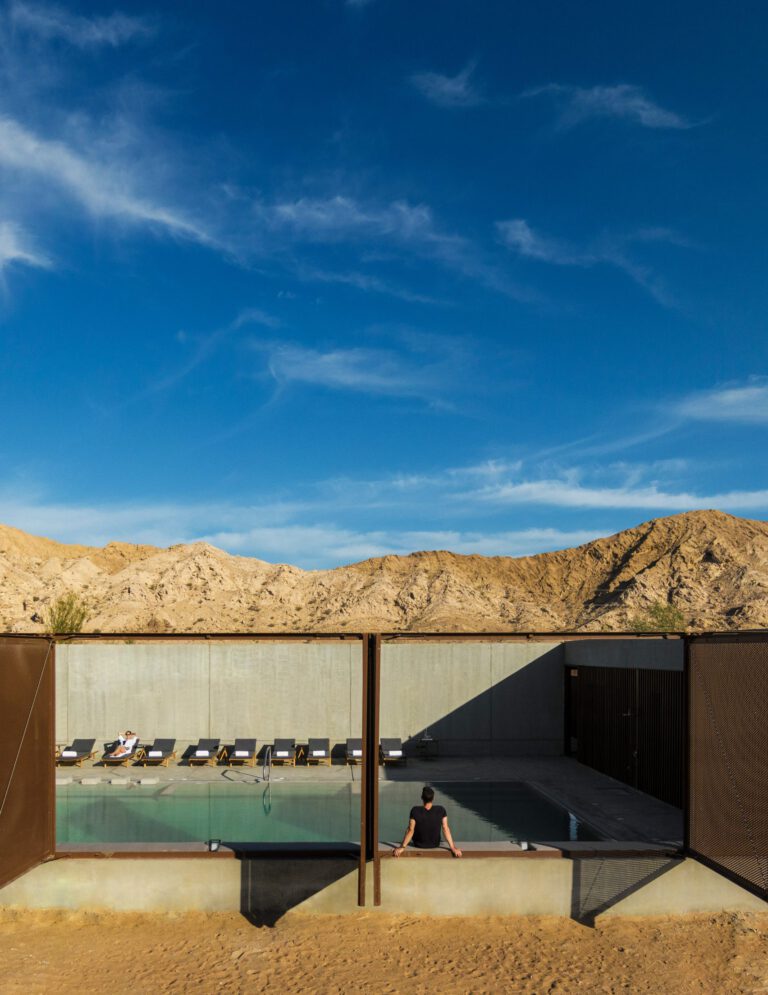
Tucked away in the red sands at the base of Mount Alvaah in Sharjah, Al Faya Lodge is a striking blend of contemporary design and desert heritage. Designed by the Dubai-based architecture studio Anarchitect, the boutique hotel and saltwater spa reimagine two stone buildings originally constructed over 50 years ago. Once a clinic and a grocery shop, these modest structures have been transformed into a luxurious five-room retreat that embraces both sustainability and the rich history of the UAE’s desert landscape.
Al Faya Lodge is a delicate balance of old and new. The original stone buildings have been preserved and enhanced with thoughtful interventions that give them a new purpose. To preserve the spirit of the desert, Anarchitect used local materials like concrete and stone in the new structures that complement the original buildings. Weathered steel, with its striking rust hue, was chosen to highlight these additions, tying the design to the rich iron ore deposits found in the region. This use of metal not only reflects the area’s natural landscape but also nods to its industrial history, being near one of the UAE’s first petrol stations.
The lodge’s design takes the region’s extreme climate into careful consideration. Sharjah’s desert environment presents a unique set of challenges, from searing heat and prolonged sun exposure in the summer to chilly nighttime temperatures. Jonathan Ashmore, Anarchitect’s founder, emphasized that any design in such an environment must account for these factors. “The elements—sunlight, sandstorms, and temperature swings—require materials and designs that are both durable and practical,” he explains. The team rose to this challenge by creating raised terraced decks, over-sailing roofs, and shaded screens to keep the hot sun at bay, while also ensuring comfort for visitors.
Durability was a key factor when choosing materials. Polished concrete, granite, and travertine were selected not only for their ability to withstand the desert’s elements but also for their beauty. Hardwood and plastered-render were incorporated to weather naturally over time, enhancing the building’s aesthetics while ensuring a long lifespan in the harsh desert climate.
Al Faya Lodge by Anarchitect is a desert spa and hotel made from stone and steel
Each of the five rooms at Al Faya Lodge has been designed with star-gazing in mind, featuring skylights to give guests an unobstructed view of the desert sky. The master suite even has a private roof terrace, perfect for soaking in the serene surroundings. The lodge can be booked in its entirety, offering exclusive use of the saltwater spa and open-air swimming pool, along with access to other luxurious amenities, including a dining room, reception area, and an outdoor terrace with a fire pit for evenings spent under the stars.
The result is a desert retreat that celebrates both the timeless beauty of the landscape and the importance of sustainable architecture. Al Faya Lodge’s thoughtful design invites guests to reconnect with nature, while also showcasing how modern architecture can thrive in some of the world’s most extreme climates. With its perfect blend of luxury, comfort, and environmental sensitivity, Anarchitect has created a one-of-a-kind destination that sets a new standard for desert architecture.
Al Faya Lodge by Anarchitect is a desert spa and hotel made from stone and steel
If you’re looking for a unique and luxurious getaway in an exotic Middle East location, look no further than the desert resorts of the UAE just outside of Abu Dhabi or Dubai. These remarkable retreats offer a combination of serenity, adventure, and authentic Arabian experiences, perfect for those seeking both relaxation and excitement. Whether it’s dining beneath the stars, indulging in spa treatments under the open sky, or simply soaking in the beauty of the desert landscape, these resorts promise unforgettable memories. Ask for sustainability commitments before you book or when you get there be an inquisitive guest.
Dubai
Al Maha Desert Resort
Located just an hour from Dubai, Al Maha Desert Resort is a true desert oasis. Set amidst the vast dunes, the resort features 42 exclusive villas, each with its own private pool, providing guests with unparalleled privacy. Spend your days lounging by your private pool or visit the resort’s outdoor pool, where you can relax with sweeping views of the desert. The resort’s all-day dining restaurant, Al Diwaan, offers exquisite meals, while the spa provides a range of treatments to ensure total relaxation. Guests may even be greeted by Arabian Oryx and gazelles while enjoying breakfast on their private terrace.
Rates start at Dhs3,616. About $950 a night. Tel: (0)4 832 9900. marriott.com
Bab Al Shams Desert Resort
A short drive from Dubai, Bab Al Shams is a renowned luxury desert retreat that blends adventure with comfort. Recently renovated in 2022, the resort now offers enhanced guest rooms, exciting new culinary offerings, and a host of outdoor activities such as fat biking, desert safaris, and archery. Dining experiences include the Middle Eastern-inspired Ninive restaurant and the Anwā Sunset Lounge, where you can enjoy breathtaking views of the desert as the sun sets.
Rates from Dhs1,050 about $300 USD a night. Tel: (0)4 809 6100. babalshams.com
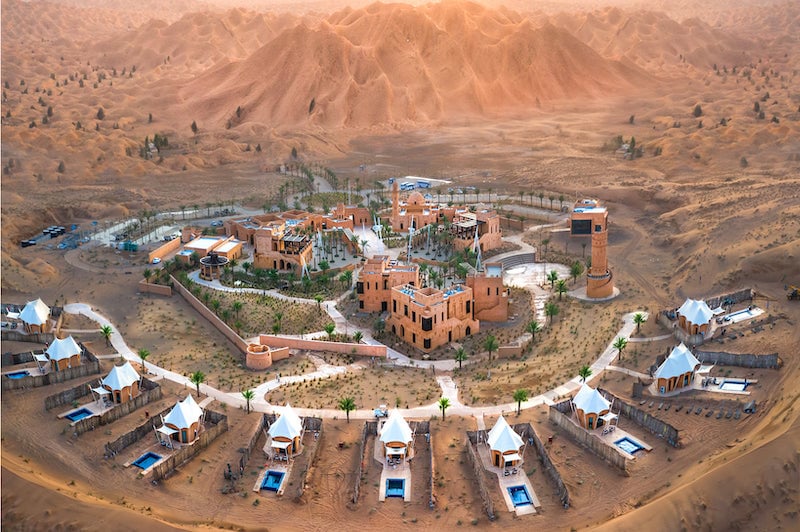
Terra Solis Dubai
For an authentic Bedouin-inspired escape, Terra Solis Dubai provides a truly unique experience. Situated in a vast 371,000-square-metre landscape, this desert resort features luxurious accommodations such as spacious Polaris bell tents, Perseid lodges, and Orion pool lodges. With its star constellation-inspired design and serene surroundings, Terra Solis is an ideal retreat just 30 minutes from the city.
Rates from Dhs440 about 100 USD a night. Tel: (0)4 456 1956. terrasolisdubai.com
Abu Dhabi
Anantara Qasr Al Sarab
Nestled in the heart of the Empty Quarter, Anantara Qasr Al Sarab is a secluded desert sanctuary offering breathtaking views across endless rolling dunes. The resort features 140 rooms, 14 suites, and 52 private pool villas, each beautifully decorated with traditional Arabian touches. Separated from the main resort, the villas offer ultimate privacy, and the serene atmosphere makes it an ideal destination for those seeking both relaxation and adventure.
Rates from Dhs936 about $250 USD a night. Tel: (0)2 886 2088. anantara.com
Bateen Liwa Resort
A new addition to the Abu Dhabi desert resorts, Bateen Liwa Resort offers a luxurious experience in the heart of the desert. This resort is part of Bab Al Nojoum’s glamping collection and features private villas with plunge pools, alfresco dining spaces, and fire pits. With facilities like a modern spa, infinity pool, and stargazing experiences, Bateen Liwa Resort ensures that guests enjoy both comfort and adventure in an extraordinary desert setting.
Rates from Dhs692 about $200 USD a night. Tel: (0)2 894 8888. babalnojoum.com
Ras Al Khaimah
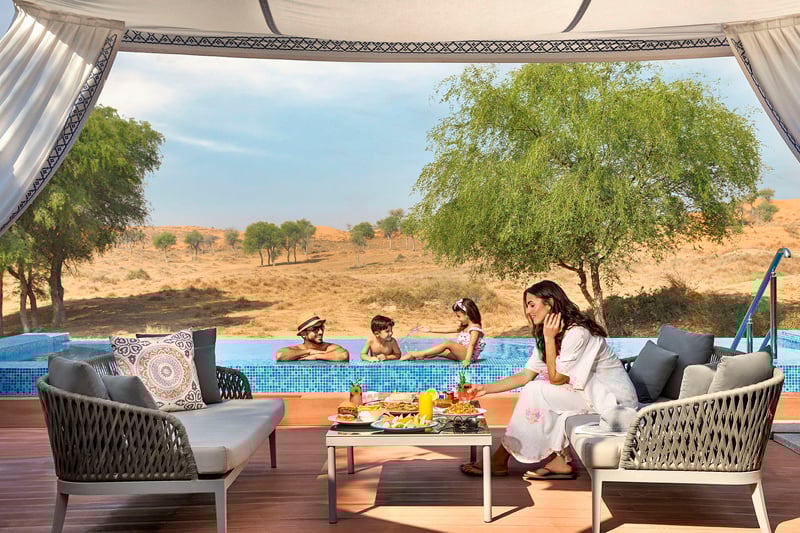
The Ritz-Carlton Ras Al Khaimah, Al Wadi Desert
The Ritz-Carlton Ras Al Khaimah, Al Wadi Desert is set within a 1,235-acre protected nature reserve, offering the perfect blend of tranquility and adventure. Guests can stay in luxurious Bedouin-style villas, each with its own private pool and stunning desert views. For a truly immersive experience, try activities like camel trekking, archery lessons, or nature walks. The resort’s dining options, including Sonara Camp and the open-sky Moon Bar, offer a perfect end to your day in the desert.
Rates from Dhs1,329 about $400 USD a night. Tel: (0)7 206 7777. ritzcarlton.com
Sharjah
Al Badayer Retreat
Al Badayer Retreat in Sharjah offers a unique blend of adventure, culture, and serenity. Situated inside a traditional Arabian fort, the resort provides modern comforts while offering authentic Emirati experiences like falconry, dune bashing, and quad biking. With its focus on eco-friendly luxury, Al Badayer Retreat offers an unforgettable stay in the heart of the desert.
Rates from Dhs350 about $150 USD a night. Tel: (0)6 556 0777. sharjahcollection.ae
Al Faya Retreat
For those seeking privacy and tranquility, Al Faya Retreat in Mleiha desert is the perfect choice. This luxurious retreat, originally built in the 1960s, has been expertly converted to offer a serene atmosphere while allowing guests to explore the area’s rich history and archaeological sites. The retreat’s unique, hands-free spa and stargazing opportunities make it an ideal destination for those looking to relax and unwind.
Rates from Dhs3,499 about $950 USD a night. Tel: (0)6 538 7857. sharjahcollection.ae
On February 10, 2025, President Donald Trump signed an executive order banning the use of paper straws in federal agencies, advocating for a return to plastic straws, which he claims are more effective. I have to say I have started the practice of bringing my own straws to fast food restaurants when I eat at them with my children because the paper straws dissolve in my mouth and leave a really bad feel and experience.
There was some irony of it in getting an entire meal packaged in plastic, wrapped in plastic and served in plastic, and then using a paper straw, but environmentalists argue that the straws are particularly harmful to wildlife because of the shape and size.
This move reverses a Biden administration policy that aimed to phase out single-use plastics, including straws, in federal operations by 2035. Trump dismissed concerns about plastic pollution, stating that plastic straws do not significantly affect marine life. Consumers are also concerned at the same time that plastics aren’t being recycled.
Environmentalists criticized the straw decision, citing the global plastic pollution crisis and the harmful impacts of microplastics on wildlife and ecosystems. Despite broader efforts to reduce plastic waste, Trump’s order has been supported by the plastics industry but diverges from many companies’ sustainability goals. The controversy highlights the ongoing debate over environmental policies and the balance between convenience and ecological responsibility.
Lisa Ramsden, Greenpeace USA’s senior plastics campaigner says, “Donald Trump’s Executive Order on plastic straws is a distraction from his administration’s efforts to prevent the EPA, the FDA and the NIH from protecting Americans from microplastics and dangerous chemicals.
“Plastics contain more than 16,000 chemicals, with over 3,200 known to cause cancer, disrupt hormones, contribute to obesity, or trigger early puberty in children. These chemicals have also been linked to reproductive health problems and declining fertility. So while the administration feigns concerns for Americans’ health and the declining birth rate, policies like this are exacerbating a public health crisis that drains over $250 billion from our economy annually.”
You can still do your part by opting out from using paper straws or ones made from sugarcane. There are several alternatives to paper straws that aim to reduce plastic waste while maintaining functionality:
The apple gazoz drink with sustainably made straw and spoon
Stainless Steel Straws – Durable and reusable, stainless steel straws are a popular alternative, easy to clean, and environmentally friendly for long-term use. You need to carry these on hand, and they need to be washed thoroughly with a special tiny brush.
Glass Straws – Made from tempered glass, these straws are reusable and offer a sleek, eco-friendly option. They are transparent and provide a similar feel to plastic, though they can be more fragile. They can also be dangerous for children.
Bamboo Straws – A natural, biodegradable option, bamboo straws are durable and compostable, making them a sustainable choice for those looking for an eco-friendly alternative. These aren’t easy to find and they are expensive.
Silicone Straws – Flexible and reusable, silicone straws are gentle on the mouth, dishwasher safe, and available in various sizes and colors. They are a safe, practical option for both kids and adults. Again, cleaning them thoroughly is an issue.
Edible Straws – Made from materials like rice, seaweed, or even fruit, these biodegradable straws are not only eco-friendly but can be consumed after use. They do leave an aftertaste and residue. Nice idea, but not practical.
Plant-based Biodegradable Straws – These straws are made from materials like cornstarch, sugarcane, or plant fibers that break down naturally in the environment, offering a more sustainable alternative to traditional plastic straws. We are rooting for this option. Get your thinking caps on engineers and make biodegradable plastic better than petrol-based plastics.
Here are five U.S.-based companies that produce biodegradable straws:
Chaga tea, lion’s mane mushroom, spirulina and fiber powder are all part of a new health food diet served with a paper straw.
Aardvark Straws – Known for their paper straws, Aardvark offers biodegradable and compostable products made from sustainable materials, including paper.
BioStraws – This company manufactures biodegradable, compostable, and plant-based straws made from cornstarch and other renewable resources.
Ecology – They produce compostable straws made from plant-based materials like sugarcane and corn, providing an eco-friendly alternative to traditional plastic straws.
Greenworks – Greenworks offers biodegradable paper and plant-based straws that break down naturally and are a sustainable choice for businesses.
StrawFree – This company produces compostable straws made from materials such as bamboo, which are both biodegradable and eco-friendly.





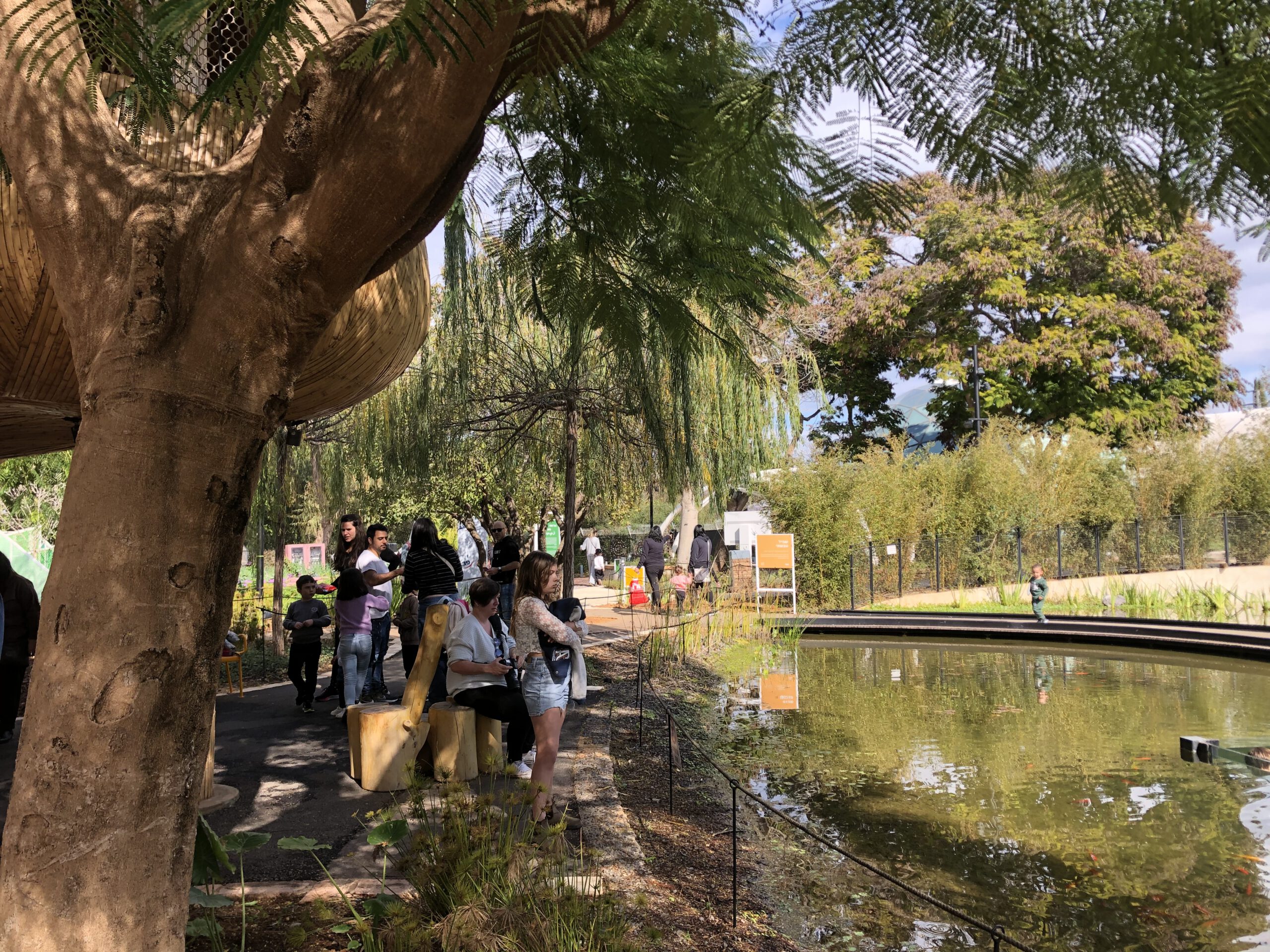





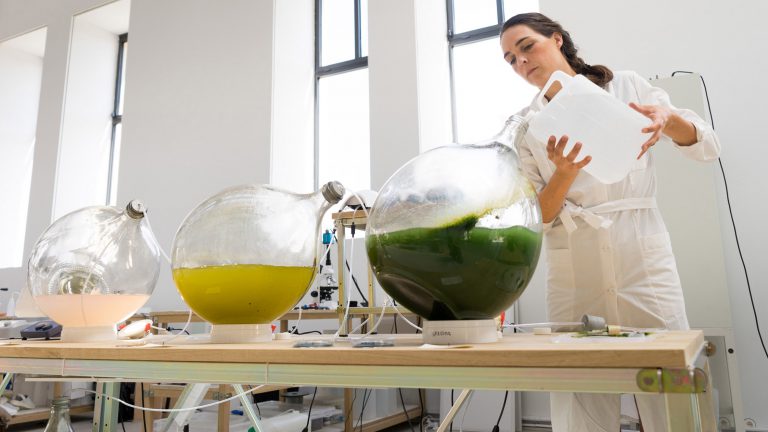





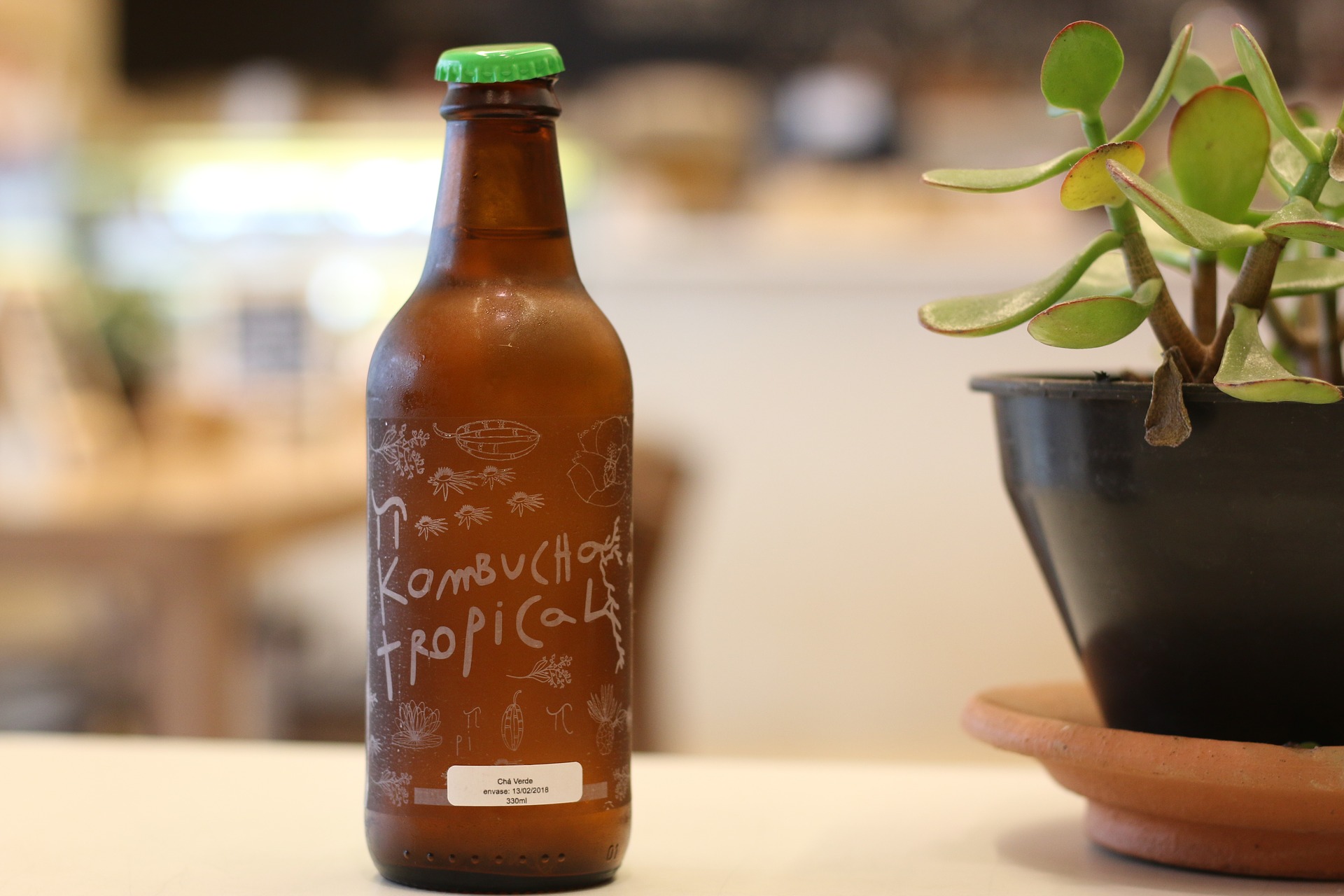







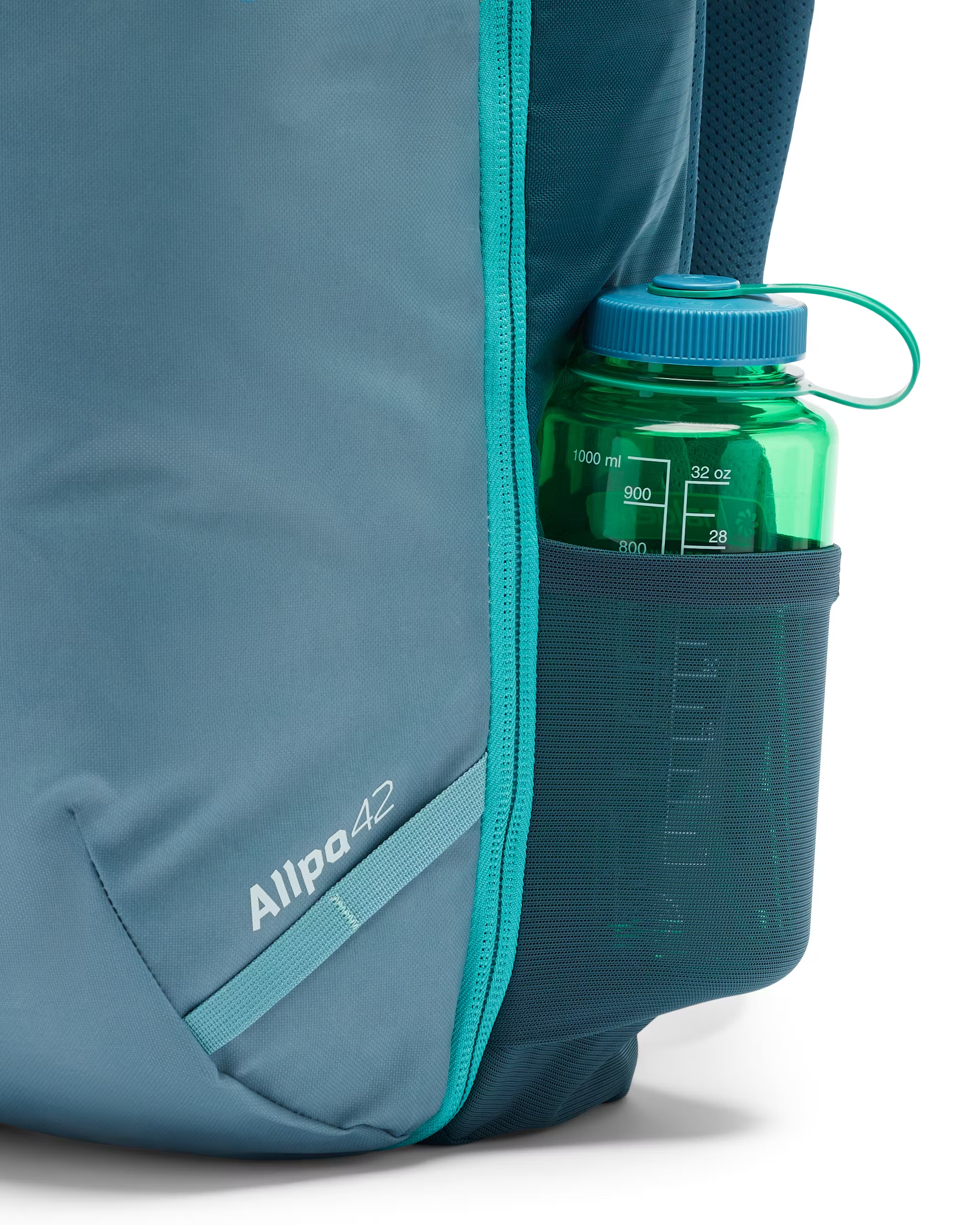
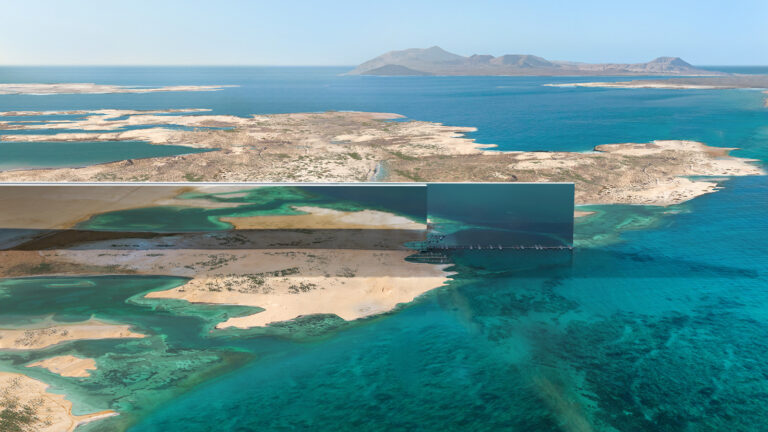




![Academics from the University of Bath have issued a new resource on the potential for regenerative design to deliver net-positive benefits, as well as actionable principles for change. RENEW: a manifesto for regenerative design and engineering is a 35-page electronic guidebook developed by the university’s Centre for Regenerative Design & Engineering for a Net Positive World (known as RENEW). A top 10 ranked university in the U.K., the University of Bath has demonstrated international leadership in research dedicated to achieving climate resilience, decarbonization, and a healthy future for the planet. The RENEW center takes a cross-disciplinary approach to developing systems for the built environment that harmonize benefits to society with the natural world. RENEW combines expertise from more than 40 academics, researchers, and industry stakeholders in water and chemical engineering, materials and composites, and placemaking and architecture with social science, economic, governance, and ecological studies. Image courtesy of the University of Bath The University of Bath’s Centre for Regenerative Design & Engineering for a Net Positive World (RENEW) has released a guidebook focused on defining regenerative design and expanding awareness of its prospects. Left to right: Dr. Juliana Calabria-Holley, co-director; Prof. Sukumar Natarajan, director; and Dr. Emma Emanuelsson, co-director. The University of Bath’s Centre for Regenerative Design & Engineering for a Net Positive World (RENEW) has released a guidebook focused on defining regenerative design and expanding awareness of its prospects. Left to right: Dr. Juliana Calabria-Holley, co-director; Prof. Sukumar Natarajan, director; and Dr. Emma Emanuelsson, co-director. Regenerative > Sustainable? Technology, science, and education have long focused on improving the human experience—such as by extending life expectancy worldwide—and evolving the spaces where we live, work, and play, but have done so through “extractive, non-regenerative practices,” said RENEW members in the manifesto. Sustainability has been championed for four decades to manage and minimize damage to the Earth’s resources but has been slow to penetrate the industrialized world. The guidebook’s authors note that contemporary net-zero emissions efforts and global climate target policies do not prescribe a way forward for “human systems to contribute positively to natural systems.” In order to adequately mitigate the impacts of climate change, improve biodiversity, and rebalance social inequities, the RENEW manifesto authors indicate that society requires an evolution from resource exploitation to a framework that prioritizes restoration of the global ecosystem. Image courtesy of the University of Bath Cover image for RENEW: a manifesto for regenerative design and engineering “Regenerative design, as a philosophy and practice, aims not merely to limit the damage we cause to the environment but to restore natural systems.” In an announcement launching the RENEW guidebook, center director and professor Sukumar Natarajan said that the initiative is designed to provide guiding principles for engineering, architecture, and other disciplines that enable society to “create resilient, fair communities that can thrive in balance with nature, while improving standards of living.” Six Principles of Regenerative Design The RENEW manifesto lays out six guiding principles of regenerative design, then offers a framework for putting them into practice. The six principles include: Reflective governance—Establish continuously evolving metrics and monitoring practices to track progress and impact. Embrace interconnectivity—Recognize that the world is intricate and interdependent. Take a holistic view accounting for the dynamic relationships between ecosystems and communities. Work as nature—Work harmoniously with and as nature. Design systems that work as part of species and ecosystem patterns, processes, and cycles. Prioritize net positive—Prioritize regeneration, replenishment, and restoration, recovering and reusing waste to create net-positive solutions and an abundance of resources. The aim should be to repair, sustain, and enrich the planet, rather than deplete its precious resources. Cultivate resilience—Systems should be designed with a capacity to adapt, diversify, and self-renew even in the face of uncertainty, change, and disturbances. Transmit—Document, curate, and publicize to help proliferate best practice through active discourse on a global scale. The authors concluded that the guide is intended as a foundation for continuously evolving this multidisciplinary approach to solving building/engineering problems. Center co-director Emma Emanuelsson observed that “We want this manifesto to help create a less anxious future for today’s young people, and for humans and nature to prosper in equal measure. […It] may not show us the full journey, but it does have advice and a framework to allow us to get started.” For the full guidance, readers can download RENEW: a manifesto for regenerative design and engineering free of charge from the University of Bath’s website.](https://www.greenprophet.com/wp-content/uploads/regenertive-design-bath.avif)




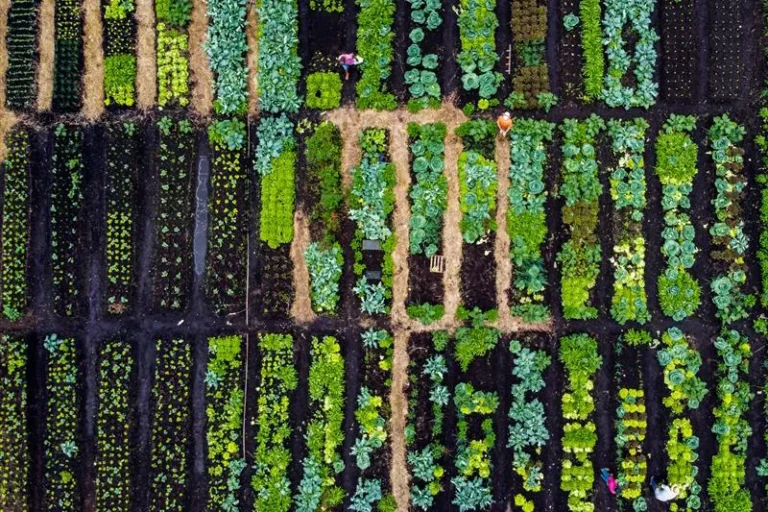
 During the Spring Meeting in