Home Blog Page 452

Environmentalists Mourn the Passing of Egypt’s Patriarch of Environment

8

Eulogy, Dr. Mohamed Kassas, desertification, patriarch, Egypt, environmentalist, leadershipDr. Mohamed Kassas was a leading pioneer of Egypt’s environmental movement and a beloved mentor. 

Dr. Mohamed Kassas was active until the end, says Mindy Baha El Din, Manager of Nature Conservation Egypt. Just yesterday Christians packed the St. Mark’s Cathedral in Cairo to bid farewell to their patriarch Pope Shenouda III, and today environmentalists throughout the country are mourning the loss of their own hero – the father of desertification and a “truly unique man.”

After spending more than a week in Manal hospital in Cairo after suffering from health complications, the 91 year old Professor Emeritus of Botany at the University of Cairo and former President of the International Union for Conservation of Nature (IUCN) died today.

Egyptians Panic as Foot and Mouth Disease Sweeps Through the Country

0

FMD, epidemic, Foot and Mouth Disease, Egypt, Livestock, food, health, Many Egyptians have stopped buying meat after thousands of livestock have died from foot and mouth disease in the last three weeks.

Even though it is extremely rare for humans to contract foot and mouth disease, many panicky Egyptians have stopped purchasing meat since the virus began to spread through the country, leaving thousands of dead cattle in its wake. After last year’s revolution and subsequent mismanagement of natural resources and political matters, Egyptians are unable to trust government exhortations that they are monitoring the epidemic that has affected cattle and livestock in Alexandria, Cairo, and various other governorates.

The General Authority for Veterinary Services reported that 40,222 cattle have been infected and 4,658 cattle have died since the disease broke out three weeks ago.

Israeli Cleantech VC Nears $100 Million Goal

0

digital green clean tech
The finish line is in sight for Israel Cleantech Ventures (ICV), which has been racing towards a $100 million goal.

ICV is an Israeli venture capital fund that was founded in 2006 to focus exclusively on raising capital for investment in renewable energy companies. In its February financial filing the company showed it had raised nearly half the $100 million it has set to raise this year. As international funds like Blackstone begin noticing the Israeli cleantech sector, the homegrown ICV fund will become incrasingly significant on the global map.

Interfaith Eco-Conference Reveals Need To Educate Religious Leaders

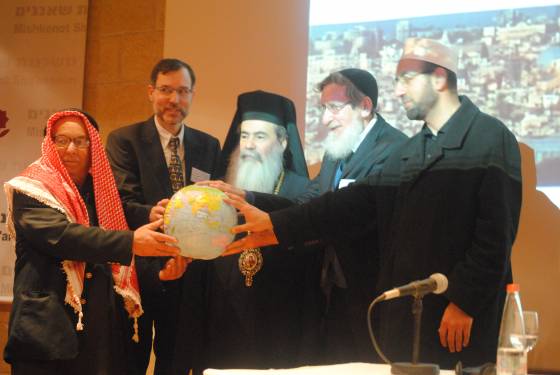
image-religious-leaders-jerusalemMiriam found much good will but only dawning eco-awareness in Israel’s religious leadership.

“I came today, not to say anything new – but to learn.” So the Greek Orthodox Archbishop, Dr. Elias Chacour, began the Interfaith Climate and Energy Conference that took place yesterday, March 19, in Jerusalem. The conference was organized by the Interfaith Center for Sustainable Development together with the Konrad Adenauer Foundation.

The Archbishop’s frank declaration summed up the prevalent state of eco-consciousness among the clergy: great willingness to learn, but little to go on.

The atmosphere among the 200-odd participants was optimistic. We gladly heard speeches on man’s God-sent responsibility towards creation. The Greek Orthodox Patriarch of Jerusalem, Patriarch Theophilos III, spoke movingly about the intimate relationship between creation and the Creator. Amid quotations from the Old and New Testaments and the Koran, most of what emerged from the panel of distinguished clergymen was a vision of interfaith tolerance, even brotherhood.

S-x Shop Hoax May Point to New Wave of Social Activism

sex shop storefront windowA story about a Morocco sex shop turns out to be a hoax, but is the idea of expanding sexual freedom finding fertile ground in the region?

Sex is natural. We wouldn’t be here were it not for the ability to procreate, and for most people in the world, physical intimacy and pleasure are desired bedfellows, ideally going hand in hand, consensually so. Unfortunately, healthy sexuality is often a difficult topic to approach in the middle east, a region conservative about such matters.

Social morays and religious laws commandeer the tenor of the discussions if not the actual acts. Which is probably why the announcement of an adult store in a residential neighborhood in Morocco turned out to be more hype than hope.

Handmade Fabric Designs “To Go” From Deda Designs

1

"kitchen towel design"

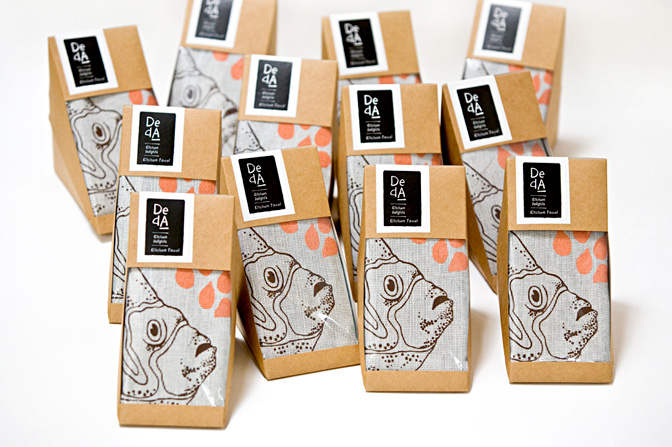
Handmade and packaged in recycled boxes generally used for fast food or take-away, Deda Design’s kitchen products look delicious.

Fast food usually gets a bad rep: it’s fatty, bad for you, and wastes a lot of packaging and resources.  But what if fast food style packaging was put to more sustainable use?

Packaging has been used in eco-friendly ways by designers before, either by upcycling plastic packaging or making a product’s outer packaging multi-functional

Now Deda Designs, a boutique design label based in Israel, is finding ways to use recycled fast food packaging to house its limited edition, handmade fabric products.  Thereby making it easier for the fish-themed kitchen towel (pictured above) to masquerade as a tuna fish sandwich.

Oil Shale Marchers Walk 40 k from the Valley to Jerusalem

0

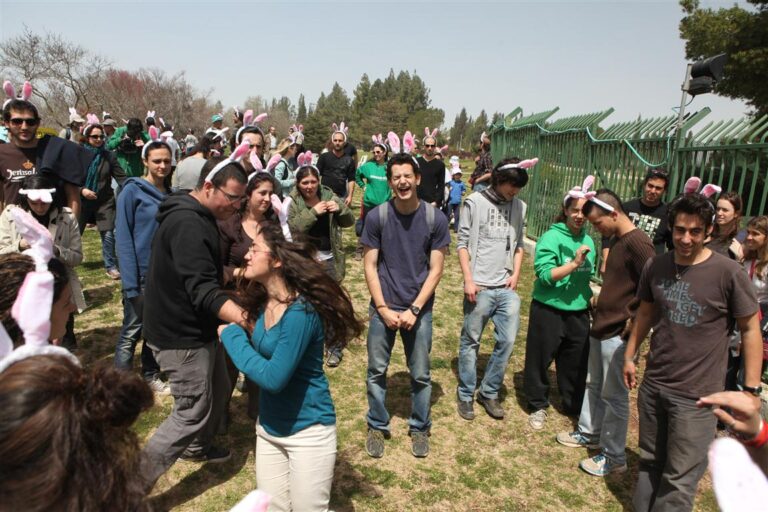
oil shale israel “We are not rabbits,” was among the slogans against the “oil shale experiment” march today in Israel.  A story of Davids versus the Goliaths?

Valley of Elah residents, Greenpeace members and local NGOS in Israel organized a march today against the development of oil shale in Israel. Oil shale and its extraction remains a very controversial subject.

Israel has so much oil shale, located in regions like the Elah Valley where the story of David and Goliath took place, enough some say to make it energy independent. Israel’s oil, locked up in shale much like the Alberta tar sands, could shift the energy curve. Developers of oil shale in Israel (Rupert Murdoch is an investor along with Lord Jacob Rothschild) say that their methods to extract the shale – oil mixed in with sediments and rocks deep below the ground – will not harm the environment. Elah Valley residents do not believe such “experimental” techniques are in the interest of the community or long-term environmental survival of the region.

Tafline has written a lot about oil shale in Israel, and after an open letter to environmentalist David de Rothschild, convinced him to bring the topic up with his cousin, Lord Jacob Rothschild, an investor of oil shale exploration in Israel. Stakeholders are convinced that their new methods to drill into, then heat the oil shale up underground to siphon off the oil will not harm the outwards environment or the water table. The public, clearly, is not buying. 

Promise of Blackstone’s Millions May Keep Israel Focused On Cleantech

0

money growing palm trees israel
Israeli entrepreneurs are world renowned for their high tech talents and ingenuity. Funding has always been the problem. But now Israeli cleantech start-ups may finally be getting the financing they need.

$7.7 billion market cap investment fund, Blackstone, also the world’s largest private equity fund, began holding advanced talks with Israeli fund Markstone in February on entering the Israeli market. The two have since created a joint venture that will invest hundreds of millions in the Israeli market, much of it in the cleantech sector.

How To Hitchhike from Europe to the Middle East

3

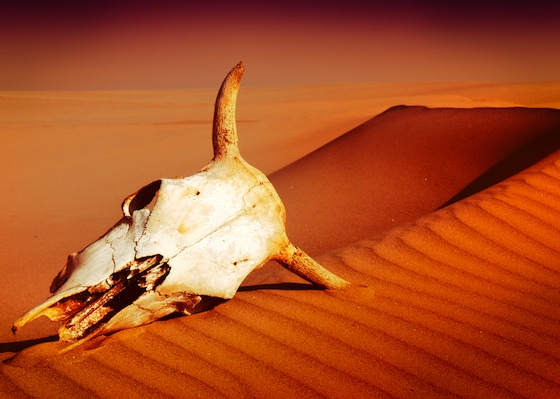
desert hitch hiker middle eastFull of adventures, and matching the rhythm of the place, Does recounts his long hitchhiking journey from Belgium all the way to Egypt.

First, stay with your feet to the ground: Moving from Europe to the Middle East isn’t something you do overnight. Especially if you’re not willing to take an aeroplane, whether because entering an airport or aeroplane makes you feel like being in kindergarten again (you can’t take your own beer), or because you care about climate change.

Last summer I wanted to go from Brussels to Cairo, Egypt. Somehow I was convinced that plenty of boats are criss-crossing the Mediterranean, and booking a boat could get me where I wanted. But the internet proved me wrong. Apparently that damn cheap air travel made all lines disappear. Luckily there’s an alternative, that is overland travel.

Cairo’s Zabaleen Scavenge for Renewables to make Solar Cities

zabeleen cairo roofs goats

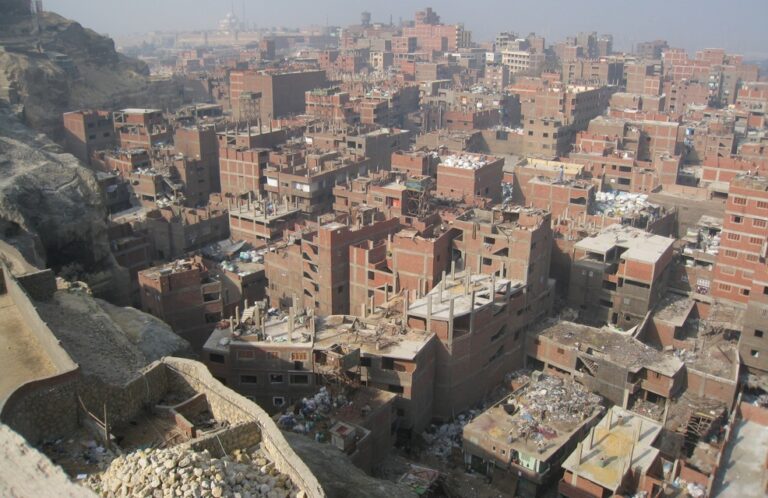
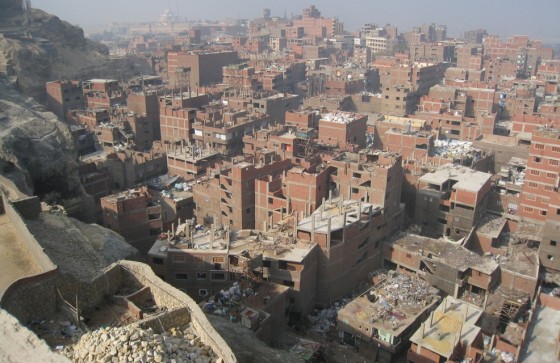
No better place to do a reality check on our environmental vision than Cairo’s Manshiet Nasr neighborhood. Its local inhabitants, the Zabaleen (Arabic for garbage pickers and recyclers) started closing our material cycles thirty years ago, something we even now barely find necessary. They know that what is without value for most, isn’t useless per sé. In their neighbourhood you can see things you see nowhere else in Cairo, recycling, urban gardening, composting and renewable energy.

For them it is not about lifestyle, greenwashing or being eco-bourgeois , but about exploring the possibilities every day innovation has. They are social entrepreneurs and are constantly testing the profitability of what’s possible.

In the West Bank, Springs of Contention

ein gedi spring dead sea, children swimming
As West Bank settlers develop water sources, Palestinians say they are excluded. Which narrative is right?

Ein Ariq, WEST BANK — A convoy of white United Nations jeeps pulls into the olive-tree laden valley below the Jewish community of Eli. They are greeted by Jamal Deragmeh, the mayor of the nearby Palestinian town of Lubban Al-Sharkiya, who points out the cement pool around the spring and complains.

“If you weren’t here,” he says to the representative of the UN Office for the Coordination of Humanitarian Affairs (OCHA), “The [Jewish] settlers would come and put a bullet in my head.”

Scores of springs like Ein Ariq pepper the valleys and slopes of the Samarian and Judean hills of the West Bank. Palestinians use them to water their flocks and irrigate fields. But some have been neglected and forgotten, and in recent years residents of Jewish settlements in their vicinity have come to clear out stones and mud, build small pools, put in a few picnic tables and turn them into parks.

And this has raised the ire of the local Palestinians, who say the Israelis have taken over the springs and keep them away.

Lone Spanish Researcher Aims to Humanize Dubai With Solar Art

0

Urban, architecture, design, green art, solar energy, solar art, Land Art Generator Initiative,Nacho Zamora is touring Dubai, speaking with various leaders about incorporating solar-powered public art projects – like The Verdant Walk by North Design Office.

Any pedestrian who has braved the backstreets of Dubai knows two things: there are a lot of open spaces vying for attention and the sun is relentless. An independent researcher from Spain and a specialist in indexing and researching solar artwork, Nacho Zamora has recently traveled to Dubai in order to convince the municipality and Green Building Council to fill up these spaces with public art projects that also produce energy. Following the recent announcement that Dubai will consider purchasing energy from rooftop solar panels, which reveals a potential shift in the city’s eco-ethos, Zamora’s timing might just be spot on.

Israeli Defense Forces Polluting Groundwater with Impunity

1

army illustration, oil refinery, Israel army pollution
Eighteen months ago, Itzhak Ben-David, the Israeli Environment Ministry’s deputy director for enforcement, visited several Israeli army bases in the West Bank.  What he saw was shocking.  Fuel and oil were leaking unabated into the ground on several sites.  In response, Ben-David asked the Israeli Defense Forces (IDF) to conduct water quality sampling and monitoring.  Part of the Environment Ministry’s purview is ensuring soil and groundwater are protected from contaminants.

Months after Ben-David’s request, the IDF has done little to assuage the Environment Ministry’s concerns.  Although water samples were collected, military officials have not made the results available.  Recognizing the IDF’s apparent bureaucratic foot-dragging and indifference, Ben-David recently wrote to the Military Advocate General, Brig. Gen. Danny Efroni.  He did not mince words:  “A civilian polluter would have already been investigated by the ministry’s enforcement officials and long since been indicted, probably found guilty and made to pay a heavy fine.”

A Forest of Umbrellas Keeps Medina Pilgrims Cool

3

medina hajj sunshades sefar

Today’s pilgrims to Medina are way cooler than their predecessors thanks to sun shelters surrounding Islam’s second-holiest mosque.

Al-Masjid al-Nabawī,  the second mosque built by the Prophet Mohammed, is one of the world’s largest. But continual expansion over the centuries hasn’t kept pace with the increasing swell of Hajj pilgrims who congregate each year in its courtyards.

With summer temperatures exceeding 120 degrees F, these marble-floored spaces can be punishing.  A dual challenge emerged: how to improve the mosque’s natural micro-climate without destroying its architectural character. The solution was to plant a forest of umbrellas.

Battle To Save Solar In Remote Palestinian Villages

0

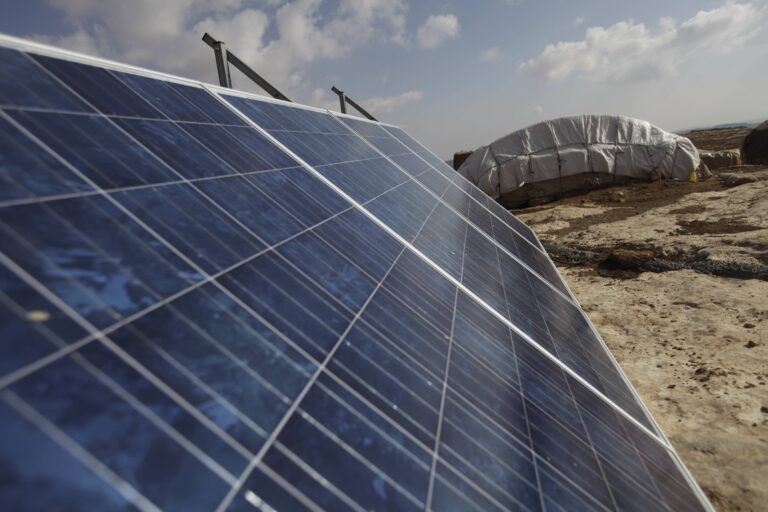
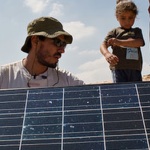
comet-me-solar-palestine-israel-hebronI speak to Elad Orian of Comet-ME, who is campaigning to prevent the demolition of solar panels providing electricity to remote Palestinian communities

Elad Orian is clearly a man on mission. It’s just gone 8pm and he is busy telling me about his work with Comet-ME, which provides renewable energy to Palestinian villagers living in the south Hebron Hills. His mission, however, is to save 6 of these projects from demolition. “The Palestinians were hoping it wouldn’t come to this as the solar panels had been there for a while,” tells me Orian over the phone. “But in the same way, this isn’t exactly a big surprise. In Area C there are around 10,000 outstanding demolition orders…”

No Permits for Palestinians in Area C

The argument goes that that these solar projects were installed without permits in Area C of the West Bank which is under Israeli control. As such the Israeli authorities have every right to demolish these solar panels and wind turbines, even if they are the sole source of electricity for some villagers. So why didn’t Comet-ME and the German aid group Medico which helped fund these projects apply for permits?
“The reason that we didn’t apply for permits is that we know we wouldn’t have got them,” replies Orian. “We would be applying for places in Area C and Israel never grants permits there for Palestinians…” In fact, according to figures from the pressure group Peace Now, in total, just 91 permits were granted for Palestinian construction in Area C between 2001 and 2007. In the same period, more than 10,000 Israeli settlement units were built. And more than 1,500 Palestinian structures were demolished.

International Pressure to Stop Demolition

“Why they have decided to get demolition orders now I really don’t know,” continues Orian. “One of the solar panels was built quite near to an Israeli checkpoint with soldiers working there and so it’s not like they didn’t know that it was there. They did.” Orian also explains that as an occupying power, Israel has a duty under the Geneva Convention to provide basic facilities such as energy to Palestinians living in Area C and yet many of them don’t have access to electricity.

Comet-ME and the German government are currently working hard to put pressure on Israel to leave the solar panels in tact. “I do think there is still a chance that the solar panels won’t be demolished as there is lots of international pressure to stop this,” says Orian. “The German foreign office has been involved and also many others see the importance of protecting the Palestinian communities in Area C.”

Whilst the demolitions may deemed justifiable to some, Orian insists Israel has nothing to gain from demolishing these renewable energy projects which are providing a lifeline to isolated Palestinians.

:: You can help support the campaign to protect the solar projects here.

:: Image via Tomer Appelbaum.

For more on

Interview with Elad Orian: Building Wind and Solar Energy for Palestinians with Comet-ME

Palestinians Attempt to Build Secret Renewable Energy Plants

Comet-ME Continues to Bring Power To Villages In South Hebron Hills