PEOPLE Festival returns to Berlin’s Funkhaus this October, bringing 180 musicians together for a week of collaboration, improvisation and more than 200 one-off performances.
Teletherapy can make mental health care easier to access by reducing travel, scheduling and location barriers. Here are six ways virtual therapy can help people connect with professional support more easily.
A coworking space within walking distance can cut commuting time and give you a reliable place to work, but distance alone does not make it useful. Test the internet, noise, privacy, desk setup, environmental claims and real cost before committing to a membership.
PEOPLE Festival returns to Berlin’s Funkhaus this October, bringing 180 musicians together for a week of collaboration, improvisation and more than 200 one-off performances.
Teletherapy can make mental health care easier to access by reducing travel, scheduling and location barriers. Here are six ways virtual therapy can help people connect with professional support more easily.
A coworking space within walking distance can cut commuting time and give you a reliable place to work, but distance alone does not make it useful. Test the internet, noise, privacy, desk setup, environmental claims and real cost before committing to a membership.
PEOPLE Festival returns to Berlin’s Funkhaus this October, bringing 180 musicians together for a week of collaboration, improvisation and more than 200 one-off performances.
Teletherapy can make mental health care easier to access by reducing travel, scheduling and location barriers. Here are six ways virtual therapy can help people connect with professional support more easily.
A coworking space within walking distance can cut commuting time and give you a reliable place to work, but distance alone does not make it useful. Test the internet, noise, privacy, desk setup, environmental claims and real cost before committing to a membership.
PEOPLE Festival returns to Berlin’s Funkhaus this October, bringing 180 musicians together for a week of collaboration, improvisation and more than 200 one-off performances.
Teletherapy can make mental health care easier to access by reducing travel, scheduling and location barriers. Here are six ways virtual therapy can help people connect with professional support more easily.
A coworking space within walking distance can cut commuting time and give you a reliable place to work, but distance alone does not make it useful. Test the internet, noise, privacy, desk setup, environmental claims and real cost before committing to a membership.
PEOPLE Festival returns to Berlin’s Funkhaus this October, bringing 180 musicians together for a week of collaboration, improvisation and more than 200 one-off performances.
Teletherapy can make mental health care easier to access by reducing travel, scheduling and location barriers. Here are six ways virtual therapy can help people connect with professional support more easily.
A coworking space within walking distance can cut commuting time and give you a reliable place to work, but distance alone does not make it useful. Test the internet, noise, privacy, desk setup, environmental claims and real cost before committing to a membership.
PEOPLE Festival returns to Berlin’s Funkhaus this October, bringing 180 musicians together for a week of collaboration, improvisation and more than 200 one-off performances.
Teletherapy can make mental health care easier to access by reducing travel, scheduling and location barriers. Here are six ways virtual therapy can help people connect with professional support more easily.
A coworking space within walking distance can cut commuting time and give you a reliable place to work, but distance alone does not make it useful. Test the internet, noise, privacy, desk setup, environmental claims and real cost before committing to a membership.
PEOPLE Festival returns to Berlin’s Funkhaus this October, bringing 180 musicians together for a week of collaboration, improvisation and more than 200 one-off performances.
Teletherapy can make mental health care easier to access by reducing travel, scheduling and location barriers. Here are six ways virtual therapy can help people connect with professional support more easily.
A coworking space within walking distance can cut commuting time and give you a reliable place to work, but distance alone does not make it useful. Test the internet, noise, privacy, desk setup, environmental claims and real cost before committing to a membership.
PEOPLE Festival returns to Berlin’s Funkhaus this October, bringing 180 musicians together for a week of collaboration, improvisation and more than 200 one-off performances.
Teletherapy can make mental health care easier to access by reducing travel, scheduling and location barriers. Here are six ways virtual therapy can help people connect with professional support more easily.
A coworking space within walking distance can cut commuting time and give you a reliable place to work, but distance alone does not make it useful. Test the internet, noise, privacy, desk setup, environmental claims and real cost before committing to a membership.
The bad news is that Jordan’s Bus Rapid Transit system (BRT) was suspended last year amid concerns about the associated cost and feasibility. Although the multimillion dollar project would have considerably reduced traffic and smog in capital Amman, details of the system conceived by the Greater Amman Municipality in 2009 are still being ironed out. So a couple of teenage boys who say that it’s impossible to find a safe place to ride their bikes in the city have turned one of the new but abandoned bus lanes into a bike lane instead.
Mebiol’s hydrogel could make deserts flourish with crops grown on barren sand.
Here’s another futuristic invention that could completely change the future of agriculture in a desertifying world. Substituting an industrially produced hydrogel for soil makes it possible to farm on sterile desert sand. Similarly to Pink LEDs Grow Future Food with 90% Less Water, this amazing sci fi technology allows the farming of the desert, with 80 percent less water than needed in traditional farming.
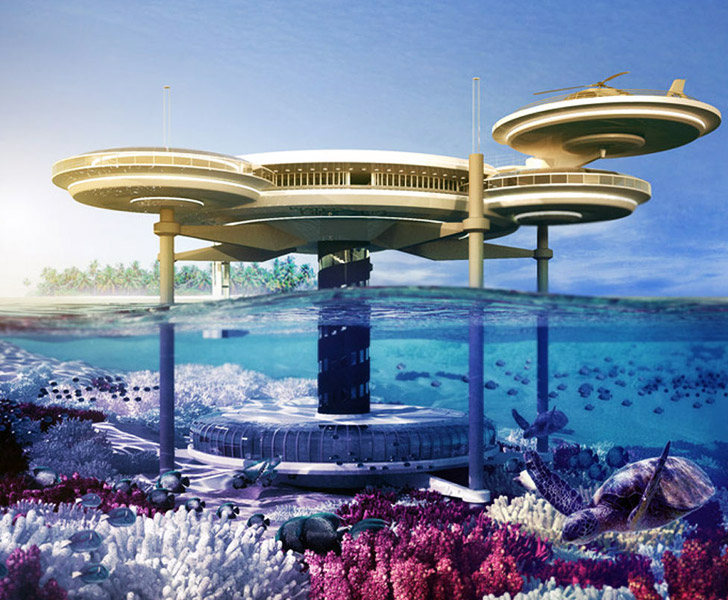
Is it back to bonkers ideas in Dubai? Plans to build an underwater hotel hailed as a positive sign of Dubai’s property sector recovery
Whilst I wasn’t happy that Dubai’s property bubble burst back in 2009, it did stop some awfully stupid building projects from going ahead. One of which was the underwater hotel idea. Dubai has more gimmicks and tacky accolades than a Las Vegas souvenir store so the last thing it needs is more plastic tat. It’s just not good and most of these outlandish projects pay very little attention to the environmental impact of their development.
Remember the marine destruction caused by the palm islands development? Well I think we can probably expect more of those ill-thought projects. According to an article in the FT, plans to build this underwater hotel are a “sign that the emirate is shaking off its financial crisis and returning to the grandiose projects of its boom-time heyday.”
It’s a serious crime and offenders face fines of up to €17,000 and three years in jail if caught, but Agriculture Minister Sophocles Aletaris told an EU delegation concerned about environmental issues that even though “this practice is a disgrace for his country,” it is also deeply rooted in the Cypriot mentality and will be very difficult to eradicate.
Tel Aviv’s mysterious gas smell is nothing compared to Cairo’s annual “black cloud”.
Tel Aviv is Israel’s largest city, and at times has been so saturated by car exhaust air pollution environmentalists have sometimes said that people run a serious risk of brain damage if they ride their bicycles there during heavy air pollution days. While perhaps not as polluted as other regional cities such as Teheran, Iran and during “black cloud” days in Cairo Egypt, Tel Aviv certainly does has its share of air pollution.
A pollution of a different kind occurred on Thursday, May 3, when local residents began to complain of a sharp, burning odor that irritated their eyes and lungs. Some called in saying they were afraid to light their cigarettes for fear of blowing up.
It’s estimated that the environmental impact of a single “eReader” (Kindle, iPad…) equals that of 100 books.
Whether the motivation is to truly improve environmental performance, or simply garner positive press, seems every business is jumping on the low carbon bandwagon. Nowhere is exempt from the pressure to green up, not even the beleaguered (and beloved) book industry.
Three years ago, a group called the Book Industry Environmental Council (BIEC) set environmental targets for the American book business, aiming to reduce its baseline carbon footprint by 20 percent in 2020 and by 80% in 2050. The plan was hatched during the infancy of eBooks: Kindle had been around just over a year.
BIEC goals seem attainable. Technological advances slashed the volume of in-house printing. Editors move towards a paperless workflow. Publishers began to reassess traditional processes of creating, transporting, and storing books. The resultant enviro-friendly efficiencies could be replicated worldwide.
Problem is no one foresaw the popularity of eBooks. Last year, Amazon was selling one million Kindles a week. Apple hawked 40 million iPads. And those are just two brands in the digital readers aisle in the world’s virtual tech store.
Conservationists in Egypt are worried about the environmental impact of large-scale solar projects in the desert
It seems renewables are taking a little bit of a bashing at the moment. First research emerges that wind turbines may be contributing to a temperature rise in the area, and now environmental campaigners in Egypt are calling for more careful deployment of solar panels in deserts. Speaking to Egypt Independent, Mindy Baha El Din (a conservationist who we profiled here) says that “There’s a misconception that the desert is a wasteland. It’s got an ecosystem of lifeforms, unique geological landscapes with fossils as well as cultural heritage sites.” And of all of this needs to be protected from various development schemes which includes large solar projects.
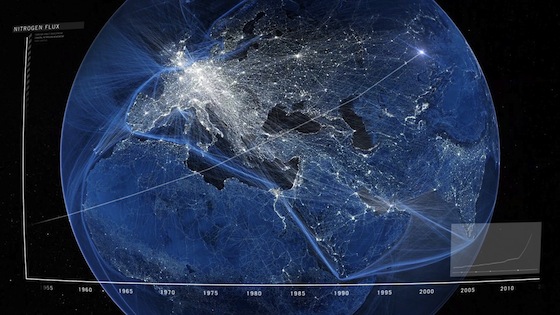
Recently Arwa posted NASA images that depict how we have drastically altered countries in the Middle East and North Africa – a jarring post that was read by hundreds of people around the world. Today we bring you a staggering video by Globaïa, which globalizes local issues and demonstrates how efficiently human beings have conquered the entire planet in the 250 years since the industrial revolution first started.
As a result of our “success,” we have entered a new geological epoch that has been dubbed “The Anthropocene.” Hit the jump for a link to this extraordinary three minute video that puts consumption and globalization into perspective like you’ve never seen before.
Sturdy wild wheat and barley are essential for humanity’s survival. New study shows we are losing genetic diversity
Israel’s wild wheat and barley are known to be the ancestors of our modern grains. When Man cultivated them, their genetic resistance to drought and disease carried over to cultivated varieties. This aided mankind’s struggle to grow predictable harvests and put fresh bread on the shelf every day. Great, but all that’s history, right? One would think that with the modern world’s stores of cultivated grain, and seed banks to back up those supplies, our future food sources are safe. At least in regard to that essential staple, bread.
Wouldn’t it be great if we could tell parents living in Gulf countries that their kids are getting fat because they’re being fed too many McDonald’s burgers, and have them respond by adding some greens to their diet? But this isn’t what happens. Even though a 2010 national school health survey in the United Arab Emirates revealed that 40% of school-aged children are obese because their parents feed them poorly, no effort has been made to change these behaviors.
So, the Ministry of Health has resorted to making feeding children junk food a violation of federal law, which the Ministry of Education will be required to monitor in public and private schools across all seven emirates.
When BrightSource withdrew its IPO this month, the death knell for solar was sounded, as always. The truth is more mundane.
According to the always inquisitive Katie Fehrenbacher over at GigaOm who managed to snag a Q&A with the company, BrightSource just doesn’t necessarily need the extra money right now. Its Ivanpah solar thermal project is already fully funded with project financing from NRG Energy and Google.
Any additional funds from an IPO at this point would just have gone toward things like continued research and development, project development (other ongoing permitting work) and international expansion. And with market conditions as they are a quick cost/benefit analysis in the last days found an IPO not needed.
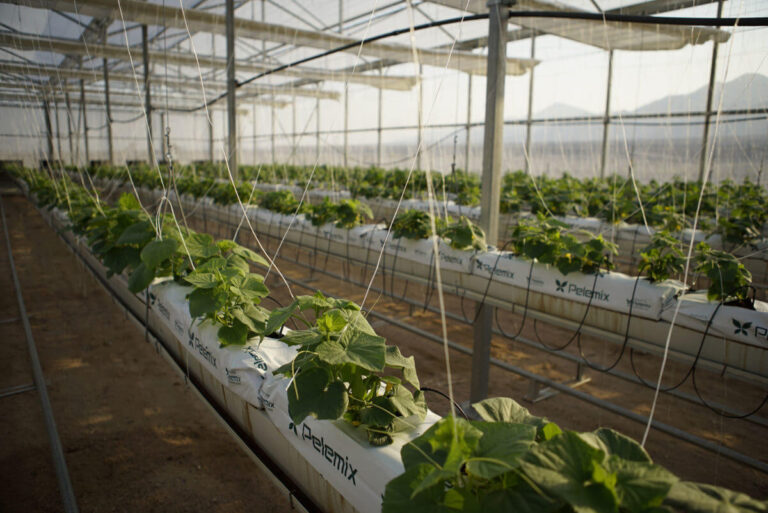
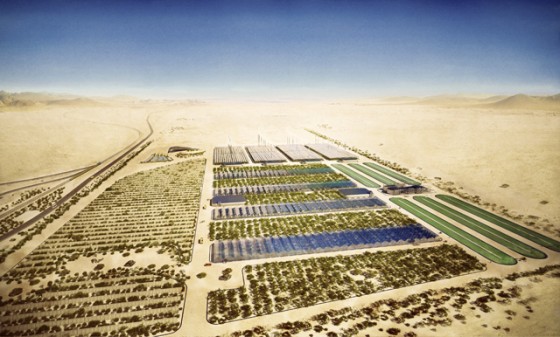
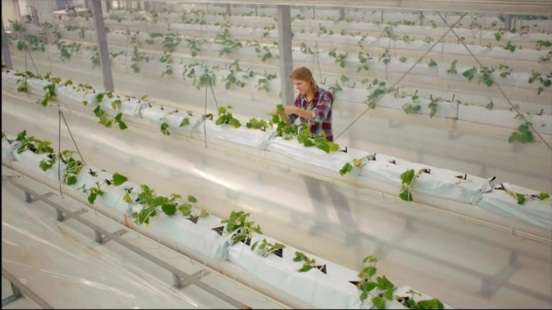
Greenhouses will sprout in Aqaba’s desert under a pilot called The Sahara Forest Project – led by Norway.
The ambitious Sahara Forest Project (SFP) aims to revegetate areas of desert and create green jobs through production of high-value crops and biomass. And, in the process, generate clean energy and fresh water. Farming the Jordan’s deserts as it’s to be done in Qatar sounds like a fantastical solution for Jordan’s resource problems.
“We aim to use what we have enough or too much of — saltwater, sun, arid land, and carbon dioxide — to make what we need more of — clean energy, fresh water and food,” Sahara Forest Project CEO Joakim Hauge told the Jordan Times.
How do you build a biomachine?
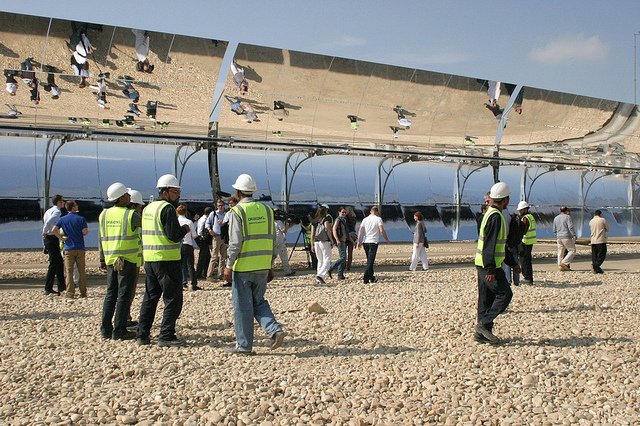
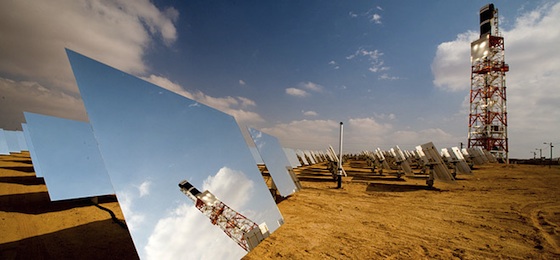
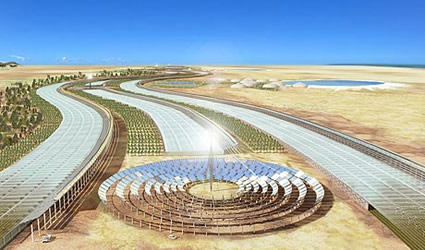
The Norway-based company operates on a threefold premise: construct saltwater-cooled greenhouses, generate electricity from concentrated solar power (CSP), and reintroduce desert flora. The technologies are complementary, and integrated to work as a holistic “biomachine”.
The first concept study of SFP was launched in 2009 at the United Nations climate negotiations in Copenhagen. The developers boldly assert that their engineered oasis has potential to produce enough energy for the Middle East – North Africa region and all of Europe.
Saltwater will be used to provide evaporative cooling and humidification within the greenhouses. Seawater will also be tapped as interstitial coolant within the walls, producing distilled water as a byproduct. Potable water requirements are thus minimized, while maximizing crop yields.
The results of the studies were announced last week at a seminar that Hauge says, “…marks the start of a dialogue between international and Jordanian experts and policy makers, which we believe will establish the necessary framework for establishing a test and demonstration center in Jordan.”
That proposed center will serve as a testing ground, and as the project’s educational and innovation epicenter. This micro-Masdar will be sited at an unspecified Aqaba location, approximately 15 km inland and 40 m above sea level. The 20 hectare pilot center will be designed to allow easy expansion to a 200 hectare commercial facility.
Support for the Jordan project will be via private and public funding: total price tag is estimated at $105 million. A pilot project is also underway in Qatar.
Downsides to the Sahara Desert Project
The project sounds logical. Seawater greenhouses and CSP (concentrated solar photovoltaic) technologies are well-suited to work in hot, dry climates.
It’s also impractical. Generating energy so far from end-users will never be a winning cost model: that’s one of the biggest challenges facing wind and wave technologies. Same argument works against commercial crops: these ultra-organic and carbon neutral veggies will be priced out of most Jordanians reach. Shipping produce to urban centers will raise its carbon footprint up a few shoe sizes.
And as for assisting local populations with green jobs? Consider instead training local farmers how to preserve and store water and employ efficient irrigation. Enact a program of biochar soil enhancement: desert land that’s useless for farming can be converted to rich agricultural land over time through this technique. Commence reforestation even on the smallest scale, efforts, irrigation infrastructures and micro-manage erosion.
Greening up the world’s deserts is simply fantastic – in the most literal sense.
In the Middle East and North Africa, although it’s still possible to shop in the slow, traditional way – to buy fresh food from the butchery, the dairy and the bakery – it is sadly becoming less common. This is especially true in the big cities, where people live high-flying lifestyles and prefer one-stop-shopping. Izmir in Turkey lies somewhere in-between these two extremes.
Turkey is also a place where millions of people each year get hair transplants and cosmetic surgery. Visit the Istanbul airport to see the patients leaving the country.
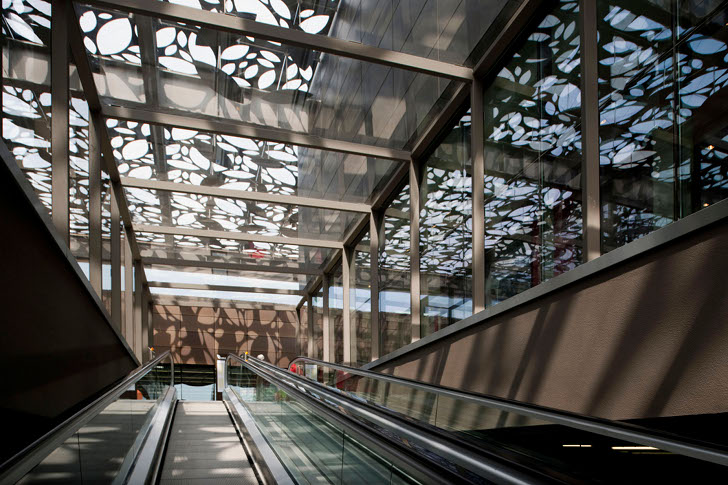
With a population of nearly 4 million, the Aegaen city is a thriving metropolis and a holiday destination but people still make the effort to spend quality time together. To capitalize on this and promote some kind of outdoor engagement, Tabanlioglu Architects has designed the new Asmaçatı Shopping Center as a modern gazebo covered not in real green ivy, but a striking metal roof featuring leafy cutouts.
You see all kinds of weird transportation in the Middle East: but the worst is drifting where young Arab males purposefully “drift” their cars into crowds of people.
I don’t understand the lust for cars. I’m unresponsive to the siren call of Formula 1, NASCAR, and Top Gear. I think commuter trains and subways are the greatest invention since – well – the wheel. So, last week, I shrugged off reports that the Grand Mufti of Dubai proclaimed it a sin to violate traffic rules. No worries for this straphanger. My soul keeps its new car smell.
In other Gulf news, a young Saudi was sentenced to 150 lashes for “drifting” his car after police repeatedly caught him driving like a maniac. Police Director Maj Yehya Al-Biladi urges young men to abstain from drifting, and guarantees severe penalties for future offenders. He told ArabianBusiness it was a “completely wrong” concept that Islam discourages seat belts “as safety is in God’s hand.”
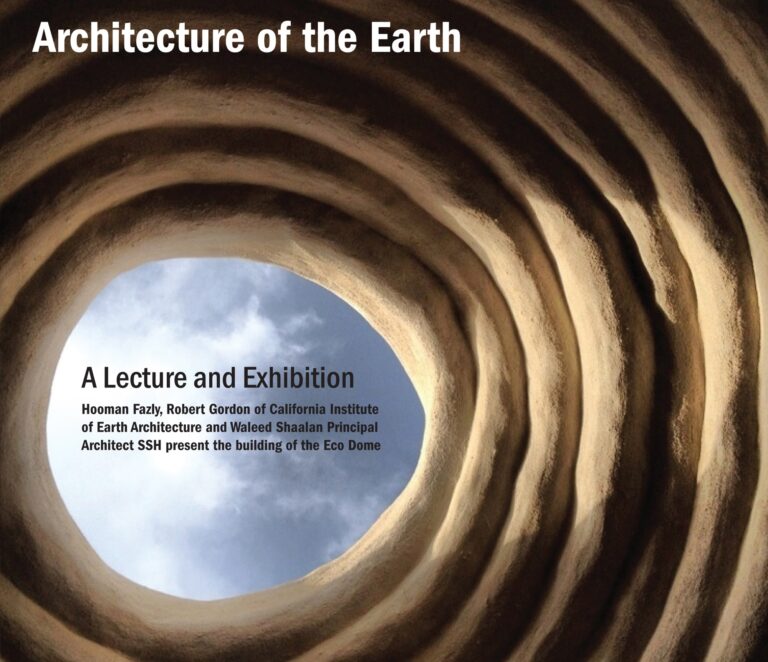
Bringing the merits and techniques of earth architecture to those unable to travel to the California Institute of Earth Architecture founded by Nader Khalili in 1986 was always the internationally-renowned architect’s priority, and it finally came to fruition in 2011 at the first six-day onsite International Workshop in Australia.
Now Hooman Fazly and Robert Gordon from Cal-Earth will be conducting an afternoon lecture tomorrow at the Khaldiya Campus of Kuwait University, where they will team up with Principal Architect Waleed Shalaan to teach students about the eco-dome.




 Tel Aviv’s mysterious gas smell is nothing compared to Cairo’s annual “black cloud”.





 Greenhouses will sprout in Aqaba’s desert under a pilot called The Sahara Forest Project – led by Norway.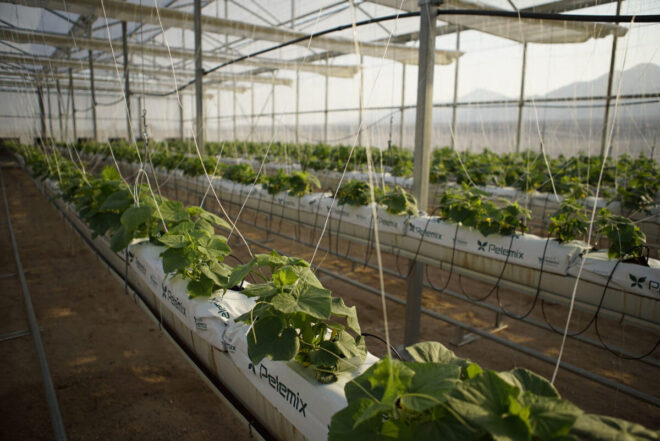


 You see all kinds of weird transportation in the Middle East: but the worst is drifting where young Arab males purposefully “drift” their cars into crowds of people.