Home Blog Page 44

All aboard the Techno, folk and sauna trains in the best subway and train experiences in the world

An acrobat on the E Line, NYC.  (Samira Bouaou/Epoch Times)
An acrobat on the E Line, NYC.  (Samira Bouaou/Epoch Times). The Tube, Underground, Metro, Subway, SkyTrain, RER, Train, Rapid transit, Light rail, Urban rail, Commuter train, Transit train, Subterranean railway, Electric train, City train, Métro. Whatever you call, it’s getting more fun!

While most of us just use the train or bus to get from point A to point B, there are times when the public can move and join together in an event or a mission. Train, subway, and underground rides within cities and between them are the perfect way to add in an experience, either planned or spontaneous. They are moving cabins with a captive audience. Put away your phone and think about the best underground experience you have ever had. My favorite city train ride was on the underground train from Midtown to Harlem in New York City, on a subway train which ended up in acrobatics and a spontaneous dance party. It was the best performance and I was part of the show. No one could plan the art on that train.

Once we bought family tickets to ride the train to nowhere in India. It was pretty funny. We had feet in our faces and got to make friends and eat strange treats, even other peoples’ home cooking. At one point my bag was full of scattered and cooked grains sticking all over it and I dumped it out in a garbage bin on a connecting platform. At that moment my husband said: If they were making a movie about Karin, this would be the opening shot. It was a great memory being on that train.

I love the idea of traveling by train as a sustainable way to do tourism and get a sense of place. There is a lover’s train in Norway, and Saudi Arabia is building the world’s most luxurious slow travel trains as it opens to tourism. But we aren’t looking for love or luxury. Just simple fun: so we took the question to the Internet, and readers responded with some great ideas. What are the best train tourism experiences in the world? There is a techno train, a sauna train, an accordion and beer train, a no-pants train, a supper train and a train where you can speak with professors. Or maybe the surprise train that plays live music and drops you off in an unknown village. All aboard?

Techno Train: Germany’s Eco-Friendly Rave on Rails

Techno Train
Techno Train via Instagram

In Germany, trains are no longer just for commuting—they’re rolling nightclubs! The Techno Train offers partygoers a chance to dance the night away on a train traveling between cities. This eco-friendly rave is powered by renewable energy and creates a sustainable, low-carbon alternative to driving to music festivals. Not only does it reduce car traffic, but it also promotes eco-conscious partying. While this may seem unconventional, it’s an electrifying way to get more people to choose public transport. Find out about the next Techno Train here.

Scientists on the Trains: Israel’s Physics Professors on Trains

Science experiments on the train
Science experiments on the train in Taiwan

In Israel, professors from the Hebrew University of Jerusalem have been known to bring their classrooms to the public transport system. Commuters on specific train lines, at certain times of the year, can listen to free lectures about physics, turning otherwise mundane commutes into educational experiences.

Some explore topics like global warming, the creation of Earth and how the brain works. There was one lecture about the love letters between Einstein and his first and then second wife –– a natural choice since Einstein was one of the founders of the Hebrew University in the 1920s. Einstein gave his first lecture in 1923, and upon his death, donated his collection of material to the university in Jerusalem where it is now located in a special museum. Einstein wrote these letters when he was traveling –– by train.

In Taiwan the idea has caught on and in 2020, scientists started doing experiments with school kids on the train. So much you can do with a captive audience. What would you lecture about on a train? Would you want that for your city? A nice add to the educational experience is Mail Rail in London.

Accordions and Beer on a Train, with the Music Winkel Express, Germany

Beer and accordions on an authentic looking diesel train called the MusikWinkel Express. They need more guests, more beer and more accordions on this car.

The Winkel Express offers a nostalgic journey between the Czech Republic and Adorf in Germany, traversing the picturesque Ore Mountains.
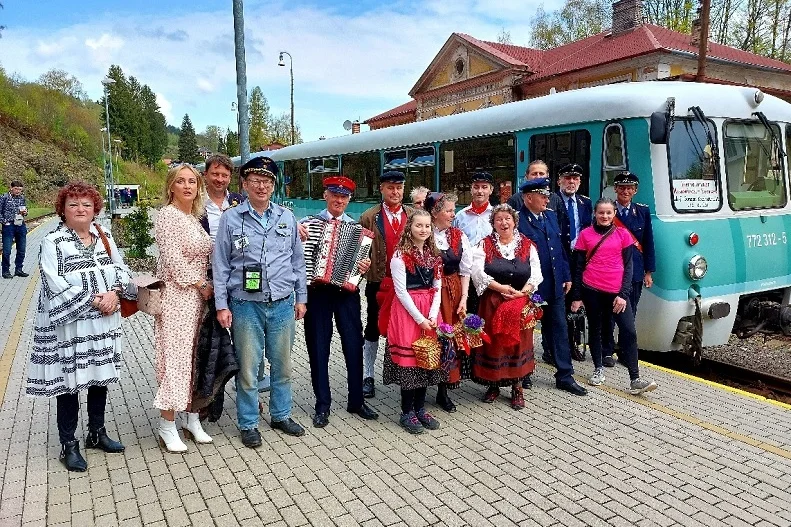
Accordions getting ready for the Musikwinkel Express

This unique experience features a vintage German Schienenbus, a diesel railbus reminiscent of mid-20th-century travel. Passengers are treated to live accordion music, enhancing the very convivial atmosphere, while enjoying locally brewed beers served onboard. The journey is particularly enchanting during winter, as snow blankets the landscape, creating a serene and picturesque setting. The combination of musical entertainment, cultural exploration, and scenic beauty makes the Winkel Express a memorable excursion for those seeking a blend of tradition and adventure. Or those just seeking beer and accordions. Get info about getting aboard with German hearty cheer here.

Wabi Sabi gardening on the train, Tokyo and Kyoto Japan

Garden train japan
Kyo-train GARAKU, running between Osaka-umeda station and Kyoto-kawaramachi station. A train with a garden on the inside!

In Tokyo, commuters can easily step off the train and be right inside an urban garden. We experienced this in Ueno and Shibuya and some trains have gardens inside them like the Kyoto Garaku train, and others have gardens on the roofs of the trains stations. Tokyo and Kyoto are cities full of secrets that don’t give them up easily.

Some local transit authorities in Japan have partnered with environmental groups to create small green spaces filled with plants and trees at select transit hubs. Not only do these mini gardens serve as beautiful, peaceful places for passengers to relax, but they also promote biodiversity and air purification. The green spaces also help reduce the urban heat island effect, making them a practical solution for sustainable cities.

Japan is just full of surprises. It’s even possible to buy a Suica card and jump on and off the trains in Tokyo, with no plan and choose your next adventure. Of course the bullet train is also an experience in itself. I felt a bit nauseated when on one, but I am told you get used to the speed eventually. 

London also took on the idea of Tiny Parks. This page has more about them if you are in London. There are currently 9 Tiny Parks in former London Underground ticket office windows. They can be found at: St James’s Park, Belsize Park, Wood Green, Kilburn Park. 

Tiny Pakrs, London
Tiny Parks, London

No Trousers on the Tube Day, London

No trousers on the Tube
No Trousers on the Tube Day, in London

London also has the No Trousers on the Tube Day, every year. You might make a note to avoid public transport on London, on that day. The last one was in January so you are probably good until that rolls around again. The annual No Trousers Tube Ride went ahead this year despite the freezing temperatures in London.

Bare-legged passengers could be spotted throughout the London Underground, including in Westminster, Waterloo, and South Kensington. Started in January 2002 by just seven participants in New York, the event has since grown globally, with dozens taking part in this year’s London edition. Charlie Todd, the no-pants founder said:  “The goal is simply to create unexpected moments of joy, delight, and confusion.”

No Trousers on the Tube Day
No trousers in London on this frigid day in January. Are you confused?

The Supper Club Train in London

Supper Club, on the tube

Where London in lacking in pants, they make up for in food. A unique supper club experience has been gaining popularity in London, offering a dining adventure like no other—on a train. This innovative concept transforms an ordinary train ride into a gourmet experience, where guests are treated to multi-course meals while traveling through the city or scenic countryside.

The supper club on a train is more than just a meal; it’s an immersive experience that combines the thrill of travel with fine dining. Passengers board a vintage-style train, which has been thoughtfully restored to exude charm and sophistication. The journey takes them to various destinations, with the train’s luxurious setting providing the perfect backdrop for an evening of culinary delight.

Supper club on the tube

Chefs prepare the meals on board, offering seasonal and locally sourced ingredients in beautifully crafted dishes. The atmosphere is relaxed yet refined, with tables set for intimate dining, accompanied by wines that perfectly complement the courses. Along with exceptional food, the journey itself becomes part of the experience, offering views of London’s iconic landmarks or the tranquil English countryside. The cost is about $85 USD a person.

Book the supper club here

Solar-Powered Trains, India

The solar panels generate about 17 units of power in a day which enables the lighting system in the coach. Currently Railways will be installing solar panels on non-AC coaches only.

This is less of an experience and more of a sweet idea: In India, solar energy is powering the lighting of certain diesel-powered trains. The Indian Railways have launched solar-powered trains that help reduce their carbon footprint and reliance on fossil fuels. Solar panels are not yet able to power a train journey, but do send a nice message about sustainable travel. These trains run lights and charging stations from solar panels installed on their rooftops, providing a clean, renewable energy source.

Interactive Art Installations in Argentina

Buenos Aires is a vast canvas for urban art as well as being an efficient public transport system. The train system underground and above is also a gallery of urban art with 450 artistic projects from 200 artists at stations across the network.Throughout the metro system, passengers can engage with art pieces that involve everything from light projections to touch-sensitive walls.

These installations don’t just provide entertainment; they connect passengers with the culture and vibrancy of the city. It’s a creative way to use public transport as a platform for local artists while fostering a sense of pride in the community. The city also offers free bikes when you get off the train using Ecobici, the 24-hour bike share scheme. Bikes can be taken for up to one hour Monday – Friday and up to two hours at the weekend (you can go for a second spin after a five-minute wait).

Reset and Detox on this Sauna and Surprise Train, Czechia

https://x.com/sleeping_train/status/1365678398119546880?lang=ar
VlakFest (Czech Republic) created train sauna car. Work is ongoing also on 2 couchettes and concert car.

VlakFest organizes adventurous train trips throughout Czechia and occasionally to neighboring countries, with the twist of surprise destinations. These trips occur throughout the year, featuring themed rides with live music, cultural experiences, and seasonal events like winter wonderland journeys. The adventure also includes saunas on the train, pioneered in Finland, a country known for its sauna culture.


Vlakfest
Vlakfest, getting there is more than half the fun
All rights reserved.

Unique activities include onboard workshops, food tastings, and overnight stays at hidden gems. The sauna car and love music means getting there is 90 percent of the journey. Meet new people and relax. For dates, locations, and booking details, visit VlakFest’s website.

A Conference on Trains, On a Train?

Darjeeling Limited Screen Shot

This is something only Europeans could think up and I thank my friends in Finland (remember our cleantech press tour Helsinki?); Tampere University is putting on a conference on alternative experiences by train, on a train that crosses through cities and ends in Istanbul. This is a country that has invented saunas on a train, so you know it’s going to be a wild ride. Have a new idea to share for tourism, art, education or the environment? They are looking for submissions and lecturers in areas such as:

  • The railway journey as a narrative trope in literature and film
  • Sensory geographies of the railway
  • Historical phenomenologies of the railway
  • The railway as a multisensory experience in literature and art
  • Railways and the aesthetics of speed
  • Nostalgic or futuristic railway imaginaries

The CfP for the conference ‘Railway Aesthetics: Experiencing Locomotion across Media and Cultures’ (Vienna-Bucharest-Istanbul, 10-13.09.2025) will be taking place between these cities in September, organized by Tampere University, Sapienza University of Rome, and University of Zurich. The deadline for submissions is May 2, 2025. 

Get on the Folk Train, in England

Folk Train England, alternative train travel tourism, with music
The Folk Train in England.

Folk train fun on the Glossop Line: For a fun evening with a special twist, the all year round program of live music folk trains on the Glossop line in the Peak District of Derbyshire is hard to beat. For just the price of your train ticket, music lovers can sit back and admire the views from the carriage window while being entertained by a live folk music band on board the train. Their Facebook page keeps you updated on who’s running the jam for each month. It’s free with a train ticket. The train leaves Manchester Piccadilly in the evening and returns to Manchester later on.

No extra ticket required – Normal train fares apply. A voluntary raffle is held for a bottle of wine or couple of beers. £2 per ticket plus any other contributions you wish to make, all proceeds go to pay the musicians. There are more folk trains in England. While this page is a bit outdated, there are contacts and links for finding out how to catch folk trains running throughout other parts of England. Groups are allowed but be in touch beforehand. 

Party on the Rampage Express, Belgium

Rampage Express train
Rampage Express pre-party train. Look for this guy.

The Rampage Express is a dedicated festival train that takes partygoers from Brussels and Antwerp to the Rampage Open Air festival in Belgium. It’s not just a ride—it’s a pre-party on wheels! The train is filled with excited festival-goers, creating an electrifying atmosphere before you even reach the event. People are decked out in festival gear, music is pumping, and the energy is contagious. It’s a great way to meet fellow fans and get the party rolling. We we

Rampage Open Air is a premier drum & bass and dubstep festival held annually in Lommel, Belgium. The 2025 edition is scheduled for July promising an electrifying experience for bass music enthusiasts. The festival boasts seven stages and over 300 artists, aiming to attract around 60,000 attendees. Book the festival and train here.

The Dutch Sziget Express Party Train from Amsterdam to Budapest

The Sziget Express is a unique party train that transports festival-goers from the Netherlands to the Sziget Festival in Budapest, Hungary. Departing from Amersfoort on August 4, 2025, and arriving in Budapest on August 5, this journey transforms travel into an unforgettable pre-festival celebration. The return trip leaves Budapest on August 12, reaching Amersfoort on August 13.

Onboard, passengers can expect a vibrant atmosphere with DJs, a bar carriage, and ample opportunities to socialize. The train offers comfortable seating, with baggage included in the ticket price. For those traveling with friends, group seating requests are accommodated, provided all have the same ticket type.

Tickets for the Sziget Express start at €299, with package deals available that include festival passes at discounted rates. Given the train’s popularity and limited capacity, early booking is highly recommended to secure a spot on this extraordinary journey to one of Europe’s premier music festivals. Years ago, many years ago when I went to a Rolling Stones concert in Zurich I found myself on a party bus taking us there. Getting the party to a destination festival by rail is so sustainable, leaving out all that space needed for cars that will not be used for days.

The cost of of public transport for major cities in Europe

0
Techno Train, Germany
Get on the Techno Train in Germany. Do you call it the Tube, Underground, Metro, Subway, SkyTrain, RER, Train, Rapid transit, Light rail, Urban rail, Commuter train, Transit train, Subterranean railway, Electric train, City train, or Métro?

Public transport isn’t just a way to get from point A to point B—it’s a gateway to experiencing a city in its truest, most authentic form. It’s one of the most sustainable and eco-friendly ways to travel, helping reduce congestion, cut down on emissions, and lower your carbon footprint. We have spent many journeys on trains and buses in European cities. And some rides, for the cost of the train ride you can be part of a folk train, a sauna train, or the Techno Train. Let’s see how European cities compare in prices, to each other, with inclusions from the Levante.

Single-Ride City Bus/Train Fare Comparison

City Single-Ride Bus Fare (USD)
London, UK $5.19
Zurich, Switzerland $4.75
Stockholm, Sweden $4.20
Oslo, Norway $3.91
Toronto, Canada $3.25
Amsterdam, Netherlands $3.20
Copenhagen, Denmark $3.50
Helsinki, Finland $3.00
New York City, USA $2.90
Vienna, Austria $2.30
Tel Aviv, Israel $2.23
Paris, France $2.20
Berlin, Germany $2.00
Rome, Italy $1.60
Madrid, Spain $1.50
Lisbon, Portugal $1.50
Athens, Greece $1.40
Budapest, Hungary $1.30
Moscow, Russia $0.90
Warsaw, Poland $0.90
Bucharest, Romania $0.50
Belgrade, Serbia $0.65
Zagreb, Croatia $0.70
Sarajevo, Bosnia and Herzegovina $0.50
Skopje, North Macedonia $0.50
Tirana, Albania $0.50
Chisinau, Moldova $0.70
Podgorica, Montenegro $0.50
Pristina, Kosovo $0.50
Tbilisi, Georgia $0.50
Yerevan, Armenia $0.50

Inside cities, trains are more than just transportation; they’re stages for spontaneous experiences and unexpected adventures. From techno parties to educational lectures, trains around the world are transforming the way people travel, making public transport a fun, engaging, and sustainable option.

No Trousers on the Tube Day
No pants in London on this frigid day in January. Are you confused?

In Germany, the Techno Train doubles as a nightclub on rails, powered by renewable energy and offering an eco-friendly alternative to car travel. It’s not just about the music—it’s about reducing carbon footprints while dancing the night away. Meanwhile, in Israel, professors turn commuter trains into mobile classrooms, giving passengers a chance to learn about everything from physics to Einstein’s love letters. It’s proof that even a daily commute can be inspiring.

Vlakfest
Vlakfest, getting there is more than half the fun

For those who love culture and tradition, Germany’s MusikWinkel Express serves local beer with live accordion music, turning a simple ride into a festive celebration. Japan takes a quieter approach with garden-themed trains that promote relaxation and biodiversity, offering passengers a breath of fresh air even in bustling cities like Tokyo and Kyoto.

The Sziget Express
The Sziget Express

Other unique experiences include London’s Supper Club Train, combining fine dining with scenic views, and Taiwan’s educational trains where kids can participate in science experiments on the go. For thrill-seekers, Belgium’s Rampage Express pre-party train brings the festival vibes before you even reach the event.

https://x.com/sleeping_train/status/1365678398119546880?lang=ar
VlakFest (Czech Republic) created train sauna car. Work is ongoing also on 2 couchettes and concert car. https://x.com/sleeping_train/status/1365678398119546880?lang=ar

These examples show that train travel can be an adventure in itself. Whether it’s learning, partying, or just enjoying the ride, taking the train offers endless possibilities to connect with others, explore new ideas, and experience the city in a completely new way. So next time, skip the car and hop on a train—who knows what kind of journey you’ll have?

Data source: public transport sites of cities in Europe. Report an inaccuracy, add a city: [email protected]

Green transportation of paper and wood: a sustainable approach in logistics

0
FSC certified wood products, Sustainable paper transportation, Environmental benefits of FSC certification, Hygroscopic paper rolls in storage, Moisture-resistant packaging for wood, Active shipping system for paper transport, Secured reeled paper with loading straps, Long timber on an extended profile trailer, Telescopic trailer for oversized timber, Door-to-door sustainable logistics, Eco-friendly cargo packaging solutions, Dunnage bags for securing paper bales, Inspection of transport vehicles for wood, Optimized route for reduced carbon footprint, Sustainable wood and paper logistics solutions.
Logging truck is transporting large load of freshly cut timber logs through muddy road in forest

Although paper and wood are considered natural, their transportation cannot always be described as such. What logistics solutions should you pay attention to to work toward sustainable transportation?

Green transportation starts with green sourcing

The wood and paper industry around the world may be subject to FSC (Forest Stewardship Council) chain of custody certification. Certification by this organization confirms that a product comes from a certified forest and meets strict environmental requirements. While it is not necessary to have this document to operate in these industries, it can bring many business benefits, especially given the increased environmental awareness of today’s society.

Evaluating products before they are awarded FSC certification covers a variety of areas, including the transportation of raw materials. Offering a sustainable wood and paper transportation service can therefore establish business partnerships with investors who are keen to confirm that the process takes place with minimal environmental impact.

Challenges in transporting paper and wood

It is worth bearing in mind that cargo consisting of paper, wood, and their derivatives is one of the particularly vulnerable groups. The biggest threat here is water, as products in these categories exhibit high hygroscopicity. Contact of wood with water threatens to make it damp and increase pest activity. In the context of paper and cellulose, this primarily means swelling or mold.

From the carrier’s point of view, it comes down to the need to create the right conditions for transportation. In order for the cargo to reach its destination in an undamaged condition, it must be enclosed in packaging that is resistant to temperature fluctuations and moisture. Solutions must also be implemented to control the conditions inside the trailer or container containing the paper or cellulose. This is done with a so-called active shipping system, which allows real-time monitoring of conditions in the transport space.

Contrary to appearances, reeled paper is characterized by a much heavier weight than one might think. From this appearance, the carrier is subject to the obligation to properly secure it for transport. Strong loading straps and paper liner systems with longitudinal rails and wedges that lock the bales in one position prove to be a frequent choice here.

When it comes to transporting timber, the biggest challenge turns out to be the so-called “long timber”, i.e. lumber of an above-standard length. Its transport by road must be carried out using specialized equipment, including, for example, an extended profile trailer with an extended load or a telescopic trailer. Special attention must also be paid to packing the packages safely and loading the cargo space evenly with it. If the cargo qualifies as oversized, it is also necessary to obtain the required permits.

Logistics solutions in the service of sustainable paper and wood transportation

Given the need to maintain controlled conditions during the transportation and storage of paper, pulp, and wood, environmental goals are furthered by planning the transportation accordingly. Any change of means of transportation or temporary holding in a warehouse involves an additional human factor and the powering of systems to maintain moisture and temperature at a certain level.

It is therefore necessary to optimize the route in such a way that the cargo gets from A to B in the shortest possible time, excluding downtime that is not necessary. For this reason, door-to-door transportation by an experienced logistics partner will prove to be the most environmentally friendly here. AsstrA’s road transport should meet the expectations of even the most demanding investor.

It is also worth making sure that eco-friendly solutions are used for packaging and securing cargo. Where stretch film can be dispensed with without harming the products being transported, it should be excluded. In other cases, it is recommended to keep it to a minimum. Modern cargo securing solutions, such as dunnage bags (useful for filling the space between paper bales) or spreader bars and rods, will also prove helpful.

In the context of sustainable transportation, it is also important to remember that vehicles used for transporting wood and paper are exposed to harsh working conditions. As a result, their technical condition should be inspected more frequently than for vehicles handling lighter loads. The more efficiently a fleet operates, the lower the carbon footprint it generates.

Make Kuku Bedemjan – an Eggplant Frittata from Iran

0

Iranian eggplant frittata

Eggplant, as versatile as a potato. Like spuds, it absorbs other ingredients’ flavors but keeps its sturdy personality throughout the cooking. It’s a hearty vegetable that appears often in vegetarian/vegan cuisines to provide that satisfying “meaty” background. As in these bulgur balls in eggplant and tomato sauce. Although here’s an interesting note: botanically, the eggplant is considered a berry.

I’m sure I’d be getting flack from other eggplant fans for having consigned it to the background, so I’ll state up front: eggplant also stars in many main dishes. Like this simple recipe for eggplant slices in tomato sauce. Well, yes, eggplants and tomatoes combine often and deliciously. Maybe their affinity starts with their both being nightshade fruit.

Here we present Kuku Bedamjan, an Iranian egg dish where the filling is eggplant. Any time you come across a recipe with the word “kuku” in it’s name, you’ll know it’s an egg-based dish, very often a big, vegetable-stuffed one similar to the frittata. But unlike Mediterranean omelets and frittatas, this recipe has no cheese or other dairy. The focus is on the eggplant and onion, subtly flavored with an unexpected (to Western cuisine) spice: saffron.

Kukus are most often cooked in a skillet and carefully turned over to finish the top side. In a departure from tradition, this kuku is baked in a casserole or large, preferably cast-iron skillet. Easier, because no hovering over the fragrant, golden creation on the stove top, and no flipping over.

Kuku Bedemjan

Iranian Eggplant Frittata

  • skillet
  • casserole
  • large bowl
  • 4 tablespoons Olive oil
  • 1 Onion (finely chopped)
  • 3-4 Garlic cloves (crushed)
  • 4 Small eggplants (cut into medium cubes)
  • 6 Eggs
  • 3 Saffron threads (soaked in 1 tablespoon boiling water)
  • 1 teaspoon Paprika
  • 1/2 teaspoon Salt
  • Ground black pepper to taste
  • To garnish: chopped fresh parsley
  1. Preheat the oven to 350°F – 180°C.
  2. Heat 2 tablespoons of the olive oil in a large skillet.
  3. Fry the onions until golden and soft, but not crisp.
  4. Add the garlic. Stir and cook 2 minutes.
  5. Add the eggplant cubes. Stir and cook 10-12 minutes, until they’re soft and golden brown.
  6. In a large bowl, beat the eggs.
  7. Pour the eggplant mixture into the bowl.
  8. Add the saffron water, paprika and seasoning.
  9. Pour the remaining 2 tablespoons of oil into an ovenproof casserole, or wipe the skillet clean for baking the kuku.
  10. Heat the casserole or skillet a few minutes in the oven.
  11. Pour the egg/vegetable mix into the casserole or skillet.
  12. Bake 30-40 minutes until set. Garnish with parsley and serve.
Main Course
Iranian, Vegetarian

sliced raw eggplant

Top photo from the excellent food blog The Caspian Chef.

Photo of sliced eggplant by tijana-drndarski via Unsplash

More exciting recipes starring eggplant on Green Prophet:

Best Baba Ganoush recipe

Vegetarian Tahchin, Iranian Rice with Eggplant and Portobellos

Roasted eggplant with tahini, as a side dish


Tel Aviv’s mayor Huldai is taking smart phones from schools – his irony in education

0
Boys from the Shemesh class, Reut
A Waldorf school in Tel Aviv, Reut. Photo by author, Karin Kloosterman.

Tel Aviv-Yafo Mayor Ron Huldai recently announced a plan to remove smartphones from schools to improve focus and attention. He stated, “I have a dream that together, we will pull ourselves and our city’s education system out of our comfort zone, relearn the art of attention, and be fully present—100% in time and place. That we will dare to say: we are going to manage technology, not be managed by it. How? By removing smartphones from schools.”

Huldai praised several schools in Tel Aviv already implementing this, calling them “digital pioneers” and highlighting their role in leading this shift.

While this sounds positive, it feels ironic to me as a founding parent of Tel Aviv’s first Waldorf School, established 15 years ago (we joined at Year 3). Our school, formerly called Aviv and now Reut, has always prohibited cell phones and embraced Waldorf principles like minimizing technology and promoting arts and crafts. Most families don’t allow their children to have phones until at least age 12, if at all.

When our school transitioned from private to public 1.5 years ago, the city, led by Huldai and Shiri Carmon, forced us to split grades 7 and 8 from the younger students and integrate them into Ironi Zayn, a challenging middle and highschool school in Jaffa that does not align with Waldorf values. Every day, our values are questioned, and we constantly have to defend our approach to education. A quick survey and most families that tried to integrate, are leaving.

The result? The older classes are struggling, and my son’s grade 6 class now in line to join the experimental integration, is now breaking apart, with students from his class scattering to different schools across Tel Aviv without completing their 8-year cycle where they started.

This isn’t Huldai’s first clash with our school. About eight years ago, he took us to the Supreme Court to prevent our recognition as a legitimate school despite us winning the local court in Tel Aviv that he do so. His current smartphone initiative feels like lip service, especially considering how he disregarded the community and disrupted a thriving, tech-free educational model at Reut Waldorf School. Children in the older grades, Grades 7+ now need to use a phone to check schedules, communicate with staff.

Ron Huldai wants the world to think that Tel Aviv is a green city and there are great programs that are marketed well and touch on green values, see the urban fruit tree program, but he virtually cares nothing about the true environmentalists who built Tel Aviv’s Waldorf Schools, and their community who created the Reut Waldorf School of Tel Aviv. Luckily, he listened to us and didn’t agree to have the trees cut down from Jerusalem Boulevard during the light rail construction; but his dissembling of the Reut Waldorf school and its deeply anthroposophic community is as shambolic as the idea of cutting down 100 year-old trees to make way for an eco train.

Waldorf schools, created by Austria’s Rudolph Steiner, are the fastest-growing school system in Israel because of their focus on arts and crafts and their avoidance of technology in the classroom. As of 2024, the country hosts 25 elementary schools, 6 high schools, and over 150 kindergartens following the Waldorf methodology.

This expansion reflects a doubling of student enrollment over a five-year period, indicating a strong and growing interest in Waldorf education among Israeli families.

A core principle of Waldorf education is the integration of arts and crafts into the curriculum. Students engage in activities such as drawing, painting, sculpture, knitting, and woodworking, which are designed to foster creativity and practical skills. It is a much loved and appreciated method for the kids of hightech CEOs and engineers –– both in Israel as startup nation, and also in Silicon Valley in California.

It’s ironic, and also very sad for 100 families, that Huldai is being praised for pushing a tech-free school environment while his administration shattered a community that has been practicing this philosophy for over a decade.

Tel Aviv is giving away free fruit trees to turn the city into an urban edible forest

0
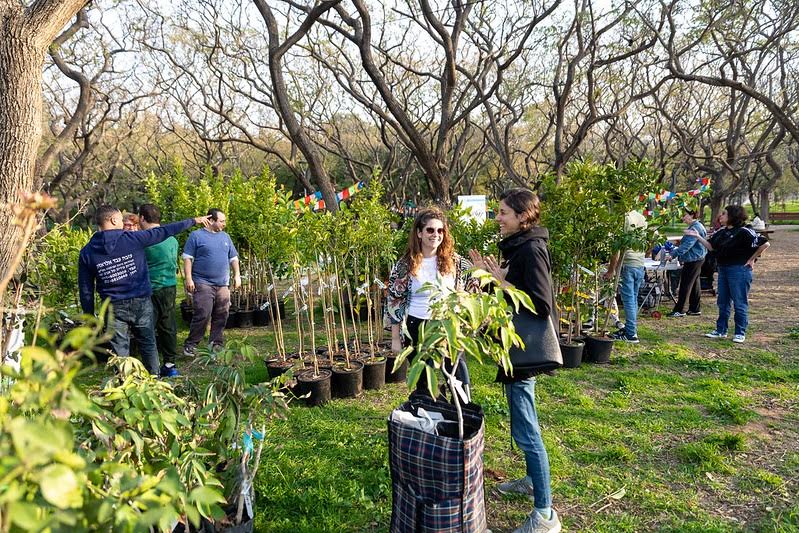
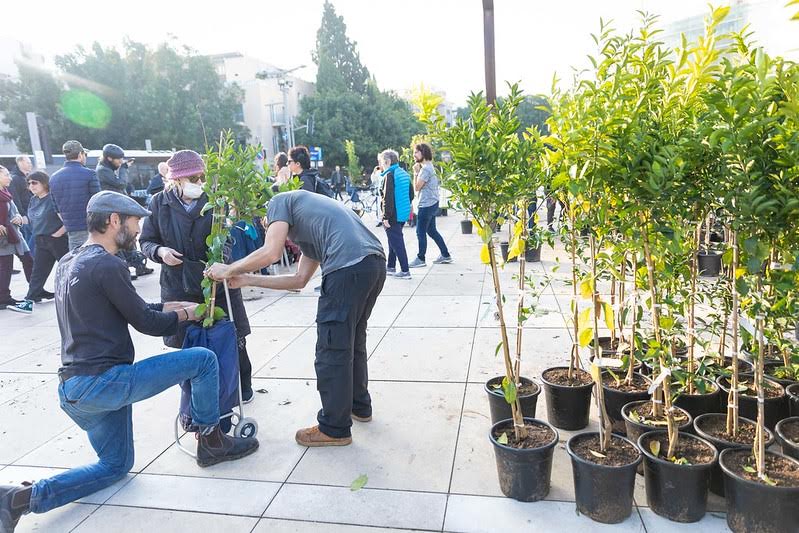
Orange trees are everywhere in Jaffa. So are grapes, loquats, and olives. The city is giving away free fruit trees so the entire city will be an edible urban forest

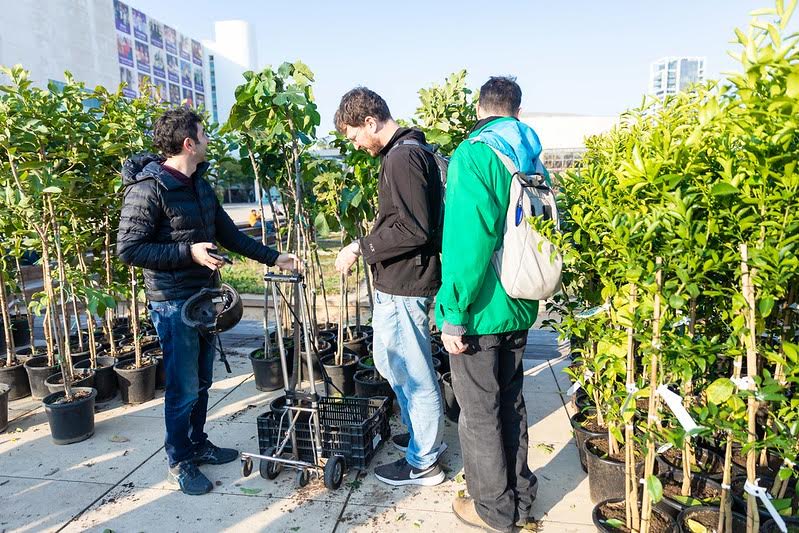
The Tel Aviv-Jaffa Municipality continues to distribute trees – and the most recent call was for Jaffa.  “We invite you to join the project and plant a fruit tree in the garden of your residential building,” says the message sent out by the city a few weeks ago. The city of Tel Aviv has decided that its residents will grow an edible forest among the gardens of apartment buildings and shared spaces. There are already Whatsapp groups and apps that share with locals where they can harvest and forage. The joys of urban foraging are now going to expand.

urban edible forest, city food forest, urban permaculture garden, edible landscape design, sustainable urban farming, community food forest, urban agriculture, edible plants in city, urban food ecosystem, green city living, urban gardening for food, permaculture in cities, edible greenery, city-grown food, urban food sustainability, urban food forest design, edible cityscape, food security in cities, urban agroforestry, urban self-sufficiency urban edible forest, city food forest, urban permaculture garden, edible landscape design, sustainable urban farming, community food forest, urban agriculture, edible plants in city, urban food ecosystem, green city living, urban gardening for food, permaculture in cities, edible greenery, city-grown food, urban food sustainability, urban food forest design, edible cityscape, food security in cities, urban agroforestry, urban self-sufficiency urban edible forest, city food forest, urban permaculture garden, edible landscape design, sustainable urban farming, community food forest, urban agriculture, edible plants in city, urban food ecosystem, green city living, urban gardening for food, permaculture in cities, edible greenery, city-grown food, urban food sustainability, urban food forest design, edible cityscape, food security in cities, urban agroforestry, urban self-sufficiency urban edible forest, city food forest, urban permaculture garden, edible landscape design, sustainable urban farming, community food forest, urban agriculture, edible plants in city, urban food ecosystem, green city living, urban gardening for food, permaculture in cities, edible greenery, city-grown food, urban food sustainability, urban food forest design, edible cityscape, food security in cities, urban agroforestry, urban self-sufficiency urban edible forest, city food forest, urban permaculture garden, edible landscape design, sustainable urban farming, community food forest, urban agriculture, edible plants in city, urban food ecosystem, green city living, urban gardening for food, permaculture in cities, edible greenery, city-grown food, urban food sustainability, urban food forest design, edible cityscape, food security in cities, urban agroforestry, urban self-sufficiency urban edible forest, city food forest, urban permaculture garden, edible landscape design, sustainable urban farming, community food forest, urban agriculture, edible plants in city, urban food ecosystem, green city living, urban gardening for food, permaculture in cities, edible greenery, city-grown food, urban food sustainability, urban food forest design, edible cityscape, food security in cities, urban agroforestry, urban self-sufficiency urban edible forest, city food forest, urban permaculture garden, edible landscape design, sustainable urban farming, community food forest, urban agriculture, edible plants in city, urban food ecosystem, green city living, urban gardening for food, permaculture in cities, edible greenery, city-grown food, urban food sustainability, urban food forest design, edible cityscape, food security in cities, urban agroforestry, urban self-sufficiency

This tree distribution is part of the city’s climate change preparedness and urban forest plan, aiming to plant 100,000 trees across the city by 2030. We highlighted Tel Aviv in this study of AI and urban greenery from MIT.

Trees in urban areas play a crucial role – they provide shade, can lower temperatures by about 5 degrees, purify the air, support the ecosystem, and more. The trees we plant today will provide us with delicious fruits in the coming years, offering a source of nutritious and accessible food right outside our homes.

There are already a number of edible trees planted throughout Tel Aviv and Jaffa. It’s not hard to find citrus, loquats, mulberries and olives. Now the city will provide a variety of fruit trees for free: (citrus, loquat, plum, fig, mulberry, guava – subject to availability), compost, and guidance on planting and tree care.

Some trees like olive do not require a lot of watering. Trees like mango, do, and are not part of the program.

“Your part will be to plant the tree near the fence so it provides shade to the nearby sidewalk, send us a photo of the newly planted tree, water it, take care of it, and enjoy a green garden with delicious fruits,” writes the city.

Tree distribution will take place during February. The exact pickup location and date will be provided later. Note, trees will not be distributed under this project for addresses where urban renewal or building permits are planned within the next 5 years. The initiative will be implemented gradually in different neighborhoods across the city.

Related: How Ron Huldai killed the future of the city’s nature-based Waldorf school

Tel Aviv gets an A Minus for Sustainability

AI Tool Reduces Greenhouse Gas Emissions Associated with Livestock Farming and Land Use

0
Treetoscope’s ingenious system monitors plant indicators in real time to provide worldwide farmers a SaaS platform to optimize irrigation at substantial water savings
The Treetoscope app helps people understand the complex processes in orchards.

Loughborough University computer scientists have developed AI tools that offer insights into how greenhouse gas emissions associated with UK livestock farming and land use can be reduced.

The tools – which are hosted on an online digital platform and created as part of research funded by UK Research and Innovation (UKRI) and the Engineering and Physical Sciences Research Council (EPSRC) – aim to provide farmers, farming organisations, and government bodies with valuable data on how changes in livestock practices and land use can help the UK achieve its 2050 net zero goal.

Developed by a team led by Professor Baihua Li and Professor Qinggang Meng, key features of the platform include machine learning models designed to estimate methane emissions from livestock farming, predict milk productivity and ammonia emissions from dairy farms, and analyse how land use and environmental factors influence methane emissions across the UK.

Related: what is Bovaer milk and why are UK consumers dumping it? 

“Our mission is to bridge the gap between innovation and practicality, offering a platform that supports data-driven decisions to combat climate change, advance sustainable farming, and achieve global net-zero emissions goals”, said Professor Li.

“By harnessing AI, our platform can offer data-driven insights that can help forecast future emissions based on a diverse range of data, giving stakeholders actionable intelligence to make cost-effective proactive decisions.”

Achieving net zero by 2050 requires balancing greenhouse gas emissions with their removal and storage in ‘carbon sinks’ – natural systems like forests, oceans, plants, and soil that absorb more carbon than they release.

Livestock farming plays a dual role, contributing to greenhouse gas emission – particularly methane and nitrous oxide, two potent heat-trapping gases – while also affecting the land’s ability to function as a carbon sink through grazing, feed production, and pasture management.

Reducing farming’s environmental impact is challenging, as emissions, carbon storage, and farm productivity are shaped by multiple interacting factors, such as animal breed, feed, pasture, and climate. These vary across farms, making a one-size-fits-all approach ineffective.

Related: Accelerate 2050 conference and AI for Good

Beyond livestock farming, land use itself significantly influences emissions. Different types of land – such as agricultural, woodlands, or urban areas – interact with environmental factors to determine how much methane is released or absorbed. Understanding these complex interactions is essential for identifying the best strategies to minimise emissions.

The Loughborough University AI models provide a solution. Trained on diverse livestock and environmental datasets, they analyse how various factors interact to impact emissions, providing farm-level and nation-wide insights that can help shape strategies to support the UK’s net zero goal.

The AI tools developed for livestock farms allow farmers to input details about their specific animals and practices to estimate their current annual greenhouse gas emissions. Farmers can easily explore potential changes to their practices – simply by selecting options from drop-down menus or entering variable values. These adjustments provide immediate insights into their potential impact on both emissions and farm productivity.

One tool is designed specifically for dairy farmers, helping them estimate how their current practices affect individual cow milk yield and ammonia levels in waste. Monitoring ammonia is crucial, as it interacts with soil microbes to produce nitrous oxide and may also indicate dietary imbalances. This development was made possible through the support of the National Bovine Data Centre and the Cattle Information Service.

Another tool, developed for beef farmers, predicts methane emissions for individual cows based on farm-specific data. It also helps farmers understand emissions in context by offering relatable comparisons—such as the number of trees needed to offset a cow’s annual emissions, the equivalent emissions from flights between London and New York, or the months of energy use in an average UK household.

The team has also developed a livestock emissions calculator based on Intergovernmental Panel on Climate Change (IPCC) guidelines, the global standard for climate reporting. Suitable for farmers worldwide, it simplifies complex government formulas and presents them in a user-friendly format, helping farmers compare their emissions to official baselines.

Creating a Digital twin

Digital twins

Beyond farm-level tools, the research team has harnessed artificial intelligence to develop a user-friendly, web-based platform – referred to as a ‘digital twin’ – to provide detailed insights into how different types of land use affect methane emissions across the UK.

The digital twin features heatmaps of ruminant livestock distribution, land cover types (such as agriculture, urban areas, and woodland), and methane emission concentrations across the UK. It integrates real-time satellite methane observations from Sentinel-5P TROPOMI, AI models, datasets, and various intuitive visualisation tools.

Users can adjust parameters such as location, land cover percentages, seasons, and years to track historical changes and model future emission scenarios based on climate and land use projections.

The Loughborough team has analysed the UK’s methane emissions using the digital twin with early findings – intended for future publication in a peer-reviewed journal– indicating that methane emissions have been increasing year after year. Agriculture arable land and improved grassland used for livestock farming have also been identified by the researchers as key contributors, closely linked to methane hotspots.

It is hoped the tool will be used by policymakers, government bodies, and farming organisations to deepen understanding of how environmental factors influence emissions and enable data-backed decisions to be made to reduce emissions.

AI and the Accelerate 2050 conference

Singapore's Super Tree Grove at Gardens by the Bay
Singapore’s Super Tree Grove at Gardens by the Bay. Is this the future of cities?

Artificial Intelligence, or AI, has the power to transform our world, helping farmers plant seeds and water plants at the right time. It can help develop solutions in renewable energy so we can scale climate solutions that help wean the world off oil and plastics. But when it comes to AI, we need some kind of global consensus on a couple of things: what do we define is “good” for the planet, and what do we want the future to look like? Global leaders are coming together these questions and fresh challenges and opportunities in AI.

This event announcement comes off the heels of an AI and the planet UN project that includes 193 UNESCO signatories –– with some of the countries being the most violent on earth. Now is the time to wake up stakeholders to build the foundations of AI so we can truly use it for good.

The Accelerate 2050 conference in Brindisi, Italy, brings together visionaries, innovators, and leaders to address global challenges in AI. One of the key focus areas is AI for Good, leveraging artificial intelligence to solve pressing societal and environmental issues. This initiative is not just about technology but about creating a positive impact on humanity and the planet.

The conferences bring together experts from various sectors—including investors, companies, consultants, non-profits, and government officials—to discuss and promote sustainable practices and innovations.

Key Features of Accelerate 2050 Conferences:

The conferences cover a range of topics such as climate technology, renewable energy, carbon markets, biodiversity, impact investing, and the role of artificial intelligence in promoting sustainability. Events have been held in multiple locations, including New York City and Santa Monica, California. For instance, the New York event took place on May 8-9, 2024, at the New York Society for Ethical Culture Building. The Santa Monica event was held on November 6-7, 2024, at the Expert Dojo.

One of the topics is AI for Good which refers to the ethical and responsible use of artificial intelligence to tackle challenges like climate change, poverty, healthcare accessibility, and more. It emphasizes using AI not just for profit but to improve lives and promote sustainability. This includes:

  • Environmental Conservation: AI models to monitor biodiversity and carbon emissions.
  • Social Impact: Enhancing education, healthcare, and community development.
  • Ethical AI: Ensuring transparency, fairness, and accountability in AI systems.

How Other Generations and Skill Sets Can Contribute

AI for Good isn’t just for the tech-savvy; it requires diverse experiences and interdisciplinary approaches. Here’s how people from different generations and backgrounds can participate:

Mentoring and Leadership:Experienced professionals can mentor young AI enthusiasts, guiding them on ethical considerations and societal impacts.

Policy and Ethics:Those with backgrounds in law, sociology, or public policy can contribute to creating ethical frameworks and guidelines for AI deployment.

Creatives and Communicators: Designers, writers, and educators are needed to make AI solutions accessible and understandable to non-technical audiences. Storytelling and communication strategies can help raise awareness about the impact of AI for Good.

The meeting provides a great chance to network with people in AI who share similar goals. Some of the confirmed speakers include:

  • Vanessa AdamsLevel4International
    A consultant service that focuses on international development, aiming to drive social impact and sustainability.

  • Saeed Al DhaheriAI UNESCO / AI Ethicist
    Specializes in AI ethics, ensuring responsible AI deployment globally.

  • Niclas AnderssonUntap
    A water from air business.

  • Fiona BanisterDecarbonized.org
    Advocates for environmental sustainability through decarbonization initiatives.

  • Brian BartholomeuszStanford – TomKat Center
    Leads efforts in energy innovation and tech transfer at Stanford University.One Earth logo

  • Karl BurkartOne Earth (Invited)
    Focuses on environmental sustainability, leveraging technology for conservation.

  • Michael CapponiGEM
    Leads global empowerment and humanitarian aid initiatives. Global Empowerment Mission was formed in response to the 2010 Haiti Earthquake to deliver the most amount of aid, to the most amount of people in need, in the shortest amount of time and with the least amount of costs to donors.

  • Claudia D’AndreaTetra Tech
    Tetra Tech is a global consulting and engineering services firm that provides a wide range of services related to environmental, infrastructure, and energy sectors.

  • Edivando Vitor do CoutoAlteromani
    Focuses on renewable energy and sustainable solutions.

  • Jillian DyszynskiAmerican Forest Foundation
    Works on environmental conservation and forestry initiatives.

  • Gene EidelmanAzure Printed Homes
    Pioneers sustainable housing solutions using advanced manufacturing techniques.

  • Brian FairhurstAnthropogenic
    Utilizes advanced impact intelligence to address environmental challenges.

For more information about upcoming events, speakers, and registration details, you can visit the official Accelerate 2050 website.

Can cuttlefish ink be “bear spray” against sharks?

0

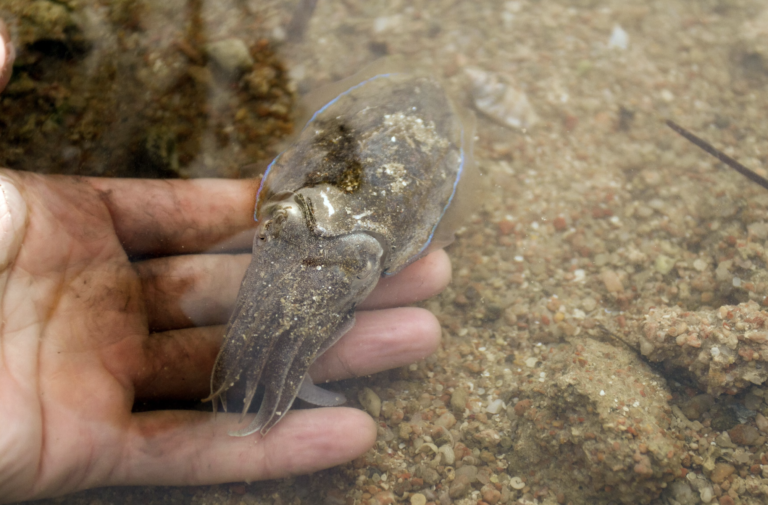
Close-up of a cuttlefish, Cuttlefish underwater, Cuttlefish displaying unique pattern, Marine life cuttlefish, Cuttlefish camouflaging in ocean

Diving in the crystal-clear waters of the Red Sea or exploring the vibrant reefs of Australia is an unforgettable experience. But sharing the ocean with sharks can be a nerve-wracking thought, even for the most seasoned divers. What if there were a natural, non-lethal way to keep sharks at a safe distance? Recent research suggests that cuttlefish ink might be the answer. It is much needed: a recent tragic dive boat accident in the Red Sea that led to 11 deaths was prevented from being rescued quickly because of sharks in the area, according to witnesses.

Cuttlefish (Sepia officinalis) are known for their impressive camouflage skills and their ability to release a cloud of ink when threatened. This ink isn’t just a visual smokescreen—it also contains chemical compounds that can overwhelm a predator’s sense of smell. Sharks, in particular, rely heavily on their acute olfactory senses to navigate and hunt. The compounds in cuttlefish ink are thought to disorient sharks, making them less likely to approach the source of the scent.

Recent research from University College Dublin indicates that cuttlefish ink, particularly its primary component melanin, may serve as an effective shark deterrent. The study found that melanin can bind to shark olfactory receptors, potentially overwhelming their sense of smell and causing them to avoid areas where the ink is present.

“Understanding how prey species like cuttlefish have evolved to exploit specific vulnerabilities in predators like sharks enriches not only our understanding of marine ecosystems but provides inspiration for conservation tools rooted in natural processes,” said Colleen Lawless, a researcher in the study.

Modelling the three-dimensional structures of shark olfactory receptors by using genetic data from several shark species including the Great White Shark, Colleen and her colleagues Dr Graham Hughes and Dr John Finarelli discovered melanin possesses a molecular structure that lets it latch onto the smell receptors of these ocean predators, disrupting their sensory perception.

And because sharks generally share the same core set of smell receptors despite differences in lifestyle and habitat, the binding effect likely extends to all shark species, making it likely effective across most shark species.

This discovery suggests that deploying cuttlefish ink, or synthetic analogs, could create safe zones for divers by deterring sharks without harming them. Such an approach could enhance diver safety in regions like the Red Sea and Australian waters, known for frequent shark encounters. Additionally, this method offers a non-invasive alternative to traditional shark deterrents, which often pose risks to other marine life.

By releasing cuttlefish ink—or a synthetic version—into the water, it may be possible to create a safe zone that deters sharks. This approach could provide a protective barrier, allowing divers to observe marine life without posing a threat to themselves or the sharks.

Practical Applications and Challenges

For this idea to work in real-world scenarios, several challenges need to be addressed:

  • Deployment Methods: The ink could be released from wearable devices, such as wristbands or diving suits equipped with small dispensers. Alternatively, underwater “ink bombs” could be deployed around high-risk areas. Or kept on hand during rescue dives. Divers from the Sea Story accident did not want to go on a rescue operation because of the number of sharks circling the floating wreck.
  • Environmental Impact: It’s crucial to ensure that the ink doesn’t harm other marine species or disrupt the delicate ecosystem.
  • Scalability and Production: Harvesting enough natural cuttlefish ink isn’t feasible, so researchers are exploring synthetic alternatives that mimic the chemical properties of the original ink.
  • One of the most exciting aspects of this technology is its potential to protect both humans and sharks. By steering sharks away from popular diving sites, we reduce the chances of negative encounters that could lead to harmful outcomes for the sharks.

While promising, further research is necessary to develop practical applications and assess the environmental impact of widespread use of cuttlefish ink as a shark repellent.

How the mobility scooter industry is tackling carbon emissions

0
mooncool electric trike for seniors
Mooncool electric trike for seniors and people who need the stability of 3 wheels

The mobility scooter market is increasingly focused on addressing carbon emissions and enhancing environmental sustainability.  As the demand for mobility solutions grows, especially among the ageing population, the industry is taking steps to minimise its environmental impact.  Here we provide a breakdown of how the mobility scooter market is tackling carbon emissions.

Electric Power and Zero Emissions

  • Electric-Only Operation: Mobility scooters are predominantly electric, meaning they produce zero exhaust emissions during use.  This is a major advantage over fossil fuel-powered vehicles, contributing to reduced air pollution in urban areas.
  • Battery Advancements: The shift from traditional lead-acid batteries to more efficient lithium-ion batteries is underway.  Lithium-ion batteries offer better energy density, longer life cycles and faster charging times, which collectively reduce the environmental footprint by enhancing energy efficiency and reducing waste.  

Sustainable Manufacturing Practices

  • Eco-Friendly Materials: Manufacturers are increasingly using sustainable materials in scooter production.  This includes recyclable plastics and metals, which help lower the environmental impact associated with raw material extraction and processing.
  • Energy-Efficient Production: Efforts are being made to adopt energy-efficient manufacturing processes, which can significantly reduce carbon emissions.  This includes optimising supply chains, reducing waste and implementing cleaner production technologies.  

Lifecycle Emissions and Recycling

  • Comprehensive Emissions Assessment: To fully understand the carbon footprint of mobility scooters, it is important to consider lifecycle emissions, which include emissions from manufacturing, operation and disposal.  The industry is working towards minimising emissions at each stage of the lifecycle.  
  • Battery Recycling Initiatives: Proper recycling and disposal of batteries are crucial for reducing lifecycle emissions.  Manufacturers are developing return initiatives and recycling schemes to ensure that batteries and other components are disposed of responsibly and materials are reused where possible.  

Renewable Energy Integration

  • Solar Charging Solutions: Some mobility scooters are being designed with solar charging capabilities, allowing users to harness renewable energy.  This reduces reliance on grid electricity and promotes the use of clean energy sources.
  • Green Energy Partnership: Manufacturers are exploring partnerships with renewable energy providers to offer green charging solutions, further reducing the carbon footprint associated with electricity consumption.  

Regulatory and Market Drivers

  • Government Incentives: The UK government is offering incentives for the development and adoption of low-emission technologies.  This includes grants, tax breaks and subsidies for manufacturers and consumers, encouraging the production and purchase of environmentally friendly mobility scooters.
  • Consumer Demand: As consumers become more environmentally conscious, there is growing demand for sustainable mobility solutions.  This market pressure is driving manufacturers to innovate and prioritise carbon reduction in their product offerings. 

Urban Infrastructure and Integration

  • Smart City Initiatives: As part of wider smart city initiatives, the UK is investing in infrastructure that supports electric mobility, including charging stations and dedicated lanes for mobility scooters.  This integration helps reduce emissions by promoting the use of electric vehicles over traditional ones.

The mobility scooter market is actively working to reduce carbon emissions through advancements in electric power, sustainable manufacturing practices and renewable energy integration.  By focusing on lifecycle emissions and responding to regulatory and market drivers, the industry aims to provide environmentally friendly mobility solutions that meet the needs of users while contributing to a more sustainable future.  As these efforts continue, mobility scooters will play an increasingly important role in reducing urban carbon emissions and promoting cleaner, greener transportation options in the UK.  

Why do mummies smell so sweet?

0

mummies smell sweet

Unveiling the Scents of the Afterlife: Did Ancient Egyptian Mummies Smell Like the Gifts of the Three Wise Men?

Researchers are investigating whether the smell of an Egyptian mummy could enable them to discover what materials were used to preserve the body without disturbing it. They extracted air from the sarcophagi of nine mummies and asked expert smellers to rate the scents for contemporary odour qualities such as woodiness and sweetness. Woodsy and sweet with a hint of pistachio, was the answer.

They then analysed each air sample to identify volatile compounds responsible for certain smells. The team also hope their work can provide curators with a synthetic recreation of how mummies smell to make exhibits more engaging.

Researchers from UCL and the University of Ljubljana conducted the first-ever systematic analysis of the smells associated with mummified bodies. Using advanced technology, including an electronic ‘nose’ and trained human sniffers, they examined nine mummies displayed and stored at Cairo’s Egyptian Museum.

Figure 1. (A) Coffin with a mummified body (M7) in the display area of the Egyptian Museum in Cairo.
Coffin with a mummified body in the display area of the Egyptian Museum in Cairo.

Related: Iran’s mummy shrunken salt heads

The findings, published in the Journal of the American Chemical Society, offer a new perspective on ancient embalming practices and how museums preserve these historical artifacts.

One researcher is developing the scent into a perfume, and is calling it the Scent of Eternity.

Scent of a Mummy

“The smell of mummified bodies has for years attracted significant interest from experts and the general public, but no combined chemical and perceptual scientific study has been conducted until now,” said Professor Matija Strlič, lead author of the study. “This ground-breaking research really helps us better plan conservation and understand the ancient embalming materials. It adds another layer of data to enrich the museum exhibition of mummified bodies.”

King Mutt: a dog mummy buried along with a pharaoh.
King Mutt: a dog mummy buried along with a pharaoh. Do they smell good too?

To identify the chemicals released by the mummies, the team used a gas chromatograph and mass spectrometer. A panel of trained sniffers also evaluated the scents’ quality and intensity, allowing researchers to distinguish between odors originating from the original mummification process and those from modern conservation methods.

Dr. Cecilia Bembibre, a member of the research team, highlighted two significant aspects of the study: “First, new information was revealed by the smells, highlighting the importance of using our senses to understand the past. Secondly, while most of the studies on mummified bodies have taken place in European museums so far, here we worked closely with Egyptian colleagues to ensure their expertise and perceptual experience were represented, and we jointly developed an ethical and respectful approach to studying the mummified bodies.”

Barbara Huber, a scientist at the Max Planck Institute of Geoanthropology, examines Scent of Eternity in the lab. (Chris Leipold)

Related: meet the face of Pharaoh Thutmoses IV

One of the study’s key findings is the ancient Egyptians’ awareness of the link between scent and purity, particularly in the embalming of gods and pharaohs. The process involved oils, resins, and balms such as pine, cedar, myrrh, and frankincense, which still emit pleasant aromas after 5,000 years.

In the Hebrew Bible, the Old Testament, Psalm 45 offers a clue to how the ancients felt about fragrance: “All your robes are fragrant with myrrh and aloes and cassia”).

In Psalm 141, prayers are likened to incense. The sense of smell is one of the oldest in animal evolution. And, even if it is not the prime sense for humans, it remains one of great potency.

Interestingly, the presence of myrrh and frankincense has led some researchers to speculate about a historical connection to the gifts brought by the Three Wise Men to the newborn Jesus, as described in the Christian tradition. These valuable resins, known for their spiritual and preservative properties, were highly prized in the ancient world and were commonly used in religious rituals and burial practices. Is there a link to the materials used in mummification or at the Jewish Temple as offerings? 

Looking ahead, the research team aims to create “smellscapes” – recreations of the scents of ancient mummified bodies – to enhance museum exhibitions. This innovative approach could allow visitors to experience history in a new, immersive way, not only enriching our understanding of the past but also transforming how we engage with it.

Ivanpah’s Sunset: Why the Collapse of a $2.2 Billion Solar Dream Threatens the Future of Renewable Energy

0
A vast field of solar mirrors, at the Ivanpah solar energy facility, reflecting sunlight toward tall central towers, against a desert landscape
Ivanpah solar energy panels

Exclusive Interview: Pioneer Scientist Moshe Luz Dispels Myths and Reveals How Ivanpah’s Failure Could Stall Bold Investments in Green Tech

California is shutting down its $2.2 Billion CSP solar energy project called Ivanpah. And we wrote last week that investing in things that fail is worthwhile. One of the key scientists behind this technology, Moshe Luz, reached out to Green Prophet to dispel some myths and answer some questions. He argued that claims of bird deaths from CSP are only myths and that Ivanpah’s closure could hinder future renewable energy projects by discouraging investors from taking risks.

Luz emphasized the need for bold investments to advance renewable technology. He suggested that smaller, modular CSP plants could reduce financial risks and attract more investors. Luz also highlighted the importance of balancing innovation with financial sustainability. He noted that government subsidies play a crucial role in supporting renewable energy but warned that dependency on them could jeopardize long-term viability.

The Ivanpah Solar Power Facility, a $2.2 billion concentrated solar plant in California, was once hailed as a breakthrough in renewable energy. However, it underperformed, requiring natural gas backup and failing to meet energy production targets. Pacific Gas & Electric canceled its contract early, citing cost concerns, putting the plant on track for closure. Despite its financial struggles, Ivanpah provided valuable insights into large-scale solar thermal technology. The Ivanpah Solar Power Facility, a $2.2 billion concentrated solar plant in California, was once hailed as a breakthrough in renewable energy.

Regarding future energy sources, Luz expressed skepticism about the sole reliance on wind, solar, or hydro, pointing instead to nuclear and fusion energy as more sustainable alternatives. He emphasized the need for technological advancements in miniature turbines and molten salt systems to make CSP more cost-effective. His insights underline the challenges and potential of CSP in the evolving renewable energy landscape.

A vast field of solar mirrors, at the Ivanpah solar energy facility, reflecting sunlight toward tall central towers, against a desert landscape. Moshe Luz
Moshe Luz

“A very interesting article,” he writes, “I’m not going to argue if the CSP is good or bad, but to reiterate the urban legend, ‘it is known to kill birds that pass by it,’ is absolutely bad because it is not true. All claims about ‘birds evaporating in the air,’ and other nonsense, were rejected scientifically. Whenever a white elephant such as Ivanpah is shutting down – it is bad.

“It means that the bankability of future projects is at risk, and without these daring initiatives the progress is going to be very slow. If investors are deterred from taking risks we will see only very small steps, playing safe. We need brave people and organizations that will be the first to cross the sea. For them it is not encouraging and they will tackle higher barriers,” he tells Green Prophet.

Moshe worked with BrightSource, the company that built the Ivanpah facility but left the company about 5 years ago.

CSP stands for concentrated solar power. It is a technology that uses mirrors or lenses to focus the sun’s energy to a receiver point which heats a fluid to produce steam that drives a turbine to generate electricity. When combined with molten salt, the heated salt stores energy, allowing power generation even when the sun isn’t shining, improving reliability and efficiency. To note, Ivanpah runs steam in its pipes (not molten salt) and it does not have storage (Thermal Energy Storage).

We asked Moshe about the future of CSP and the bankability of new technologies that widen the possibilities for renewable energy. 

Ivanpah, CSP plant

Questions for Moshe Luz

You seem to suggest that the failure of Ivanpah is a blow to the bankability of future renewable projects. In your opinion, what could have been done differently to ensure its success, and how can future projects avoid similar pitfalls?

Some projects are “doomed” to end up as white elephants. If the technology is not mature enough, the results might fall below expectations, in some cases – while inflicting losses to the investors. This is the nature of the beast… It might be a result of bad design, wild assumptions, ignoring facts and data, very high and unjustified targets or going to the market before the “t”s are crossed and the “i”s are dotted – the designer / manufacturer freezes the design before the job is done because of the pressure to go to the market. There is no proven medicine for these diseases. 

What do you think needs to change in the approach to solar power development to make it more cost-effective and viable in the long term?

The present CSP is very expensive and the risks are high. This is why a failure (and there were several) might deter investors from giving money to such plants. Building much smaller plants, where the risk is much smaller as well, will enable more investors to consider the risk as “tolerable”.

So – the solution might be the development of small, modular CSP plants.

You mention that brave organizations should take risks. In your experience, how do you balance the need for innovation with the importance of financial sustainability in such large-scale projects?

There are 2 ways: in the private market the profit from a successful project should be high enough to tempt an investor to take the risk. At the state level, the benefit (not necessarily the profit) should justify the sacrifice of public money in order to promote a project that might lead to better ones. Such was the pilot of “Solar II” that was financed as a test bench for molten salt CSP. 

You believe that the future lies in nuclear and fusion energy rather than wind, solar, or hydro. Can you explain why you feel that way, and how do you see these technologies evolving in the coming decades?

BrightSource, Ivanpah, California, Mojave Desert, US Solar Projects, clean tech, concentrating solar energy, ISEGS, world's largest solar thermal plant, PG&E, NRG Solar, Google, Southern California Edison, renewable energy,

The consideration should be balanced between the risks: all power sources affect the environment but the extent and magnitude should be calculated. We learn slowly about the influence of renewable sources on our planet.

For example: if the average efficiency of the PV after some degradation is 20%, it means that 80% is converted into heat. How is it in comparison to bare sand or even a green forest? Do we reduce the heat absorption or increase? What about the influence on fauna and flora? About birds, insects, wildlife etc.?

Remember the turmoil about the birds in Ivanpah – now there are claims that the blades of wind turbines are vibrating and affecting the birds as well. We have experience with nuclear power and it is not so bad although Chernobyl and Fukushima left a trail of devastation.

Imagine the possibility of a collapse of a huge dam, such as Hoover dam or Aswan dam – what will be the result? Can we guarantee that this will never happen? The 2 major advantages of nuclear power is the very small footprint they have and the ability to provide electricity with minimal pollution if maintained properly.

Could you share your thoughts on the role of government policies and subsidies in encouraging or hindering renewable energy advancements? Do you think current incentives are enough?

Please see my reply above about brave organizations. For sure a subsidy of renewable technology might promote their development. LUZ used the subsidy to justify the installation of its CSP plants, which were copied by dozens of other plants, but when the government stopped the money – the justification disappeared.

Yet – the technology survived. Ivanpah also used subsidies and the tower technology evolved from the innovative concept of heliostats field and power tower.

You’ve worked with BrightSource for many years. In hindsight, are there specific lessons learned from your time there that could help future CSP projects succeed?

One very important lesson: if you work on a technology that consumes so much money for each unit – you must work “lean and mean”. BrightSource was a very good place to work, but its burn rate was too high. In some cases it identified changes in the technology too late, which left it behind other competitors.

And above everything: these groundbreaking companies need A LOT OF MONEY!

You mention that climate change has always affected our lives and always will. What is your perspective on how human intervention through renewable energy can address current and future climate challenges?

I don’t hold myself to be an expert in climate changes or renewable energy. Yet, I’m old enough to remember the panic about global cooling in the 70s: it was assumed that the accumulation of ice in the poles will cause the seas to rise and flood the coasts… sounds familiar?

There was a plan to spread coal dust over the ice caps (from C130 airplanes) in order to increase the absorption of heat and thus melt the ice. Today, I’m not convinced that we are responsible for the changes. I read the book “Unsettled” by Steven Koonin and I am convinced that I’m not convinced: do we affect the changes that much, that it is in our hands to change the direction of the change?

I was also impressed by the book “The Famine Was Severe In The Land” by Arie Issar and Mattanya Zohar that claimed many years ago that the fluctuations in the climate in the Middle East caused geo-political changes – without human intervention in the climate. So – I hesitate to declare if we are the cause of the change and if we are a considerable factor in the direction and / or magnitude of the change.

As an expert in the field, what innovations in solar technology or energy storage do you find most promising for the future of CSP?

Without being an expert, I think that there are 2 technologies that might contribute to the CSP industry:

1). a miniature turbine or heat engine, not necessarily a steam  turbine, in the size 1-10 MWth (megaWatt thermal). This will enable local small modular CSP plants to be installed where needed and

2). a steady improvement in the equipment for molten salt: pumps, valves, instrumentation. This, together with a reduction in the cost of material (pipes, heat exchangers, solar receivers), will enable the small units to turn into commodities. I’m not aware of any major change that will guarantee the future of CSP.

More about Moshe Luz

Moshe Luz is an accomplished engineering professional specializing in renewable energy, with a particular focus on molten salt thermal energy storage and concentrated solar power (CSP) systems. His last position was as the Molten Salt Director at Luminescent Solar Power Ltd. in Israel, he brings over two decades of leadership and project management experience to the renewable energy sector. He currently works as a freelance consultant.

Previously, Moshe was the Director of Construction for the Northern Sectors at NTA – Metropolitan Mass Transit System Ltd., overseeing infrastructure development for the light train in Israel’s Dan District. His expertise in complex engineering projects was further honed during his tenure at BrightSource Industries Israel (formerly Luz2), where he spent nearly nine years in various strategic roles. These included Project Manager and Product Manager, where he supervised the design, production, and supply of Molten Salt Solar Receivers for the Dubai DEWA solar tower, part of the Noor Energy 1 – 700MW CSP Project.

Moshe also played a pivotal role as Owner’s Engineer for the Ashalim Plot A Solar Plant in Israel, ensuring compliance with contractual obligations and performance standards. His leadership extended to managing the Solar Energy Development Center (SEDC) in Dimona, Israel, a test site for innovative solar receiver and heliostat technologies.

Earlier in his career, Moshe gained extensive project management experience in desalination and energy sectors with prominent companies such as Paz Oil Company, Bateman Litwin, and Oran Safety Glass OSG. His international exposure includes overseeing large-scale infrastructure and utility projects in Nigeria and managing multi-disciplinary engineering teams worldwide.

With a robust background in infrastructure, project management, and renewable energy innovation, Moshe Luz continues to be a driving force in advancing solar thermal technology and sustainable energy solutions.

In Hebrew, “luz” means almond, though in some editions of the Bible, it is translated as hazel.

The UN builds an AI coalition to save the planet

Natalie Levy works with artificial, terracotta reefs to restore life in the Red Sea

Can AI be sustainable?

Over 100 partners, including 37 tech companies, 11 countries and 5 international organizations, have joined forces with the UN under the Coalition for Environmentally Sustainable Artificial Intelligence, aiming to ramp up global momentum to place AI on a more environmentally sustainable path.

Spearheaded by France, the UN Environment Programme (UNEP) and the International Telecommunication Union (ITU), the new AI Coalition brings together “stakeholders across the AI value chain for dialogue and ambitious collaborative initiatives,” according their press material.

193 countries have adopted a series of non-binding recommendations on the ethical use of AI, but a few of these are troubling because among the 193, some of them are considered the “most dangerous countries in the world” by the International Security Journal; they include countries that face severe human rights violations including Afghanistan (run by the Taliban), Syria (run by an ex-Al Qaeda leader), Yemen (controlled by the Houthis). Will they have an equal say in how AI is built or unbuilt with human biases and ambitions that may not be shared as a value across the board?

“We know that AI can be a force for climate action and energy efficiency,” says the UN Secretary-General António Guterres. “But we also know AI power-intensive systems are already placing an unsustainable strain on our planet,” “So it is crucial to design AI algorithms and infrastructures that consume less energy and integrate AI into smart grids to optimize power use.”

The Coalition was announced at the Artificial Intelligence (AI) Action Summit in Paris, where Heads of State and Government, leaders of international organizations, CEOs, academics, artists, and members of civil society gathered to discuss support for AI innovation, adequate regulation, and respect for rights to ensure development of these technologies in the interests of all, including developing countries.

humanoid e-skin that feels pain, university of glasgow
This humanoid e-skin feels pain, University of Glasgow. Maybe this can be applied to pollution in nature? Maybe we can program her to think like Greta

According to their marketing material, the Coalition will encourage AI initiatives for the planet, including its role in decarbonizing economies, reducing pollution, preserving biodiversity, protecting the oceans, and ensuring humanity operates within planetary boundaries.

“It will use a collaborative approach – bringing together governments, academia, civil society, and the private sector – to focus on standardized methods and metrics for measuring AI’s environmental impacts, comprehensive life cycle analysis frameworks for reporting and disclosure, and prioritization of research on sustainable AI.”

What is sustainable AI? What is an environmental impact? Who chooses who enters the pact?

eddy flux biodome grow food on mars
Artificial Intelligence is used in this biodome to grow bio-organic food (Karin Kloosterman).

The new EU coalition argues that the the EU itself has tried and the United States of America have introduced legislation to temper the environmental impact of AI. “However, the policy landscape remains sparse.” The EU group believes that they can “inform investors, development banks and local authorities on the objective elements defining an energy-efficient data centre.”

“The power of AI to solve complex global challenges is becoming ever clearer, but so too are its environmental impacts and the need for environmental guardrails to ensure the field grows sustainably,” said Golestan (Sally) Radwan, Chief Digital Officer for UNEP, from Egypt. “The new Coalition brings together critical stakeholders who have the power to work together and build systems that ensure the net effect of AI on the planet is positive as the technology continues to deploy rapidly.”

Updated, February 20, 2025


How Satellite Technologies Reduce Costs for Agrochemicals and Fertilizers

0

Precision fertilization with satellite crop monitoring" title="Using satellite data for targeted fertilizer application

In today’s farming, using agrochemicals and fertilizers wisely is essential for cost savings and protecting the environment. Space technology is changing how farmers handle their resources by providing data that helps them use inputs more effectively and save money. With satellite images and remote sensing, agronomists can check soil health, evaluate crop condition, and identify nutrient shortages with great precision.

This up-to-date information allows for precise application of agrochemicals and fertilizers, making sure plants get the right care at the right time and location. Consequently, waste is reduced, crop yields increase, and farming becomes more eco-friendly. Satellite technology is more than just a tool for better efficiency and tracking crop growth; it leads to smarter and more sustainable agri practices. Let’s take a look at a case where a cutting-edge satellite crop monitoring technology company assisted in enhancing fertilizer application efficiency.

Case Study: Optimizing NPK Fertilizer Application with EOSDA’s Satellite Monitoring Technology

In Central and Eastern Europe, traditional crop cultivation practices have long relied on NPK fertilizers to enhance soil productivity and maximize yields. However, conventional application methods often achieve only 40-60% nutrient efficiency, with severe drought conditions further reducing this figure. Overuse of these fertilizers not only strains farmers’ budgets but also imposes heavy environmental costs, including nutrient runoff and water contamination. To address these challenges, innovative practices are emerging that enable growers to achieve higher yields with reduced chemical inputs.

A prime example is the collaboration between Agrinova Group and EOSDA Crop Monitoring. Since 2021, Agrinova Group, a consulting firm established in 2014 with a strong presence across Poland, Slovakia, and Ukraine, has integrated EOSDA’s satellite-based platform into its advisory services. Leveraging high-resolution space imagery, artificial intelligence, and machine learning, EOSDA Crop Monitoring provides near real-time insights into vegetation health and vegetation dynamics. This technology enables the creation of precise VRA maps for variable rate application of fertilizers and seeds, tailored to the specific needs of each field.

satellite technology, agrochemical cost reduction, precision agriculture, fertilizer efficiency, remote sensing, precision fertilization, satellite crop monitoring, targeted fertilizer application, smart farming, sustainable agriculture, NDVI vegetation index, crop health monitoring, satellite imagery, plant vigor analysis, Variable Rate Application, VRA map, optimized fertilizer use, precision farming, agriculture technology, soil moisture mapping, satellite data, nutrient uptake, smart irrigation, farm management, AI-driven agriculture, satellite analytics, agribusiness optimization, crop yield improvement, eco-friendly farming, NPK fertilizer optimization, nutrient management, remote sensing technology, efficient farming, farming innovation, crop monitoring, space technology in farming, remote sensing agriculture

A productivity map is useful for applying potassium and phosphorus.

By replacing traditional, labor-intensive soil testing with remote sensing, Agrinova Group has significantly reduced fertilizer inputs — optimizing nitrogen use by 50–130 kg/ha. This shift not only cuts chemical costs but also minimizes ecological impact. Moreover, remote management capabilities have slashed operational travel expenses by 80%, enhancing overall service efficiency. The successful implementation of EOSDA’s platform has reinforced Agrinova Group’s reputation as a leader in sustainable, tech-driven agricultural consultancy, driving both business growth and improved environmental stewardship. Let’s explore how agronomists can make the most of satellite data to improve their crop management strategies.

Using Satellite Data for Better Crop Management with Precision Fertilization

Satellite crop monitoring is revolutionizing fertilizer application by offering farmers a detailed, data-driven understanding of their fields. Utilizing vegetation indices like NDVI and MSAVI, space imagery provides critical insights into plant vigor and health. These indices reveal variations in plant biomass and chlorophyll content, allowing agronomists to identify areas that require more intensive fertilization versus those that need less.

In addition to vegetation indices, satellite data captures soil moisture levels, which play a vital role in nutrient uptake. By understanding moisture distribution, growers can fine-tune fertilizer applications to coincide with optimal soil conditions, thereby increasing the efficiency of nutrient absorption. Furthermore, nutrient distribution maps derived from space imagery highlight spatial variability within fields, enabling the creation of precise prescription maps for fertilizer application.

One of the most impactful innovations arising from this technology is Variable Rate Application (VRA). VRA empowers farm owners to adjust fertilizer doses on a granular level rather than applying even rates across entire fields. This targeted approach not only reduces the overall quantity of fertilizers used but also ensures that each section of a field receives the appropriate amount to maximize crop yield. The resulting efficiency not only cuts costs but also minimizes the environmental impact by reducing chemical runoff and preserving soil health.

In essence, the integration of satellite data into fertilizer management transforms conventional practices. It offers a robust toolset that enhances decision-making, drives cost savings, and sustains high yields. By embracing this technology, modern agriculture moves towards a more precise, sustainable, and economically viable future, demonstrating the powerful synergy between cutting-edge remote sensing and traditional farming techniques. Let’s take a closer look at how satellite-guided fertilization can benefit both the economy and the environment.

The Economic and Environmental Benefits of Satellite-Guided Fertilization

satellite technology, agrochemical cost reduction, precision agriculture, fertilizer efficiency, remote sensing, precision fertilization, satellite crop monitoring, targeted fertilizer application, smart farming, sustainable agriculture, NDVI vegetation index, crop health monitoring, satellite imagery, plant vigor analysis, Variable Rate Application, VRA map, optimized fertilizer use, precision farming, agriculture technology, soil moisture mapping, satellite data, nutrient uptake, smart irrigation, farm management, AI-driven agriculture, satellite analytics, agribusiness optimization, crop yield improvement, eco-friendly farming, NPK fertilizer optimization, nutrient management, remote sensing technology, efficient farming, farming innovation, crop monitoring, space technology in farming, remote sensing agriculture
Precision fertilization with satellite crop monitoring” title=”Using satellite data for targeted fertilizer application

Space-guided fertilization and crop monitoring systems are reshaping modern agriculture by offering a dual advantage: boosting farm productivity while reducing ecological harm. By precisely targeting fertilizer applications, farmers can significantly cut input costs. Detailed satellite data — encompassing vegetation indices, soil moisture levels, and nutrient maps — allows for pinpoint accuracy in fertilizer delivery, ensuring that each portion of the field receives just what it needs. This precision minimizes the excessive use of agrochemicals, curtailing unnecessary expenses and reducing the risk of nutrient runoff that can pollute water bodies and harm local ecosystems.

The economic benefits are multifaceted. Reduced fertilizer usage reduces production costs, while optimized nutrient management enhances vegetation vigor and yield. This leads to a healthier bottom line for farm owners and contributes to a more competitive agricultural sector. Moreover, the ecological benefits are equally compelling. Over-fertilization is a primary cause of soil degradation and water contamination. By adopting satellite crop monitoring software, farmers mitigate these issues, preserving soil fertility and promoting biodiversity. 

The integration of AI-driven satellite analytics, predictive modeling, and modern farm management tools is revolutionizing agrochemical use by boosting yields, cutting waste, and reducing ecological impact. This innovative approach supports sustainable farming practices, aligning economic growth with environmental stewardship and paving the way for a resilient, eco-friendly future in agriculture.


Layoffs Begin at the EPA: A Setback for Environmental Protection Efforts

0
forest bathing, OCD therapy, woman hipster contemplating nature in dark green forest
Forest bathing can help mental health in stressful times such as job insecurity.

At the end of last week, more than 1,000 employees at the U.S. Environmental Protection Agency (EPA) received distressing news: they could be dismissed immediately. Workers with less than one year of service were notified via email that they had been identified as “probationary/trial period” employees and were at risk of immediate termination.

According to the email, “As a probationary/trial period employee, the agency has the right to immediately terminate you.” The unsettling message has left many EPA employees uncertain about their futures and has sparked widespread fear across the agency.

Related: Cheryl Crows sells her Tesla to protest Elon Musk

Marie Owens Powell, president of the American Federation of Government Employees Council 238, which represents approximately 8,500 EPA staffers, confirmed that about 1,100 employees received this notification. While no probationary employees have been let go yet, Powell emphasized that the email had caused significant anxiety among staff. “It was scary for people to receive the message, as you can imagine,” she said. “The agency obviously can dismiss probationary employees, but it has to be for cause.”

The decision to send out these termination notices comes as part of a broader push by the Trump administration to downsize the federal government.

In line with President Trump’s “energy dominance” policy agenda, the EPA is undergoing a reorganization aimed at reducing regulations and realigning resources to focus on energy production and deregulation efforts. This includes a reevaluation of agency functions and staffing, with a particular focus on programs that do not align with the administration’s priorities.

gender fluid worms, LGBT on hands

In addition to the layoffs, nearly 200 employees involved in environmental justice and diversity, equity, and inclusion initiatives have been placed on administrative leave. These programs, which focus on supporting communities disproportionately impacted by pollution, have been sidelined in the new direction of the EPA, raising concerns about the future of environmental justice within the agency.

EPA Administrator Lee Zeldin, who was confirmed last week, has been tasked with leading the agency’s efforts to roll back regulations enacted under the previous administration, including those aimed at reducing carbon emissions and promoting environmental equity. The restructuring and layoffs are expected to further weaken the EPA’s capacity to address climate change, pollution, and public health issues, particularly for vulnerable populations who rely on the agency’s protective regulations.

The atmosphere within the EPA has become one of fear and uncertainty, as employees are left unsure of their job security and the future of the agency’s work. With critical programs in jeopardy and a shift in focus away from key environmental issues, many are questioning how the agency will continue to fulfill its mission of safeguarding public health and the environment. As these changes unfold, the long-term impact on U.S. environmental policy remains uncertain, and the ripple effects could be felt across the country and beyond.