Maggie Baird, best known as the mother of Billie Eilish and Finneas O’Connell, is stepping into a much larger spotlight, this time as a climate storyteller.
Tillage is one of the clearest signals of how a farm treats its soil. Intensive plowing can degrade structure, release carbon, and increase erosion. Conservation practices—no-till, cover cropping, minimal disturbance—do the opposite. They build soil, retain water, and support biodiversity. But until now, measuring these practices at scale has been slow, expensive, and often self-reported.
Hydrophilis, Oliver Isler’s experimental rebreather suit, reimagines diving by reducing drag, eliminating bubbles, and bringing humans closer to the natural movement of marine life.
If you work as a roofer, landscaper, pool builder, or in construction, installing garden slabs or solar panels, building sheds, or working on outdoor home improvement projects, take note of new research that can help you protect your heart.
Maggie Baird, best known as the mother of Billie Eilish and Finneas O’Connell, is stepping into a much larger spotlight, this time as a climate storyteller.
Tillage is one of the clearest signals of how a farm treats its soil. Intensive plowing can degrade structure, release carbon, and increase erosion. Conservation practices—no-till, cover cropping, minimal disturbance—do the opposite. They build soil, retain water, and support biodiversity. But until now, measuring these practices at scale has been slow, expensive, and often self-reported.
Hydrophilis, Oliver Isler’s experimental rebreather suit, reimagines diving by reducing drag, eliminating bubbles, and bringing humans closer to the natural movement of marine life.
If you work as a roofer, landscaper, pool builder, or in construction, installing garden slabs or solar panels, building sheds, or working on outdoor home improvement projects, take note of new research that can help you protect your heart.
Maggie Baird, best known as the mother of Billie Eilish and Finneas O’Connell, is stepping into a much larger spotlight, this time as a climate storyteller.
Tillage is one of the clearest signals of how a farm treats its soil. Intensive plowing can degrade structure, release carbon, and increase erosion. Conservation practices—no-till, cover cropping, minimal disturbance—do the opposite. They build soil, retain water, and support biodiversity. But until now, measuring these practices at scale has been slow, expensive, and often self-reported.
Hydrophilis, Oliver Isler’s experimental rebreather suit, reimagines diving by reducing drag, eliminating bubbles, and bringing humans closer to the natural movement of marine life.
If you work as a roofer, landscaper, pool builder, or in construction, installing garden slabs or solar panels, building sheds, or working on outdoor home improvement projects, take note of new research that can help you protect your heart.
Maggie Baird, best known as the mother of Billie Eilish and Finneas O’Connell, is stepping into a much larger spotlight, this time as a climate storyteller.
Tillage is one of the clearest signals of how a farm treats its soil. Intensive plowing can degrade structure, release carbon, and increase erosion. Conservation practices—no-till, cover cropping, minimal disturbance—do the opposite. They build soil, retain water, and support biodiversity. But until now, measuring these practices at scale has been slow, expensive, and often self-reported.
Hydrophilis, Oliver Isler’s experimental rebreather suit, reimagines diving by reducing drag, eliminating bubbles, and bringing humans closer to the natural movement of marine life.
If you work as a roofer, landscaper, pool builder, or in construction, installing garden slabs or solar panels, building sheds, or working on outdoor home improvement projects, take note of new research that can help you protect your heart.
Maggie Baird, best known as the mother of Billie Eilish and Finneas O’Connell, is stepping into a much larger spotlight, this time as a climate storyteller.
Tillage is one of the clearest signals of how a farm treats its soil. Intensive plowing can degrade structure, release carbon, and increase erosion. Conservation practices—no-till, cover cropping, minimal disturbance—do the opposite. They build soil, retain water, and support biodiversity. But until now, measuring these practices at scale has been slow, expensive, and often self-reported.
Hydrophilis, Oliver Isler’s experimental rebreather suit, reimagines diving by reducing drag, eliminating bubbles, and bringing humans closer to the natural movement of marine life.
If you work as a roofer, landscaper, pool builder, or in construction, installing garden slabs or solar panels, building sheds, or working on outdoor home improvement projects, take note of new research that can help you protect your heart.
Maggie Baird, best known as the mother of Billie Eilish and Finneas O’Connell, is stepping into a much larger spotlight, this time as a climate storyteller.
Tillage is one of the clearest signals of how a farm treats its soil. Intensive plowing can degrade structure, release carbon, and increase erosion. Conservation practices—no-till, cover cropping, minimal disturbance—do the opposite. They build soil, retain water, and support biodiversity. But until now, measuring these practices at scale has been slow, expensive, and often self-reported.
Hydrophilis, Oliver Isler’s experimental rebreather suit, reimagines diving by reducing drag, eliminating bubbles, and bringing humans closer to the natural movement of marine life.
If you work as a roofer, landscaper, pool builder, or in construction, installing garden slabs or solar panels, building sheds, or working on outdoor home improvement projects, take note of new research that can help you protect your heart.
Maggie Baird, best known as the mother of Billie Eilish and Finneas O’Connell, is stepping into a much larger spotlight, this time as a climate storyteller.
Tillage is one of the clearest signals of how a farm treats its soil. Intensive plowing can degrade structure, release carbon, and increase erosion. Conservation practices—no-till, cover cropping, minimal disturbance—do the opposite. They build soil, retain water, and support biodiversity. But until now, measuring these practices at scale has been slow, expensive, and often self-reported.
Hydrophilis, Oliver Isler’s experimental rebreather suit, reimagines diving by reducing drag, eliminating bubbles, and bringing humans closer to the natural movement of marine life.
If you work as a roofer, landscaper, pool builder, or in construction, installing garden slabs or solar panels, building sheds, or working on outdoor home improvement projects, take note of new research that can help you protect your heart.
Maggie Baird, best known as the mother of Billie Eilish and Finneas O’Connell, is stepping into a much larger spotlight, this time as a climate storyteller.
Tillage is one of the clearest signals of how a farm treats its soil. Intensive plowing can degrade structure, release carbon, and increase erosion. Conservation practices—no-till, cover cropping, minimal disturbance—do the opposite. They build soil, retain water, and support biodiversity. But until now, measuring these practices at scale has been slow, expensive, and often self-reported.
Hydrophilis, Oliver Isler’s experimental rebreather suit, reimagines diving by reducing drag, eliminating bubbles, and bringing humans closer to the natural movement of marine life.
If you work as a roofer, landscaper, pool builder, or in construction, installing garden slabs or solar panels, building sheds, or working on outdoor home improvement projects, take note of new research that can help you protect your heart.
An Israeli is part of a team to invent a new kind of “green” LED light called the OLED. If brought from theory to practice they could be manufactured from plastics and made by ink jets.
Valy Vardeny and Tho D. Nguyen from the University of Utah (Salt Lake City) worked with Eitan Ehrenfreund from Technion-Israel Institute of Technology (Haifa) to invent spintronic organic light-emitting diodes (OLEDs). A paper describing their invention was published in the journal Nature. Vardeny said spintronic OLEDs could lead to a cheaper, brighter and greener light source.
Greenprophet has written about the unsustainable use of endangered words such as sustainable so we should thank these scientists not only for their amazing technology but also for introducing some fresh and wonderfully fun words into our green vocabulary. Let’s have a look at our new words:
The time has finally come to announce the winner of the Facebook competition launched in cooperation with MuMu Organic – the first organic clothing line in Greece. Randomly chosen by our judges, Shannon Gilmour gets to enjoy the dress of her choice, which will be shipped to her from Greece. Readers will recall that we asked participants to say why it’s important to choose organic and fair trade clothing. This is what Shannon wrote:
Recently I made a tiny film clip to raise awareness about the pollution surrounding the Giza Pyramids. In the comment section of that post, one of my colleagues quipped that Egypt’s newly empowered islamists would probably destroy the iconic Pharaonic structures. He was perhaps responding to a rumor that was circulating on social media at the time.
Quite frankly, I thought he was being ridiculous, and I still doubt that the pyramids are at risk of destruction given their importance to the country’s identity and weakened economy. But in Timbuktu, hardline islamists have destroyed one of the country’s most important buildings – the Djingareyber Mosque.
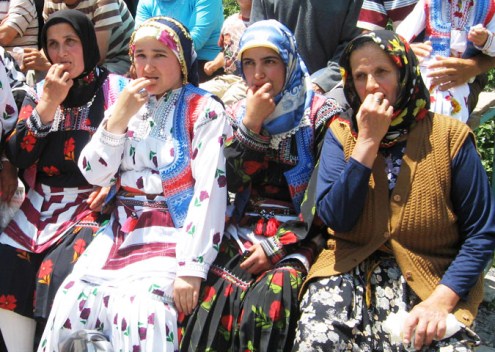
In Kuşköy, which literally means “Bird Village” in Turkish, the villagers have been able to communicate across long distances well before the invention of cellphones.
Laid out along a deep, lush valley in Turkey’s Pontic Mountains, Kuşköy isn’t an easy village to traverse quickly. So some time ago — 400 years, according to some local estimates — its residents invented a whistled language based on Turkish. Although threatened by the arrival of cell phones and the emigration of village youth, bird language is still alive and well in Kuşköy.
Lending wings to human words
Bird language consists of approximately 20 whistled notes, each based on a syllable in Turkish. The sound can extend as far as about 3 miles, according to villagers interviewed.
Even when two people are too far apart for whistles to travel between them, other villagers in between will pass along the message to the intended recipient.
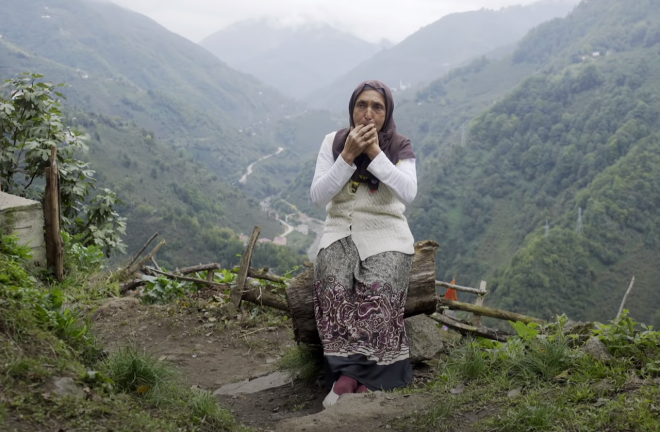
She’s the best whistler in her village.
The language is mainly used for basic everyday purposes: inviting neighbors over for tea, calling for help in the field to pick apples, announcing arrivals to the village, funerals, births, or weddings.
Some of the human bird language communication mimics actual birdsong, according to İbrahim Kodalak, a Kuşköy villager. A particularly poetic example is the morning song of the blackbird, which Kodalak says is the same as a famous Koran verse when whistled in bird language.
An endangered language? Not if they can help it.
Since electricity arrived in Kuşköy in 1986, followed by cell phones, the need for bird language has been dwindling and it has begun to fall out of common use. The village’s population is also shrinking as young people move to bigger cities for education and higher-paying employment, as they are doing all over Turkey. This story was written in 2012, but already by 2020, producers of the documentary clip below says that only about 50 people use the bird language today.
But for the past 15 years, the villagers have held an annual festival to promote the language and village culture. The festival features music, dancing, and a contest between the village’s best whistlers. This year’s festival occurred on July 8 and was attended by more than 2,000 people.
The governor of Kuşköy’s district said that he wants “to use tourism to turn this language into an economic source for the region.”
He’d like major Turkish corporations, such as telecommunications firm Türk Telekom, to sponsor the festival and improve the village infrastructure so that more visitors can come see the speakers of bird language. It’s definitely something I’d like to see.
Would turning bird language into a tourism draw also strip it of meaning and authenticity? Or is it worth commercializing a language to keep it from entirely falling out of use? The future of Kuşköy may reveal the answer.
Israeli designer Omer Inbar is selling Bug Lights – a series of desk lamps that look like insects. Decidedly minimalist and definitely unique, each product comes with a choice of several different kinds of 25 W bulbs that emit a soft glow, along with a 1 meter long cable and a bug light ID postcard.
Eliminating BPA from baby bottles is just one step towards eliminating our exposure to harmful, noxious chemicals.
Score one small victory for consumer groups and ecosexuals everywhere: The United State’s ban on bisphenol-A or BPA is a small step towards ending our romance with toxins. That’s the good news. The downside is that this ruling by the Food and Drug Administrations has no direct bearing on consumers in the Middle East. A ban on BPA in bottles is insufficient in the long term, failing to address the many sources of this compound or the long list of other compounds tweaking our reproductive health.
Already working on wind farms in Israel, this company launches a full scale solution for wind farms worldwide
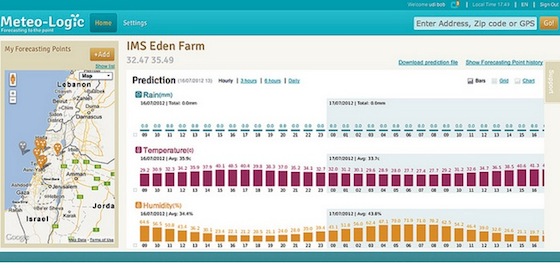
Meteo-Logic, a software provider of custom-made accurate weather forecasting, launched yesterday a new service specifically designed to provide the wind farm energy industry with highly accurate localized weather forecasts.
Meteo-Logic offers detailed weather parameters and tools required for making weather-sensitive decisions for specific locations at specified times. This is done while dramatically reducing the direct and indirect expenses of wind farms, maximizing profits and reducing financial uncertainty.
Sodastream bottles are BPA free, according to the company, and offers a new way to drink carbonated beverages without stacking up thousands of unwanted plastic bottles each year. Sodastream provides gas cannisters and a recharging mechanism that allows people to make their own fizzy drinks at home. Among the flavors that Sodastream sells are cola and orange; the new Kool-Aid deal will make the Sodastream solution more palatable to the masses.
It’s hard to ignore the lack of infrastructure and safety for cyclists in the Middle East. In Egypt you might get sexually harassed if you are a woman riding a bike in Cairo. With the raised sidewalks, when they exist in Amman, Jordan; and the deathly traffic and smog, riding in Amman isn’t such a great exercise in sustainability either. But Middle Eastern cities looking to cut smog and the health effects of car transport might consider installing a super highway for bikes, like a new project in Denmark that has paved an 18 km cycling pathway for Danish commuters around Copenhagen.
America, next to some European countries, has the most stringent environmental policies on health and safety. In 2008 America’s Food and Health Administrations (the FDA) declared BPA, or bisphenol A, an estrogen mimic used in plastics, as safe. But in 2010 it started backpedaling over concerns that it might have health risks, especially in children. Yesterday it was announced that BPA is now banned in baby bottles and sippy cups across America. What does that mean for the health of babies around the planet?
Although building a monument to nature is something of a contradiction in terms, o2a studio has done a wonderful job of finding balance between the built and unbuilt in this striking design for the Natural History Museum in Jerusalem. A subterranean facility with stone cladding, the museum is topped with a green roof that creates a continuation of the surrounding green space.
The disruption to Jordan’s natural gas supply from Egypt has finally awoken a sleeping giant: renewable energy. Long focused on oil shale and nuclear energy instead of renewable sources, the Kingdom has recently entered negotiations with no fewer than 20 international wind and solar-energy suppliers.
These are mostly small or medium-sized firms that will provide up to 80MW each. Among them, China’s Trina Solar has expressed willingness to invest $200 million on a photovoltaic plant.
A sweltering heat wave has swept through Tunisia, disrupting both electrical and water supplies just days before Ramadan begins. Extreme heat destabilizes electrical cables, with as many as three cables a day fraying under the pressure in some cities. Disruptions in the electricity supply in turn cause water pipes to malfunction, leaving many homes, businesses and hospitals without a steady supply of either.
In a surprise but welcome move that prioritizes people over commerce, the National Water Supply and Distribution Company (SONEDE) in Gabes cut its water supply to a chemical company that has long threatened the southern city’s water resource.
Unprecedented Highs in Tunisia
The National Institute of Meteorology reports that an unprecedented rise in atmospheric pressure from the great desert is responsible for the heat wave that has caused such havoc in Tunisia, according to Tunisia-Live.
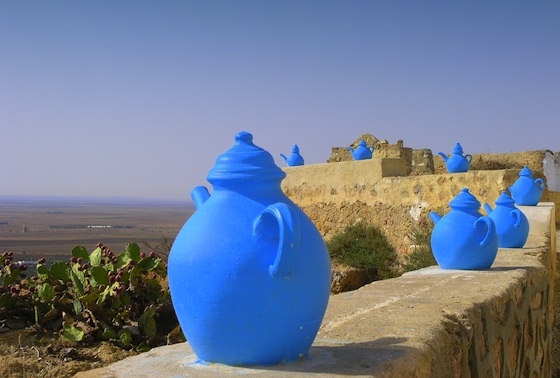
Temperatures of 42-47°C have been recorded in the past week, reports engineer Sahar Shickhawi.
“All the temperature data that we gather are from shaded areas, but sunny areas are normally 4-7 °C hotter, so we must account for that. In the summer, we are used to the temperature being in between 32-36 °C in the coastal areas and 38 to 42 °C the interior regions in the month of July,” Shickhawi explained.
Although energy shortages have rarely lasted for more than two hours, according to SONEDE employee Mohamed Sadoke, which pales in comparison to 12 hour energy shortages in Lebanon, Gabes residents preparing for the Ramadan fast are concerned.
Energy and Water Shortages Become “Complicated”
One housewife told Tunisia-Live that the situation is becoming more “complicated.”
But for hospital workers and patients, the shortages are more than complicated. Men and women with broken legs haven’t received treatment at the Regional Hospital of Gabes since the X-Ray machines can’t function without electricity. And Hospital Tahr Sfar atop a mountain on the coast was without water for nearly a week.
In order to alleviate supply disruptions to Gabes residents, SONEDE has cut off water supply to the local chemical manufacturing plant which has historically used more than its fair share of both water and electricity.
“We cut the water supply on the chemical complex because we have to prioritize,” said Mbarak Haddad, the switch board operator of Gabes SONEDE.
In Gabes, people are more important than chemicals.
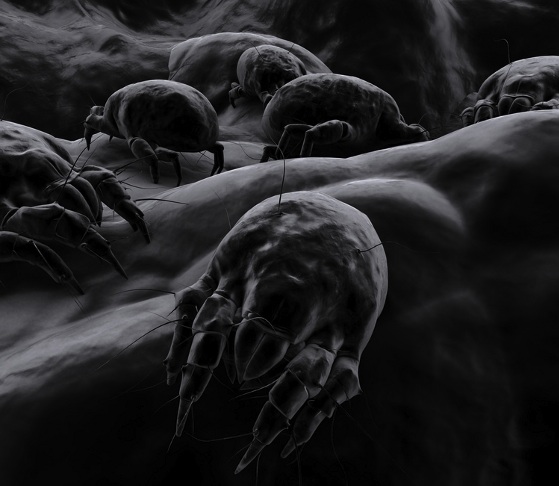
Turn sick buildings healthy with a probiotic air filter from Israel. Above, dust mites.
Better Air of Rishon LeZion, Israel is using a new approach to improve indoor air quality. Their probiotic Biozone cleaners harness natural bacteria to break down biofilms and reduce contamination from molds and other allergens. This approach is intended to prevent sick building syndrome (SBS.)
Last week, experts lit up an Israeli conference with new strategies to curb smoking using email, text messages and smartphone apps. Hebrew University’s School for Public Health, in cooperation with The Medical Society for Smoking Prevention and Cessation in Israel and the Hadassah Medical Organization, sponsored a forum focused on using modern communication to help smokers kick the habit.
At the conference George Washington University‘s Dr. Lorien Abroms delivered the keynote lecture, “Using Mobile Phones for Smoking Cessation”. Abroms researches the influence of modern communication technologies on human behavior: how emails, text messaging, and smartphone apps can alter unhealthy habits. She developed several quit-smoking programs, including an iPhone app and a smoking cessation kit for young adults. She created a text-messaging program for adult smokers, a service currently offered to callers in selected American states.
We live on our phones. They feed our demand for immediate information. We’re instantly reachable and can perform functions that only recently became common verbs: google the best restaurant, mapquest our way there, then facebook friends so we can meet up. It’s inevitable that this connectivity will be exploited for other uses.
We’ve seen social media be tapped to solicit wide-scale emergency fund-raising: consider relief money raised in the aftermath of the Haitian earthquake. Now political candidates and charities have jumped on mobile phone fundraising.
Phones convey environmental messages: Green Prophet’s reported on an SMS campaign that encourages water conservation in Jordan. Phones also promote fitness. My healthier friends use exercise applications on their phones to guide workouts and track calories consumed. Apps are constantly being developed to support other lifestyle choices. Like extinguishing smokes.
Conference topics included use of social networks to quit smoking and the impact of online information searches on smoker habits. Dr. Diane Levin-Zamir, director of the Department of Health Education and Promotion for Clalit Health Services, discussed the role of mass media in conveying health data and influencing behavior in her presentation “Media, Media Health Literacy and Smoking Among Adolescents”.
Other speakers included Dr. Hagai Levine of the School of Public Health, and Haim Pilosof, the smoking cessation call center manager at Maccabi Health Services, Israel’s second largest healthcare provider.
The Simple Message: Do or Die
Tobacco use is the most common preventable cause of death: half of all longterm smokers will die of smoking-related problems.
Quitting isn’t easy. Short-term effects such as weight gain, irritability and anxiety top the list of turn-offs for folks who try to stop. But for those who stay the course, soon after stubbing out the last butt, circulation begins to improve and blood pressure starts to return to normal. Sense of smell and taste return and breathing becomes easier. Your risk of getting cancer decreases with each year you stay smoke-free.
Now the tools to tackle quitting can be texted to you anywhere. Pick your own pocket: grab the pack of smokes or choose to check your phone. Green Prophet hopes you answer the call to quit.

 An Israeli is part of a team to invent a new kind of “green” LED light called the OLED. If brought from theory to practice they could be manufactured from plastics and made by ink jets.

 In Kuşköy, which literally means “Bird Village” in Turkish, the villagers have been able to communicate across long distances well before the invention of cellphones.
 She’s the best whistler in her village.