
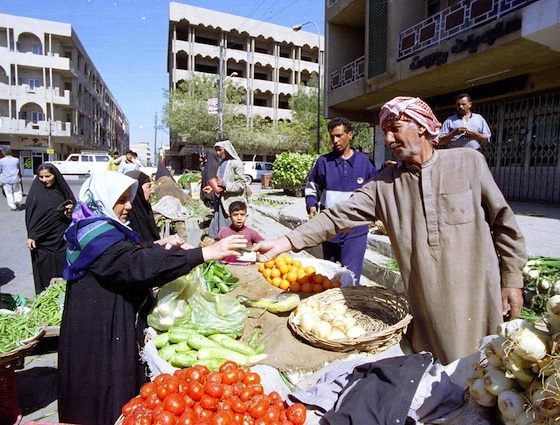
 Adherents of Islam consider suicide to be one of the greatest of all spiritual transgressions, so when an Iraqi farmer recently took his own life because he could no longer maintain his crops amid chronic water shortages, it could not have been an easy decision.
Iraqi Farmer Commits Suicide Over Intense Water Shortages
Jordan’s Crippled Water Resources Protected by Security

Jordan’s armed security forces have been enlisted to protect the Kingdom’s scarce water resources from recurring vandalism and theft.
Jordan is dealing with an increase in water theft. Ironically, as I type, I am awaiting a water truck arrival to refill our new apartment’s tank: I’d jumped in the shower, turned the knobs, and was met with – nothing. Landlord says it’s been three weeks since the city pumped water to the roof tanks, and the situation seems to be city-wide.
Now it makes sense why people would be breaking into the system. Mark my words, water is the new oil.
Solar Flare Super Storm Could Put Middle East in Darkness

Could we survive a massive blackout caused by a solar super storm?
The sun, our most important source of natural energy, light, and even nutrition could one day also become our worst enemy if intense solar magnetic ‘super storms’ cause massive power blackouts. Whether these storms, which appear to come in 11-year cycles, could melt down nuclear reactors as might have happened earlier this year, is still a matter of speculation. These intense solar storms have in the past been so severe that they are said to have been responsible for severe damage to power grids and communications networks.
Dancing With Hayatuna’s Creativity in Amman, Jordan
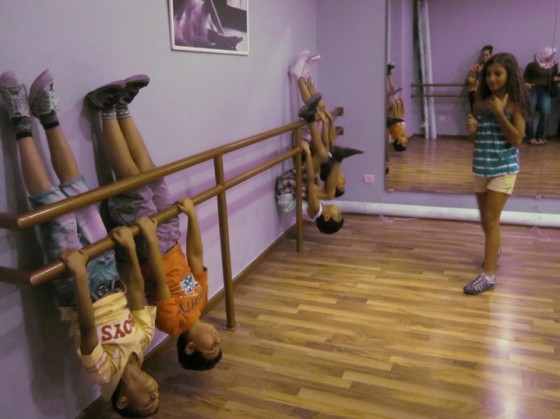
 Swedish NGO uses Hayatuna – creative arts to provide new perspectives to kids in the Middle East
As a Dance and Anthropology double major and an Arabic minor at Montclair State University, my interests slip right into the mission of Spiritus Mundi, a Swedish NGO that sees the arts as forces in social change and whose chief operations are in the Middle East.
Hayatuna, or “Our Lives” in Arabic, is the name of a project that was launched by the organization this summer in Amman, Jordan and is set to be initiated next in Cairo, Egypt.
Dancing, singing, and songwriting workshops were held several times per week for children from local orphanages at Freeway Dance Studios and Stardust Academy, to expose them to the performing arts and to build their confidence. During my internship with Spiritus Mundi, I helped to facilitate those workshops.
Pundak Neot Semadar – An Improbable Organic Oasis in the Arava Desert
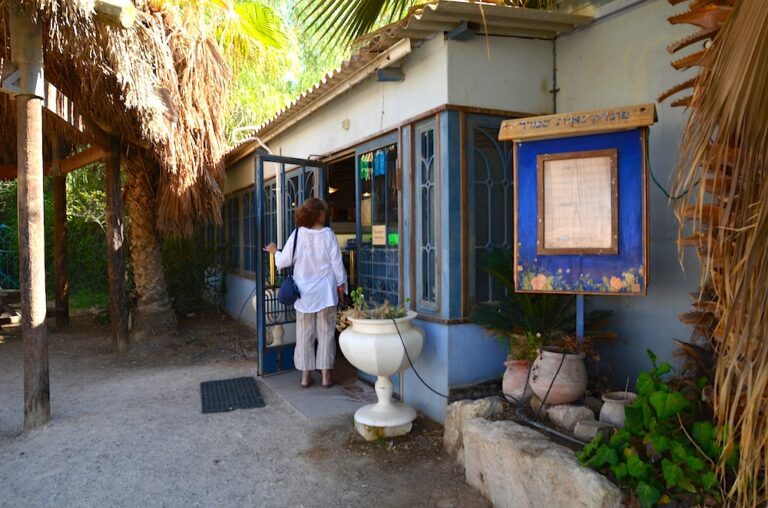
 Sucked dry by an unforgiving sun, my travel companion and I were badly in need of hydration and nourishment yesterday afternoon. Frankly, I had resigned myself to a day full of headaches and delirium, but then we stumbled across an improbable oasis located miles from nowhere in Israel’s Arava desert.
Once no more than a ramshackle caravan, a pitstop between the developed north and the country’s dry southern expanse, Pundak Neot Semadar has since evolved into a charming all-organic restaurant that also sells jam, soap, dates and other goods produced at the nearby kibbutz.
Hassan Fathy’s “New Gourna” Model Village lies Shambles

In 1946 Hassan Fathy, Egypt’s Green architect, built a model village near Luxor called ‘New Gourna’ out of mud. But what happened to this stunning village?
Hassan Fathy, author of Earth & Utopia is the Middle East’s father of sustainable architecture. Before it was fashionable or even fathomable, he was championing earth architecture in the hopes of bringing decent housing to Egypt’s impoverished masses. Using mud and other natural resources, he wanted to liberate Egyptians from the ‘concrete matchboxes’ that they lived in the crowded and bustling cities and give them spacious, earthen homes they could be proud of. He came from a wealthy family but wanted more for Egyptian society.
Fathy also brought a new found respect to age-old (and sustainable) architectural techniques that were still in use by Egypt’s poorest to build homes. His world-famous book ‘Architecture for the Poor‘ extolled the virtues of vernacular architecture and the skills and knowledge that the poor possessed. But what happened to his model village ‘New Gourna’ that was built in the forties?
Well, years later the model village is falling into serious disrepair. Buildings are crumbling and others have disappeared completely or have been changed beyond all recognition. But for all its fault those will live there are proud of their village and are desperate to see it repaired. In 2010, the World Monument Fund visited the village to survey the damage. As well as producing a stunning little video they documented all the repairs that would be needed to restore the village to its former glory.

What’s happened since then isn’t so clear. I got in touch with the WMF to find what the future holds for New Gourna. Erica Avrami, who is director of Research and Education at WMF explained: “We would very much like to follow-up on this work, and UNESCO – who is our institutional partner for New Gourna efforts and the lead organization in its preservation – has been working with the government bodies in Egypt to get approval for the project’s continuation.”
World Monument Fund – “I Wish I Had Better News To Convey…”
“Unfortunately, due to the political situation and the many changes in ministry leadership that have occurred over the past year, this has proven difficult. At present, we are in limbo as we await these permissions. I do wish that I had better news to convey with regard to our work at New Gourna.”
It’s a shame that the project hasn’t lead to more concrete action so far. Yes the instability of the region is a huge and understandable stumbling block but New Gourna represents so much of what is creative, innovative and great about Egypt that I hope it remains a priority to see it restored. As the seasons pass and erode away at the earthen walls of Hassan Fathy’s model village, I also hope that the restoration happens before it’s too late.
For inspiration I highly recommend Fathy’s book Earth and Utopia which you can buy here. Or Hassan Fathy, An Architectural Life (links to Amazon).
The leading editorial review sums it up:
“Hassan Fathy is Egypt’s best-known 20th-century architect. He was also a man of contradictions. He came from a wealthy background and had a western-style training. Yet he embraced traditional, vernacular forms, techniques, and materials and throughout his career promoted their use as part of a campaign to improve the conditions of Egypt’s rural poor.
“Earth & Utopia chronicles this lifelong commitment through personal interviews conducted by the author, photographs, and drawings from the Hassan Fathy archives, and Fathy’s own writings on the subject, many of which are published for the first time. This beautiful, fascinating, and scholarly book will be essential reading for students, academics, and general readers interested in Fathy, and the development of Arab and vernacular architecture, earth construction, architecture for the poor, and sustainability.”
For more on Fathy and Gourna see:
Remembering Hassan Fathy – Egypt’s Green Architect Of the People
Hassan Fathy is the Middle East’s Father of Sustainable Architecture
13 Principles of Sustainable Architecture
Syrian Mint Lemonade

 Called polo in Syria, try this refreshing Middle East mint lemonade to beat the heat.
Like our cooling vegan cold almond milk and Turkish aryan yogurt drink, this herbal lemonade cools the body and soothes heated spirits.And it’s not only good, it’s good for you.
Mint is packed with vitamin C, which helps you withstand summer’s spiking temperatures. Cold, wet, tasty, and healthy. Can’t beat that.
This recipe comes from the Syrian Foodie in London blog. The author cautions us to remove the mint leaves from their stalks carefully, so as not to have bits of stems in the drink. He adds that this mint and lemon drink is commonly called “Polo” in Syria.
Syrian Mint Lemonade
Ingredients:
1 liter – 4 cups water
Juice of 5 lemons
70 grams – 6 tablespoons sugar
50 grams – 1.5 cups fresh mint leaves, rinsed and drained
1 tsp. orange blossom water, optional
Blend all ingredients in a blender until smooth.
Pour over ice, sip, and enjoy!
More delicious Middle Eastern potables on Green Prophet:
SmartPaint Senses Structural Damage, KNOxOUT Cleans Air

Made from fly ash, SmartPaint is a new environmentally-friendly paint that alert owners of building faults. This is one of three space-age eco paints that Laurie explores.
Green Prophet’s brought you some of the technical advances that permit paint to act as a solar collector. Now in the news, it seems some super-paints can also sense structural degradation and filter pollution: promising potentiality exposed by new research. Meet SmartPaint: it acts as a large-scale and seamless sensor of changes occurring on the surfaces it coats, which could include everything from bridges to buildings, tunnels to wind turbines. Developed by researchers at Glasgow’s University of Strathclyde, the paint contains an integral network of carbon nanotubes capable of detecting microscopic surface flaws that precede major structural faults.
Amman Infested with Litterbugs While Emiratis Cry Foul
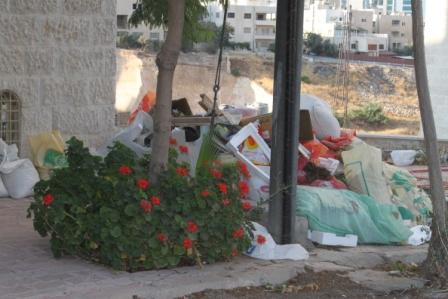
 Environmental campaign to rehabilitate litterbugs kicks off in Amman.
Plastic bags and cigarette butts are part of the natural landscape in contemporary Jordan. Bottles roll like tumbleweed across Amman’s early morning streets. Residents say the city’s sanitation services are deteriorating, according to The Jordan Times, but towering trash and burst garbage bags, overloaded waste bins and erratic municipal collection tell the story in more sensual way – the city stinks.
The problem doesn’t discriminate, residents in east and west Amman alike tell of smelly, rotting trash attracting flies, rats and feral cats, despite citizen’s paying regular sanitation fees as part of their monthly water bills.
Baghdad Fights Tobacco Trend Among Youth

Nearly seven percent of adolescent Iraqis have smoked shisha, and more than three percent have smoked tobacco, raising concerns among health officials about future diseases that could arise as a result. This was one of the findings of the Global Youth Tobacco Survey carried out recently by Iraq’s Ministry of Health.
Shisha, also known as a water pipe or hookah pipe, has gained immense popularity in the Middle East. The fact that it is so popular among Iraq youth is a red light for health officials in Iraq and is prompting officials to launch campaigns warning against the hazards of this practice and to prepare for future diseases that could occur among the adult population.
Spencer Tunick Will Float Clothed at the Dead Sea


He asks hundreds of thousands of people around the world to strip for his cause, but when naked activist photographer Spencer Tunick returns to Israel to help “save the Dead Sea” he’ll be floating clothed. The award-winning photographer from the US travels the world, and asks volunteers to strip as naked subjects in his art happenings which he photographs. He was in Israel last fall to take pictures of nudes floating in the Dead Sea, in the hopes to draw more attention to this natural wonder that is flailing due to human intervention.
According to a new Facebook group that just popped up there will be a new chance to float as a means to raise awareness to an ailing Dead Sea. Spencer Tunick will be returning to Israel this fall to float with the masses as Tafline reports. But he won’t go nude.
Rare Earth Metals Limits Clean Technology’s Future

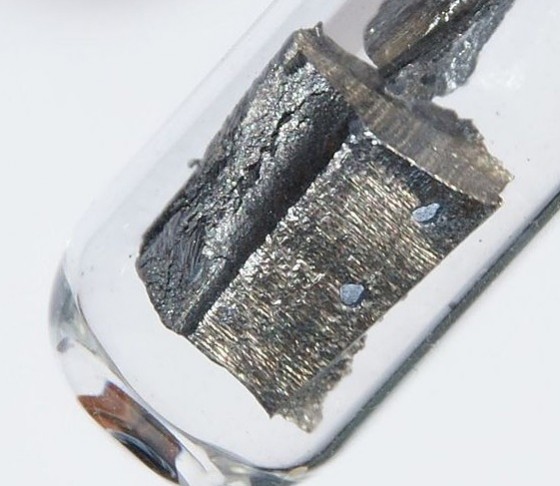
If you think renewable energies will become an increasingly cheaper alternative to petrol – think again now that there’s peak minerals.
As the world moves toward greater use of zero- carbon energy sources, the supply of certain key metals needed for such clean-energy technologies may dry up, inflating per unit costs and driving the renewable energy market out of business. We’ve talked about peak phosphorus for food; now consider that rare earth metals like neodymium which are used in magnets to help drive wind energy turbines, and dysprosium needed for electric car performance are becoming less available on the planet.
Arab Athletes by Brigitte Lacombe Celebrated at London Exhibit

 Hey’Ya: Arab Women in Sport: Sisters Brigitte and Marian Lacombe celebrate Arab female athletes at London’s Sotheby’s Gallery.
Last December, Qatar Museums Authority commissioned Brigitte Lacombe, a French photographer known mainly for her work with the film industry, to snap over 70 sportswomen from 20 Arab countries – some with Olympic potential. The project was the brainchild of Sheika Mayassa Al Thani, chair of the Qatar Museums Authority (QMA), and also the 29-year-old daughter of the emir of Qatar. It’s a great way to encourage more Arab women to turn to sport, and to help draw light on Muslim societies that require headscarves in sport.
The series, Hey’Ya: Arab Women in Sport, uses videography by Marian Lacombe and portraiture by Brigitte to depict the powerful feelings provoked by sport. It’s a limited showing from July 25 to August 11, but will undergo continued continued development. Admission is free.
Dubai’s Renewable Energy Conference To Boost Middle East Green Energy Investment
With more than $20 billion worth of renewable energy projects currently being developed in the Middle East and North Africa (MENA), the upcoming Mena Renewable Energy conference in Dubai will look at boosting investment in this sector.
How Green Are the Olympic Games?


Going into the London Olympic games, Green Prophet covered issues affecting Arab athletes who planned to compete in the 26th modern Olympiad since the games were revived in Athens in 1896. These are also religious ones, such as whether Muslim athletes could be exempted from fasting on Ramadan, as well as the perennial one over proper clothing for female Muslim athletes, especially the wearing of the hijab headscarf while competing in Olympic sporting events.
In addition to issues affecting Muslim athletes, there were also ones involving Jewish athletes being able to compete on the first two days of the 17 day competition, due to those days being the Sabbath and the fast day of the Ninth of Av. which occurred on Sunday, July 29, commemorates some of the darkest moments in Jewish history.
But these types of issues have always been around and have affected athletes in other types of sporting competitions as well. With the International Olympic Committee making great strides to emphasize the meaning of the games within the framework of global community and pure athletic competition, we might take some time to dwell on the games themselves within the framework of whether gigantic sporting events like the Olympiad are contributing anything towards helping make the world environment a better for humanity.