A new breed of luxury has landed on the Red Sea, mirrored pods floating above coral reefs, reflecting sky and sea like something not entirely of this Earth. Energy powered by solar powers, drinking water pulled from the sea using desalination.
All-women roofing team Summit Sisters installs a sustainable metal roof in Ontario as climate change forces Canadians to rethink asphalt shingles and choose longer-lasting, eco-friendly roofing options.
Maggie Baird, best known as the mother of Billie Eilish and Finneas O’Connell, is stepping into a much larger spotlight, this time as a climate storyteller.
Tillage is one of the clearest signals of how a farm treats its soil. Intensive plowing can degrade structure, release carbon, and increase erosion. Conservation practices—no-till, cover cropping, minimal disturbance—do the opposite. They build soil, retain water, and support biodiversity. But until now, measuring these practices at scale has been slow, expensive, and often self-reported.
A new breed of luxury has landed on the Red Sea, mirrored pods floating above coral reefs, reflecting sky and sea like something not entirely of this Earth. Energy powered by solar powers, drinking water pulled from the sea using desalination.
All-women roofing team Summit Sisters installs a sustainable metal roof in Ontario as climate change forces Canadians to rethink asphalt shingles and choose longer-lasting, eco-friendly roofing options.
Maggie Baird, best known as the mother of Billie Eilish and Finneas O’Connell, is stepping into a much larger spotlight, this time as a climate storyteller.
Tillage is one of the clearest signals of how a farm treats its soil. Intensive plowing can degrade structure, release carbon, and increase erosion. Conservation practices—no-till, cover cropping, minimal disturbance—do the opposite. They build soil, retain water, and support biodiversity. But until now, measuring these practices at scale has been slow, expensive, and often self-reported.
A new breed of luxury has landed on the Red Sea, mirrored pods floating above coral reefs, reflecting sky and sea like something not entirely of this Earth. Energy powered by solar powers, drinking water pulled from the sea using desalination.
All-women roofing team Summit Sisters installs a sustainable metal roof in Ontario as climate change forces Canadians to rethink asphalt shingles and choose longer-lasting, eco-friendly roofing options.
Maggie Baird, best known as the mother of Billie Eilish and Finneas O’Connell, is stepping into a much larger spotlight, this time as a climate storyteller.
Tillage is one of the clearest signals of how a farm treats its soil. Intensive plowing can degrade structure, release carbon, and increase erosion. Conservation practices—no-till, cover cropping, minimal disturbance—do the opposite. They build soil, retain water, and support biodiversity. But until now, measuring these practices at scale has been slow, expensive, and often self-reported.
A new breed of luxury has landed on the Red Sea, mirrored pods floating above coral reefs, reflecting sky and sea like something not entirely of this Earth. Energy powered by solar powers, drinking water pulled from the sea using desalination.
All-women roofing team Summit Sisters installs a sustainable metal roof in Ontario as climate change forces Canadians to rethink asphalt shingles and choose longer-lasting, eco-friendly roofing options.
Maggie Baird, best known as the mother of Billie Eilish and Finneas O’Connell, is stepping into a much larger spotlight, this time as a climate storyteller.
Tillage is one of the clearest signals of how a farm treats its soil. Intensive plowing can degrade structure, release carbon, and increase erosion. Conservation practices—no-till, cover cropping, minimal disturbance—do the opposite. They build soil, retain water, and support biodiversity. But until now, measuring these practices at scale has been slow, expensive, and often self-reported.
A new breed of luxury has landed on the Red Sea, mirrored pods floating above coral reefs, reflecting sky and sea like something not entirely of this Earth. Energy powered by solar powers, drinking water pulled from the sea using desalination.
All-women roofing team Summit Sisters installs a sustainable metal roof in Ontario as climate change forces Canadians to rethink asphalt shingles and choose longer-lasting, eco-friendly roofing options.
Maggie Baird, best known as the mother of Billie Eilish and Finneas O’Connell, is stepping into a much larger spotlight, this time as a climate storyteller.
Tillage is one of the clearest signals of how a farm treats its soil. Intensive plowing can degrade structure, release carbon, and increase erosion. Conservation practices—no-till, cover cropping, minimal disturbance—do the opposite. They build soil, retain water, and support biodiversity. But until now, measuring these practices at scale has been slow, expensive, and often self-reported.
A new breed of luxury has landed on the Red Sea, mirrored pods floating above coral reefs, reflecting sky and sea like something not entirely of this Earth. Energy powered by solar powers, drinking water pulled from the sea using desalination.
All-women roofing team Summit Sisters installs a sustainable metal roof in Ontario as climate change forces Canadians to rethink asphalt shingles and choose longer-lasting, eco-friendly roofing options.
Maggie Baird, best known as the mother of Billie Eilish and Finneas O’Connell, is stepping into a much larger spotlight, this time as a climate storyteller.
Tillage is one of the clearest signals of how a farm treats its soil. Intensive plowing can degrade structure, release carbon, and increase erosion. Conservation practices—no-till, cover cropping, minimal disturbance—do the opposite. They build soil, retain water, and support biodiversity. But until now, measuring these practices at scale has been slow, expensive, and often self-reported.
A new breed of luxury has landed on the Red Sea, mirrored pods floating above coral reefs, reflecting sky and sea like something not entirely of this Earth. Energy powered by solar powers, drinking water pulled from the sea using desalination.
All-women roofing team Summit Sisters installs a sustainable metal roof in Ontario as climate change forces Canadians to rethink asphalt shingles and choose longer-lasting, eco-friendly roofing options.
Maggie Baird, best known as the mother of Billie Eilish and Finneas O’Connell, is stepping into a much larger spotlight, this time as a climate storyteller.
Tillage is one of the clearest signals of how a farm treats its soil. Intensive plowing can degrade structure, release carbon, and increase erosion. Conservation practices—no-till, cover cropping, minimal disturbance—do the opposite. They build soil, retain water, and support biodiversity. But until now, measuring these practices at scale has been slow, expensive, and often self-reported.
A new breed of luxury has landed on the Red Sea, mirrored pods floating above coral reefs, reflecting sky and sea like something not entirely of this Earth. Energy powered by solar powers, drinking water pulled from the sea using desalination.
All-women roofing team Summit Sisters installs a sustainable metal roof in Ontario as climate change forces Canadians to rethink asphalt shingles and choose longer-lasting, eco-friendly roofing options.
Maggie Baird, best known as the mother of Billie Eilish and Finneas O’Connell, is stepping into a much larger spotlight, this time as a climate storyteller.
Tillage is one of the clearest signals of how a farm treats its soil. Intensive plowing can degrade structure, release carbon, and increase erosion. Conservation practices—no-till, cover cropping, minimal disturbance—do the opposite. They build soil, retain water, and support biodiversity. But until now, measuring these practices at scale has been slow, expensive, and often self-reported.
Case Study: A stable security state or a nation eager for reform? We look at Jordan and the strengths and weaknesses of its civil society
Whilst Jordan may not have seen the flurry of protests that lots of other Arab countries witnessed during the Arab Spring, that doesn’t mean Jordanians are not desperate for reform. In fact, they are and to a certain extent the government has been eager to show they are happy to make changes. In the last two years alone there have been amendments to over 42 articles of the Jordanian Constitution. But, for many, these reforms aren’t having a real impact and there are growing concerns that the authorities are becoming more draconian.
Got strong jaws? Noam Edry’s Seeds of Bliss project promotes international friendship by sunflower seed.
It’s a custom observed by folks everywhere in the Middle East. Neighbors and family get together, sharing a platter of the plump, salty, black seeds and sipping cups of strong coffee. (And if you’re curious to taste the real thing, try our coffee recipe here.)
Maybe taking a leisurely pull at the narghila pipe, although the narghila has been proven stronger than cigarettes. A relaxed meeting between neighbors – or a friendly, apolitical way for Jews and Arabs to meet?Sounds crazy, but it’s working. In artist Noam Edry’s project, Jews and Arabs, Jordanians and Israelis travel to each others’ cities, sit down at cafes, and chew sunflower seeds together. In between chewing and spitting out the seeds, there’s plenty of chat and getting to know each other, at a grassroots level, if you will.
The ostensible goal of the project is to make 10 tons of chewed and discarded hulls, which will then be shipped to London as part of an art exhibit. But the real goal is to open doors of friendship.
British-Israeli artist Noam Edry was inspired by Chinese artist Ai Weiwei ‘s 10 million sunflower-seed replicas on the floor of London’s Tate Museum. Weiwei’s installation represented political and social issues of the Chinese, but Edry brought the idea several steps closer to home. Since Arabs and Jews enjoy chewing the seeds, the leap to inviting Arabs and Jews to sit down together and chew for peace took only a certain out-of-the-box logic.
The “Big Chew” project began in August 2012, when chewers from Kibbutz Ramat Yohanan met with seed-chompers from neighboring Arab/Beduin villages Khawaled, Ibtin, Shfaram and Zarzir.
These events last up to five days, during which everyone in the vicinity is invited to join the core champions. At the end of each meeting, all the hulls are swept up and stored in plastic bags against the day that they’ll reappear as art – and proof that friendship can sprout even in the conflicted soil of the Middle East.
“The goal is to have a meaningful encounter and to develop a real friendship,”says Edry.
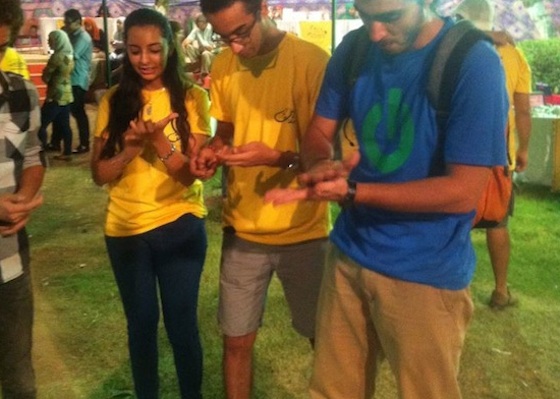
In September, a team of eight Jewish and Arab Israeli chewers traveled to Aqaba, spending five days chewing seeds with local folk at a café. Edry overcame bureaucratic objections (and maybe bureaucratic disbelief) to bring 10 Jordanians from Aqaba to Eilat in order to to sit down with sunflower lovers from across the Red Sea. This month’s seed-chewing event took place at Haifa’s Art and Street Culture Festival, where ten residents of Nablus joined Jews in exercising their jaws cracking seeds and chatting. The Governorate of Nablus will sponsor a reciprocal event there.
“At first we were afraid of coming to Haifa and we thought that people would hate us. Instead we were greeted by loving people, who made us feel so welcome and at home,” said one of Nablus participants.
Seed-lovers from Jenin and Afula are scheduled for November’s “Big Chew.”
Edry seems to be one of those people who doesn’t allow anything to get in the way. Facing down incredulity, discouragement, heavy-handed flirtation, the language barrier and the price of the project, she smiles and plows ahead. Each ton of sunflower seeds costs NIS 6000; close to US$1.1572. There are sponsors: Haifa Museum of Art and Artis Contemporary, a nonprofit organization that promotes contemporary Israeli artists. Seeds are donated by the local companies Zarubi Seed, Hazera, Migdan, kibbutzim and private donors. But it seems that Edry’s invincible drive is the project’s most valuable asset.
Who are the chewers? Anyone, of any age, who can chew and spit out the seeds with expert speed. Edry actually brings bags of seeds for “auditions” when recruiting new participants. It’s amazing and encouraging how seriously folks take the whole fantastic project, grasping what the mountain of chewed-up hulls is meant to represent right away.
And what will become of the hulls? They will be piled up into a hill along with any street litter swept up with them, as an art installation. A movie documenting every event and encounter will be projected next to it.
Edry calculates that one person can chew around 200 grams a day.
“Imagine how many are needed for 10 tons – thousands of people,” she says enthusiastically.
More on peace efforts and interfaith projects happening in the Middle East:
My collection of Pyrex baking pans: An explosion waiting to happen?
A hot Pyrex type glass baking dish can literally explode if placed on a cool surface like a sink counter top…In an illuminating article about the dangers of non-stick ceramic cooking ware, we advised readers of the risks involved in cooking with some types of ceramic cooking utensils following an exposure by a local Israeli TV program. The results of this revelation made us think about buying colorful ceramic cookware. And indeed in Israel some of this cooking ware being either taken off the market or sold at low “fire sale” prices by stores to get rid of existing stocks. What many people may not know, however, is a very serious risk involving the use of what is known as glass bake ware, sold for many years in under the brand name of Pyrex.
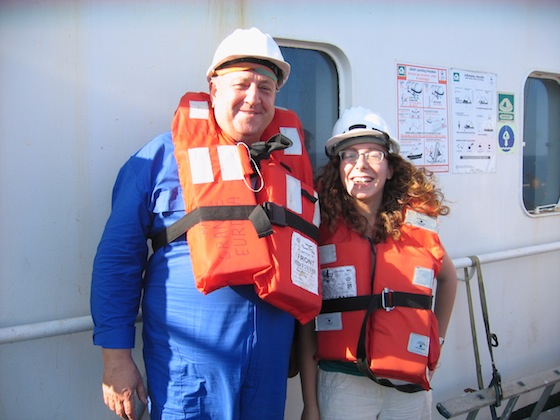
In a bid to reduce her carbon footprint, Londoner Lianna Etkind chose an unconventional summer holiday this year – a voyage to Israel over land and sea.
“From London to Israel without flying? Is that even possible?” Mostly, telling people about my ambition to travel overland to Israel was met with incredulity. Crossing borders in the Middle East is hardly straightforward, and the ferries that used to go from Greece and Cyprus stopped years ago, another casualty of ‘The Situation’.
But it is possible. The cargo ship company Grimaldi allows paying passengers to piggyback on their regular freight passages to Israel. For me, travelling by cargo ship was a way of minimising the climate change impact of my travel. At around 400 Euros (US$520), it’s more expensive than flying. But passage includes meals and a cabin for the week long sail. I booked trains from London to Paris, then onto Italy, where we would embark.
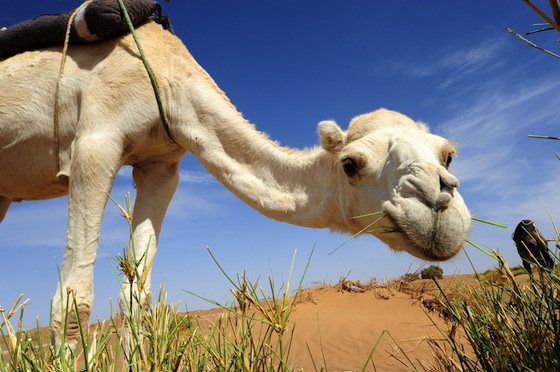
This is the fourth time that the Biomimicry 3.8 institute is staging their international design competition and this year they are inviting students to submit water management solutions that take inspiration from nature. Biomimicry is not a well known design strategy in the Middle East, though it is possible to learn what camels and scorpions teach us, for example, through special tours offered by Dayma in Egypt.
But the great thing about this competition is that learning is an essential aspect of the entire process. Hit the jump to find out what it takes to win $5,000 while providing meaningful ideas to address the very serious problem of worldwide water shortages.
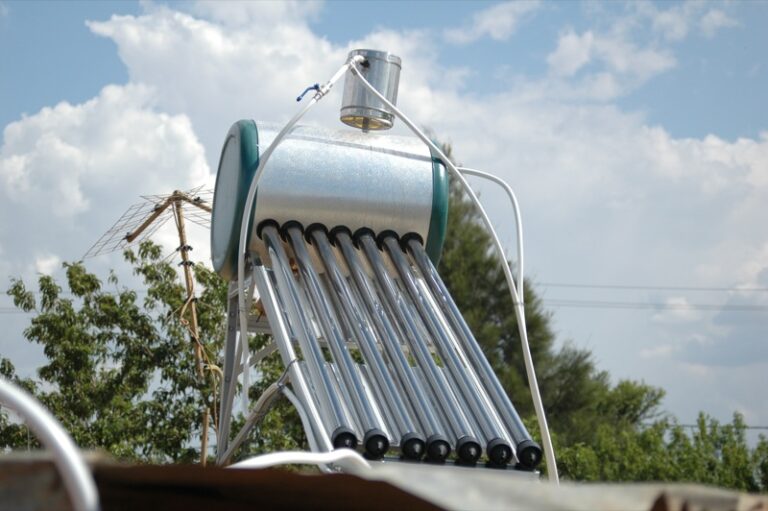
Jordan passes new building codes requiring solar water heaters on all new commercial and residential buildings.
It’s about time: Regulations come into effect in April 2013 and make solar water heaters obligatory for every new residence (including apartments) sized 150 m2 or greater in Jordan where there is ample sun. Private houses sized a minimum of 250 m2 and office spaces sized a minimum 100 m2 must also comply. Finally Jordan’s rooftops and side yards will capitalize on the nearly 330 days of sunshine that they bask in every year, just as we’ve seen in Turkey, Cyprus, Egypt and Israel.
Faiza Hussain, who has started a small online business selling halal and organic skincare products, tells us why she ditched the chemical-laden products she used to love
Like most women, Faiza Hussain’s fascination with creams, lotions and potions started at a young age. As a teenager she had a collection of skincare products she adored but as the years went by, she became a mother and a wife and also began to wonder what exactly was in the products that were going into her skin. After some research, she found out that lots of products contained alcohol and animal fats (including pork substance) as well as chemicals that were known to cause irritation to sensitive skin. So she began to make her own all halal and organic products for her young family. Soon her friends and family were asking for more and so ‘Halal & Organic’, her online shop, was born.
Bahrain, a small island country situated near the western shores of the Persian Gulf, has lagged behind other Gulf region countries in developing its clean energy sector. But the ministry of electricity and water affairs is looking to change all of that with the announcement of a new solar energy project in the capital, Manama. The hope is that the new project will be a watershed for the small Gulf Kingdom, an archipelago of 33 islands, to begin to establish alternative energy as a key driver of the country’s energy sector.
In the wake of ousting its guru-like CEO visionary Shai Agassi, rumors are circulating that Better Place Israel will be laying off staff, about half of its workforce, according to Haaretz. The plan is to cut about half of its Israeli staff, numbering somewhere between 400 to 500 people.
The article states: “After anticipated development team layoffs, dismissals are expected among the staff in charge of the network of battery changing stations. The plans for the Israeli network call for 45 stations, 38 of which have already been built.”
I think this will turn out to be interesting because most of the cars sold in Israel were to company employees. As company policy, employees were asked to purchase new cars, though some of the employees found loopholes around it. Still, imagine getting sacked and having to drive around the car that will remind you every day that you don’t have a job?
The flailing company hasn’t seem to be able to meet the aggressive roll-out expectations set by Agassi over the last five years and also seeks a cash injection of about $150 million to keep the company afloat. Meanwhile there are talks in the air that the incoming CEO Evan Thornley from Australia has plans in the works with leading car companies such as General Motors, according to various media sources. Can this important EV enabling startup be salvaged?
The Bee’ah School of Environment (BSOE), an education initiative created by a United Arab Emirates-based environmental and waste management company, recently announced it is expanding its networks in the eastern and central region of Sharjah, engaging with 160,000 students in over 200 schools. The BSOE envisions an expansion of this initiative, hoping to spread throughout the UAE, with the support of both the Ministry of Education and the Ministry of Environment and Water. From Ramallah to Jordan, and other areas of the UAE, this year the the Middle East has seen a surge of cooperative environmental initiatives between entrepreneurs and public education.
Established in the lead up to the COP18 Doha negotiations, the Arab Youth Climate Movement brings together over 20 campaigners from 15 Middle East/North Africa countries
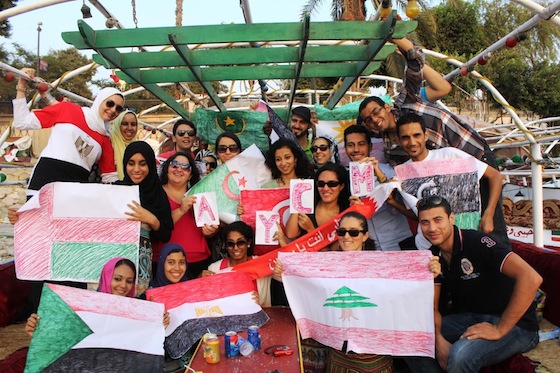
As the saying goes, there is power in numbers. So it’s great to see environmental organisations across MENA come together to “create a more sustainable, prosperous, meaningful, just, and fair world”. The the newly launched and ambitious Arab Youth Climate Movement unites campaigners from IndyAct, 350.org, Global Campaign for Climate Action and the Climate Action Network (CAN) in a simple vision: to be able to enjoy the stable climate that our parents and grandparents enjoyed. A five-day workshop was held around two weeks ago in Egypt where new regional alliances were built and plans were made to hold an Arab regional day of climate action on the 3rd of November.
Egypt’s first ever seed bombing event will highlight the importance of preserving Egyptian seeds and promoting local biodiversity
Environmental groups across Egypt have come together to launch a unique event that involves two things you wouldn’t normally put together: seeds and bombing. Campaigners from Nawaya, Nabta, Greenpeace Egypt and 350.org have been busy training activists in the art of seed-bomb production ahead of a guerilla-style gardening event due to take place next Saturday. As well as lots of fun (who doesn’t like moulding shapes with clay!), the event aims to highlight the the importance of local biodiversity and the increased disregard for native Egyptian seeds and crops amongst the agricultural sector. And following the news that Arab Spring countries are at increased of food price hikes in 2013, timing couldn’t be better.
A surprising number of people still live in caves throughout the Middle East, but hardly any of them have a home that is as luxurious as the enviable Columbarium in Israel.
Iranians live in caves, some Turks live in caves, and one of the region’s most sought-after Couchsurfing hosts brings guests to his tranquil lair in Petra, Jordan, but most of those dwellings are rather simple and dank. Not so with this Airbnb listing for a two bedroom apartment located between caves Hazan and Beit Govrin in the Judean hills of Shefek Israel.
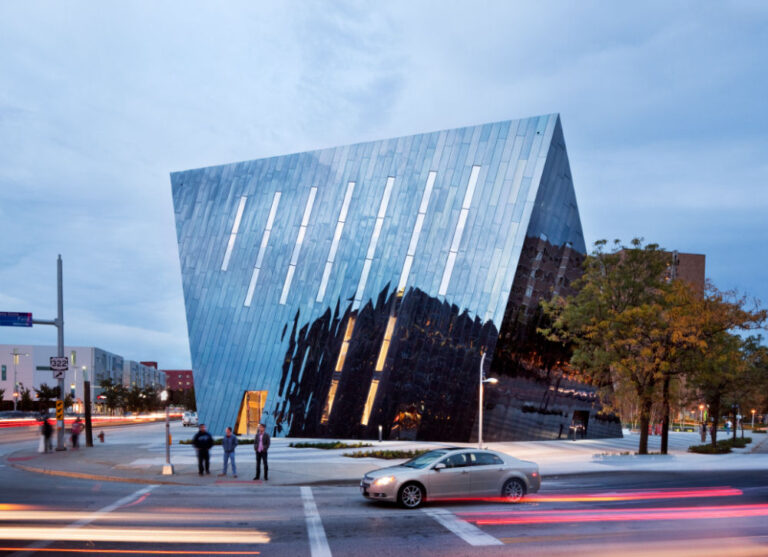
Farshid Moussavi’s inaugural project in the United States, the sharp Museum of Contemporary Art Cleveland, is expected to achieve LEED Silver certification if it performs as designed.
Born in Iran but currently based in London, Moussavi recently split up with her former work and life partner and beat out a lot of competition to win the MOCA project. But with a price tag of $27.2 million and more glass than we like to see on a new build, we predictably take issue with calling the project sustainable.
Mornings are getting darker. Need a pick me up? Tick tock: try an eco clock.
Israel daylight savings already sent summertime packing, but the rest of us in the Middle East will be switching in the weeks ahead from Daylight Savings to standard winter time. Blast yourself out of that darkened bedroom with the help of one of these innovative clocks that give a nod to sustainability, or at least to Zen-like calm.

 Case Study: A stable security state or a nation eager for reform? We look at Jordan and the strengths and weaknesses of its civil society










 Farshid Moussavi’s inaugural project in the United States, the sharp Museum of Contemporary Art Cleveland, is expected to achieve