Home Blog Page 386

$9 Cardboard Bike from Israel Going to Market

$9 cardboard bike israel izhar gafni

Could it be a world-changer? A cheap solution to help African kids get to schools and clinics? Israel’s Izhar Gafni (who we interviewed here) had an outlandish idea to create a durable cardboard bike from scratch with raw materials sum totalling about $9. Add in some labor costs and you can get a pretty cheap ride, one worth buying in a world where bike theft is rampant.

When Only a Coke and a Kebab Will Do

0

junk food cravings, sushi, kebab, cigarettes

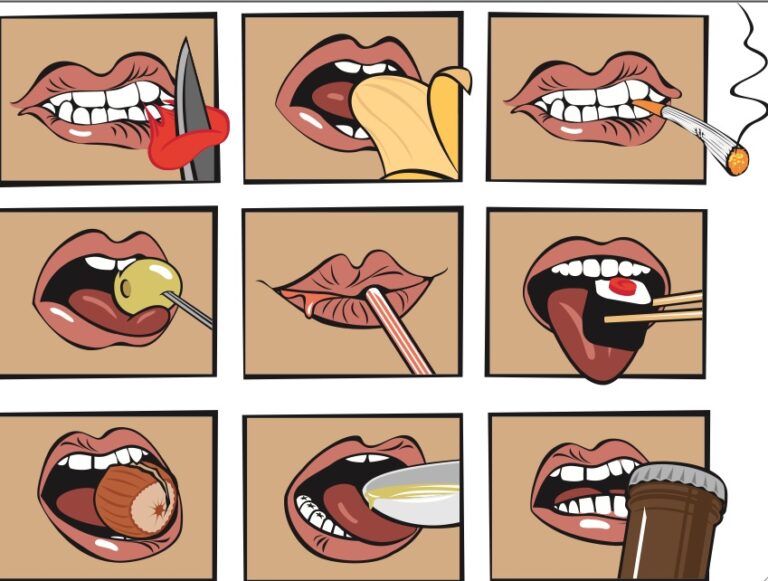
I try to eat as healthy as possible, buying my family whole wheat products instead of white. I also like to bake pita breads (see my recipe), cookies, and make dinner from scratch as much as I am able. As much as I like healthy choices like quinoa and cranberry juice, sometimes there is nothing like some street meat: a greasy kebab and a Coke to satisfy those hunger pangs. And according to a new research project published in Current Biology, there are some natural reasons why certain unhealthy food pairs go well together. It’s the reason why cheese and wine go good together, as well as pastrami and pickles, burgers and soft drinks.

CEBC Maps 150 Clean Energy Projects in North Africa and the Middle East

CEBC, renewable energy, MENA, Middle East, North Africa, clean tech, clean energyIf knowledge generates power, then the Clean Energy Business Council (CEBC) based in Abu Dhabi’s Masdar City intends to make the Middle East and North Africa (MENA) invincible with a new map of every known renewable energy plant in the region.

Similar to the list of active environmental organizations in Palestine shared earlier this week, this evolving tool reveals the extent to which each country in the Levant, Maghreb and Gulf have surged ahead with energy developments over the past few years, and the CEBC hopes this will inspire greater investor confidence.

Breast Cancer Risk in Israeli Women On The Rise

0

breast cancer patient israel
A high use of hormones for IVF treatments may be one reason why Jewish Israelis in special risk category. 

The Israeli Health Ministry stated that 1 in every 8 Israeli women is at risk of breast cancer. The disease is on the rise in Jewish Israeli women, but mortality rates are dropping, according to the Israel Health Ministry. The contradiction is resolved when it’s understood that early detection and greater numbers of women being screened reveal new cases earlier than in previous years, which in turn allows prompt treatment and better chances of recovery. And if natural cancer prevention with herbs sounds unlikely, read our post about turmeric’s amazing anti-cancer properties and another about a folkloric Pakistani herbal tea that’s come under scientific scrutiny.

According to the Israel Cancer Association, about 90 percent of patients can be cured if the disease is detected at an early stage. Breast cancer age-standardized mortality rates dropped from 22.6% in 1998 to 17.4% in 2009- an impressive 30% decrease.

10 Ways Abu Dhabi Leads The Arab Gulf’s Green Revolution

1

abu dhabi, water cooling, desert landscape, sustainable city

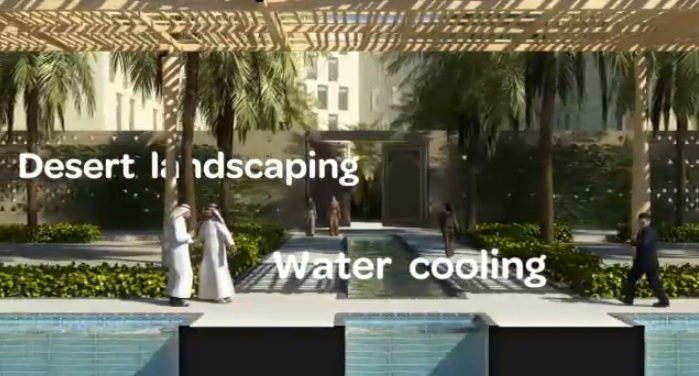
Abu Dhabi’s stellar efforts to raise green performance across industry sectors position that Gulf state as regional leader in both conceiving sustainable solutions, and more critically, setting them in action. There are some more famous projects like the multi-million dollar zero-energy city Masdar. But this is just the tip of the bucket. Read on for the ten best ways that the United Arab Emirates emirate Abu Dhabi is leading the way for the Middle East. 

Better Place Sells 125 Renault ZEs to Huge Industrial Group in Israel

2

Better Place, Renault ZE, electric vehicles, clean transportation, Elco Holdings, BusinessDespite a major upheaval in recent weeks, the electric vehicle company Better Place is pushing forward its business expansion plans with a $4 million deal recently signed with Elco Holdings Ltd.

One of the largest industrial groups in Israel, Elco will purchase 125 Renault Florence ZEs that will be distributed to its subsidiaries Electra Ltd. and Electra Consumer Products Ltd. The first batch of 25 vehicles will be delivered by the end of 2012, while the remainder will be delivered throughout 2013.

Israel’s Tent Protest Movement is Growing Roots in an Eco-Community

4

eco-community, social protest, activism, agriculture, tent city, Tel Aviv, Israel, ArsufThe Israeli government may not be taking them very seriously, but a small bucket of social activists who colonized Rothschild Avenue last summer with tents, pop-up massage parlors and peace-preaching posters have yet to give in to the country’s growing income disparity.

Refusing to pay exorbitant prices for shoebox apartments amid the city’s concrete lanes and glass towers, twelve protesters have taken up residence on a former fruit orchard in Arsuf, where they are establishing a small ecological community.

Israeli Eco Artists Dance in Australia

0

Dance, Israel, Australia, Sustainable, Eco, Environment, Awareness, Zohar, Spiritual, BalletIsrael’s Vertigo Dance Company made its Australian debut at the Brisbane Festival in September. They performed a piece titled Mana, which means “vessel of light” and comes from the Zohar, the Jewish mystical text. Mana featured eight dancers exploring the contrasts between dark and light, male and female. Both the moon and sun were powerful symbols in the piece, which drew inspiration from the ancient text it is named after.

Five years ago Noa Wertheim, Vertigo’s co-artistic director, and her three sisters created the Vertigo Eco Art Village in Israel’s Elah Valley, overlooking the site where Bible says David defeated Goliath. They live with their families in the village, which has composting toilets, solar-heated showers and a water-recycling system. 

The Arabic Roots of 10 English Words

2


Did you realize you speak some Arabic? 

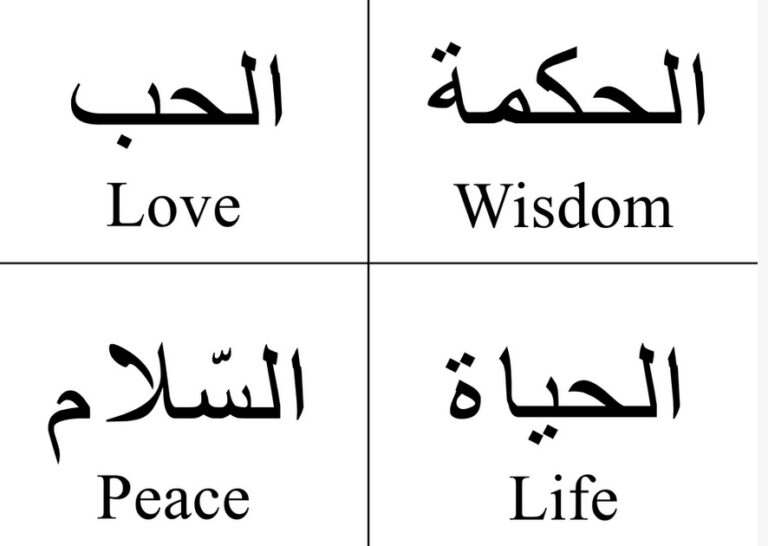
An estimated 175 million native Arabic speakers make it the sixth most-spoken language. As we draw connections between environmental actions in the east and west, let’s look at how some commonalities in language are shared by these cultures.

It’s natural that, over time, some words slide across linguistic boundaries, particularly into modern Castilian Spanish given Moorish rule in Spain from 711 to 1492.

But here are ten Arabic words that infiltrated English.  Current events render some instantly recognizable, but others will surely surprise.

 1.   Ghoul – The الغول (ghul) comes by way of Arabic folklore, specifically mentioned in “One Thousand and One Arabian Nights”.  This desert-dwelling shape-shifter feasts on the dead, with a particular appetite for children.  Just in time for Halloween, “ghoulish” describes a creepy fascination with the macabre.

 2.   Genie – The الجن (jinn) is also a player in “One Thousand and One Arabian Nights.” In the Middle East, genies are thought to emerge from smokeless fires: they enjoy free will and can be horribly bad or Disney-fied sweet.  They can influence human behavior and be obligated to grant wishes.

 3.   Mujahedeen – مجهدين (mujahedeen) are those who bear arms in defense of the faith. Its positive connotation in the 1980s (when the USA supported Afghani freedom-fighters battling Soviet communists) later morphed to connote any Islamist fighters who commit terror in the name of faith.

 4.   Jihad – جهد (ja-ha-da) stems from an original meaning of “making an effort” or “struggle”, particularly in regard to religious rightful action: jihad appears 41 times in the Qur’an.  Modern (Western) interpretation is darker, usually relating to sanctioned opposition to a non-Islamic practice, institution or individual.

 5.   Admiral – أمير البحر (amir-al-bahr) translates to “prince of the sea” and is used in English military parlance to describe highest ranking Navy officers.

 6.   Algebra – الجبر grows from a root that means “he set (a broken bone)”.  It makes a conceptual leap to describe setting two sides of an equation into equilibrium.  The specific mathematics of algebra was codified by 9th Century Persian mathematician Muḥammad ibn Musa al-Khwarizmi.

 7.   Algorithm – الخوارزمية also comes from al-Khowarizmi, alleged to be a variation on the mathematician’s name, and describing a procedure for solving mathematical problems.

 8.   Ream – رزمة means “parcel” in Arabic and, in English, a pack of paper sheets.

 9.   Hazard – الزهر (al-zarh) means “dice”, which was adopted by the Spanish as “azar” meaning “risk” (recall that Arabs ruled Spain for almost 800 years). The dangerous connotation remains strong.

10.   Alcohol – كهل (kohl) is finely powdered antimony used as eye makeup throughout the Middle East (and by Keith Richards). Riffing on its meaning of fineness and subtlety, Arab alchemists gave the name of al-kuhl to any powder obtained by sublimation (transformation of a solid into vapor, and the reverse process).  Not a stretch to see how it came to be used for other products of distillation.

This is far from scholarly analysis.  Basic info came off a much-copied and anonymously authored “fun facts” sheet circulating at my daughter’s high school, but a quick Google search shows most of the etymology to check out, Insha’Allah.


Mapping Palestine’s Environmental Civil Society – The Good, the Bad and the Uncooperative

2

palestine-environment-actors-organisations-heinrich-boll-stiftungA study mapping the environmental actors in Palestine shows a desperate lack of co-operation between organisations and donors keen to play it safe with ‘practical projects’

The lovely people at Heinrich Böll Stiftung had done something that I have been procrastinating about for almost lifetime (well, not quite a lifetime but a good couple of years at least). They have mapped out the important actors and organisations on the environmental scene in Palestine. Exciting, right!? They have painstakingly gone through all those websites, NGOs and institutes with an environmental focus to bring us a clear image of the state of the environmental movement in Palestine. They found that out of 2,245 NGOs registered in the oPt only 104 were environmentally-focused and of these, just 56 were actually still active. More juicy details after the jump.

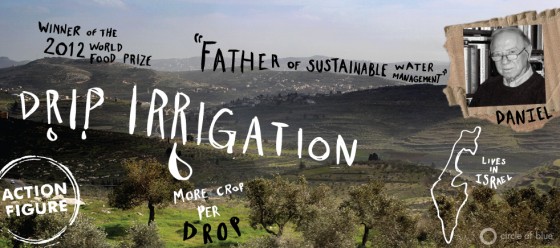
Israeli Innovator Dr. Daniel Hillel wins UN World Food Prize

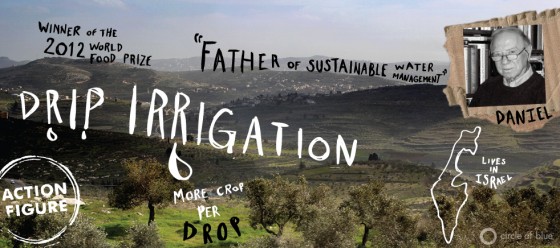
October 16, 2012 is World Food Day as designated by the Food and Agricultural Organization of the United Nations (FAO). This years theme is agricultural cooperatives, and the winner of the World Food Prize for 2012 is Dr. Daniel Hillel of Israel. He was honored for his work in micro-irrigation and innovative irrigation methods for use in arid regions at a ceremony in Washington, D.C. Such work is essential considering our global food production needs and rising food costs.

Dr. Hillel was honored for his work in microirrigation, an innovative irrigation method that applies water in small, continuous amounts directly to plants. Many traditional methods of irrigation, including soaking fields during a region’s wet season and allowing them to dry out during the arid season, are relatively inefficient in both crop productivity and water conservation.

The food prize council also recognized Hillel’s commitment to intercultural understanding and collaboration; he has worked to spread his irrigation technique to farmers in 30 countries, including Turkey, Pakistan, Sudan, and Palestinian communities.

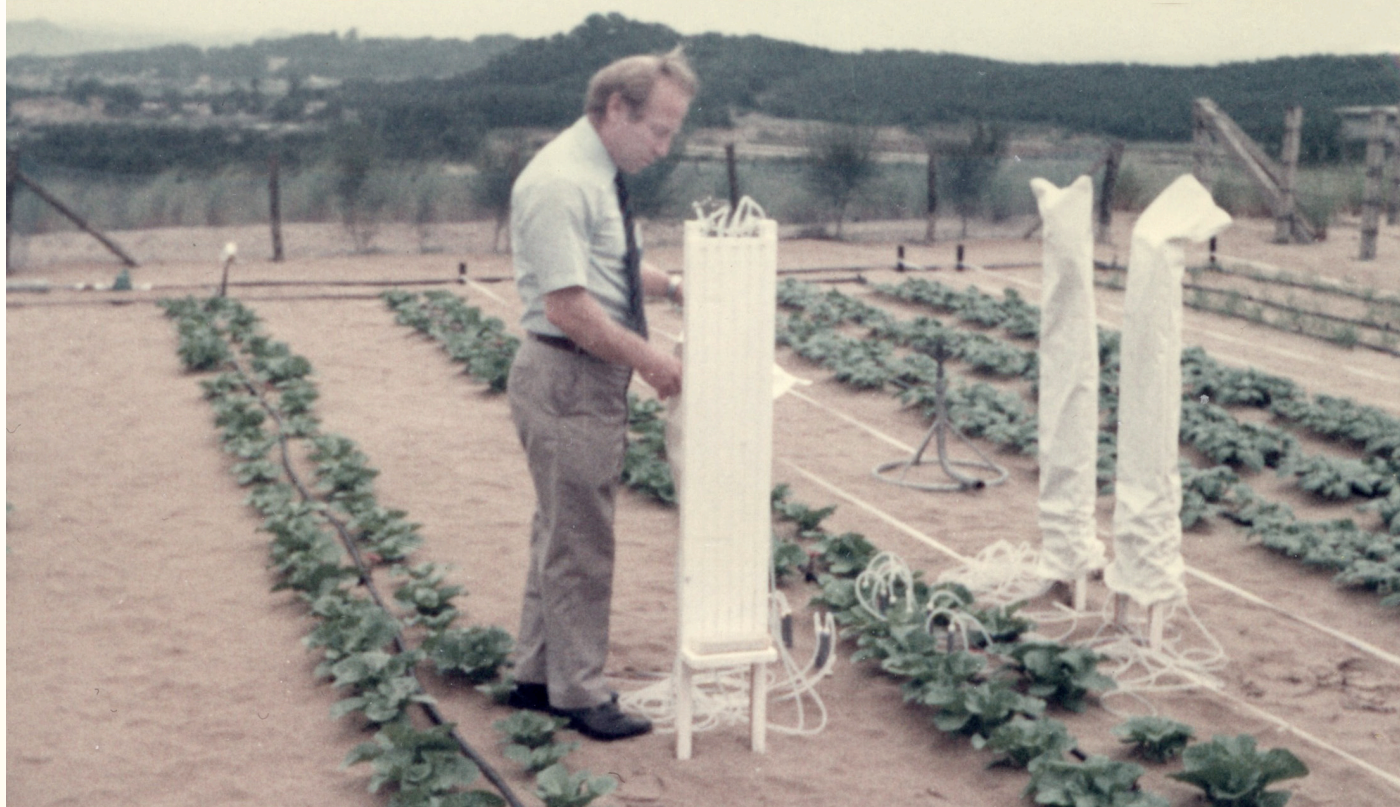
Daniel Hillel, drip irrigation
Daniel Hillel in Sde. Boker

Hillel discussed sustainable agricultural practices in a recent lecture in the US. According to the Iowa Daily, Dr. Hillel, an adjunct senior scientist at Columbia University’s Earth Institute is quoted as saying that,“we are not able to expand agriculture much beyond where it is today without encroaching upon natural ecosystems and violating their biodiversity and impoverishing the biosphere. So we have to be very careful and learn how to intensify production and do it sustainably without degrading the resources of the land and water.”

Israel is known for pioneering practices (the drip irrigation system was invented by Israelis) and is often called the Start Up nation for it’s innovations that benefit the global population. That population is growing at a fast rate.

“The world’s population has been projected to stabilize at 9 [billion] to 10 billion by the third decade of this century,” Hillel said. “Consequently, our expansive population has been placing ever greater demands on the world’s limited and vulnerable soil, water and biotic resources.”

“My hope is to encourage them to pursue their interests, and to raise their awareness of the crucial importance of this profession that we share, which is agriculture and environment and land and water and climate,” Hillel said. “You [young people] are the future of the world.”

For more information on World Food Day, visit the website.

Photo Credit: Circle of Blue

Read More Food and Health News:

5 Ways Yom Kippur Can Green the World


How Traditional Arab Architecture is Greening Buildings in Israel

0

traditional arab building
In the unrelenting Middle East sun, one thing is very clear when you build a new home: it must work with the elements. Standing the test of time are traditional Arabic buildings that kept families and worshippers cool for centuries, long before air conditioning was invented.

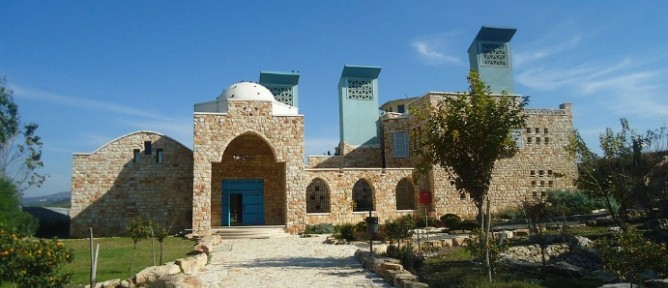
A new “green” teaching and research center in the Israeli-Arab town of Sakhnin showcases some of the best traditional approaches to construction in the hope that it will inspire modern building practices. And on a less concrete level, the building is seen as a “green bridge” between the Arab and Jewish communities. The Union of the Mediterranean recently awarded it first prize in a competition on energy conservation.

Architects anywhere can pick up on traditional Arab building techniques as a means to improve building efficiency, says Hussein Tarabeih (who we’ve filmed here), director of the Towns Association for Environmental Quality (TAEQ) for the six Arab-Israeli towns in the Beit Natufa Valley in the Lower Galilee. This is the association that commissioned the building.

“We have a lot of energy-saving elements built into the building,” Tarabeih says. “And it was important for us that we use the community. We conducted a survey asking them what they wanted and involved the older people quite a bit. The truth is that much of the knowledge on the traditional elements has been lost so we had to learn from the beginning. But this is one of the purposes for creating this building. We wanted to preserve the old traditional techniques.”

Traditional Arab building secrets

Tarabeih (pictured below) says many of the 20 features incorporated in the building could easily be applied to hot, desert climates anywhere, including California or Arizona, to keep edifices naturally cool in summer and warm in winter.

hussein tarabeih
Constructed from adobe bricks made from mud and straw, the building in Sakhnin was designed by architect Abed Elrahman Yassin, a student of the late Egyptian “architect for the people” Hassan Fathy. Typical of Arabic homes throughout the Middle East, it has a wall and window covering called a mashrabiya. This feature, usually decorated with a geometrical design, serves as a sunshade and privacy screen.

Most traditional Arabic houses have a large patio, either on the exterior of the building or in a central courtyard. When paired with long, high windows and doors, and draft windows in the right orientation, the patios cool the circulating air and offer a pleasant seating area throughout the day. If a water fountain is placed in the center of an enclosed patio, the cooling effects are even greater.

Dome-shaped roofs are a traditional symbol of Arab architecture found in mosques throughout the world. On the practical side, they maintain cool air in the building. At the base of the dome, as in the Sakhnin structure, four small windows remove the hot air while channeling the cool air into the room.

Traditional skylights called tezana are made from glass spheres and tubes that allow natural sunlight to penetrate the rooms without the need of electric power in the daytime. When the glass is colored, the amount of direct sunlight into the rooms can be controlled.

Windcatchers of Yazd
Wind catcher in Iran

Also central to traditional buildings, and seen today widely in countries like Iran, is the cooling wind tower. “Our water circulation tower, called a malkav in Arabic, is 12 meters high, and you can spray water in the top of the tower to cool down the air circulating through the building,” says Tarabeih.


Morocco University Excited Over First Wind-hydrogen System Installation

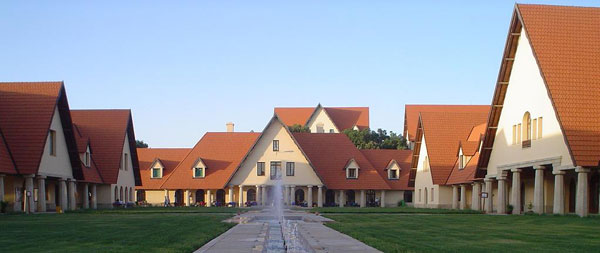
Al Akhawayn University, wind hydrogen energy teaching center, morocco, Training, teaching and researching the wind: Al Akhawayn University in Ifrane gets Africa’s first wind-hydrogen system.

Morocco’s renewable energy push received yet another boost last week with the installation of the first-ever wind-hydrogen system in Africa. Activists and industry experts are excited that the government is pushing forward on its continued promises to create clean energy for the North African country which aims to be 42 percent reliant on renewables by 2020. “This is a great initiative and one that we all believe will be a huge success as it can help build on the issues of losing potential energy from renewable sources,” environmental technology consultant Ibrahim bin Abdullah, who has worked with the Moroccan government on wind and solar projects in recent years, told Green Prophet.

How to Get to Israel by Boat Part II

1

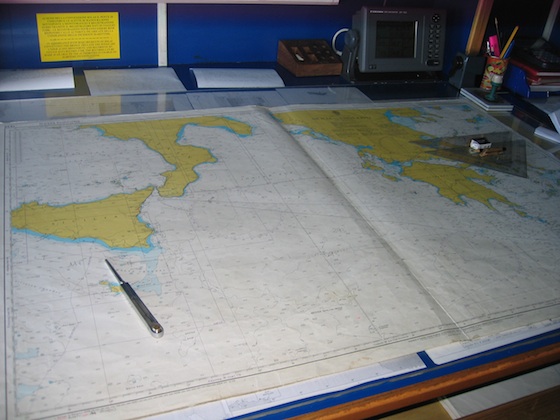
travel, eco-tourism, carbon footprint, Mediterranean Sea, alternative transportationHere’s what Lianna got up to on her carbon cutting voyage from London to Israel. You can find out why she wanted to avoid flying in How to get to Israel by boat – Part 1.

Day 1: Departure

Today, we sail! Confirmation came this morning that the Grande Europe freight ship will arrive at Salerno in Italy. After some final panic-buying of chocolate bars (what if they’ve never heard of vegetarians?!) I shouldered my rucksacks and headed to the docks.

The port borders a pleasure beach, so bizarrely, we wait it out surrounded by beach umbrellas and bronzing Italian families until the unmistakeable yellow and white hulk of our ship moves into view. There’s a nerve-wracking hour whilst the ship turns 180º and heads away from the port. She’s not leaving us behind though, but waiting for a dock to become vacant.

Archi5’s Solar-Powered Archaeology Museum for Morocco

0

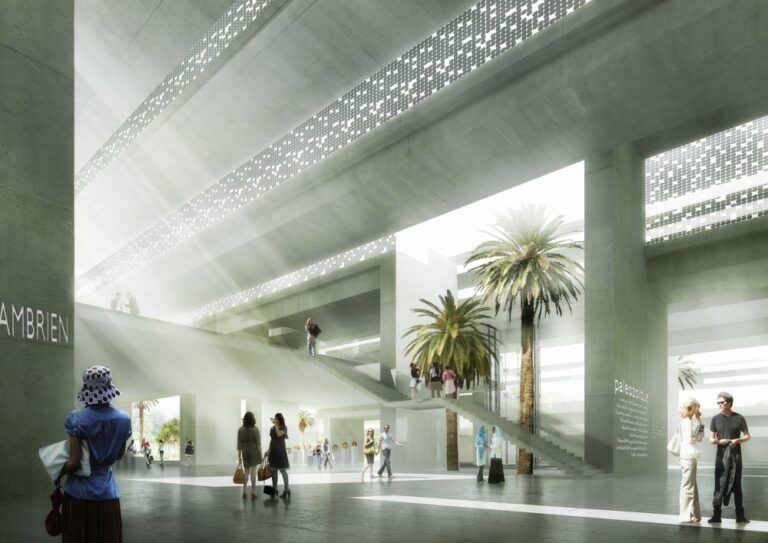
green design, solar power, Morocco, rainwater harvesting, museum, archaeology, Rabat, Archi5The Archaeological Museum of Rabat was first built in 1932 and is badly in need of a renovation, so Archi5 submitted plans for a new solar-powered facility that would rise in harmony with its surrounding. Comprised of a series of boxy ribbons filled in with glazing, the conceptual museum is a fluid space that provides “visual environmental comfort,” according to the design brief, as well as a protective shell for the museum’s numerous archaeological and earth science treasures.