Opioid drugs including oxycodone, heroin and fentanyl have fueled an ever-worsening epidemic in the US. And after giant events in New Orleans they are popping up in the wastewater.
Neom, a bombastic collection of futuristic cities and resorts, has flopped as Saudi oil prices roll back reality. The Saudi plan of hosting the 2029 Asian games to be held at Trojena, a ski report in the desert, has been cancelled.
A large sperm whale has washed ashore on Zikim Beach in southern Israel, marking only the eighth documented case of its kind along the country’s Mediterranean coast since monitoring began.
Opioid drugs including oxycodone, heroin and fentanyl have fueled an ever-worsening epidemic in the US. And after giant events in New Orleans they are popping up in the wastewater.
Neom, a bombastic collection of futuristic cities and resorts, has flopped as Saudi oil prices roll back reality. The Saudi plan of hosting the 2029 Asian games to be held at Trojena, a ski report in the desert, has been cancelled.
A large sperm whale has washed ashore on Zikim Beach in southern Israel, marking only the eighth documented case of its kind along the country’s Mediterranean coast since monitoring began.
Opioid drugs including oxycodone, heroin and fentanyl have fueled an ever-worsening epidemic in the US. And after giant events in New Orleans they are popping up in the wastewater.
Neom, a bombastic collection of futuristic cities and resorts, has flopped as Saudi oil prices roll back reality. The Saudi plan of hosting the 2029 Asian games to be held at Trojena, a ski report in the desert, has been cancelled.
A large sperm whale has washed ashore on Zikim Beach in southern Israel, marking only the eighth documented case of its kind along the country’s Mediterranean coast since monitoring began.
Opioid drugs including oxycodone, heroin and fentanyl have fueled an ever-worsening epidemic in the US. And after giant events in New Orleans they are popping up in the wastewater.
Neom, a bombastic collection of futuristic cities and resorts, has flopped as Saudi oil prices roll back reality. The Saudi plan of hosting the 2029 Asian games to be held at Trojena, a ski report in the desert, has been cancelled.
A large sperm whale has washed ashore on Zikim Beach in southern Israel, marking only the eighth documented case of its kind along the country’s Mediterranean coast since monitoring began.
Opioid drugs including oxycodone, heroin and fentanyl have fueled an ever-worsening epidemic in the US. And after giant events in New Orleans they are popping up in the wastewater.
Neom, a bombastic collection of futuristic cities and resorts, has flopped as Saudi oil prices roll back reality. The Saudi plan of hosting the 2029 Asian games to be held at Trojena, a ski report in the desert, has been cancelled.
A large sperm whale has washed ashore on Zikim Beach in southern Israel, marking only the eighth documented case of its kind along the country’s Mediterranean coast since monitoring began.
Opioid drugs including oxycodone, heroin and fentanyl have fueled an ever-worsening epidemic in the US. And after giant events in New Orleans they are popping up in the wastewater.
Neom, a bombastic collection of futuristic cities and resorts, has flopped as Saudi oil prices roll back reality. The Saudi plan of hosting the 2029 Asian games to be held at Trojena, a ski report in the desert, has been cancelled.
A large sperm whale has washed ashore on Zikim Beach in southern Israel, marking only the eighth documented case of its kind along the country’s Mediterranean coast since monitoring began.
Opioid drugs including oxycodone, heroin and fentanyl have fueled an ever-worsening epidemic in the US. And after giant events in New Orleans they are popping up in the wastewater.
Neom, a bombastic collection of futuristic cities and resorts, has flopped as Saudi oil prices roll back reality. The Saudi plan of hosting the 2029 Asian games to be held at Trojena, a ski report in the desert, has been cancelled.
A large sperm whale has washed ashore on Zikim Beach in southern Israel, marking only the eighth documented case of its kind along the country’s Mediterranean coast since monitoring began.
Opioid drugs including oxycodone, heroin and fentanyl have fueled an ever-worsening epidemic in the US. And after giant events in New Orleans they are popping up in the wastewater.
Neom, a bombastic collection of futuristic cities and resorts, has flopped as Saudi oil prices roll back reality. The Saudi plan of hosting the 2029 Asian games to be held at Trojena, a ski report in the desert, has been cancelled.
A large sperm whale has washed ashore on Zikim Beach in southern Israel, marking only the eighth documented case of its kind along the country’s Mediterranean coast since monitoring began.
Everyone older than ten has likely experienced the exquisite agony and transformation of a broken heart. Which means that just about everyone has probably developed their own recipe for healing as well. Some people go on “retail therapy” sprees to sweeten the pain, others crawl up in a tiny ball on their bed and stay there for days, while others still look to nature for help.
This is what Jeff did, a Couchsurfer who met me in the Sierra Nevada mountains of southern Spain for a weekend of wet walking. I thought he was coming to my rescue because I was planning to hike alone, but when we started to talk, it emerged that Jeff’s heart was recently crushed and he needed a friendly distraction. Here are five ways that 18 miles of mountain hiking put him back on the path of happiness, and me too!
Researchers turn to high tech cameras to track sensitive animal populations in Jordan’s Dana Biosphere Nature Reserve.
Using cameras equipped with ultra-violet sensors, Jordan’s Royal Society for the Conservation of Nature (RSCN) measures animal population and distribution, including female to juvenile ratios, male versus female numbers, and specific patterns of migration through the Reserve. RSCN is dedicated to protection and enhancement of Jordan’s natural environment; part of that mandate is to record key data about the Kingdom’s native plant and animal species.
They deployed 12 devices throughout the park, capable of daytime and nighttime recording. The cameras, activated by vibrations of approaching mammals, begin to record images when the creatures come within 10 meters.
Key “animal paparazzi” points included water sources, valleys and known migration routes.
The cameras, which record in dual media (video and still photography), have verified excellent results from recent conservation practices. The images document a 2011 population of 450 ibex, up from an initial count of 15 almost twenty years ago when this reserve was established.
Tracking biodiversity in the Dana Biosphere
Dana Biosphere is home to about 40 mammal species including striped hyenas, rock rabbits, wolves, Asiatic jackals and rare species of fox.The technology documented increasing populations of Caracal, Rock Hyrax, the endangered Ibex, and the rarified Bland Ford Fox, which was believed to be extinct.
According to ecologist Malik Al-Awaiji, the reserve is home to over 200 bird species and 800 plant varieties, three of which are plant species never known to exist. These discoveries are named Rohia danaiansis, Macromeria danaiansis and Salin danaiansis. “Work is ongoing to determine their properties,” he told the Ghana News Agency.
Dana Biosphere conducts critical biological research and conservation while allowing a high level of public access. Perched on the edge of Wadi Dana, and open year-round, the guesthouse offers breathtaking views of the reserve. It contains nine bedrooms, most with private terraces, as well as facilities for courses and conferences.
Bird Watching in Jordan
The park covers 310 square kilometers and boasts spectacular natural highs and lows: mountains 1,600 meters above sea level and valley gorges 150 meters below. It extends from the top of the Jordan Rift Valley to the desert lowlands of Wadi Araba and famed for its bird watching and archeological sites.
The reserve is one of Jordan’s major eco-tourism destinations, recording 40,000 visits last year with associated revenue of $425,000. Unfortunately, reserve carrying costs run about $565,000 per year.
Reserve estate manager, Mahmoud Bdour, said that the United States Agency for International Development (USAID) is providing $2.5 million to renovate dilapidated guest infrastructure including its sewerage system. It also receives support from the World Bank and the United Nations Development Program.
“I am optimistic, the project will enhance visitation and generate the needed revenue to further development, when completed”, said Bdour.
Jordan is host to other reserves, namely, Shamary, Azraq Wetland, Rum, Mujib Biosphere, Ajloun, Dippen and the newest, the Al Yarmoole reserve.
“Fun is important for humanity and without it, we are greatly diminished'”- Grant Shilling on why surfing is important and holds the key for the Israeli and Palestinian conflict
During the 60 year conflict between Israel and Palestine, there have been some fairly ‘outside-the-box’ suggestions for resolving the hostilities. One of my all time favourites was Gaddafi’s suggestion that the two nations unite and rename the country ‘Isratine’ – part Israel and Palestine. However, an activist from Canada has come up with an equally mind-boggling suggestion.
Grant Shilling insists that surfing could be a successful peacemaker and bring Israelis and Palestinians together in friendship and peace. I know what you’re thinking because I’m thinking it too: surfing? Really? With all those opposing views and strong beliefs, surfing is going to change anything? Well, Grant says yes and whilst he’s under no illusion that this is a quick answer, he does believe “it is one small step toward the path to peace.”
I caught up with Grant Shilling to talk about his mission to deliver wetsuits to the Gaza Surfing Club and his book ‘Surfing with the Devil’.
Tell us a little about yourself and how your project to deliver wetsuits to Gaza came about.
I live on Vancouver Island, Canada and work as a writer, artist and street outreach worker. I have consistently involved myself in projects of sport and social change including art gallery installations and more relevant direct actions including: AIDS and sport, homeless soccer, long boarding and First Nation communities and many more.
This project was the result of this background and more specifically two factors: an increasing sense of hopelessness about the situation in the Middle East and an awareness of the Gaza Surf Club as a result of the actions of Dorian ‘Doc’ Paskowitz and the group Surfing for Peace.
From what I’ve read from your book, it’s clear that you have a real sense of the intractable nature of the conflict between the Israelis and Palestinians. What did you hope that delivering the wetsuits to the Gaza Surf Club would do?
Well on a practical level I could relate to the idea of an absence of equipment. The surf scene here on the west coast of Vancouver Island really just emerged in the ’80s and equipment was scarce and mainly available in the States. So on that level I simply wanted to see the people of Gaza surfing.
On a philosophical level I have a core belief that fun is an aspect that all of us need in this life and unfortunately don’t always get enough of. Naturally, given the horrific stress of living in Gaza and the Middle East with the constant threat of war or violence and the disruption of people’s lives, fun is often ignored. In my opinion nothing is more fun than surfing so if some people in Gaza were able to get to surf as a result of more equipment than they would be offered a welcome reprieve from the stress of their daily lives.
You say that at its core, Surfing with the Devil asks the question ‘can surfing be used as a grassroots peacemaker?’ You asked a wide range of people during your adventure [including Sama Wareh a young Syrian-American Muslim woman who surfs in a burkini; Rabbi ‘Shifty’ Shifren aka The Surfing Rabbi; Mike Ali a Muslim born in Jerusalem, Shaun Tomson, South African Jew and former World Surfing Champion and Dorian ‘Doc’ Paskowitz, 91, the father of Israeli surf ] but I guess what I want to know is what your answer is and whether that changed due to your journey?
The short answer is yes I do believe surfing can be used as a grassroots peacemaker. In any situation where you have people sharing a passion; arts, music, medicine anything, you are creating an opportunity for understanding and stripping away prejudices that preclude such opportunities. The biggest hurdle to getting people together is these existing prejudices and fears but once you are able to get passed them, good things happen.
I’d also like to add that I am no saint. I am full of the contradictions and flaws that all of us possess and that any of these processes involve. For instance in Surfing With the Devil I explored the less savoury aspect of localism in surfing.
This was to demonstrate that any ‘method’ or practice has its flaws as does its practitioners. It is part of what makes us human and that the peaceful path is for all saints, sinners and surfers.
You talk about the spiritually of surfing and how it can bring you closer to nature and a greater realization of our interconnectedness of everything. Is connecting to nature important to you to help resolve the Israeli-Palestinian conflict?
Interesting question. One of the things I noticed in surfing the Mediterranean is how you don’t get the overwhelming sense of wildlife that you do when you surf the west coast of Vancouver Island and its abundance of sea lions, whales, waterfowl etc.
The Med is alas, a bit dead. That said, surfing offers the unique experience of buoyancy that being in the water provides and the rush that catching the collective energy of a wave supplies. So I would suggest that nature is inherent to the act of surfing. As to your question I would say that in nature there is peace.
You talk about the fact that friendships don’t need politics but are friendships more powerful than politics? And in the Middle East, can they really change anything?
Yes I believe so. I feel that globally there is a growing disenfranchisement with the political process. That people are fed up with politicians and either the inherent corruption of their situation or the powerlessness to change things. People do have the power.
A major criticism of much of the co-existence work that occurs between Israelis and Palestinians is that it ignores the power inequalities between the two sides. It often makes empowered Israelis and Jews feel good without changing the dire situation of Palestinians. What would be your response to that?
First of all as someone who does street outreach work for my day job, if you are doing this kind of work to “feel good” you are doing it for the wrong reasons. Most of the time you are frustrated, disheartened and disappointed. It is not a “feel good” factor that keeps you going – and sometimes I’m not even sure what is! But I would say it is a sense of social justice.
All of these situations whether it be Jews and Palestinians, outreach worker and the homeless, involve an inscribed inequity – it is why the work (in the broadest sense) exists. What is important is to somehow shift the power or control. This is where sport and surfing are such great tools as they eliminate these inequities. One further thing I have always admired is Nadine Gordimer’s take on the apartheid system that existed in South Africa and I am paraphrasing: “Any system that enslaves one group of people enslaves all groups of people.”
Shilling with Doc.
The one important thing that you learnt from this experience and you would like to share with others?
Fun is an inherent human need and to ignore it or not have enough opportunities to experience it greatly diminishes us.
Any future projects you are working on that you’d like to share with us?
I am currently involved with a project I call Get on Board which is using longboarding (skateboards and surfboards) for outreach with First Nation Communities.
A few months ago together with three enthusiastic family kids I started a gardening experiment: growing fruits out of the seeds we collected from fruits we ate, just planting it in the backyard.
We used tomato, watermelon and melon seeds, the kids even made signs for each. Though all seeds sprouted, the watermelon seedling was first to die on us, followed surprisingly by the tomato, which managed to flower and grow one small fruit but stopped developing and died soon after.
The biggest success belongs to the melon, it kept growing and fast, flowering yellow and even bearing several fruits – one of the flowers which was pollinated by bees kept growing into this strange looking fruit.
MENA Geothermal has completed the largest geothermal heating and cooling system in the Middle East and North Africa. Completed in August, 2012, the new and deeply clean energy system at the American University of Madaba (AUM) in Jordan has a total cooling load of 1680 kW and a heating load of 1350 kW, which is enough energy to power both the College of Science and the College of Business.
“It reduces CO2 emissions by 223,638 kg CO2/yr or 47% compared with conventional chiller/LPG boiler cooling and heating systems,” the company’s President and Founder Khaled Al Sabawi told Green Prophet, and the project was constructed using 100% local labor and Palestinian engineering and support staff.
You can get vending machines for the strangest things in the Arab Gulf – even for gold bars. But thinking in a greener direction, the United Arab Emirates is the second country in the world to adopt light bulb and used battery recycling machines to the public. Five reverse vending machines are being set up in Sharjah this week. Used light bulbs and batteries are considered hazardous waste, though just a drop in the bucket of electronic related waste. But bulbs and batteries do contribute to the build up of dangerous levels of mercury when these chemicals seep into the ground.
The city of Sharjah already employs vending machines for plastic bottle recycling and medical wastes through an organization called Wakaya, and the city’s environment agency is planning to award prizes to people for their recycling initiatives.
New opportunity opens for the hearing-disabled in Gaza.
About 1 percent of Gaza’s 1.6 million people suffer from total or near-total deafness. Their education is limited to the 9th grade. They must contend with a popular notion that deafness equals mental disability.
Calling all media professionals in Palestine or Jordan: increase your eco-broadcast effectiveness by applying for some hands-on training by top media pros.
The British Broadcasting Corporation (BBC) is leading a series of workshops focused on journalism, new media and management for media professionals working in Jordan and the Palestinian Authority.
The workshops are part of the European Union (EU)-funded Media Neighborhood Project, a three-year training program for journalists, editors and managers from broadcast, print and digital media. It aims to strengthen journalistic skills in the areas of media independence and online media; and improve the reporting of EU social, economic and political policies within the Middle East, Eastern Europe and Caucasus. APPLY NOW>
Applicants must select one of three workshops available in each country:
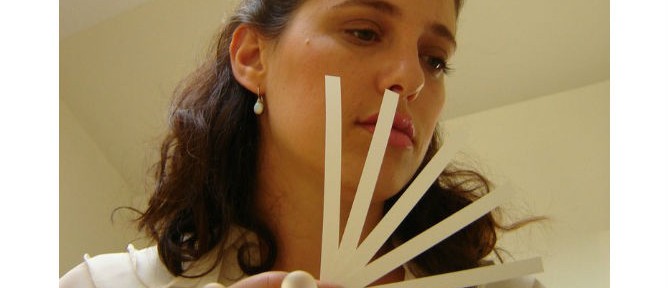
Family circumstance and curiosity led boutique and natural perfumer Ayala Moriel from the city of Tel Aviv to the other end of the world on the west coast of Canada. After landing in Vancouver in her early 20s, her sense for Middle Eastern scents helped her create a unique line of natural perfumes for women and men.
Now 36, and considering a move back to Israel, Moriel mainly relies on electronic communication to help her develop custom-made scents from exotic ingredients that evoke the Arab market in the Old City of Jerusalem, or the verdant valleys that lead to the Mediterranean Sea from Israel’s Galilee. A consultation with her artisanal perfume house can start with an online questionnaire, and even a phone interview or personal meeting in Vancouver.
Moriel has also created about 50 signature scents with names like Zohar, Sahlab and Finjan, which I have tested and loved, and is working with companies to help create a commercial line of fragrances to be repackaged under other brands for products such as natural cleaning supplies.
Safe, natural ingredients
Moriel’s perfumes do not contain synthetic musk or odor-enhancing chemicals.
Though aware of the allergenic or toxic effects of synthetic perfumes, Moriel stays out of the politics of this debate in the perfume industry by saying that she works with only natural substances for aesthetic reasons: Natural perfumes have hues and layers much more resonant and complex than synthetic big-name brands at airport duty-free shops and American department stores, she says.
Living between the juxtaposed cultures of Jewish hippies, Druze villagers and Arab farmers helped define Moriel as the exotic, all-natural perfumer she is today.
Born in 1976 in Montreal, at the age of three she immigrated to Israel with her mother and stepfather. They helped found the alternative ecological village Klil, in Israel’s north.
Moriel’s products are favored by established, over-30 women.
“It was like heaven for a little girl because we had so much freedom and loved the nature and flowers around us,” she tells Green Prophet. For a few years, her family lived without electricity.
In her early 20s, she and her husband and baby went to look for new opportunities –– and Moriel’s birth father –– back in Canada. It would prove to be a difficult period in her life.
After a separation that left her alone with her autistic daughter in Vancouver, Moriel turned to burning incense to help her relieve stress and anxiety.
Enjoying it so much, Moriel decided to try making her own incense, but it did not live up to her expectations, smelling like a lit marijuana cigarette. Why not create scents that don’t need to be burned, she reasoned? Her unique brand, Ayala Moriel Parfums, was hatched. That was about 10 years ago.
With orange blossoms as compass
Always looking to her Middle Eastern home for inspiration, this year she returns directly to her Jewish roots by launching a new perfume called Etrog, which distills the hauntingly sweet smell of the citron, an aromatic citrus fruit used as a symbol in the fall Jewish holiday of Succoth.
Citron, or etrog. Warty but with the smell of heaven.
Zangvil is one of her signature scents.
Before committing to a large order of Etrog, or any other scent for that matter, for about $50 Moriel will send a broad sample of scents in the mail –– each bottle containing at least a week’s worth of perfume. Customers can then work with Moriel to choose the right scent.
With winter coming, her perfumes offer an exotic pick-me-up, she says. The definitive lack of scents in chilly Canada pushes Moriel to keep surrounding herself with rich aromas formed in her early memories. She says that the warm, humid climate in Israel contains more fragrances than colder countries, and besides coming to see her growing family in Israel every year she is drawn to the odors.
“I am sensitive to the smells in Vancouver now and can pick up the cherry and linden blossoms. But it’s really the Middle Eastern heat that brings out the best in plants and flowers,” she says.
“And in the spring … there are orange blossoms in full bloom. I try to time my trips back to Israel around this time.”
A West Bank hospital gets wind powered with 700 kw.
Few things are as deadly as a hospital without power, but a new wind turbine is about to blow away one hospital’s fear of losing theirs. The largest of its kind in the Palestinian territories, Al Ahli Hospital provides care to 600,000 Palestinians living in the Hebron district. With 365 regular beds and a capacity for 500 patients in emergency situations, they can’t afford to lose the energy needed to keep people well.
So in 2009, a project was officially inaugurated to incorporate wind energy into the hospital’s generating mix, and the European Union agreed to fund 80 percent of it; now, following years of planning and mapping, a 700 kilowatt wind turbine is about to be installed. It is expected to start generating 40% of the hospital’s power by the end of 2012.
Three years of sustainable lighting for fifteen bucks? United Nations Relief Agency, you hearing this?
The LuminAID inflatable solar light was created by a pair of architecture students focused on disaster-relief solutions to the 2010 Haitian earthquake. Their light offers a safe, inexpensive and sustainable alternative to kerosene and oil lamps that’s ideally suited to the Syrian refugee camps swelling in north Jordan and eastern Turkey.
In just two years, they’ve pre-sold 1,500 units in more than 25 countries.
They’ve collected donations to fund over 3,000 lights for NGOs doing work off-grid in countries including India, Uganda, and Laos.
We speak to Muaz Nasir about his faith-focused environmental work in Canada and why the Muslim community can’t afford to sideline climate change
“The environment is something everyone should be concerned about as climate change, water scarcity and pollution are issues that do not discriminate based on faith:” That’s Muaz Nasir’s response to what he likes to call constructive criticism that the Muslim Ummah focus its energies on ‘bigger issues’ rather than climate change.
Personally, I can’t imagine a ‘bigger issue’ then the future of our planet but I completely accept that this realisation hasn’t quite reached the wider Muslim community. Ground-breaking policies such as the Muslim Seven Year Action Plan on Climate Change were impressive but as Nasir points out, but they failed to “develop the necessary research or resources that would push the climate agenda into the mainstream Muslim community.”
As such, any progress has been slow and the product of hard working individual campaigners rather than national policies. Read on for more about the Muslim-environmental movement in Canada, Nasir’s green Muslim website Khaleafa.com and how he getting mosques to ‘Ban the Bottle’ among other green ideas he is working to implement in the Muslim community – ideas which can spread around the world.
Tekirdağ Province, in northwestern Turkey, will be the site of several new wind power plants over the next few years.
This has been a big year for wind power in Turkey, with more than 5,000 MW of wind power projects (WPPs) licensed and awaiting permitting. Foreign companies such as Nordex and GE are jumping into the expanding sector with investment and equipment.
Israelis are averse to buying egg imports from Turkey, where the hens may not be inoculated against salmonella.
Free from the dilemma of buying the free-range or organic eggs (I own my own coop with eight hens), the Israeli government has decided to make a law that will require the Made-In label on every egg sold in Israeli supermarkets. The public was aghast apparently at the news that millions of the eggs sold on the local market do not originate in Israel, but come from countries such as Turkey which does not control for salmonella. Some 80 million eggs are imported to Israel every year from Turkey, more than half of the 3 percent of all foreign imports and the health inspection on these eggs are limited, according to Haaretz. Some of them are sold under the Tnuva label, which includes pictures of hens out to pasture in verdant fields. Likely the opposite of how these eggs are raised.
Green Prophet travels to the marvel-filled UNESCO World Heritage Site
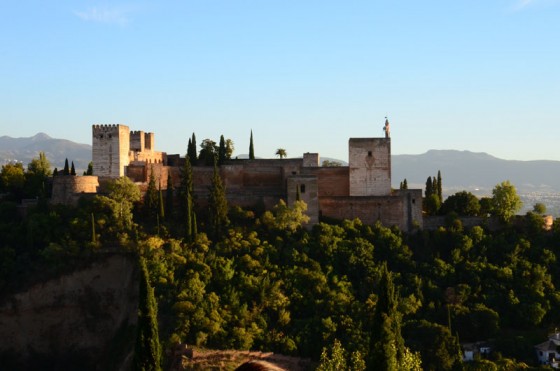
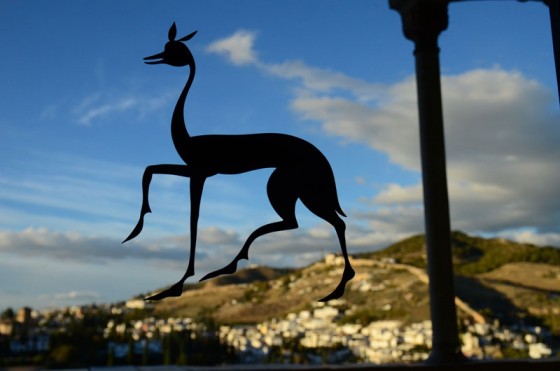
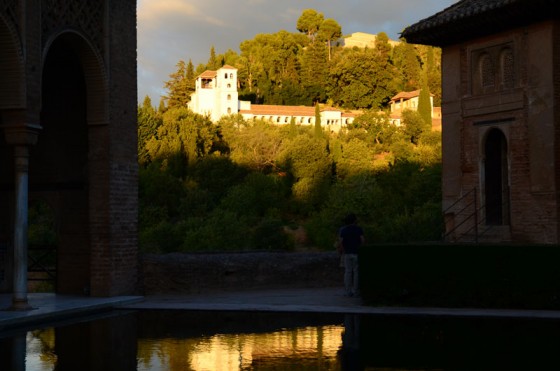
Around 7pm in autumn, a golden light cradles La Alhambra, a Moorish fortress and palace complex located in Granada, Spain. The reddish exterior walls and the surrounding woods stand with their shoulders square and crowns basking in the glow, as if to show off their undisputed majesty.
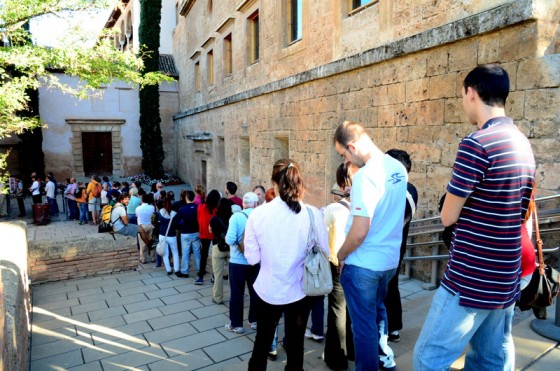
Indeed, the UNESCO World Heritage site is so revered that shortly after sunrise, a long line of tourists shuffle slowly through a winding queue at the entrance, waiting for their chance to visit what Salman Rushdie called the Moor’s Last Sigh developed over eight centuries of Nasrid rule in southern Spain.
We did too. Step in for a peak at what we found.
La Alhambra, which means The Red One, was originally constructed during the mid 10th century by Badis ben Habus, the Berber rule of the Kingdom of Granada. It sits high above the surrounding city on the hill of the Assabica, and is separated from the neighborhoods on its northern flank by deep ravines and the Darro river.
Although the palatial complex and fortress features some of the finest examples of Islamic art, and the architecture’s not bad either, it reveals a haphazard construction process that extended over a period of many centuries.
The 1,530,000 sq ft palace city was renovated by a succession of dynasties from the 9th century to the 16th century, when the holy Roman Emperor Charles V inserted his own palace within the Nasrid fortifications. But during every epoch, particularly during Islamic rule, there was an emphasis on creating a heaven on earth couched within a rather plain shell.
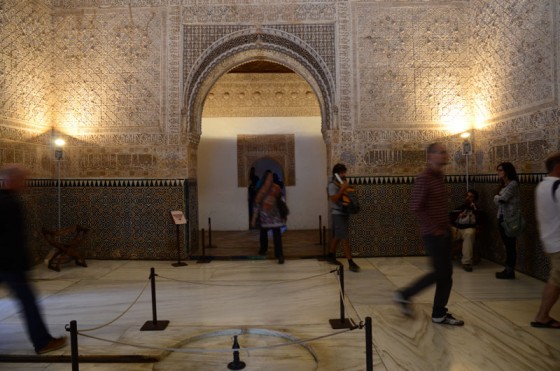
And what does heaven look like? Think of the sound of trickling fountains and of rows of roses and orange trees. Think Calliphal horseshoe arches framing views of the valley, of detailed muqarnas (stalactite ceiling decorations) peering down at you from above. Think pretty painted tiles on towering walls. Reflection pools double the magic of the buildings, which feature increasingly finicky arabesques crafted by the Christian, Jewish and Muslim artisans of the time.
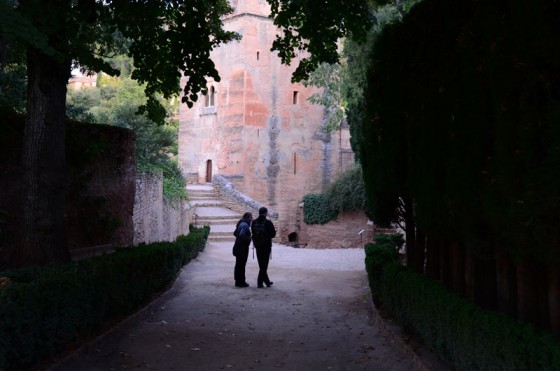
Carrying their iPads (the commoners camera of the 21st century?), iPhones and sometimes more sophisticated photographic equipment, visitors crawl through 13 towers, the Alcazaba fortress, the Nasrid palaces, which are the most frequently visited sections of the meandering complex, and the Generalife, which includes a high palace and low sculptural gardens used as a playground for the monarchs of Granada.
We also crawled, stopping at every carved door, marveling at the sheer number of people who flock to the site. It took us hours just to get through the palaces, and then we spent another watching the sun melt into the forest.
And around every corner, down every narrow passage, and in front of every golden arch, we felt so proud of this Arab world marvel. The Moors demonstrated remarkable sophistication as well as a celestial reverence for both nature and god.
It made us hopeful too that the parts of the Arab world embroiled in merciless self-destruction will one day emerge with a refreshed sense of purpose, in the same way that the Arabian Gulf countries have awoken from the slumber of their oil wealth into something of a green renaissance, an active and creative response to the climate and resource challenges of the day.
This is what La Alhambra inspires: a look within, a look without. And a desire to make our immediate surroundings a more beautiful place.

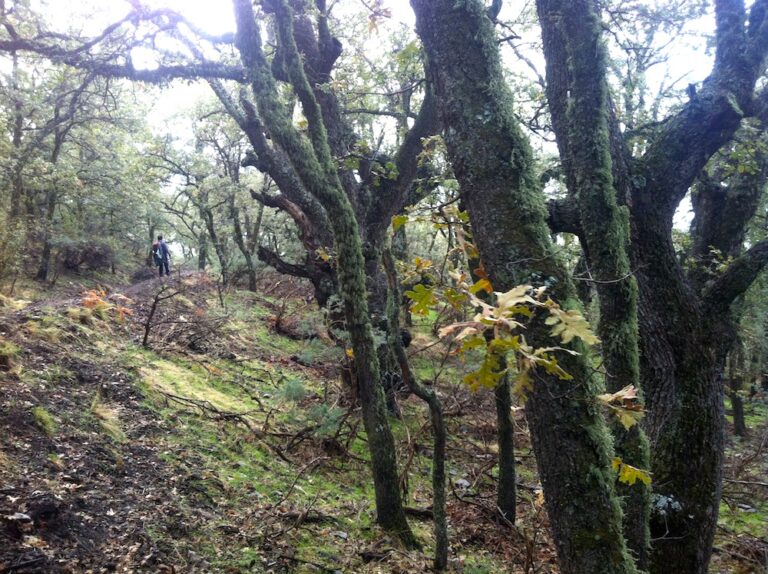
 Everyone older than ten has likely experienced the exquisite agony and transformation of a broken heart. Which means that just about everyone has probably developed their own recipe for healing as well. Some people go on “retail therapy” sprees to sweeten the pain, others crawl up in a tiny ball on their bed and stay there for days, while others still look to nature for help.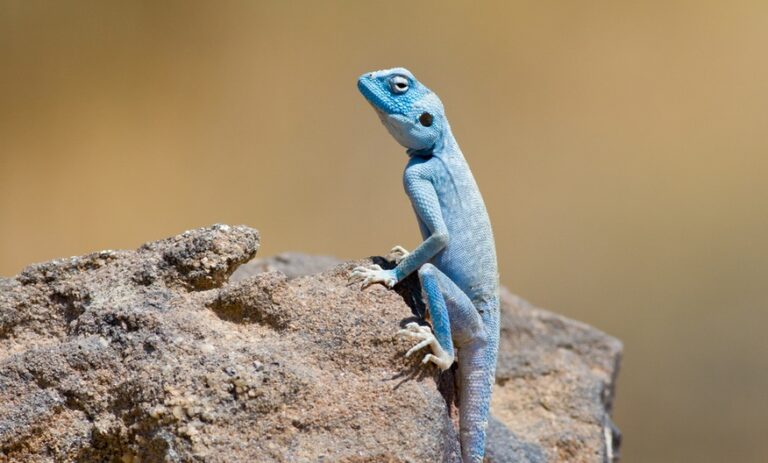


 A few months ago together with three enthusiastic family kids I started a gardening experiment: growing fruits out of the seeds we collected from fruits we ate, just planting it in the backyard.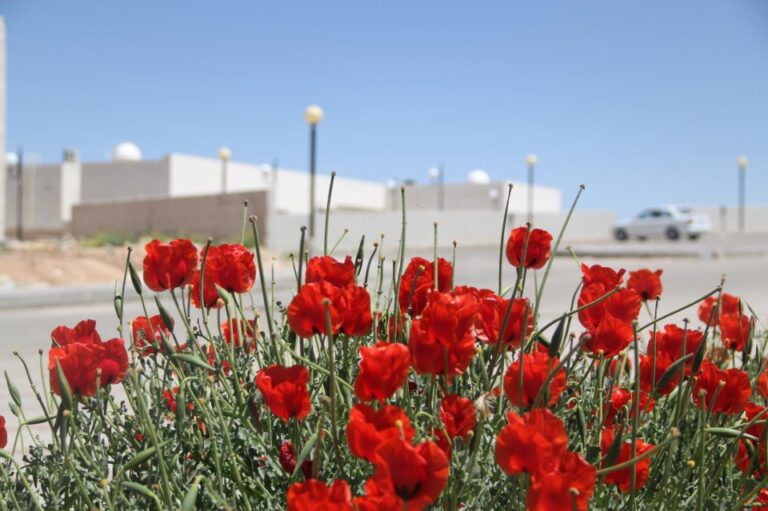










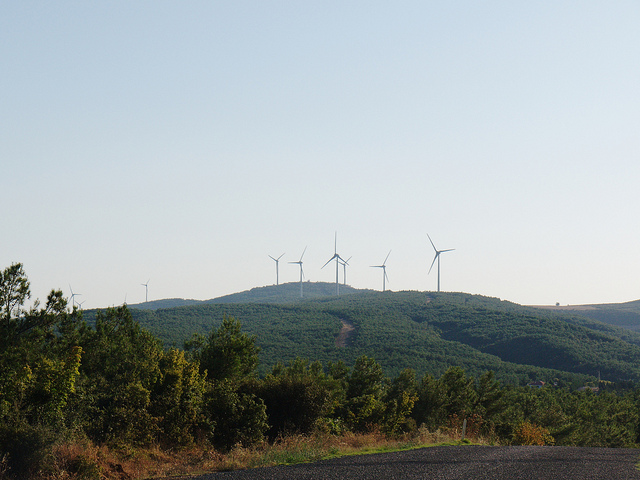
 Tekirdağ Province, in northwestern Turkey, will be the site of several new wind power plants over the next few years.

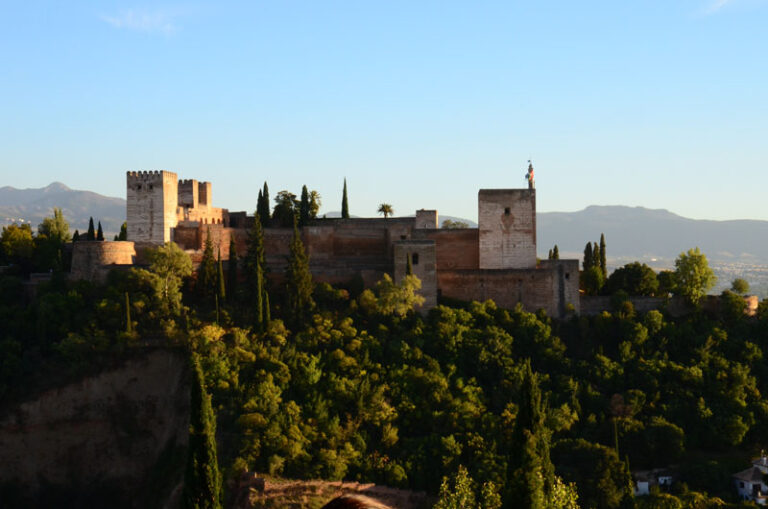
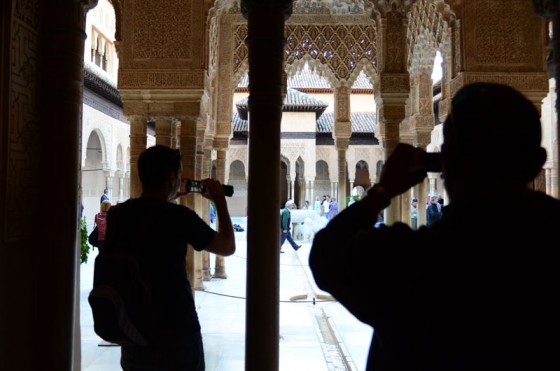
 Carrying their iPads (the commoners camera of the 21st century?), iPhones and sometimes more sophisticated photographic equipment, visitors crawl through 13 towers, the Alcazaba fortress, the Nasrid palaces, which are the most frequently visited sections of the meandering complex, and the Generalife, which includes a high palace and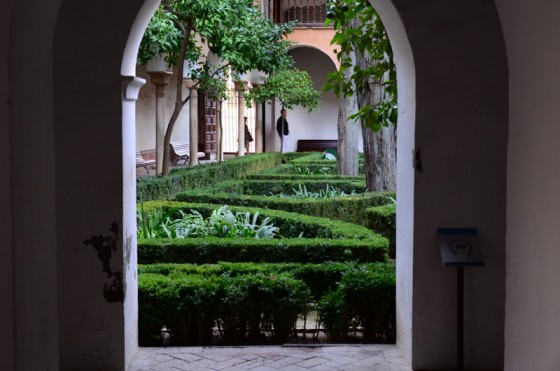
.jpg)