Home Blog Page 385

Egypt’s Pyramid Builders Succumbed to Climate Change

2

Martin_John_The_Seventh_Plague_1823

Pollen and ash in Nile river delta sediment provides evidence of ancient climactic events including mega-droughts and wildfires which wiped out pyramid-building civilizations, says a study published in the recent July 2012 edition of Geology.

They waited seventy days for her to reappear. Finally she came. For a moment just before sunrise, the bright star Sirius, daughter of Ra, shimmered over the pyramids of Cairo. For generations she had always appeared as a sign that the Nile would soon flood, bringing water, fertile sediment and life to the people of Egypt. But one year her promise of sustenance failed.  Something happened around the year 2200 BCE.  Perhaps the snow melt from the highlands of Ethiopia never arrived. Or the infrequent rains stopped coming altogether.

Whatever the cause, a once-great river became mud.  Parts of its fertile delta turned to dust. Then the fires came. They swept through the valley destroying homes, trees and crops. The people who had built the great pyramids were powerless against the climate change which led to a global drought 4200 years ago. Egypt’s pyramid-building Old Kingdom met its demise. Was climate change to blame?
sandstorm_pyramid The study entitled Nile delta response to Holocene climate variability,was authored by Christopher Bernhard of the US Geological survey (USGS), Benjamin Horto of the University of Pennsylvania, and Jean-Daniel Stanley of the Smithsonian Institution.

These researchers found that during various times throughout history, the proportion of wetland pollens in Nile Delta sediment decreased and the proportion of charcoal ash increased.

The sediment layer suggested that climate change caused severe drought conditions 3000, 4200, 5000 and 6000 years ago. Some of these drought sediment layers correspond with human records of severe droughts and the collapse of civilizations.

The Uruk Kingdom in modern Iraq collapsed about 5000 years ago. The drought 3000 years ago is associated with the fall of the Ugarit Kingdom and famines in the Babylonian and Syrian Kingdoms. The drought 4200 years ago corresponds with the end of the Old Kingdom, the pyramid builders of Egypt.

In a USGS press release, Christopher Bernhardt said, “Humans have a long history of having to deal with climate change. Along with other research, this study geologically reveals that the evolution of societies is sometimes tied to climate variability at all scales – whether decadal or millennial.”

Benjamin Horton added that, “The study geologically demonstrates that when deciphering past climates, pollen and other micro-organisms, such as charcoal, can augment or verify written or archaeological records – or they can serve as the record itself if other information doesn’t exist or is not continuous.”

Sudan, Djibouti, Eritrea, Somalia, Ethiopia, Kenya, Syria, the UK, the US and northeastern Brazil  have all faced droughts this year. Blogs around the world are writing about it.

Australia faced a series of severe droughts and wildfires just in the last few years.  Most of the Middle East and North Africa live precariously with scarcely enough water during a normal year, much less a drought. Much has changed over the past 6000 years, but when a drought hits and wildfires rage, we can imagine how such events might have ended civilizations.

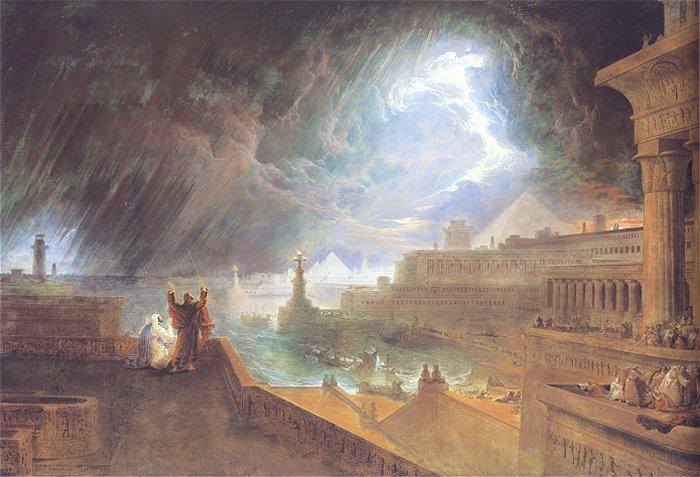
Public domain image of The Seventh Plague (Old testament bible story, “plague of hail and fire”, Exodus 9:13-35.) by John Martin via Wikimedia.

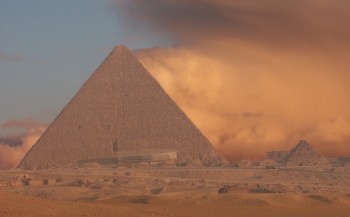
Photo of sandstorm over Egyptian pyramids via Shutterstock

Rain and Qatari folktales of nature in film

0

rain movie qatar doha cop18 folktales, Qatar folk legends and filmA community project in Qatar explores local folktales and what they can teach us about nature in the Middle East

Whilst every corner of the world has a strong storytelling tradition, the Middle East is blessed with its own unique strand of folktales exploring nature. Water scarcity, rain and drought feature heavily due to the hot and arid climes of the region. A new community education/outreach project with the Qatar Heritage and Identity Center has partnered folklorists, scholars, and storytellers with local Qatari youth to encourage oral storytelling, and also help train them to collect and document this heritage.

One Qatari folktale has already been transformed into an animated film called ‘Rain’, which will be screened at the Doha Tribeca Film Festival this November.

“Our film ‘Rain’ is based on an oral folktale called ‘Amtir Ya Matar,’ which is about a traveler stranded in the desert and rescued by a tribe of Bedouins who then offer him hospitality while he recovers,” explains Autumn Eve Watts who is one of the organisers of the initiative.

“However, discovering that the traveler’s name is Matar [which means rain in Arabic], they beg him to bring rain to their drought-parched land. Matar repeatedly tries to explain to them that only God do this, but the misunderstanding persists. He eventually turns to prayer for help, and Allah answers his prayer by bringing rain to the land. The moral lesson of the folktale involves miscommunication, and the mistaken belief that man can control all aspects of the natural world.”

Indeed at the heart of many Qatari folktales are the limitedness of man in the face of nature – something which the modern world could do with remembering. We can’t conquer nature and be its master. Our lives and future survival is based on caring for the environment and allowing it to remain in equilibrium so that we can live our lives in comfort and peace.

One of the mentors of the folktale project is Dr. Kaltham Al-Ghanem, a Qatari anthropologist who has done a lot of research on culture and the environment and has a forthcoming book on this subject. ‘Rain’ along with other Qatari folktales will be published in a book in their original dialect as well as in English.

Autumn Eve Watts, who is the screenwriter of the ‘Rain’ film, also remarked that the group was meeting with the COP18 UN Global Climate Change Conference organizers to plan a cultural program for the conference that would involve Qatari storytellers sharing tales related to heritage and environment. So, I guess we can expect to hear more from them in the future!

:: Qatari Folktales Facebook page

For more on culture and the environment see:

Lebanon’s Trash Theatre and the True Cost of Rubbish (INTERVIEW)

Recycle Art Workshops @Darb1718

Ask Ali: The UAE’s Very Own Hipster Environment Show

Better Place Electric Car Company Gets $100 Million Investment Boost

better place electric car switch station

Investors still have faith in the Israeli-led Better Place electric car company. After the board fired its visionary founder and CEO Shai Agassi, and laying off half its staff in Israel last month the company has secured a $100 million investment. The company aims to reduce range anxiety of the use of electric cars by providing a switchable electric battery that can be replaced at change stations located throughout a network in as little as five minutes. We’ve featured a couple happy Better Place car owners in Israel, who no doubt will be breathing a little easier about the future of their cars, following the new investment news.

According to Better Place Spokeswoman Julie Mullins the $100 million pledge in electric car financing is in, but the deal isn’t sealed. The Israel Corp. said it will pump some $67 million USD into this round, on top of their previous investments, totalling $250 million. The company has already spent nearly half a billion in developing and deploying its battery charge replacement and charge stations in Israel. Sales amounting to about five hundred or so cars in Israel have been very weak. This new round is to push sales, sources say. The company also has efforts to deploy its network of electric cars in Denmark, even though some Danes strongly believe the charge stations should be green and not blue.

Will Dark-sky Ecotourism Spread to the Mideast?

1

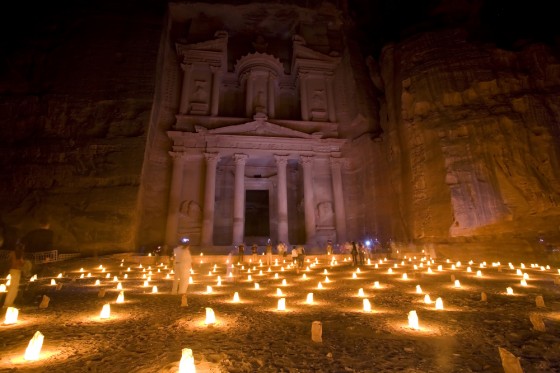
petra candle light dark sky tourism

Israel’s Negev Desert, Jordan’s Mount Nebo, Medaba and Wadi Rum are a few dark sky destinations for stargazing.

Paris is known as the city of lights. So is Medina Saudi Arabia, Be’er Sheva Israel and Las Vegas, Nevada. We shouldn’t overlook Baltimore Maryland, Varanasi India, Quanzhou China and Milford Pennsylvania. Each of these cities is also known as the city of lights. I’m sure I’ve forgotten a few. Developer Tamouh plans to complete a city of lights project in Abu Dhabi by 2014 and the entire Benelux region of Europe has more than enough eye-watering glare to qualify as one colossal city of lights. The message seems to be that if you want tourists to visit, make sure you have plenty of lights. But that isn’t how it always works.

Abu Dhabi’s Eid al-Adha Waste Cleared by 3,000 Workers

0

arab family eating picnicAbu Dhabi’s key attractions received a special makeover over the Eid holidays thanks to an army of extra workers equipped with special cleaning gear.

Public places and picnic spots received focused attention by 3,000 waste workers on duty across the Emirates for the holiday: waste generation skyrockets during Eid. Eid al-Adha, also called Big Eid, is an important 3-day Islamic holiday that occurs in the last month of the lunar Islamic calendar, after the start of the Hajj pilgrimage to Mecca.  The holy days, or days of remembrance, recall the willingness of Ibrahim to obey God by sacrificing his son, Ismail. God of course intervened, and a sheep was sacrificed instead of the boy (read here about one Green Prophet writer who got close to Eid meat).

WISH20: One Big Wish Which Could Change The World

1

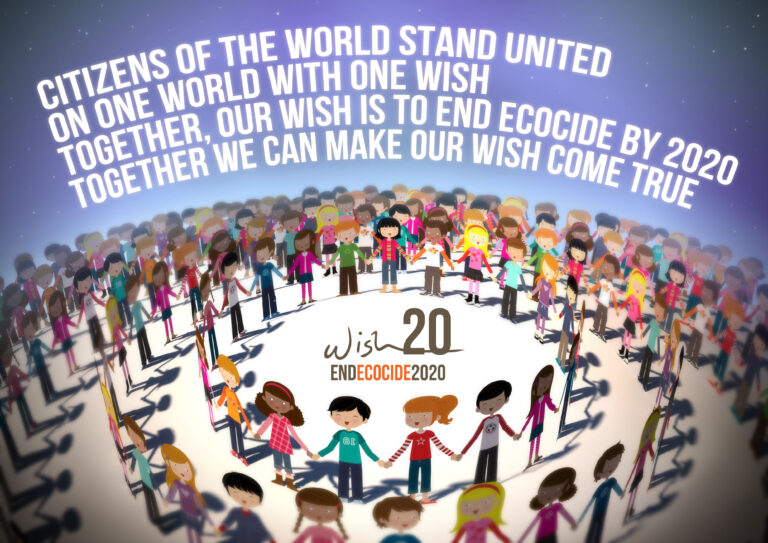
Ecocide, Wish20, crime against humanity, earth first, law, environmental law, Polly HigginsImagine it’s 2020, what do you see? Poverty or abundance, environmental destruction or nature flourishing? War or Peace?

Polly Higgins, voted one of the World’s Top 10 Visionary Thinkers by the Ecologist and named the Overall Champion of the 2012 People and Environment Awards, has a very bright outlook for the future.  For Polly, 2020 is a future where governments and business put people and planet first; where nature is flourishing, and where the future of our children’s children is assured.  To get there, Polly has one big wish which could literally change the world; to end all Ecocide, the extensive destruction of ecosystems, by 2020.

Dozens of Dead Turtles Washed up in Egypt

2

Mediterranean, Sinai, Lake Bardawil, Egypt, Sea Turtles, Mass Deaths, Poison, Nature Conservation, IUCN

An investigation is underway to determine the deaths of dozens of sea turtles that washed up on Egypt’s Mediterranean shore last week. Initial forays prompted suspicion that the turtles had eaten deliberately poisoned fish in Lake Bardawil, but conclusive results have not yet been published.

Minister of State for Environmental Affairs Mostafa Hussein Kamel established a committee to explore the cause of death of the 84 dead sea turtles, though some critics claim the ministry, the Egyptian Authority of Fish Resources and the Sinai governorate were all initially slow to respond. It isn’t clear which species have turned up in Egypt, but six out of seven marine turtles species are listed as endangered on the IUCN Red List of threatened species.

Turkish Seed Developer Helps European Farmers Adjust To Warming Temperatures

0

progen turkish seed company seedsProGen, a Turkish seed developer and supplier, has specialized in crop varieties that can withstand the hot Mediterranean climate.

As climate conditions in European countries increasingly resemble those of their southern neighbors, European farmers are seeking new strains of staple crops that can adjust to the new climate. A pan-European research project, EASTBRED, brought European agronomists together with ProGen to start selecting the new crops and introducing them to fields in central and eastern Europe.

Clever Tel-O-Porter Bike Trailer Boosts Israel’s Shared Bike Program

3

green transportation, design, Tel-O-Fun, Tel Aviv, urban cycling, shared bicycles, bike trailerJust when we thought that urban cycling had reached its zenith, Israeli designer Udi Rimon essentially rendered Tel Aviv’s cars redundant with his design of Tel-O-Porter – a genius bike trailer that connects to the city’s shared Tel-O-Fun bicycles. Made of aluminum tubes and stainless steel mesh, the trailer doubles as a hand held cart and holds up to 45kg of cargo.

The Best Electric Cars of 2012, According to the American Buzz

0

The Fisker Karma electric hybrid sport: Not everybody's car at $98,000The Fisker Karma electric hybrid sport: Not everybody’s car at $98,000

Electric cars cruising the roads of the Middle East and elsewhere in the world have been frequent Green Prophet clean technology articles ever since Better Place’s founder Shai Agassi launched his unique electric car network concept back in early 2008. Since then, a number of other electric car players have entered the electric or “zero emissions” (ZE) field, especially companies like Ford, General Motors Volt electric hybrid, which began rolling into GM dealerships in late 2010; Nissan’s total electric Leaf Model; and particularly Tesla Motor’s hot and expensive sports and roadster electric car models. But out of all these cars which translate well in the Middle East?

Luxury Fisker Karma Electric Vehicle Hits the Middle East

0

Middle East, MENA, GCC, Gulf, Arabian Gulf, Fisker Karma, Electric Vehicles, eco-friendly car, eco-transportationThere really isn’t a better market than the Arabian Gulf for Fisker’s luxury electric vehicle, that smooth and opulent 5,000 pound Karma, so it comes as no surprise to learn that one of the world’s most expensive electric vehicles will soon be spotted flying down roads throughout the Middle East.

While many western buyers are crippled by economic hardships, except for the so-called one percent and Justin Bieber, certain residents of the United Arab Emirates, Qatar, Kuwait and Saudi Arabia coasting on oil money can still afford the $136,000 – $163, 320 (AED 500,000 – 600,000) price tag that comes with this ‘eco-friendly sedan.’

Israelis Design Cardboard Wheelchairs for Africa

3

cardboard bike, cardboard wheelchair, Izhar Gafni, Israel, recycled materials, I.G. Cardboard Technologies, Nimrod ElmishIzhar Gafni and the same team behind the already world-famous cardboard bicycle have added a few other items to their repertoire, including a cardboard wheelchair. After news of the dirt-cheap cardboard bicycle raced around the globe, an international non-profit organization contacted Israelis Nimrod Elmish and Izhar Gafni of I.G. Cardboard Technologies about developing a cardboard wheelchair that could be distributed to disabled Africans. So they set about making a prototype, which, it turns out, was actually less complicated than the bicycle.

Steep Decline of Dead Sea Levels Due to Fertilizer Industry

1

dead sea shrinkingFriends of the Earth Middle East state that half of the record shrinkage of the Dead Sea is caused by Israeli and Jordanian fertilizer companies

Over the last year alone, the Dead Sea has shrunk by a record 1.5 metres. This ecological catastrophe however isn’t caused by environmental factors alone – according to the environmental organisation Middle East Friends of the Earth, half of the shrinkage was caused by two local fertilizer companies. Speaking to Bloomberg, Gidon Bromberg who is the Israeli director of the Friends of the Earth Middle East, urged Israel Chemicals Ltd and Jordan’s Arab Potash to stop siphoning off so much water and allow the Dead Sea to recover. 

Natural Holy Land Healing Research Center in Jerusalem

2

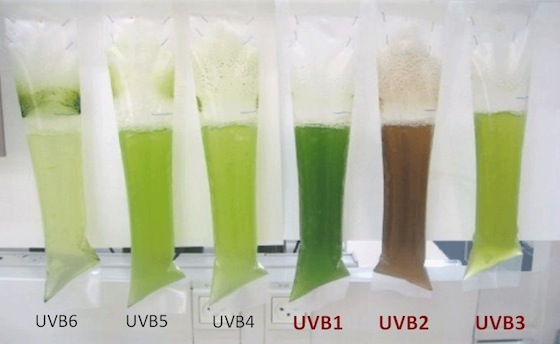
univerve-seaweed biofuel

Seaweed is prolific in Israel’s Mediterranean Sea. It makes sense, then, that Middle Eastern ancients used it to help alleviate a host of ailments from peptic ulcers to fungal infections and wounds.

Based on past and present literature, archeology, history, biology, linguistics and botany, the Natural Medicine Research Unit for the Study of Complementary, Alternative and Integrated Medicine at Hadassah Medical Organization in Jerusalem is looking into how seaweed can be utilized for its nutritional and medicinal properties. Staffers have been working with Canadian partners to grow the novel idea into commercial projects.

Green Waste Processing for Boutique Olive Oil Presses and Wineries

0

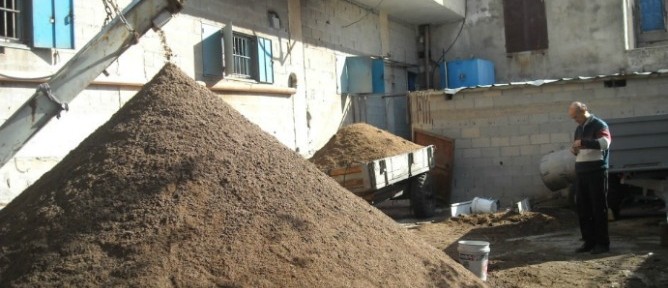
green waste refinery water treatment for olive oil press, boutique wineries

An Israeli company makes a mini-sewage plant to help small wineries, olive oil and cheese-makers deal with the pollutants from their industries.

Waste from small olive presses, cheese factories and wineries is not good for the water or soil. Organic farming and the 100-Mile Diet have influenced new college graduates to establish farms instead of seeking jobs in finance. The last decade has seen an explosion of cottage industries in everything from cheese- to wine-making.