A vast and largely untapped lithium reserve may be hiding beneath one of North America’s oldest landscapes, the Appalachian Mountains, offering a surprising twist in the global race for clean energy materials. According to new findings from the U.S. Geological Survey (USGS), as much as 2.5 million tons of lithium could be buried across the region, stretching from the Carolinas up through New England.
Energy equities are responding unevenly to the evolving landscape. Companies with direct exposure to UAE production growth and infrastructure are benefiting from increased activity expectations, while global oil majors face a more mixed outlook.
All air conditioners release water. That's Physics. Cities like Los Angeles pour billions of water down the drain every year. And while home owners who are savvy to water reuse are finding ways to use AC water in the garden (here are 5 ways to use air con water at home), or in art studios (it's basically free distilled water), cities could save water in meaningful ways by using creative ideas. These are solutions you can send to urban planners and those running smart city accelerator programs. Pick one of them and you might win the grant!
As tensions rise in one of the world’s most critical maritime chokepoints, the ripple effects go far beyond oil—touching food systems, climate pressures, and regional stability
Current goals are to treat neurological disease like Parkinson’s and restore autonomy to people with severe physical limitations by controlling exoskeletons and prosthetics. There’s also huge potential to improve cognitive abilities such as memory, attention, and languages.
A vast and largely untapped lithium reserve may be hiding beneath one of North America’s oldest landscapes, the Appalachian Mountains, offering a surprising twist in the global race for clean energy materials. According to new findings from the U.S. Geological Survey (USGS), as much as 2.5 million tons of lithium could be buried across the region, stretching from the Carolinas up through New England.
Energy equities are responding unevenly to the evolving landscape. Companies with direct exposure to UAE production growth and infrastructure are benefiting from increased activity expectations, while global oil majors face a more mixed outlook.
All air conditioners release water. That's Physics. Cities like Los Angeles pour billions of water down the drain every year. And while home owners who are savvy to water reuse are finding ways to use AC water in the garden (here are 5 ways to use air con water at home), or in art studios (it's basically free distilled water), cities could save water in meaningful ways by using creative ideas. These are solutions you can send to urban planners and those running smart city accelerator programs. Pick one of them and you might win the grant!
As tensions rise in one of the world’s most critical maritime chokepoints, the ripple effects go far beyond oil—touching food systems, climate pressures, and regional stability
Current goals are to treat neurological disease like Parkinson’s and restore autonomy to people with severe physical limitations by controlling exoskeletons and prosthetics. There’s also huge potential to improve cognitive abilities such as memory, attention, and languages.
A vast and largely untapped lithium reserve may be hiding beneath one of North America’s oldest landscapes, the Appalachian Mountains, offering a surprising twist in the global race for clean energy materials. According to new findings from the U.S. Geological Survey (USGS), as much as 2.5 million tons of lithium could be buried across the region, stretching from the Carolinas up through New England.
Energy equities are responding unevenly to the evolving landscape. Companies with direct exposure to UAE production growth and infrastructure are benefiting from increased activity expectations, while global oil majors face a more mixed outlook.
All air conditioners release water. That's Physics. Cities like Los Angeles pour billions of water down the drain every year. And while home owners who are savvy to water reuse are finding ways to use AC water in the garden (here are 5 ways to use air con water at home), or in art studios (it's basically free distilled water), cities could save water in meaningful ways by using creative ideas. These are solutions you can send to urban planners and those running smart city accelerator programs. Pick one of them and you might win the grant!
As tensions rise in one of the world’s most critical maritime chokepoints, the ripple effects go far beyond oil—touching food systems, climate pressures, and regional stability
Current goals are to treat neurological disease like Parkinson’s and restore autonomy to people with severe physical limitations by controlling exoskeletons and prosthetics. There’s also huge potential to improve cognitive abilities such as memory, attention, and languages.
A vast and largely untapped lithium reserve may be hiding beneath one of North America’s oldest landscapes, the Appalachian Mountains, offering a surprising twist in the global race for clean energy materials. According to new findings from the U.S. Geological Survey (USGS), as much as 2.5 million tons of lithium could be buried across the region, stretching from the Carolinas up through New England.
Energy equities are responding unevenly to the evolving landscape. Companies with direct exposure to UAE production growth and infrastructure are benefiting from increased activity expectations, while global oil majors face a more mixed outlook.
All air conditioners release water. That's Physics. Cities like Los Angeles pour billions of water down the drain every year. And while home owners who are savvy to water reuse are finding ways to use AC water in the garden (here are 5 ways to use air con water at home), or in art studios (it's basically free distilled water), cities could save water in meaningful ways by using creative ideas. These are solutions you can send to urban planners and those running smart city accelerator programs. Pick one of them and you might win the grant!
As tensions rise in one of the world’s most critical maritime chokepoints, the ripple effects go far beyond oil—touching food systems, climate pressures, and regional stability
Current goals are to treat neurological disease like Parkinson’s and restore autonomy to people with severe physical limitations by controlling exoskeletons and prosthetics. There’s also huge potential to improve cognitive abilities such as memory, attention, and languages.
A vast and largely untapped lithium reserve may be hiding beneath one of North America’s oldest landscapes, the Appalachian Mountains, offering a surprising twist in the global race for clean energy materials. According to new findings from the U.S. Geological Survey (USGS), as much as 2.5 million tons of lithium could be buried across the region, stretching from the Carolinas up through New England.
Energy equities are responding unevenly to the evolving landscape. Companies with direct exposure to UAE production growth and infrastructure are benefiting from increased activity expectations, while global oil majors face a more mixed outlook.
All air conditioners release water. That's Physics. Cities like Los Angeles pour billions of water down the drain every year. And while home owners who are savvy to water reuse are finding ways to use AC water in the garden (here are 5 ways to use air con water at home), or in art studios (it's basically free distilled water), cities could save water in meaningful ways by using creative ideas. These are solutions you can send to urban planners and those running smart city accelerator programs. Pick one of them and you might win the grant!
As tensions rise in one of the world’s most critical maritime chokepoints, the ripple effects go far beyond oil—touching food systems, climate pressures, and regional stability
Current goals are to treat neurological disease like Parkinson’s and restore autonomy to people with severe physical limitations by controlling exoskeletons and prosthetics. There’s also huge potential to improve cognitive abilities such as memory, attention, and languages.
A vast and largely untapped lithium reserve may be hiding beneath one of North America’s oldest landscapes, the Appalachian Mountains, offering a surprising twist in the global race for clean energy materials. According to new findings from the U.S. Geological Survey (USGS), as much as 2.5 million tons of lithium could be buried across the region, stretching from the Carolinas up through New England.
Energy equities are responding unevenly to the evolving landscape. Companies with direct exposure to UAE production growth and infrastructure are benefiting from increased activity expectations, while global oil majors face a more mixed outlook.
All air conditioners release water. That's Physics. Cities like Los Angeles pour billions of water down the drain every year. And while home owners who are savvy to water reuse are finding ways to use AC water in the garden (here are 5 ways to use air con water at home), or in art studios (it's basically free distilled water), cities could save water in meaningful ways by using creative ideas. These are solutions you can send to urban planners and those running smart city accelerator programs. Pick one of them and you might win the grant!
As tensions rise in one of the world’s most critical maritime chokepoints, the ripple effects go far beyond oil—touching food systems, climate pressures, and regional stability
Current goals are to treat neurological disease like Parkinson’s and restore autonomy to people with severe physical limitations by controlling exoskeletons and prosthetics. There’s also huge potential to improve cognitive abilities such as memory, attention, and languages.
A vast and largely untapped lithium reserve may be hiding beneath one of North America’s oldest landscapes, the Appalachian Mountains, offering a surprising twist in the global race for clean energy materials. According to new findings from the U.S. Geological Survey (USGS), as much as 2.5 million tons of lithium could be buried across the region, stretching from the Carolinas up through New England.
Energy equities are responding unevenly to the evolving landscape. Companies with direct exposure to UAE production growth and infrastructure are benefiting from increased activity expectations, while global oil majors face a more mixed outlook.
All air conditioners release water. That's Physics. Cities like Los Angeles pour billions of water down the drain every year. And while home owners who are savvy to water reuse are finding ways to use AC water in the garden (here are 5 ways to use air con water at home), or in art studios (it's basically free distilled water), cities could save water in meaningful ways by using creative ideas. These are solutions you can send to urban planners and those running smart city accelerator programs. Pick one of them and you might win the grant!
As tensions rise in one of the world’s most critical maritime chokepoints, the ripple effects go far beyond oil—touching food systems, climate pressures, and regional stability
Current goals are to treat neurological disease like Parkinson’s and restore autonomy to people with severe physical limitations by controlling exoskeletons and prosthetics. There’s also huge potential to improve cognitive abilities such as memory, attention, and languages.
A vast and largely untapped lithium reserve may be hiding beneath one of North America’s oldest landscapes, the Appalachian Mountains, offering a surprising twist in the global race for clean energy materials. According to new findings from the U.S. Geological Survey (USGS), as much as 2.5 million tons of lithium could be buried across the region, stretching from the Carolinas up through New England.
Energy equities are responding unevenly to the evolving landscape. Companies with direct exposure to UAE production growth and infrastructure are benefiting from increased activity expectations, while global oil majors face a more mixed outlook.
All air conditioners release water. That's Physics. Cities like Los Angeles pour billions of water down the drain every year. And while home owners who are savvy to water reuse are finding ways to use AC water in the garden (here are 5 ways to use air con water at home), or in art studios (it's basically free distilled water), cities could save water in meaningful ways by using creative ideas. These are solutions you can send to urban planners and those running smart city accelerator programs. Pick one of them and you might win the grant!
As tensions rise in one of the world’s most critical maritime chokepoints, the ripple effects go far beyond oil—touching food systems, climate pressures, and regional stability
Current goals are to treat neurological disease like Parkinson’s and restore autonomy to people with severe physical limitations by controlling exoskeletons and prosthetics. There’s also huge potential to improve cognitive abilities such as memory, attention, and languages.
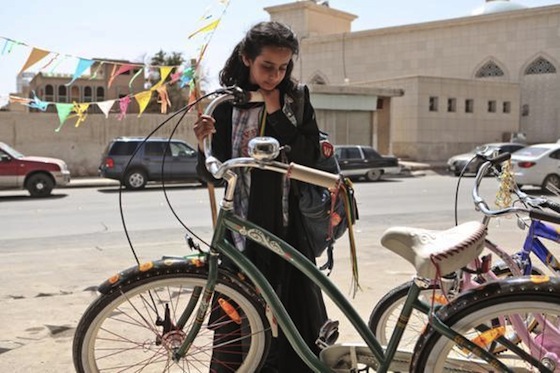
There may have been a public battle to allow Saudi women to drive but an award-winning film explores the sensitive issue of women’s rights through a young girl and her green bike
The battle for Saudi women to drive (and also take part in the Olympics) may have hit the headlines in 2012 but there are a million little battles fought by Saudi women everyday. The new and award-winning film ‘Wadjda’ by Saudi filmmaker Haifaa Al Mansour charts a young girl’s wish to ride a green bicycle and race with a boy in her neighbourhood. Al Mansour says the film aims to put a human face on the issues in Saudi Arabia and charts the struggles of ordinary people who have to manoeuvre through the conservative society of the Kingdom.
The search for fresh water is on and United Arab Emirates-based Masdar Institute of Science and Technology believes that its new collaboration with the region’s National Research Foundation (NRF) will help detect fog and monitor the precipitation for the expansion of renewable fresh water sources as well as what the company said will improve safety and transportation monitoring when fog events occur.
The idea is simple. By following the fog the company hopes that it can then develop nano-composite material with the goal of harvesting water from the atmosphere, i.e. from the fog.
The location of the UAE on the edge of a very warm sea on the one side and hot and dry desert on the other create the optimal conditions of inland fog forming. The afternoon sea breeze –almost a daily event in the UAE’s coastal areas – transports moisture inland, then at clear sky conditions at night, the large surrounding desert radiates heat very efficiently and temperatures fall quickly. The rapid cooling of accumulated inland moisture during the night facilitates conditions for fog development.
According to the Emirates official news agency WAM and a press release issued by Masdar, the projects are being split into two separate actions to work together on boosting the use of fog, detection and grabbing of fresh water.
To the unsuspecting eye, the Emirates might seem like a country not prime for fog and its tracking and ultimate development of the precipitation, but as a result of the UAE being located between a hot and dry desert to the west and a warm sea to the east, it results in massive fog accumulation inland, which Masdar believes can push the creation of new sources of water development.
Detection is important for safety reasons: Dr. Hosni Ghedira working on the project said: “On an average, there are 20 occurrences of dense fogs each year in the UAE, mainly during the December-January period. Heavy fog events reduce visibility, causing flight delays and fatal highway accidents. An accurate detection of fog will improve the safety and efficiency of transportation systems.”
Masdar Insitute President Fred Moavenzadeh told WAM, “The two groundbreaking research projects will bring sustainable benefits to the UAE and other parts of the world.
“Our projects remain relevant to Abu Dhabi and the UAE while offering benefits to regions with similar climatic conditions. With the support of the UAE leadership, we have sustained the momentum in achieving innovative solutions. We hope the global community will benefit from the outcomes of the two research projects currently being undertaken at Masdar Institute,” he added.
Dr. Raed Hashaikeh says it’s a welcome alternative to collecting fresh water in the water scarce region: “Desalination is the main source of fresh water in the UAE. The ambient atmosphere in the UAE contains a large quantity of water which makes it a potential renewable source of fresh water. Our research work will focus on developing advanced surfaces to enhance the capture and collection of tiny fog droplets. Through materials that can increase water capture efficiency, we aim to exploit fog occurrences as a renewable source of fresh water in the UAE.
National Research Foundation Research Program Manager Ahmed Alosi said: “The collaborative effort with Masdar Institute will bring benefits to the community. As directed by the UAE’s leadership, NRF promotes research activities that survive international peer review and contribute to social and economic benefits in the UAE.
“We hope the research projects on fog by Masdar Institute faculty will result in tangible outcome to support sustainable development in the country and the region.”
Masdar has become the leading renewable energy company in the Gulf region, with massive investment and development of the solar and wind energy sectors in the past 6 years since its founding. Green Prophet’s Tafline Laylin will be heading there in January for a week of sustainable events.
According to Masdar, it “aims to be a global leader in commercially-viable clean energy and sustainable technologies — and to secure the Emirate’s continued leadership in the evolving global energy market.”
With this new ambitious fog effort, it could once again show itself capable of innovation and alternative energy development that leads the global energy push away from traditional sources.
It’s nearly 2013 and I am grateful. After three years of traveling with a backpack through 14 countries in Africa and the Middle East, I am finally back home with my family in the United States. The time I spent abroad stretched my mind and broadened my heart, transformed long held stereotypes into a long string of new insights, and in some ways left me more confused than I was before.
But I must say, looking at next year and beyond through the eyes of my young nephews, whose planet has been so radically altered in the last few decades, strengthens my worries about the future. And with it my motivation to do something about it, which is why I decided to sit down and map out a few ways in which I hope to reduce my environmental footprint in 2013. Here are six of my resolutions. Please feel free to share yours in the comment section.
Every year we like to round up a list of our most popular stories from the preceding year. Not only does this give us a sense of closure, but it also helps us better understand what our readers want. This year our readers have been following a range of subjects that affect the health of our planet, including energy, food, and wildlife stories.
With 6 of the top 10 most obese countries located in the Middle East, maybe it is time to look at reducing our meat intake argues Joseph writing from Egypt
There are always arguments for and against going vegan, and they are many, but for many in today’s world, going vegan is all about the ethical decision not to harm animals, at any level, from eating them to wearing their skins. Those of us out there who have taken meat off our plate have done so for a variety of reasons, reducing factory farming only one of the myriad factors in our choice. Also on the list of reasons why people turn away from flesh consumption is the environment and health concerns.
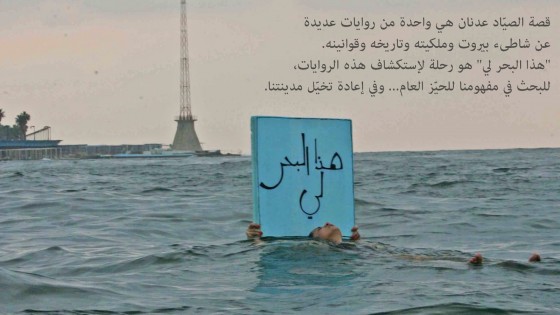
“The Sea is Mine” is a unique live art piece and interactive theatrical production bringing awareness to Beiruti’s on the tragic history and destiny of its seashore
A familiar ongoing struggle along Beirut’s waterfront is that between those who want free access to the sea and the privatization of the Mediterranean seashore. “The Sea is Mine” is one of the most unique and creative environmental awareness projects I have come across. The aim of the project, conceived by the Dictaphone Group comprised of Abir Saksouk (an architect and urban planner), Tania El Khoury (live artist and performer), and Petra Serhal (a performer and producer) is to allow for the public audience to experience the concepts behind seashore ownership, the public space and the public good “the sea” and to learn what has happened to Beirut’s waterfront. This learning process is achieved through a mixture of theater performances, live art piece and interactive political polemics on a boat journey from the port of Ein Mreisseh to the white beach in Ramla.
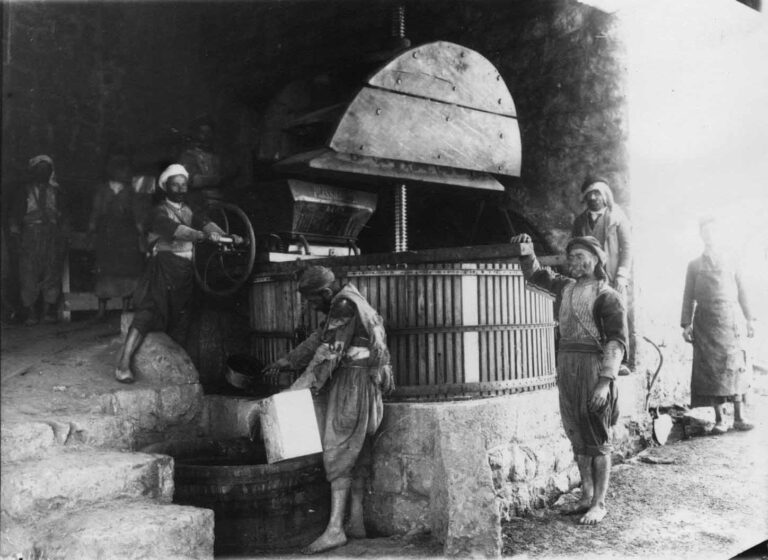
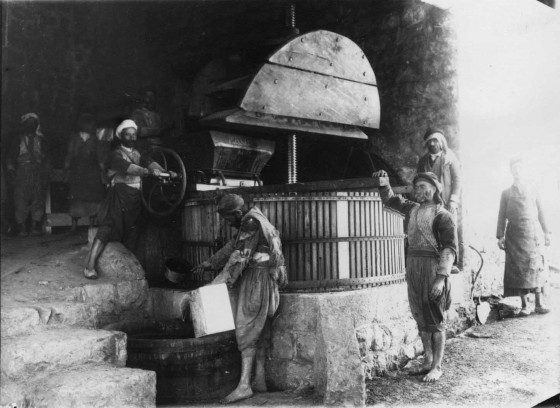
Jesuit brothers at the Ksara wine press in 1910: Lebanon’s oldest wine growing domain
Following the footsteps of a wine trading tradition started by Phoenicians, modern Lebanese wine-making re-starts in 1857 when French Jesuit missionaries at Ksara (today the site of Château Ksara) introduced new viticulture and viniculture methods as well as new vines, from French-governed Algeria. Sixty years later the French civil and military administration that governed Lebanon between the wars created unprecedented demand for wine until 1975. This golden age for wine making in Lebanon subsequently declined when the country descended into a 15-year civil war, however it managed to pick up momentum afterwards.
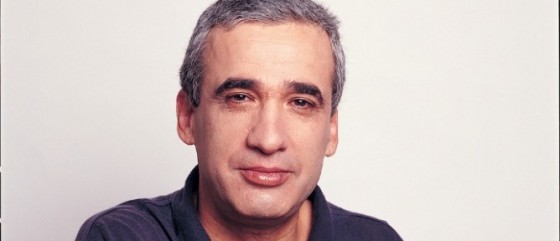
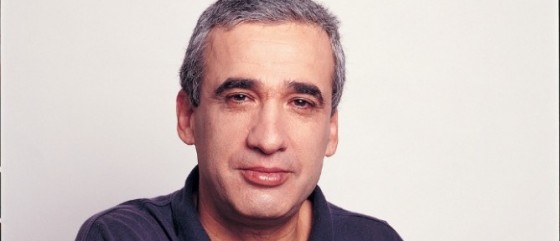
I interview one of Israel’s main solar energy entrepreneurs and researchers, Jacob Karni.
Israeli solar energy pioneer Prof. Jacob Karni was born just two years after Israel became a state, in 1950. Already back then, the country’s leaders were tangibly aware that Israel needed to develop its human resources in order to build a country that was severely lacking in energy and water. Unlike some kids who have their goals set early, Karni didn’t know he would be an engineer, let alone work with the sun. He grew up in the Polish Zionist Kibbutz Beit Alpha in northern Israel, where he slept in a children’s house like all kibbutz kids back then, and his mom before him. He went on to become an officer in a tank unit and served in the 1973 Yom Kippur War.
A new seed treatment could stop the use and need for GMOs.
Even though organic agriculture and sustainable farming practices are on the rise, feeding a hungry world demands that commercial farmers rely on genetically engineered (GMO) seeds to boost production and fend off diseases. But environmentalists fear that GMO crops are a sort of Frankenstein with unknown future consequences.
The Israeli company Morflora now has an alternative seed treatment in the works that is so revolutionary it is short-listed for Best Novel Agricultural Biotechnology in the 2012 international AGROW awards, and recently won a Red Herring business award in the Top 100 Europe category.
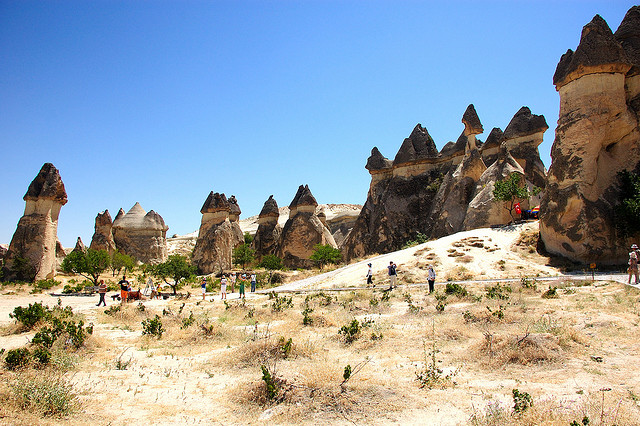
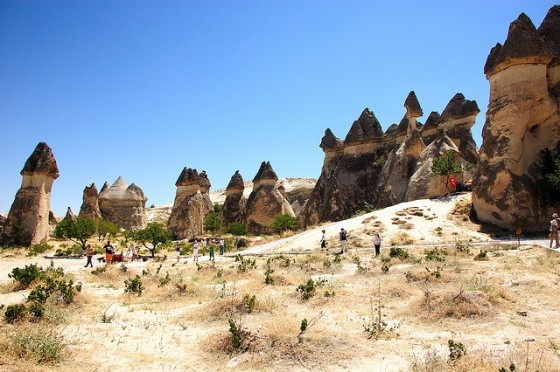
Remember them in the movie Star Wars? Historic Turkish Wonder under threat from severe man-caused erosion in the coming years.
A UNESCO World Heritage site, and a favorite backdrop for hot ballooning in Turkey, the iconic “fairy chimney” rock formations of Cappadocia, in central Anatolia, draw more than 1 million tourists to Turkey each year. Only 300 of the formations are officially registered with the Tourism Ministry, according to official statistics, although the 40-square-kilometer site is covered with them. Without any effort made to preserve the delicate structures, warns a Turkish geologist, they’ll begin to erode away rapidly over coming years.
One important issue that is still to be decided on (and an important environmental one at that) is whether to continue to use petroleum based diesel fuel to power the train’s engines, or to convert them to run on electricity as was proposed by the management of Israel Railways and reported in Haaretz and other news media articles. Although using electricity would result in less air and noise pollution, an issue of great concern to the country’s Ministry of Environmental Protection is the amount of radiation caused by increased electrical current. This increase could be much greater that that allowed by the ministry and by the various municipalities along which the rail line now runs, including the two major cities of Haifa and Tel Aviv.
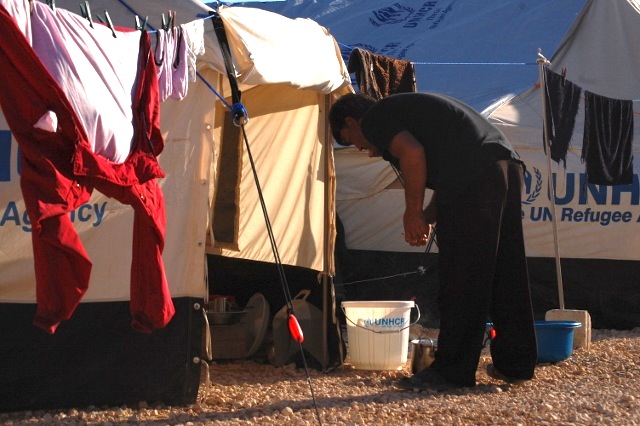
Egyptian model for the Zabaleen could help heat Syrian refugees. Green Prophet’s Joseph reports from Jordan.
Zaatari Refugee Camp in Jordan: Walking through the vast expanse of white tents, dirt “roads” and masses of families huddled closely together for warmth, if you ask what they most need, the answer, without pause, is simple: blankets. In late November and early December, I was walking through the Zaatari refugee camp in northern Jordan along the Syrian border, and the Syrian refugees are surprisingly open and frank.
Despite the destruction and death that they witnessed across the border, they remain optimistic about the future. As I was leaving the camp, an idea struck me: why not use biofuel to give power to the tents, at least deliver some form of heat to combat the encroaching winter cold?
Back in Amman, Jordan, I talked to a number of NGOs who listened patiently to this idea. They would nod and smile, say this could be a useful idea, but how could it be implemented, was the question that continued to be broached. They are right. Without adequate funding to supply the tens of thousands of refugees with blankets, biofuel is not high on anyone’s agenda.
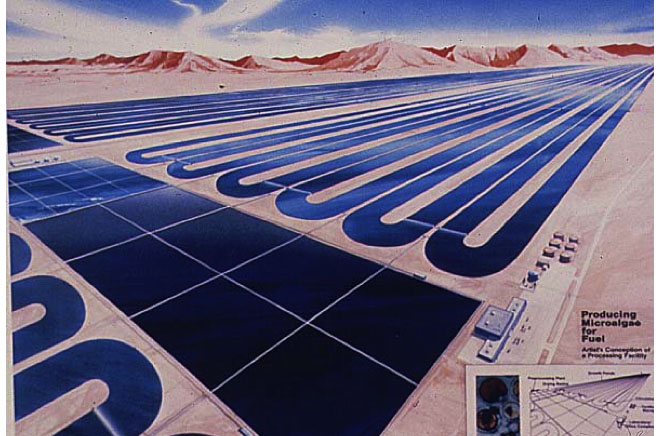
Image of the US-researched Aquatic Species Program from Jimmy Carter era
The Arab gulf region is continuing to boost its international profile in renewable energy, the most recent initiative aims to use algae as biofuel. Lootah Biofuels in Dubai has recently inked a deal with Singapore-based AlgaOil with the ultimate goal of using algae for oil extraction. (Lootah is the company that is helping bio-power buses in Dubai). It won’t be as easy as it might sound, but in an interview with ConstructionWeekOnline, alaLootah’s CEO Yousif Saeed Lootah believes that it could give a boost to reducing greenhouse gas emissions and help ensure that oil spillage is not lost for the oil rich Gulf country.
Banking on Masdar to lead the Arab world in sustainability in 2013?
With over 50 percent of the world’s oil and gas reserves the Middle East is not the likeliest place to be witnessing a green revolution, but with climate change running its course and oil prices rising through the roof, the region, and especially the Gulf countries, believe they can lead the charge to a greener and more sustainable future. Coming off a year that saw numerous gains for the renewable energy sector, including solar, wind and biogas, the region is ready to take on 2013 with a little bit more green in its focus. Masdar in Abu Dhabi is arguably the most prominent figure in this new revolution, which could easily be dubbed the Arab Green Spring.
According to Nawal al-Hosany, the director of sustainability at Masdar, their portfolio is expanding and the region is getting on board the movement away from traditional greenhouse gas emitters to push solar and wind energy to the forefront of development of energy.
Cheaper flights for all? If Qatar’s “Pearl project” can develop the natural gas industry for planes, it could translate into reducing overall costs for US carriers.
Qatar Airways ambitious new plan to erect a $19 billion Pearl project that will be the largest gas-to-liquids plant in the world, is receiving massive praise and optimism over its future success. The President of the Council of the International Civil Aviation Organization (ICAO) Roberto Kobeh González said at the recent climate event COP18 in Doha that the project could revolutionize air travel and alternative energy efforts.
“We really welcome this project as an example of the varying biofuel solutions that can be applied in different areas around the globe,” stressed Kobeh in Doha as he detailed the ICAO’s status updates for the aviation industry on energy. Qatar has the largest per capita carbon footprint in the world.

 There may have been a public battle to allow Saudi women to drive but an award-winning film explores the sensitive issue of women’s rights through a young girl and her green bike






 I interview one of Israel’s main solar energy entrepreneurs and researchers, Jacob Karni.