Home Blog Page 370

Climate Change Contributing to Mali-Algeria Conflict

2

climate change mali algeria drought libya politics environmentAccording to experts, climate change and rising food insecurity are major contributors to the recent destabilization of Mali and southern Algeria

Over the last couple of years, there has been a growing link between climate change and political issues in the Middle East. During the Arab Spring there was a real recognition that rising food prices caused by droughts in Russia and the US brought ordinary people to the streets in protests like never before. In Syria, poor water policies were held up as a major contribution to the drought which forced 500,000 Syrians to flee their homes. Now, experts state that global warming is also playing a role in the destabilization of Mali and southern Algeria which has hit the news.

TEDxAmman – Mohammed Asfour’s Green Message

1

Mohammed Asfour at tedx jordanThe chairman of the Jordan Green Building Council Mohammad Asfour tells us why nature inspires him to deliver a practical message of action

If you have been keeping an eye on the green scene in Jordan, then there’s no chance that you could have missed Mohammed Asfour. As well as the chairman of the Jordan Green Building Council, Asfour is a talented photographer with a great eye for nature and the skill to be able to capture its beauty. At the latest TEDxAmman talks hosted in Jordan, Asfour delivered a personal presentation about his early foray in environmental action and how the country could take action on climate change.

Join Jerusalem’s Critical Mass Biking Event this Friday

0

critical mass cycling in Jerusalem
For the two years I lived in Jerusalem, I tried to bike with my crappy communist throwback – a mini gearless green metallic wonder that I bought for the flat streets of Tel Aviv. The bike looked too pitiful to steal and that’s why it suited my tastes. Transplanted to Jerusalem, the labyrinth of hilly neighborhoods, lack of bike lanes, raised curbs and pedestrian walkways made out of several stories-worth of stairs became a nightmare for me and my sorry bike. I chose to walk bus or take taxis instead. We parted ways by my neglect. Eventually the bike was crushed by a car trying to park on a sidewalk – also too typical for Israeli cities.

While my glutes got a work-out, I dreaded biking into the city center from Rehavia where I lived. Yet, despite the discomfort on your bum muscles, cycling can be a great way to enjoy Jerusalem, especially if your bike is  a mountain or city bike with multiple gears to help you get up steep hills, possibly in the snow. One past Green Prophet writer Michael Green, now living in the UK, was a big fan of cycling in Jerusalem, and wrote about cycling in the historic city here – The Cycling Nightlife of Jerusalem.

Jordan and Masdar Ink Clean Energy Deal

2

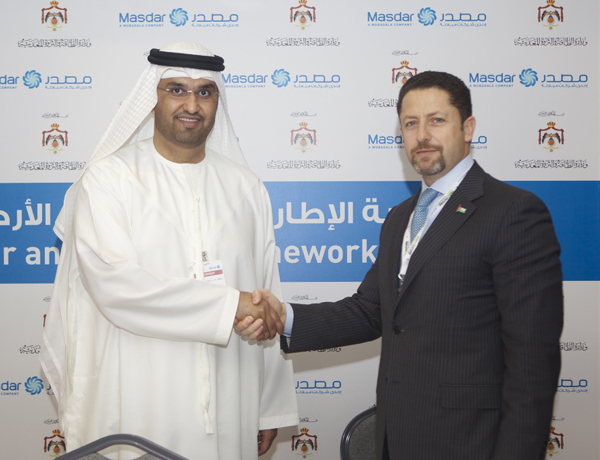
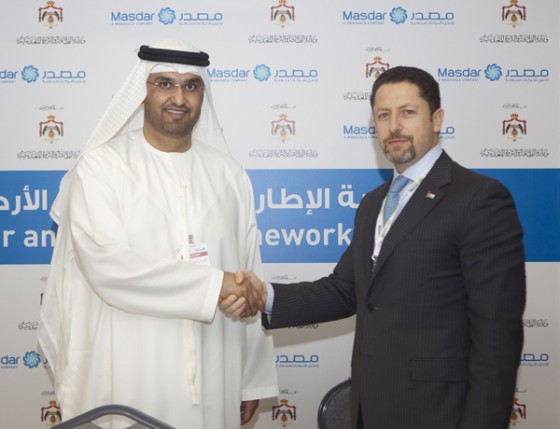
Alaa Batayneh with Masdar CEO Sultan Ahmed Al Jaber jordan minister of energy Masdar Jordan Public Private Partnership.jpegThere’s a lot of mingling afoot at conventions, and news of resulting hook-ups (including those we made there) at last week’s Abu Dhabi World Future Energy Summit are starting to hit the press.

Masdar, Abu Dhabi’s renewable energy company and host of Abu Dhabi Sustainability Week (ADSW) has signed a framework agreement with Jordan to help develop the kingdom’s renewable energy potential. The deal defines a collaborative plan to foster Jordan’s transition from fossil fuels to a more diversified and secure energy mix, according to a statement from Masdar.

Press announcements state that the agreement will facilitate competitive tenders for Masdar [projects] in Jordan. It also establishes a public-private partnership in which Masdar will advise the nation on commercial viability and, eventually, delivery of clean energy projects.

Masdar said Jordan was one of the Middle East’s “most promising clean energy markets”, in part because of its new renewable energy feed-in tariff, which creates incentives for local renewable energy projects.

Alaa Batayneh, Jordan’s Minister of Energy and Mineral Resources, said: “Jordan’s steadfast desire to navigate a path toward energy security and sustainability is of great national importance. The renewable energy industry is set to provide a significant boost to our economy as well provide a pathway to meet future energy demands.
”

“We recognize Masdar as a regional leader in the adoption and delivery of clean energy, and this agreement will support Jordan as we build a new energy industry, benefiting both our economy and society,”
 Batayneh told The Jordan Times.

Jordan’s Queen Rania delivered a keynote speech at the opening of the event on Tuesday, underscoring Jordan’s growing commitment to renewable energy development.

Image of Jordan Minister Alaa Batayneh with Masdar CEO Sultan Ahmed Al Jaber from Masdar 

Intermittent Fasting for Fat Loss and Optimal Health an Old Prophecy?

15
hamburgers not gluten free buns
How can you say no to a burger? Many paleo diets are gluten free. You just have to find yourself a bun, sans gluten

Eat like a Paleo man? A pair of new medical books claim that a continual routine of restricted eating results in fat loss, increased longevity and improved overall health.

The Prophet Mohammed, may peace be upon him as Muslims are careful to say when they mention his name, was a proponent of regular fasting. Dr. Michael Mosley refers to this fact during a BBC interview promoting his book, The Fast Diet: Lose Weight, Stay Healthy, and Live Longer with the Simple Secret of Intermittent Fasting.  Mosley suggests the best path to optimum health is to eat normally for five days a week, and fast for two.

Sort of “fasting lite”: he recommends cutting back to ¼ of your normal food intake (about 600 daily calories for men and 500 for women) while drinking plenty of water and plain tea. He lost 19 pounds in two months by following his own advice. Of course, this diet must be paired with exercise.

Sunny Solar Outlook For Middle East and North Africa

1

masdar-shams-1-solar-energyThe Middle East and North Africa (MENA) are expected to bring 3.5GW of solar capacity online by 2015: Saudi Arabia and Turkey lead the way.

A new report published by Green Tech Media (GTM) Research pins the surge from today’s near-negligible production on rapidly rising energy demand spurred by MENA economic expansion, population growth, and urbanization. It helps that the region is supersaturated with sunlight.

Factor in rising opposition to nuclear development and growing public awareness of the environmental sins of fossil fuels, and solar’s sunny reception makes perfect sense. Plus renewables, specifically concentrated solar (CSP) and photovoltaics (PV), would provide a secure domestic substitute for state-subsidized oil-generated electricity.

Quinoa and its dirty secret to local societies

0

quinoa sustainable

Quinoa is a healthy superfood filling up kitchen cupboards of ethical and vegetarian eaters, but quinoa comes at a high price for those in Peru and Bolivia,

If you’re a vegan or vegetarian or someone who is just trying to eat a little more consciously, you know that shopping can be something of a nightmare.

Taking into consideration food miles, sustainability, water footprints, animal-friendly production as well as making sure the food is organic and healthy is a minefield. So when something as tasty and low fat (I remember ‘superfood’ was being bandied about) as quinoa comes along it’s something of a blessing.


Quinoa is super high in protein

The fact it is high in protein is also perfect for those cutting out meat. However, new research has shown that affluent westerner’s love for quinoa is pushing up prices and denying Peruvians and Bolivians the crop which was once was a staple of the poor.

Since 2006, the price of quinoa has tripled and in Lima, Peru, the once unheard of grain now costs more than chicken. Overseas demand for the grain continues to grow which is all putting pressure on land in Peru and Bolivia that once produced a diverse range of crops to simply harvest quinoa.

Writing in the Guardian, investigative journalist Joanna Blythman states: “The quinoa trade is yet another troubling example of a damaging north-south exchange, with well-intentioned health and ethics-led consumers here unwittingly driving poverty there. It’s beginning to look like a cautionary tale of how a focus on exporting premium foods can damage the producer country’s food security. ”

Another example that Blythman highlights is that Peruvian asparagus which is grown in the arid Ica region has depleted water resources on which the locals depend.

She also adds that soya production is now one of the two main causes of deforestation in South America along with cattle ranching. It is worth pointing out however that according to a UN report in 2006, 97% of soya production was used for animal feed and not to fill vegetarian’s fridges. Even so, the food insecurity caused by the rising popularity of Quinoa is troubling and highlights the need for a more localised approach to food production and consumption. Especially when we are importing from countries with high poverty rates.

For more on sustainable food see:

Eat Like A Sustainable Iranian

Globally, Obesity is Now More Deadlier than Hunger

7 Evergreen Books On Sustainable Food For Your New Year

Mushroom Farmers Start To Sprout Up In Iraq

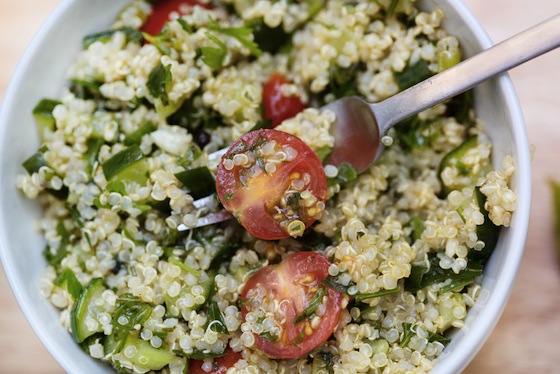
Image of Tabbouleh Quinoa with Tomatoes via Shutterstock.com

“Irresponsible” World Bank Says Red-Dead Canal Feasible

6

red dead canal conduit

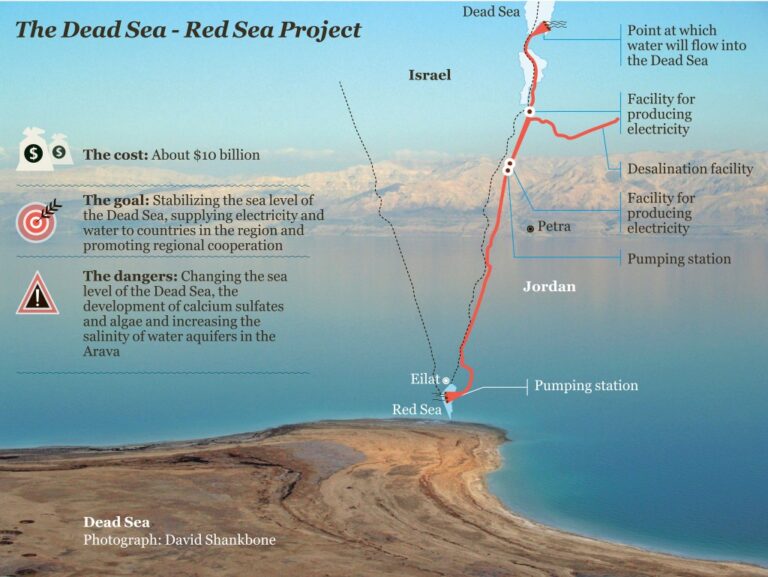
It was about a decade in the making: without much fanfare the World Bank has released a report stating that the Dead Sea – Red Sea Canal project (also called the Red Dead Conduit) will work. The basic idea is to take salty water from the Red Sea, pump it up to a channel, desalinate it and then run the excess saline water to the Dead Sea via the channel where it can replenish the super-salty water at the lowest  place on earth. Fresh drinking water will go to Jordanians as well as energy created by hydro-electric processes.

The Dead Sea is shrinking due to human overuse of water that should normally run to the Dead Sea, as well as mineral cultivation in the South end of the sea by the Dead Sea Works owned by Israel Corp (ILCO:Tel Aviv). While the World Bank report (which can be downloaded here in English, Hebrew and Arabic) says that the canal is feasible and contingent on about $10 billion in investments, it does point out some environmental considerations.

It is these very considerations, green organizations like Friends of the Earth Middle East state, which should stop the Red-Dead plan from ever materializing. In a statement issued after the publishing of the report, Friends of the Middle East write that the World Bank study is “irresponsible” and that their conclusions do not match the findings in the report.  In short: The ‘Red Dead Canal’ project idea has wasted a decade for the Dead Sea, says the NGO which is based in Israel, Jordan and the Palestinian Authority.

Fecal Transplant “Crapsule” Kills Super Bugs Better Than Antibiotics

2

fecal transplant diarrhea in woman

New Nature study research shows that fatal first world, hospital-born diarrhea caused by Clostridium difficile can be treated with donor feces. 

It’s exactly what it sounds like. Transferring feces of a (healthy, tested) donor to the gut of a patient suffering from life-threatening diarrhea.

These are cases where the body’s natural, beneficial bacteria are wiped out from many rounds of antibiotics, giving room for the virulent Clostridium difficile bacteria to take over. It causes never-ending, foul-smelling diarrhea, fever, severe cramps, dehydration and possibly bowel perforation and sepsis.

Fecal transfer is done by introducing the stool sample it into the body either via enema or nasal tube. Disgusting? Very. Effective? Yes. Replacing healthy gut bacteria with donated feces cures.

Turkey’s Energy Campaigns Should Lose Gender Roles, Columnist Says

0

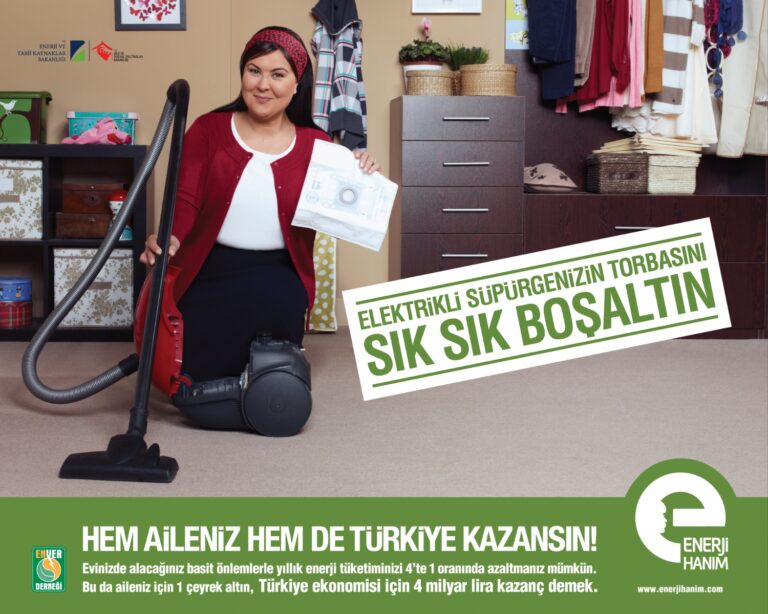
“Empty your vacuum bag often” urges Mrs. Energy (“Energy Hanım”) in this advertisement.

An energy conservation campaign recently launched by the Turkish Ministry of Energy and Natural Resources and the Ministry of Family and Social Policies has already aroused ire among female commentators in the country. The plump poster-wife for the campaign always appears in domestic settings, urging her fellow housewives to conserve energy by turning off the oven or unplugging the iron before they are done with it.

Admirable cause, but an “annoying” approach

“In this way, they aim to save the Turkish economy $4 billion,” groaned Nilgün Tekfidan Gümüş, a columnist in the Turkish daily Hürriyet newspaper (in Turkish), one of the papers which featured a full-page advertisement from the Mrs. Energy campaign.

“This is a good effort to begin a campaign that calls on the public to conserve more energy. However, it is annoying that it is done in a sexually discriminatory manner,” she wrote in the Jan. 14 column.

Mrs. Energy has appeared newspaper advertisements and television commercials, and her campaign has been endorsed by the Turkish prime minister’s wife, Emine Erdoğan.

How to achieve real energy savings

The incremental savings that a housewife can achieve by turning off her devices a few minutes early pale in comparison to larger inefficiencies, such as poorly insulated houses, losses in the national power grid, and vehicles idling in traffic for hours on the congested streets of Turkey’s larger cities.

Rather than “Mrs. Energy”, Gümüş says, the energy ministry should have called the campaign “Energy Family” and showed how children and fathers can also contribute to the effort to conserve energy.

“If gender roles weren’t being imposed, the energy savings could be even greater,” she argued.

Read more about energy efficiency in the Middle East:

Beemtech’s Smart Sensors Slash Energy Use in Commercial Spaces
Jordan’s Dinosaur Grid To Get A “Smart” Update?
5 Technologies To Make Desalination More Efficient

 

Renault’s Electric Mini Car is More Electric Bang for Your Buck

1

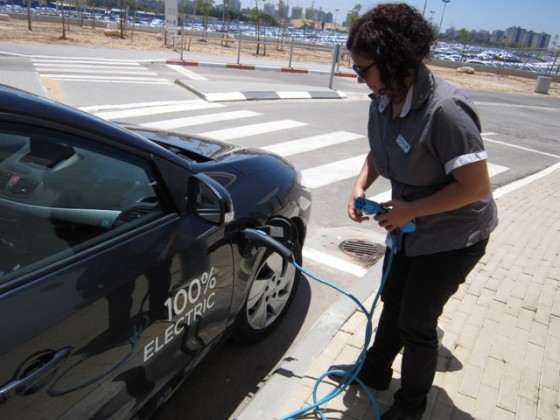
renault electric zoe miniNot exactly the 2014 Corvette, this smaller and cheaper electric model may be popular for older purchasers and the eco-aware in the Middle East

This past year, a lot of adverse publicity issues surrounded the Better Place electric car network company, that  included the firing of its international CEO Shai Agassi.  This was followed  by news yesterday that the new CEO Evan Thornley has been fired. These revelations have at least partially resulted in France’s Renault Group looking for new alternatives to the battery switching concept as devised by Better Place and its former CEO.

Post Mubarak Egypt Struggles to Supply Wheat to Hungry Country

1

toshka new valley project egyptTaking irrigated water from the Nile, the Toshka pumping station in upper Egypt was supposed to help combat encroaching desert

Political tension in Egypt in the aftermath of the revolution which began nearly two years ago, has hit tourism, led to high food prices, and caused an economic slowdown which is raising food security concerns. In 2012, Egypt was the world’s largest wheat importer (read this story on how wheat connects the planet), shipping in 11.5 million tons, and highlighting the gap between official food sustainability goals and reality.

“There is an urgent need to increase wheat productivity,” said Nagui Saeed, head of Egypt’s Wheat Producers’ Association – not just to conserve foreign currency but also to cater for Egypt’s growing population, which has nearly doubled in the last 30 years to 83 million.

Masdar City Unveils Phase B For the First Time (PHOTOS)

2

Masdar, Masdar City, clean tech, renewable energy, green design, sustainable design, Estidama, Future Build, Siemens, Abu DhabiOn a VIP media tour of the zero-carbon city Masdar, Tafline unveils these new pics of the stunning green oasis in the desert

A lot has happened at Masdar City since our first visit two years ago. Back then the “zero carbon, zero waste” development received a pile of bad press for falling short of its ambitions. The New York Times criticized the facility’s compound aesthetic and critics around the world predicted that the government-backed initiative would fail.

But… we were all wrong. In the seven short years since its launch in 2006, the many branches of Masdar – Masdar Institute, Masdar Capital, Masdar Clean Energy and Masdar City – have grown from a seedling of an idea into a full fledged engine of economic, social and technological progress. And we’ve been fortunate to see sections of the city never before unveiled to the press. Hit the jump for details.

After Pep Talk to Better Place Car Buyers Last Week, New CEO Fired

better place car company electric EVIs Better Place hiring a new CEO?

In a surprising article in the Israeli business newspaper Globes today, Israel’s electric car network company Better Place seems to have lost its new CEO, Evan Thornley from Australia. This is after a short three months on the job. Thornley was put in place to start a recovery program for the flailing company which has been burning through millions of investment capital with little more than 500 of its Renault built battery-swappable cars sold in Israel. The company was hoping to gain 1 percent of the market in Israel by now, and has set up an electric charge network in Denmark to do the same. 

Experts: Tel Aviv Will Flood Again

0

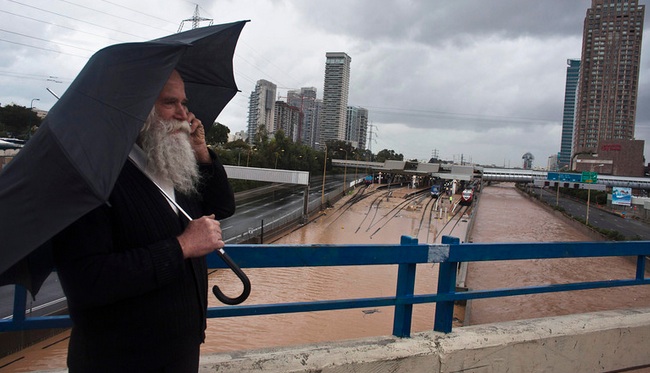
tel aviv flood train 2013 rain storm

Tel Aviv University professors tell Green Prophet that it’s just a matter of time: Tel Aviv will flood again.

It’s warming up again this week in Israel, just after a series of storms last week that began with major flooding on the Mediterranean Coast and ended with Jerusalem of Gold turned to white after a serious snowstorm. Reports on the flooding of the Yarkon River, which shut down large sections of Tel Aviv for a day, including its major highway, have addressed the insufficient drainage system, but little has been made of the connection between climate change and severe weather events.

Professors Pinhas Alpert and Colin Price, lecturers at the Porter School of Environmental Studies’ International MA Program at Tel Aviv University, have predicted that increased flooding will result from global climate change. Alpert helped to pioneer the use of cellular phone networks for monitoring the amount and intensity of precipitation and water vapor – measurements which are virtually free of charge and can be used for studying global climate systems.