Home Blog Page 348

Ancient Wine Press for “Pauper’s Wine” and Vinegar Unearthed in Israel

1

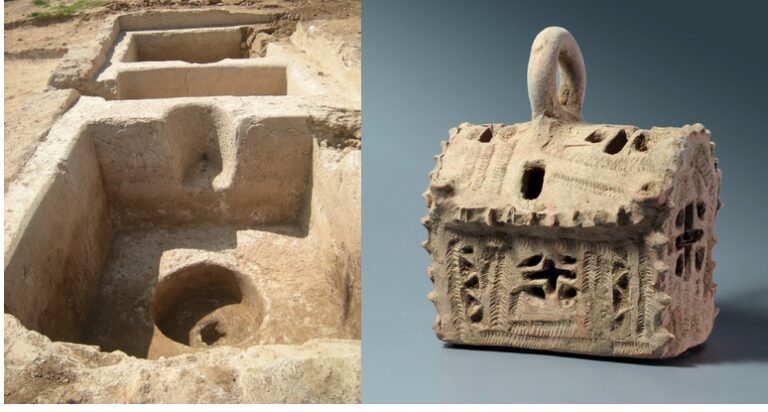
ancient wine press israelAn ancient Christian wine press 1500-years-old was uncovered in Israel, telling more about the customs of the people in the Holy Land of days gone by.

It may not have yielded a prize-winning bottle, but excavators in Israel are excited about uncovering an ancient wine press, probably used for making low quality wine and vinegar, according to the Israel Antiquities Authority which has just released news of the find. The wine press was found in a Byzantine settlement next to an ancient clay “light house” which resembles a small church, suggesting the press was owned by early Christians. The site was excavated before new construction took place at a spa in the area of Hamei Yo’av.

Burning Trash to Power 200 Island Homes in the Gulf

2

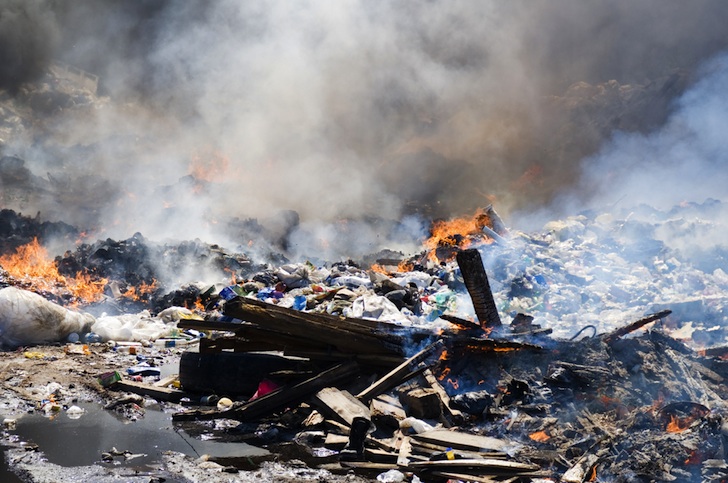
waste to energy, burning trash, Delma Island, Abu Dhabi, United Arab Emirates, clean tech, Shams 1, alternative energyA small island off the coast of Abu Dhabi in the United Arab Emirates has announced plans to use the heat from burning trash to generate electricity for roughly 200 homes. Currently, Delma Island transports its household waste to the mainland, where it is dumped in already overburdened landfills.

The process called “waste to energy,” is employed in progressive countries throughout the globe – most notably in Copenhagen, arguably Denmark’s greenest city. This new initiative will not only free up landfill space, but it will also save costs and energy associated with transporting the waste. 

Egyptian Government Called to Finally Halt Sexual Assaults Against Women, Amnesty International

women activists in egypt

Two years after the revolution in Egypt, sexual assaults against women are rising and becoming more violent, says several human rights organizations.

A recent New York Times piece created a storm of reactions with it’s portrayal of the dangers to women in Egypt since the Arab Spring. According to the story, at least 18 rapes ocurred on the second anniversary of the revolution, and Tahir square, the symbol of freedom, has “become a no-go zone for women, especially after dark.”  The Times article goes on to describe the increased level of violence of these assaults.

They state: “In the 18 confirmed attacks that day, six women were hospitalized, according to interviews conducted by human rights groups. One woman was stabbed in her genitals, and another required a hysterectomy.”

Women’s rights are fundamental human rights and environmental concerns. As the world reacts to the rise in assaults on women in Egypt, it’s going to take more than rhetoric to halt sexual assaults and violence against women.

Hussein Chalayan’s Transformer Runway Clothes

0

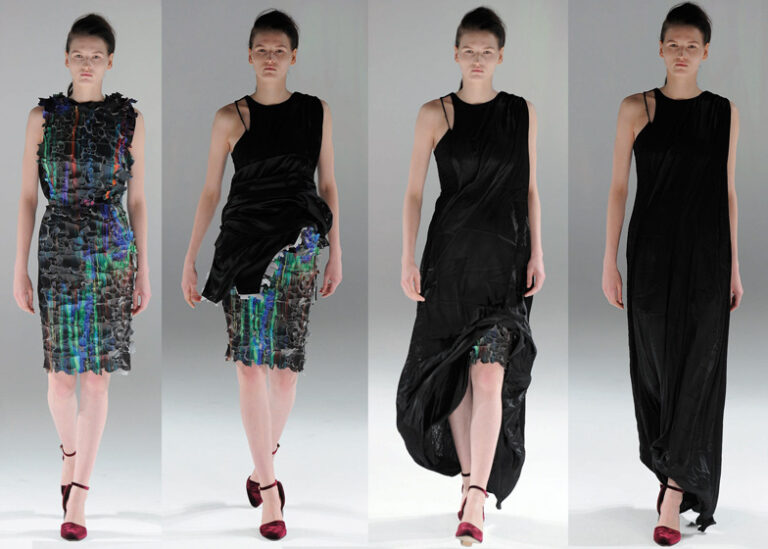
Hussein Chalayan transformer clothingWant to go from one high fashion look to a completely different one without getting undressed? Hussein Chalayan is a high-end transformer clothing designer. 

Turkish Cypriot Hussein Chalayan’s double-duty dresses are sensual and slightly sustainable: two-in-one haute couture arrives in a single shipment. London-based designer Chalayan unveiled a line of tranformative clothing in the runways of Paris Fashion Week not long ago. Without any help from stylists and dressers, these kinetic clothes actually morph before your eyes into completely different looks. Check out the videos below.

https://youtu.be/r6m8rSBuejY

His Paris show featured garments with built-in technology that caused necklines to deepen, skirts to balloon, and floppy hats to slowly hug the models’ beautiful faces, but also included simpler frocks that depend on simple tailoring to transform. A single tug to a neckline releases shoulder-line snaps:  a top layer of material cascades down the body, revealing a different underlayer.  A new full-length outfit is magically created!

This Black Line collection also features peeling wall prints in 3D textures on dresses and trousers. According to Dezeen magazine, Chalayan says he developed the collection around the “concepts of disembodiment and metamorphosis”.

The designer has stated that the top layers are “like the alter egos of the garments beneath, floating above them as if they are about to leave but never completely going, like a spirit reluctant to escape the body”.  Sounds dangerously close to star-chitect talk, which makes some sense, as Chalayan is as much a fine artist as a designer of pricey duds for the ladies.

At university in 1993, he buried his garments in his back garden before exhuming them to include in his graduate collection.  An instant sensation, that whole collection was purchased by a London luxury goods store.  His work’s been exhibited at the Istanbul Modern, Victoria & Albert Museum, Tate Modern, and Venice Biennale and he’s dressed iconic singers Lady Gaga and Bjork.

LED

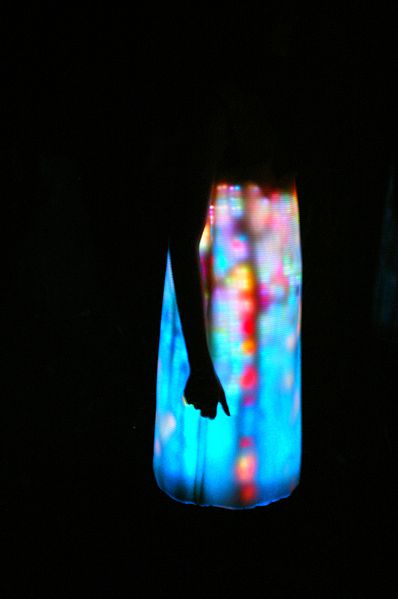
In early 2008,  in collaboration with Swarovski Crystal, Chalayan designed a series of dresses illuminated by laser LEDs, his riff on the electrical nature of the human form.

Peeling clothes appeal to you? You’ll be peeling off more than a few shekels to cover the tab.  Past seasons’ garments from this designer can be found online, on retailer Net-A-Porter as example, with a basic top selling for about $1200.  Check out his website for a list of retailers and a better look at the full collection.

:: Hussein Chalayan

Kids Forced Into Garbage Sorting in Jordan

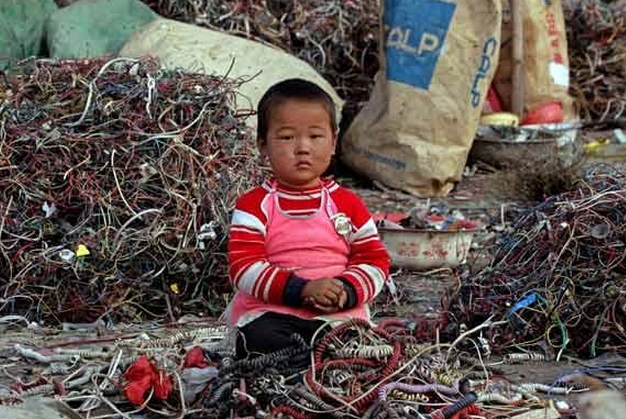
china boy child labor e-wasteYoung Syrian refugees are being forced into sex and child labor in Jordan

Abdul Rahman, an eight-year-old refugee from Syria, rummages through a trash container along the side road of north Amman’s bustling Sweileh neighborhood. His sparkling green eyes stare out from his dirty, emaciated face. His bony legs appear from under torn blue trousers. The pint-sized child separates soda cans and scrap metal. “One bag for cola cans and a second for toys and old gadgets,” he explains.

Rahman’s six-year-old brother Ahmed tries to hide from the scorching sun, finding relief in the shade provided by the container.”I work with my brother for a man who sells scrap metal from a truck,” Abdul Rahman tells The Media Line. “We travel everywhere from the morning until late in the afternoon,” he says, wiping the sweat off his forehead.

Solar Waterpods Could Help Sahara Nomads Purify Salty Water

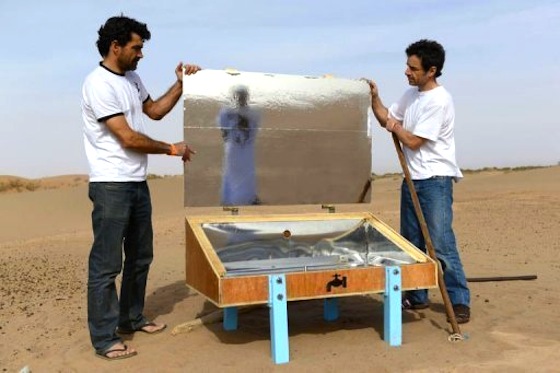
desalination, water purification, waterpod, sahara, nomad, desert, fresh drinking water, green design, sustainable design, nomad festival, moroccoA former sailor, Alain Thibault knows what it means to pine after fresh water, so he designed a portable desalination device that uses the sun’s power to make fresh drinking water.

What’s more, he and the rest of his team have introduced the technology to Sahara nomads, who frequently struggle to find water that isn’t inundated with salt. Called the Waterpod, the wooden box was recently demonstrated to a captive audience at the Nomadic Festival in M’Hamid El Ghizlane in southern Morocco.

Bill Gates Seeks Next Generation Condom

3

condom in pocketBuild a Better Rubber, They will Come? The Bill and Melinda Gates Foundation will grant $100k to the inventor of the next generation condom.

Condoms have been around for 400 years, with very little improvements over the last 50 years, according to Grand Challenges in Global Health, a research foundation established by the Bill and Melinda Gates Foundation – the one that funded a new kind of toilet.

To bring the condom into the 21st century, Global Health is offering the grant to anyone who can develop the best “testable hypothesis” for a condom that can preserve or enhance pleasure. “The primary drawback from the male perspective,” they state is that, “condoms decrease pleasure as compared to no condom, creating a trade-off that many men find unacceptable, particularly given that the decisions about use must be made just prior to intercourse.”

Will this improve the use of condoms in the Middle East, an area that traditionally has shunned the sheath?

Ultra-light Dubai Car Travels 1000 KM On One Liter of Fuel!

Shell, lightweight car, Eco-Marathon, Emirati car, car travels 1000km on one liter, Middle East, green transportation, fuel efficiencyWhile some in the United Arab Emirates insist on developing unsustainable vehicles like this solid gold mercedes car powered by biofuel, engineering students from Dubai have been hard at work designing a more modest vehicle that should be able to travel as far as 1,000 kilometers on just one liter of fuel.

Ironically, the team from Higher Colleges of Technology Dubai Men’s College will race their car at a competition hosted by a corporation that has met a lot of resistance for their unsustainable fracking plans in several countries in the Middle East and North Africa. Shell’s Eco-Marathon slated to take place in Kuala Lumpur between July 4 to 7, 2013 will be attended by a total of five teams from the UAE, as well as a host of international collegiate groups.

Direct Seeding Helps Moroccan Farmers Adapt to Climate Change

1

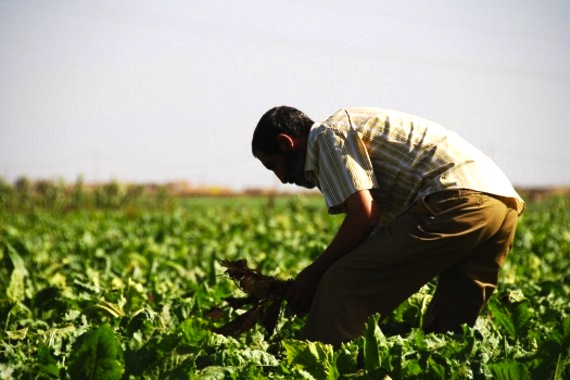
agriculture, direct seeding, drought, water scarcity, Plan Maroc Vert, World Bank, sustainable agricultureFarming is risky business in Morocco, where a 30 percent drop in precipitation since 1970 makes steady, predictable annual crop yields virtually impossible. So the World Bank was called in to help implement Plan Maroc Vert – an ambitious initiative designed to boost the country’s cereal production and create a more sustainable agricultural sector by 2020.

And though Morocco’s Berbers have long cultivated water management practices that sustained their crops, it turns out that direct seeding can substantially improve yields in an uncertain future.

The Birdmen of Istanbul Film Follows Songbird Lovers of Times Past

0

birdmen of istanbul film

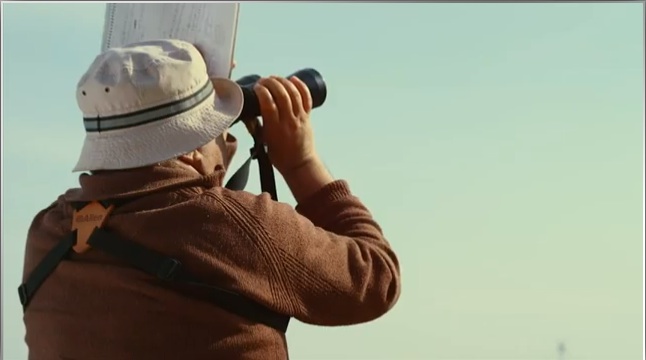
The Birdmen of Istanbul, a film by Ali Naki Tez, follows the reclusive, fascinating old men who have devoted their lives to tending Istanbul’s songbirds. The documentary opens on two old men discussing a mysterious ailment. It alienates you from your family, your work, your regular social circle, they say, before revealing the culprit: bird disease. Not bird flu, but an obsession with birds so intense that it has brought grown men to tears, bankrupted others, and lifted others to transcendent heights of joy.

Futek’s Solar Cell Plants Shrink Egypt’s Fossil Fuel Addiction

fossil fuel, oil, gas, Egypt, solar, clean tech, renewable energy, solar energy, alternative energy Futek is about to break ground on a new solar cell manufacturing plant in Egypt, which is expected to cost roughly USD 3 million to construct. This is the company’s third such plant in the solar-rich north African country, which combined with the others costs a total of USD 7.35 million to run.

President of Futek’s Board of Directors, Mohamed Helal told Daily News Egypt that he hopes the new manufacturing facility will boost production capacity so that the company can reach new markets and increase exports. But he also laments a series of obstacles that curtail wider development of similar renewable energy projects throughout the country.

Ancient freekeh fires up new recipes

1

food, health, freekeh, grain, quinoa, slow food, sustainable food, ancient middle eastern grainIf you told someone from the Middle East that progressive, health-conscious Americans have fallen in love with freekeh, they might raise their eyebrows in surprise or roll their eyes in utter boredom, since people in this region have enjoyed the benefits of the ancient grain said like “freak eh” for eons.

But for westerners, freekeh is the latest in a slew of boutique grains gaining popularity as alternatives to other staples. Wheat harvested before it is completely ripe, the grain has nutritional value that far exceeds that of its more widely-known competitor – rice.

Freekeh is harvested when the yellowish kernels inside are still soft and moist.

Freekeh tastes like smoked grains
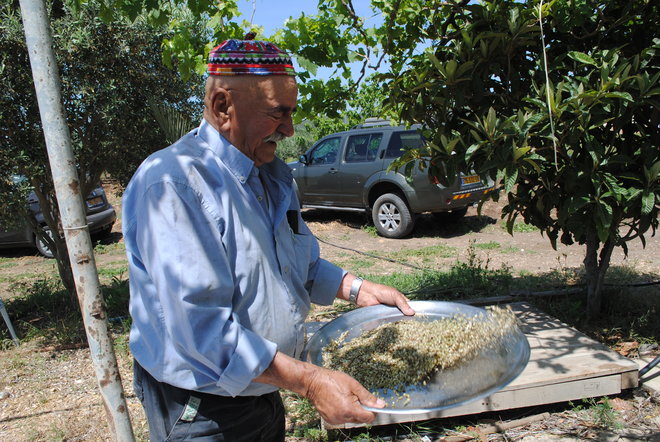
winnowing freekeh

They are then stacked and left under the sun to dry, after which the freekeh grains are carefully roasted over a fire so that the shells are sloughed off (or rubbed, which is roughly how freekeh is translated from Arabic) without destroying the chewy inside.

Said to have a smoky flavor, freekeh is great as a standalone dish, or mixed with fruits and vegetables in all kinds of new, exotic combinations.

Speaking to The National, Ghina Hamoui, a nutritionist at Emirates Hospital and Cosmesurge said that freekeh has a 10 percent fiber content, virtually no fat, a decent amount of protein, and certain beneficial vitamins and minerals such as B1 and B2.

“While it should be avoided by coeliacs and people on gluten-free diets,” she told the paper.

“It has a lower glycemic index than rice which means it gives more satiety and fullness as well as raising blood sugar less.”

Sounds like the story of quinoa?

This is not the first time that a grain from the developing world has gained traction in the west – to the detriment of their producers. Quinoa, for example, is pitted as one of the best grains for heart health, but Andean farmers who have grown it for centuries can no longer afford to purchase it themselves because its popularity in the west has driven up costs.

Similarly, argan oil produced from a nut that was traditionally processed by goats and used in a variety of applications – including food and cosmetics, has become enormously popular in the west.

For now this demand has been a boon for Moroccan women who are employed to produce modern varieties of the oil, though careless management could quickly tip the scale.

Freekeh might become a more sustainable option for western foodies than other boutique grains, as several kitchens around the globe boast its unique taste and nutritional qualities.

Or it might remain hidden in dishes across Egypt, Syria and other parts of the Middle East.

Image of freekeh meal via Star Chefs

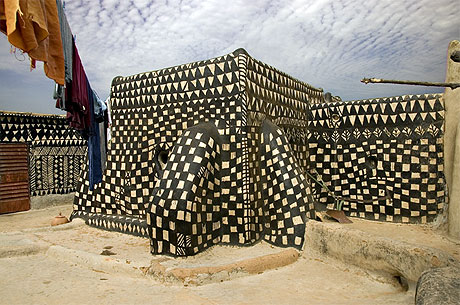
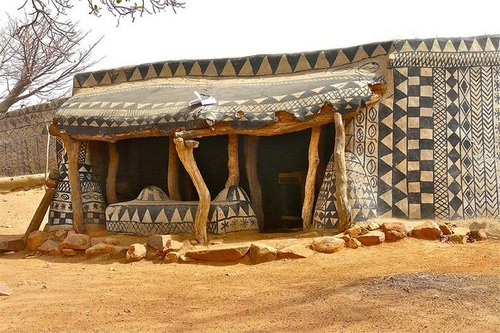
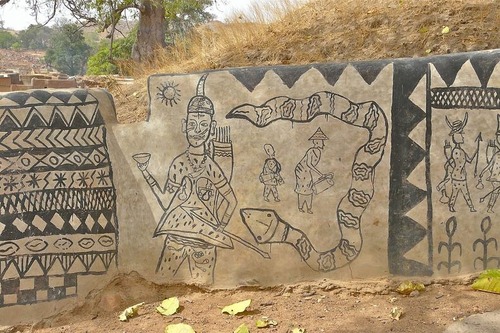
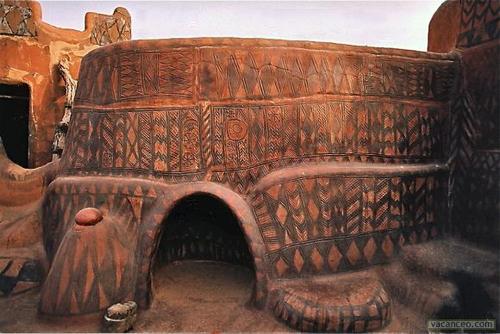
Artistic Gourounsi architecture in Burkina (Photos)

Gourounsi architecture

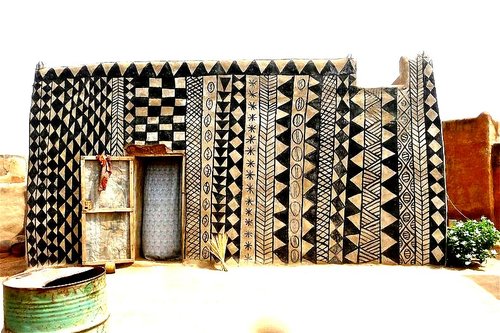
Mixing art and earth architecture in Burkina Faso

In the south of Burkina Faso, west Africa, near the border with Ghana lies a circular village called Tiébélé. Home of the Kassena people, one of the oldest ethnic groups that settled in Burkina in the 15th century. Tiébélé is known for its creative Gourounsi architecture and elaborately decorated walls.

tumblr_inline_mkbldkqmEo1qz4rgp

These homes recall the adobe earth buildings championed by Nader Khalili, however the artistic aspect is much more explored here. It would be interesting to mix the architectural aspect of  Super adobe with the artistic style of Gourounsi.

tumblr_inline_mkblcrE18f1qz4rgp

tumblr_inline_mkbp6apjBL1qz4rgp

tumblr_inline_mkblc4hCcG1qz4rgp

tumblr_inline_mkblj5MuS41qz4rgp

Dusting Off Solar Panels With an Electric Charge

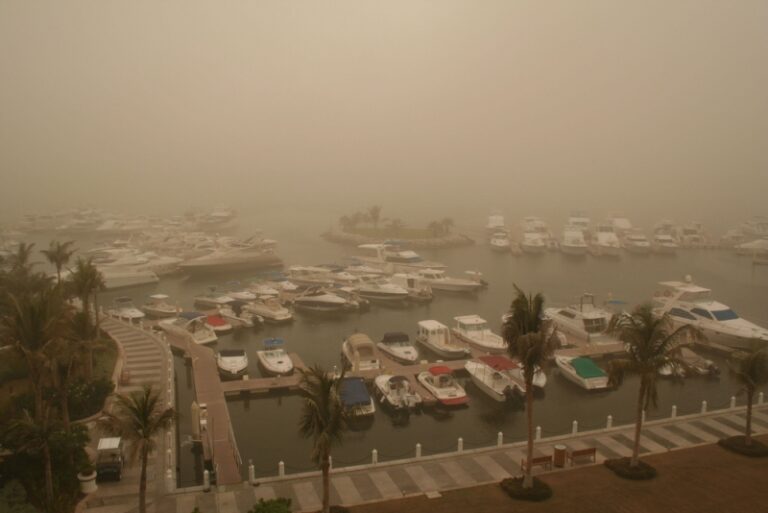
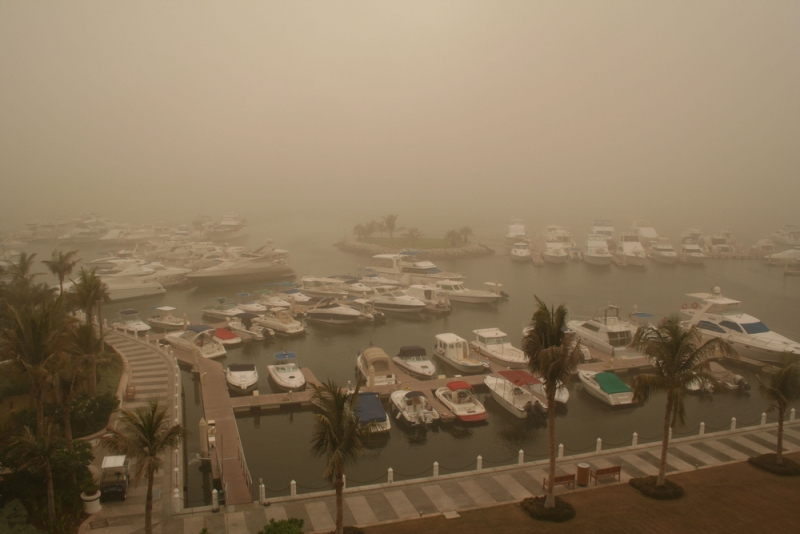
 Dust Storm in Dubai harborDubai is prone to frequent dust storms. A new solar panel dust particle remover made in Israel boosts power and cleans off dust at the same time

Solar voltaic panels, which at their best only have about 25 percent efficiency for converting direct sunlight into electricity, have even less efficiency than this when dust and heavy air pollution is factored in. A number of solar innovations can deal with desert dust and sand storms including Martian technology from  earth to Mars space programs for ‘zapping’ dust from solar panels on terrestrial unmanned exploration vehicles.

Due to frequent dust and sand storms in the United Arab Emirates (like at Shams solar plant) and other parts of the Middle East, the efficacy of the solar cells is reduced even less if they are afterwards covered with dust. In order to alleviate this problem, a researcher, Sergey Biryukov at Israel’s Ben Gurion National Solar Energy Center came up with the idea of using an electrical field to “charge” the dust particles and repel them from the solar panels.

Sustainable Table Film Shows What’s On Your Plate

0

sustainable plate, what's on your plate

Miriam has been covering a series of sustainable meal recipes from the Middle East region, from countries like Saudi Arabia, Jordan and Iran to help people reconnect with their local food (click the countries to get some great local recipes).

We know that food industry is shaping the future of our bodies and our planet, and not in the best way. When you last tucked into dinner, did you pay any attention to where the ingredients came from? What’s on your plate? Where does it come from? The documentary Sustainable Table: What’s On Your Plate looks into the food we eat. While the film covers what’s going on in America the lesson can be applied to our global village, patterning itself on the West.