Home Blog Page 349

Ali Barbour Cave Restaurant in Kenya Offers Flintstone Fine Dining

0

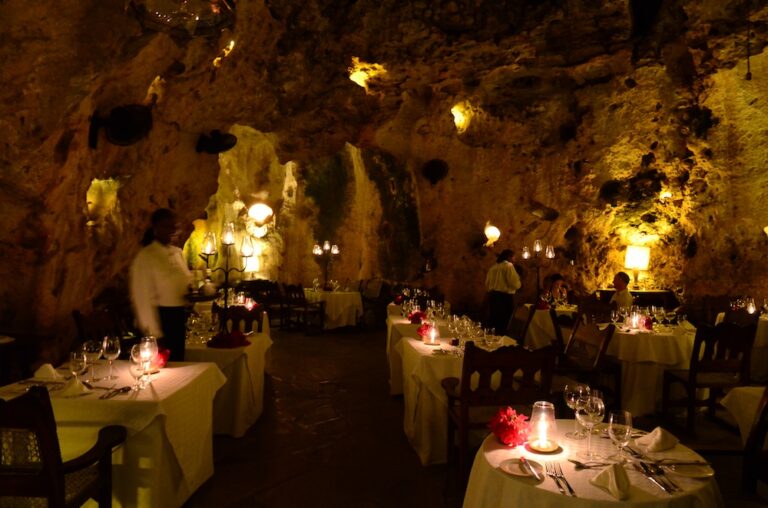
Kenya, locally-sourced food, vegetarian, Ali Barbour Cave Restaurant, travel, nature, 180,000 coral caveEating at unique restaurants around the world is just one of the perks of a traveler’s life, but these experiences are always more fun when shared with our readers – especially when it involves subterranean spaces, that brought to mind these 700 year old cave homes in Iran.

Thought to be up to 180,000 years old, Ali Barbour Cave Restaurant is a multi-chamber coral cave in Kenya’s Diani Beach. Converted upon the property owner’s surprise discovery three decades ago, the fine dining establishment is now world renowned not only for its remarkable ambience, but for dishing up some of the best food we have eaten in the country to date.

First African-Styled Hunting Resort in Gulf Country Will Serve its Kill

1

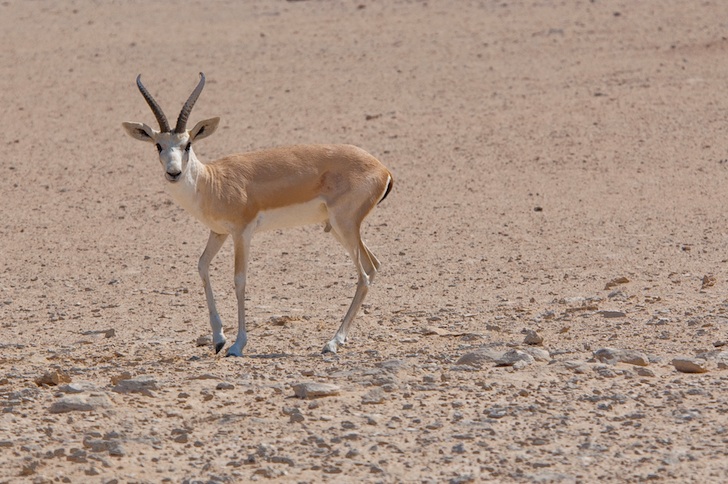
hunting, desert, UAE, sport, gazelle, Al Ain, boutique, lodgeWith the advent of modern agriculture and technology, it is no longer necessary for most people to shoot their dinner. Yet the taste for the sport of tracking and shooting an animal has persisted, and in some countries, hunting is carefully regulated to maintain a sound balance between predator and prey.

Working with the local environmental agency, a new resort in the United Arab Emirates hopes to entice hunters to come and “kill for the pot” at their high end desert lodge near Al Ain. For a steep sum, they can hunt for deer and gazelle, which will be cooked by trained staff at the end of each day.

Nanophotonic Building Panels Beam Sunlight and Heat into Cold Space

glass house design, hipster
Is a glass house an ecological liabil

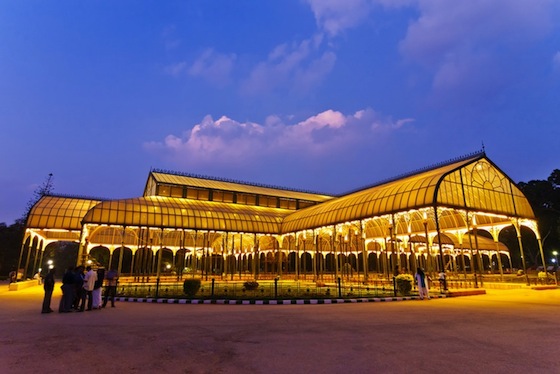
Finding building materials that are appropriate for hot desert conditions is one of the biggest challenges facing the Middle East and North Africa region’s construction industry. While earth used in architecture found in Egypt, Libya, Yemen and elsewhere is typically considered the most effective material for keeping interior temperatures low while the sun acts like a giant blowtorch outside, it isn’t popular among contemporary designers.

Instead, we see a lot of new buildings – particularly in urban environments – constructed with steel and glass, which exacts an enormous cooling load and requires water, another scarce resource, for cleaning. But the future holds promise; researchers from Stanford University have created a nanophotic panel that reflects sunlight off of buildings (or cars and other structures), and beams heat out right of the earth’s atmosphere.

Scientists have long sought a way to prevent buildings from absorbing heat from sunlight during the day and radiating it back into space, and now a team from Stanford University have done that. They published their findings in the journal Nano Letters.

The trick is to produce a material that can not only reflect sunlight, to prevent absorption of heat, but also to radiate that thermal energy beyond the earth’s atmosphere at a very specific wavelength to ensure that the heat isn’t simply radiated back to earth.

Known as the greenhouse effect, this trapping of heat is one of the mechanisms behind global warming and climate change.

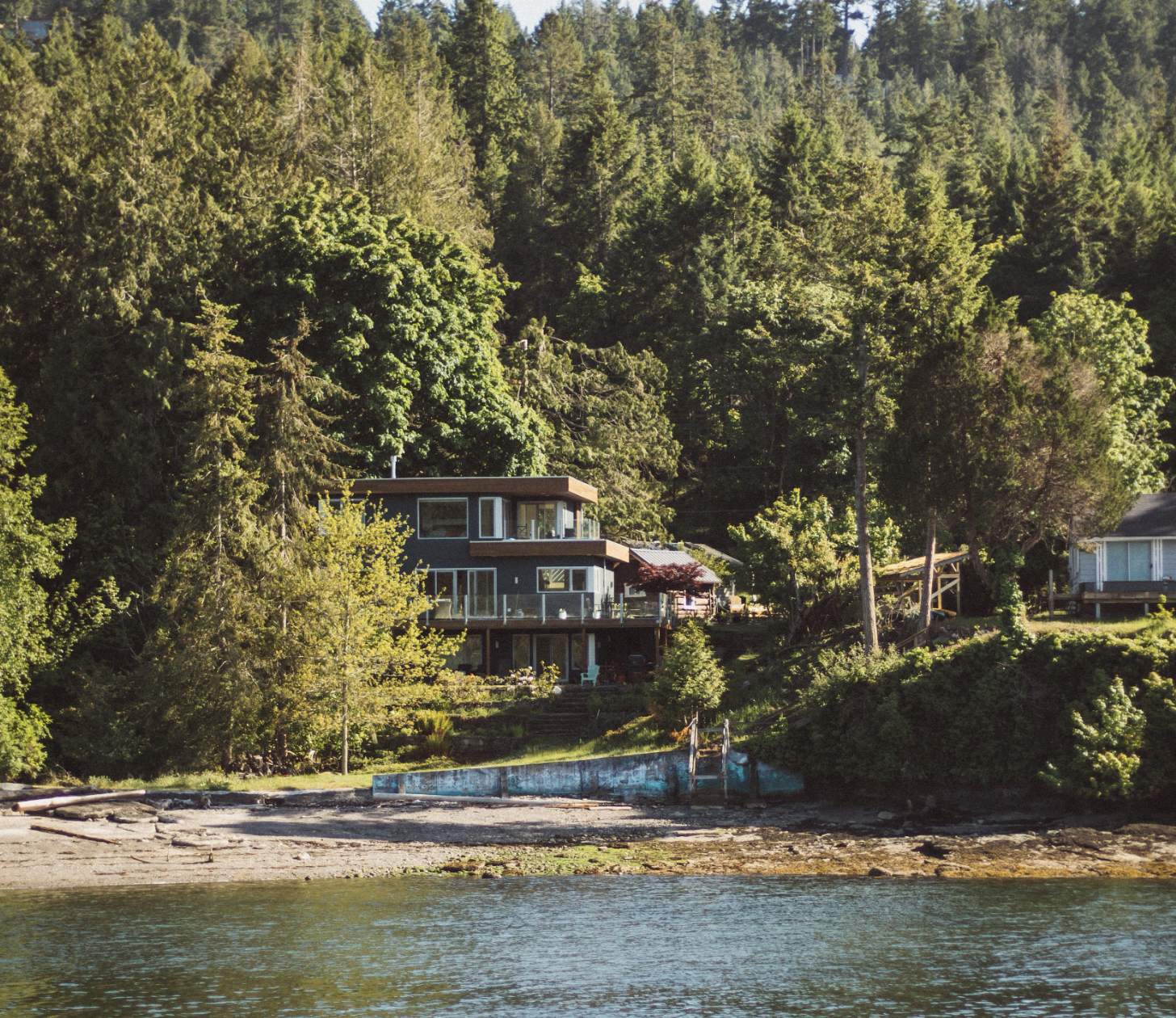
Glass house on a lake in Canada

“We’ve developed a new type of structure that reflects the vast majority of sunlight, while at the same time it sends heat into that coldness, which cools manmade structures even in the day time,” Shanhui Fan, professor of electrical engineering and the paper’s senior author, told Physorg.

They have been able to incorporate both the reflective and radiative cooling effects into one material, which is made of quartz and silicon carbide. While it is unclear how readily available these materials are for mass production, or whether they can be harvested from existing materials, they don’t absorb sunlight well, which allows the building or car on which they are placed to stay cool even during the heat of the day.

Replacing just 10 percent of a roof’s surface with this material can theoretically mitigate 35 percent of that building’s cooling load, according to Physorg, – an exciting prospect for governments that are serious about slashing their energy consumption in the face of growing energy scarcity.

Even better, this passive technology mitigates carbon emissions given that air-conditioning units would be obsolete in a building clad in such engineered panels.

As our informed followers point out, the Stanford team’s breakthrough is still conceptual, but at the very least scientists are starting to think more creatively about how to reduce the building industry’s detrimental environmental impact.


Upgraded LEED V4 Version Demands Energy and Water Meters

11

LEED, Dewa, Dubai, USGBC, LEED v4, green design, sustainable design, eco-design
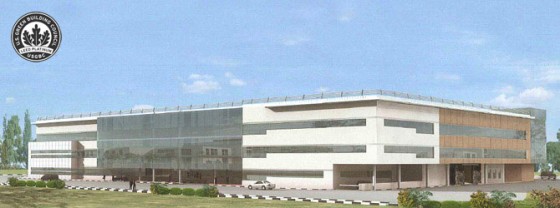
The Leadership in Energy and Environmental Design (LEED) green building standard devised by the United States Green Building Council often comes under fire for being insufficiently rigorous – particularly for large commercial buildings. Now a new version  – LEED v4 – has been established. Taking effect in November, 2013, LEED v4 incorporates four new standards designed to improve the performance of buildings, one of which makes it mandatory for developers to install energy and water meters, The National reports.

Community Gardens Sprout in Israeli Desert Town

3

נגינון הטיפולי באילן מרכז יום לנכים קשים_D21פינות בגינת בית Aהעיוור_01

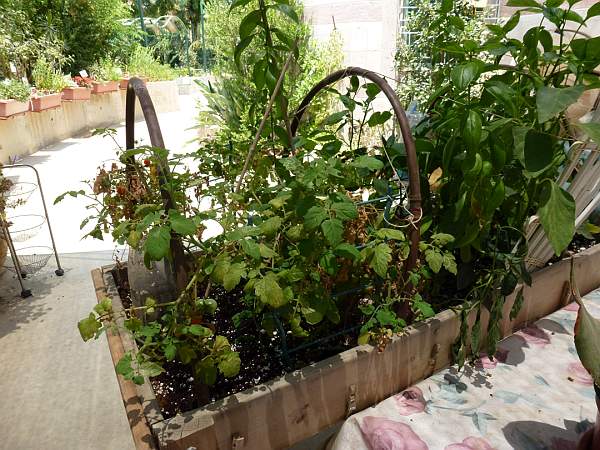
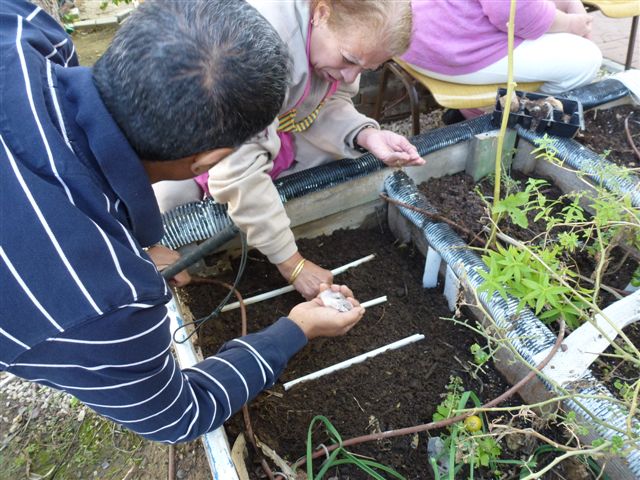
In September 2012, the Israeli desert city of Beersheva became the second municipality in Israel to staff the newly created post of community gardens coordinator. The multidisciplinary position was born through fruitful cooperation between two of the city’s municipality departments – environmental and welfare, following a strategic process aimed at reinforcing local community and environmental elements while encouraging activism amongst the city’s residents. This move marks a significant shift in policy as the municipality re-defined its role over the issue of community gardens around the city.

While previously it served mainly as aid-provider to environmental organizations that initiated and operated the gardens, now the municipality controls and formulates communal gardens.

Beersheva Municipality encourages this sustainable activity using diverse resources, including conducting training programs, holding round-tables events involving the environmental organizations, and daily liaison with the local residences’ groups.

To learn more about the subject, I recently had a talk with Achikam Averbouch, who was appointed for the job of community gardens coordinator.

Dead Sea Mining Company Plans Dubious Merger With Canadian ‘Natural Resource’ Firm

2

Israel Chemicals Dead Sea Plant, Ofer VakninAn Israel Chemicals Dead Sea mining plant; Photo by Haaretz/Ofer Vaknin

Despite the recent heavy rains and flooding in Israel that helped replenish water in the Dead Sea, the salt lake in the ‘lowest point on earth ‘ is still suffering from a sharp decline in water levels due in part to the ongoing mineral harvesting activities by Israel and Jordanian chemical industries who cause the water to disappear further by evaporating it to extricate bromides and other chemicals for use in chemicals as well as in the fertilizer industry.

Futuristic Amman Airport Terminal by Foster + Partners Officially Open

0

foster and partners, green design, islamic design, daylighting, energy efficiency, queen alia airport, amman, jordan, bedouin tent, daylightingA couple of years ago we questioned the “greenliness” of Foster + Partner’s new airport terminal at the Queen Alia International Airport in Jordan, and now the futuristic building has finally opened. Located just south of Amman, the domed structure is designed to mimic the black folds of traditional Bedouin tents out of deference, according to designers Foster & Partners, to what is one of the world’s oldest continually habited cities. Boasting a combination of modern materials with passive Islamic design techniques, this modular wing should maintain comfortable temperatures year-round.

Gabriele Galimberti Shows Middle East Kids and Their Toys

0

gabriele galimbertiGabriele Galimberti’s“Toy Stories” documents the world’s children posed with their favorite toys.

Everyone remembers their most prized possessions.  Mine were an Etch-a-Sketch, some wads of Silly Putty, and an endless supply of Crayola crayons: surely you can rattle off yours? Galimberti, an Italian photographer who specializes in serials, all variations on a single theme, said he expected to show kids with the basic playthings: dolls and trucks, monsters and plush animals.  “At their age, they’re pretty all much the same,” he concluded. “They just want to play.”

“I learned more about the parents than I did about the kids,” he said.  It’s common for toys to mirror family values: the girl from a wealthy Mumbai family loves Monopoly, because she likes buying houses and hotels.  The boy from rural Mexico loves trucks because they constantly roll through his village to the nearby sugar plantation.

His unscientific study showed that Middle Eastern and Asian parents pressure their shy, nervous or upset kids to be photographed, while South American parents, “said I could do whatever I wanted as long as their child didn’t mind”.

But what he found most interesting can’t be seen in the pictures.  How kids actually play was widely variant.  “The richest children were more possessive.  They wouldn’t want me to touch their toys, and I would need more time before they would let me play with them,” he said. “In poor countries, it was much easier. Even if they only had two or three toys, they didn’t really care.”

Ben Machell of The Times Magazine, who wrote the foreword to the project posted on Galimberti’s website, observed that kids will “construct worlds” around their favorite toys, believing that their toys can protect them from danger, and those threats vary by country.
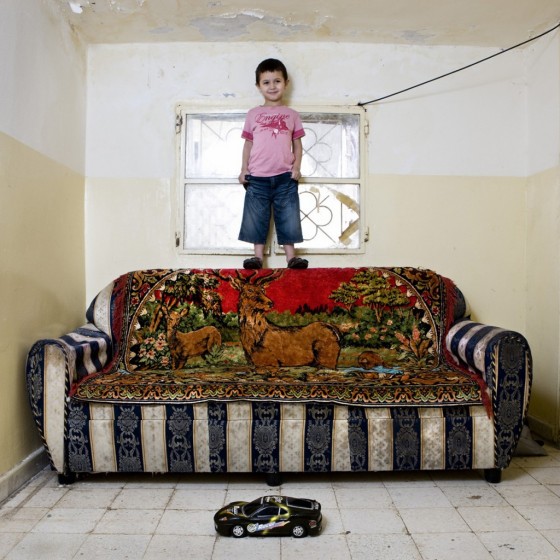
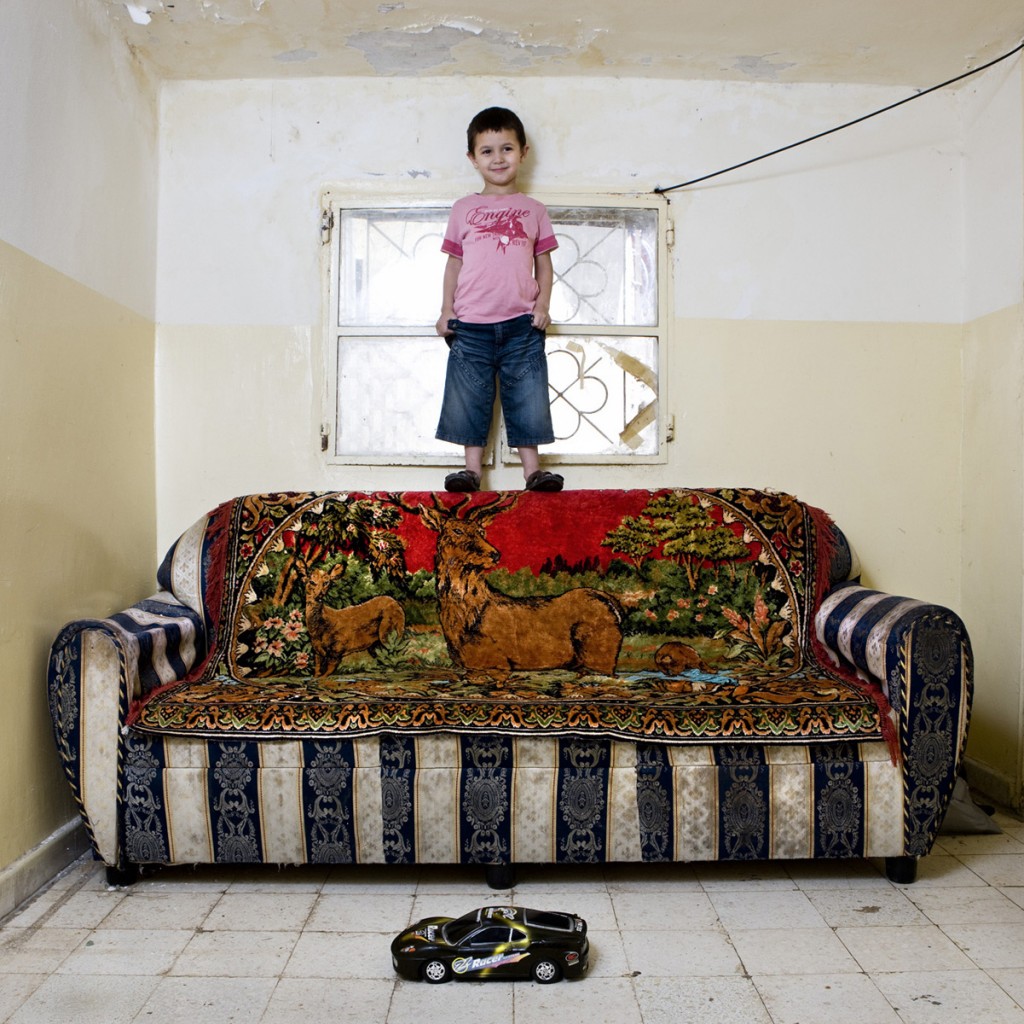
Beirut Lebanon Gabriele Galimberti Taha was born in Palestine but now lives in a refugee shantytown in Beirut.  He has a single toy, the racecar, which he happily shared with the photographer.
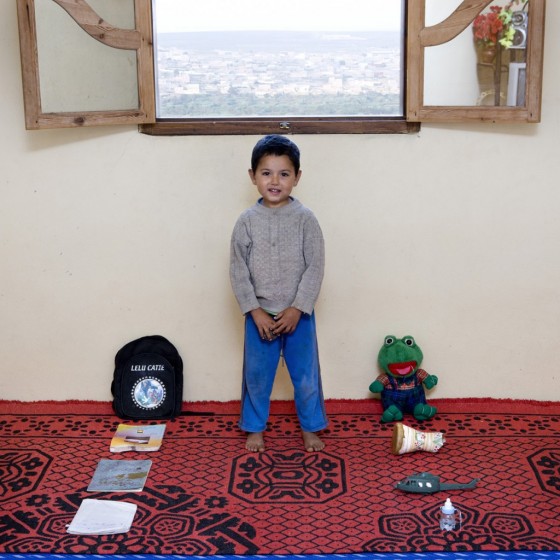
 Gabriele Galimberti Toy StoriesNorden lives in Massa, a small village outside of Agadir.  The room where he plays and sleeps is empty except for a carpet. Every day he wakes up early and travels to the valley where his family farms, where he spends most of his time playing with a small stray dog. The items in the photo are all the toys he owns.

Cairo Toy Stories Gabriele Galimberti Faida lives in east Cairo, a new and affluent part of the city. Her father works abroad for an oil company.  When he returns home each month he brings her back a stuffed toy. Her favorite is the bear she’s holding, his name is Peter and he comes from Canada.
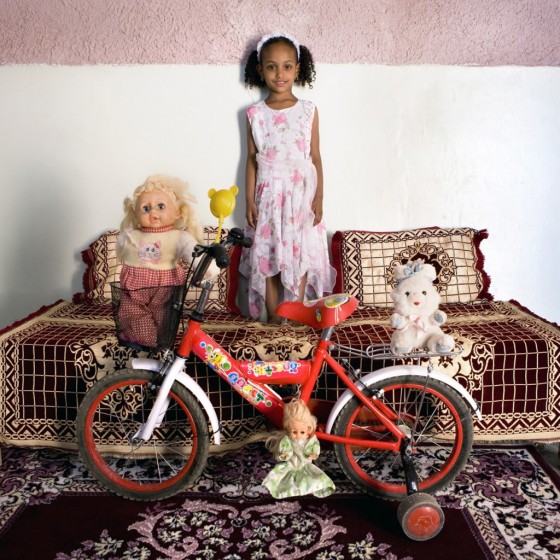
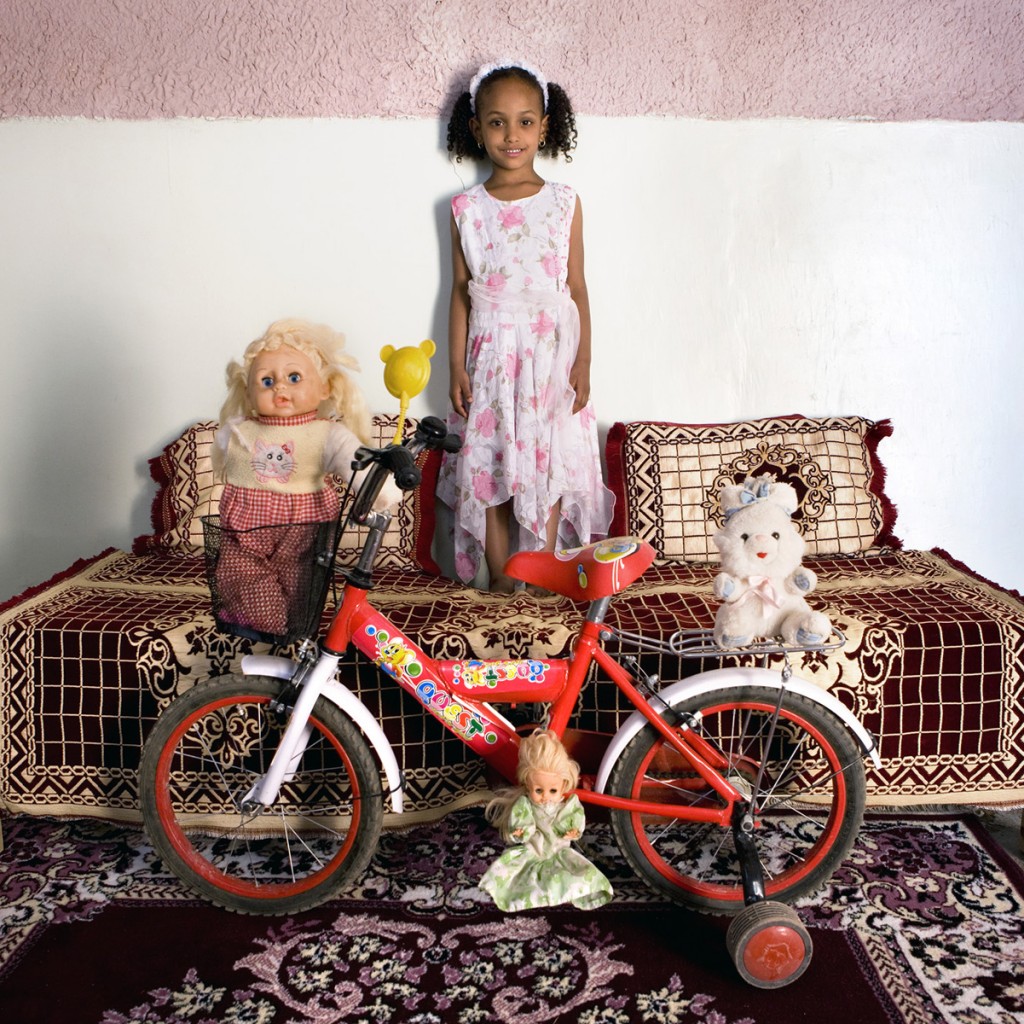
Algeria Toy StoriesTalia was born in Algeria, in the middle of the Sahara. Her parents work in a small travel agency giving desert tours to infrequent tourists.  This photo was taken just after her birthday and the bike is a gift from her father.

I discovered Galimberti’s images this weekend at the same time a friend was volunteering at the Zaatari camp for Syrian refugees: The Times of Israel estimates that 120,000 people currently occupy that site. Although her mission was artistic (to teach small children, and design and paint a mural), she went armed with bags of toys and art supplies financed by ragtag donations from friends.  While those gifts were wondrous, given the thousands of kids in this camp, these micro-donations amount to little more than a pimple on an elephant’s ass.

For decades, Jordan has been welcoming an incoming tide of Palestinians, Iraqis, Lebanese and Syrians. Galimberti’s subjects may have sparse playthings, but each has a home, filled with with family and friends. I couldn’t look at his images without thinking of the unrecorded parallel series: what do refugee children play with? Their needs are enormous. How can any individual make a lasting impact?

The answer is simple: give money.  Give money to legitimate relief organizations who can navigate secure transport and equitable distribution.

Save the Children established their Jordan field office in 1985 with a special focus on children and families. They work to improve health care services and education and create economic opportunities for poor women that result in real and lasting change for children and families. If these photos pull you back to your own childhood, if they pull on your heart, please open your wallet and make a difference.  Here’s the link to their Syrian donation site, but a moment googling will bring you to many other child-focused charities for the region of your choice.

Sure it’s springtime, but I doubt the Easter bunny will object to you acting like Santa Claus.

All images via Gabriele Galimberti’s website

Internationally Funded $1 Billion Solar Plant Planned for Upper Egypt

egypt, solar plant, economic development, clean tech, renewable energy, alternative energy, first solar plant in upper egypt, luxor, aswanUpper Egypt, which actually lies in the southern half of the country below the Nile Delta, is preparing to build a $1 billion solar power plant with help from a suite of international donors.

A particularly poor region of the large North African country that currently experiences intermittent electricity generation but plenty of solar irradiation, the area comprising historic Luxor and Aswan is well-suited to exploit energy from the sun. Construction on the 140 MW plant is expected to break ground some time in 2016.

Turkey’s Yalın Mimarlık Wins Ancient Troy Archaeological Museum Design Competition

1

Yalın Mimarlık, Museum of Troy, Turkey, Archaeology Museum, Corten Steel, Weathered Steel, green design, sustainable design, eco-design, green designYalın Mimarlık won first place in an international design competition for an archaeological museum on the site of ancient Troy. Renowned for the famous Trojan horse story in Homer’s Iliad, this historic site in the northwestern corner of Turkey reveals a lot about the country’s artistic and cultural development leading up to World War I; the new museum will help make that legacy known to a greater number of visitors.

This Desalination Infographic is Like Taking Climate Change Advice from Shell

desalination, water shortages, Energy Recovery, clean tech, Masdar, If Shell were to design a clever infographic with a bunch of facts, it would probably highlight the amount of fossil fuels the United States imports from “dangerous” foreign countries, how expensive those imports are, and how the company could save the world if only they had unrestricted access to the Arctic’s fossil fuel reserves – for example.

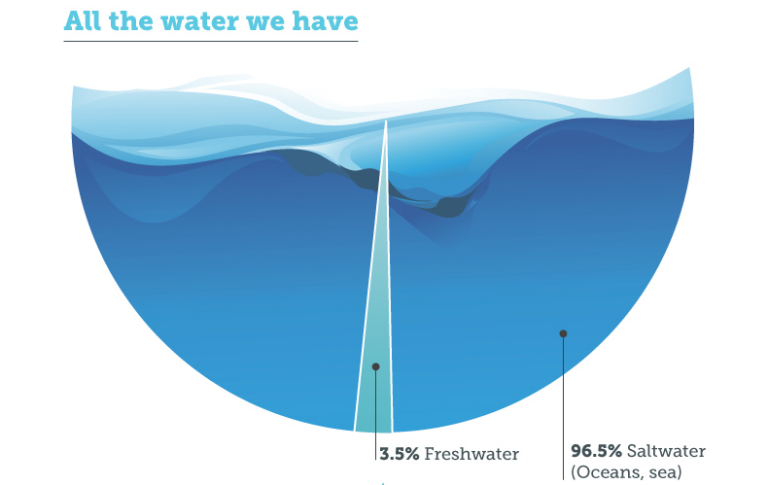
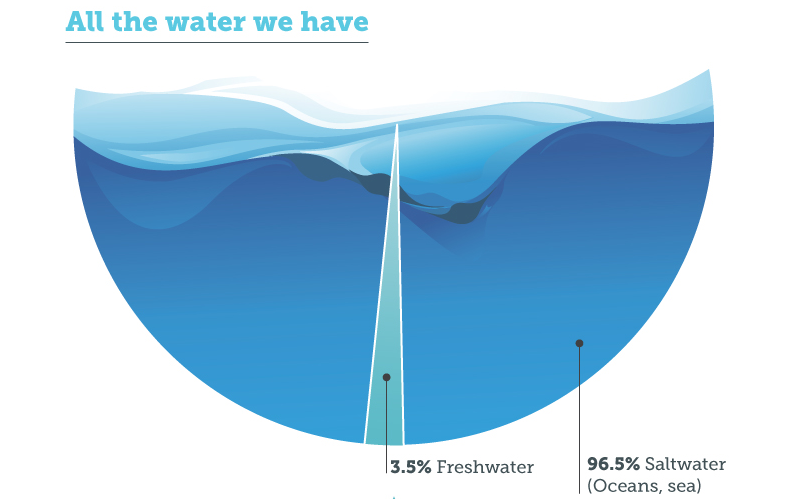
Now read this infographic from Energy Recovery, a company that provides technology for the fossil fuel industry, that attempts to persuade us that desalination is a panacea for chronic water shortages. Granted, more than one third of the world’s population lacks access to decent sanitation. And yes, our planet is comprised of 96.5 percent salt water.

But can we rely on a company whose bottom line depends on selling desalination technology to give us the straight scoop on the detriments of desalination?

Eco-Activist Mindy Baha el Din Dies Suddenly, Egypt Mourns

2

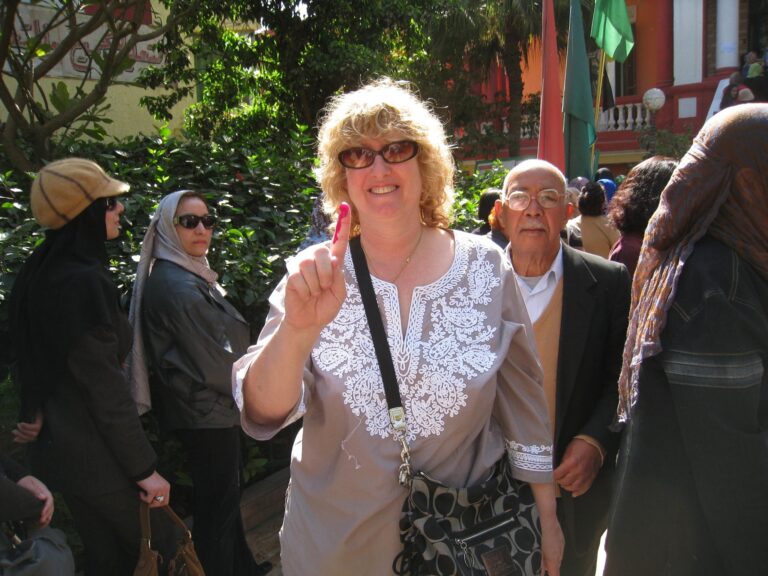
Mindy Baha el Din, Egypt, Eco-Activist, Obituary, Sherif Baha el Din, NCE, wildlife conservationist, activismAn American environmental activist who shone a piercing light on environmental negligence in Egypt, Mindy Baha el Din died suddenly last week after suffering a brain stroke, leaving behind a husband, two daughters and a large community of grieving eco-warriors.

Born and raised in the United States, Mindy first moved to Egypt in 1988 and married a renowned ornithologist, Sherif Baha el Din, a quiet, intelligent man. She was outspoken and direct, the very opposite of her husband, and yet they persevered, united in their shared passion for nature. Confronted with an opportunity to return to the United States, Mindy once said to me, “what will I do there?” Instead she stayed, and fought for Egypt until the very end.

Istanbul Municipality Knits Enormous Sweater for Energy Conservation

1

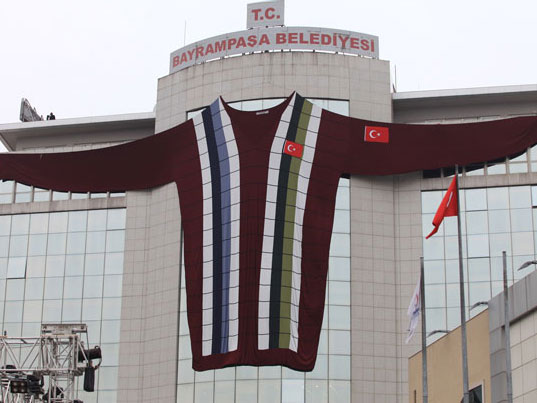
Guinness Book of World Records, World's Largest Sweater, Turkey, energy, conservation, Istanbul, climate changeAll over the Middle East and North Africa, governments are feeling the energy pinch, and each has a different solution. Morocco and Algeria are turning to solar energy, so are Saudi Arabia and the United Arab Emirates, while Jordan seems more intent on exploiting its oil shale reserves to bridge the soaring gap between supply and demand.

But Turkey has taken a different approach. Instead of relying only on increasing generation capacity, the government has launched a national energy conservation campaign. And this enormous sweater is its intriguing focal point.

7 Steps to Wean Yourself From Processed Food

5

free yourself from processed foodsA new book holds your hand and walks you through the stuff you already sort of know: 7 simple steps to bring you back to food basics.

Once a week, a small group of arty pals convene after work to play with papier-mâché, share a simple meal and unwind.  It’s wonderful. With our hands busy, our minds declutter and good conversation floats like a plastic bag in the wind. We talk about food, about how, without true intention, we’re mostly vegetarian.  Vegetarian doesn’t always mean healthy. We talk about our weaknesses: potato chips, ice cream, Cheez Doodles.

One mentioned she’d found a decent real-food cookbook, and she’d tuned in to the author’s blog:  his name is Mark.  Another said, “I know that site, but it’s a knitting blog, I found it after buying the guy’s patterns. His name is Bruce.”  We scrub floury paste off our hands to settle the debate.  Gather ’round my laptop: find they’re talking about the same website.  Tiny world.

Knitter Bruce Weinstein and Chef Mark Scarbrougheal share a website where they blog about life, food and knitting.  The duo has co-authored about 20 books.  Their latest, Real Food Has Curves, describes a 7-step plan for weaning yourself off processed foods.  Here’s their healthy eating road map, condensed to baby steps:

Zakaria Café Returns to Sustainable Lebanese Roots

0

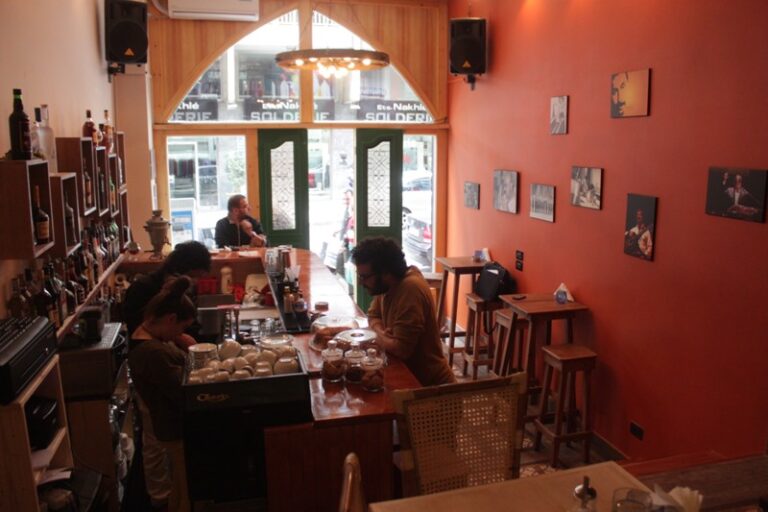
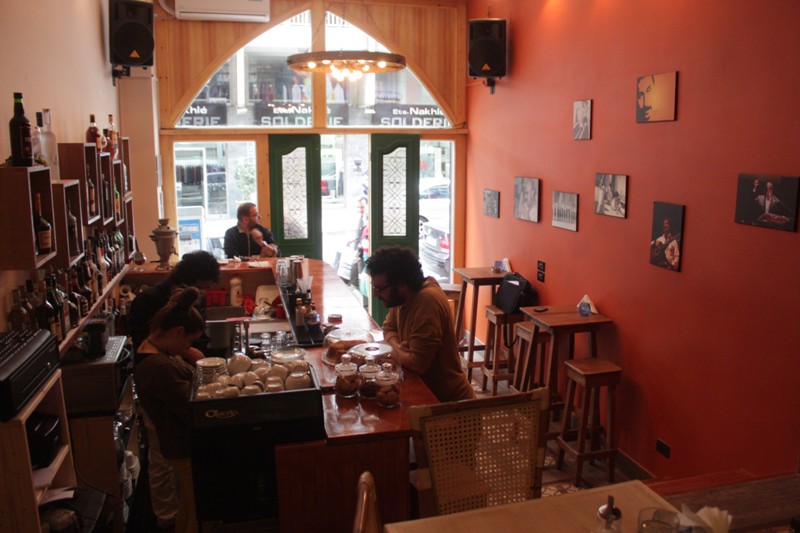
Zakaria cafe beirut lebanonAt the heart of Beirut, Zakaria counters corporate cafe culture with art and heritage

As larger coffee and restaurant chains take over the streets of Beirut and other Lebanese cities, smaller, local cafes are abandoning their businesses as they are faced with too much competition. Walking away from the scene is not only a coffee shop or a local eatery but also a tradition, a culture, art and in some cases sustainability.

Zakaria café is the dream of Layal Boustany, her father, George Boustany, sister, Yara Boustany, and boyfriend, Jawad Taher. Opened in March 2013, they are in the process of creating a relatively novice idea in Lebanon by pushing the “green aspect” at the center of their café culture.