Home Blog Page 261

How cannabis will feed the world

1

cannabis fork I didn’t mean to go to pot. But after of researching urban food movements in a bid to save the world from hunger, cannabis clearly emerged as the answer. Cannabis and what’s happening now in Canada, the United States, and Israel will be the answer to global food shortages.


Mark my words: Marijuana will feed Africa, it will save China, and it will give Americans everywhere a better quality of life. You are scratching your head, right?

Let me connect the dots.

We’ll start with a few points you can’t ignore: The world is growing beyond capacity. More people live in cities than the country. Fewer people want to be traditional farmers, and global warming and our dependence on fossil fuel is killing our planet. Add to the muck land shortages, over-fertilization, pesticides… conventional agriculture as it is, I’ve summed up, cannot be the answer.

Meanwhile activists are crying out against Monsanto and the large monopolies that put much in the hands of very few. A day doesn’t go by when you don’t read a new study about the dangers of modern pesticides. Or greenhouse gas emissions putting our planet in peril. Oh, and just last week –– why biofuels have been a big disaster in the end. Now there is not enough land to grow corn. Oops.

But if you really think about it, you know that there is something terribly wrong with growing potatoes in Canada, chopping them up in China, and then selling them as chips in America.

We need to look somewhere else to make sense of our food production madness. We need to look to the people. Don’t blame the system. Blame yourself.

Americans did it before and they will likely do it again given recent urban food trends in cities like New York.

During the Second World War, Eleanor Roosevelt compelled Americans to plant Victory Gardens, and in so doing they produced 40 percent of their fresh foods and vegetables! Isn’t that about the same number economists say that we will need from urban farmers of the future to sustain our planet? These were urban gardens in backyards, schools, patios and between high rise buildings.

While the war is long over there is a new breed of Americans, Canadians and Europeans who are planting food anywhere they can grow it: on rooftops, on patios, in skyscrapers, in basements and even inside restaurants. This food is hyper local, hyper nutritious because it’s fresh and without much pesticides, and growing it gives people a sense of meaning, connection to nature, and, in a way, a better quality of life.

So why don’t more people do it now?

Since most of us live in cities access to land isn’t simple. And this is where I circle back to pot: 15 years ago cannabis growers in the United States and Canada (when it was completely illegal) discovered a better way to grow pot. Well mainly at first it was to avoid being busted by the cops. This novel hydroponic method which used 90% less water and no heavy bags of soil, made it easier to hide underground operations in basements and closets, or in Gran’s shed, and over time a whole industry emerged from it: it’s called hydroponics and it means water farming, without soil.

If this is a world that you’re oblivious to Google “Hydro Shop + your hometown” to understand just how many pot growers are cultivating in your neighborhood. The point here is not to pay lip service to the pot industry, and I am certainly not supporting illegal activities, but to extract from my research that pot growers grow their crops like mad scientists.

Those who do it on water have developed their own tricks of the trade: seed hybrids with crazy names like Dutch Crunch, autoflower seeds for quicker flowering times, nutrient ratios and formulas that will make your head spin, and light cycles that will impress. They know how to detect disease and pests with the slight change of leaf color. They’ve hacked together technologies to automate and optimize their plants; and they work alone but somehow as a collective, in an unstructured, but supportive way to help each other grow the best plants possible.

Take out the word cannabis and change it to tomatoes, cucumbers, or strawberries and you’ve got a new kind of food production system perfect for cities.

Understanding the scope of this wisdom that cannabis growers are developing is part of the mission in my startup flux. I am developing a tool that takes the pain and hardships out of water farming, making it accessible, fun and communal.

Marijuana growers today, whether they are running small grow ops in the basement, or are running $10 million grow ops in Canada are building the wisdom that will feed our planet more sustainably from the ground, or rather, from the “water” up. Some are eager to share this wisdom.

I’ve spent more than a decade as a media entrepreneur studying and covering the urban food movement globally. I know that going to pot to feed the world sounds nuts. It’s not the typical story that traditional investors want to hear. But the winds are changing over here in Israel where I am growing my new startup.

Government funds now seem to be okay supporting technologies in the cannabis field, and people managing these funds are listening to me with very open minds. As we speak traditional agriculture companies from Israel all seem to be digging into the US and Canadian cannabis markets. This is what I am hearing at conferences. They too want a stake in what could be the next gold rush.

From my research cannabis is either a $150 billion legal and grey market combined, or a $2.6 billion legal market this year in the US depending on whether you are looking at police records or cannabis sales from legalized states.

With legislation changing quickly in the US, the numbers are bound to rise. But I am still sticking to my plan to feed the world. In the meantime I’ll ride the tailwind of cannabis to develop the best tools for the job. Want to join me?


Saudi prince loves poaching

1
 Arab hunting stopped in Pakistan

Last year, Green Prophet broadcast the alarming news of a Saudi prince who poached thousands of protected birds during a 21-day hunting safari in Pakistan.

Nearly a year on, the Sindh High Court has revoked a federal notification that allowed issuance of permits to Arab dignitaries for hunting endangered species – (including the houbara bustard, pictured above) – in the country. It’s a significant victory for the birds and the villagers who land they nest on.

Every year, Arab monarchs, princes and sheikhs arrange for special licenses that allow them to hunt the endangered houbara bustard in Pakistan for ten days with a 100-birds-per-bag limit.  Last year, 16 licences were granted, but the hunting party of Prince Fahd bin Sultan bin Abdul Aziz Al Saud reportedly slaughtered 2,100 bird, more than the total number of licensed kills for the year.

The houbara bustard, locally known as Tiloor, was declared an endangered species in 1912, and Pakistan imposed a permanent ban on hunting the bird in 1972. The Sindh High Court had struck down the temporary licences for Arab royals in 1992, but the practice continued unabated.

The new ruling responded to a petition filed by villagers charging that the foreign affairs ministry had allocated different districts of Sindh, Punjab and Balochistan to dignitaries of the UAE, Bahrain and Qatar for hunting protected animals. They alleged that a private department of Sheikh Nahyan bin Zayed Al Nahyan that organizes hunting on private property, working with local officials, illegally took over thousands of acres of land for the purposes of hunting protected animals such as the bustard, ibex, markhor, crocodile, and blanfordi sheep.

Their counsel also alleged that illegal acts had been carried out in national parks, wildlife sanctuaries and protected areas. The petition asserted that local officials were heavily compensated by Arab dignitaries.

The federal attorney argued that the government could declare any area as a game reserve with hunting allowed via special permits specifying the maximum number of animals that could be killed or captured. The federal government, he added, could issue special permits to heads of Gulf countries and members of royal families. The hunters use falcons to kill the birds; special hunting permits also allow temporary import and re-export of the falcons.

This ruling – if enforced – is good news for wildlife conservation, but it was incited by self-preservation of a largely impoverished people. The villagers claimed they were prohibited from farming their lands and grazing their cattle from November 2014 to February 2015 to allow the Gulf royals to set up hunting posts and patrol the area in their vehicles.

The International Union for Conservation of Nature and Natural Resources estimates the houbara bustards’ global population to be at 100,000, declining 20% annually due to hunting and habitat degradation. They are globally protected under the Convention on International Trade in Endangered Species.

Image of slaughtered birds from Pakistan Defense


Tesla teases with insanity: get shocked by this electric car!

12

tesla insane buttonTesla CEO and Founder Elon Musk is shocking his fan base with a special feature more likely to appeal to drag racers and Middle East “drifting” aficionados than the usual suspects attracted to his stylish and environmentally excellent electric cars. Press the “Insane Button” and his all-wheel-drive Model S P85D rockets from 0-60 miles per hour (mph) in just over 3 seconds. It’s the world’s fastest electric car, now with roller-coaster thrills built-in.

#OnlyInDubai is eating the calories you just burned considered “good health”

3

eat more calories to lose weightWorking out with no results? Health professionals in Dubai have a counter-intuitive solution to consider: eat more!

So you’re trying to make good on your New Year’s resolution to put down the shawarma and pick up some weights. But after a month, you can’t see results (nor your toes).  Fear not, the Dubai Health Authority (DHA) has your back (and belly) with a dozen new programs about nutrition for exercise.

Exercising and healthy eating go hand-in-hand, and you’re unlikely to reach your desired workout results without a healthy meal plan, warns the DHA. Planning to burn 600 calories during your work-out?  Then swallow a snack packing 300 calories.  You read that right. They claim that a healthy pre-exercise nibble should contain 50% of the calories you expect to burn, ideally made up of about 30% protein, 55% carbs and 15 % fats.

DHA-suggested examples start out sensibly enough with nuts with yogurt, and hummus and veggies, but then escalate to peanut butter and jelly sandwiches and yogurt smoothies – menu choices that likely led you to the treadmill to begin with.

But here’s where their plan really derails: they also recommend a second snacking after your workout – again, loaded with half of the calories you’ve just burned off. The DHA smartly urges that ample water be drunk throughout the workout, but goes on to state that your exercised body is in “recovery mode”, requiring a nutrient dense meal to stay in best health.

“In 2013, we noticed that although some of our patients were regular with exercise but they were following incorrect practices such as not consuming water during exercise, consuming unnatural protein sources etc.,” said Wafa Ayesh, DHA Director of Clinical Nutrition, “We then realized that it is important to educate people about correct nutrition especially before and after exercise so that they can see positive results and be healthy. People need to understand that exercise and healthy eating go hand-in-hand.”

Exercise boosts metabolism, which means that after your workout your body at rest will burn more calories than it would had you not exercised. But to sandwich workouts between meals that replace in total the calories you just spent sounds like flabby fitness advice.  Especially in the Gulf states which are producing a bumper crop of obese and diabetic people.

In its weekly Twitter clinic, the DHA announced it will carry out several awareness campaigns at walking tracks throughout the emirate over the next 3 months.

They’ve set up booths at Dubai’s various walking venues where they will be addressing topics such as nutrition for athletes, ideal foods to consume before and after exercise, and the hazards of energy drinks. They will also give free health screening for Body Mass Index, blood sugar and blood pressure. Find them at these locations on the specified dates:

  • Zabeel Park, Gate 3: 4 to 6 PM on January 19, February 16, March 16, and April 6
  • Al Khawaneej: 4 to 6 PM on January 26, February 23, and March 23
  • Hatta Park: 11 AM to 1 PM on February 9 and March 9

And if DHA is to be believed, bring plenty of snacks.

Image of athlete eating rice from Shutterstock

WaterGen gadget pulls drinking water from thin air

5

watergen-spring_table

Finding ways to augment supplies of fresh drinking water have been around for years. These ideas vary from basic “low tech” ones like a Yemenite funnel water cone to extract fresh water from saltwater to using water created by aircon units.

Purifying sewage systems to create safe, drinkable fresh water are also being tried; and have received visible support by personalities such as high tech mogul Bill Gates, who demonstrated this by drinking purified toilet water. The headline: from Poop to Potable.

watergen-ground-unit

Extracting water from the air may have one of the most promising futures due to technology being developed by an Israeli company, Water-Gen, that has taken extraction of  water from AC units one step further.

Impressing and hydrating armies

WaterGen is now developing and producing portable units that literally turn water vapor in the air into potable drinking water. The company first got its start back in 2011 when it introduced its first working prototype units for the Israeli Defense Forces.

From there, it has also received attention from the US, French and UK militaries; which have been looking for a more economical way to provide fresh water to troops stationed in desert locations like Iraq, North Africa and Afghanistan, where transported drinking water can cost anywhere from $15 to $17 a gallon.
springsystem

WaterGen units that have received the most attention from the military include a “wearable” portable Spring System  unit (see photo) that can filter as much as 7 to 10 gallons (28 – 40 liters) daily; and a larger unit for field bases that produces as much as 120 gallons (480 liters) a day.

WaterGen Chairman and co-CEO Arye Kohavi says that a portable water producing system helps free the military from the need to transport water supplies in tanker convoys which have often been subject to attack in locations like Afghanistan.

India, a country which has a severe problem of enough fresh water for its giant population, has also become interested in Water-Gen devices.

This has resulted in agreements being reached to introduce civilian versions of WaterGen units into India this year.  “We have been approached by many companies in India to partner with for launching products with WaterGen technology. We will launch our products there this year; and believe the Indian market has a huge potential,” says Water-Gen founder Kohavi.

water_generator_table

If WaterGen will work in a country such as India, one might well imagine how it would work in other locations which have suitable climate conditions. This could include parts of the Middle East; if this becomes possible.

Update 2020, the Watergen units are going to the UAE.

Hebrew University and PhytoTech from Australia partner on medical cannabis patch

2

cannabis-thc-molecule Everything is coming up green in Israel. At least that’s how it seems in the medical cannabis space. We’ve recently interviewed Dr. Alan Shackelford (Charlotte’s Web) then there is Canna Tech next week. Just in: Yissum, the technology transfer company of the Hebrew University of Jerusalem, just announced that it will work with PhytoTech Medical of Australia on cannabidiol (CBD) and THC, the active ingredients in cannabis, for the treatment of a variety of medical indications.
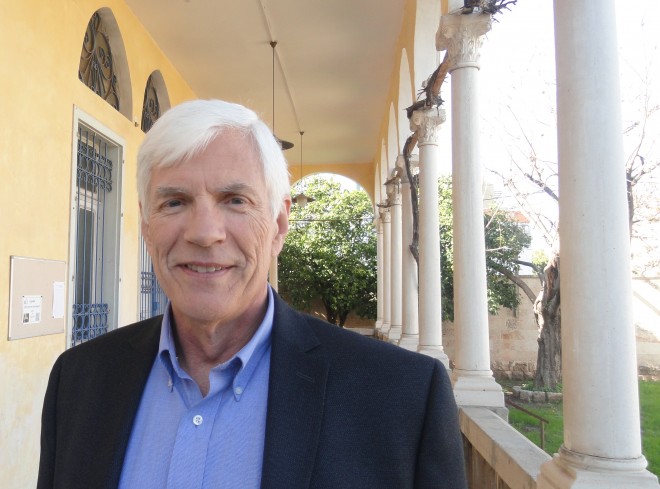
The novel formulations are based on oral and transbuccal delivery technologies developed by Professors Abraham Domb and Amnon Hoffman from the Institute of Drug Research, School of Pharmacy, Faculty of Medicine, at the Hebrew University of Jerusalem.

Last week on January 22, 2015, PhytoTech Medical became the first medical marijuana company on the Australian Securities Exchange (ASX). The company raised about US$4.7 million at a share price of $0.20 per share. The offer was significantly oversubscribed, demonstrating the high level of demand in the market to invest in MC stocks and the calibre of the offering by PhytoTech.

Cannabis based medications are currently in clinical use worldwide. The most known formulation is Sativex, a sublingual spray delivering CBD and THC. You can read about the problems with Sativex on our LaraPharm interview.

PhytoTech will develop an improved, oral capsule formulation and transbuccal delivery system that consists of a flexible, muco-adhesive patch that will release the active ingredients of cannabis in a controlled manner.

Yaacov Michlin, CEO of Yissum, said: “We are very pleased to collaborate with PhytoTech in developing the inventions of Professors Domb and Hoffman for the purpose of delivering the active components in cannabis.

“Medical cannabis is increasingly being used for a variety of indications, such as reducing nausea during chemotherapy and relieving pain and muscle spasticity in MS patients. Development of state-of-the-art delivery systems for the active ingredients will undoubtedly pave the way for a wider variety of clinical indications for these types of drugs.”

Boaz Wachtel from PhytoTech says:“We are happy to collaborate with Yissum in developing this novel delivery platform for THC and CBD.We believe that Yissum’s novel transbuccal delivery method is particularly appropriate for the delivery of these agents, and helps avoid problems such as lack of standardization of drug concentration, and health risks stemming from more traditional ways of absorbing cannabis, such as smoking.”

Image of THC molecule from Shutterstock

Can solar panels boost green roof productivity? New study asks

2

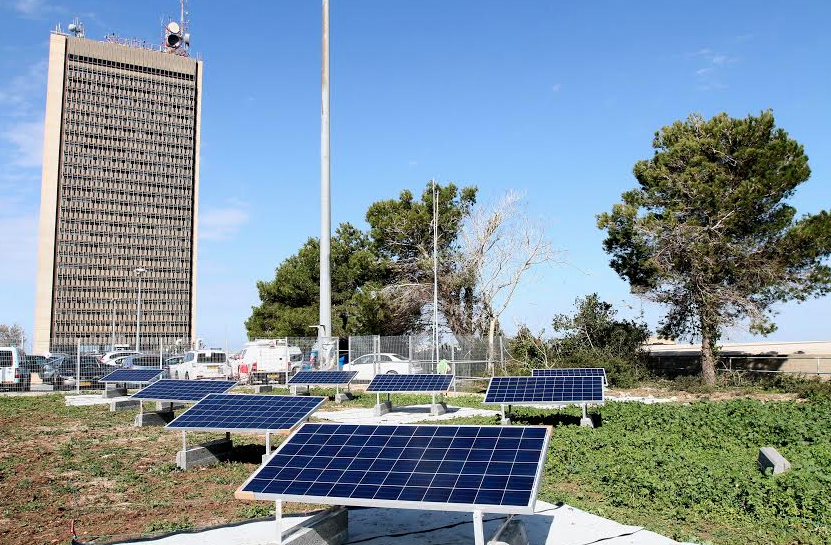
green roof solar power panels

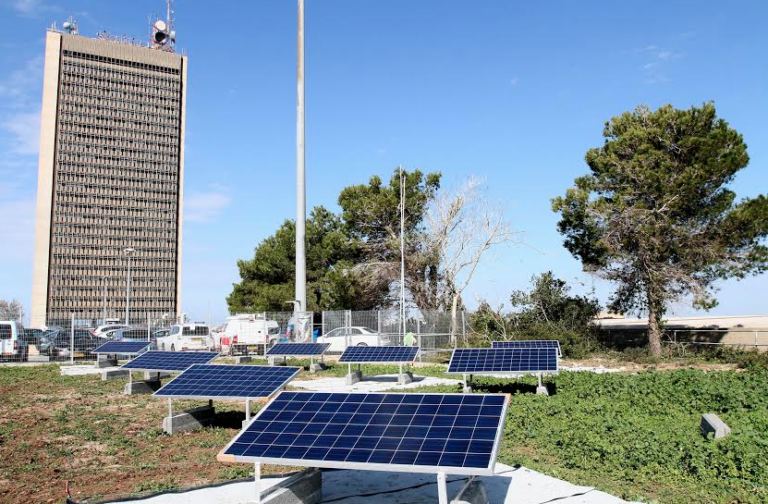
There’s plenty of cold weather still to come if you live in the Middle East, but the University of Haifa is preparing for the sun, with a new study that examines whether solar electricity panels and green roofs can work well in tandem. It is basically the question can 1+1=3?

The Kadas Green Roofs Ecology Research Center (which we’ve featured here) and which is headed by Prof. Leon Blaustein, researches the potential contributions of green roofs – roofs that are partially or completely covered with vegetation.

With ongoing urbanization, which reduces the variety of species found in cities, green roofs can increase biological diversity, and also provide insulation, bringing energy benefits to building owners who will save money on heating and cooling.

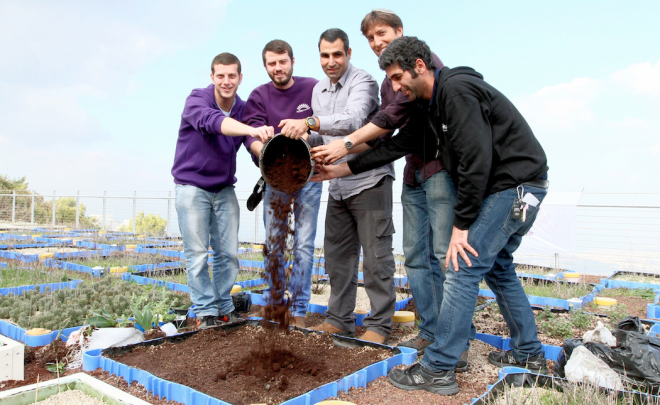
Green Roof researchers pouring coffee on it

green roof coffee grounds

Now the researchers, as part of a doctoral project by Bracha Schindler (not pictured above), are trying to add another “green” element to such roofs – solar panels that produce electricity. According to Kadas Center manager Dr. Shay Levy, the research hypothesis is that a green roof cools the panels, which will improve electricity production on hot days.

The panels, meanwhile, will provide shade and greater heterogeneity, making areas of the roof habitable by a wider variety of flora and fauna.

The above study is the precursor of a larger study being planned by the Kadas Center in conjunction with the Green Knesset project being implemented by the Knesset, where solar panels will be installed on green roof plots atop the Knesset after the shemitta (sabbatical) year is over in early Fall 2015.

Related: are coffee grounds good for green roofs?

The findings of the research project at University of Haifa will facilitate the larger research project on the rooftop of the Knesset, where the importance of irrigation on the PV-green roof synergy will also be assessed.

“We are always looking for synergy – combinations that make a total contribution that’s bigger than that of the individual components,” Dr. Levy said. “On the assumption that our hypotheses prove themselves, we hope to find a green synergy that will benefit the environment and perhaps further encourage the planting of green roofs and the installation of solar panels all over our cities.”

LaraPharm’s dry-powder inhaler delivers cannabis like a medicine

3

larapharm-cannabis-medical-marijuana-inhalerSince humankind has discovered healing properties of herbs like cannabis, inhalation through smoke has been the delivery method of choice. Smoking cannabis makes the molecules go straight to the blood and brain. It’s great for some people, but for those using cannabis medicinally –– and want to work, drive and tend to their children –– rolling and smoking a joint with all of its psychoactive effects isn’t appropriate.
Meet LaraPharm, an Israeli company that plans on delivering cannabis through an inhaler, not as a wet vapor, oil, or in a brownie, but as a synthetic material put inside a dry puff inhaler, the same inhalers used to treat asthma.

rita alter larapharmIt is the first company in the world to take THC and other cannabinoids and attempt to deliver them this way. Rita Alter (left), the CEO and founder of LaraPharm, founded the company four 4 years ago and has put her family savings behind the idea: she believes it could be a winning solution for the multi-billion pharmaceutical companies that want to go into the medical cannabis business but who don’t know how to approach cannabis from a medicinal standpoint.

Cannabis growing to $40 billion in the US

The major Pharma companies cannot sell joints, says Alter: “They need a pharmaceutical medicine with controlled dosage and efficacy. For them, the medical cannabis business is a multi-billion dollar game they’re left out of. LaraPharm can turn the tables on that and provide them with a viable medicine replacing medical marijuana,” she tells Green Prophet.

It was in the clinical setting that Alter first got turned onto cannabis. Four years ago she was working for the Helsinki Review Board at an Israeli hospital. The international review board oversees clinical trials and makes sure that doctors are not breaching human rights and are delivering the experimental medicines as required. There, she noticed the real need for a medicinal form of medical marijuana.

Along with their prescribed medicines, top doctors, heads of wards, were telling patients suffering from extreme pain or gastrointestinal problems to take their medicines but also to go home at night and smoke a joint. Because pot can help, they told their patients.

“It was strange to hear many senior doctors telling their patients suffering from pain or stomach ailments to go home and smoke some marijuana,” says Alter. “Of course it sounded weird at first. But I understood that marijuana is a plant with great therapeutic qualities.”

Alter knew that she was onto something and started furiously researching and mapping cannabis use throughout the centuries. What happened next is what makes Alter part of Israel’s Startup Nation: With a background in microbiology, human immunology and genetics Alter started working on a company: “I looked at the use of cannabis in cultures around the world, as a medicine for giving birth, and then the later demonization of cannabis that spread throughout Europe until recent times.”

She could do something new.

Alter then collected scientists who’d worked at the failed Israeli cannabis company Pharmos, to treat pain, and those from respected pharma companies like Taro and Teva. They dove, quite literally, into pot together.

Some $250,000 has been put into the company so far. Unlike in the US where research on cannabis compounds is illegal on the federal level, in Israel it is not and talking about it and dealing with it has become in a way commonplace, although it is illegal to smoke recreationally in Israel.

Taking marijuana to clinical studies

Today, with her advisors, and an investment from Therapix, a local publicly traded bio-med investment company, Alter is building a startup in Israel to help people dose themselves using a new kind of inhaler that delivers medical grade synthetic cannabis molecules just like an asthma inhaler.

Alter has built the breakthrough formulation design, filed a patent and is now looking for an investment of about $13 million USD to enter clinical trials with expected commercial launch within two years.

She aims to create a medical solution that can portion out medical grade and replicable doses of synthetic, cannabis-like drugs to sick people who need it most. The drug will be developed in such a way that the dose will be standard and reliable, to meter out the same effects every time.

Consider that the pharmaceutical company Eli Lilly that had a cannabis extract on the market 100 years ago. The same company today might want to get into cannabis but doesn’t have a channel.

Also, today the landscape is bleak for people in need of medical cannabis. Just smoking the plant flowers can’t ensure a regular and reliable dose due to genetic variations of the plants being grown, how it’s grown and how it’s administered.

Meanwhile in terms of pain relief there haven’t been any advances since NSAIDs (Ibuprofen) or opiates which can be highly addictive, says Alter: “I saw the need and dug in.”

Scientists today estimate that cannabis contains 70 or more active compounds. THC, the chemical that gets you high in pot is one of the most therapeutically influential but it is also only one of 70. What Alter plans to do is build a platform solution so that drug companies can build dozens or more of their own drugs, based on these molecules in any combination and then deliver them through the inhaler.

Can LaraPharm put the major Pharma companies back into what’s estimated to be a $40 billion legal market in the US alone by 2020?

“Well we aren’t the first to think about the need,” Alter says humbly. There is Marinol, a company with $200 million in sales that produces a synthetic THC and delivers it with sesame oil. It’s been on the market for 30 years to treat chemotherapy-induced nausea and vomiting and reportedly works very poorly. After reaching the blood and due to the liver pass there is a dumping effect and a person gets high for a long period of time.”

Then there is GW Pharma, a $1.3 billion company with contracts in 25 countries that produces a THC and CBD spray (Sativex) which is absorbed sublingually, or under the tounge. The company is listed on the LSE and NASDAQ stock exchanges but you can’t find it in the US, she says. “Patients globally report dissatisfaction from this solution and the Sativex sales never really took-off.”

Those two companies pretty much sums up the international business for medical cannabis pharmaceuticals, Alter notes.

Alter thinks the delivery system is the problem, because, she nods, “think about how most people use cannabis today? They smoke joints.”

What she’s done is developed a dry inhaler, the same kind used for asthma sufferers, and has loaded it with a dried powder made form synthetic THC. While the THC is not patentable, the delivery method is: how the powder is made and how the combinations of drugs can be formulated for specific diseases.

It is the know-how of this unique formulation and pharmaceutical constituents that Alter wants to use to entice large pharmaceutical companies.

Over in Jerusalem, where THC was discovered by Prof. Raphael Mechoulam in the 60s “he is screaming for someone to do something with these molecules,” Alter says.

Indeed. Among the many times I’ve interviewed Mechoulam he says that a replicable, medicinal grade dosage system is highly sought after.

LaraPharm includes a management team of six that started working on the product three years ago. So far Alter has invested her family savings into the company, about $250,000 and an investment in the company this past summer by the Israeli company Therapix.

Today she is seeking about $12 million to get her through the 12 months of animal studies, lung tests, and first-in-man clinical trials. When done, she plans to go ahead to pass Phase II regulations.

Then comes the bigger mountains to climb that people who smoke joints don’t think about: Alter will need about $150 million to turn LaraPharm into a global leader providing cannabis-based solutions for the development of a whole family of novel drugs for unmet medical needs.

Is she crazy?

The pharma business is risky, with high stakes, but the rewards can be worth it, she says. Especially if you are always aware of the real goals of this enterprise, Alter says.

“My motto is: let’s help sick people first.”

Alter will be presenting her company at Israel’s first Canna Tech event on February 5. There is still spaces left for accredited investors. Link here.

To read more on LaraPharm, click here.

Image of woman and inhaler from Shutterstock

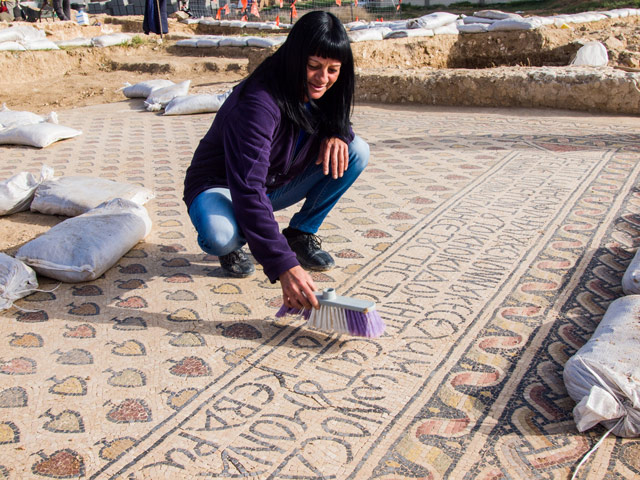
Want to join an archeology dig?

3

Join an archeology dig
Join a summer archeology dig

It’s a dream for some and a reality that can come true if you plan in visiting Israel this year. The country some say is an open archeology site. You can literally find ruins everywhere. But let’s say you want to participate in a formal dig and even possibly earn school credit. If this tickles your fancy, read on for the ultimate guide of Israeli digs this summer, one starting as early as the first week of February. Details, costs and contacts are in the rough guide below.

Joining a dig is a great way to get close to ancient history and if you are an environment lover – a way to learn about the simpler ways of life, before industrialization and technology.

VOLUNTEERING AT A DIG IN ISRAEL

Many archaeologists enlist volunteer help on their digs, as volunteers are highly motivated and wish to learn and gain experience, although the work is often difficult and tedious. Usually, no previous experience is necessary. The work includes digging, shoveling, hauling baskets of earth and sherds, cleaning pottery sherds and more. Volunteers are responsible for their own travel arrangements to and from Israel.

Accommodations for volunteers can range from sleeping bags in the field, to rooms in hostels or kibbutzim, to 3-star hotels near a site. Each expedition has its own accommodation arrangements.

Related: 10 eco tourism day trips in Israel

There is usually a charge for food and lodging, although on some excavations these are free. Volunteers who require kosher food should inquire in advance. Excavations conducted in or near a city often require volunteers to find their own accommodations.

Volunteers should have comfortable, sturdy clothes for heavy work. Sunhats are absolutely compulsory in summer; warm clothing is suggested for summer evenings as the weather can be cool. Winters are wet and cold; warm clothes and water-proof boots are necessary.

Equipment that may be useful – depending on the conditions at the site and the type of accommodation available – includes work-gloves, sleeping bag, canteen, towels and sunscreen lotion.TMRECREATION AND TRIPINSURCE

In most cases, volunteers must arrange for medical and accident insurance in advance. Even in instances when accident insurance is provided, it is strongly advised that volunteers come fully insured as the insurance offered is minimal.

APPLICATION AND REGISTRATION

When applying to the director of an excavation you should indicate any previous studies you may have in archaeology or related fields, such as anthropology, architecture, geography, surveying, graphic arts; or experience in excavation work, pottery restoration or photography.

For registration, please contact the persons listed in the individual entries. Please note that a registration fee is often required.

Note: Israel Ministry of Interior regulations require that passports of all volunteers (other than Israeli) be stamped with a volunteer visa (B4). This request should be made by the volunteer at the point of entry into Israel. 

MORE details on the archeology digs in Israel

 
CENTRAL TIMNA VALLEY (CTV) The Central Timna Valley (CTV) Project is a multi-year project of the Institute of Archaeology at Tel Aviv University, focusing on copper production sites in the southern Aravah Valley at the transitional period between the Late Bronze and Iron Ages (1300-800 BCE). The excavations are aimed at addressing social, technological and chronological aspects of the ancient copper production industry. Field work is conducted on a small scale, designed to address specific research questions, and is complemented by various laboratory analyses of the different archaeometallurgical finds. The project is based on two intensive weeks of field work, excavations, lectures and field trips to various ancient copper production sites, with emphasis on learning different excavation methods and understanding technological evolution from the dawn of metallurgy to the Islamic period, as shaped by the environmental background.
Director: Dr. Erez Ben-Yosef, Tel Aviv University
Dates: Feb 1-13
Accommodation: Simple huts near the Timna Valley; several nights will be in sleeping bags in a heated tent. Full board.
Cost for volunteers: Variable based on length of stay: $950 for entire field season
Minimum participation: 3 days
Application deadline: January 25, 2015
Academic credit: 2 academic credits of TAU for the course: Field Archaeology (0671-1216). Israeli students are required to complete their 20 days quota in a different project during the summer. TAU academic fees are $125 per unit (total $250 for the course).
Insurance: Volunteers must arrange their own medical and accident insurance in advance, and offer proof of doing so. The expedition will not cover any claims of damage to equipment or injuries to the volunteers or their visitors.
Work hours: The season is short and without breaks; it includes work on Saturdays and Sundays.
Contact: Yitzhak Vassal, [email protected], or call +972-3-6409427
Additional phone number: Gali Edelstein, Department of Archaeology and Near Eastern Cultures at TAU – +972-3-6409703
Website: For more information see website 
 
 
KHIRBET EL-MAQATIR The location of the city of Ai mentioned in Joshua 7-8 has long been a matter of mystery and controversy. The  geographic, historical and archaeological evidence collected in excavations to date demonstrates that Khirbet el-Maqatir is the Ai of Joshua. The discoveries to date include include a rare 15th century BC Egyptian scarab, a Late Bronze I city gate and wall system, large amounts of pottery from the time of Joshua, remains from the Judges period, evidence of destruction by fire, ancient coins, a first century AD city/town, and a Byzantine monastery.
Directors: Dr. Scott Stripling, Wharton County Junior College and Belhaven University
Dates: May 24 – June 13
Accommodation: Mount Scopus Hotel, 10 Sheikh Jarrah Street, Jerusalem
Cost: One week: $1100. Two weeks: $2149. Three weeks: $2999. Includes double occupancy, three meals a day, evening classes. Rates for participation other than 1, 2 or 3 weeks can be priced on an individual basis, depending on the availability of hotel rooms.
Registration fee: $500 deposit
Minimum participation: At least one week participation is preferred, but not required.
Application  deadline: Deadline for signup – April 1, 2015. Final payment in full is due April 15, 2015.
Daily schedule: 5:45 AM – 1:45 PM Excavations, with lunch break
2:30 PM – 3:30 PM Pottery washing
7-8 PM Evening Biblical teaching as scheduled .
Recreation: During the dig, two weekends trips will be made available. Park entrance fees, bus and/or van costs are not included, but will be paid by participants in Israel, about $30-$50 per day.
Insurance: Volunteers must arrange their own medical and accident insurance valid in Israel in advance, and offer proof of doing so.
Contact:

Henry B. Smith, Jr.
Associates for Biblical Research
P.O. Box 144
Akron, PA 17501
Phone: 1-800-430-0008
Fax: 1-717-859-3393
Email: [email protected]

Website: For more information and application form see ABR website
 
GEZER WATER SYSTEM Gezer, one of three cities fortified by Solomon, guards the western entrance of Jerusalem from the coastal plain. Gezer was continuously occupied from the Bronze Age to the Hellenistic Period. Excavations will focus on re-opening the ancient water system that was first discovered in the early 1900’s but was not entirely explored.
In 2015 we will continue to clear more of the diagonal tunnel, clearing the tunnel area between the area of the water source and the bottom steps, explore futher the possibility of an external entry, and expand the restoration of the area.
Directors:

Tsvika Tsuk, Director of Archaeology for Israel Parks Authority
Drs. Daniel Warner, James Parker, and R. Dennis Cole of NOBTS

Dates: May 24 – June 12
Accommodation: Air-conditioned rooms at the Neve Shalom Guest House, with three to four persons per room. All guestrooms have air conditioning, telephone, television, and refrigerator.
Cost: $1800 for the 3-week season. The price does not include airfare to and from Israel or weekend study tours. Some space is available for those who cannot stay all 3 weeks, at $600 per week.
Registration fee: Deposit of $500 is due by March 15, balance of payment due by April 20.
Academic program and credit:

Either 3 or 6 semester hours of credit can be obtained through NOBTS for the full 3 week participation in the expedition.  A reduced tuition charge will be assessed by NOBTS for participants in course credit. Some undergraduate credit is also available.

Minimum participation: Preference to volunteers who join the project for the full five weeks of the excavation season. It is possible to arrange for a minimum two week stay upon approval by the project directors.
Work hours: Monday through Friday: 5:00 a.m. to 12:30 p.m. – excavation. Afternoon – lab work in camp (pottery washing, processing of material culture, etc.), and a lecture.
Field trips: The expedition will arrange travel to various key areas and sites during the three week stay, including such areas a Jerusalem, Galilee, the coastal plains of Sharon and Philistia, and the Dead Sea.
Recreation: Swimming pool. Located midway between Tel-Aviv and Jerusalem, Neve Shalom/ Wahat al-Salam overlooks the Ayalon Valley and the Coastal plain. The village is surrounded by olive groves, pine forests and fields. Within walking distance are the Trappist Monastery of Latrun and the Yitzhak Rabin National Park.
Minimum participation: Preference for full period, minimum two week stay upon approval by the project directors.
Insurance: Volunteers must arrange their own medical and accident insurance in advance and offer proof of doing so.
Contact:

Dr. Dan Warner ([email protected]), Dr. Dennis Cole, ([email protected]), or Dr. Tsvika Tsuk ([email protected])

Website: For registration details and application form see website.
 
 
BETHSAIDA Bethsaida, situated on the north Sea of Galilee was founded in the10th century BCE as the capital city of the biblical kingdom of Geshur. During the Time of Jesus Bethsaida served as the birthplace of three Apostles Peter, Andrew and Philip and a place where Jesus performed many miracles, it is one of the most frequently mentioned towns in the New Testament.
Director: Prof. Rami Arav, University of Nebraska at Omaha
Dates: Session 1: May 25 – June 6
Session 2: June 7-20
Session 3: June 21 – July 4
Accommodation: Nof Ginosar Hotel on the western shore of the Sea of Galilee
Cost: $643-1310 per week according to type (dorm, triple, double, single)
Registration fee: $200 deposit (Full reimbursement until March 31, 2015.
Cancellation fee of $100 April 1-30, 2015)
Minimum participation: One week
Work days:

Monday-Friday
5:30am – 12:30 pm: Fieldwork
4:30 pm – 6:30 pm: Lab work and pottery
8:00pm – 9:00pm: Lecture

Recreation: Kibbutz Ginosar is located right on the Sea of Galilee, and there is also a swimming pool on the kibbutz. Weekend tours are arranged throughout the season (for an additional charge).
Insurance: Volunteers must arrange their own medical and accident insurance in advance, and offer proof of doing so.

Contact:

Kristy Leahy Pape, Excavations Coordinator
1.402.554.3108
[email protected]

Website: For more information and application form see:http://world.unomaha.edu/bethsaida/dig.php
 
TEL BURNA The site of Tel Burna is located in the Shephelah region, which served as a border between the kingdoms of Judah and Philistia in the Iron Age. A fertile area that supported agricultural production, the region became known as the breadbasket of the south. Survey finds indicate the city was important throughout the Bronze and Iron Ages. Excavations have revealed settlements from the thirteenth, ninth, eighth and seventh centuries BCE, as well as some Persian period remains.
This summer, we plan to continue the excavations on the upper mound, where the Iron Age II fortified city stood.
Director: Dr. Itzhaq Shai and Dr. Joe Uziel, Institute of Archaeology, Bar Ilan University
Dates: June 7 – July 3
Accommodation: Standard lodgings are 4-6 people per room.
Cost for volunteers: $450 per week. Includes room and board from Sunday morning to Friday morning, travel to and from the site, field trips (1-2 per week), lectures, and all dig-related activities.
Registration fee: $50 (non-refundable)
Application and payment deadline: May 1, 2015
Minimum stay & age:
One week. Minimum age 18.
Insurance: Volunteers must arrange their own medical and accident insurance in advance, and offer proof of doing so. All participants must be of sound mind and body, enabling participation in an exerting physical activity, in (occasionally adverse) outdoor conditions. Participants are required to undergo a medical examination prior to the excavation and present a medical doctor’s authorization.
Work hours: Volunteers will participate both in excavation (ca. 6AM-1PM) and in post-excavation activities such as pottery washing which will be conducted in the afternoon and evening.
Contact: Itzhaq Shai [email protected]
Institute of Archaeology
Bar Ilan University
Ramat Gan, Israel, 52900
Telephone: 972-54-4700596
Website: For more information and registration forms see flyer andwww.telburna.wordpress.com
 
TEL HAZOR Hazor is a major site in the Galilee, located approximately 5 km. north of Rosh Pina.
The population of Hazor in the second millennium BCE is estimated to have been about 20,000, making it the largest and most important city in the entire region, located strategically on the route connecting Egypt and Babylon. The city was rebuilt and fortified by King Solomon and prospered in the days of Ahab and Jeroboam II, until its final destruction by the Assyrians in 732 BCE.
Director:

Prof. Amnon Ben-Tor, Institute of Archaeology, The Hebrew University

Dates: June 21 – July 31. The season is divided into two 3 week sessions: Sunday June 21 – Friday July 10; Sunday July 12 – Friday July 31. It is possible to apply for either one of the three week sessions or both, but preference will be given to those who apply for the entire 6-week season.
Accommodation: Holiday Village of Kibbutz Gonen. All the rooms equipped with air-condition, TV and a kitchenette.
Cost: $1500 per session ($500 per week x 3) or $2800 for those who register for the entire period.
Registration fee: $75 nonrefundable registration fee.
Credit courses: Students may arrange to receive academic credit (undergraduate or graduate level) through the Rothberg International School. These credit points can be transferred to the student’s home institution. The cost is $80 for the application fee and $120 per academic credit point, each equals 1 week of participation (students can get up to 6 credit points for the whole season).
Students opting to receive academic credit should state their intent upon registration, and directions for application to the credit program will be sent by mail.
Work hours: Monday through Friday: 5:00 a.m. to 14:30 p.m. – excavation and pottery washing.
Lectures: A series of lectures during the week will provide training in field archaeology and the interpretation of finds.
Recreation: The kibbutz has a swimming pool, basketball and tennis courts.
Minimum age: 18
Minimum participation:
3 weeks.
Insurance: Volunteers must arrange their own medical and accident insurance in advance and offer proof of doing so.
Contact: Mail the application form + registration fee to:
Prof. Amnon Ben-Tor
Institute of Archaeology, The Hebrew University
Mount Scopus Jerusalem 91905 Israel
Tel. 972-2-5882403/4 Fax: 972-2-5825548
For information contact: Dr. Sharon Zuckerman
Email: [email protected]
Website: For registration details and application form see Hazor website.
 
 
TEL KABRI Located in a quiet rural setting within the western Galilee, a ten minute ride from the historical town of Acco and the modern resort town of Nahariya, the site of Tel Kabri has what may be the earliest-known Western art yet found in the Eastern Mediterranean. In 2013, we found the oldest and largest wine cellar in the ancient Near East, in the storage rooms of the palace. We will be continuing the excavation of these during the 2015 season.
Co-Directors:

Assaf Yasur-Landau, Haifa University and Eric H. Cline, George Washington University

Dates: June 21 – July 30, split into two sessions of three weeks each: June 21 – July 9 and July 12-30.
Accommodation: Western Galilee Field School, near Achziv beach, north of Nahariya. Meals provided during work week.
Cost: Room and Board: $750 per week ($600 for returnees and consortium members)
Registration fee: $50 non-refundable deposit
Application deadline: All payments will be due in full by 1 April 2015.
Credit courses: We anticipate offering the following course through the University of Haifa, for credit which should transfer back to US colleges and universities: Kabri Archaeological Field School: Methods and Techniques in Field Archaeology (3 credits). It is expected that the cost of the field techniques class, available as transfer credits from the University of Haifa, will be US $600 per 3 credit course.
Work hours: Sunday through Thursday: 5:00 a.m. to 1:00 p.m. Work on the finds continues between 4-6 pm in the excavation camp. For those who are enrolled in the field school, several afternoons a week will be dedicated to lectures and practice of field techniques.
Lectures: A series of lectures during the week will provide training in field archaeology and the interpretation of finds.
Minimum age: 18
Minimum participation: 3 weeks
Insurance: Volunteers must arrange their own medical and accident insurance in advance and offer proof of doing so.
Contact: Eric H. Cline, Ph.D. – Chair, Department of Classical and Near Eastern Languages and Civilizations, George Washington University
Tel: (202) 994-0316, Fax: (202) 994-2156; Email:[email protected]
Website: For registration details and application form see website.
 
TELL ES-SAFI/GATH The site of Tell es-Safi/Gath is located in the Shephelah region (the Judean foothills), approximately half way between Jerusalem and Ashkelon. One of the largest archaeological sites in Israel, it is identified as Canaanite and Philistine Gath, Medieval Blanche Garde, and modern Tell es-Safi. During biblical times this was one of the five major cities of the Philistines, the home of Goliath and Achish according to the biblical text. Excavations over the last 17 years have uncovered impressive remains, including the worlds earliest known siege system, rich finds from the Bronze and Iron Age periods, Philistine temples, inscriptions and art, and evidence of the destruction of the city of Gath by Hazael, king of Aram Damascus, as mentioned in II Kings 12.
In the upcoming 2015 season, we plan to continue to excavate levels dating to these various phases, with particular emphasis on the Early and Late Bronze Ages, and various stages of the Iron Age.
Director: Prof. Aren Maeir, Institute of Archaeology, Bar Ilan University
Dates: June 28 – July 24
Accommodation: Kibbutz Revadim. Standard lodgings are 4-6 people per room; double and single rooms available for additional fee.
Cost for volunteers: US$450 per week. Includes room and board from Sunday morning to Friday morning, travel to and from the site, field trips (1-2 per week), lectures, and all dig-related activities. Weekends and double/single rooms available for additional fee.
Registration fee: US$50 (non-refundable)
Application deadline: May 1, 2015
Academic program: A field school in field archaeology will provide university credits (from Bar-Ilan University): 3 credits for 2 weeks ($500 additional payment) or 6 credits for 4 weeks ($1000 additional payment).
Work hours: Monday afternoon to Friday afternoon. Includes excavation (ca. 6AM-1PM) and in post-excavation activities such as pottery washing which will be conducted in the afternoon and evening.
Minimum age: 16 to 90. Volunteers under the age of 18 must have the consent of their parents/legal guardians.
Minimum stay: 2 weeks
Recreation: Kibbutz pool
Lecture/class: Twice a week, in evenings.
Insurance: Volunteers must arrange their own medical and accident insurance in advance, and offer proof of doing so. All participants must be of sound mind and body, enabling participation in an exerting physical activity, in (occasionally adverse) outdoor conditions. Participants are required to undergo a medical examination prior to the excavation and present a medical doctor’s authorization.
Contact: Prof. Aren M. Maeir, Institute of Archaeology, Bar-Ilan University, Ramat Gan 52900, ISRAEL
TEL: +972-54-6205082; FAX: +972-3-635-4941
E-mail: [email protected][email protected]
Website: For more information and registration forms see:gath.wordpress.com
 
HIPPOS (SUSSITA) The ancient city of Hippos, one of the Decapolis, was erected upon the plateau of Sussita Mountain overlooking the Sea of Galilee which stretches west of it. The Hippos dig is one of the main Classical Period excavations being conducted during last decade in Israel.
This season’s plans include: excavations of a Roman period Basilica, excavations of fortification segments (the bastion), and excavations of the Roman-Byzantine southern bathhouse.
Director: Dr. Michael Eisenberg, University of Haifa
Dates: July 19 – Aug 13
Session A: July 19-30
Session B: August 2-13
Accommodation: Kibbutz Sha’ar HaGolan in air-conditioned rooms including weekends (3 meals a day, expedition tours, leisure activity, lectures, etc.), 2-4 per room
Cost: Session A or B (2 weeks each) – Cost for full Room and Board: $1410
Tuition Fee for 2 Credits: $150
Session A and B (4 weeks) – Cost for full Room and Board: $2525
Tuition Fee for 4 Credits: $150.
Registration fee: 100 Euro (nonrefundable) in personal or bank check. Fee will be deducted from total cost of participants.
Application deadline:
March 30, 2015. Full payment by April 20.
Work hours: Excavation (Sunday-Thursday): 05:00-12:00, with additional work assignments and lectures in the afternoon and evenings.
Recreation: Guided tours; on weekends participants may relax or travel on their own or enjoy on the shore of the Tiberias Lake.
Minimum age: 16
Minimum participation: Two week session. Preference will be given to those who apply for the entire season.
Insurance: It is mandatory for each participant to provide proof of full medical insurance covering all aspects of illness or possible injury.
Contact: Dr. Michael Eisenberg, Co-Director, Hippos (Sussita) Project, Zinman Institute of Archaeology, University of Haifa, Mt. Carmel, Haifa 31905, Israel
Tel. 972-4-8249392; Fax: 972-4-8249876
E-mail: [email protected]
Website: For registration details and application formhttp://hippos.haifa.ac.il/
 
 
ASHDOD-YAM

In summer 2015, we are planning to continue the excavations of the Iron Age compound (known also as an ‘Assyrian enclosure’) at the site of Ashdod-Yam (South) (Ashdod on the Sea; Asdudimmu in the neo-Assyrian sources; a part of Azotos Paralios in Byzantine times), which is located on the coast of Israel (within the boundaries of the modern city of Ashdod).
The fate of Ashdod-Yam was always connected to the capital city of Ashdod (one of the five major Philistine cities during the Iron Age. Already during the Late Bronze Age there was probably a small port of trade at Ashdod-Yam, which served the capital city, while its main port of trade was located at Tel Mor, north-west of Tel Ashdod.Tel Mor’s significance was diminished during the Iron Age and Ashdod-Yam became the main coastal settlement connected directly to the inland city of Ashdod.

Dates:

July 19 – August 22

Directors: Dr. Alexander Fantalkin, Tel Aviv University Institute of Archaeology

Prof. Angelika Berlejung, Leipzig University Institut für Alttestamentliche Wissenschaft
Accommodation: ORT YAMI-ASHDOD Naval officers boarding school. Full board on weekdays, up to 3-4 people in a room. Includes room on weekends, no meals provided.
Cost:

Two weeks: US $ 1200
Three weeks: US $ 1750
Four weeks: US $ 2300

Registration fee (non-refundable): $50
Work days: Monday through Friday. Saturday and Sunday free.
Lectures and tours: Academic lectures and workshops; afternoon archaeological programs and social activities, educational tours to archaeological and historical sites and museums in the region.
Academic credit:

It is our intention to develop an additional educational program for foreign student​s who will get academic credit hours from Tel Aviv University

Recreation: Accommodation located within short walking distance of Mediterranean beaches.
Minimum participation:
Two consecutive weeks.
Insurance: Volunteers must arrange their own medical and accident insurance in advance and offer proof of doing so.
Contact:

Dr. Alexander Fantalkin, [email protected], Tel. +972-54-5721866

Website and application forms:

Official website: http://www.ashdod-yam-archaeological-excavations.com


ASHKELON From the Canaanite era (2000-1200 B.C.), Ashkelon was one of the most important ancient seaports in Israel and in the eastern Mediterranean. In 2015, we will continue to uncover Ashkelon’s history from the Bronze Age through the Crusades.
Directors: Lawrence E. Stager and Adam J. Aja, Harvard University
Dates: TBA
Accommodation: Dan Gardens Hotel
Cost:

TBA
In addition to the program fee, students are responsible for:
A health insurance fee (waived if students have US insurance that provides coverage outside the United States)
Transportation to and from Ashkelon
Independent excursions
The cost of passports and visas (if the latter is needed)
Any immunizations

Academic program:

Students who are participating in the Ashkelon program for course credit take Harvard University NELC S-198: Field School and Education Program for Ashkelon Excavations: The Leon Levy Expedition (32237).
For more information and application see website.

Application fee: $50 (nonrefundable)
Application deadline:
January 29, 2015
Minimum age: Students must be at least 18 years old, have completed at least 1 year of college or be a first-year student, and be in good academic standing to apply.
Work hours: Sunday-Friday: Excavation – 5:30-1:00;
Pottery washing – 4:30-6:30 except on Fridays.
Recreation: Saturdays free. Hotel is located near the beach, has a swimming pool, tennis court, weight room and sauna.
Insurance: Volunteers must arrange their own medical and accident insurance valid in Israel in advance, and offer proof of doing so.
Contact: Ashkelon Excavations, [email protected], (617) 495-9385
Website: For more information and application form see Harvard excavation website or the Leon Levy Expedition website.

Israel Antiquities Authority

The Israel Antiquities Authority’s Department of Education and Information is responsible for educational programs in archaeology and heritage preservation. The department runs three centers for archaeology, offering tours, workshops, activities, enrichment courses and opportunities to participate in excavations.

For information on volunteer opportunities available at the IAA, contact Meyrav Shay: [email protected] or call her at 972 52 428 4408. Volunteers from abroad should also prepare a photocopy of their insurance policy.

The

Assaf Peretz, courtesy Israel Antiquities Authority

Top

Global warming expert fine tunes weather predictions

0

weather-forecast

The night before the Israel Defense Forces’ 1976 mission rescuing over 200 hostages from hijackers in Entebbe, Uganda, Tel Aviv University’s Prof. Pinhas Alpert, then head of an Israel Air Force base forecasting unit, provided intelligence that was critical to the success of the operation — the weather conditions commandos were likely to encounter en route and on the ground. Had his information been incorrect, the mission might have ended quite differently.

Related: Pinhas Alpert shows how cell phone towers predict the next big flood

The inaccuracy of forecasts also has personal implications for people around the world, leaving them stranded without umbrellas, snowed in, or stuck in airports. But considering the technology available today, why do meteorologists continue to miss the mark?

New research published in the journal Land by Prof. Alpert of the Department of Geosciences at TAU’s Faculty of Exact Sciences prioritizes, for the first time, reasons for forecast failures across different regions of the world. Using multi-regression-based statistics on data collected between 1979-1993 on tens of thousands of forecast points, Prof. Alpert and his team were able to quantify the causes — man-made and natural — for weather prediction inaccuracies.

Studying geographic and topographic changes

Pinhas Alpert“Considering my background in forecasting, weather prediction fallacies bothered me for a long time,” said Prof. Alpert. “Since joining TAU in 1982, I have been looking for a way to quantify the dominant factors that cause errors in forecasting. Until now, there has been no comprehensive analysis of these factors. They have been studied separately, but not in combination. I decided to quantify and prioritize the dominant factors for different regions, and provide this valuable information to the world scientific community.”

Using statistical analysis of meteorological data over thousands of locations and the course of 15 years, Prof. Alpert identified unique factors affecting forecasts in Europe, North Africa, the Mediterranean, Asia, and East Asia. The researchers found the dominant factors clouding the accuracy of predictions comprised land-use changes (i.e. an area that had been covered in forest is suddenly bare), topography, particles in the atmosphere and population density.

“For example, when Israel’s national water pipeline crossed the northern Negev in June 1964, it changed the lay of the land,” said Prof. Alpert. “After a relatively short period of time, the desert was blooming, affecting the generation of clouds, precipitation, and temperature extremes. It is difficult for forecasters to incorporate changes like this. In effect, this single land-cover change altered the entire local climate over the Northern Negev, and existing forecast models had difficulty accommodating this, leading to erroneous predictions.”

Weather forecasting with grades

The researchers incorporated the dominant factors within a single equation and then monitored the model’s ability to accurately predict monthly weather conditions in different regions over 15 years. Prof. Alpert and his team also created a table of “factor prioritization” — gold, silver, and bronze labels to identify dominant and less dominant factors for different regions in the world. For example, they found that in the eastern Mediterranean, particles in the atmosphere were the most important cause of forecast fallacies, followed by land cover change. They also found topography to be the most influential factor affecting weather around the world.

“The only tool the weather forecaster has is his model, and the only choice he or she has is to look at different models, each of which has strengths and weaknesses,” said Prof. Alpert. “Several hundred research groups are trying to improve forecasting models all the time. These groups also seek to improve predictions of climate change and global warming. Our study provides them with information about the right topics of research to address for each region.”

Prof. Alpert is continuing to investigate factors that damage the quality of forecasts, hoping to devise new methods of improving weather and climate models.

Image of woman weatherman from Shutterstock

How Alan Shackelford changed cannabis as medicine

2
Alan Shackelford, medicinal cannabis doctor Charlotte's Web, CBD, THC
Dr. Alan Shackelford was among the first to prescribe medical cannabis in the United States to a child. Her seizures stopped. 

Thirty-five years ago an Israeli researcher documented the case for medicinal cannabis to treat epilepsy. It was one of these studies by a Prof. Raphael Mechoulam that Denver-based physician Dr. Alan Shackelford read when he was debating one of the hardest questions of his career. He was prescribing medical cannabis already in Colorado to help people with occupational injuries. 

A desperate couple came to him. Their daughter Charlotte Figi was having 300 seizures a week. They read about an Israeli study that suggested cannabis might help. They implored him to try it on their daughter who was put on a do-not resucitate list in the hospital. Every seizure she had from Dravet’s Syndrome could potentially cause a heart attack.

Figi’s parents were heart-broken by the situation. They asked Shackelford: could he give their 5-year-old medical marijuana?

Charlotte had about 300 seizures a week. They read cannabis might work.

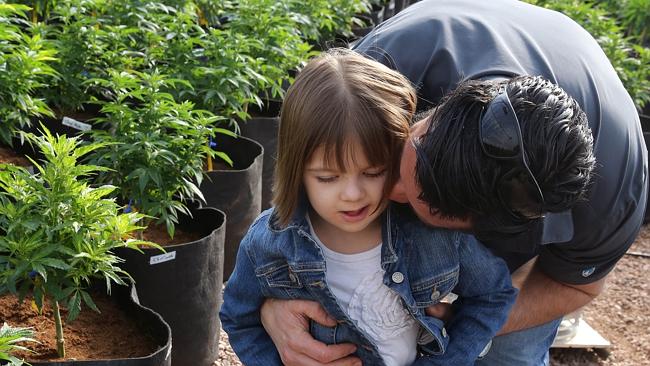
Charlotte Figi with her father, cannabis plants high in CBD for CBD oil
Charlotte Figi suffers from a rare form of epilepsy called Dravet’s Syndrome. Medical cannabis in the form of CBD oil was the only medicine that helped.

“I wasn’t intending on seeing her,” Shackelford tells me when we sat down to talk. “I had no experience with children. My oldest patient was 103, andthe majority of them were older people with back pain, and the treatments were working well on older patients, including some with seizures, but I wasn’t sure it would be appropriate for a child of five.”

Medical cannabis physician Alan Shackelford led the way of the use of CBD oil in children
Dr. Alan Shackelford

Shackelford then poured over a stack of Charlotte’s medical records: “I decided that Charlotte would surely die if we didn’t do something to help her,” he tells Green Prophet. “As a doctor we take an oath that if we can help someone we must do what we can –– ‘cure when possible, comfort always’.”

Charlotte’s mother had brought to him a stack of convincing medical records. Then Shackelford made an appointment at his office: “There I met a girl just over a meter tall. On the way she’d had a seizure in the car, two in the waiting room and two while I was evaluating her.

“These were grand mal seizures. I made extensive notes. Charlotte was unresponsive to questions. She couldn’t eat, couldn’t drink and because nothing was working for her, she was no longer on any medicines.”

Shackelford was educated at Heidelberg Medical School in Germany and Harvard and certainly looks and plays the part of a conservative and evidence-based physician. He wasn’t the kind of doctor who gave prescriptions for cannabis out loosely. In fact, over the years he’d developed a pretty effective protocol he used by phone to screen out recreational users and over the stateline pilgrims looking for a free license to get high.

The lab that started cannabis research in the world

He went back to the research papers and poured over them again. It was the 1980 paper by Mechoulam that caught his eye: in it Mechoulam from the Hebrew University discussed the effectiveness of giving synthesized cannabidiol or CBD to patients with seizures–– in fact it was this particular molecule found in cannabis that shows therapeutic effects, without getting people high. In this paper 4 out of 8 people that used the CBD became seizure free.

Shackelford understood it was worth a shot.

Now the question was how to dose and administer marijuana to a little girl. And where to find plants with high levels of CBD (cannabidiol), but only with small amounts of THC (tetrahydrocannabinol), the primary psychoactive compound found in cannabis.

How to dose a child with CBD

Based on ratios presented in the study Shackelford decided on 6mg/kilo (or 3 mg/pound) of Charlotte.

But Charlotte couldn’t smoke a pipe or a joint.

Normally growers in the Colorado area pride themselves on plants very high in THC, or the molecule that gets you high. This is not what the doctor wanted to give to a small child.

Shackelford found a local grower that could supply a small amount to try. The ratios were 17 molecules of CBD to one molecule of THC but it cost an extraordinary $800 an ounce. This is 4 times the price of high-quality medical grade cannabis, which costs about $200 an ounce.

From this precious bit of plant Charlotte’s mom helped make an extract to give to her daughter.

Miraculously, “after the first dose the seizures stopped,” Shackelford told me. “She went from 300 seizures a week to none. But the family was concerned that they would have no more access to the drug.”

How cannabis strain Charlotte’s Web was born

Then a local group of marijuana growers, the Stanley Brothers from the area, heard about the potential for CBD to treat children and agreed to create an extract with the same high CBD content and low THC. Today this extract is called Charlotte’s Web and parents are moving to the Colorado area to access this treatment for children in similar situations.

USing CBD to treat children was a controversial treatment in 2012 and he knew it. Shackelford discussed the idea of using cannabis with Charlotte’s current doctor who thought it was worth a try, and met with in-house counsel at the Colorado Department of Public Health, which administers the medical cannabis program, and with the Department’s medical director to advise them of his decision.

It eventually took one full year for the Health Department to approve the unconventional but effective treatment, with a big part of the convincing coming by way of Mechoulam’s paper.

Why it took 35 years for neurologists to accept cannabis

When I spoke with Mechoulam about it he expressed a confusion as to why it took neurologists 35 years to understand that cannabis could work to treat seizures.

He continues important research on cannabis compounds from his laboratory at the Hebrew University in Jerusalem. 

Raphael Mechoulam, chemist TCH, medical cannabis, CBD
Raphael Mechoulam, discoverer of THC, CBD in medicinal cannabis

There are about dozens of active research teams in Israel directly working with cannabis as a medicine. These teams are associated with government-funded hospitals and universities. One just found that cannabis treats autism

Over in the US, it was late and 2012 CNN was on the line: Sanjay Gupta, previously anti-cannabis, would go on to create a moving video about the medical benefits of cannabis featuring Charlotte and Shackelford. But by the time CNN called, Shackelford who was not looking for fame or “people moving here” had already decided that he would be immigrating to Israel.

Shackelford, who is Jewish and naturally drawn to Israel, says: “I was frustrated. I saw patients taking narcotics and know that thousands of people a year suffer from the side effects of opiate use. Over the counter aspirin causes 1,000 people a year to die from stomach bleeding.

“I wanted to see if I could do research on cannabis in Israel – with Prof. Yehuda Baruch.”

While cannabis is now legal to use in some form in 23 US states, it is a federally prohibited substance when it comes to researching it. As a research physician by training, “I knew I had to go somewhere else,” Shackelford says. “I was very encouraged by my trip to Israel in early 2013 and decided I would come back.”

In the US, committees that should be helping researchers find funding are essentially “looking at the consequences of cannabis abuse rather than at potential benefits, and I went back to find funding in the US so I could do research here in Israel.

“I’d fallen in love with Israel in 2007 and decided I didn’t want to do research from the US, in absentia.”

And that’s what he has done. But it’s not been easy. Back on a trip to Israel in late December 2014 Shackelford knew he had patients back in Denver counting on him. So for now it’s a shuffle: a few weeks in Israel, a few weeks in Denver.

Karin Kloosterman, Dr. Alan Shackelford organizing cannatech
Karin Kloosterman organizes Israel’s first cannabis conference, CannaTech. Dr. Alan Shackelford will be the guest speaker.

“Now I have found people who have my shared vision.”

For Shackelford, a tall statured man, distinguished certainly – almost enlightened? – he knows it’s wildly inappropriate to tell his patients to take a ‘two puffs and call me in the morning”.

Formulating marijuana for medicine

What he’s referring to is the “medical formulations” available to medical cannabis patients in the US and elsewhere. Of course most are not remotely medical and they are not really formulations. Patients currently take medicinal cannabis by smoking it in joints, inhaling it through bongs and vaporizers, or ingesting it as baklava, gummy bears, brownies, hard candies or as drinks: “The inconsistencies are the problem and people don’t really know what’s in them,” Shackelford explains.

And therein lies the solution –– in Israel. Mechoulam and about ten other academic research teams are profiling cannabis strains by medical condition.

Some new companies like BreedIT are working on standardized breeding software for growers, while others like Cannabics are developing medical-grade slow-release pills to administer a reliable and even dose of oils.

Shackelford too has found his own “medicine” – in the halls of Israeli medical wards. Shackelford is now the medical advisor for a company he co-founded called OWC Pharmaceutical Research Corp. The company is publicly traded in the US. And this way he can live his true passion in Israel in the research arena.

OWC, or One World Cannabis, is now matching dosages and strains of cannabis to conditions and are testing them in clinical trials in Israel.

Cannabis research in Israel has been ongoing for the last 50 years. Patients have been using it legally for the last ten. An open source medical records system in Israel helps research doctors understand the effects of cannabis on conditions.

From this kind of data the One World Cannabis team started planning their trials and is now conducting clinical research studies with investigators at several renowned medical centers in Israel on a number of different serious medical conditions for which cannabis may be beneficial.

The history of cannabis as medicine

Shackelford’s journey started in Texas where was born; then in studies at the Heidelberg Medical School where he got the chance to do research as a student. After that Harvard for seven years shaped his “conservative attitude perspective on therapeutics and what is known as evidence-based medicine.”

By 2003 he was in Colorado practicing occupational medicine and in 2009 his story with cannabis began when he gave his first recommendation for medical cannabis to a patient suffering from work force inflicted pain.

All around him at the time the city of Denver was going through a big change with dispensaries opening everywhere like it was the Wild West. Of course in the beginning it was frustrating to hear from scared “soccer moms concerned that their children were going to start and shoot up heroin.”

It was equally annoying seeing women in bikinis in front of dispensaries swinging signs and competing for foot traffic from the streets.

Shackelford recalls: “Growing was haphazard. People would show up to dispensaries with their harvest in socks. And they would dump it out on the table, along with sand saying, ‘dude I’ve got some really good weed’.”

By 2010 Shackelford was getting involved in legislation and joined Senate hearings about why he thought cannabis was an important treatment for certain people. “I thought it was important to regulate it so the benefits would be there for patient use.”

He’s fought with judges, argued in tribunals, and led senators pushing for cannabis reform with scientific evidence and professional experience to back his claims. At one point he even had the law try and bust him: undercover cops had come to his clinic seeking “prescriptions” but the medical records never matched the story. So he denied them.

From seeing stark results in a leukemia patient to cannabis changing the lives of people with chronic pain in a few short months, then the story of Charlotte, Shackelford is convinced that medical cannabis works, and is planning a series of scientific investigations in Israel to study its treatment potential in many more conditions.

The next chapter of his life and career is now being written in Israel, and Shackelford is currently looking for a set of electric wheels to get around.

Dr. Alan Shackelford will be headlining Israel’s first ever CannaTech, a high-level networking event on February 5, that will connect Israeli startups in cannabis technologies to investors locally and globally. Investor spots still open. The event is founded by me – Karin Kloosterman – founder of Green Prophet, the CEO of the medical cannabis growing robot flux, and will be invite only. 

Read more on cannabis technologies and research from Israel:

Raphael Mechoulam changes medical cannabis globally
Cannabis makes PTSD effects disappear

Images: Dr. Alan Shackelford top, via Twitter; Charlotte Figi, News.com; Raphael Mechoulam, Courtesy; Lower Dr. Shackelford, Green Prophet

Negev oil spill will take years to clean up

0

AP photo of cleanup efforts at Arava oil spill

Oil spills are bad enough themselves. When they occur in fragile ecological regions like Israel’s Arava desert, they can be catastrophic.  Such is the case of the recent Negev Desert-Arava oil spill, which occurred as a result of a break in a large oil pipeline during renovation work.

This spill, occurring in early December, caused an estimated 600,000 gallons or 3 million liters of crude oil to run in virtual torrents through some of the Arava Valley’s most unique desert nature reserves. The spill has caused incalculable damage to fragile desert ecosystems. Environmentalists estimate that cleaning up this oil spill will cost more than $7.6 million USD to clean up and take years to do so.

This recent spill is not unique to the area, as other large spills have occurred during the shadowy history of this controversial pipeline.

In 2011, a massive jet fuel spill occurred when a tractor struck a portion of the Eilat Ashkelon pipeline, causing more than 1.5 million liters of aviation jet fuel to spill into the Nahal Zin stream, severely damaging a nearby nature reserve.

That spill alone took weeks to clean up; and resulting damage to the nature reserve and its fragile ecosystem has never been fully corrected. At that time, the Nahal Zin spill was referred to as “Israel’s worst ecological disaster.” So has the recent oil spill as well.

The Eilat Ashkelon oil pipeline was originally constructed in the 1960’s to bring oil purchased from Iran to refineries located on Israel’s Mediterranean seacoast. With Israel still in a state of war with Egypt, Israeli oil tankers and other ocean vessels could not use the Suez Canal.

The Eilat Ashkelon Pipeline Company, which originally constructed the oil pipeline when Israel still had diplomatic and commercial ties with Iran, has enjoyed a “veil of secrecy” that has been so tight and far reaching that numerous incidents of oil leaks and subsequent environmental and public health damage have been quietly covered up; until now anyway.

A legal petition has  been filed by the Israel Union for Environmental Defence (called Adam Teva V’din in Hebrew) with the High Court of Justice that asks that the pipeline company be forced to  release all available information on the oil spill; and to release all the audits and critical reports written about the company that were banned from publication by the military censor since a confidentiality order went into effect in 1968.

A January 5 article in Haaretz reported that activities by the Eilat Ashkelon Pipeline Company have been kept secret under a gag order that is no longer relevant due to Israeli/Iranian relations being severed in 1979.

Lawsuits against the pipeline company are now in the process of being filed on damage caused to the Evrona Nature Reserve,  the communal settlement of Be’er Ora (where the oil spill took place); and by environmental activist Yoel Hadida, who demands “that the Israeli public get 820 million shekels ($210 million USD) in compensation for the damage done to public lands and natural assets, as well as 151.5 million shekels ($39 million USD) in compensation to area residents.”

Whether or not these lawsuits are successful, the damage caused by this recent pipeline rupture incident will have a serious effect on the Arava Desert environment and health of area residents for years to come.

Dubai fog and urban canyons through the lens of Daniel Cheong

0

Heavenly_Photographs_of_Dubai_Skyscrapers_in_a_Sea_of_Clouds_by_Daniel_Cheong_2014_01

Winter storms hammered much of the Middle East last week with strong winds that rose seas and dropped snow from Egypt all the way to Turkey. Meteorologists claimed it was the most severe December storm since 1953 to hit Israel, northern Lebanon’s roads were paralyzed, and the Sea of Galilee rose 10 centimeters in a day. But the balmy Gulf states do storms in style, their gentler weather stunningly captured by Dubai-based photographer Daniel Cheong.

Green Prophet caught up with this self-described photography “hobbyist” (he works in the telecom industry) to ask how someone who only recently got serious about cameras can consistently produce such  knock-out portraits of his adopted city.

Daniel CheongCheong captures the interplay of nature with Dubai’s aggressive urban canyons. These pictures vividly illustrate the free verse of American poet Carl Sandburg’s Fog:  “It comes in on little cat feet. It sits looking over harbor and city on silent haunches and then moves on.”

Daniel Cheong

Cheong began shooting in earnest nine years ago after he bought his first digital single-lens reflex camera. That’s also when he also discovered the world of “high dynamic range photography”, a technique of manipulating multiple exposures of the same subject. This allows the images to seem fully in focus, regardless of distance. Color and light have a clarity and brightness not found in real-world scenes.

He told us, “‘Straight Out Of the Camera’ is a concept which I am not familiar with. I don’t pretend to show reality, but more an idealized vision of it.”

Daniel Cheong

This French national, born in Mauritius, told us he is most attracted to the “blue hour”, which he described as, “This very short moment when the sky turns to a beautiful blue color. This happens about 20 minutes after sunset, or 30 minutes before sunrise. I prefer the blue hour after sunset because at that time the city lights turn on, and make a great contrast with the blue sky.”

His gorgeous portraits of his adopted city are painterly and surreal.  They magically bring nature to the forefront in the Middle East’s most unnatural city, Dubai.

Interested in seeing more of these stunning images? Wish to buy prints? Check out his website (link here). Keep up with his new projects and exhibitions on his Facebook page (link here). Interested in learning this art? The photographer is available for workshops in Dubai, and offers private lessons.

All images from Daniel Cheong

Oil fracking protestors in Algeria rise up against their regime, Total and Shell

1


fracking-algeria

Big demonstrations have spread from the Sahara to Algiers, after Algerian authorities announced the drilling of the first shale gas well in the country. With world’s oil prices plummeting people are starting to wonder: why frack? Can the environmental cost outweigh the benefits of energy security now that prices are falling and renewables within reach. Now virgin deserts are at risk in Algeria as people rise up against the regime and companies with big stakes in oil.

Related: The fall-out after France tested nuclear

“Fracking will have disastrous consequences for the Algerian desert. It threatens scarce water reserves and provides a new rent for the authoritarian Algerian regime that oppressed and imprisons the Algerian people,” says Hamza Hamouchene, President of Algeria Solidarity Campaign (ASC) that signed a collective solidarity statement by more than 80 organisations worldwide.

fracking-alergia-Elwatan-gas de schite-In salah

He adds: “The British government and British companies are supporting this push to exploit Algerian shale gas. No multinationals should be allowed to frack in Algeria and we stand in solidarity with the inspiring resistance movement in Algeria.”

Tens of thousands joined anti-fracking protests and marches across Algeria, after the government announced the drilling of the first shale gas well by Total near In Salah.

Protests spread from there to Tamenrasset, Ouargla, Ghardaia, Illizi, Adrar, Timimoun, Bordj Baji Mokhtar, Ain Beida, Oum El Bouaghi and Algiers.

Against foreigners in Algerian oil

The scale of the public opposition took the government by surprise, and threatens future plans to frack by multinationals including Total and Shell. A sit-in in Algiers was forcibly dispersed and a dozen protestors arrested. Discontent with fracking has been bubbling in Algeria for some time, but these are the first large-scale protests.

News reports have emerged that President Bouteflika might have announced a moratorium on drilling. This remains unconfirmed, and government announcements are often manipulative and unreliable.

Initial anger is focused on the government and Total, Sonatrach and Partex, the oil companies involved in the first well in the Ahnet basin.

There is frustration that while Total is banned from fracking in France, the French government is encouraging fracking in Algeria.

BP and Statoil are also affected, as the oasis town also hosts their In Salah joint venture with Sonatrach, one of the largest gas projects in the country.

The huge protests are demanding the halt of all shale gas operations and a national debate on the issue. This was an existing demand before the Jan 2013 amendments to the hydrocarbon law, that enabled exploitation of unconventional hydrocarbons in Algeria.

The demonstrations reflect a deeper discontent at the ongoing exclusion of the Algerian people from public decision-making, and the long-standing socio-economic marginalisation of inhabitants of the oil and gas-rich Sahara, which provides the bulk of Algeria’s resources and income.

Making the mining industry greener: an environmentally-safe way to extract gold

0

gold-miner-green

Cyanide – a highly-toxic chemical compound – is being used by mining companies in the extraction of gold from the soil. While the compound is safe for humans wearing protective coverings, the same cannot be said for the environment that absorbs traces of the chemical that are left in the process of extraction. The hazardous nature of the mining business is the reason why the industry is being heavily criticized by environmentalists all over the world.

The face of the mining industry, however, might change with the groundbreaking discovery of some scientists from the Northwestern University.

Sir Fraser Stoddart, a professor of chemistry, and his team were able to discover a non-toxic method to isolate gold from the soil with the help of a common baking ingredient: cornstarch.

“The elimination of cyanide from the gold industry is of the utmost importance environmentally,” said Stoddart. “We have replaced nasty reagents with a cheap, biologically friendly-material derived from starch.”

The new material made with cornstarch was discovered purely by accident. Stoddart’s team originally intended to create a three-dimensional structure that can be used for storing gases and molecules.

The mining industry is facing a lot of challenges today. Apart from the pressure given by environmental activists, mining companies are now facing a “drought” due to the fact that most of the easy-to-mine gold has already been extracted from the Earth.

Bullionvault mentions that gold outputs from some of the biggest mines in North America, South Africa, and Zimbabwe have fallen to very low levels.

Stoddart and his team’s findings were documented in the online journal of Nature Communications.